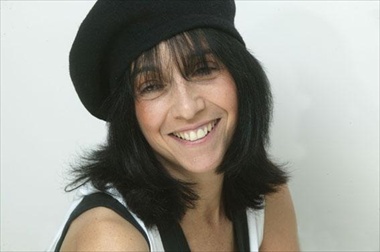
ArielLanyi_Piano13_72Sq

Who or what inspired you to take up the piano, and make it your career?

Music was an inseparable part of my life from the very beginning. I heard it from the day I was born, beginning with Bach’s Well-Tempered Clavier. Just as most people don’t remember when they learned to speak, I don’t remember when I learned to make music. The act of performing music came entirely naturally to me. My first interest is music, then comes the piano. I always enjoyed music more than anything else, so I always wanted to make it my career.

Who or what were the most important influences on your musical life and career?

Most important were probably my piano teachers: Lea Agmon and Yuval Cohen. My recent musical thinking has been heavily influenced by several workshops I attended with Leon Fleischer.

What have been the greatest challenges of your career so far?

The greatest challenge has always been keeping up with my ever increasing standards. Today I’m highly critical of recordings that once seemed to me stellar artistic achievements.

Which performance/recordings are you most proud of? 

In general, the performance I’m most proud of is my last one. But this ties in with the previous question. As my expectations of myself increase every day, performances I used to be proud of a few years ago strike me differently today.

Which particular works do you think you play best?

The composer to whom I feel closest at the moment is Beethoven. I played his works extensively, including solo works for the piano (like the cycle of the last three sonatas), chamber works, and concertos. I don’t want to create the impression that I’m specialising. In the next two recitals I’ll be playing in London are works by Bach, Mozart, Schubert, Chopin, Brahms, Debussy, and Ravel – and not a piece by Beethoven.

How do you make your repertoire choices from season to season?

I don’t have any guidelines for making repertoire choices, and I tend to avoid programming pieces with some common factor – a recital of “last sonatas” for example (I realise these clever extra-musical organising principles are quite fashionable today…) My programs consist of selections of compositions I’m working on at the moment. My only guideline is that the programs be balanced and make sense in musical terms.

Do you have a favourite concert venue to perform in and why?

I haven’t performed at enough venues to say which one is my favourite. Generally, I like venues with an intimate atmosphere, where there is an easy and sympathetic give and take between performer and audience. This is why, among others, I don’t do competitions, where the mood in the hall is judgemental and potentially negative.

Favourite pieces to perform? Listen to?

I find myself nowadays listening more and more to music that is not for the piano. I very much enjoy opera, chamber music and symphonic works. My favourite pieces to perform change all the time. Right now they probably include the works of Beethoven, among many others…

Who are your favourite musicians?

I cannot say. I don’t rank and I don’t think in ranking terms. Moreover, they are simply too many to list…

What is your most memorable concert experience?

The one that is yet to come.

What do you consider to be the most important ideas and concepts to impart to aspiring musicians?

I don’t have a set of aphorisms at hand. My advice is to be curious and open to new ideas, both musical and cultural, and to question generic advice. (I don’t think the next Richter will come from reading my blog.)


What is your most treasured possession?

A wonderful coffee machine. My mother got it as a New Year’s present, but I’m its primary employer.

What do you enjoy doing most?

Writing blogs?.. (Not really, although it is a form of relaxation and it forces me to clarify issues I haven’t given enough thought to.)


Ariel Lanyi, born in 1997, began piano lessons with Lea Agmon just before his fifth birthday and made his orchestral debut at the age of 7. Since then, he has given numerous recitals in London, Paris (including Radio France), Rome, Prague, Belfast, and regularly in concerts broadcast live on Israeli radio and television. He has appeared as a soloist with a variety of orchestras in Israel, and has participated in the Israel Festival, Prague Music Performance, Tempietto Festival in Rome, the Ravello Festival, and the Young Prague Festival. As a chamber musician, he has appeared with members (including leading members) of the Prague Philharmonia, the Czech Philharmonic, and the Israel Philharmonic, among others.

In 2012, Ariel released Romantic Profiles on LYTE records, a recital album featuring Schumann’s Carnival Scenes from Vienna, Liszt’s Fantasy and Fugue on the theme B-A-C-H, Brahms’ Fantasies Op. 116, and Janacek’s Piano Sonata I.X.1905.

Ariel has recently participated in three workshops with Leon Fleisher: the Beethoven and Schubert Institute in Prague (2013), the Schleswig-Holstein Musik Festival in Lübeck (2014), and the Menuhin Festival and Academy in Gstaad (2014). He played in masterclasses for renowned artists such as Richard Goode, András Schiff, Emanuel Ax, Murray Perahia, Thomas Adès, Andrei Gavrilov, Yefim Bronfman, Paul Badura-Skoda, Ivan Moravec, Imogen Cooper, Pascal Devoyon, Angela Hewitt, Dénes Várjon, Mitsuko Uchida, Jonathan Biss, and others.

Ariel studied at the High School and Conservatory of the Jerusalem Academy of Music, in the piano class of Yuval Cohen. He also studied violin and composition, and was concertmaster of the High School and Conservatory Orchestra. Currently, he studies as a full scholarship student at the Royal Academy of Music in London with Hamish Milne.


(photo: Chris Stock)

Who or what inspired you to take up conducting and pursue a career in music?

There were a number of “wow” moments that inspired me as a kid. I still remember the first time I heard an orchestra live (it was my local youth orchestra playing Shostakovich 5). I was only three, but that moment stuck with me and I started going to grown-up concerts very young, maybe five or six years old (worth noting given recent controversies about kids at concerts). There were other pieces, like the Shostakovich, that had a huge impact on me when I first encountered them- symphonies by Mahler, Beethoven and Bruckner for example.

My parents bought us a wonderful series of LPs called “The Stories of the Great Composers Told Through Their Music.” I must have played the Mozart, Bach and Beethoven records hundreds of times.

I was not a very motivated young pianist (it’s a pity nobody told the seven-year-old Ken about the link between keyboard proficiency and conducting), but I loved the cello, and when I started playing real repertoire in good orchestras, that was a major turning point. I still remember playing Schumann 2 for the first time in my high school orchestra, and when James Smith took over my youth orchestra that was an eye opener. I’d never played under a great conductor before. That was the first time I understood what an orchestra can be when everyone is giving their best.

Who or what were the most important influences on your musical life and career?

My teachers, chamber music coaches and mentors. My main cello teachers, Parry Karp (Pro Arte Quartet), Lee Fiser (LaSalle Quartet) and Fritz Magg (Berkshire Quartet) had a huge impact on me. Their teaching went way beyond cello playing, and taught me a lot about score study and chamber music. Henry Meyer (LaSalle Quartet) and Peter Oundjian (Tokyo Quartet) were very important chamber music mentors- my whole approach to conducting was shaped in significant ways by studying and performing the string quartet literature. Gerhard Samuel was incredibly generous with me when I was his conducting student in Cincinnati. Take one more step beyond the scope of the teachers I saw every week as a student, and the list of important mentors gets absurdly long, but they’re all important and inspiring.

What have been the greatest challenges of your career so far?

The hardest thing about being a conductor is that your time with the orchestra is always finite. I’m glad I can pick up a cello and play Bach without having to raise money, go to committee meetings, or set a rehearsal schedule. There’s so much great repertoire that one wants to learn (more than you could do justice to in three lifetimes), and so much that one could do in rehearsal, and yet the clock is always ticking. I’d love to be able to work with really great orchestral colleagues in the kind of detail we do in my string trio, but nobody wants to pay an orchestra to rehearse so it’s always a balancing act.

Which performances/recordings are you most proud of?

I’ll always remember conducting my first complete Mahler symphony (the Second) with the Oregon East Symphony. That was a huge undertaking for everyone involved- so many people worked very hard and the concert felt like a real spiritual coming together. The final concert with Orchestra of the Swan in our Gál/Schumann cycle was memorable and moving- the end of a fantastic journey through that repertoire, and they played out of their skins.

For me, one of the joys of playing in a chamber group is revisiting pieces over and over until we feel like we really own them. When Ensemble Epomeo play the Schnittke String Trio, it’s always an event for us, and it felt much the same whenever my string quartet used to play Bartók no. 2. When you’ve invested years in a piece with your colleagues, you know you have to savour every performance together.

As far as recordings– the Gál/Schumann discs have been special. Gál was a recent discovery I felt lucky be entrusted with, but I’d wanted to do the Schumann symphonies since I was a teenager. The recent Nimbus recording of Philip Sawyers’s Second Symphony, Cello Concerto and Concertante was also a labour of love. Introducing unknown music to a wider public is surely the most important thing a recording can do, and Philip’s music is wonderful and very important.

Which particular works do you think you play/conduct best?

I find a huge range of music both rewarding and challenging. I don’t believe in specialities, because everything not on the list of things you do particularly well then suffers. I’m an intense guy, and I suppose I’m most at home in music that uses that intensity constructively.

How do you make your repertoire choices from season to season?

It’s a balance of what I want to do (some works stay on my wish list for 15 years before I get a chance to programme them), what my colleagues and employers want me to do, and what we have to do to stay in business.

Do you have a favourite concert venue to perform in and why?

My friends from home will laugh because it’s not a great venue, but Mills Concert Hall in Madison, Wisconsin. It’s where I first heard an orchestra when I was tiny. I’ve given recitals, played in all kinds of cello sections, played concert concertos, chamber music, heard amazing performances by friends and teachers, conducted and taught. It’s where music was born for me as a kid.

Favourite pieces to perform? Listen to?

As a listener, I tend to cycle through obsessions. I might listen voraciously to late Shostakovich, Schumann piano works, Debussy and Ravel, or early Beethoven string quartets, for two or three weeks, then not touch it again for a couple of years.

Who are your favourite musicians?

I like musicians who combine a certain amount of serious mojo with craftsmanship and honesty. My favourite performers are the ones who can put across a distinctive point of view about the music they play. My favourite composers engage heart, head and guts.

What is your most memorable concert experience?

Hearing Shostakovich’s Seven Romances on Poems of Alexander Blok with the Dubinsky’s and Fritz Magg with soprano Gloria Davey at Indiana University when I was 18. I still don’t think I’ve recovered.

What do you consider to be the most important ideas and concepts to impart to aspiring musicians?

Cultivate a love of music that will sustain your efforts as an instrumentalist- too many young musicians are more interested in playing their instrument than in the music they play.

Rhythm is the foundation of music. Playing in time is hard, but you can only play with true freedom if you’re in total command of tempo, pulse, meter and time.

What is your idea of perfect happiness?

Camping with Suzanne and the kids (while knowing that I’ve got something nice in the diary when we get home)

Kenneth Woods conducts the English Symphony Orchestra at St John’s Smith Square on 24th April in a concert of music by Handel and W F Bach which explores the origins of Mozart’s Requiem. Further information and tickets here

Hailed by Gramophone as a “symphonic conductor of stature,” conductor, cellist, composer and author Kenneth Woods has worked with the National Symphony Orchestra (USA), Royal Philharmonic, Cincinnati Symphony, BBC National Orchestra of Wales, Budapest Festival Orchestra, Royal Northern Sinfonia and English Chamber Orchestra. He has also appeared on the stages of some of the world’s leading music festivals such as Aspen, Scotia and Lucerne. In 2013, he took up a new position as Artistic Director and Principal Conductor of the English Symphony Orchestra, succeeding Vernon Handley.

Kenneth Woods’ full biography

A View from the Podium – Kenneth Woods’ blog

Who or what inspired you to take up the piano and pursue a career in music?

It was a combination of different influences.  At around the age of 13 I was introduced to Glenn Gould’s recording of the Goldberg variations (the 1955 recording). I was fixated with it, and for many months I listened to nothing but Bach! I suppose my passion and energy for music arose from then.

Who or what were the most important influences on your musical life and career? 

There are too many to count! Tom Waits, The ‘Heiliger Dankegesang’ movement from Beethoven String quartet op 132, Mahler’s 6th Symphony, Oscar Peterson, Strauss’s Metamorphosen, Schubert songs. The list is always growing….

What have been the greatest challenges of your career so far? 

Performing Stockhausen’s ‘Mantra’ with my piano duo (the Francoise-Green duo) was especially memorable. It was 70mins of extremely difficult piano music, as well as playing crotales, a wood block, ring modulators and a radio! But generally, I don’t look back, I am always looking forward to the next challenge.

Which performance/recordings are you most proud of?  

I am proud of my latest CD ‘Dialog mit Mozart’, with the Austrian violinist Daniel Auner. We recorded 3 Mozart violin sonatas on the Gramola label. We approached the project by studying the original manuscripts, and discussing in detail how Mozart should be played naturally and instinctively.

Which particular works do you think you perform best? 

I have always insisted on performing lots of different repertoire. There is so much great music, that it is a crime not to try it all in a life time. This month I have performed works by Strauss, Schubert, Mozart, Stravinsky, Saints-Saens and Steve Reich, so my musical life is always extremely varied. I have a huge passion for chamber music from the Classical era and try to perform this as often as possible. I am very happy that I will be performing the Beethoven Cello Sonatas this season with my good friend Christian Elliott, the cellist of the Zehetmair quartet.

How do you make your repertoire choices from season to season? 

This very much depends on which concerts/festivals I am invited to, and who I will collaborate with. This coming season, I will perform a number of concertos for the first time, including the Mendelssohn Double concerto in Japan.

Do you have a favourite concert venue to perform in and why?

Performing at Wigmore Hall is very special. It has an astonishing Steinway piano, and a magical acoustic. I was also very excited to play in Berlin recently at the Piano Salon Christophori. There is a concert series in a working piano factory, where the owner has over 120 pianos! It is a magical atmosphere and a very attentive audience. There were over 250 people, and half the audience was under 40. A good sign for 2015.

Favourite pieces to perform?

Whichever piece I am about to play.

Who are your favourite musicians?

Whoever I am about to play with.

What is your most memorable concert experience?

I once played at the BBC Proms with the European Union Youth Orchestra on the organ! We played ‘Tarus Bulba’ by Janacek, which includes very exposed solos. That was my first time playing an organ, so it was quite an overwhelming experience! Perhaps I can officially retire as an organist now I have played at the Royal Albert Hall.

What do you consider to be the most important ideas and concepts to impart to aspiring musicians? 

Never stop learning, never stop working and never stop dreaming. When the cellist Casals (then age 93) was asked why he continued to practice the cello three hours a day, he replied, “I’m beginning to notice some improvement.”

Where would you like to be in 10 years’ time?

Doing exactly what I am doing now.

‘A light touch and an engaging tone’ (The Strad magazine), Robin Green enjoys a busy career as a soloist, chamber musician, conductor and ensemble pianist.

Robin’s first CD, ‘Dialog mit Mozart’ with the Austrian violinist Daniel Auner, released on the Gramola label, was ‘Editors choice’ in the December 2014 issue of the Strad Magazine.

Robin has performed recitals in many of the world’s most important concert venues including the Wigmore Hall and the Vienna Musikverein. His festival appearances have included the Festspiele Mecklenburg-Vorpommern, the ‘Interlaken Classics Festival’, Davos Young Artists Festival, the International Musicians Seminar ‘Open Chamber’ Festival at Prussia Cove, the Pharos Trust, Festival de Radio France et Montpellier and Le Jardin Musicaux Festival.

As a concerto soloist, Robin directed a performance of Poulenc´s ‘Aubade’ from the piano with the European Union Youth Orchestra. Other concerto highlights include the Martinu Double Concerto with Sinfonia Cymru and Camerata Nordica at the Small Nations Big Sounds festival.

Together with the pianist Antoine Françoise, Robin is part of the Françoise-Green piano duo. The duo are the first prize winners of the Royal Overseas League Chamber music competition, and the Concours Nicati in Switzerland. In 2015, the duo were finalists of the YCAT competition at Wigmore Hall.

A passionate chamber musician, Robin has collaborated with Gordan Nikolitch, Michael Collins, Thomas Carroll, Rolf Hind, the Cavalieri String Quartet, members of the Zehetmair quartet, Llyr Williams, the Rambert Dance Company and the Mercury Quartet, where he is a guest conductor.

Former recipient of the Leverhulme Chamber music fellowship at the Royal College of Music, Robin is now a piano professor at the Royal Academy of Music Junior department. Supporting his studies at the Royal College of Music and the Mozarteum, Salzburg, Robin has participated in masterclasses with Vladimir Ashkenazy, Menahem Pressler, Ivry Gitlis, Ferenc Rados, Stephen Kovacevich, Dénes Várjon, Imre Rohmann, Peter Lang and Rainer Schmidt.

Robin is the former pianist of the European Union Youth Orchestra, having won the Chairman’s award. As an ensemble pianist, Robin has performed with Orchestre National de Radio France, Aurora Orchestra and Nouvel Ensemble Contemporain.

Lola Perrin
Lola Perrin

Who or what inspired you to take up the piano, and pursue a career in music?

It picked me, I couldn’t keep away from the piano and when I hit my early twenties I realised I had to compose, and knew it would take a good few years to write anything I could say was original.  It actually took 9 years to eventually compose eleven minutes of music that I rate; my first piano suite which is a set of seven miniatures.  After that, the door was open.


Who or what were the most important influences on your musical life and career?

Edward Hopper, Ansel Adams, observing children set free at the piano, Rachel Whiteread, Carsten Hoeller, Dr Martin Coath’s emails to me about the speed of thought in the brain, Hussein Chalayan’s ideology that drives his designs, the passing of a close friend and musician and remembering him in a piano suite – these were all triggers, one by one, for my eight piano suites.


What have been the greatest challenges of your career so far?

It’s unimaginably difficult to get other people to play your work which is fairly usual (so many of my predecessors only started getting played after their deaths), although my work is played now more than it was – it ebbs and flows.  It’s hard to get it to take off. I’m more interested in composing than promoting so I run out of time to promote my books. I spend less time than I would like on promoting my books because my composing and teaching take priority.  So I would say the greatest challenge is ongoing; getting my work further into the repertoire and into the hands of many more concert pianists.


Which performance/recordings are you most proud of? 

Always the next one.


Favourite pieces to listen to?

Bill Evans playing ‘Symbiosis’


Who are your favourite musicians?

Martha Argerich is high up in my list and I loved seeing her daughter’s amazing and intimate film about Martha: ‘Bloody Daughter’.


What is your most memorable concert experience?

Maybe the one where around 5 and a half people came. I was in a tiny chapel in Hamburg, My show included films and as there was no screen, they were projected onto the amazing and antiquated wallpaper, creating the sense of a one-time-only atmosphere never to be repeated but perhaps everyone would remember on a particularly deep level.


What do you consider to be the most important ideas and concepts to impart to aspiring musicians?

Once you find your path, never step away from it; no matter how hard it is, do not compromise. Be brave and keep reaching out!


What are you working on at the moment?

I’ve spent the last year creating “Now You See It” – a composer’s response to living in the age of climate change. It’s scored for piano and an orchestra of words featuring the voices of activists and innovators at the frontline of climate justice.  I worked with co-producer Christian Dymond, researching and interviewing a number of activists around the world; then I created a word based composition using extracts from the interviews and set that within piano composition. It has its premiere in London in March and is going to Hebden Bridge Piano Festival in April, will be on at Markson Pianos Concert Series in October, with more dates coming in. 


Where would you like to be in 10 years’ time?

On a planet that has switched to renewable energy or NO energy.


What is your idea of perfect happiness?

Walking to my next gig; that’s when I most feel in my element.


Lola Perrin performs at Hebden Bridge Piano Festival on 18th April in a programme which culminates in her “Now You See It” – a multimedia project featuring solo piano with a sumptuous cloud film by visual artist Roberto Battista, and pre-recorded words captured from international activists, climatologists, inventors, writers, and oil rig workers; voices from the frontline of our global climate conversation.  “Such a brilliant idea!” George Monbiot

 Further information and tickets here 

Lola Perrin is a London-based, USA-born composer, pianist, publisher, and Composer-in-Residence at Markson Pianos.

She has been composing since 1992 and performs her compositions on mainland Europe, in the UK (including works for 2, 4 & 6 pianos at Lang Lang Inspires, Southbank Centre) & USA, and has published over 70 piano compositions in 8 books, distributed via Spartan Press. Commissions include silent film scores performed at Barbican, BFI Southbank and Peninsula Arts in Plymouth. She collaborates in performance with writers (including Mihir Bose  & Sue Hubbard), scientists, artists and film makers. 

Lola Perrin has been taken into the repertoire by concert pianists including; Elena Riu, Kevin Robert Orr, Paul Cassidy, Ivory Duo Piano Ensemble, LP Duo, Duo Gastesi Bezerra, Carles and Sofia.  Her technical exercises, commissioned by Trinity College of Music, can be found in their 2015 – 2016 Piano Syllabus Grades 3 & 4.

As an increasing number of pianists and piano duos take up her piano works she is turning her attention to instrumental works.  Elysian Quartet and Carlos Lopez-Real have performed her string quartet and saxophone work. Sarah Watts  commissioned ‘Her Sisters’ Notebook’ (ten bass clarinets) for Peninsula Arts Contemporary Music Festival 2011 and played it at Irish Royal Academy 2014. Simon Desbrulais and Ivory Duo Piano Ensemble have taken up her forthcoming Suite for Two Pianos, Trumpet and Narrator. During 2014 two instrumental works (String Quartet & Saxophone, Wind Quintet & Choir) are due to be rehearsed / performed in London.

She has been interviewed and reviewed by various media including Berliner Morgenpost, BBC Radio 3 and local stations, The Guardian, Lyric FM.  Her recordings appear on radio playlists and occasionally on broadcast TV, are on general release and can be found through digital sites including iTunes (CDs: Fragile Light’, ‘By Peculiar Grace and other loves’).  She also works as a private piano teacher.  Pianist magazine ran an interview, June 2014, with her piano student Shadow Chancellor Ed Balls, in which Lola made a sneak appearance.

As well as various composition projects, she is also currently transcribing ‘Concerto in C Minor’ by Helen Hagan, a forgotten 1912 virtuosic masterpiece still in the composer’s hand, and creating a concert programme around it.

www.lolaperrin.com