ben-socrates_0464_1 copy

Who or what inspired you to take up the piano and pursue a career in music?

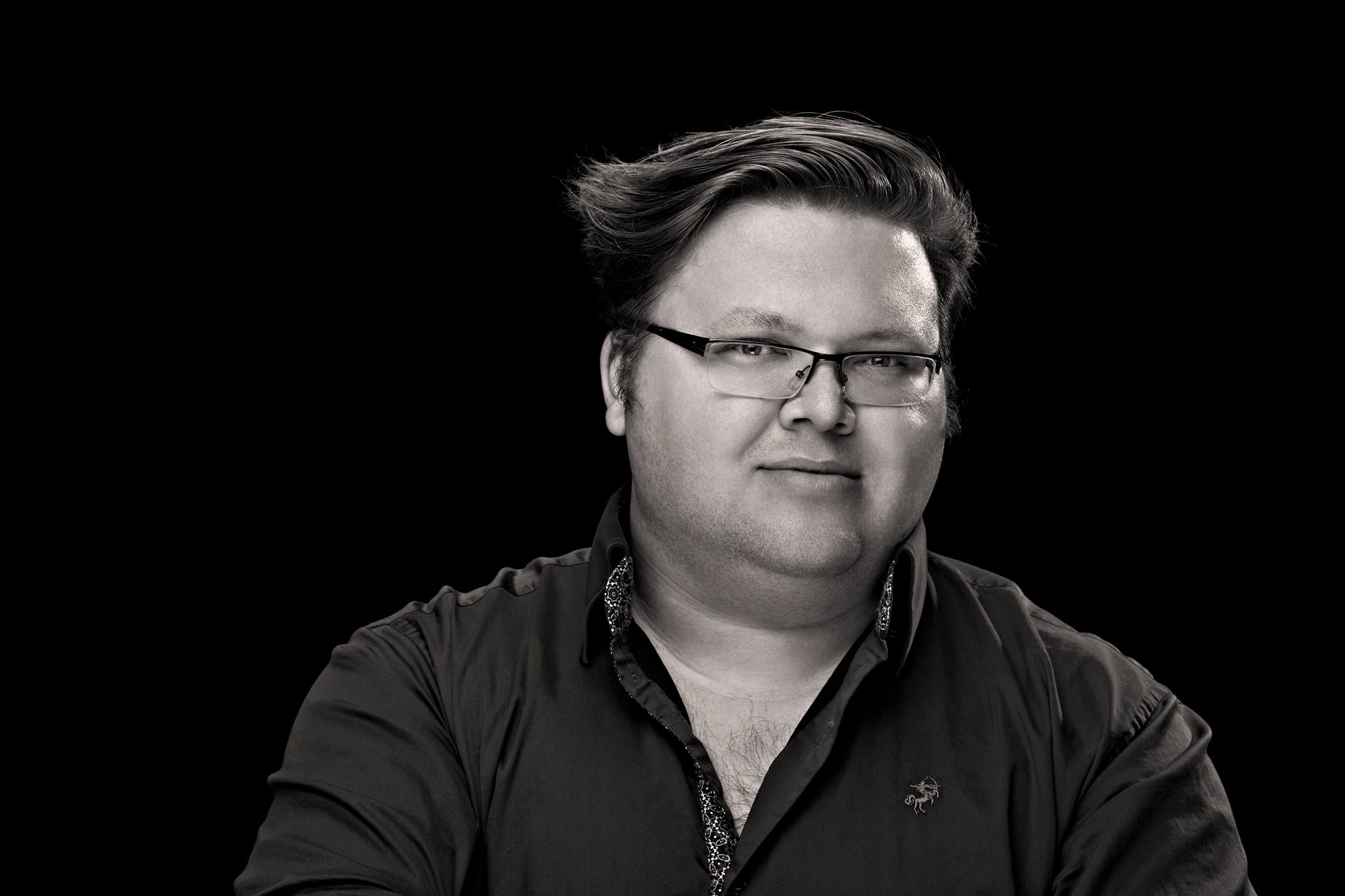
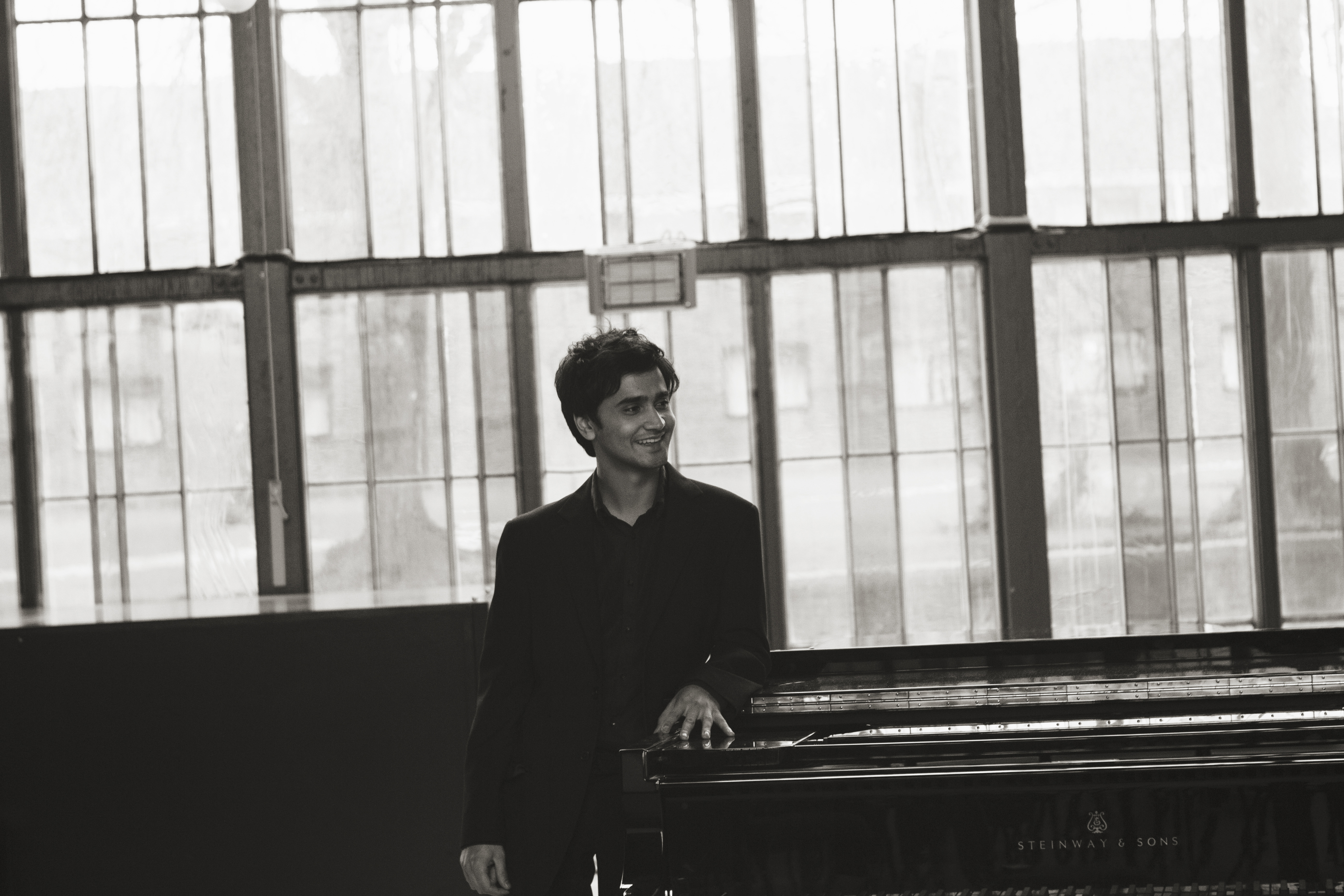
I have a half brother to thank for this – Luke, who lives in Arizona, or at least he used to, and I’ve only met him once in my life. He came to visit us in Devon when I was younger, and my mother convinced my father to get an old pub piano – Luke is a singer/songwriter and she hoped we would appreciate hearing his music. I did, and I took a particular liking to that creaky piano, began making noises and was soon taking lessons. I don’t come from a musical family, and there wasn’t exactly a fertile scene for it in my hometown, so the desire for a career in music came later, when I enrolled on a music course at The University of Chichester, met some inspiring musicians and mentors, and discovered the breadth and potential of what was out there

Who or what were the most important influences on your musical life and career?

My first major influence would be my first band The Plastic Hassle – which helped me learn how to improvise and write music, play with rhythm and make naïve psychedelic jazz-rock noise, at the age of 15. My first piano teacher had moved to Yorkshire by then and I was feeling a bit discouraged about music so this was a welcome kick! When I came back to classical piano aged 19 I found I had much more to express and ‘something to say’, and I never lost my love of improvisation. Adam Swayne, my teacher at university, switched me on to modern music, and showed me the scope and variety of piano repertoire outside the repressive ABRSM exam bubble. Finally, my teacher at Trinity Laban, Douglas Finch, who has always challenged conventions and collaborated successfully within other disciplines, which is something that became very important to me. There are of course many more influences, but these are the most important!

What have been the greatest challenges of your career so far?

Finding time and a space to practice away from irritable neighbours. Finding other musicians and artists to work with, which is easy enough when you’re part of a big collaborative conservatoire but harder when you’re in the wider world chasing up jobs, gigs, and endless life admin! Organising interesting concerts and events myself, which I would like to do more of, it is a huge investment of time and energy but incredibly worthwhile, and can raise awareness for good causes. I would like to pursue my other musical interests – whether that’s composition, jazz, harmony, learning accordion, or electronic music – but as is known, getting and staying half decent at piano is time consuming enough in itself!

Which performance/recordings are you most proud of?

My debut recital at Chichester Cathedral last year was special for me, so much of my musical development happened in that area, and coming back to perform for an audience of over 500 was quite overwhelming. I’ll be back there on the 8th March next year, excuse the plug. While studying for my Bachelors I was invited to perform the Shostakovich Piano Concerto No 2 with the university orchestra – the support and goodwill from the musicians, conductor and audience, and how it all came together on the night, is an enduring memory. Other than that, I enjoyed putting together a performance of Ravel’s La Valse, arranged for two pianos, with a choreography devised by contemporary dance students at Laban, for the first CoLab festival at Trinity Laban. I got to play some of Eric Satie’s Vexations at 4 in the morning, for a project at Chichester University. The performance, split between all the pianists that the university could muster, had been broadcast online for a good 12 hours prior to this and the music was firmly lodged in my psyche before I dragged myself out of bed to the concert hall!

Which particular works do you think you perform best?

I think it’d be easier to say what I perform badly! I suppose I feel most at home with music of the 20th century, which is very vague, and in itself contains a vast variety. I never tire of exploring whats out there, trying to find out how it all came about, and it’s place in history. Alex Ross can help with this.

How do you make your repertoire choices from season to season?

I try and learn a programme or two worth of new repertoire every season, but then it is also satisfying to come back to something I struggled with years ago and find that I now better understand the music or am no longer wrestling with the technical problems, or I might find a whole new approach to take. A teacher told me that the best performances are of the pieces we learn and forget, then relearn, then forget, then relearn, and by then they are just so well internalised and part of our musical DNA.

When it comes to programming, I try and include a diverse selection from across the four main periods of Western music, but the challenge is in giving it some kind of unifying  thread. My recitals this year are loosely themed around the title ‘Visions & Dances’, with the music grouped around Visions (visionary, impressionistic, colourful, innovative, imaginative pieces, usually of the 20th century and beyond) and Dances (self explanatory), which really means I am able to incorporate all the music I love to play! I find that unpretentious and demystifying introductions can really help ‘sell your idea’ also.

I like to include contemporary repertoire in most of my concerts, not so much the wilfully difficult and obtuse stuff, but experiments in sound by Henry Cowell, Rautavaara, Somei Satoh and Frederic Rzewski have all been memorable for audiences (for good or bad!).

I occasionally start to write a ‘bucket list’ of the music I want to perform in the next year, 5 years, decade, lifetime, but such a list is never finished and can be overwhelming. It’s good to be spontaneous in our selections also.

Favourite pieces to perform? Listen to?

I never get tired of performing Prokofiev – I haven’t yet approached the sonatas but I became hopeless addicted to the Visions Fugitives, the Ten Pieces opus 12 and some of the etudes. There is something very seductive about the expressive language, the kaleidoscopic colours, the hallucinatory changes of character. It seems like this kind of music emerged out of nowhere, from a timeless and intangible place, and I can’t really figure out where it went after Prokofiev departed. I admire the nationalistic, folkloric strain in music at the turn of the century – the Dvorak Slavonic Dances, and of course Brahms’ Hungarian Dances that inspired Dvorak, are pretty much the most fun I’ve had at the piano, and I love Janacek’s piano music.

When it comes to listening that is a very difficult question in the age of Spotify, as there is so much that I have loved, forgotten, come back to – but at the moment I am enjoying the more meditative music of Olivier Messiaen, Morton Feldmann, John Adams, Arvo Pärt. Also anything with a rhythm that makes me stop in my tracks, or want to dance, whether it’s Scarlatti, Villa Lobos, Gershwin or all kinds of electronic and world music.

Who are your favourite musicians?

I have a lot of admiration for musicians that have taken creative U-turns, in spite of achieving a certain amount of success, and turned their hand to different styles rather than play it safe, bringing a new audience and appreciation to other forms – Jonny Greenwood, Scott Walker, Robert Wyatt, David Byrne, PJ Harvey, for example. As far as pianists go I love what Chilly Gonzales is doing, bringing back the somewhat lost character of composer/performer, he is also a formidable improviser, and I recommend you listen to the online snippets from his 27 hour marathon piano performance (he was the Guinness World Record holder for the longest solo performance, but only for a few months!) you’ll be impressed by the variety of music at his fingertips. In the classical world it’s hard not be in awe of Daniel Barenboim at the piano or the podium, Grigory Sokolov for the Romantic repertoire, Martha Argerich in everything she does. Alice Sara Ott has done some really wonderful things with Chopin. They’re my favourites for now. I have to mention Art Tatum and Bill Evans also, for their boundless creativity at the piano, and the music of Charles Mingus never fails to blow me away. Why are all my favourite jazz musicians dead??

What is your most memorable concert experience?

Can I pick a few?

The second time I heard an orchestra was in Ravel’s Daphnis et Chloe, which set the bar rather high. I heard three quarters of Wagner’s Ring Cycle in the space of a week, it was the Berlin Statskapelle conducted by Barenboim at the 2013 Proms, and time seemed to stop for those 12+ hours. I was transfixed by Steve Reich’s Music for 18 Musicians performed by the Colin Currie Group, and Cordelia Williams performing Messiaen’s 2.5 hour Vingt Regards sur l’enfant Jésus from memory, with this superhuman ferocity and passion. I vividly remember when Douglas Finch improvised a set of subversive variations on Christmas themes we’d suggested, in the dark, at a party. There is a German composer called Haushcka who prepares a grand piano by filling it with ping pong balls, contact microphones, E-Bows (magnetic devices invented for guitarists to sustain sounds indefinitely), other gizmos – I expected a load of gimmicks and party tricks but it was quite an amazing transformation. When I was younger I was inspired by some of the modern jazz artists who for some reason came to play in my sleepy hometown of Barnstaple, particularly Seb Rochford’s Polar Bear, and Basquiat Strings, a string quartet of incredible improvisers backed by double bass and drums. When I got a place at Trinity Laban and found some of these very musicians were on the faculty, I was very excited; unfortunately my jazz chops hadn’t really kept up!

What do you consider to be the most important ideas and concepts to impart to aspiring musicians?

Despite my philosophical sounding name I don’t have a lot to say that hasn’t been said better already. I went to hear Daniel Barenboim speak at this year’s Edward W. Said Lecture and wrote down loads of quotes I considered important. They’ve been lost since I moved house, but essentially – use music to understand life, and life to understand music, and always impart this to everyone you encounter as a musician and teacher.

Happily the lecture is on YouTube for anyone who wants it in a bit more depth/less paraphrased!

Where would you like to be in 10 years’ time?

In some remote part of the world with some good companions, a piano and just enough free time!
  

Who or what inspired you to take up conducting, and pursue a career in music?

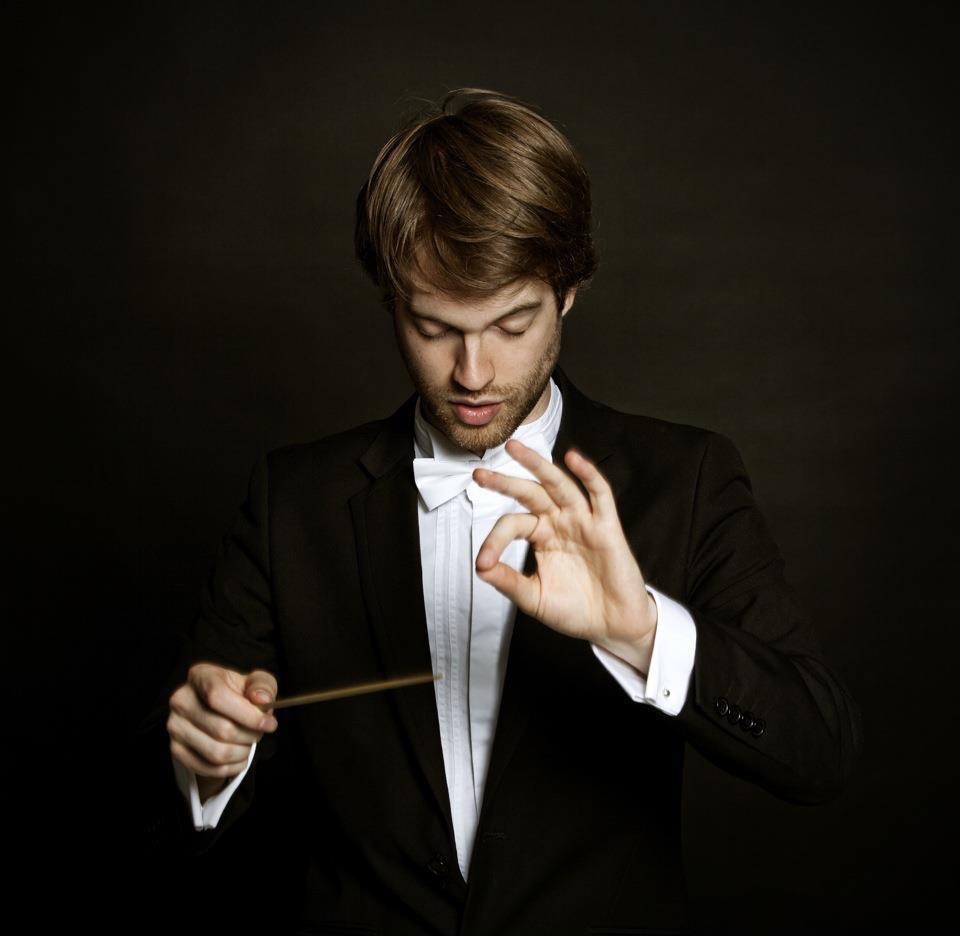
Carlos Kleiber! More seriously, I was feeling a bit frustrated playing the cello, not having the big picture. The instrument seemed to be almost “getting in the way” of the music and me. Also I have always enjoyed managing people and was excited by the added challenge of getting the musicians to feel they are fully part of the creative process. Finally I felt I had something to say and express about music. 

Who or what have been the most important influences on your musical life and career?

I have met some fantastic people in my life, ranging from my nursery school teacher to my passionate cello teacher when I was a teenager, and my music teacher in high school. Working with Benjamin Zander was also a great experience. He taught me a lot as a musician and as a person. I believe it is crucial as an artist to keep learning from others throughout your life. It is often said that a great musician should know about philosophy and other arts, cultures etc. and this is absolutely true.

What have been the greatest challenges of your career so far?

Getting it started!

Which performance/recordings are you most proud of?

My concert last year with Sinfonia Tamesa, when we performed Nielsen (Aladdin), Grieg (Peer Gynt) and Rimsky-Korsakov (Sheherazade), was pretty amazing – really electrifying and colourful! I was also thrilled to perform Albéric Magnard’s Hymne à la Justice last year on the 100th anniversary of his death. He hasn’t been played at all in France and for me it is a real shame! I am also very proud to be conducting a concert on 11 November at St James’s Piccadilly with the amazing Sarah Connolly in aid of UNICEF Syria Children’s Appeal. Such a worthy and important cause.

Which particular works do you think you play best?

I experience and therefore conduct the music in a passionate way. Of course there is always a necessary intellectual approach to the score: you’ve got to analyse it and understand the notes and their relationship, but what’s most important is to love the music, to feel it and make the audience experience it with you. I particularly relate to powerful and expressive composers like Beethoven, Mahler, Sibelius, Bruckner etc. Plus I am an advocate of playing unknown composers; the feeling of discovering something new, another language, another personality is always extremely rewarding and motivating.

How do you make your repertoire choices from season to season?

I always try to put three kinds of pieces in my programmes: something famous to attract the more traditional audience, a premiere or contemporary piece, and a little-known piece or composer to feed the audience’s curiosity. There are so many wonderful things out there we haven’t heard yet!

Supporting new music is also essential. I believe performers should be more involved and work with composers themselves. For example, I think what Fenella Humphreys did with Bach to the Future was really inspiring.

Do you have a favourite concert venue to perform in and why?

I have played in too few venues to have a favourite. Maybe the state-of-the-art concert hall which Simon Rattle has been calling for in London?

Favourite pieces to perform? Listen to?

I can be quite obsessive sometimes, and right now I am completely mad about Bruckner’s 8th Symphony. It’s incredibly powerful, meditative, epic…

Otherwise, I like to listen to YouTube channels featuring unacclaimed masterpieces and other hidden gems. The Corymbus blog is also definitely worth following!

Who are your favourite musicians?

Carlos Kleiber (again)! He is such an inspiration. He breathes the music, loves it so much that the way he conducts seems so organic. I’ve also always been fascinated by Furtwängler and his bizarre but magical conducting. Of course we’ve got some fantastic conductors today as well: Mariss Jansons, Sir John Eliot Gardiner, Andris Nelsons, Sir Simon Rattle.

What is your most memorable concert experience?

Probably my very first concert as a conductor in 2009! Hopefully there is much more to come. The UNICEF concert on 11 November promises to be quite a highlight too and because of the cause it supports, a memorable one too.

What do you consider to be the most important ideas and concepts to impart to aspiring musicians?

“You know nothing!” No matter where you are or how good you are, you have to keep learning and be humble. But remember if music is life, life is not only about music!

What is your most treasured possession?

The St Christopher pendant my grandmother gave me a long time ago. Not for religious reasons at all but because it is a reminder of where I come from. Also my cello: it symbolises the efforts and sacrifices I had to make to get where I am and all the support I got from my parents. And very soon my wedding ring!
Sarah Connolly and some of the top professional musicians in London are uniting under the direction of Nicolas Nebout in a special fundraising concert for Syrian refugee children. The concert takes place on 11th November 2015, 7.30pm at St James’s Piccadilly, London W1

Programme:

Ludwig van Beethoven – Symphony No.5

Gustav Mahler – Kindertotenlieder (soloist: Sarah Connolly)

Malek Jandali – Phoenix in Exile (World Premiere)

Book tickets http://www.brownpapertickets.com/event/2265817

Donate https://www.justgiving.com/MusiciansForSyria/
Nicolas Nebout’s website http://www.nicolasnebout.com

(Photo: Jamie Jung)
(Photo: Jamie Jung)

Who or what inspired you to take up the violin, and pursue a career in music? 

I have liked the sound of the violin as long as I can remember. Also, my parents are both musicians but neither play the violin, so by choosing this instrument they couldn’t tell me what to do…

Who or what were the most important influences on your musical life and career?

My parents, who have both had a life in music and made me believe that it is possible to have a life in music; my teacher at Juilliard, Sylvia Rosenberg, who has been a great influence in shaping how I think of music; and pianist Joseph Seiger, who encouraged me to always find more colors in music.

What have been the greatest challenges of your career so far? 

Just playing the violin… I find it very challenging. Also I find that combining physical relaxation with musical tension while playing is a constant challenge.

Which performance/recordings are you most proud of?  

I really try to avoid listening to recordings of myself (except ones I make for myself in the practice room), so I don’t know… So far I’ve only released one commercial album, my debut CD Portrait, (released August 2014 in Europe and February 2015 in the US).

Which particular works do you think you perform best? 

There seems to be a gap between what I think I play well and what other people think… I think I play Brahms well, but others think Schubert fits me very well.

How do you make your repertoire choices from season to season? 

I’m always trying to find a balance between new works that I want to learn, keeping enough works that I already know in my repertoire so that I don’t overbook myself, and putting together what I think are interesting programs. Also, it is important for me to include new works in my programs, and lesser known works, especially from the 20th century, which I think deserve to be heard.

Do you have a favourite concert venue to perform in and why? 

I absolutely love Suntory Hall in Tokyo and the Seoul Arts Center, because of their acoustics. I feel that these halls add new colors to my sound, which are not possible to find in a practice room. The auditorium at the Israeli Conservatory of Music is very special for me though, because I grew up in that institution, and so is the Israel Philharmonic Hall in Tel-Aviv, because as I child I dreamed of performing there.

Favourite pieces to perform? Listen to? 

There are some pieces that I just feel privileged to play. Ones that pop into my mind at this moment are Mendelssohn’s Violin Concerto, Mozart’s 5th Concerto, Prokofiev’s 1st Concerto and Cesar Frank’s Sonata. I usually prefer not to listen to violin music, so I listen mostly to piano music and sometimes orchestral music. Late piano pieces by Brahms are a particular favorite.

Who are your favourite musicians?

Has to be composers – Schubert, Brahms, Tchaikovsky, Shostakovich, Ravel, Ligeti and many others…

What is your most memorable concert experience? 

Hearing Ravel’s Sonatine for the first time, at a student’s concert at the conservatory in Tel-Aviv. The beauty of this music brought tears to my eyes instantly.

What do you consider to be the most important ideas and concepts to impart to aspiring musicians? 

Playing an instrument and making music is not easy, and I don’t know anyone who doesn’t encounter hardships on the way. One has to work hard in order to improve, and I somehow find that understanding that the process isn’t supposed to be easy, and that everyone is going through difficulties, is quite comforting. Also, on stage always try to make music, no matter how nervous you are. The audience is there to enjoy and to feel, and if one plays in order not to miss a note, it doesn’t mean much to the listeners, and one tends to miss more, in my experience…

Born in Tel-Aviv in 1985 to a family of musicians, Itamar Zorman began his violin studies at the age of six with Saly Bockel at the Israeli Conservatory of Music in Tel-Aviv. He graduated in 2003 and continued his studies with Professor David Chen and Nava Milo. He received his Bachelor of Music from the Jerusalem Academy of Music and Dance as a student of Hagai Shaham. He received his Master’s of Music from The Juilliard School in 2009, where he studied with Robert Mann and Sylvia Rosenberg, and received an Artist Diploma from Manhattan School of Music in 2010, and an Artist Diploma from Julliard in 2012, studying with Ms. Rosenberg. Itamar Zorman is currently a student of Christian Tetzlaff at The Kronberg Academy.

www.itamarzorman.com

11009397_406902086138349_6883018641379446363_o

Who or what inspired you to take up the piano and pursue a career in music? 

During a family holiday in Jersey in 1988, I heard a cocktail pianist at the Hotel de France.  I became transfixed with the piano sound, and each evening at the hotel restaurant would stand next to the artist and gaze (realising now how irritating it would have been for an eight year old in chinos and a gaudy shirt, to be peering and examining the artist’s fingers).  I also remember eating each course terribly slowly to maximise on the listening potential!

After much nagging (persistence usually pays off!), and against my late father’s intentions (S.A.S. fighting machine), Ma bought me my first piano for £50.00.  It was an Erard, and I adored it until I wore it out.  My world gradually became totally music and arts orientated, and I felt it was the only thing I excelled in; there was no option other than to forge a musical path.  Looking back, I had no idea what colourful and wonderful opportunities it would hand to me.

Who or what were the most important influences on your musical life and career? 

This is the easiest of the questions to answer.  Margaret Fingerhut, who believed in me at a time when I was having quite a major confidence wobble in my life, taught me at the RNCM, and on occasion privately afterwards.  I learned more in the short time I had with Margaret, than I did from any other principal study tutor I studied with during my degree course.

Before this, Arthur Williams taught me organ (I ended up covering five different church organist posts at the same time!), and piano encompassing everything I needed to know to set me up in moving forward with my career.  He took me on many trips to concerts and hands on playing events across the country, and in his will left me his entire sheet music and recordings collection.  It was one of the most harrowing days of my life having to play for his funeral, and listening to Elgar’s ‘Dream of Gerontius’ in its entirety looking at the 7 foot gentle giant lay in his coffin!  On a lighter note, I amusingly curse the huge collection Arthur left me, each time I have to move house, as do the friends that help me pack it up each time.

After Arthur had sadly passed away, Doctor Stephen Collisson took on the challenge of preparing me for conservatoire entry auditions, and had playing Bach English Suites, Brahms Ballades, Mozart Sonatas and Rachmaninoff Preludes in the short space between A levels and conservatoire entry.  He had time and patience and gave me extra time whenever I needed, or was having a mini-meltdown, and probably understood me more than I did at the time!

What have been the greatest challenges of your career so far?

This has to be when I went across to the dark side, and organ was my principal study.  I was fortunate enough to land a position as Organ Scholar at Her Majesty’s Chapel Royal Hampton Court Palace when I was 17.  This involved learning up to an hour’s worth of new choral accompaniments per week, plus some taxing voluntaries.  My first service there, the setting for Evensong was Stanford in A (orchestral reduction); alone in the organ loft in such an auspicious setting, my heart was in my mouth, all trussed up in the royal livery.  That place was magical, most notably at Midnight Mass.

Which performances/recordings are you most proud of?

I have one recording available which was awarded a five star review, and demanded a second album.  Also a telling off from the reviewer who had never heard of me, and that my modesty and lack of online presence is holding me back.  The recording was done in whole takes only, and I insisted that the ‘inaccuracies’ were kept in as part of the performance.  Hidden on the album cover is my insignia “there are no mistakes, just happy accidents”, I also have this on a plaque next to my piano at home, as I feel it is vital for students to be aware of this, as well as me.  The recording is very special in another way I have never revealed until now, in that I was head-over-heels for the page-turner.  Shortly after he moved to the other side of the world.

In terms of performances, it has to be 2012 Manchester Pride Concert Series, promoting LGBT composers.  I was due to accompany the Poulenc Trio for piano, oboe and bassoon amongst other chamber works.  Sadly the oboist got stuck in another country the day before, and I had twelve hours to pull together a solo recital to be recorded live and aired on BBC Radio 3, BBC Manchester and Gaydio!  After dealing with a stroppy audience lady who screamed “WHAT, no oboe….I’m off” … Chaminade, Debussy, Hahn, d’Indy, Dukas, Ravel, Saint-Saens and Widor were played, and this recording kick-started my YouTube channel in an attempt to embrace technology and my reviewer’s advice!

Which particular works do you think you perform best? 

The pinnacle two works in my repertoire are unusual French sonatas.  Chaminade and Dukas!  The Chaminade I learned back in 1996, and the Dukas in 2003.  The Chaminade I use as a cornerstone in recitals a lot as it covers many forms; Fantasia, Fughetta, Nocturne, Toccata.

The Dukas has been allowed by programmers twice due to its need to be served with a good dose of happy pills and a course of counselling afterwards.  I also find it is quite an aerobic challenge, and gave it the nickname “French Hammerklavier”.

How do you make your repertoire choices from season to season?

I am constantly on the discovery path, delving far too deep into the byways of the gargantuan repertoire available to us, sadly a vast amount now out of print I uncover from what seems another world.  Often, after playing through the unknown, one can see why it never caught on.  Other times, it makes no sense why it never made it past a first edition.

I leave the core repertoire to the high-masters.  I have far too much fun in the unknown, and tracing ancient scores whose printing plates were destroyed in the wars.  My most recent example of this is the Scharwenka Piano Sonata No. 1 in C sharp minor (first version), and works by Granville Bantock.  The piano works of the great French organists such as Dubois, Tournemire, Vierne and Widor are also an interesting route to follow.

Do you have a favourite concert venue to perform in and why? 

I found myself puzzling over this question, then my answer came to me in my own living room.  The recital work I have enjoyed the most is in the salon setting, where people can discuss music, enjoy food, cake and wine, and follow a less formal protocol such as the concert halls.  I always enjoy socialising with people who have come to share the music.  To perform, hide in a dressing room, then retire to a hotel room would not make me happy at all.  Excitement is to be shared.

Favourite pieces to perform? Listen to? 

Although I have what I call phases of favourite pieces, I always end up hurtling back to Chaminade for her simple yet effective turn of melody and exotic harmonies, and of course her largest form of writing, her Piano Sonata, which even then, is totally accessible to anyone.  Many links, (albeit tenuous), can be made to other wonderful works as Chaminade’s brother-in-law and eminent pianist Moszkowski.  Even Stokowski wrote his first opus for Chaminade’s sister, Henriette Moszkowski née Chaminade!

In terms of listening, I adore the freshness of Rameau and the Couperins.  I have also recently discovered Lebegue thanks to a recent trip to Vienna with friends, and some harpsichordal geekyness.

Who are your favourite musicians?

I have found over recent years, my personal preferences lie in the hands of lady pianists and accompanists, too many to mention by name here; but, I am pleased to see this fairly recent surge after a male-saturated scene.

What is your most memorable concert experience? 

This was actually a ballet performance at a very young age, when Ma sneaked me to see Tchaikowsky’s Nutcracker and parked her car outside her place of work in case my father was checking up.  From there Ma’s boss at work drove us to the ballet.  I found the whole evening spell-binding and magical, although still confused as to the travel arrangements!

What do you consider to be the most important ideas and concepts to impart to aspiring musicians? 

The most important thing I learned at conservatoire was how not to treat people and students.  The favouritism and bullying I witnessed and experienced shocked me to the core.  My impossible situation was such that had I made any more fuss, I’m pretty sure it would have ended my study and career.  I stood my ground, and tunnelled, surfacing into the light at the end with some scratches and bruises, but to the annoyance of some hierarchy, unscathed.

I tell students I work with about my experience, and that there are many wonderful people in the field, and as a minority career group, we should all support each other.  Sadly this is not the case, and I feel duty bound to give warning about the blockades and barriers (aka unpleasant people in powerful positions), students may face.

Where would you like to be in 10 years’ time? 

This is a taxing question at present, as I am currently caring full time for Ma.  I would like to say, “exactly what I am doing now”, but when the new start comes, my secret intention is to start again somewhere exiting and new, surrounded by my close network of wonderful friends, and lots of exposure to the arts.

What is your idea of perfect happiness? 

Perfect happiness for me, is spending time with friends, being creative, whether it be baking or what we call “danger concerts” …. all this without having to clock-watch.

What is your most treasured possession?

This has to be the autographed manuscript I am lucky enough to possess of Chaminade’s Piano Sonata.  When my number gets called in, my vast Chaminade collection will be available for borrowing, and viewing via the Cornulier family in France (Chaminade descendants).

What do you enjoy doing most? 

When I’m not working on a musical project, hunting library archives, or catching up with social networking gossip, I enjoy exploring all things Art Nouveau and French cinema.  Period dramas are a big favourite and practising concert harp.

You are performing Dukas’ Sonata in E-flat minor on 4th December. What is the special fascination of this sonata for you and how did you discover it in the first place?
 
I shall answer this question backwards if I may, as it is the Sonata that found me, a little like Bilbo and the ring in The Hobbit! “It came to me, my own, my precious”
 
Searching in the dimly lit archive wheelie-to-and-fro stacks within a French private collection left to Henry Watson Library, for some very early Chaminade; the moving of the casing on the tracks must have dislodged some scores and the Dukas came down like a feather from heaven (not a horn from hell as one colleague put it), and landed on the linoleum tiling infront of me. It is jolly good fun turning those wheels and watching several thousand books move gracefully, then reading the sign to check if anyone is inbetween cases, and having an ‘ah well too late now’ moment There are worse ways to go, other than being pressed between Chambonnieres and Vianna da Motta!
 
I had one of my ‘ooooooooh’ moments, picking the score up, and watching the cover-page waft away as it cracked off of its binding. It felt heavy, all 56 A3 pages of it printed on that wonderful French (latrine) paper of the day, that goes brittle at the edges, and eats itself inwards. Clefs are usually to go first, then the key signature…what I call the vitals first….then the dots. Leafing through I could see Dukas had been very busy with his ‘note pepperpot’, and there were some gloopy nutella like textures throughout all four movements. For the first time I abandoned poor Chaminade, I thought ‘challenge accepted’, and power-minced out of the stacks home to the piano. Again like Tolkien, it felt as though I had dug too deep, and released a demon from the ancient world, a shadow wreathed in flame! I could not get out from this music and the way was shut! … It is dark and brooding covering all forms, fantaisie and prologue, nocturne et chorale, toccata-scherzo et fugue, culminating in a rapsodie. Here Dukas tries to outdo Liszt in places where the line, “Go back to the shadow….you shall not pass” comes to mind, and after 40 minutes of forboding gloom and battle, and vagrant Balrog-like chromaticism; triumph wins, and we finally are released into the major tonality.
The special fascination for me is the emotion Dukas conveys and that the sonata carries. Tragedy, pity, defeat, surrender, plunder, gloom, tranquility, tyranny, heroism, peace, relentlessness, mysticism and nostalgia. It is exhausting to play physically and emotionally, with all these facets packed into 50 minutes and four movements, and preparing to perform it is what I imagine preparing for a hefty marathon would be like (those that know me, I am no sports icon). The only thing I can compare it to is my 22 mile charity bicycle ride across Sandringham with zero training on a beautiful bicycle that weighed 5 stone. (I was only meant to be on the finish line handing out Robinson’s squash and cake). I had a wonderful cyclist encouraging me forward with snackettes on a stick, and this person has transmogrified now into my page-turner (the parallels are amusing), for the ‘Dukas after Dark’ event.
It has had a few mini-outings to select ears, and the first question people ask is how long it took to learn. 18 months to learn the dots back in 2004, and since then it has been quietly stirring under my fingers like a languishing beast, for over a decade, ready for it’s first big outing on December 4th at 1901 Arts Club for South London Concert Series. Curious, as Dukas finished lavishing over the work in 1901, and I am extremely excited and thankful to be finally performing this keystone of the piano repertory. It has been one hell of a journey, nevermind about Hobbits!


Peter performs Paul Dukas’s Piano Sonata in E-flat minor in a special concert at the 1901 Arts Club, Waterloo, London on 4 December 2015. Further details and tickets here

Born in 1980, Peter embarked upon piano tuition aged 8 after hearing a cocktail pianist perform in the Hotel de France, Jersey and after much persistence was bought an Erard as his first instrument. Three years later he took up the church organ too, studying with Arthur Williams, Paul Hale and David Briggs. After numerous parish church organ scholarships in Birmingham, Olton, Solihull and Bickenhill, (including work on the famous Handel organ for Lord and Lady Guernsey and The Earl of Aylesford in their private estate chapel), he undertook organ scholarships at Solihull School for Boys and at Her Majesty’s Chapel Royal, Hampton Court Palace.

Having received a bursary from his L.E.A. Special Awards Committee, Peter entered the Birmingham Conservatoire Junior School where he performed Grieg’s Piano Concerto. He has also performed the piano concerti of Chaminade, Pierné, Boieldieu, Lalo, Massenet, Saint-Saens, Widor, Vierne, and Rubinstein. In 2004 he graduated with a BMus(Hons) from the Royal Northern College of Music after studying with Margaret Fingerhut. Since then he has established a busy career having taught for Manchester High School for Girls and Ashton-under-Lyne Sixth Form College, has a busy private practice, is an instrumental accompanist, and has a full time post specialising in French music at Forsyth Brothers Limited, Manchester.

Now specialising in only piano, Peter continues to seek professional coaching from Margaret Fingerhut (recording artist), and has had duo performance coaching with Peter Dixon (BBC Philharmonic). He is especially keen to champion unjustly neglected solo and chamber repertoire, particularly that of the French Romantic School, Dukas’ piano oeuvre and Cécile Chaminade for whom he gave a BBC Radio 3 interview in 2013. Peter has broadcast on BBC Radio 3, BBC Radio Manchester and Gaydio taking part in the Manchester Pride Chamber Concert Series performing Saint-Saens, Chaminade, Dukas, Ravel and Hahn. In March 2005 Peter recorded ‘A Gallery of Miniatures for Piano’, a full length disc of piano byways that received an acclaimed 4.5 star review.