One Sunday afternoon I was idly leafing through a copy of Vanity Fair, which I found lying around at the country home of my parents-in-law. On the back page was a revealing interview with A Famous Person, based on the Proust Questionnaire, a set of questions which the French author Marcel Proust answered at different times in his life. Later that day, I thought this might make an interesting addition to my blog – a weekly interview where each respondent answers the same questions. And thus, in April 2012 the Meet the Artist interview series was born.
At this time, I’d been writing this blog for nearly two years. Originally intended as a place where I could record my thoughts about returning to the piano after an absence of some 20-odd years, it had quickly become a kind of online classical music ‘magazine’ with varied content: concert reviews interspersed with articles on piano technique, teaching, and repertoire, and more esoteric ‘think pieces’ on music. More importantly, it now had the beginnings of an established, regular readership, albeit still quite small (today it enjoys c30,000 visitors per month). A series of interviews with musicians seemed a good addition. Classical musicians have an aura of mystique (usually created by audiences and others, rather than the musicians themselves) and there is, I find, a great curiosity about what classical musicians do; not just the exigencies of life on the concert platform – the visible, public aspect of the profession – but, in effect, ‘what musicians do all day’. The Meet the Artist interviews offer a snapshot of other facets of the profession, giving readers a chance to get “beyond the notes”, as it were, and in doing so reveal some fascinating insights.
The willingness and openness with which people respond is refreshing, often unexpected, and largely free of ego. In addition, the interviewees give advice and inspiration for those considering a career in music, and attempt to define “success” in a profession where one’s ability to communicate with and move an audience is placed considerably higher than monetary returns.
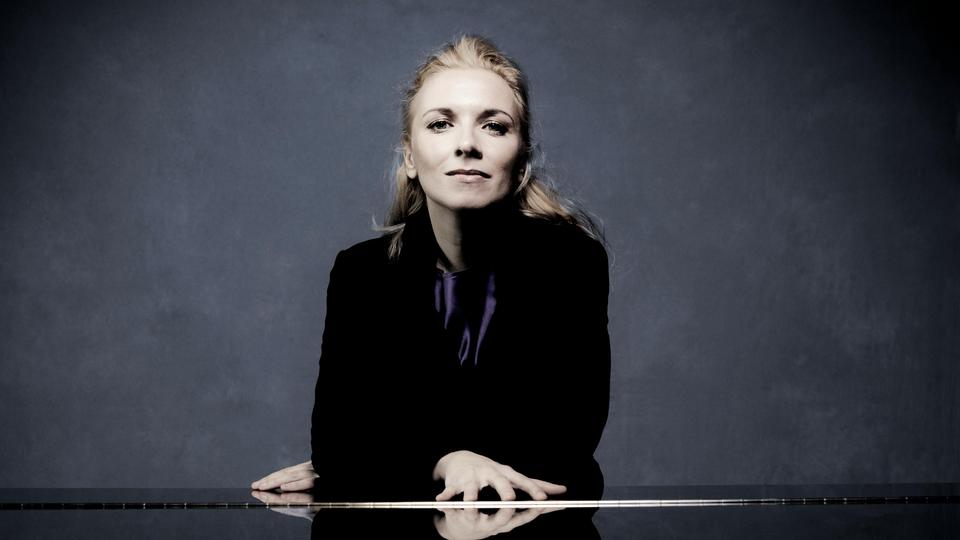
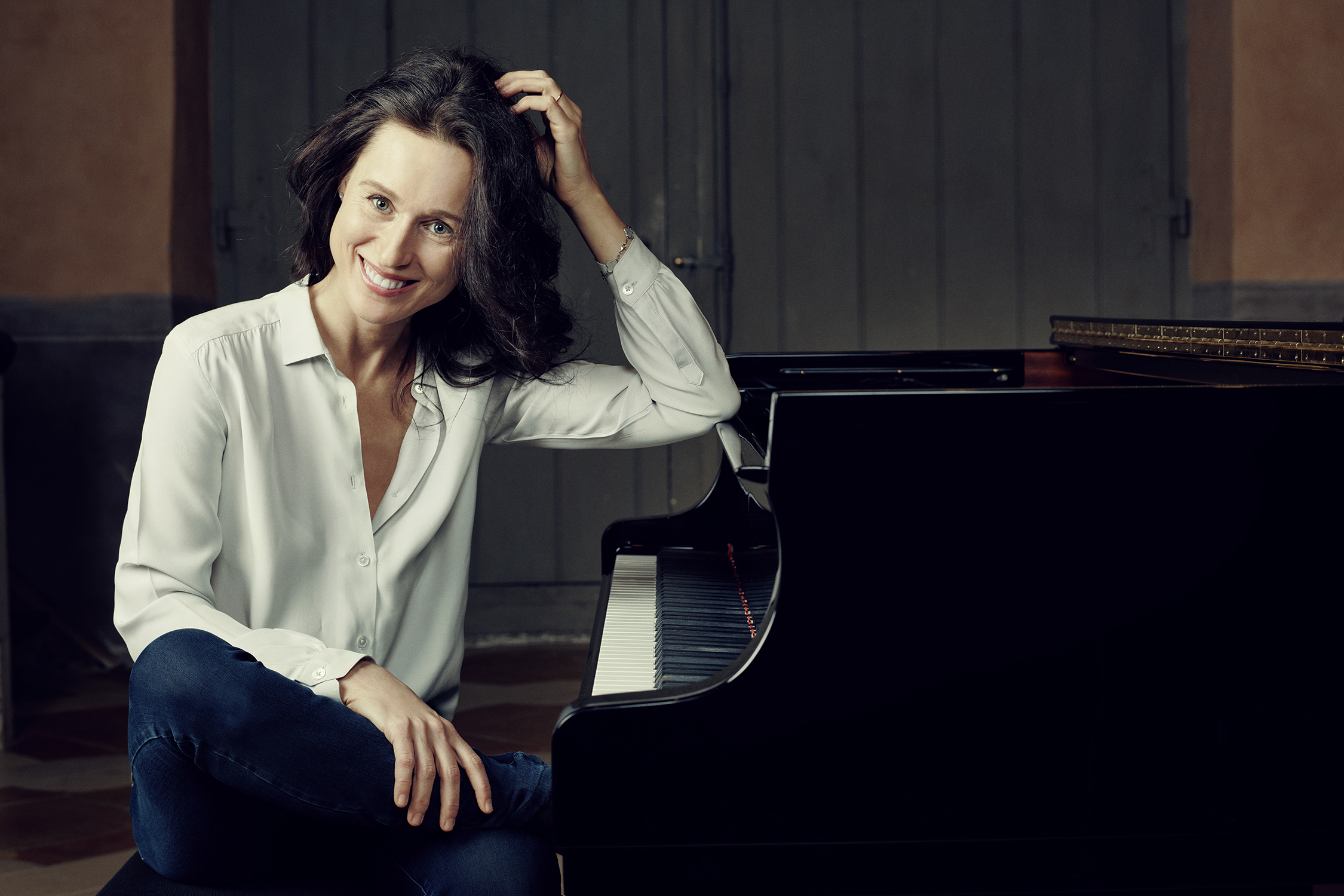
Tamara Stefanovich
I never sought out the “big name” international performers like Angela Hewitt, Ivo Pogorelich, Tamara Stefanovich or Marc-André Hamelin (or indeed prog rock legend Rick Wakeman!), but as the series grew in reputation, so I found these people were happy to be interviewed, either directly (usually by email, occasionally in person) or via their publicists and agents. The series has become not only a valuable compendium of surprising, insightful, honest, humorous and inspiring thoughts from a wide range of artists, but also a platform for young and lesser-known artists in particular to gain exposure in an industry which is highly competitive. Others use the series as a means to promote upcoming concerts, recordings or other events, while also leaving an enduring contribution to audience’s and others’ understanding of how the music industry “works” and what makes musicians tick. It has received praise from the likes of pianists Stephen Hough and Peter Donohoe, both of whom are featured in the series.
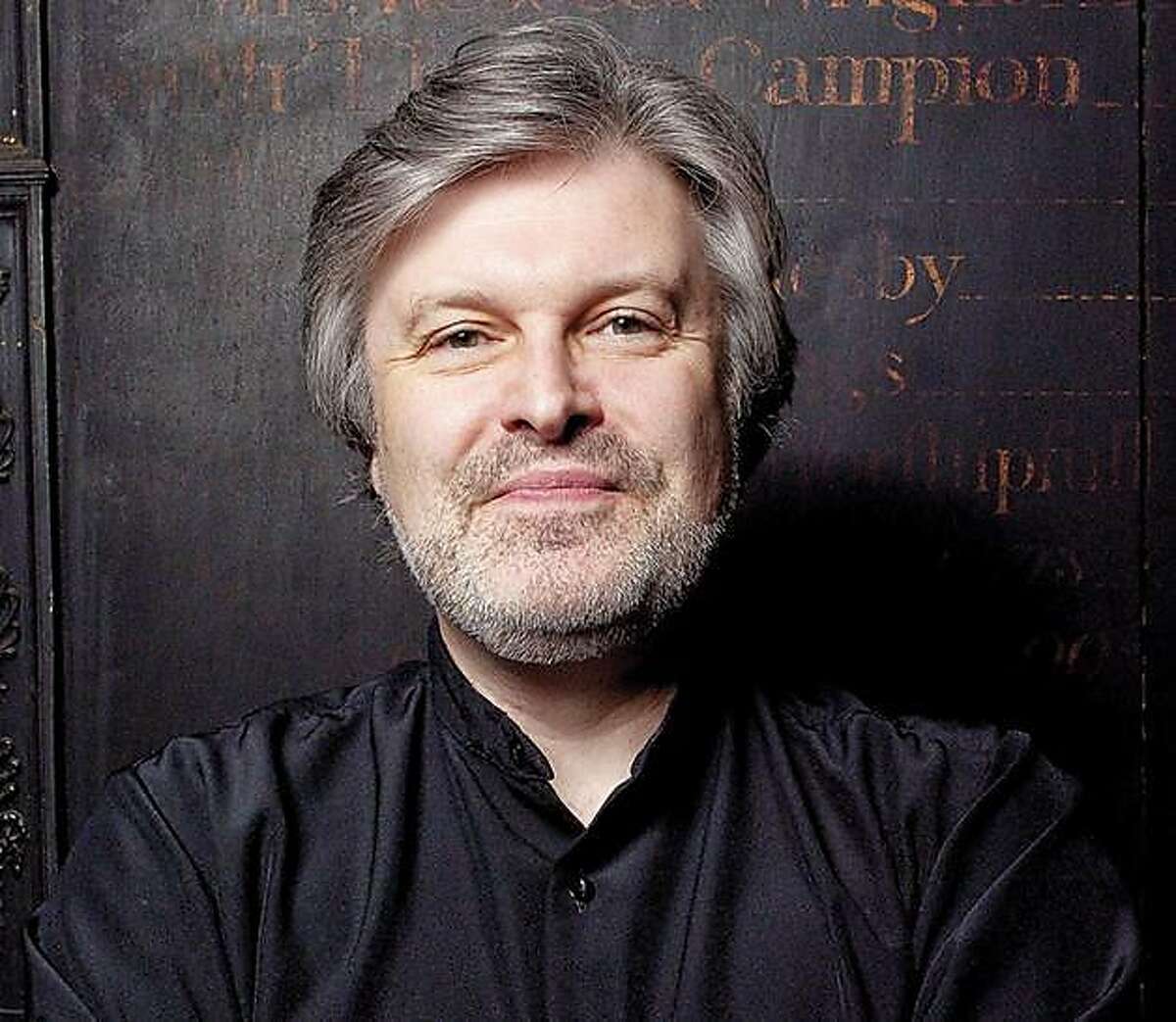
James MacMillan, composer & conductor
From strictly classical artists such as harpsichordist Mahan Esfahani or composer and conductor James MacMillan, two of the earliest interviewees, the series has broadened in its scope over the years and now includes musicians from the world of crossover classical music, folk and jazz. Yet regardless of genre, what these interviews often reveal is how one’s chosen instrument and its literature exert a strong attraction, seducing would-be professionals from a young age and continuing to bewitch and delight, frustrate and excite.
To date, the series features over 1600 interviews from some of our greatest living musicians to young artists poised on the cusp of a professional career. Every single interview has value, and I am immensely grateful to the many musicians who have freely offered their insights, reflections and advice in their interviews.
To all of you who have taken part in the Meet the Artist series to date, THANK YOU.
Frances Wilson, The Cross-Eyed Pianist, April 2022
Award-winning composer Thomas Hewitt Jones was one of the first people I interviewed for my Meet the Artist series, back in 2012. Here, he has updated his interview with further thoughts on his significant influences and inspirations, and why we should cherish and value the arts.
Thomas Hewitt Jones
Who or what are the most significant influences on your musical life and career as a composer?
Without a doubt, my paternal grandparents (both composers) were hugely significant influences on me, both musically and in terms of my career trajectory so far. My grandfather Tony was a great craftsman and studied with Nadia Boulanger; my granny Anita wrote educational music that is extremely accessible for young string players, yet is of consistently high quality. Both had studied harmony and composition techniques with the lovely man that was Bernard Rose while at Oxford (who told Tony in an early supervision “you’ll never get a girlfriend unless you cut off your beard”… anyway the next week Tony announced with a wry smile that he was engaged to Anita); however, over her lifetime Granny’s music did better commercially than Tony’s, who wrote entirely for himself (and often wrote choral music that was high quality, yet challenging to both listen to and perform). He once got offered a large amount of money to write music for a TV ad for a building company, and turned it down. I like to think that I have ended up with a mix of both approaches to composition, although I personally enjoy writing music for a wide audience which is nevertheless genuine, with…that ever-important word these days…integrity.
What have been the greatest challenges of your career so far?
I think that we live in a difficult time for composers who want to write music that has what I call ‘horizontal’ emotional narrative. There’s so much soundbitey ‘vertical’ contemporary classical music that is constructed like pop music, built around earworms and varying textures over a repetitive chord sequence rather than maintaining melodic, rhythmic and harmonic interest over time. Music can do so much more than just an earworm intended to get high numbers on Spotify.
On the other end of the artistic spectrum, I’ve got an amusing commercial music track called ‘Funny Song Cavendish’ that has gone mega-viral on TikTok (currently 2 billion streams, and countless celebrity videos as I write this). It is a lesser-discussed part of the music streaming arguments that are currently taking place, but newcomer music usage platforms such as TikTok present difficulties for composers and publishers because royalty streams are not always transparent until legislation is fought for in retrospect. I’ve actually recently been voted on the Ivors Academy Senate Committee for this year, and I’m going to be campaigning for this, and many other similar issues that will hopefully make issues of streaming rates more transparent for the composers of tomorrow. My overriding feeling is that composers in the year 2022 feel that they must write a certain type of music that will serve them well financially through the algorithms of streaming services, rather than being musically satisfying – rather than pushing artforms to a new and exciting place – which is, in my humble opinion, a sorry place to be.
What are the special challenges/pleasures of working on a commissioned piece?
It’s always an enjoyable challenge to write to a brief. As artists throughout time have invariably found, the difficult commissions are the ones where there is a clear cognitive dissonance during the creative process – if, for example, there are words a composer doesn’t particularly want to set, or a subject matter that doesn’t really interest him or her. The really great craftsmen can transcend these situations – but the arts at their best are an honest expression of humanity. A composer is invariably emotionally naked, and audiences aren’t stupid so they will realise pretty quickly if music isn’t authentic. I’ve been lucky not to have to deal with such situations, but in the arts there is nowhere to hide!
What are the special challenges/pleasures of working with particular musicians, singers, ensembles or orchestras?
I am incredibly lucky to have worked with some of the finest players around in recording sessions so far, many of whom have become friends as well as colleagues. The COVID lockdowns in 2019-21 were an interesting time because everyone was recording at home, but we managed to still make things work and release albums. As well as writing the music I very much enjoy the music production process as well, so these things came together during that time.
Of which works are you most proud?
I’m not sure that a composer can judge his or her work. Each piece of music you write is like a new offspring, but as soon as it has grown up and left home, it’s no longer yours. For this reason, I make a point of deleting files and throwing away copies of pieces of music that have had copyrights assigned and are published and out in the ether. If people email asking me for copies of pieces, I genuinely can’t help – and I occasionally hear things on the radio that I’ve forgotten I’ve written! As a writer, the thing you are working on is the only piece you are aware of.
How would you characterise your compositional language?
Approachable and mainstream, yet high quality and with integrity. That’s what I hope anyway, but it’s not for me to judge.
How do you work?
I have a lot of technology in my studio, and I love using it. That said, I believe that the key elements of music composition are exactly the same as they were in Bach’s time, that great melody and harmony (or interesting texture used in a way that is satisfying in narrative) are key to an emotional experience that makes great music.
It strikes me that today there are a lot of ‘noodlers’ who can’t look at a score and hear it in their head, and can’t compose away from their DAW [Digital Audio Workstation]. For me personally, that isn’t quite right. There is a place for every approach, and improvisation is incredibly important for all-round great musicianship. But for me, the first idea isn’t necessarily the best one, and while noodling might make for perfectly good underscore underneath an emotive speech in a film, it won’t break the mould as a standalone piece. (It might satisfy a mass radio streaming audience who are using music as background wallpaper though.) The creative process is full of contradictions so I always approach each project differently. As Stephen Sondheim so wisely said, ‘Content dictates form’.
As a musician, what is your definition of success?
A second performance. I think many of my peers would agree – if you ever meet a load of composers in a bar, they’ll either be chatting about the PRS, or about second performances.
What do you consider to be the most important ideas and concepts to impart to aspiring musicians?
This will sound facetious, but – like the human condition itself, the route into a musical career is also full of contradictions and there is honestly no set way to approach a career in music. I’m sure many would agree that it’s about hard work, luck, and being happy to be poor while you are building up a reputation in your early years. It took me 8 years after leaving university to make a successful living as a composer. Hopefully the horrendous swagger of entitlement of the generation above us (typified by the likes of certain members of our cabinet) will cause a reassessment of honesty, integrity and equal access for talented newcomers that will filter through to the arts as a whole. But that might be wishful thinking.
What do you feel needs to be done to grow classical music audiences?
I think that two ends of our industry have to meet in the middle, and everyone needs to be unjudgmental. I think ClassicFM has done such a huge amount for music appreciation in the general population, and I love its straight-to-the-point promotion of great melody. I also really enjoy listening to the Ligeti Piano Concerto. I think that great music needs to be given as much of an airing irrespective of commercial viability, background or composer’s gender.
Where would you like to be in 10 years’ time?
Last time I did this, I said I would like to be in a hut by the sea, with a wife and kids if I’m lucky. Well now I have a wife, Annalisa and two kids. Maybe next time I do this, I’ll have another kid, but hopefully not another wife!
What is your idea of perfect happiness?
Being with my wife and kids.
What is your most treasured possession?
My wife and kids.
What do you enjoy doing most?
Don’t ask.
What is your present state of mind?
I’ve got a huge amount of writing to do at the moment, on top of some mixing, so I’m extremely busy, but happy to be working on projects at the moment which are employing other musicians. Using live musicians is really important, and never more so than post-COVID. Software sampling is really great these days, but still nothing beats many musical brains working as one…
Thomas Hewitt Jones is an award-winning composer of contemporary classical and commercial music. Since winning the BBC Young Composer Competition in his teens, his music has been published by many of the major music publishers and is frequently heard in concert and on radio, TV and in the cinema.
Thomas’s diverse catalogue includes small instrumental, orchestral, choral and ballet works, and his large number of choral titles includes seasonal carols. ‘What Child is This?’ (OUP) has become a choral classic of recent years, garnering large numbers of performances each season. His music is regularly featured on Classic FM, including most recently ‘Christmas Party’ (his seasonal violin concerto, written and recorded for violinist Simon Hewitt Jones). In 2021, he released ‘Can you hear me?’, an acclaimed response to the COVID19 pandemic.
The Russian pianist Irina Lankova, based in Europe for the past 25 years, has kept her career moving despite the lockdowns and confinements of the covid pandemic. She performs at Carnegie Hall’s Weill Recital Hall in May 2022, and has other engagements to the Salle Cortot in Paris, the Concertgebouw in Amsterdam, “and many concerts in between”, as she said in our interview.
Her new album Elégie, a “very personal selection” of her favourite emotional pieces by Rachmaninov, Schubert and Bach, has been critically acclaimed in Europe where she has built her career as a soloist. Her playing is notable for her erudite talks in French, English or Russian before recitals, and her expressive interpretations. It is not unusual, she says, to leave members of the audience in tears. “I also cry, at least internally, when I play,” she says.
She has issued six other albums featuring Rachmaninov, Scriabin, Liszt, Schubert, Chopin and Bach.
In this YouTube clip she performs one of the selections from the album recorded during her recital at the Salle Gaveau, Paris
She reads voraciously and draws on the Russian masters – Dostoevsy, Bulgakov, Pasternak, Pushkin, Akhmatova and others “to understand the suffering and the spirituality of the characters”.
Her new album and her internet clips are illustrated with the work of the late photographer Peter Lindberg, who sought her out after absorbing the “strength and fragility” of her playing. She writes in her liner notes that “with all his kindness he was able to capture this duality and something more, invisible.”
Now raising a family while practicing long hours on her Steinway B, she balances her Russian origins with her European life, still playing with much of her Russian school training in evidence.
Ms. Lankova granted this telephone interview (below) from her home in Belgium and mine in Bordeaux covering her musical origins, what matters most to her continued development as a musician, and where she is headed next.
Here is an edited transcript of our conversation.
You come from an unusual family of mechanical engineers? Are your parents music-lovers?
My parents were not musicians, but they were what we call intelligentsia, people who read, listen and think. There was a piano at home, so it was the most natural thing that I started to go to a music school at the age of 7.
When did the piano first become important to you?
Almost immediately after I started. I was very shy, introverted, bored and sensitive, so music became all at once a friend, a shelter, a source of intellectual challenge and beauty.
Were you attracted to one of the big-name Russian pianists – Gilels, Richter Yudina, Kissin, Tatiana Nikolaeva, Lev Naumov? Did you or do you listen to their recordings? Do they influence you?
Sure, all of the above, but mostly Horowitz, Lipatti, Gould, Rubenstein, Rachmaninov and later Grigory Sokolov. Their recordings forged my musical taste, made the reference point for what is my commitment to music, the quality of work, the depth of the interpretations, and the attitude towards the performance – respect for the score, becoming a musician at the service of Music and not the opposite.
When were you first recognized as an exceptional talent?
Around 10 or 11 years old, I guess I was playing Liszt’s paraphrases and I wasn’t realizing that I was playing something difficult, so at some point my parents were told that I should consider this professional orientation. At the same time, I was also doing exceptionally well at school, so my parents were not inclined to let me choose music unless I entered the best college. At age of 13, I still didn’t know what I wanted to do. This persisted until the day I pushed the door open to the Gnessin Musical College and from that moment there was no second option for me, that’s where I wanted to belong.
How many years did you study at the Gnessin Musical College? Was it very demanding? A wonderful experience? Or was it hell on earth?
I studied at Gnessin from the age of 14 to 18. My four years there were absolutely wonderful. I studied with Irina Temchenko, who was wonderful to me, and who taught me so much. I’m still in touch with her on a regular basis. And I also was taking occasional lessons with other great Moscow professors which broadened my outlook. These included Olga Tchernjak, Lev Naoumov, Vladimir Tropp.
How did the move to Belgium at age 19 affect your playing? Was Russian training removed and suppressed from your musicality?
No, not at all, maybe just the opposite. In Brussels I studied at the Royal Conservatory with Russian professor Evgeny Mogilevsky (himself a pupil of Heinrich Neuhaus), so I totally continued with the Russian school. I also worked with Vladimir Viardo and Vladimir Ashkenazy. I was exposed to other influences by living in Europe and going to concerts. For example, Early Music that I loved ever since. But my taste for a specific piano sound was already formed by Russian teachers.
How would you describe the “Russian school”? Do you feel it in your bones? Is it more aggressive and expressive? Or is this a meaningless question?
I think it is real. The secret of Russian pianism is probably in the singing and depth of sound, in the rich scale of colours and nuances, and a special expressiveness. We really look for a large scale of colours, from pianissimo to fortissimo. Not being afraid of expressiveness. We avoid making it overly sugary.
In your stagecraft, you demonstrate an attractive grace, smooth movements of arms and hands, controlled emotions. Is this your natural demeanour or have you been trained for this image?
The movements come from the desire of a particular sound that I want to achieve: the singing sound, full and deep, without harshness, long melodic lines. So, whatever my arms and hands are doing in order to achieve that doesn’t matter to me.
Some pianists fill concert halls with their non-musical trickery – stunning gowns, exaggerated grimaces, bouncing on the piano bench… How have you resisted these temptations?
I need to be myself when I perform. I dress in the same style on stage and off stage — simple, classy and elegant. This means jeans and jackets off stage, long dresses and flared trousers on stage. I feel good in that way and I don’t need to eroticize my looks. And second, and the most important, I think classical music is not about the looks. It’s above all a spiritual and intellectual experience. The music of Bach, Beethoven, Rachmaninov aim to elevate the human being. When I perform, I’m very humble in front of these composers and the public. I’m not flirting with public, neither I try to impress. Instead I’m putting all my heart and soul into the performance, and I want to share the emotion.
Your playing in your new album “Elégie” creates moods by making the piano “work” for you. The listener feels your floating resonances, your sensitive pedalling, your tone, breathes with your pauses and silences.
I am not aware of that but if you hear it that way I am touched. Elégie is very personal selection of pieces that I love. That’s what I hope you sense while listening. Two thirds of that album is Rachmaninov, my favourite composer. I love his expressivity, the gravity, the drama, the spirit, the sincerity, the richness, the intelligence, the melodies, the harmonies, the unpredictability, the humour, the sadness — everything!
Evolution of your repertoire today will take you where – towards Baroque, Classic, Romantic, Contemporary?
Through the years, it seems that I have gone backward from Rachmaninov and Scriabin, to Chopin, then Schubert, then Bach. Today, I’m kind of turning back to Scriabin and Chopin in my next season’s program and CD. And I also want to perform Mozart concertos. If I feel the emotion, I will play it.
You are an avid reader of books. Who are your favourite Russian writers. How do you bring their poetry, philosophy or prose into your playing?
Totally, I read all the time in Russian, French and English. Right now I’m finishing the new book of my favourite Russian author Ludmila Ulitzkaya. Of course, I have read most of classics to Tolstoy, Dostoevsky, Bulgakov, Pushkin, Akhmatova. I think it’s important to read Russian literature to understand Russian music, to understand the suffering and the spirituality of the characters of Dostoevsky, Tolstoy and Bulgakov in order to feel the depth of Rachmaninov’s music. I also read a lot in French and English. For me, it’s important to go from contemporary writers to the classics and back.
You have written transcriptions and cadenzas. Do you foresee more ambitious composing objectives ?
No, I don’t think so. I’m not a composer. I’m very happy with my role as an interpreter. It’s an important role in music. We are sort of guardians of what the human race has been doing best — classical music.
You are not the same musician you were 30 years ago. As you reach maturity, how has your musical approach changed? Are you getting better and better?
I hope better and better. You develop as an individual and a human being as well as a musician, and your understanding of life and music become deeper and you have more to say in music when you are 40 than when you were 20, providing you continued to read, learn, play and grow.
How much practice do you need daily to maintain your technique? Do you spend all day at the keyboard?
No, no. If I did, my playing would be very boring. Four hours is ideal for me, but in real life is doesn’t work like that. Sometimes it’s one hour one day versus eight hours the next. The routine is very flexible. I practice on a Steinway B. It’s my friend. We know each other. I can rely on it. It responds to what I want to do.
How reliable is your musical memory? Is it changing as you become more mature? What is your technique for remembering? Do you visualize the score?
I think it’s not the memory that needs to be reliable, but the confidence. Few years ago, I had a very difficult period in my life that damaged my confidence and I had a blackout on stage. It was an important moment for me. It was very painful. After that experience, for a few years I was not able to play by heart. Even in recitals I played with the score before me. It took me a lot of effort, determination and help from various people to get the confidence back and to trust my memory again. Today, I play by heart again, I feel free and love it. But it’s not something I take for granted.
Where did the idea of delivering short music lectures at your recitals come from? Was it your personal concept or did a teacher guide you?
I started intuitively long ago with very short introductions to the pieces, with an idea to provide some key points. And gradually I felt more and more comfortable in talking on stage and I found it helped me to relax and to establish a connection with the public. And the feedback was very good. I made some videos that I called Piano Unveiled and before I realized it, this became my signature.
What has been the impact of the Covid pandemic on your art and your career?
Despite the negative side of cancellations and change of plans, there was a positive side for me. I have had more time to reflect on many things, on my repertoire, on things I wanted to prioritize in the future. I also made recordings, including the new Elégie album.
How do you see your career evolving over the next five or ten years ?
I want to continue establishing myself internationally, playing on a variety of beautiful stages everywhere – Japan, Germany, Austria, Scandinavia, North and South America.
Michael Johnson is a music critic and writer with a particular interest in piano.
He has worked as a reporter and editor in New York, Moscow, Paris and London over his journalism career. He covered European technology for Business Week for five years, and served nine years as chief editor of International Management magazine and was chief editor of the French technology weekly 01 Informatique. He also spent four years as Moscow correspondent of The Associated Press. He is a regular contributor to International Piano magazine, and is the author of five books.
Michael Johnson is based in Bordeaux, France. Besides English and French he is also fluent in Russian.
You can order Michael Johnson’s most recent book, in French and English, with drawings by Johnson: “Portraitures and caricatures: Conductors, Pianists, Composers”here.
This interview first appeared on the Facts and Arts website
Who or what inspired you to pursue a career in music?
Ultimately, I have to say that it was my mother who inspired me to pursue a career in music. It was her idea for my sister and I to start piano lessons, as a means of us staying out of trouble when she wasn’t around!
I doubt if we knew then that both my sister and I would go on to pursue various musical ventures throughout our youth and then end up as choir directors for our careers!
Who or what have been the most important influences on your musical life and career?
I would have to say that the biggest influences on my musical life and career would be the church that I grew up in, as well as the classical influences that I learned from my teachers of oboe and piano, and my music teachers at school.
What drew you to singing and conducting?
The Pentecostal church, in which I grew up, had a strong musical culture where singing accompanied everything. It would have been very hard not to have developed a love of music and singing in such an environment.
Whilst I loved the singing, I never wanted to be a performer intentionally. I think it is fair to say that I fell into it, alongside my sister and friends. We would gather around the piano at church, where my sister would play and the rest of us would stand her around singing in harmony. It all came about so naturally. After doing this for a while, we decided one day that we would perform at an upcoming concert, and that’s how I started singing.
Our particular denomination had choirs up and down the country – and they were very competitive! Soon, my singing extended to one of these choirs that was London wide. It wasn’t too long before I graduated from being a choir member, to helping out with the conducting, and finally to being a main conductor. My classical training meant that I had extra tools with which to teach and impart to others.
What are the special pleasures and challenges of conducting a gospel choir?
There is nothing like the sound of voices joined in singing to me. It’s a very spiritual experience in the broader sense of the word. The best choirs will always say that they are like family, and I believe that it is togetherness and connection that actually impacts the sound a choir makes.
What did it mean to you and the choir to perform at the wedding of Prince Harry and Meghan Markle?
It was a wonderful honour, and hugely exciting to be asked. It was completely unexpected, seemingly coming out of the blue. We knew that we would be setting a precedent, however, as there has been no other black Gospel choir that has sung at a royal wedding.
We didn’t understand at the time how much this would change things for us. It’s been a rollercoaster of a ride, thrilling, dizzying, and sometimes challenging. I don’t think we would have it any other way.
What have been the greatest challenges of your career so far?
I think surviving through the lockdown and the pandemic has been the greatest challenge for the choir, and for the whole industry. It hasn’t just been a matter of being locked away in your house; I believe that so much was also locked away – creativity, connection, and the list goes on. I must say, though, we had some wonderful opportunities during the lockdown which helped to keep us hopeful, and connected.
I think it’s always important to remember your ‘why,’ and this is what we try to do. As people of faith this is quite important and we back that up with prayer and times of worship.
What is your most memorable concert experience?
My most memorable concert experience has got to be the whole of our US Tour in 2019. It was incredible as a gospel choir to be singing in the land where gospel music first came into being. We were so well received, it was an amazing and unforgettable time.
As a musician, what is your definition of success?
Personally, success is always about the impact that one’s art has on other people. When I’m teaching my choirs I will often say to them that people should come to your performance one way and leave another. It’s about transformation that makes things better. I have been privileged to see the power of music do this so many times over my singing career. It’s always thrilling to me. This is what I call success.
What advice would you give to aspiring musicians?
I think it’s important to love what you’re doing, but more, love the people that you are doing it with and doing it for. It makes all the difference. Fame will only last for so long, but real love is solid and true. I know that this sounds like a real cliché, but I believe it.
What is your present state of mind?
Anticipatory! I am hopeful and looking forward to great things coming to pass!
The Kingdom Choir’s new EP, Together Again, featuring Jake Isaac, is out now
Karen Gibson MBE is a choir conductor and workshop leader with London’s The Kingdom Choir, which she founded. She led the Kingdom Choir’s gospel performance of “Stand by Me” at the wedding of Prince Harry and Meghan Markle in May 2018, after which she was described as “Britain’s godmother of gospel”.Gibson has previously provided backing vocals for acts such as Grace Kennedy and The Beautiful South. She has been involved with vocal groups and choirs since 1993, conducting gospel workshops all over the UK and Europe as well as Nigeria, Japan, Zimbabwe, Rwanda and the United States.She was appointed Member of the Order of the British Empire (MBE) in the 2020 Birthday Honours for services to music.
The Cross-Eyed Pianist is free to access and ad-free, and takes many hours every month to research, write, and maintain.
If you find joy and value in what I do, please consider making a donation to support the continuance of the site






 The Cross-Eyed Pianist