6ebf9f_6cd64976f4878aec1230604fb9fddc09

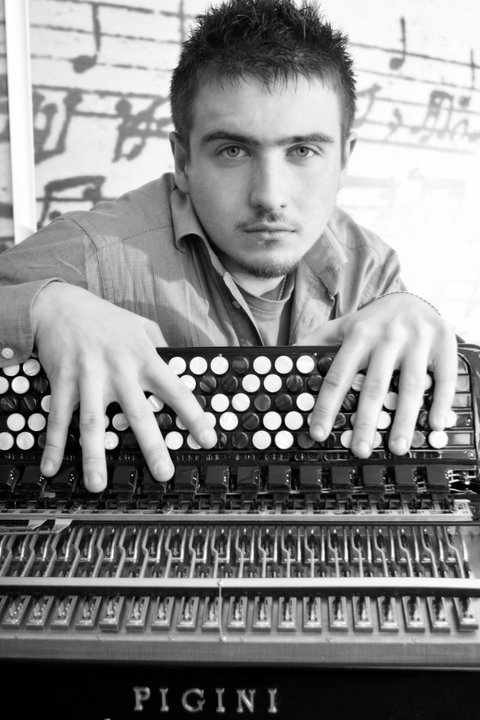
Who or what inspired you to take up the accordion and pursue a career in music?

I started playing the accordion quite late, when I was 11 and I began attending one of the national schools in Poland where I am from. I soon realised that this is what I wanted to do in my life. I was very lucky to have amazing teachers who were also great human beings so that helped me a lot in my decisions.

Who or what have been the most important influences on your musical life and career? 

I cannot name a single person in my musical career who has been the most important to me. I tend to take inspiration from everyone I have come across or worked with. My teacher Owen Murray from the Royal Academy of Music is one of them, for example, as someone who showed me the importance of sound quality.

What have been the greatest challenges of your career so far? 

I think that maintaining the artistic vision in every concert is the biggest challenge but I think this problem touches most artists.

Which performance/recordings are you most proud of?  

It is very hard to name them as every performance is special for me and I try to give my best in each of them. If I have to choose one it would have to be my performance of Concerto Classico by Mikolaj Majkusiak for accordion and symphony orchestra in Vienna or my first album “Encuentro” with my group, the Deco Ensemble.

Which particular works do you think you play best?

I love to play classical contemporary works for accordion and I think that is the most natural repertoire in classical music for accordion nowadays. But, I enjoy playing all different styles of music as it helps to develop your musical taste.

How do you make your repertoire choices from season to season? 

My choices are based on my new discoveries. I love to go for the pieces or transcriptions which are not very popular or completely new.

Do you have a favourite concert venue to perform in and why? 

I think the Wigmore Hall is one of my favourite venues because of the acoustics. Also Studio S1 of Polish Radio is outstanding. I am also really looking forward to playing at the Wallace Collection for the first time as part of City Music Foundation’s Summer Residency on 28th July.

Favourite pieces to perform? Listen to? 

Works by Gubaidulina are my favourite to perform and Chopin to listen to.

Playing Chopin on the accordion would be one of the biggest mistakes possible.

Who are your favourite musicians?

My favourite musicians are the ones who I work with as I am often very lucky to meet people who are very talented but, more importantly, are nice people to work with. I think is really important. From the musical legends my favourites are Vladimir Horowitz, the great jazz pianist and composer Krzysztof Komeda, and Paco de Lucia.

What is your most memorable concert experience? 

I remember playing for one of the political institutions in Brussels during an exhibition of pictures on the martology of Eastern Europe. I did not want to spoil the institution but the organisers asked me to play one of pieces in my repertoire called The Gulag Archipelago based on Solzhenitsyn’s book. Unfortunately, straight after the performance, the audience were supposed to move to the area where the post event reception was meant to take place. However, most of the audience went there after I started playing. I thought that it was a very bad concert experience until one lady came to my dressing room crying and explaining that her family went through the Gulag prisons and how touched she was.
We went for coffee together and she told me a lot of incredible stories from her life which were absolutely inspiring. Those kind of moments compensate for all the bad experiences in a musician’s life.

What do you consider to be the most important ideas and concepts to impart to aspiring musicians? 

I would have to say it is the concept of musical journey in the concert which the musician can reflect on.

What is your idea of perfect happiness?

The word “perfect” should be completely erased from any language as there is no such thing in real life. For me happiness should be balanced between what you do, who you do it with and how you do it. Having a lovely family, doing a lot of concerts with my artistic vision and being able to enjoy life is as close to perfect as it can get in my opinion. Finding this balance in real life situation is the hardest bit.

Accordionist Bartosz Glowacki performs works by Scarlatti, Arvo Pärt, Trojan, Makkonen, Semionov and Piazzolla on Thursday 28th July as part of City Music Foundation’s Summer Residency at the Wallace Collection 25-29th July. More details here

City Music Foundation’s mission is to turn exceptional musical talent into professional success by equipping outstanding musicians at the outset of their careers with the tools, skills, experience and networks they need to pursue music as a viable and rewarding livelihood. 

www.glowackiaccordion.com


rt2020130925_fr_s15_0003Who or what inspired you to take up the piano nd pursue a career in music? 

I don’t recall myself the beginnings of my musical studies, but it was my parents who made the decision. They loved Classical Piano, and specifically my father, who was exposed to the rigors of Classical Piano training through his sister. She had studied seriously in NY, and turned to teaching because of a hand injury.

Playing piano was part of the process of growing up and getting education – which also included school, sports, cub scouts, etc.

The idea of pursuing a career in piano evolved steadily and slowly, but unconsciously, on my part and on the part of my parents. It wasn’t until I was in my mid-20’s that I consciously made that decision. By then, of course, I had already attended two of the greatest music schools in the world (Indiana University and Juilliard), played around the world, made recordings and had management! I realized that I could pursue a number of different careers, but that, given my training, playing the piano was the most interesting and rewarding path. From that point, I doubled down on my commitments and focus. And it hasn’t stopped since!

Who or what were the most important influences on your musical life and career? 

Having Classical music playing 24/7 in my parents’ house since before I was born made a huge difference. I still play some of those recordings virtually in my head. My brother (a 1st violinist in the Chicago Symphony) and I lived within music, not realizing how unusual it was to have that kind of upbringing. 

Each of my teachers brought me an essential element at the right time. I think about their teaching regularly as I continue down my path.

In terms of icons, I was most influenced by 3 pianists: Horowitz, who taught me what the piano can do, through his amazing recordings. Richter, who taught me how to position yourself relative to the music when performing. And Glenn Gould, who taught me why one should explore music and performance.

Later, when I was in Paris, I discovered Alfred Cortot, who embodies all of that. His words about music (and I feel grateful to have learned French, if only to be able to understand Cortot in his mother tongue) are able to describe music in a way that I have not found anywhere else.

What have been the greatest challenges of your career so far? 

Balancing career building with other aspects of life – family, health, friends, other interests. I often leave piano playing to the end, which is both a plus and a minus. A Minus because sometimes I don’t spend the time I truly should, when I truly should, focusing on career development, piano development, etc. It’s a Plus because, coming at the end of a long to do list, my playing really becomes a receptacle for all of the thoughts and ideas that the other activities inspired. It’s where I’ve always processed all of my thoughts and feelings, and I think it has become richer for that.

Which performance/recordings are you most proud of?  

That’s like – “Which of your children are you most proud of.”!! I can say something about every album that has come out!

Transcriptions: part of the leading edge of the acceptance of Transcriptions in the repertoire.

Complete Prokofiev Sonatas: Wow, I actually recorded this!

Mendelssohn Sonatas: So happy this is one of my best-selling albums – the music is amazing, confident, historically significant AND people recognized this.

Rossini Sins of Old Age: I learned how to produce an album (under dire circumstances!) through this fun, virtuosic recording.

Chopin Etudes Opus 10 and Rondeaux: A complete change in my approach to Chopin, plus doing the 2-piano recording, playing with technology!

Liszt Annees de Pelerinage: My first big concert in Paris was playing this cycle. So moving to get to put it down for posterity.

Schubert/Liszt Schwanengesang: Intermingling one of the greatest achievements of Liszt with some of the most important personal relationships in my life.

Reflections – Ravel, Decaux, Schoenberg: I consider this my greatest contribution to the part of programming – discovering Decaux and using those pieces to bridge the chasm between impressionism and expressionism.

Chopin Complete Mazurkas: Chopin possibly used every iteration of ¾ time available somewhere in this genre. I wanted to create a CD that could be compelling but also play in the background, and I think I succeeded.

Chopin Etudes Opus 25 and late works: Making a link between works of Chopin that have not been associated before. And being able to record the great late Chopin works.

Brahms Violin Sonatas (with Pierre Amoyal): Brahms Sonatas, what more need I say?

Grieg Violin Sonatas (with Pierre Amoyal): beautiful, unrecognized pieces. Pierre and I both entered into a world of discovery with this recording and bonded in a wonderful way.

Prokofiev Romeo and Juliet: My favorite recording of my own to listen to. The rhythms and melodies are endlessly fascinating and compelling, no matter how many times I listen.

Prokofiev Volume 5, early works: Fugitive Visions and Sarcasms – love the contrast between these two early works.

Prokofiev Volume 6: middle works: Obscure sets that are never played, but which illuminate an important time of Prokofiev’s life. It’s impossible to understand his music without knowing these works.

Prokofiev Volume 7: children theme: I have always loved music for/about children, and Prokofiev has a special connection to this theme as well.

Prokofiev Volume 8: a kind of wrap-up of the complete set, but includes the Choses en soi, which exemplify the turmoil within Prokofiev that eventually led him to return to the Soviet Union.

Prokofiev Volume 9: transcriptions: Includes my complete Lt Kije Suite, as well as the Divertissement – never played and beautifully complex.

Prokofiev Volume 10: Violin Sonatas: an important annex to the three “war sonatas” that tell an important part of the Prokofiev life journey in music.

Beethoven Symphony V – My first independently produced album, working with the great Judy Sherman. I felt great putting this together from A to Z.

Saint-Saens Carnival of the Animals – so wonderfully fun working with David Gonzalez, story-teller.

Distant Voices – truly a revolutionary recording, using Disklavier technology to be able to produce a great audio CD AND an incredible video DVD and DisklavierTV show. This is the future!

Hymns & Dervishes: A successful Kickstarter project, this recording has been maturing in my mind for over 15 years, and will finally be out in 2016. The fundraising and recording processes have brought incredible depth and richness to the project, and to me in general.

Which particular works do you think you perform best? 

I love Prokofiev, and feel I’ve aptly demonstrated how diverse and richly nuanced his music actually is, compared to the cliches that surround him and his work. In particular, perhaps the Toccata, Fugitive Visions, Sixth Sonata and Seventh Sonatas have most benefited from that. I would love to present the 4th Concerto more often. It’s not just a work for left-handed or Russian pianists!

I love Mendelssohn’s Opus 6 Sonata, and no one plays it, for some reason.

I love transcriptions, and hope I bring a special attention and passion for them in concert. I’m especially proud of my Lt Kije transcriptions.

How do you make your repertoire choices from season to season?

I have some recurring themes and ideas – Prokofiev, Classical Smackdown, French impressionists, Transcriptions, unusual collaborations. I have the luxury of following my sense of where I am and where the world is. From the time I decided to forgo the competition circuit, the freedom of exploring and presenting repertoire has been wonderfully inspiring. That inspiration has continued to this day (almost 30 years). My choices almost always come from taking the perspective of the open but untrained listener, willing to take a chance with a new musical experience. This has a huge influence on my choice of repertoire and the structure of the programs that I put together.

Do you have a favourite concert venue to perform in and why? 

My nostalgic favorite is the Salle Cortot, in the Ecole Normale of Paris 17th. I played there the first time in Paris, and have since played there over 20 times. It is a beautiful wooden hall that seats 440, designed by the same architect who went on to build the Theatre des Champs Elysées.

Favourite pieces to perform? Listen to? 

I love to listen to jazz and Middle Eastern music. Things with a strong rhythmic element and an improvisational aspect. I relate to rhythm deeply, and I am terrible at improvising, so that is kind of aspirational to me! It puts together my best and my worst qualities in playing!

Who are your favourite musicians? 

My favorite musicians today? I think that I’m not that inspired by musicians in general. I feel much more like a conduit of other kinds of perspectives and thinking, and channeling them into my own music-making as a communication tool. I’m not a big concert-goer, but when I do go, it’s usually for friends, and I’m totally connected with them and the music-making experience.

If I had to name names, I would include Valery Gergiev.

What is your most memorable concert experience?

One striking memory is my first exposure to Horowitz at Carnegie Hall. It was the premier screening of “The Last Romantic,” a concert filmed in his NY apartment, and a prelude to (one of) his return to the stage the following year. I remember the visual experience resonating with the sonic experience to make something so compelling, so hallucinating. It was my first time in Carnegie Hall. Everything came together that evening.

Soon after, I bought the soundtrack, and realized that, without the visual element, the performance was actually quite lacking in some ways. It was a ground-breaking discovery on my part

What do you consider to be the most important ideas and concepts to impart to aspiring musicians? 

Be sure of your vision first, and then be open to others’ ideas. Bring your vision to others, but be ready to interact with their ideas. Not having your own values and vision means you have no convictions, an unclear profile. Not being open others’ ideas means you are just barrelling through life and not relevant.

Where would you like to be in 10 years’ time? 

Moving around the world, doing residencies that allow building musical relationships and programs with roots.

What is your idea of perfect happiness? 

Being with my wife with a group of friends.

What is your most treasured possession? 

None. I could see giving up anything as long as I’m healthy.

What do you enjoy doing most? 

Reading and thinking.

What is your present state of mind?

Curious, fascinated.

Frederic Chiu’s intriguing piano-playing and teaching springs from a diverse set of experiences and interests: his Asian/American/European background, his musical training, and an early and ongoing exploration of artificial intelligence and human psychology, especially the body-mind-heart connection.

Find out more here


r8a0839-2-web
(photo: Nikolaj Lund)
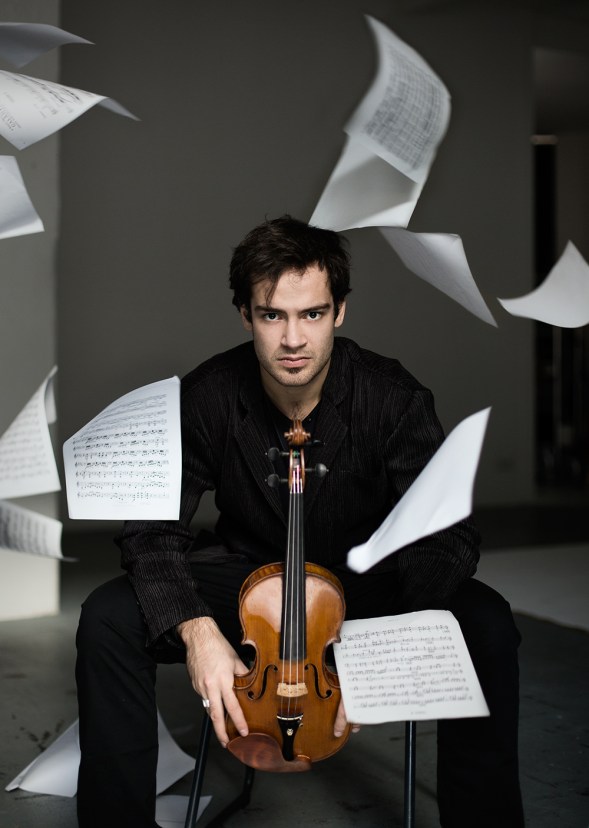
Who or what inspired you to take up violin and pursue a career in music?

This was an easy choice, everybody in my family was playing the violin. It was almost a “Mother language”. I HAD to talk this language if I wanted to be understood, or understand what was around.

Who or what have been the most important influences on your musical life and career?

In my early life, as I said, my parents and my family, but then, later on, the absolute love of the music and the need to create sounds!

What have been the greatest challenges of your career so far?

All the competitions that I have done were a great challenge till today. But I understand now, that the biggest challenge ever happens each time I come to play a concert for an audience who expects to hear something special, something they will remember; this is  very challenging!

Which performance/recordings are you most proud of?

I unfortunately don’t remember so well which concerts went well, but I remember very well the bad ones. I always try to recall what actually made an experience not so good, so that I know what to do for the next time. The greatest concert was probably a recital, where I felt the biggest connection with my partner. That was incredible.

Which particular works do you think you play best?

Probably the ones that I believe in the most. Meaning, when I study the piece in its context and the main idea, touches me. When the music, or its purpose doesn’t really touch me, I am afraid I can’t be sure of giving my best in it…

How do you make your repertoire choices from season to season?

I of course look into the big repertoire pieces that I haven’t played yet, and then try to combine them with maybe lesser-known pieces that fit well with the mood, character, and again touch me enough to be able to transmit it to the audience.

I always try to keep something that I’ve already played, so that not always everything is new!

Do you have a favourite concert venue to perform in and why?

I’ve discovered a lot of dry, beautiful and great sounding concert venues! Every concert hall for me has a very personal history: I simply try to remember every concert, and all the circumstances of each hall where I performed.

I enjoyed very much the Philharmonie in Cologne, because of the shape of the hall and its unbelievable acoustic.

Favourite pieces to perform? Listen to?

Well, probably the one I love to play the most is J S Bach, no surprises there. Simply because I always find new harmonies to underline, or listen to. The writing is perfect, so evident and clear, one always discovers more and more complexity in his music.

I would say my problem is that I sometimes want to show my “personal discoveries” too much, and then it becomes a personal fight:

What I want to show as personal intention / what needs to be kept natural and be played in a more “hidden” way. For this reason, I also love playing Ysaye’s music, where a lot is happening and there is rather more room for personal interpretation.

Who are your favourite musicians?

From the ones I have been listening to lately: L. Kavakos, C. Eschenbach, M. Goerne, V. Gergiev, M. Pressler, S. Edelman…

What do you consider to be the most important ideas and concepts to impart to aspiring musicians?

I believe that today it is becoming more and more difficult to hold on to the principles of “great culture”.  We are the people who have the chance to be part of it, we have a great but very difficult mission – we have to keep it alive. I really think that a great part of our humanity is kept in the Art, as much in the “understanding” of it, as in its “producing”. This is why new and young artists have to hold on to something that maybe doesn’t bring that much success, or money, or fame. They have to bring something much more powerful (and not to themselves) – feelings, happiness, support, unity, and thousands of images.

All those elements are the true benefits of the music that we are sharing.

You’ve just been announced as the new London Music Masters Award Holder, tell us more about this?

It is a very new episode of my life starting, and I am really looking forward to the fresh new contact with Great Britain! Passionate people, passionate musicians!

I will be given the opportunity to introduce my concepts of instrumental playing and music making to the growing new generation of people/audiences in schools, for example. I really hope that my English will be good enough for the people to understand some of my twisted notions!

What are you most looking forward to about working with London Music Masters?

Meeting different people, and learning from them!

Where would you like to be in 10 years‘ time?

In a place where there would be unlimited space for love, friendship, and where I could be in a good enough shape to make music on a very high level

What is your idea of perfect happiness?

To be surrounded by truly honest and loving people.

What is your most treasured possession

Hum… Material possession..? Nothing… (Yet?)

What is your present state of mind?

In a very good mood.

Marc Bouchkov was born 1991 into a family of musicians. He received his first lessons at the age of five from his grandfather, Mattis Vaitsner. His first public appearance was just one year later. In 2001, he joined Claire Bernard’s studio at the Lyon Conservatoire National Supérieur de Musique; he transferred to the Paris Conservatoire National Supérieur de Musique (CNSM) in 2007. There, he began studies with Boris Garlitzky, who has been his mentor ever since, and offers him invaluable guidance for honing his craft. The following years saw participation in master classes and invitations to festivals in Moulin d‘Ande, Troyes, and Bordeaux (France), Viterbo (Italy) and New Hampshire (USA).

Marc Bouchkov is the recent recipient of a London Music Masters award

Marc Bouchkov’s website

rachel_podger_photo
(Photo: Jonas Sacks)

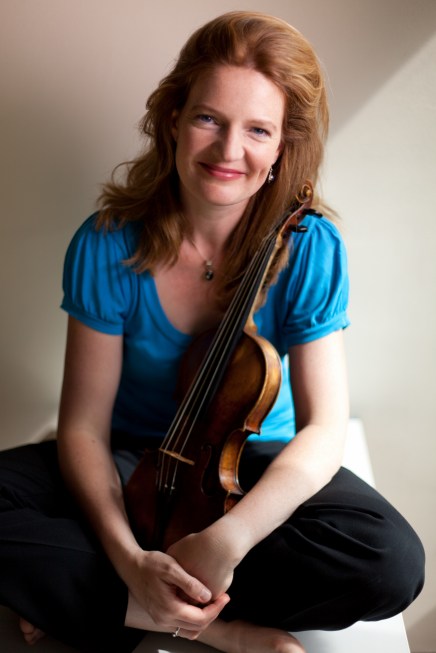
Who or what inspired you to take up the violin, and pursue a career in music?

Playing or hearing music around me was such a normal occurrence when I was growing up. From an early age I was involved in many concerts a year, whether playing or singing, that I didn’t need to choose whether to do music; the choice was more about which directions within music to take, and also where to study after school in Germany.

Who or what have been the most important influences on your musical life and career?

Peter Werner, a Eurythmy teacher and conductor at the Steiner school I went to in Kassel, Germany was an important influence on me. He had enormously creative energy which sometimes became feverish. His rehearsal technique was engaging and involved every player in the (big) school orchestra, and he taught me how to listen. I remember hearing Gidon Kremer and Reinhard Goebel in Kassel and being stuck by their different sound worlds and charismata.  And then of course my violin teacher at the Guildhall School of Music, David Takeno, who was much more than a violin teacher, but connoisseur of all musical styles with an uncanny musical intelligence, knowledge and generosity in his teaching.

What have been the greatest challenges of your career so far?

Apart from playing concerts when I’m jetlagged or ill (!), the hardest thing for me was playing Bach solo recitals after I had my first baby, (15 years ago) when I could hear her screaming backstage because the milk had run out, and all my instincts were telling me to run to her – but I was in the middle of the C major Fugue!!

Which performance/recordings are you most proud of?

Tricky one, as there are always things you want to play again when you come off the stage… But I quite like the Biber Passacaglia on my disc the ‘Guardian Angel’ and also the Bach A minor Concerto with my group Brecon Baroque on the Bach Violin concerto disc (both Channel Classics).

Which particular works do you think you play best?

That’s another tricky one to answer… I commit myself entirely to whatever it is I’m playing, and I adore most of what’s on the musical menu. But Bach, Mozart and Vivaldi stand out for me…

How do you make your repertoire choices from season to season?

Repertoire choices are often decided by the theme of a festival, or the preferences of a promoter, recording plans and the recording back catalogue, so in the end there actually isn’t that much choice left! Who knows, if I had a completely new season to choose without any strings attached (as it were!) I might come up with Schubert and Brahms!

Do you have a favourite concert venue to perform in and why?

There are a few concert halls I’ve played in that seem to make you play like a dream…one of them is the Symphony Hall in Boston, another the Suntory Hall in Tokyo and then I absolutely adore playing at the Wigmore Hall in London.

Favourite pieces to perform? Listen to?

I adore listening to styles I don’t get to play like polyphony, music from the Renaissance, symphonic repertoire, Jazz…I get to listen to some pop too since I have teenage daughters…I always wake up to ‘Breakfast’ on  BBC Radio 3 and look forward to their ‘Bach before 7’ slot, but am continually intrigued by all I get to hear.

Who are your favourite musicians?

Creative ones! I’ve been lucky to play/work with many of them…Trevor Pinnock, Gary Cooper, Pamela Thorby, Richard Egarr, Phoebe Carrai, Elizabeth Blumenstock, Pavlo Beznosiuk, Jane Rogers, Alison McGillivray, Marcin Swiatkiewicz, Robert Hollingworth, Julian Podger (yes, my brother!), Alfredo Bernadini and many more…and then there’s the amazing Kris Bezuidenhout!

What is your most memorable concert experience?

There are many amazing moments I’ve been lucky to be part of, and often while performing with a larger group of musicians when there is a sense of unity within the music making.

Once while playing the Biber Mystery Sonatas in concert I was struck by the physicality in the ‘Crucifixion’ Sonata and got so involved in that aspect that I didn’t hear the applause afterwards and just stood there for a while (or so I’m told!) looking like I’d been the one crucified…

Another time playing the ‘Erbarme Dich ‘ aria from the Matthew Passion with Trevor Pinnock and The English Concert when I was pregnant and my unborn baby was utterly still while I stood up alongside the alto and played that heartfelt piece about mercy. Afterwards when I sat down the baby kicked and danced to the rest of the piece!

What do you consider to be the most important ideas and concepts to impart to aspiring musicians?

Practise intelligently, i.e. use your time well and efficiently and set yourself goals, even if it’s within a ten minute time frame, or even within one phrase. The relationship between musical intention and execution is essential, and it’s good to ask yourself how you’ll best get from one to the other. Aimless practice might help some mechanical workings, but is less effective. If your musical intention is unclear or confused, read the score in your head, sing it or parts of it, imagine how it might sound, play one part and sing the other, read it like a book on the train! Self-belief is utterly important, but so is an acute self-awareness. Lastly: try to keep the big picture in view!

Where would you like to be in 10 years’ time?

Happy, healthy, loving life and playing music.

What is your idea of perfect happiness?

Happiness is fleeting – I’d like to make sure I never miss one of those uplifting moments that seem to come out of nowhere and are a complete gift.

What is your most treasured possession?

My violin.

What do you enjoy doing most?

Looking at the sunset over the Brecon Beacons sipping a glass of white wine with my partner.

What is your present state of mind?

Looking forward to getting home! (Am writing this on a plane after a concert with EUBO in Regensburg!)


Over the last two decades Rachel Podger has established herself as a leading interpreter of the Baroque and Classical periods and has recently been described as “the queen of the baroque violin” (Sunday Times). In October 2015 Rachel was the first woman to be awarded the prestigious Royal Academy of Music/Kohn Foundation Bach Prize. She was educated in Germany and in England at the Guildhall School of Music and Drama, where she studied with David Takeno and Micaela Comberti.

Rachel Podger’s website