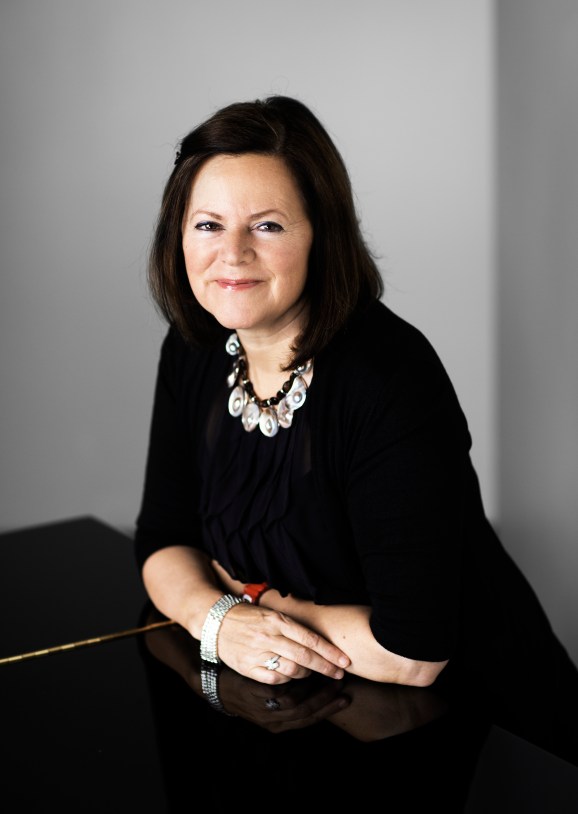
ayako-13

Who or what inspired you to take up the piano and pursue a career in music? 

I hardly remember when I first started to play the piano. I remember that I used to have a red toy piano. My mom bought it when my older sister was born. I grew up playing this toy piano, played some songs which I just learnt by singing. When my grandmother saw me she decided to buy a piano for me.

My family is pretty musical family. My father plays the guitar and sings opera, my mother used to play the Koto (japanese traditional instrument), and my sister played the piano, the clarinet and a bit of the violin. For me it is pretty normal to play some instruments. But I was passionate about the  piano and loved the piano’s sound. But also I played percussion in the kids orchestra and played little bit of the violin.

I have always felt passionate about the beauty of piano sound and the piano pieces composed by others. I tried hard and explored how to get better, how to play that sound, how to express music and I enjoyed those processes…  I love it and I feel restless if I don’t;  so I thought I might as well make it my profession.

Who or what were the most important influences on your musical life and career? 

Alicia de Larrocha definitely comes on top – I used to listen to her Granados/Goyescas and Albeniz/Iberia all the time before studying with her. I became a huge fan and fought for the privilege of becoming her pupil in Barcelona. I succeeded!  I also owe a lot to Carmen Bravo Mompou  – a great pianist and the widow of Frederic Mompou – one of my favourite composers, and Carlota Garriga – also a great pianist and the widow of one of renown conductors, Igor Markevich.

When composing I think I am between Japanese and some mixture of those countries I  was stimulated by  – I intuitively belong to Japanese culture because I grew up there but at the same time I absorbed lots of mixed cultures. I like Japanese composers, such as Toru Takemitsu, Ryuichi Sakamoto, Joe Hisaishi etc. and the most of classical music composers like Debussy, Mompou, Chopin, Granados lots more..

What have been the greatest challenges of your career so far? 

To find my own way and stick to it.  Combining ambitious classical performance with being a composer is not always easy.  I try hard at my composing and my performing leveraging each other.

Which performance/recordings are you most proud of? 

Finishing my ‘Brightwater’ CD gave me a great sense of achievement – I worked on it really hard for more than a year with the help of a number of people, including OBC concertmaster Christian Chivu and the Symphony Orchestra of the Gran Teatre del Liceu the 1st soloist-cellist Cristoforo Pestalozzi.  I should say, as well, that felt really emotional when I played one of my pieces in a full Barcelona’s Palau de la Música in the context of a charity event to raise funds to support people affected by Japan’s big earthquake.

Which particular works do you think you play best? 

Probably French and Spanish classical.  I also get carried away with romanticism in music such as Chopin, Schumann, Mendelssohn lots more… And my own pieces!

How do you make your repertoire choices from season to season? 

I think carefully about how the pieces tie with one another.  I think about the concert as a whole, trying to give it different moments, different emotions and would usually challenge myself to leverage on my cross-cultural musical background to choose the pieces.

Do you have a favourite concert venue to perform in and why? 

I might say there is a venue in each city of each country. I like those places because they are fruits of cultural heritage from there. I especially like Palau de la Música in Barcelona, beautiful architecture, the size of the place and the acoustics are perfect.

Favourite pieces to perform? Listen to? 

Beyond classical, I listen to lots of electronic and ambient music – I like Anohni (Antony Hegarty), Tori Amos, Sigur Ros, etc.

Who are your favourite musicians? 

I would go for Martha Argerich, Maria Joao Pires, Daniel Barenboim, Mitsuko Uchida, Joshua Bell, Ryuichi Sakamoto.

What is your most memorable concert experience? 

Playing Schumann Piano Concert in Bulgaria. I hardly communicated with most of orchestra members because of the language barrier, but on with the conductor, Sir Palikalov who is great musician and speaks English. But through music, we communicated very well and we understood each other. That process was a wonderful experience.

What do you consider to be the most important ideas and concepts to impart to aspiring musicians? 

I guess be ambitious with the quality of the product and be yourself. Never give up making steps ahead.

Where would you like to be in 10 years’ time?  

I would like to have made an impact in the musical circles – big or small – but an impact which I feel proud of.

What is your most treasured possession?  

My Steinway…….

Ayako Fujiki’s new album ‘Brightwater’, featuring her own original pieces, was released on 30th September in UK. Ayako composes her own music, incorporating classical and electronic music techniques.

Born in Tokyo, Ayako Fujiki started playing the piano as a young child and performed her first concert at age seven, playing Beethoven and Chopin.  She has performed in Japan, Spain, UK, Austria, Switzerland, Italy, Colombia and Bulgaria.
ayakofujiki.com

Who or what inspired you to take up piano, and pursue a career in music?

I grew up in a family of musicians. Both my parents are pianists and repetiteurs in different Moscow opera houses and so I was always surrounded by music.  Many of my earliest memories are of the excitement of seeing my parents practicing and performing.  Music came to me very naturally. I was very lucky to have Ada Traub as my first piano teacher.  She was an extraordinary teacher and human being with a special ability to communicate with children and give them crucial skills and a love for music.  I then went on to Gnessin Music School and from there to the Jerusalem Academy and the Royal College of Music. It never really occurred to me to do anything else with my life – I am delighted to say that I still don’t regret it!

Who or what have been the most important influences on your musical life and career?

Each of my four teachers have been hugely significant, each in a different way.  I have already mentioned Ada Traub. My second teacher was Anna Kantor, much more formidable – in fact slightly terrifying to her students.  She had an amazing ear for detail, was very hard-working and a perfectionist.

Through her I met my fellow student Evgeny Kissin, one of the world’s most accomplished pianists. I was present at many of his lessons and went on a couple of tours with him.  His extraordinary talent made a massive impression on me. He inspired me to be a performer

In Jerusalem I was taught by Irina Berkovich. From her I learned much about analysis and structure. Irina Zaritskaya’s approach (at the Royal College in London) focussed on sound and colour. I had a very special bond with her; she was an amazingly caring teacher and herself a wonderful pianist with a sound from the golden age of piano greats.

What have been the greatest challenges of your career so far?

These days musicians lives are crazy.  In order to be “on the scene” and in demand as a performer we often have to take up almost any invitations that come our way which often means learning a huge amount of solo and chamber music repertoire at very short notice.  I find that the most challenging: not only to learn new repertoire but to fill it with meaning and understanding in a very short time.  It can be thrilling but also daunting.  You have to live off adrenaline.  It must be very difficult for musicians who don’t learn fast how to survive in today’s world.

Which performance/recordings you are most proud of?

There were many memorable performances in my life… ( for different reasons!)

One of my most memorable performances was playing complete Brahms piano quartets in Moscow with Boris Brovtsyn, Maxim Rysanov and Boris Andrianov. It was the combination of learning the three Brahms quartets, which I think are some of the very best chamber music works there are, and then performing these pieces with fantastic musicians whom I admire.

As for recordings, I guess my first solo recording of Grieg piano music is something that is very important for me. I visited Grieg’s house outside Bergen in Norway, and played there too. It was such a magical place and it made me want to record Grieg. But I don’t find listening to my own recordings easy: its so difficult to accept the finished product, I always want to change something ..

Which particular works do you think you play best?

So difficult to say… Hard to judge yourself. I guess romantic music suits me most but I think I can play a Haydn sonata decently too… !

How do you make your repertoire choices from season to season?

There are many factors involved… It depends on how busy I am in that particular season and also often there are concerts/festivals for which I am asked to play certain pieces or concertos.

But I do try always to learn something new.  And I try to vary styles in my programmes. I think it’s an art in itself to create a really interesting and exciting programme. It can be crucial to the success of a concert.

Do you have a favourite concert venue to perform and why?

I love the beautiful and very special atmosphere of Wigmore Hall and the unique sense of history pervading the Holywell Room in Oxford.  I generally prefer more intimate venues although I did recently play in the Unam University Hall in Mexico City, which is a very big hall indeed, but i loved the acoustics and felt really good playing there. There are quite a lot of lovely venues around the world, it is impossible to name them all.

Favourite pieces to perform/listen to?

I really can’t name favourite pieces to perform or listen to… I just love too many different things. If I name a couple of pieces, then immediately others will come to mind and so on…   Often I don’t feel like listening to classical music and I switch a nice jazz record on… Or even pop, dare I say.

Who are your favourite musicians?

From past generation – Rachmaninov, Kreisler, Rubinstein, Carlos Kleiber to name a few

Now – Grigory Sokolov, Martha Argerich, Maria Joao Pires, Radu Lupu, but there are quite a few others and not necessarily pianists.

What is your most memorable concert experience?

I will never forget playing in the finals of Leeds Piano Competition. I played Rachmaninov 2nd Piano Concerto and Sir Simon Rattle was the conductor. I never dreamt I would get into the final so I didn’t even bring the score with me… So when I found out I had got through to the final, I had to find the music urgently!  Also I didn’t know it so well… I had two days to revise it. It was a live broadcast on TV and radio and it was definitely the most terrifying experience on stage for me. Working with Sir Simon was really amazing though; he was so kind and encouraging.

What advice would you give to young or aspiring musicians?

We live in a very competitive world. Being proactive and ambitious is good but most important is to be true to music; music requires dedication and commitment – years of learning, studying, exploring, thinking – not just playing your instrument.  If you want to be a performer, you need to have something to say in music, and you need to develop as an individual, as a human being, in order to have something to say.

Where would you like to be in 10 years time?

Hopefully still here with my friends and loved ones near me!  And still enjoying playing the piano as much as I do now.


Katya Apekisheva is one of Europe’s most renowned pianists, in demand internationally as both a soloist and as a chamber musician. Since becoming a prize-winner in the Leeds International and Scottish Piano Competitions and collating awards such as the London Philharmonic ‘Soloist of the Year’ and the Terence Judd Award she has been marked out as a pianist of exceptional gifts, performing with many of the world’s leading orchestras, including the London Philharmonic, The Philharmonia, the Halle Orchestra, the Moscow Philharmonic, the Jerusalem Symphony, the English Chamber Orchestra and the Royal Philharmonic Orchestra, working with conductors such as Sir Simon Rattle, David Shallon, Jan Latham-Koenig and Alexander Lazarev.

Read Katya’s full biography here

jane_booth

Who or what inspired you to take up the clarinet and make it your career? 

My father used to take me to hear concerts at Middlesbrough Town Hall given by what was then called the Northern Sinfonia Orchestra. I loved the sound of the the clarinet in that orchestra and declared it my chosen instrument – apparently!

Who or what were the most important influences on your musical life and career? 

During my teenage years I loved making music in a variety of settings. The combined energies, harmonies, rhythms and colours from orchestras, wind bands, dance bands and pit bands gave me a  hunger for performing that has never left!  Chamber music, solo playing, orchestral playing now fill many of my days (and evenings), and the sense of fulfilment just gets stronger.

What have been the greatest challenges of your career so far? 

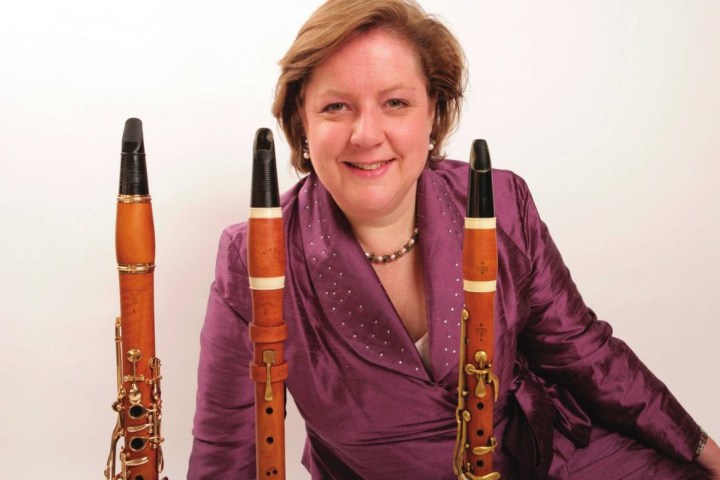
As a performer on historical instruments I find that I need to have many different instruments in good working order and ready for performance at any one time. Sometimes lining up 10 or 12 different clarinets, basset horns or chalumeaux in the run up to a range of concert programmes can be quite challenging – not to mention ensuring that I have good working reeds for all of them too! But each instrument has its own tonal colour, depth and dynamic range to explore and this also informs my music making so the down sides all have a really positive flip side to accompany them.

Which performance/recordings are you most proud of? 

I’m really excited about the new CD with one of my chamber groups ‘Ensemble DeNOTE’, an ensemble formed by my husband and fortepianist, John Irving. We often play historical arrangements of eighteenth and nineteenth century favourites, so this CD celebrates that repertoire with two Beethoven ‘selfies’ – his trio arrangement of the Septet (clarinet, cello, fortepiano) and a piano quartet version of the Op. 16 quintet for piano and wind. With the beautiful added decorations in the Op. 16 I’m enjoying the piano quartet version rather more than I ought to! With ensembleF2 I’ve recorded a second album of chamber music by Franz Danzi. Returning to his two wonderfully operatic sonatas (one for clarinet with fortepiano and the other for basset horn and fortepiano) with Steven Devine has been great fun, especially using the Fritz fortepiano at the Finchcocks museum and its very special percussion pedals!

Some years ago I was thrilled to take part in the first ‘historical instrument’ performances of Wagner Operas with two different orchestras and under two conductors.  Daniel Harding and Sir Simon Rattle each brought their own insights to this repertoire, the results were thrilling for players and audiences – such a privilege to be a part of this particular journey of rediscovery.

Which particular works do you think you perform best? 

Mozart ‘s Gran Partita, Requiem and of course Concerto really are enjoyable to perform and I’ve had plenty of opportunities to indulge myself in these works in recent times. Again, the instruments we use are so very special for these pieces and I’m lucky to have very well made (hand made) copies that are as close to the instruments that Anton Stadler played as I think it is possible to have. My basset clarinet was made by Peter van der Poel, it plays really well and is modelled on the picture of Stadler’s instrument from a Riga concert announcement.  My basset horn was a recent purchase from Guy Cowley whose instruments just get better and better – it sings so sweetly and is a joy to play.

How do your make your repertoire choices from season to season?

A new bass chalumeau by Guy Cowley and a basson de chalumeau by Andreas Schöni have promoted me to explore a number of baroque composers recently leading to a new programme of music for chalumeaux, voice and continuo with works by Vivaldi, Bononcini, Graupner, Zelenka,  Telemann and others. The soprano chalumeau in particular blends so sweetly with a voice – and fits very conveniently into a coat pocket!

Do you have a favourite concert venue to perform in and why? 

My favourite hall of the moment is The Anvil at Basingstoke. With the OAE (Orchestra of the Age of Enlightenment) we have played large symphonic programmes such as Berlioz Symphonie Fantastique as well as chamber performances of classical wind serenades. The sound in the hall is exceptional and it is so rewarding to perform in such a wonderfully warm and vibrant atmosphere. The people of Basingstoke and the surrounding region may not realise just how lucky they are!!

Favourite pieces to perform? Listen to? 

I love playing great choral works such as Mozart’s Requiem, Haydn’s Creation, Bach/Mendelssohn St. Matthew Passion and others. Performing the texts and sentiments of these great works is always inspiring and there are several great choral ensembles around these days that lift the music to incredible heights – I’m lucky to have the opportunity to work with some of them. Brahms Symphonies, Tippett’s A Child of our Time and Schubert’s Lieder would also be on my desert island disc list.

Who are your favourite musicians? 

Playing in TWO chamber groups on a regular basis affords me many wonderful opportunities to play with musicians whose playing I adore, who inspire and challenge me and with whom I can explore ideas and repertoire to my heart’s content.  Beyond the lives of those ensembles, I feel most inspired when I’m on stage with people who put the music and their enthusiasm first, leaving their egos outside the room…… A number of them work alongside me at the Guildhall School!

What is your most memorable concert experience? 

I’ve enjoyed many different performing settings but many concerts with Toronto’s Tafelmusik stand out for me as having incredible energy, consensus and excitement. Under Bruno Weil, Tafelmusik’s exploration of Beethoven Symphonies brought me immense pleasure and fulfilment – even through the recording sessions which so often in other settings can sap the joy out of the music.

What do you consider to be the most important ideas and concepts to impart to aspiring musicians? 

Technique only has value if you can use it to convey something from your heart.

Where would you like to be in ten years’ time? 

In 10 years’ time I’d like to be working one-to-one with more students and directing even more of my own musical projects.

 Jane peforms Mozart’s Clarinet Quintet K.581 on a period basset clarinet and Crusell Quartet Op.2 No. 1 in a concert on October 5th with Consone Quartet, St Leonard’s Church, Shoreditch, London E1 6JN. Free entry with retiring collection

Jane is a specialist in the early clarinet and chalumeau. In addition to her work as Head of Historical Performance at the Guildhall School of Music & Drama, London, regular masterclasses and international adjudicating, she has pursued a busy international career, playing all over the world with many renowned ensembles including the Orchestra of the Age of Enlightenment, Tafelmusik and The Academy of Ancient Music. Her repertoire is vast and extends from the works of Handel, Telemann and Vivaldi through to Wagner, Mahler and Debussy – all on historically appropriate instruments.

After some fifteen thrilling years as principal clarinet of the Orchestre des Champs-Elysees Jane turned her focus towards chamber music. She has performed in the UK, North America, Japan, Australia and Europe with Robert Levin, Ronald Brautigam, Eybler Quartet and Les Jacobins, and currently performs regularly with her Ensemble DeNOTE and Ensemble F2. Concerto performances include baroque concertos by Fasch, Telemann, Graupner, and Molter, Mozart’s Concerto for basset clarinet and Weber’s Concertos performed Europe-wide.

Jane has recorded for Analekta (Canada), ATMA (Canada) and sfz music (UK) performing Mozart’s Clarinet Quintet, solo repertoire for the Basset Horn, wind music by Gossec and Méhul, and a programme of Lieder by Schubert. A DVD documentary on Mozart’s Kegelstatt Trio with Ensemble DeNOTE (Optic Nerve) is complemented by a new recording of Beethoven’s Trio Op. 38 (Omnibus Classics). A second CD of the chamber music of Franz Danzi is in preparation with ensembleF2 on the Devine Music label.

janebooth.net

denote.org.uk

ensemblef2.com


r8a9075_11
(photo Nikolaj Lund)

Who or what inspired you to take up piano, and pursue a career in music? 

I’m not sure I was particularly inspired by anyone at the age of 5, but we had an upright piano in the house as my mother gave piano lessons to little ones after her day job. I don’t remember she pushed me to start but I was easily drawn to the instrument and picked up the basics pretty quickly. I had no wish to sit there for hours on end, so I think my saving grace was being able to read music quickly and get on with whizzing through my little book! I’ve never felt that I made a conscious decision to pursue a career in music. I went to the Yehudi Menuhin School at the age of 8 and it just naturally led to studies at the Royal College of Music – actually I never felt there was a choice NOT to continue!

Who or what have been the most important influences on your musical life and career? 

Although my lessons were infrequent with Vlado Perlemuter, he did influence me a lot in the way he approached clarity and intensity of sound. Nadia Boulanger influenced my ears to be as wide open as is humanly possible but the teacher who actually had the most profound influence, was Kendall Taylor who I studied with for 4 years at the Royal College of Music. He basically put me together after I had become very fragmented and most important, was the first person who believed in me. I’ve known Yo-Yo Ma for all of my adult life (and worked with him for 31 years) and without doubt he has influenced me tremendously, both as a pianist and a person.

What have been the greatest challenges of your career so far? 

I’ve had a number of challenges along the way. Perhaps the greatest was balancing being a mother and trying to maintain a focus on having a career which often took me away from home. My other great challenge was to accept I didn’t really like performing from memory and just deal with the fact I prefer using the score. I’ve now been doing that for about 20 years. I remember a promoter told me the critics would shoot me after I gave my first full recital using the score. It appears I’m still here.

You’re performing in the inaugural London Piano Festival in October – tell us about your programme?

I initially thought it would be a good moment to perform the Dutilleux Sonata again – a piece I absolutely love. I performed it for a whole season 10 years ago but then it disappeared from my repertoire until I recorded it for BIS 2 years ago. Then of course comes the question of what to perform with it. Somehow I couldn’t escape the idea of F sharp and now here we are with music by Ravel, Messiaen and Fauré. I’m often fascinated by keys and why music sounds the way it does because a composer chose a particular key. I think it will be interesting to explore the contrasts of F-sharp for an hour. 

Which performance/recordings are you most proud of? 

I don’t particularly dwell on whether I’m proud of something or not so there are probably performances which went especially well which I’ve totally forgotten about. I think I’m proud of the fact that I performed Rachmaninov’s 4th Concerto for the first time only a few years ago. As I get older, adding works such as this seem a bigger mountain than when I was younger, but I would have been gutted to get to the end of the performing road and never have played it…what a piece! Recordings – I’d probably have to say my complete Fauré for Hyperion. Not because I think it’s better than anything else I’ve done but it was such a beautiful labour of love to learn the complete works. I know I would play everything differently now but that’s how these things go. I don’t listen to my recordings – that’s for other people to do.

Which particular works do you think you play best? 

I think there are certain pieces I perform better now simply because I’ve had some life experiences which have definitely affected how I express myself. For example I feel I now play the Britten Concerto in a way which makes much more sense than when I was younger – same with works by Shostakovich. I have no idea really – my interest in repertoire is vast so sometimes it’s good to explore even if I don’t think it’s for me.

How do you make your repertoire choices from season to season? 

It depends on the season and what is generally going on. I always have a lot of chamber music in my season, so as that repertoire is not necessarily determined by me, I might decide my own recital repertoire according to other things in place. Concertos I don’t play as often and it’s always been rare to dictate repertoire. Then of course, there are festivals where you might have a million things to play in a short space of time. I try to think how I’m going to be able to prepare everything time wise and so some choices are made on that. It goes without saying that I’ve programmed or hinted strongly I want to play a certain piece just simply because I have to play it!

Do you have a favourite concert venue to perform in and why? 

I don’t have one favourite but on the list would be Teatro Colon in Buenos Aires for its beauty and history, the Concert Hall in Luzern for being contemporary but warm and Symphony Hall in Boston for its acoustic, relationship to audience and wood floor (stage) which tells a thousand stories. I generally dislike very high stages so even a great hall where I’m too far from the audience is not in my top ten.

Favourite pieces to perform? Listen to? 

No favourites – depends what day it is. I love silence more and more but I love listening to Symphonic Music, Opera, Lieder –rarely piano music just for pleasure

Who are your favourite musicians? 

I don’t have favourites but I’m currently enjoying listening to Philippe Jaroussky.

What is your most memorable concert experience? 

If you mean me performing then performing at the Hollywood Bowl with Yo-Yo and lots of lovely, wonderful Brazilian musicians. I remember we all held hands to take a bow and I said to guitarist Sergio Assad ‘remember where we are’. He knew what I meant. It was a happy evening for us all in an iconic venue. If the experience is me sitting in the audience – I’ve just been to my first Wagner Ring Cycle performed by Opera North. Truly memorable.

What do you consider to be the most important ideas and concepts to impart to aspiring musicians?

I always think it’s important for young musicians to find their own voice and I often discuss the concept of being true to ones self, to think about why they want to be part of the music profession and to try to balance the wishes of a composer with what they have to say as an individual. Learning to tell stories via their instruments is what I’m interested in and most important, I do like to stress we all mess up and performances are not ruined thanks to some wrong notes. In the end, I hope to help them be creative, independent, courageous and above all curious.

Where would you like to be in 10 years’ time? 

Anywhere where I feel to be alive and well

What is your idea of perfect happiness? 

I don’t think it exists

What is your most treasured possession? 

My photo albums – I’m very nostalgic

What do you enjoy doing most? 

Walking in the countryside with my dog, Archie

What is your present state of mind? 

Always lots going on!

Kathryn Stott performs music in F-sharp by Fauré, Ravel, Messiaen and Dutilleux as part of the inaugural London Piano Festival at Kings Place on Saturday 8 October.

Further information here www.londonpianofestival.com

www.kathrynstott.com