Who or what inspired you to take up conducting and pursue a career in music?

I don’t know if there was one person or event in particular that led me to pursue this career. I wanted to be a conductor and to have a new platform to communicate with musicians, music lovers and people who are not aware of classical music. I wanted to have an opportunity to inspire the future generation of young musicians. I also wanted to engage people who are not fans of classical music and get them excited for it. I know many colleagues who always dreamed about being a conductor but I came to that realization when I was 22.

What, for you, is the most challenging part of being a conductor? And the most fulfilling aspect?

The most challenging part of being a conductor or a Music Director of a group is inspiring musicians to accept the challenges I present. New music is a challenge, unique collaborations are a challenge and these are paths that every orchestra (youth, community, professional) should take from time to time. As a leader one should find the determination to excite the orchestra to take on challenges with no fear. The fulfilling aspect is the final product, the inspired musicians, the excited audiences and most importantly the feeling of accomplishing something that presented a challenge.  

How exactly do you communicate your ideas about a work to the orchestra?

Every orchestra I work with I learn from. Communication is a complex topic and there are no masters. I work hard in diversifying my approach and with each experience I realize that it’s not just about the music but about the people. In my communication with the orchestra I try to inspire them with my passion and love for the music, I engage them to be collaborators and of course teach them through this process. To maximize the potential of any group it requires the energy of each individual and this can be achieved through communication not only on the podium but off the podium as well.

How exactly do you see your role? Inspiring the players/singers? Conveying the vision of the composer?

The role of a Music Director should be all encompassing. As a MD one should inspire the players through passion and enthusiasm for the music, engage audiences, and be in constant search of projects and collaborations. MD should also find ways to challenge to musicians and audiences because that is the only way we grow; that is the only way to the future. As an MD one should never assume that people know the music or the history and stories beyond the score. As conductors we have to educate not only the musicians but the audiences from the stage. Pre-concert talks do not provide a direct tool to teach and one never engages everyone in attendance. I believe that collaborations are vital for the growth of arts and classical music specifically. I think we live in a time where we absolutely have to collaborate with artists and other fields to maximize the reach of our art form.Which performances/recordings are you most proud of?I am always proud of the youth I work with and I am proud of them for accepting my challenges. I have commissioned new works, initiated unique collaborations with many organizations and invited artists from many genres to work with us. I want to thank the many young musicians I have had the privilege to work with and know that they will be leaders and inspiring individuals no matter what they do. Stepping on the podium to work with the future generation of rock stars is the greatest joy in my life, I feel honoured.

How do you make your repertoire choices from season to season?

Picking repertoire for youth and community orchestras is tough. This is something I constantly think about. I try to include a piece that will challenge the orchestra, a piece that will be fun for the audiences, and a piece that the orchestra will not feel overwhelmed with.

Do you have a favourite concert venue to perform in and why?

There are many beautiful spaces I have conducted in and can’t pick one in particular. I like spaces with windows and no formal stage. I like the orchestra to be surrounded by the audience and to feel as close to the people as possible.What is one piece that you’ve always wanted to conduct? And have you had that chance yet?

There is a wonderful Armenian composer Avet Terterian and I would love to conduct any of his symphonies when I have an opportunity to do so.

As a musician, what is your definition of success?

I currently work with many youth and community orchestras in the U.S. state of Washington. My definition of success is the consistent growth of the musicians I work with, the development of their understanding of music and most importantly the continuous passion, love and care for classical music. I want to see the youth in my orchestras be passionate advocates for arts and culture regardless of what they pursue as a career. Decades later I want to see a world full of people from diverse professional and cultural backgrounds support the arts in large numbers. As an educator and conductor I want to instill in them the importance of music.

What do you consider to be the most important ideas and concepts to impart to aspiring musicians and conductors?

As conductors it is important to understand our role within the music organization and in our community. It does not matter if you conduct the greatest orchestras in the world, a community group or a youth organization you have to stay grounded and understand the importance of impacting the youth and community. I don’t mean just advocating for the arts but actually getting your hands dirty in the daily, weekly projects of inspiring the community. There are many great conductors in the world but one thing that is evident with many is the lack of consistent commitment to youth, community and outreach events. I want to see more conductors involved in outreach events, these concerts are not just for assistant and pops conductors. Music Directors are equally responsible for these performances and should do more than just a few in a year. I want to see the role of the Music Director taken more seriously. We live in a world that is fast paced and it is easier than ever to travel across the world. Holding more than one major symphony conducting role is not only disrespectful to the orchestra but most importantly it is disrespectful to the city and community the conductor is serving. A major symphony is one of the most important cultural organizations in a city and we need to have the Music Directors fully involved in the community which again is a rare fine these days. Classical music is suffering and this is definitely one of the factors. We need our leaders a lot more than just 12-15 weeks out of a year while the rest of the year they are holding other “full-time” jobs and guest conducting 30 other orchestras.Where would you like to be in 10 years’ time?

I want to continue working with orchestras whether they are professional or not, I want to keep inspiring the youth and the community it serves.  

What is your idea of perfect happiness?

I don’t know if that exists for me but I am content with the constant challenges despite the absence of perfect happiness.

What is your most treasured possession?

I don’t know about possessions but I have treasured people who are: my wife, my brother, my parents, family, friends and the many people who help and inspire me.

What is your present state of mind?

The moment.

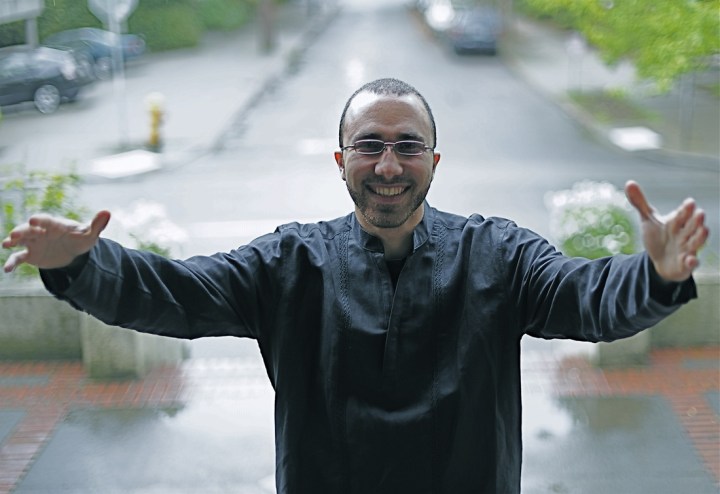
Armenian-American conductor Tigran Arakelyan is the Music Director of Bainbridge Island Youth Orchestras, the Federal Way Youth Symphony Orchestra and the Artistic Director /Conductor of Port Townsend Community Orchestra. Arakelyan held conducting positions with California Philharmonic, Los Angeles Youth Orchestra, Whatcom Symphony Orchestra, Rainier Symphony and the Northridge Youth Philharmonic. His primary conducting studies were with renowned conductors Ludovic Morlot and David Alexander Rahbee.

His recent conducting engagements were with the Fort Wayne Philharmonic, Olympia Chamber Orchestra, Armenian Pops Orchestra, Centum Youth Orchestra (S. Korea) and the Northwest Mahler Festival Orchestra.  Arakelyan toured South Korea twice (2014, 2017) with the Federal Way Youth Symphony conducting over a dozen concerts from Seoul to Busan. He recently initiated the Inaugural Bainbridge Island String Orchestra Festival with award winning guest artist Andrew Joslyn. Arakelyan also commissioned/premiered a work by international award winning composer Yiğit Kolat. 

Previously, he was the Music Director of Whidbey Island Orchestra (WA), Lark Musical Society Youth Orchestra (CA) and the Founder Conductor and Artistic Director of Cadence Chamber Orchestra (WA). At the university level Arakelyan was the Music Director of the University of Washington Campus Philharmonia and UW Summer Orchestra. He has been instrumental in initiating innovative collaborations with composers, soloists, visual artists, dancers, and choirs. Arakelyan helped in creating youth scholarship programs, festivals, young composer competitions, and led orchestral performances at unconventional venues. 

Arakelyan conducted the Pacific Northwest premiere of Paul Hindemith Kammermuzik Nr. 1. He has also conducted the Yakima Symphony Chamber Orchestra, University of California Los Angeles Philharmonia, Redmond Academy of Theatre Arts, Korean Music Association Choir (WA), Inverted Space Modern Ensemble, U.W. Symphony, California State University Northridge Symphony, CSU Northridge Discovery Players, and the Nimbus Ensemble (CA). A strong advocate of new music, he premiered works by Iosif Andriasov, Stepan Rostomyan, Eleanor Aversa, Jeff Bowen, Jon Brenner, Arshak Andriasov, and Felipe Rossi. 

Arakelyan played alongside Sir James Galway during his induction into the Hollywood Bowl Hall of Fame with the Los Angeles Philharmonic. He is a recipient of numerous awards including: Armenian General Benevolent Union (AGBU) Performing Arts Fellowship (2013, 2014, 2015), Edward Hosharian Award, and the Armenian Allied Arts Competition (1st place), among others.  Arakelyan participated in the Conductors Guild Workshop, Pierre Monteux School for Conductors, Idyllwild Music Festival, Dilijan Chamber Music Series, Seasons Festival Academy, and Fairbanks Summer Arts Festival. He conducted in masterclasses with notable conductors David Loebel, Frank Battisti, Donald Thulean, Ennio Nicotra, David Effron, Neal Stulberg, Michael Jinbo, and Lawrence Golan. 

Arakelyan received a Doctorate in Musical Arts degree in conducting from the University of Washington. His primary conducting studies are with Ludovic Morlot, David Alexander Rahbee, John Roscigno and flute studies with Paul Taub, John Barcellona, Laura Osborn, Stephen Preston, and Shigenori Kudo.​ Outside of conducting, he is the founder/director of the Armenian Orchestral Music Project and the Classical Program Coordinator at Music Works Northwest. Arakelyan is also the founder and host of Off The Podium-Music Podcast where his guests are renowned musicians and artists. 

www.tigranarakelyan.com

Who or what inspired you to take up the piano and pursue a career in music?

I started the piano when I was 3 (apparently!), and to be honest I’ve never for a second thought about the possibility of doing anything else. And I guess I might have to finally come to terms with the fact that – at 36 – Stoke City seemingly aren’t going to be calling me to play up front for them, so I guess I’m stuck with the music.

Who or what have been the most important influences on your musical life and career?

I had the great fortune to go to Chetham’s School of Music for nine years, during which time I had a fantastic education in the nuts and bolts of music, before going to the Royal Academy of Music in London to do the Undergraduate jazz course there. Having such a comprehensive training has certainly been invaluable in helping me adapt to, and survive in, the myriad of musical situations I tend to find myself in!

I’ve also been lucky enough to work with some amazing musicians over the last 20 years, and I’ve always tried to learn from everyone I’ve worked with, and every musical challenged I’ve undertaken. That’s one of the lovely things about being a musician – you never stop learning!

What have been the greatest challenges of your career so far?

Logistics! Replying to emails, booking flights, doing my accounts… The glamorous stuff!

In all seriousness being a freelance musician does come with a unique set of challenges, and surviving professionally, or professional surviving if you like (!) is right up there with the hardest of them.

Alongside that, I’ve always struggled with performance anxiety (a problem rarely discussed but frequently suffered by so many…) so dealing with that is always at the forefront of my mind.

Which performance/recordings are you most proud of?

My last release under my own name, called ‘Instrumation’, features a chamber orchestra and I wrote, arranged, produced and mixed it all – so I’m very proud of that! Every album I’ve ever made I’ve tried to do to as high a standard as possible, and whilst your style, influences and sound inevitably change over time, hopefully the attention to detail and quality of your work can remain a constant feature of what you do.

Which particular works do you think you play best?

Unfortunately I don’t really get too much opportunity to play the more standard repertoire, but this is something I’d like to rectify at some point in the future. So I guess the answer would be – hopefully – my own!

How do you make your repertoire choices from season to season?

I guess this question, again, is a little bit irrelevant for my particular career! That said, I do really enjoy the wide variety of musical situations I end up getting involved in, and I guess there is a certain amount of reacting to what is requested of me that dictates the musical direction I end up taking. In terms of a more general direction, I certainly find myself enjoying the world that lies in between the composed and the improvised more and more, so the pieces from the ‘classical’ side that I get involved with tend to be those that lend themselves to this kind of treatment. I seem to come back time and time again to 20th Century French music, as the harmony and lyricism seems – to me – to be so strongly connected to the world of improvisation and harmonic exploration that I enjoy so much.

Do you have a favourite concert venue to perform in and why?

I was fortunate enough to perform my own music at the Proms back in 2008, and to play in the Royal Albert Hall, and in front of a live BBC television audience, was just the greatest thrill. I guess, with having a classical education, performing in that situation, on that iconic stage, felt like truly fulfilling a dream. Aside from the RAH, I’ve been so fortunate these last few years to play in hundreds of concert halls around the world, all different shapes and sizes and all fantastic in different ways, but I guess on a personal note – playing in the Bridgwater Hall in Manchester has always been a wonderful experience, as I remember seeing it being built from the very beginning when I was at Chetham’s in the 90’s – so finally getting to play concerts there as a professional musician has always been a special experience.

Who are your favourite musicians?

In terms of composers, Ravel, Debussy and Dutilleux are my favourites. Jazz musicians: well piano-wise my heroes have definitely been headed by Keith Jarrett, Chick Corea and the wonderful, much-missed John Taylor. In a wider sense, the music of electric bassist Jaco Pastorius and guitarist Pat Metheny has always really been special for me. And aside from that, I always absolutely love listening to Steely Dan, Earth Wind and Fire, and Stevie Wonder. Hopefully that covers quite a bit for now!

As a musician, what is your definition of success?

To achieve respect and appreciation from my fellow musicians has always been the main aspiration for me. Of course every concert I play, I really want to give the audience a wonderful evening and take them on a musical journey, but in a more general sense I think that question of what my legacy will be has become more and more important to me as the years pass. I try extremely hard to give everything I can to each project I’m involved in, so when things go well after all the hard work, it always makes for a satisfying moment!

What do you consider to be the most important ideas and concepts to impart to aspiring musicians?

This would take quite some time to answer, but suffice to say I’m always encouraging my students to really try to put in the hours at the piano, as nothing can really replace good old-fashioned hard work! I do try to get them to try to stretch themselves creatively as much as possible, as, in the world of improvised and new music especially, developing and honing your own ‘voice’ and sound is of paramount importance. Again, there really isn’t any short cut to this, other than to put the hours in!

Gwilym Simcock performs at the London Piano Festival on 4 October. More information


Gwilym Simcock has carved out a career as one of the most gifted pianists and imaginative composers on the European scene.  He moves effortlessly between jazz and classical music, with a ‘harmonic sophistication and subtle dovetailing of musical traditions’. Gwilym has been hailed as a pianist of ‘exceptional’, ‘brilliant’ and ‘dazzling’ ability, and his music has been widely acclaimed as ‘engaging, exciting, often unexpected, melodically enthralling, complex yet hugely accessible’, and above all ‘wonderfully optimistic’.

Gwilym’s influences are wide ranging, from jazz legends including Keith Jarrett, Chick Corea, Jaco Pastorius and Pat Metheny, to classical composers including Maurice Ravel, Henri Dutilleux, Béla Bartók and Mark-Anthony Turnage. Although principally a jazz artist, Gwilym has composed numerous works for larger Classical ensemble that combine through-composed elements with improvisation, creating a sound that is distinctive and very much his own.

Read more

rimz-zwy

Who or what inspired you to take up composing, and pursue a career in music?

I definitely feel as if I came to composing music quite late in my music education. I was no wunderkind. In coming to composition at the age of seventeen, I felt that I had to catch-up with my peers: a feeling that I now understand as being totally irrational, but the weight of all that music that have come before used to make me want to walk away from the manuscript. Saying this, over the past few years, I continue to come across interviews by other composers who have said the same thing. Being a masochistic sort of bunch, I suppose we constantly – and often unconstructively – compare ourselves to what has come before. Mozart, Britten; or, more recently, Adès.

Nobody ever told me that composing music would make a good career choice. I remember seeing a concert of exclusively new music when I was 15 years-old at the then recently opened BBC Hoddinott Hall in Cardiff. Years later I realised that it was the BBC National Orchestra of Wales’ New Music:Wales project in which composers from around Wales would have their orchestral works showcased, a project I ended up being part of myself. I remember sitting in the audience and thinking, “how can they get away with this?” A whole concert of NEW music. Being brought up, in hindsight, in quite a stoic and conformist area, the thought of having a concert of Beethoven and Mozart would have been very artisan, learned or even incredibly uncool. Let alone a whole concert of new orchestral music for the concert hall. It was alien to me. Alien, but the contrarian in me thought it was incredible.

Who or what were the most significant influences on your musical life and career as a composer?

Perhaps a cliché, but teachers have always had the most significant impact on me. The meetings that we have, often stumbled upon rather than planned in advance, are the driving force for me. It’s what gets me up in the morning.

I remember meeting my first composition tutor, Robert (Rob) Fokkens, at Cardiff University. It was like being knocked over by a bus. The wind got knocked out of you. That lightbulb moment. He had opened up a new world for me. Endless listening of composers I had not heard until then. Debussy, Crumb, Ligeti, Berio, Boulez and Volans. He provided me with the tools, made sure that I knew how to apply the cement, and then guided me through the construction of the wall. We built quite an open and honest means of communication. What worked in my music; what did not (this being the majority of cases); what to trim; what to build upon and how – I constantly questioned how I came to these decisions.

Ironically the other person to have had such an impact on me not only as composer but how I go about everyday life as a composer was Rob’s former teacher, Michael Finnissy. I met Michael only in 2014 and we have built such a special relationship since then. When talking about one of my works [hafan for orchestra; later selected for the BBC National Orchestra of Wales’ New Music:Wales Project], he remarked that it was “like a classy drag act and it’s screaming for the gaudy feather boa to be taken off”. Bizarrely, I knew exactly what he meant. I was going through one of those difficult hiatuses in my music. I no longer liked the music that I was writing. The honesty and frankness that our conversations were from that moment was refreshing for me. Where Rob and I would discuss how, Michael and I would discuss why. Michael and I now perform one another’s work, giving premieres and collaborating on projects. That’s what it;s all about. In turn, how Rob and Michael treated me as a young composer is the measure of how I teach students now.

What have been the greatest challenges/frustrations of your career so far?

I have already mentioned this, so won’t labour the point: playing catch-up. I remember leaving school and being so intimidated by all the ‘big, scary professional musicians’ out there who were infinitely better that I would ever hope to be. With hindsight, this is bullshit. We all have our own demons and personal agendas, and as the old adage goes, “we’re our own worst enemy”. It took me a while to shift these insecurities and the unhelpful comparisons I was pulling between myself and others who had twenty years on me. They naturally still often find itself rearing its ugly head, but I think you learn to deal with this as you get older. Perhaps because there are unfortunately bigger or more pressing things to worry about, like paying the bills? Even with much of what I do is centred on the making of music, the boring stuff always manages to creep into the periphery.

One other thing that I have reconciled myself to is the fact that having our own agenda (albeit sometimes masochistic or unrealistic) can be far healthier for us than to comply with the agendas that other people have for you. The sooner you nip the latter in the bud, the better. Be the best person you can be.

What are the special challenges/pleasures of working on a commissioned piece?

I actually take great pleasure in working to a brief or having a set of limitations to work with, which I have often found in the commission work I have had. I know many composers who love the freedom to let their ‘artistic juices flow’, but at the moment I could not think of anything worse. It must be all that ‘teenage’ angst (or the hangover of) still built up inside of me, but if I were left to my own devices it would be riotous. Saying this, perhaps I should let go? I could be writing very different music.

What are the special challenges/pleasures of working with particular musicians, singers, ensembles and orchestras?

The collaborative aspect of it all. It seems pretty obvious, but I think composers don’t really grasp that when they start working with ensembles regularly for the first time. I certainly didn’t. Whether it’s the initial nerves of hearing your music performed live for the first time, or you are yet to discover that the way your parts are laid out is a minefield for a musician, you have to go through the rough to understand just how smooth the process can be. Having luckily worked with several ensembles on a frequent basis, now, you start to discover effective methods of communication or simply what makes them tick, with the aim of creating the best music possible. As a composer (even more so than a conductor) I see myself as a facilitator. I create the framework (the notes on the page) in which people can step into (the performer/listener). If the margins that I have created are correct or the best fit possible, then hopefully the outcome will be mutually beneficial and people begin to get on-board with what the music is trying to say.

It is the convivial nature of music which excites me. People coming together for one common cause: to create music. Full stop.

Of which works are you most proud?

Again, being your own-worst-enemy and all-that-jazz, I am only as good as my most recent piece. I take what I enjoyed or disliked from my most recent work and apply it to the next. Either as a compliment to the one gone before, or as a rebuttal.

I had the opportunity to write a work for CHROMA ensemble in 2015 and that was a real turning point for me. I feel I had hit upon something with blind bells, cry out. There is a certain economy in the treatment of musical gesture that created a sincerity and desired austerity. When they were playing it through for the first time, I turned to the person next to me (composer Helen Grime) and said “I’ll keep that!” It is now one of the only works of mine that I turn to now-and-again when I start to recalibrate or review my latest work. How did I achieve that, and can I recapture that moment? I don’t think I ever can. The music is so wrapped up in that work and the input the ensemble had in its creation.

I genuinely like the work that I am doing at the moment as I feel it actually has something to say. What I mean by that is that for the first time I am quite comfortable for this music to stand there naked without me having to dress it up in anyway or justify it (Finnissy’s words linger on subconsciously). I currently have a large-scale project entitled ‘national anthems’. It’s the first project that I devised myself and can feel proud of. I see these new works as my postcards for the world around us. More like anthems on a state of a nation, rather than something as literal as a set of verse-chorus anthems. The first was for six pianos (performed by New York-based, Grand Band, as part of the 2017 Vale of Glamorgan Festival of Music); the second for solo clarinet (for Manchester-based, Chris Gibbons; a set for piano quintet and flexible ensemble (premiered by Mary Dullea, Tippett Quartet and musicians from Royal Holloway University of London at Kings Place in June 2017; and with projects lined up with Michael Finnissy and Carla Rees next year as part of it plus an anti-fanfare (for Magnus Lindberg, the London Philharmonic Orchestra and Foyles Future First Players). Watch this space, I suppose.

How would you characterise your compositional language?

This is a difficult one, as I am still trying to establish that myself. I am fascinated with expressing myself in the clearest and most minutia way possible. I enjoy layering small cells of musical material on top of one another and often relish when these cells react with one another, sometimes creating a blanket of dense texture or of organic richness.

Friends and colleagues have said that my work is ‘minimalist’ or ‘post-minimalist’, but I am quite apprehensive with regards to labelling music. Particularly in an age where labels (not exclusively related to music but society as a whole) can be so divisive and misleading. I understand our need to compartmentalise things but I find that the fabric of my musical aesthetic is made out of all sorts of different things. Charlie Parker. Beethoven. Julius Eastman. Ligeti. Aphex Twin. Stockhausen. Meredith Monk. Victoriana. Hildegard of Bingen. Bronski Beat. My mind runs dry now, but these interests constantly change. Ironic considering many of the composers considered ‘minimalist’ categorically show disdain of this term. I am less militant in my disregard, but rarely think of myself as such.

How do you work?

As of often as I can.

I have found over the past few years, meeting all sorts of composers, of all ages, at residencies, concerts, universities, or at the bar, that the act of composing is painfully individual. Almost sacrosanct.

I use all the tools available to us today. Sometimes different variations of resources for each project. Despite being a person of routine in the everyday, there tends not to be a routine when it comes to the act of composing. Sometimes I map out the entire piece on paper, often I write out a substantial percentage of the work on manuscript before typesetting and occasionally (becoming more frequent, however unapologetically) I go straight to the computer. It’s personal to each project for me and often simply comes down to the timescale for the project.

There is a part of me that is mystified when composers living today say that they have a strict daily routine for composing music. The sort of building-block, compartmentalised, forever unpredictable career that I am shaping unfortunately doesn’t allow for this. There is no way I could carve out this sacrosanct slot every day solely for composing. I often find myself working in very intense short periods. Living with the work for weeks or months on end. Walking away from it. Allow it to rest a little. And then return to the old friend (or enemy, dependent on how the process is going). This seems to work well for me.

The one consistency that I do have however, one that I have found unmoveable, is that I need at least 25% (crassly charted) of the overall time spent on a project just living with the concept. Not writing a note. Just thinking. This always at the beginning of a project. I need to live with it for some time. Perhaps I have trust issues and I find it difficult letting this new thing into my life. Mentally rationalising it. Either way you want to think of it, this has proven an important part of the process for me.

Who are your favourite musicians/composers?

There are so many.

There are musicians and composers that I continually return to (Rameau; Beethoven; Cage; Andriessen; Lang) or I go through phases of listening to a whole back catalogue of a particular ensemble ad nauseam. I am currently listening to a lot of Anna Meredith’s work (Black Prince Fury, 2012; Varmints, 2016). I feel this conveyor-belt of listening and ‘Flavour of the Month’ model is quite common.

Likewise, and perhaps something I have already touched upon, my favourite musicians or composers are those that I am most recently working with. Certainly not in a superficial, kiss-ass sort of way. That sort of thing, or the people that inhibit these traits, I tend to stay clear of. I pump a lot of my energy in the here-and-now, and love investing time in the musicians I work with, getting to know them, what makes them tick. Get most from the process of making music.

There is also something to be said for the students that I work with. I get a lot from working with young people on new music. The immediacy. The idea that they (and I) are experiencing something totally new for the first time produces music that is so earnest and alive.

What is your most memorable concert experience?

There are so many flicking through my mind. The first time I performed at the BBC Proms (in the Semi-Chorus I hasten to add, naturally not a solo spot). First concert that I curated. First concert I conducted. First premiere (one of the first was a real triumph as an elderly lady made a dramatic and affirmed exit during the opening 2-miniutes of a work of mine. Rather proud of that one).

However, the one that really sticks in my mind was the first classical concert I had been to. Thierry Fischer. BBC National Orchestra of Wales. Beethoven’s Fifth. I had an insanely supportive secondary school teacher. Carting me to concerts, open days and vocal workshops all across the country. As I had shown an interest in music during our classes (I must have been either 12 or 13), she had offered to take a few of us keen-beans to this concert in Cardiff. To open our eyes (and ears). And that was that. I knew instantly that I wanted to be part of something. To make music. I was unsure what that might have been at that stage, but I knew I wanted to be part of it.

What do you consider to be the most important ideas and concepts to impart to aspiring musicians?

I feel a little wary of imparting any such wisdom to aspiring musicians as I still feel like I am still finding my way through a dark room.

There are a few things that I usually find myself saying to students though.

Ask yourself why? Repeatedly. Why are you doing this? For composers, what makes this 5-minute work better than 5-minutes of silence? What are you trying to say? The more you venture deeper into the music world, you begin to realise just how small it can be. However, this is not always the case. We lose ourselves in our work and sometimes feel that this short new piece for violin and piano will simply get lost in the ether and sometimes we don’t ask what difference it can make to you as an individual or others. Embrace the product of your craft and appreciate what it may mean to you and others. Otherwise, what is the point?

In the same breath, take your work as a seriously as it deserves but the moment that you take yourself too seriously, the worse off you are. Music is a wondrous, marvellous, all-embracing thing, but we are not cardiothoracic surgeons. Thus endeth the lesson!

What is your present state of mind?

Having taken part in this interview/project and having had the opportunity to reminisce on all parts of my life, I feel lucky to be able to do what I love.

I am also wondering whether I should have another coffee?


Nathan James Dearden (b. 1992) is a composer and conductor, whose music is regularly performed across the UK and overseas by a variety of different instrumentalists and ensembles, from both community ensembles to internationally renowned musicians.

Nathan’s music has been commissioned, performed, featured and workshopped by a variety of established performers and ensembles including London Philharmonic Orchestra, The Tippett QuartetGenesis Sixteen, BBC National Orchestra of Wales, National Youth Orchestra of Wales, The Heath Quartet, Grand Band, the Fidelio Trio, CHROMA ensemble and The Dunedin Consort. His music regularly features in concerts across the UK and overseas, including at the Cheltenham Music Festival, Dartington International Summer School and Festival, International Young Composers’ Meeting and Vale of Glamorgan Festival of Music. Nathan was an inaugural Young Composer-in-Residence with the National Youth Orchestra of Wales and Music Creator for Sinfonia Newydd in 2013. 

Recent notable performances include i sleep alone at Nagoya University/Japan (Jeremy Huw Williams; Paula Fan), anti-fanfare at St. John’s Smith Square/London (London Philharmonic Orchestra; Foyles Future First Players; Magnus Lindberg), two national anthems: it’s not working at Kings Place/London (Tippett Quartet, Mary Dullea, students of Royal Holloway University of London) and the bright morning star, commissioned as part of the Choir & Organ New Music Series (Choir of Royal Holloway; Rupert Gough).

Upcoming projects for 2018 include a new choral work for Cantemus Chamber Choir and Huw Williams, a multimedia collaboration with Carla Rees and rarescale, and a song-cycle collaboration with composer and pianist, Michael Finnissy.

Nathan has recently been awarded an Early Career Public Engagement Grant from the Institute of Musical Research in support of Spotlight Series: Finnissy at 70 and was selected as a London Philharmonic Orchestra Leverhulme Arts Scholar for their 2016/2017 season. In May 2017, it was announced that Nathan will be the inaugural recipient of the Paul Mealor Award for Outstanding Young Composers by the Welsh Music Guild.

Based in South East England, Nathan is currently Performance Manager, Visiting Tutor in Music Composition, Conductor of the New Voices Consort and New Music Collective and Postgraduate Research Scholar (MPhil./PhD) at Royal Holloway, University of London. Supervised by Mark BowdenHelen Grime and Julian Johnson, Nathan’s research interests include parody in music, and music as a form of social commentary. 

Nathan holds a Bachelor of Music (with Honours) from Cardiff University, where he was awarded the David Lloyd Music Prize for excellence in vocal studies and choral work (2012) and the Elizabeth Griffiths Award for his outstanding contribution to the musical life at Cardiff University School of Music (2013). He later graduated from Cardiff University as a Master of Music (with Distinction) in Music Composition with Robert Fokkens, Louis Johnson and Arlene Sierra, where his studies were kindly supported by Cardiff University, the James Pantyfedwen Foundation and the RVW Trust

nathanjamesdearden.com


(Photograph Marije van den Berg)

Photography | Marije van den Berg

217

Who or what inspired you to take up the piano and pursue a career in music?

Initially my grandmother who played, though not to a professional level, and taught me how to read music when I was about 5 years old. Also I think for a large part I have been motivated by my love of music and have always enjoyed the challenge that learning a new work brings. I remember as a teenager learning progressively more challenging pieces and there was a certain thrill in challenging myself. As I have got older it has been the desire to share the music that I love with as many people as possible, especially the music of Scriabin and less well-known composers. In addition, music is endlessly fascinating and you never really ‘master’ anything; each performance brings new challenges and the more you perform a work, the more you discover about it.

Who or what were the most important influences on your musical life and career?

I have been lucky enough to study with a number of fantastic teachers, including: John York, Charles Owen, Martin Roscoe and Ronan o’Hora, and have of course learnt a great deal from all of them. I have always been excited by discovering composers and works which are not so well known – from the age of around 19 I found myself being drawn away from what might be considered the ‘core’ repertoire. This curiosity has led me to the performance of a lot of contemporary music, which is an area I am still very interested in. Most importantly it led to my ongoing obsession with the music of Scriabin, and particularly Scriabin’s late music. My desire to understand this music, and to comprehend how it came about has really shaped my career in the past 5 years, leading to 2 recordings and the completion of my Doctorate (which was based on the performance of Scriabin’s Sonata no. 6).

What have been the greatest challenges of your career so far?

At times, simply keeping going. There are always periods where things are quiet, or perhaps teaching has momentarily taken over. During these times I have always tried to challenge myself with something new – this is partly why I decided to work towards a Doctorate, and partly what led me to crowdfund 2 recordings. The music profession is changing and you have to make your own opportunities, which can be tough at times, as well as daunting.

Which performance/recordings are you most proud of?

The two Scriabin discs I have recorded, which cover the complete ‘late’ piano music. Both records were organised by myself: everything from the crowdfunding, to the CD design. This is not easy music to record and the second disc (completed in January) was recorded in 18 hours over two days, which was very taxing, but completely exhilarating. The resulting recordings I have now heard and am quietly very proud of.

Which particular works do you think you perform best?

That’s difficult to say, but the works I enjoy performing best would certainly include the late music of Scriabin, Ravel and Debussy, Brahms and Schumann, as well as quite a lot of contemporary music – in particularly James Macmillan’s piano sonata and Thomas Adès’ ‘Traced Overhead’.

How do you make your repertoire choices from season to season?

It’s important to play to your strengths, as well as to perform only works that you enjoy playing (where possible). I like varied programmes, particularly as I often include quite a lot of more unusual repertoire, so it’s nice to break this up with something more familiar.

Do you have a favourite concert venue to perform in and why?

I love the new Milton Court hall [near the Barbican]; it has a wonderful acoustic. I have also been very lucky to be able to participate in the ‘En Blanc et Noir’ festival in the south of France for a number of years now. Their concert venue is open air, in the main square of a little village called Lagrasse, under the covered medieval market. Despite the odd gust of wind, this is a really magical setting, especially when the sun is setting.

Who are your favourite musicians?

I have become a very big fan of Stephen Hough’s playing, for me it encapsulates what I love about live performance; it is at once extremely exciting and passionate, and completely controlled. Having studied a lot of Scriabin, I have got to know the recordings of Norwegian pianist Hakon Austbo, and these have been a real inspiration to me throughout my preparation. I have been lucky enough to play to Hakon a couple of times and have always been struck by the reverence with which he treats the music, as well as his musical imagination. Finally I would have to add Martin Roscoe, who I studied with at Guildhall. He is one of the most exciting and versatile musicians I have ever met and I will never forget his performance of Beethoven’s Appassionata at Guildhall: it remains for me one of the most memorable concert experiences of all time.

What is your most memorable concert experience?

I have performed a couple of recitals of Scriabin by candlelight, which were both very special occasions. The first was in the monks’ dining room in an old monastery in France – it had a wonderful vaulted ceiling and was a perfect setting for the music. The second was in the Asylum chapel in Peckham, which was to launch my first Scriabin disc – it was extraordinarily cold, but no one seemed to care as the venue and music were so perfect together. It was this performance that convinced me that some works are simply better suited to certain locations – Scriabin in the concert hall works fine, but in the ruined chapel of the Asylum, it took on new dimensions.

What do you consider to be the most important ideas and concepts to impart to aspiring musicians?

The musical world changes and to survive you must be in touch with how this is happening. For instance Facebook is now arguably one of the most important methods of publicity, and artists must be able to engage with this form of promotion and communication. In addition, you have to make things happen for yourself, and cannot expect opportunities to be handed to you. This means being willing to put yourself on the line, as well as being forthcoming – not something I find easy. Constantly finding new and innovative ways of presenting yourself seems to be the way forward. I would also add that it is very important to know your strengths and play to them.

What is your present state of mind?

Determined.

James Kreiling has performed in most of the major London concert halls, as well as throughout Europe. His interest in contemporary and new music has led to performances in the Royal Albert and Barbican Halls – most notably in the summer of 2007 he performed solo in the BBC Proms’ composer portrait of David Matthews. In 2008 James was selected as one of the Park Lane Group’s young artists and this resulted in a solo recital in 2009 at the Purcell Room to great critical acclaim, as well as recitals in St Martin in the Fields and in the Little Missenden Festival. In addition James has broadcast regularly for BBC radio 3, including performances of the music of Jonathan Harvey, David Matthews and Peter Eotvos. Together with his wife Janneke Brits, James is a member of the Brits-Kreiling piano duo. They have performed together regularly since 2009 and have been regulars at the En Blanc et Noir piano festival in Lagrasse, France. They have performed in many of the major venues in London, and broadcast for BBC radio. They are both teaching assistants at Music at Albignac, a summer course based in the south of France run by pianist and French music specialist Paul Roberts. One of James’ biggest passions is the music of Alexander Scriabin and he is currently working towards a performance-based research doctorate at the Guildhall school of music, which is focused on the analysis and performance of Scriabin’s late piano sonatas. He gives regular lecture-recitals on Scriabin’s piano music and as part of the celebrations for Scriabin’s centenary in 2015, he will be making his first commercial recording in June of this year, which will centre around Scriabin’s late piano music.