Who or what inspired you to pursue a career in music and who or what have been the most important influences on your musical life and career?

When I was 7 years old, my parents told me that I was enrolled in a guitar group at my school.  Back then I didn’t even know what a guitar was, or that you could have a career as a guitarist !  At around 10 years of age, I took part in some guitar events in China where I saw some professional foreign guitarists play concerts and I was told I had the ability to do the same as them.

This is what first put the idea of pursuing a career in music into my head, without really knowing what it entailed.  My youthful enthusiasm took me to the Central Conservatory of Music in Beijing, against the wishes of my family, where I became the very first guitar student in the whole country.  During my ten years there I constantly felt that my instrument was under appreciated and underestimated.  This enhanced my own determination to have a musical career and show everyone what the guitar can do.  I was also so inspired by the great musical environment at the conservatory, and this too strengthened my resolve to become a musician.

What have been the greatest challenges of your career so far?

There have been many challenges on my musical journey.  When I started playing in China, no one in China had taken this path before, so there were no local role models.  The country had no classical guitar tradition.  Looking back, I had to battle against the odds to make my own path. Over the years this took me to the Central Conservatory of Music in Beijing, and later abroad to study at the Royal Academy of Music in London.  It’s not easy for an Eastern person to come to the West and make a career with no familiarity with the environment here.  Especially so when that career is playing a niche Western instrument. Therefore, I am extremely grateful for all the support I have received to come this far.

Which performances/recordings are you most proud of

My recordings are like my children. I like them all, but I am particularly proud of two,  Bach Concertos and Sketches of China. These both contain new repertoire for guitar, so I put a great deal of effort and time to make these happen.  Not only the recording, but sourcing the repertoire, and making the guitar arrangements.

There are also many concerts that I am proud of, but my most recent is actually a highlight. It was called ‘Once Upon a Time in Brazil’ and I played for two consecutive nights at the NCPA in Beijing.  The concert presents a wide selection of Brazilian music from classical to popular style. The program highlighted the central role that guitar has in all this music .  I pushed my own boundaries as a classically trained player.  I felt a revelation performing new musical styles in collaboration with different combinations of chamber musicians.  For example, we had one set with guitar, percussion, and double bass, rather like a jazz trio which worked really well.  The enthusiastic response from the audience on both nights gave me great encouragement and was a welcome reward for the project.

Which particular works/composers do you think you perform best?

I feel particularly at home with lyrical, romantic works.  I consider lyricism as one of my hallmarks.  I am always singing in my head as I play.  Several string players have told me that I phrase as if I have a bow in my hand. That’s a complement I really like and can associate with.

What do you do off stage that provides inspiration on stage?

Travel!  I like travelling to see how people live in different places around the world, and to learn about their culture.  That’s a great source of inspiration when interpreting music from these cultures.  It’s not only an inspiration on stage, but it opens my mind and helps me understand myself and my own cultural background in a broader and deeper way and understand other people more.

How do you make your repertoire choices from season to season?

It’s based on a combination of factors, my own personal tastes and desires, the concert schedule and promoter’s requests, and my recording plans. In general, I try to balance a program to have something for everyone. I also try to feature something familiar and something new, whilst at the same time broadening my own repertoire.

Do you have a favourite concert venue to perform in and why?

I think my overall favourite is Wigmore Hall in London. It has a perfect acoustic for guitar.

What do you feel needs to be done to grow classical music’s audiences?

I think a few factors need to be addressed.  I don’t know if classical music is losing audiences as such, but nowadays people have more choices about how to use their time, so we must compete for their attention.  We need to make the music relevant to them. I also feel there are still elements of elitism in classical music, that make many feel excluded from the circle.  Musical education plays a huge role in this.  For example, in China a vast number of children are learning instruments, and their parents will take them to hear concerts.

What is your most memorable concert experience?

I have many!  Two come to mind.  My first is meeting the composer Rodrigo who came to my Spanish debut concert in Madrid when I was 14!  More recently it was amazing to play on Bastille Day sitting under the Eiffel Tower with the French National Orchestra, performing to a huge live audience on the Champ de Mars, and an even bigger audience via the broadcast on French national television.

As a musician, what is your definition of success?

I think I would consider myself as a success if I could be recognised and remembered for my professional legacy.

What advice would you give to young/aspiring musicians?

There are easier ways to make a living.  It’s often a tough, competitive, and unforgiving profession, even for those who truly have talent.  It’s very easy to be distracted or disillusioned, so I think it’s useful to keep reminding yourself why you are following this path, and never lose the love and enjoyment of the music.

What’s the one thing in the music industry we’re not talking about which you think we should be?

Finding the right business model that allows promoters to balance artistic innovation versus commercial risk.  In economically hard times, there is great pressure on promoters to take commercially safe options in choices of artists, repertoire, and programs.  However, in the long run this is a danger to the health of innovation in the arts. Exciting things happen at the edge of the comfort zone. I hope the industry will regain sufficient financial independence to strike a good balance.

What’s next?

Merry Christmas Mr. Lawrence, the first single from my upcoming digital album X-Culture (released 19th May 2023), was released on Friday 7th April from  It was rather poignant to learn today that the composer of the piece, Ryuichi Sakamoto died earlier this month. I knew he was unwell at the time I was recording his piece; I was actually thinking of his feelings at that time. Reading about his suffering gave me a sense of nostalgia as I recorded the piece.

What is your idea of perfect happiness?

Good health, great loving relationship, and being able to do what I enjoy doing.

What is your most treasured possession?

My guitars.

Xuefei Yang performs in the Image China concert at London’s Cadogan Hall on Thursday 13th April. The programme features celebrated and ground-breaking works by acclaimed Chinese composers Chen Qigang, Tan Dun, Wang Xilin, Zhou Tian, and Fu Renchang alongside Western composers Edward Elgar and John Brunning.

More info/tickets


Xuefei Yang is acclaimed as one of the world’s finest classical guitarists. Hailed as a musical pioneer – her fascinating journey began after the Cultural Revolution, a period where Western musical instruments & music were banned. Xuefei was the first-ever guitarist in China to enter a music school, & became the first internationally recognised Chinese guitarist on the world stage. Her first public appearance was at the age of ten and received such acclaim that the Spanish Ambassador in China presented her with a concert guitar. Her debut in Madrid at the age of 14 was attended by the composer Joaquín Rodrigo and, when John Williams heard her play, he gave two of his own instruments to Beijing’s Central Conservatoire especially for her and other advanced students.
Read more

What is your first memory of the piano?

My maternal grandmother was a professional pianist and teacher, so my mother and her sisters played a bit and my parents loved classical music in particular, so I grew up surrounded by music. I started playing the piano at around aged 6 and I have a very vivid memory of my piano teacher, her house and her beautiful grand piano.

This first teacher was incredibly strict and rather scary, but I loved my piano lessons despite her rather formidable demeanour, and I loved practising. I never had to be reminded to practice, but my siblings often begged my mother to ‘please make her stop now!’ My first piano was a battered old upright but I loved it and just wanted to play constantly so as a result I progressed very quickly, but I think my siblings were relieved when my parents decided to create a downstairs bedroom for me so that my piano could be moved in there and I could play until my heart was content without disturbing everyone else!

Who were your most memorable/significant teachers?

I have been incredibly lucky to study with some wonderful pianists and teachers, both in regular lessons and in masterclasses and workshops, including Graham Fitch, Artur Pizarro, Noriko Ogawa, Leslie Howard, Phillip Fowke, to name just a few. I have learned so much from each one and am fascinated by their individual approaches to the piano. I have often found it a good idea to take different works to different pianists, especially if they are renowned for recording and performing the works of that particular composer.

I think that world renowned pianist and teacher Graham Fitch is a truly wonderful teacher and his approach to effective practice and endless suggestions for ways of working through tricky phrases and passages is invaluable. There is no one quite like Graham in the world of piano teaching, he really is an inspiration both as a pianist and a teacher.

Who or what inspired you to start teaching?

I always knew that I wanted to be a musician, right from the very first time I touched the piano, and I think that my inspiration to teach came from the many wonderful teachers I have had and their gift for sharing the music in such an inspirational way.

The piano is such a huge part of my life and of me, it is something which has brought me much joy and which has also helped me through some very difficult times. The piano feels like a gift that needs to be shared with others and teaching always felt like a natural progression to me. I was very keen from a reasonably young age to pursue qualifications which would enable me to understand how to teach others to play this wonderful instrument.

Who or what are the most important influences on your teaching?

Interestingly, I think this has changed over the years as I have gone through various stages on my musical journey. I have always loved to continue to learn alongside my teaching and I would say that Graham Fitch is perhaps one of the greatest influences of my later teaching career. As well as the wealth of knowledge that Graham possesses, his lessons are delivered in a most respectful and generous way, he is sharing not ‘telling’, he is also a consummate professional and I really admire and love everything about his teaching style.

Your most memorable or significant teaching experiences?

Over my 40 year teaching career I have had many memorable and significant experiences, some are as simple as a student having a lightbulb moment when you explain or demonstrate articulation or phrasing in a certain way, or the look on their face when they are finally able to play the piece that has challenged them, musically and fluently, others are the big moments when a student passes an audition for a place at music college, plays a wonderful concert, passes a diploma or wins a class in a festival. I increasingly find that the simple moments are as significant and as much of a privilege to be part of as the big moments, after all it is the small steps on a student’s musical journey which will lead to the bigger achievements.

I do feel very privileged to be able to teach some wonderful students and to watch them progress over the years, some have gone on to have careers in music and for others music and the piano have become embedded into their lives in such an important way that I can honestly say that all my teaching experiences have felt memorable and significant.

What are the most interesting or challenging aspects of teaching adults?

I really do enjoy teaching adults, I find that most adults usually come to lessons well prepared and enthusiastic, ready to learn. However, adults can sometimes be very impatient with themselves, and a little self-critical particularly if they are juggling busy careers and home lives with trying to fit in time to practice. I often find that those with high flying careers can find it quite hard if progress is slow as they are used to a high level of success in their careers.

I particularly enjoy teaching advanced adult amateurs, I find that they tend to work very hard and are extremely dedicated to their practice and progress.

What do you expect from your students?

I do expect my students to practice and I am rather unbending on this! I realise that there are weeks when due to school or work commitments it can be really challenging to find time, but in all honesty, without effective practice, there will be no, or very minimal progress, and I am really clear about this with my students from the outset.

Effective practice can happen even when time is tight, and my lessons do focus on showing students how to practice effectively so that they can get the most of the practice time they have and progress well.

I also expect students to listen to music, to attend concerts and to turn up to their lessons ready to play and to learn.

What are your views on exams, festivals and competitions?

Exams, festivals and competitions need to work for the student, by that I mean that they can be a very important part of a student’s musical journey, but we have to use them in an appropriate manner and at an appropriate time, they are not the end goal, they are steps along the way, sometimes very helpful ones should the student wish to study for exams, perform in a festival or enter a competition. Equally, they do not suit everyone.

If a student is aiming for a career in music, then exams, festivals and competitions will likely need to be part of their journey. I believe that it is very much our job as teachers to know what our students may be capable of and to advise them accordingly, a student needs to be more than a really good performer to enter competitions, they need to be ready for them emotionally and mentally, as teachers, being as sure as we can be that this is the case is vital, as it can make the difference between a student enjoying a wonderful performance opportunity, or having their confidence damaged if they are not ready or do not have the emotional resilience.

If a student is ready for exams, festivals and competitions then these can be wonderful opportunities and a great experience for the student, however we really need to know our students and how they may cope with the pressure.

One of my huge bugbears in piano teaching is when an exam syllabus is used as a curriculum and a student goes merrily from one exam to another, I find that using exams in this way is soul destroying and totally unmusical, the piano has such extensive repertoire and we should be introducing our students to that rather than sticking rigidly to a graded exam syllabus, we do our students a huge disservice if we do this, quite honestly I find it to be an incredibly lazy way of teaching.

What are your thoughts on the link between performance and teaching?

I think that it is really important for piano teachers to be able to perform, even if this is no longer a regular part of their career, it is important that they understand how to

perform, after all, how can we teach our students to do something which we cannot or have never done ourselves. I realise that not all piano teachers perform regularly, quite often because the teaching aspect of their career leaves little time for the demands of performance, but to have done so is important. Performance is an art and one which we need to have knowledge and experience of to be able to advise our students on all the complexities it entails.

Who are your favourite pianists/pianist-teachers?

Most of my favourite pianists and pianist-teachers have been mentioned in earlier questions, most are people I have been lucky enough to study in some way with, Graham Fitch, Artur Pizarro, Leslie Howard, Noriko Ogawa, Phillip Fowke, Chenyin Li for example.

Murray Perahia is one of my all-time favourite pianists too, I especially love his Bach. Steven Kovacevich’s Schubert too is a must for me. Piers Lane is another favourite as are Marta Argerich and Daniel Barenboim.

I also love listening to Horowitz, Artur Rubinstein, Cortot and Arrau.

I could probably go on…

What’s the one thing we’re not talking about in the piano teaching world which you really think we should be?

The fact that anyone with even the most minimal knowledge of piano playing and perhaps none of teaching, can set up as a piano teacher is one thing that we really need to talk about. I wrote about this recently in one of my blog posts and it really did cause quite a stir, many were not happy to discuss this and some were offended by my raising the subject, however, I do feel that it needs to be discussed, and widely so, as there are far too many students who are having their technique and understanding of piano playing damaged by people who really should not be able to call themselves piano teachers.


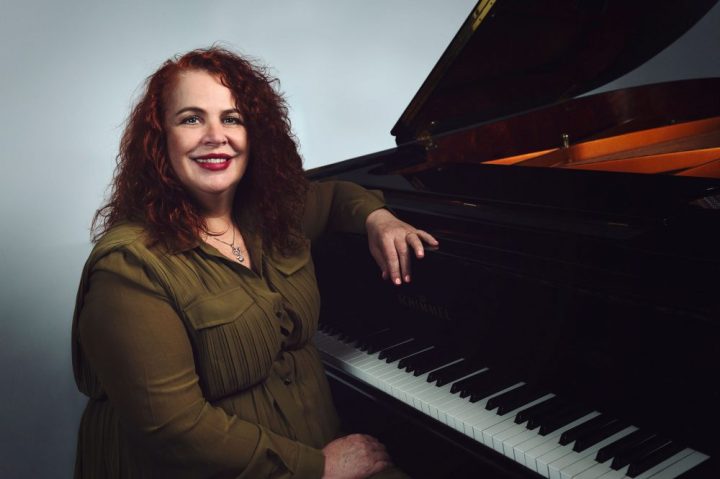
Guildhall School alumni Lorraine Augustine is the granddaughter of a professional pianist and grew up surrounded by music, beginning formal piano lessons at a young age and knowing from the very first lesson that playing the piano was the only thing she really wanted to do.
Lorraine went on to achieve Diplomas in Performance and Teaching and to study with Pianists such as Graham Fitch, Noriko Ogawa, Artur Pizarro and Leslie Howard and holds a Post Graduate Certificate in Performance Teaching from Guildhall School.

Lorraine is a regular Adjudicator for Piano Festivals and competitions including the annual Junior Clementi Competition.

Read more

As the Royal Choral Society prepares to sing Handel’s Messiah on Good Friday, one of London’s great Easter traditions, I spoke to conductor Richard Cooke about his influences and inspirations, and how one keeps a work like Messiah fresh and exciting after conducting it for over 25 years.


Who or what inspired you to take up conducting and pursue a career in music?

I was a chorister at St Paul’s Cathedral from the age of 8 to 13. Some pieces we sang as anthems really inspired me, especially Recordare from Mozart’s Requiem, (which we sang in English to a truly terrible translation – *see below). This became my favourite piece of music from the age of 8, and it still is one of them. Also movements from Brahms’ Requiem, which I used to ‘conduct’ whilst listening to my mother’s record player. Seemed like fun.

Who or what are the most significant influences on your musical life?

Those five years at St. Paul’s were massively formative, though the choir was really not good! I could sight-sing music from the age of 11. I then had 4 years in Cambridge singing in King’s under David Willcocks, and after that I was teaching at Tiffin School for seven years. My colleague David Nield who was Director of Music (I was Director of Choral Music) made a huge and transformative impact on my life.

What, for you, is the most challenging part of being a conductor? And the most fulfilling?

My musical life has been choral conducting. The great challenge is to be an orchestral conductor when choirs sing concerts with orchestras. I try to conduct choirs ‘orchestrally’ so that they think that way when it all comes together. The most fulfilling thing is to come away from conducting a great work and feel good. Rare! There is usually something I would wish to have done better – it can be only a moment, but it’s there.

As a conductor, how do you communicate your ideas about a work to the orchestra?

Talk as little as possible. Show them what you want and be faithful to what one considers were the composer’s intentions.

Tell us more about the experience of conducting Handel’s Messiah…..

How do you keep such a well-known, well-loved work fresh for both performers and audience, especially in a large venue like the Royal Albert Hall?

This is the same for any professional. I saw an actor being interviewed about how he felt performing Hamlet 25 times and that was the same. You have to make each performance as unique as it is for the audience. This is easy. I have been fortunate to conduct this concert every year for about 27 years and I tell myself and the choir that it has to reach the audience as if it were brand new each time. The Royal Philharmonic Orchestra is wonderful in this respect too. I feel it has become bigger for me with the passing years.

What for you are the particular pleasures and challenges of conducting Messiah?

One has different soloists to engage with which is (nearly) always a pleasure, and the work slowly rises to its climactic end – particularly so in the Royal Albert Hall. That final 30 minutes is an inspirational and uplifting experience every time.

The main challenge is the choral writing in Part 1 where the choir is exposed to fast semiquaver ‘runs’ without orchestral support. From the beginning of Part 2 to the very end of Part 3, the strings play these demanding passages with the choir, and the support they provide is always reassuring. Mozart ‘solved’ this problem in his re-harmonised version of Messiah by giving all the fast-running sections in Part 1 to the soloists, with the choir joining only at the very end of each chorus. The only real challenge after that is never to coast along on ‘automatic pilot’.

Is there one work which you would love to conduct?

There are several I would like to return to, all of which are hugely expensive, including Berlioz’s Grande Messe des Morts and Damnation of Faust. A work which I wished I had been able to do is Honegger’s Jeanne d’Arc au Bûcher (Joan of Arc at the Stake), but promoters just smile when they see how much it would cost!

Do you have a favourite concert venue to perform in?

I love conducting in the Royal Albert Hall and Canterbury Cathedral, though each has its challenges with the acoustic. I have other favourites – Birmingham, Bridgewater Hall, Liverpool, Gothenburg. A very beautiful venue for concerts is Lund Domkyrkan (Cathedral) in Sweden. I conduct a concert there each summer.

What do you do off stage that provides inspiration on stage?

The direct reply to that has to be preparing the music and how one is going to interpret it, assuming you are not looking for an answer like ‘take a cold shower’ or ‘walk up a Scottish Munro’.

What do you feel needs to be done to grow classical music audiences?

A massive and prolonged revolution in schools. I work with children and it is the most inspirational thing to see how they engage when challenged. Schools are very under-nourished in music, and children are underestimated. Music provision has been declining for decades and there is a misconception that classical music is elitist. Becoming an elite performer does not make it ‘elitist’. There are elite sportspeople. I don’t think Joe Root or Marcus Rashford are elitist but they are elite.

As a musician, what is your definition of success?

Um…..I’m enjoying still being able to do what I do and have done for my whole life. My hobby is my career and whether I am successful or not is for others to judge.

What advice would you give to young or aspiring conductors/musicians?

I don’t presume to advise other than to say that you have always to prepare and work as much as is needed to master in detail whatever you aspire to.

What’s the one thing we’re not talking about in the music industry which you feel we should be?

The inadequacy of classical music provision in state schools and the value and enhancement it brings to children’s lives and well-being.

Where would you like to be in 10 years’ time?

Where I am now. Maybe optimistic!

What is your idea of perfect happiness?

Not sure but I’m perfectly happy

What is your most treasured possession?

Apart from family and friends I don’t really have one, but it feels special when I dig out a great score like Beethoven Missa Solemnis to prepare for another performance.

What is your present state of mind?

Sober

*Final stanza of Recordare from Mozart’s Requiem, early Novello edition:

“In thy favor’d sheep’s position

Keep me from the goat’s condition,

On thy right complete fruition”.

(I’m quite sure that if I had sung these words as an adult, the last word by many around me would have been change to ‘coition’.)

Richard Cooke conducts the Royal Choral Society in Handel’s Messiah on Good Friday, 7th April, at the Royal Albert Hall. The choir, which is celebrating its 150th anniversary, has performed Messiah every Good Friday since 1876. Only the 1940 Blitz and the 2020 Covid pandemic have prevented the performance of one of the UK’s favourite choral works.

Tickets and information


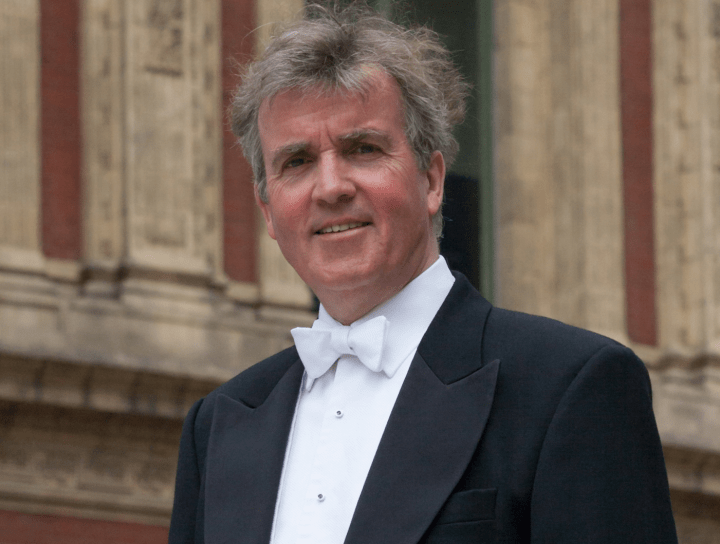
Richard Cooke was appointed Conductor of the Royal Choral Society in 1995, becoming Music Director in 1998, and has appeared with us in many concerts in the Royal Festival and Royal Albert Halls. Most notable of these have been their annual Good Friday performances of Handel’s Messiah, and spectacular Christmas Carol concerts. He has directed concerts with the RCS in the cathedrals of Peterborough, Winchester, Salisbury and Southwark. He has also recorded Orff’s Carmina Burana with the RCS together with the Royal Philharmonic Orchestra.

Read more

Image credit: Kevin Day

On 12 March 2020, pianist Igor Levit tweeted the following:

He then rushed out of his flat to purchase a cheap camera stand, returned home, then realised he also needed a stand for his phone, so he slipped out again. A friend was co-opted to help ensure the livestream was working. At 7pm Berlin time, Igor Levit gave his first livestreamed “haus konzert”.

Two days before, on 10 March, his birthday, Levit gave a concert in Hamburg; the next, in Cologne, the following day was cancelled, and it was now clear that live music, and similar activities, were being shut down, who knew for how long, in response to the global coronavirus pandemic.

Levit gave 52 house concerts via Twitter, dressed casually and livestreamed from his flat, its minimalist decor interrupted only by the shiny grand piano and a striking painting on the wall behind. It became a nightly ritual, for pianist and audience. He performed whatever repertoire “felt right” – from Beethoven to Morton Feldman, Nina Simone to Schubert and Bach; it didn’t matter, for these performances were about being together when we were isolated in lockdown. Hundreds of thousands of people tuned in via Twitter every night and the livestream feed was crammed with comments, compliments, emojis; there was a potent sense of a shared experience, even though we were all listening on our own, separated by lockdown, yet together. Spontaneous and unplanned, these house concerts helped to alleviate Levit’s – and others’ – lockdown despair and isolation, a means of keeping live music going when it was unclear when we would be allowed back into the concert halls to enjoy live music again, together. The Observer chose Levit’s online recitals as number one in its top ten classical picks for 2020.

From a pragmatic point of view, the house concerts were also an incentive for Levit to keep practising, an impulse shared by so many musicians whose performing careers stopped dead in March 2020. Like many of his musician colleagues, in the months before the covid lockdowns of 2020 and 2021, Levit was enjoying a busy career: without concerts, what was the point of practising?

Igor Levit performing in his Berlin flat during lockdown

Igor Levit’s new book ‘House Concert’ (published in the UK by Polity press in November) is about these Twitter concerts – the musician’s need to play, to express oneself through music, and the experience of playing in isolation to an unseen audiences of tens or even hundreds of thousands – but it’s about much more than this too.

Organised in a series of conversations and diary-type entries between Levit and German journalist Florian Zinnecker, ‘House Concert’ explores what it is to be a professional musician in the 21st century, and charts Levit’s career from an unknown young pianist to an internationally-acclaimed performer who plays to sold out houses around the world. It’s about the development of an artist; what it means to “be” a pianist and the need to perform, to share one’s music with others; the role and power of social media, in particular Twitter; the classical music industry; and wider issues of whether it is appropriate for an artist to engage in politics and other pertinent issues of our time – the pandemic, racism, climate change.

Levit’s path to international fame was not an easy one. As anyone who has attended one of his concerts will know, he is an uncompromising player who has a remarkable ability to create an intensity of sound and concentrated emotion when he performs (Alex Ross of The New Yorker describes him as “a pianist like no other”). His choice of repertoire may be considered “narrow” by some: eschewing the big showpieces or “top of the pops” of the pianist’s repertoire, he has instead chosen to focus on a handful of composers, recording and performing the complete piano sonatas of Beethoven, Bach’s Goldberg Variations, and Rzewski’s mighty ‘The People United Will Never Be Defeated’, together with lesser-known works by Busoni, Reger and Ronald Stevenson. As a young pianist at the start of his career, his uncompromising attitude and refusal to “play to the gallery”, as it were, to satisfy the whims of the market by including the popular classics in his programmes, meant that he was overlooked by artist managers and agents who felt he was not sufficiently marketable. This section of the book offers some really fascinating, honest and sometimes brutal insights into the workings and attitudes of the classical music “industry” today – where marketability is placed above artistic integrity. Levit didn’t fit the image that record companies were looking for and he was not willing to compromise; as a consequence it was a long time before he was picked up by a manager who was sufficiently sympathetic to his way of doing things. (An indication of how the industry reacts to the maverick, when Levit recorded Beethoven’s last five piano sonatas for his debut disc, there were more than a few mutterings that he was too young, that it was an impertinence that he should record these works at his age. It was a risk, but it was a worthwhile one: as anyone who has heard Levit perform late Beethoven knows, he is a master in this repertoire.)

The Twitter concerts throw an interesting light on the ecosystem of the classical music business and the power structures within in. In his house concerts, Levit demonstrated that it was possible to reach an audience directly via social media, without the usual tools of the business – marketing, publicity, staging. The simplicity of the Twitter concerts made them special – and for Levit they made him feel strong, that he wasn’t a fake.

For the pianist, Levit makes some challenging assertions regarding interpretation, context and the over-intellectualisation of music and its performance. He eschews the notion that music must have “meaning” or a distinct narrative, or that there is a “right way” to play it, and feels it is “just there to be experienced”. He sees the role of the musician as an “enabler”, one who brings the music to life from the page by making the piece his own.

“I’m telling my own story…the one that’s closest to my heart. The information about what happened to this piece one hundred, two hundred, three hundred years ago isn’t really my business.”

Igor Levit

In the realm of classical music, with all its conventions and tradition, where fidelity to the score and an appreciation of the context in which the music is written is regarded as essential to any “authentic” performance, Levit bucks the trend. Because he’s not interested in tradition or convention; for him it’s all about the music. He’s not interested in whether in his performances of Beethoven we hear the sound of Beethoven. For him, “it’s Beethoven, of course, but played by me.”

A keen activist, the book also explores Levit’s vocal opposition to German right-wing attitudes to immigration, anti-Semitism and online hate crime, and his advocacy for environmentalism, the plight of Syrian refugees. He’s received abuse and even death threats for his views but he refuses to submit to “artistic neutrality”. Does he believe music can make a difference, shift attitudes and effect change? Absolutely not: “If you believe music will make fascists less fascist, then you’re just naive” – and for this reason his music and his activism are kept largely separate, though his large social media following and reputation undoubtedly serves his activism.

This absorbing and highly readable book is neither diary nor straightforward artist biography. It shifts back and forth between periods in Levit’s life, from student days, to now, and explores a variety of themes, not all of them musical. It not only showcases the remarkable achievements of a charismatic classical musician, it also reveals their anxieties and doubts, strengths and weaknesses, and offers an important snapshot of the difficulties faced by professional musicians in a highly competitive industry riven with convention, power structures and tradition. The success of Levit’s house concerts – and similar livestream projects from other musicians all around the world – perhaps prove that the industry does not necessarily need all the trappings of “the business” to communicate and share the power and joy of music with others.

‘House Concert’ is published by Polity books (November 2022). Further information here


