Who or what inspired you to take up piano and pursue a career in music?

When I was very young, my grandmother made up a game of tapping a rhythm and having me name the song the rhythm was from. She seemed to think I was good at this game so one day, as a 4-year old,  I was taken to an admission test for a “special music school for gifted children” in Riga, Latvia (the former USSR).  After tapping out some more rhythms, singing and matching pitches, I remember being asked whether I wanted to play the violin because my 4th (ring) fingers were relatively long.  I said that I couldn’t play the violin “because we didn’t have one at home but we already had a piano” and so it was decided.  I spent 9 years at that school and received an excellent musical foundation.  It was always assumed by my family that I would become a musician.  There was also a personal experience of catching the music-making “bug” which remains a vivid memory. I was once practicing a piece by Khachaturian called “Ivan’s Song” and suddenly I heard myself play and appreciated the beauty of the music; there also seemed to be a meaning to that haunting melody which couldn’t be put into words.  I guess a part of me understood the importance of this experience and I realized that I have a skill which, in turn, gave me a sense of identity.

Who or what have been the most important influences on your musical life and career?

I was always fascinated by the piano’s orchestral potential and studied many transcriptions, primarily by Liszt and Busoni. That led me to making my own piano versions of music I was dying to play on the piano, like “A Night on Bald Mountain by Mussorgsky.”  Not being a composer, transcribing still gives me a feeling of creating something new.   I also love jazz and the freedom it gives and try to bring an fresh, improvisatory element to my playing.  And of course there were various teachers along the way, Vladimir Feltsman being the most important one.

What have been the greatest challenges of your career so far?

Unquestionably, the need to propel one’s career is a challenge to many musicians and it has been a source of many soul-searching hours for me. Motherhood was also a show-stopper, literally. That existential struggle between just wanting to play the piano for my personal growth as a musician and serving the larger purpose of bringing art and beauty to people because of my training and calling is always present.

Which performance/recordings are you most proud of? 

My most recent recording, the newly transcribed set of “Brandenburg Duets” is a result of several painstaking years arranging all 6 Brandenburg Concertos by Bach for piano-4-hands.  Embarking on a project of such magnitude taught me an important lesson on perseverance. I am very happy with the way the recording came out and grateful to my piano partner Jenny Lin and the Grand Piano label of Naxos Records for making the CD set a reality.  The feedback has been tremendous so far as I am constantly being told by listeners that they just love how the music makes them feel and how the piano conveys the material somewhat more clearly than an orchestra in this case and brings the concertos into a new perspective.  It feels great to have been able to pull this off and I can’t wait to get the arrangements published.

Which particular works do you think you play best?

I have always found playing Bach gratifying, especially the Partitas, since it’s a challenge and a thrill to memorize long sequences of such superior material and to have to focus on precision and conveying intentional meaning to such a degree.  His music is an endless source of wonder.  I love Liszt, especially his poetic and mystical side, and have had some transformative experiences while playing his music.  I feel a special affinity for the musical personalities of Schumann and Brahms and the Russians, of course, since they permeated my upbringing.  I also absolutely revel in Spanish music, particularly Albeniz.

How do you make your repertoire choices from season to season?

There is usually a mental queue of repertoire in my head and possible combinations which evolve over time.  I try to play the music I enjoy most.

Who are your favourite musicians?

I have heard some amazing recitals by Radu Lupu where one’s attention was held from the very first note until he walked off stage.  I love Martha Argerich, Richter, the recordings of Gyorgy Cziffra and Rachmaninov.

Do you have a favorite concert venue to perform in and why? What is your most memorable concert experience?

I had an epiphany a long time ago while waiting to perform a harpsichord recital at a small venue on City Island, in the Bronx.  In the middle of the usual, mild pre-concert anxiety, it occurred to me that the audience members were gathering to hear Bach at noon on a Sunday because it was important to them.  They made the trip instead of taking a nap or watching TV.  My nervousness and ego didn’t matter, what mattered was transmitting the music they wanted to hear in a manner worthy of the task.  Since then the venues and other details became secondary to the privilege of being the medium for this singular venture.

As a musician, what is your definition of success?

Being able to hold people’s attention and transport them into a different time and place.

What do you consider to be the most important ideas and concepts to impart to aspiring musicians?

As much as I venerate iconic pianists, I think that one shouldn’t listen to recordings before learning a particular piece well enough to have found one’s own interpretation, however initially tentative it may be.   Other than hours of practice and years at schools and conservatories, It’s important to have cultural and artistic references to gain a deeper understanding of music we perform.  Traveling, reading, looking at art and investigating historical details will help you find a unique voice and interpretation.  In turn, that unique voice will help a musician find success in today’s musical market.

What is your idea of perfect happiness? 

Being alone in a (pleasant) place I’ve never been before.

What is your most treasured possession?

Without a doubt, my Bosendorfer piano.


Eleonor Bindman’s Brandenburg Duets were completed and recorded in 2017 and released by Naxos Records on their Grand Piano label in March 2018


Praised for “lively, clear textured and urbane” performances and “impressive clarity of purpose and a full grasp of the music’s spirit” (The New York Times), New York-based pianist, chamber musician, arranger, and teacher, Eleonor Bindman has appeared at Carnegie Hall, The 92 Street Y, Merkin Hall, Alice Tully Hall, and on solo concerto engagements with the National Music Week Orchestra, the Staten Island Symphony, the Hudson Valley Philharmonic, the New York Youth Symphony, and The Radio and Television Symphony Orchestra of Moscow, Russia. Ms. Bindman is a prizewinner of the New Orleans, F. Busoni and Jose Iturbi international piano competitions and a recipient of a National Foundation for the Advancement of the Arts award.

Born in Riga, Latvia, Ms. Bindman began studying the piano at the E. Darzins Special Music School at the age of five. Her first piano teacher, Rita Kroner, hailed from the studio of Heinrich Neuhaus, the venerable Russian piano pedagogue. After her family immigrated to the United States, she attended the High School of Performing Arts while studying piano as a full scholarship student at the Elaine Kaufmann Cultural Center. She received a B.A. in music from NYU and completed her M.A. in piano pedagogy at SUNY, New Paltz under the guidance of Vladimir Feltsman. The Poughkeepsie Journal describers Ms. Bindman as a strong pianist who attacks her work with great vitality and emotion…and mesmerizes her audiences with her flair and technique” (Barbara Hauptman).
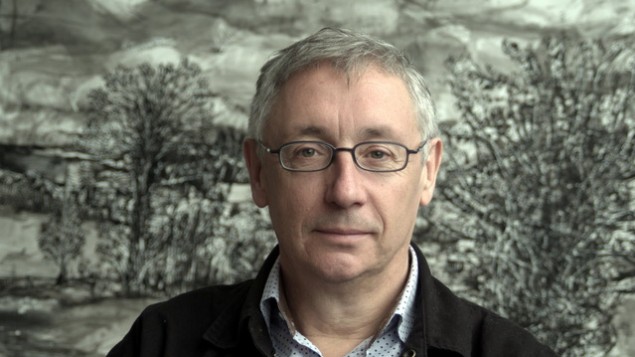

 

More about Eleonor Bindman


1940-fitandcrop-635x357

Who or what inspired you to take up composing, and pursue a career in music?

I began learning to play the piano at 10. I fell in love with the concertos of Liszt and Rachmaninoff and decided to write one of my own – at about age 12. (My family were consistently opposed to music as a career, and indifferent to music generally).

Who or what were the most significant influences on your musical life and career as a composer?

My biggest influence was from Stockhausen, my teacher for 3 ½ years, especially his professionalism and architectural approach to music. He began work on a piece in a similar way to that of an architect designing a skyscraper. Hugely logical, practical, always with an eye on the big picture, and no fuzzy thinking whatsoever. No detail in a Stockhausen piece was vague or left to chance.

The second big influence was African textiles (and later African music), which showed me possibilities that were outside the remit of serial composition.

And the third and possibly the most long-lasting influence was Morton Feldman, whose anti-conceptualism was in direct opposition to Stockhausen’s conceptualism, and very similar to what I had observed and delighted in in African music and art.

What have been the greatest challenges/frustrations of your career so far?

The greatest challenge and frustration for any artist is probably dealing with arts administrators (of all kinds) who have a different agenda, work ethic and time-scale.

What are the special challenges/pleasures of working on a commissioned piece?

Difficult to say. It depends on the commission. The greatest pleasure perhaps is writing for performers one knows and admires.

Some instruments present a special challenge. The most difficult commission I’ve accepted is a recent concerto for Uilleann (Irish) pipes and large orchestra. The pipes presented many unexpected challenges, not least of which is that the instrument and its traditional music is something of a national treasure (and therefore has to be treated fairly gently) and that traditional players do not normally read notation. And it has a very limited dynamic and pitch range. Writing a piano concerto, say, by comparison is a piece of cake.

What are the special challenges/pleasures of working with particular musicians, singers, ensembles and orchestras?

Possibly the only advantage of a career in music is that one gets to work with great musicians. I find great musicians give you 120% of what you write – they discover things you didn’t know were in your own work or you didn’t even know were possible. Poor musicians give 80% (and are often quite happy with that!). The most satisfying part of the composition process is the rehearsal period – it’s during the rehearsals that the piece is completed. Musicians or ensembles who are prepared to work (at some length) with the composers are the ones who nearly always produce the best results. I have no time, nor respect, for musicians who fancy themselves as sight-readers. Sight-reading skill for me is not an indication of musicianship nor is it music-making. It’s a primary tool – nothing more.

Of which works are you most proud?

Difficult again… Proud? I don’t know. I like what I achieved, maybe, in my 1st (White Man Sleeps), 2nd (Hunting:Gathering), 9th (Shiva Dances) and 12th String Quartets, I enjoyed playing Cicada for 2 pianos, and I’m fond of violin:piano and some of my newest pieces which haven’t been performed yet, like 7 Bass Winds, and a new clarinet trio (called clarinet:violin:piano (and CPE), which I think marks a departure.

How would you characterise your compositional language?

I have devoted most of my work to non-conceptual, or, if you like, existential composition: writing with no pre-planning, no concepts, and allowing the material (rather than an ‘idea’) dictate where the music goes.

How do you work?

I sit down and write (at the computer) usually very early in the morning, until I am tired and lose focus. I never work in the evening. Starting just before sunrise can mean (in summer) that you get 5 hours’ work done before any interruptions.

Who are your favourite musicians/composers?

Huge question, huge answer. Depends what you mean, too – people I’ve worked with or not? My list of musicians I’ve worked with and with whom I love working is too long.

So my bucket list of whom I would like to work with begins with pianist: Mikhail Pletnev; violinist: Patricia Kopatchinskaja; orchestra: Berlin Philharmonic …

Favourite pianists from the past – I have a weakness for virtuosos: Sviatoslav Richter, Vladimir Horowitz, Josef Lhevinne, David Saperton (strangely unknown), Moritz Rosenthal…

Composers: 20th Century, Stravinsky, (Ravel), Stockhausen, Feldman

19th: Chopin Liszt Debussy 18th Beethoven of course, Mozart of course, CPE Bach, 17th Bach, Sainte Colombe, etc etc etc.

As a musician, what is your definition of success?

Doing a satisfying piece of work.

What do you consider to be the most important ideas and concepts to impart to aspiring musicians?

The more you work, the easier it gets.

The more you know, the better your work.

Where would you like to be in 10 years’ time?

At home, working (or in the sun, maybe).

What is your idea of perfect happiness?

Being with the one you love and both being in perfect health.

What is your most treasured possession?

Possession? Can one possess a dog?

What do you enjoy doing most?

Sleeping, eating, in that order.

What is your present state of mind?

Happy.


Kevin Volans was born in Pietermaritzburg, South Africa, and studied with Karlheinz Stockhausen in Cologne. He now is an Irish citizen.

In 1979 after research trips to South Africa, he began a series of pieces based on African composition techniques, which occupied him for the next 10 years.

After a productive collaboration with the Kronos quartet in the 1980s his work, principally in the field of chamber and orchestral music, has been regularly performed worldwide.

In 1997 the BBC Music Magazine listed him as one of the 50 most important living composers and he was described by the Village Voice as “one of the most original and unpredictable voices on the planet”.

Latterly, he has turned his attention to writing for orchestra and as well as collaborating with visual artists. Principal performances in the last years include the Berliner Musikfest, Vienna State Opera, Lincoln Center New York, Conzertgebouw Amsterdam, Pompidou Centre Paris and the BBC Proms.

kevinvolans.com

Who or what inspired you to take up the piano and pursue a career in music?

I don’t think I can give a definite answer but I remember an immediate fascination with the piano though it wasn’t really something I seriously pursued until the age of about 11. Having said this, I don’t think one really chooses to pursue music but, rather, that it is a calling.

Who or what have been the most important influences on your musical life and career?

I suppose, repertoire-wise, Marc-André Hamelin was the biggest influence – his recordings really opened the door to me as to what there was off the beaten track. Opera has also been quite important to me in recent years. Aside from these more obvious things, art and literature (contemporaneous to whichever music I’m studying) are generally of huge importance when it comes to cultivating an understanding of the music.

What have been the greatest challenges of your career so far?

I think most musicians, if they’re honest, will answer that earning a living is up there. In connection to this is the aspect of striking a healthy balance between teaching and playing together with whatever else we have to do.

Which performance/recordings are you most proud of?

There are some tracks I’m very proud of. I think all CD recordings I’ve made I’m proud of in different ways but, for me, I also think it’s more a sense of what each CD represents; what was going on in my life at the time and the memories connected with learning the works.

Which particular works do you think you play best?

At the moment I am especially drawn to the nineteenth century. I feel I have a particular flare for operatic fantasies but if you had told me that ten years ago I would have laughed in utter disbelief!

How do you make your repertoire choices from season to season?

At the moment, it tends to revolve around what I’m doing recording-wise but not exclusively so. There are also certain things I imagine I would like to play at certain times of the year – not quite sure why that is but the seasons do influence this.

Do you have a favourite concert venue to perform in and why?

I can’t say I do though there are places I enjoy playing and I do sometimes programme works specifically for the space and instrument if I feel it might be particularly gratifying.

Who are your favourite musicians?

Marc-André Hamelin, Myra Hess, Georges Cziffra, Raymond Lewenthal, Maria Callas and Richard Bonynge to mention but a few.

What is your most memorable concert experience?

Probably giving the Hellenic première of the Liszt Hexaméron in Athens, 2012.

As a musician, what is your definition of success?

Earning a living – the rest is an added bonus.

What do you consider to be the most important ideas and concepts to impart to aspiring musicians?

I think a sense of what our purpose is. It’s something so obvious it’s overlooked. The world will always need music – it comforts, enlightens and, above all, unites us. Sharing it I regard as a solemn duty and one of grave importance in these fractured and distorted times.


Mark Viner is recognized as one of the most exciting British concert pianists of his generation and is becoming increasingly well known for his bold championing of unfamiliar pianistic terrain. He studied at the Purcell School of Music and the Royal College where his principal teachers included Tessa Nicholson and Niel Immelman. Having won first prize at the C.V. Alkan – P. J. G. Zimmerman International Piano Competition in Athens in 2012, his international engagements have flourished, he has been broadcast on German Radio and been invited to the Oxford Lieder Festival, Cheltenham Music Festival, ProPiano Hamburg and Husum Rarities of Piano Music in Germany. Last year he was invited to play for the Prince of Wales’s visit to his hometown of Oxford. Due to his close association with unjustly neglected areas of the piano literature, he was recently elected Chairman of the Alkan Society.

His recent recording of Aklan’s 12 Études in the major keys Op. 35 was praised for ‘turning Alkan’s forbidding torrents of notes into real music’.

Who or what inspired you to take up the violin and pursue a career in music?

I grew up in a musical family, so I was surrounded by music from the beginning. I seemed to like the violin from the moment I started, and my maternal grandmother was a violinist, which helped!

Who or what have been the most important influences on your musical life and career?

Outside of my family, like all violinists I listened to the greats, like Kreisler, Milstein etc. Musically speaking, Pierre Boulez had a decisive influence, especially on how to understand and then interpret the pieces I play.

What have been the greatest challenges of your career so far?

Every concert is a challenge! Playing the violin is extremely difficult, so it involves a lot of practice. And most of it is scales, exercises, etudes.

Which performance/recordings are you most proud of?

I am very happy with the most recent one, which sketches a history of Italian violin music. The programme (Sciarrino, Tartini, Berio, Paganini) is fascinating!

Which particular works do you think you play best?

I have a soft spot for classical modernity, especially the second Viennese school. But as in the recording I mentioned above, my main interest lies in the juxtaposition of works from different times that have an inherent link. The compartmentalized nature of how we see music is not only absurd, but also counterproductive; we do not allow ourselves to understand the scope of what we hear and play because of this.

How do you make your repertoire choices from season to season?

Sometimes I choose, sometimes the promoter chooses, sometimes a combination of both. I like when the programmes I play have an inner logic, the pieces should communicate with each other.

Do you have a favourite concert venue to perform in and why?

The Pierre Boulez Saal in Berlin is a unique venue because of its shape, and also the acoustics. I consider myself lucky to be able to play there regularly.

Who are your favourite musicians?

See earlier question…. Other than that, I am happy to have had the experience of working with great musicians, and hearing many more.

What is your most memorable concert experience?

If I had to pick one, it would be a concert Boulez did with the Berlin Philharmonic many years ago. The programme was beautiful, ingenious and quite amusing in its titles: Webern 6 pieces, Schönberg 5 pieces, Bartók 4 pieces, Berg 3 pieces.

As a musician, what is your definition of success?

Unlike in sport, we cannot quantify success, so we go by other criteria, the most important being whether we have understood the music we played and could convey this to the public. Other than that, it helps to play in tune obviously.

What do you consider to be the most important ideas and concepts to impart to aspiring musicians?

The most important thing is to stress the importance of the music we play, and that we are in fact only there to convey an understanding of it. People might be attracted to star soloists and the like, but what they actually hear is Mozart, Beethoven, Brahms and so on.

Michael Barenboim makes his his UK recital debut on 18 June at Aldeburgh Festival, performing works by Bach, Bartók, Michael Hersch and a world premiere from his close friend Johannes Borowski.

Further information


Violinist Michael Barenboim is one of the most versatile and talented artists of his generation and has performed with some of the world’s most prestigious orchestras and conductors, including the Wiener Philharmoniker, Chicago Symphony Orchestra, Mahler Chamber Orchestra under Pierre Boulez and Münchner Philharmoniker conducted by the late Lorin Maazel.

michaelbarenboim.com


(photo by Marcus Höhn)

