
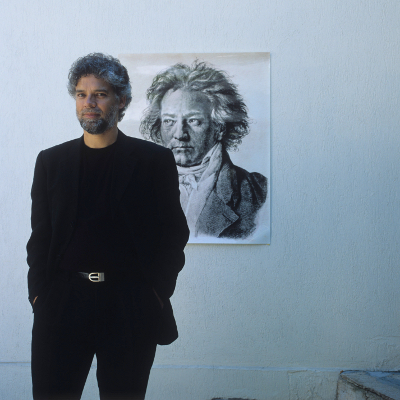
A tribute from pianist François-Frédéric Guy
« ON VOULAIT ÊTRE POLLINI ». Hommage
Oui. On voulait être Pollini.
Non par je ne sais quelle prétention ou folie, mais plutôt par nécessité.
Quand on écoutait l’un de ses très nombreux enregistrements, quand on sortait de l’un de ses concerts.
Lorsqu’adolescent, on se préparait à une vie de musicien et que l’on écoutait Pollini jouer, une force, une énergie vitale prométhéenne – beethovenienne – s’emparait de chacun d’entre nous. Passée la sidération, voire l’incrédulité devant ce qu’il venait d’accomplir sur scène, c’est un sentiment volontariste qui s’emparait de nous. Pour ma part j’allais immédiatement travailler, lire de la musique, éberlué par les programmes que Pollini proposait au «grand public».
Quand on écoutait Gilels ou Richter on était renversé, quand on écoutait Radu (Lupu) on pleurait à chaudes larmes devant sa poésie désarmante et Brendel, avant qu’il ne renonce à se produire en public nous livrait les secrets de la beauté pure des classiques viennois comme on solutionne un rébus mystérieux.
Mais quand Pollini venait de jouer… on voulait être Pollini … Quand je l’entendis jouer la Hammerklavier je voulais immédiatement la travailler. Peu importait qu’elle fut inaccessible … j’ai fini par en faire 3 enregistrements et la jouer plus d’une centaine de fois … On voulait être Pollini!!!
Un soir à Pleyel en 1981 c’est le premier concerto de Bartok avec Baremboim à la baguette. « J’oblige »mes parents à braver les embouteillages de l’autoroute A13 et m’y emmener alors que mon père n’écoutait que du Chopin et du Rachmaninoff !! J’avais 11 ans…
Quelque temps plus tard, j’achète mon premier CD: Pollini justement dans les deux premiers concertos de Bartok avec son complice de toujours Claudio Abbado. Dès lors je n’eus de cesse que de jouer ces concertos et c’est ce qui arriva bien plus tard!
C’était cela la magie « Pollini » : il donnait envie de se surpasser; d’aller au-delà de ses capacités réelles, au-delà du répertoire conventionnel! Car ses programmes étaient, pour notre génération, une source d’inspiration EN SOI.
En 2004 je suis invité à jouer avec l’Orchestre de Paris au festival Musica de Strasbourg sous la direction d’Alexander Briger. Il s’agit du mal-aimé concerto de Schoenberg – mais que moi j’adore depuis que j’ai entendu le disque de Pollini – et que je cherche une occasion de jouer. Vient la question du complément car le concerto est court (et foudroyant!)je suggère la grande pièce de Luigi Nono «Come Una ola do fuerza y luz» avec piano principal. Frank Madlener le directeur artistique du festival me dit que Pollini a joué l’œuvre à Paris sous la direction d’Abbado en 1975 avec le concerto de Schoenberg !!!! Je voulais être Pollini, encore une fois!
Quand il interpréta le 25 janvier 2009 à la Salle Pleyel la deuxième sonate de Boulez, comme s’il s’agissait d’une ultime sonate de Beethoven récemment retrouvée dans une bibliothèque d’une obscure université, après la tempête et l’Appassionata, le public pourtant réputé conservateur à l’époque, salle Pleyel – et qui quittait souvent la salle après l’entracte si quelques dissonances apparaissaient dans les œuvres proposées, est resté silencieux quelques secondes – une éternité! – après que le Géant ait joué par cœur sans la moitié d’un quart de huitième d’erreur ce monument INATTEIGNABLE pour la plupart d’entre nous. Puis ce fut l’explosion jubilatoire, incontrôlable, libératrice des applaudissements avec douze rappels à la clé pour Boulez le compositeur-présent ce soir-là- et son interprète venu d’un autre monde. Les mots pour qualifier ce à quoi on venait d’assister oscillaient entre « que c’est beau » tout simplement, à « comment est-ce possible », « cela dépasse tout ce qu’on peut imaginer » et qu’on ne se méprenne pas: ce n’était pas juste la « performance ». Et ce n’était pas la « beauté » de la musique comme on l’entend habituellement – d’ailleurs ce chef d’œuvre organise presque le CHAOS de la beauté Traditionnelle et la PULVÉRISE. NON, ce qui était beau c’était POLLINI qui domptait le chaos, qui surpasse l’humain : Sur(passe)humain. Le sentiment d’assister à quelque chose qui nous dépasse, du domaine de la transcendance.
On me demandait il y a quelques heures quel disque de Pollini était le plus cher à mon cœur. Ce choix est tout simplement impossible pour moi (ce qui est rarissime !). Chacun de ses disques est immédiatement devenu une référence quel que soit le répertoire abordé! Je ne connais pas de disque de Pollini que je rejetterais.
Et c’est là qu’on réalise l’envergure de ce Seigneur. Son ambitus de répertoire laisse pantois, tout simplement. Comment choisir entre ses préludes de Chopin, la sonate en fa dièse de Schumann- qui n’a pas en tête l’entrée hautaine de l’introduction du premier mouvement, , subtilement, provoquant un choc émotionnel originel qui ne nous quittera pas de toute la sonate – ou alors la fantaisie de Schumann ou celle de Chopin(!), les sonates de Beethoven : les dernières? La Waldstein qu’il jouait comme personne à en donner le tournis? Les concertos? l’Empereur où il régnait en maître ? Ou bien les premiers avec Jochum, pétillant comme du Prosecco ? les Brahms ? Mais alors le 1er avec Karl Böhm (pas de second car Böhm décède), ou alors ceux avec Abbado? En live ou en studio? Petrouchka, la septième de Prokofiev ? Les œuvre solo des trois viennois? Ou le concerto du plus célèbre d’entre eux, Schoenberg ? Le 488 de Mozart avec Böhm encore?
À chaque parution que nous guettions (combien de discussions avec Nicholas Angelich!), c’était l’excitation maximale ! « Alors, les dernières sonates de Schubert? Sa Wanderer était tellement olympienne »….. ah oui, il jouait Schubert…aussi … et la sonate de Liszt ! Je viens d’écouter une Totentanz en concert. Je ne me souvenais pas qu’il ait jamais joué cette œuvre ! Époustouflant ! Et les polonaises de Chopin tout comme la première ballade qu’il jouait si souvent en Bis ! Et les études ! Au cinquième bis après la ballade, l’opus 90 entière et le premier opus 11 de Schoenberg, on attendait tous l’étude opus 25/11 de Chopin pour clôturer un nouvel événement musical qui allait nous tenir éveillés des jours entiers comme dopés à l’énergie Pollinienne!
Et, quelquefois, le Sur-homme, Übermensch, était tendu presque crispé devant le clavier, comme conscient de l’énormité de la tâche à accomplir, mais une conscience de sur- homme! Il plaçait tellement haut la barre de son exigence et celle de la musique qu’il interprétait, qu’il y avait curieusement des soirs difficiles où l’on s’accrochait à notre siège espérant qu’il « tienne le coup » comme dans ce deuxième concerto de Chopin avec Barenboim et l’Orchestre de Paris il y a si longtemps… et que j’avais piraté avec un Walkman !!! C’était cette fragilité momentanée qui le rendait humain et qui parlait à notre for intérieur, pétri d’angoisses de toutes sortes, de doutes, de folles espérances, à la veille d’embrasser la carrière de musicien.
Pour toutes ces raisons et mille autres encore, pour son incarnation musicale, son insatiable soif de défis, de découvertes, d’avant-garde, on voulait être Pollini !
Adieu au Géant, adieu au Maître, adieu au Seigneur du clavier.
Translation:
Yes. We wanted to be Pollini.
Not because of I don’t know what pretense or folly, but rather because of necessity.
When we listened to one of his many recordings, when we left one of his concerts.
As teenagers, we were preparing for the life of a musician and listening to Pollini play, a strength, a Promethian – Beethovenian – vital energy seized from each of us. After the seduction, seeing the disbelief of what he had just accomplished on stage, it was a voluntary feeling that was overwhelming us.
For me, I immediately went to work, read music, amazed by the programmes Pollini proposed to the general public.
When we listened to Gilels or Richter we were knocked down, when we listened to Radu (Lupu) we cried hot tears in front of his disarming poetry and Brendel, before he gave up performing in public, delivered the secrets of the pure beauty of Viennese classics like solving a mysterious puzzle.
But when Pollini came to play… we wanted to be Pollini… When I heard him play the Hammerklavier I immediately wanted to work on it. Never mind that it was inaccessible… I ended up recording it three times and played it over a hundred times… We wanted to be Pollini!!!
One evening in the Salle Pleyel in 1981 – Bartok’s first concerto with Baremboim conducting. “Forcing” my parents to brave the A13 traffic and take me there when my dad only listened to Chopin and Rachmaninoff!! I was 11 years old…
Some time later, I buy my first CD: Pollini in the first two concertos of Bartok with his constant accomplice Claudio Abbado. From then on I never stopped playing these concertos, and that’s what happened much later!
This was the “Pollini” magic: he wanted to exceed himself; to go beyond his real abilities, beyond the conventional repertoire! Because his programmes were, for our generation, an inspiration IN ITSELF.
In 2004 I was invited to play with the Orchestre de Paris at the Musica de Strasbourg festival under the direction of Alexander Briger. It’s Schoenberg’s much-loved concerto – I’ve loved it since I heard Pollini’s CD – and I’m looking for a chance to play it. The question of the pieces to complement the programme comes up because the concerto is short (and lightning!). I suggest Luigi Nono’s great piece “Come Una ola do fuerza y luz” with principal piano. Frank Madlener, artistic director of the festival, tells me that Pollini played the work in Paris under Abbado’s direction in 1975 with the Schoenberg concerto!!!! I wanted to be Pollini, again!
When he performed Boulez’s second sonata on January 25, 2009 at the Salle Pleyel, as if it were a final sonata by Beethoven recently found in a library of an obscure university, after the storm and the Appassionata, the audience, although considered conservative at the time – and who often left after the intermission if some dissonance appeared in the works performed – remained silent for a few seconds – an eternity! – after the Giant had played the Boulez from memory without half a quarter of an eighth of an error, this monument UNATTAINABLE for most of us. Then there was the jubilant, uncontrollable, liberating explosion of applause with twelve encores for Boulez, the composer – present that evening – and his interpreter from another world. The words to describe what we had just witnessed oscillated between “how beautiful it is” quite simply, to “how is this possible?”, “this goes beyond anything we can imagine”, and, make no mistake, it wasn’t just the “performance”. And it was not the “beauty” of music, as we usually hear it – in fact this masterpiece almost organizes the CHAOS of traditional beauty and PULVERIZES it. NO, what was beautiful was POLLINI who tamed chaos, who surpasses the human, sur(passes)human. The feeling of witnessing something beyond us, in the realm of transcendence.
I was asked a few hours ago which Pollini album was dearest to my heart. This choice is simply impossible for me (which is rare!) ). Each one of his albums immediately became a reference no matter what the repertoire presented! I don’t know of a Pollini album I would turn down.
And that’s when we realize the magnitude of this Lord. His breadth of repertoire simply leaves you speechless. How to choose between Chopin’s preludes, Schumann’s sonata in f minor – which does not have in mind the haughty entry of the introduction to the first movement, subtly, provoking an original emotional shock which will not leave us throughout the entire sonata – or Schumann’s fantasy or Chopin’s, Beethoven late Sonatas? The Waldstein that he played like a dizzy person? The concertos? The ‘Emperor’, where he reigned as a master? Or the first ones with Jochum, sparkling like Prosecco? Brahms? But then the first one with Karl Böhm (no second because Böhm dies), or the ones with Abbado? Live or Studio? Petrouchka, Prokofiev’s seventh? Solo work of the three Viennese? Or the concerto of the most famous of them all, Schoenberg? Mozart’s K488 with Böhm again…
With each release (so many chats with Nicholas Angelich!), it was maximum excitement! “So, Schubert’s last sonatas?”. “His Wanderer was so Olympian”… Ah yes, Schubert again…. and the Liszt sonata! Just heard Totentanz live. I don’t remember him ever playing this piece! Breathtaking! And Chopin’s polonaises, just like the first Ballade he played so often in encore! And the etudes! At the fifth encore after the Ballade, the whole Opus 90 and Schoenberg’s first opus 11, we were all waiting for Chopin’s opus 25/11 study to close a new musical event that would keep us awake all day as if we were drugged with Pollinian energy!
And, sometimes, the Superman, Übermensch, was tense in front of the keyboard, as if aware of the enormity of the task to be accomplished, but with a consciousness of superman! He set the bar so high for himself and that of the music he played, that there were curiously difficult evenings when we clung to our seat hoping he would “hold on”, like in the second Chopin concerto with Barenboim and the Orchestre de Paris so long ago … and I pirated it with a Walkman!!! It was this momentary fragility that made him human, and spoke to our inner strength, filled with all kinds of anguish, doubts, crazy hopes, on the eve of embracing the career of a musician.
For all these reasons and a thousand more, for his musical incarnation, his insatiable thirst for challenges, discoveries, the avant-garde, we wanted to be Pollini!
Farewell to the Giant, farewell to the Master, farewell to the Lord of the keyboard.
Maurizio Pollini
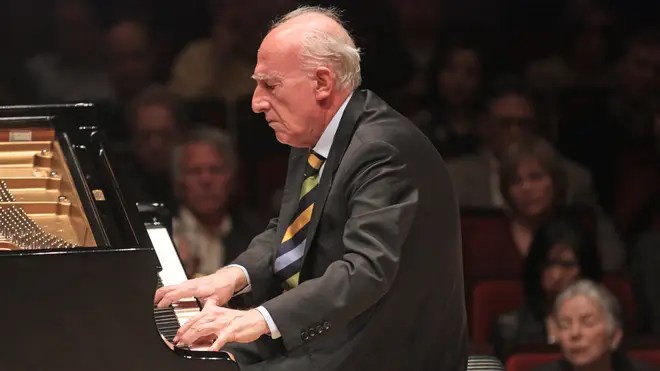
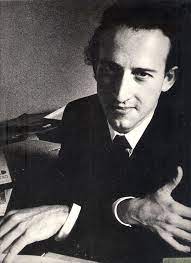
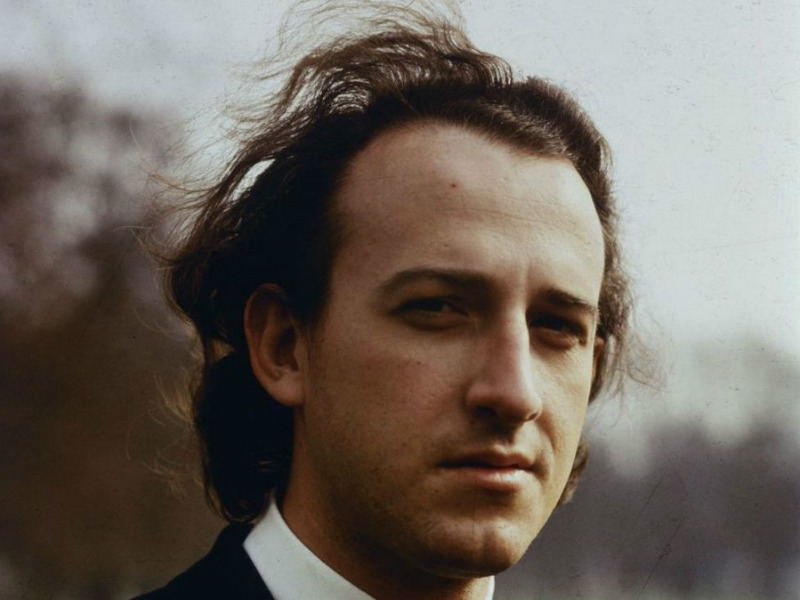
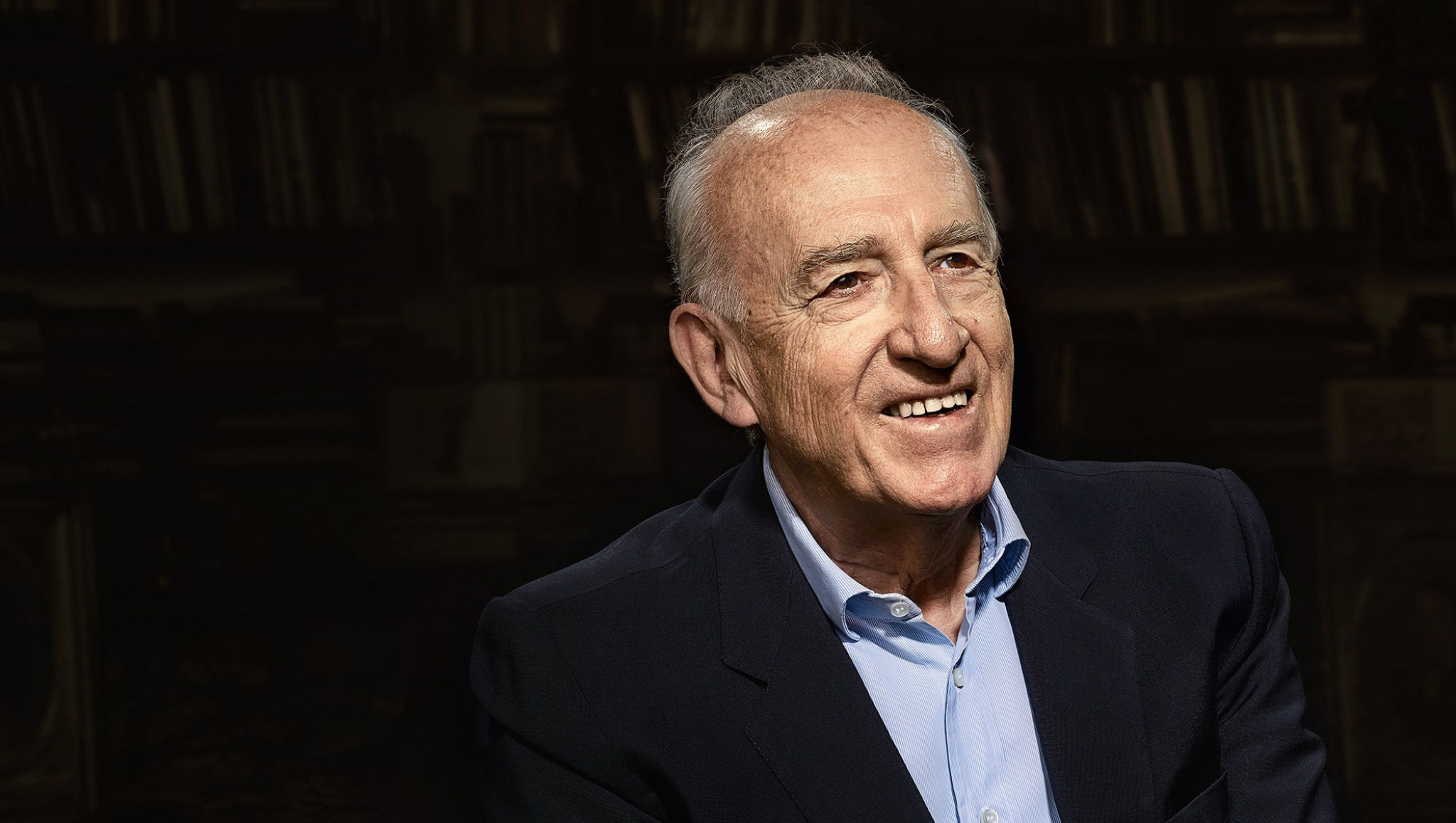
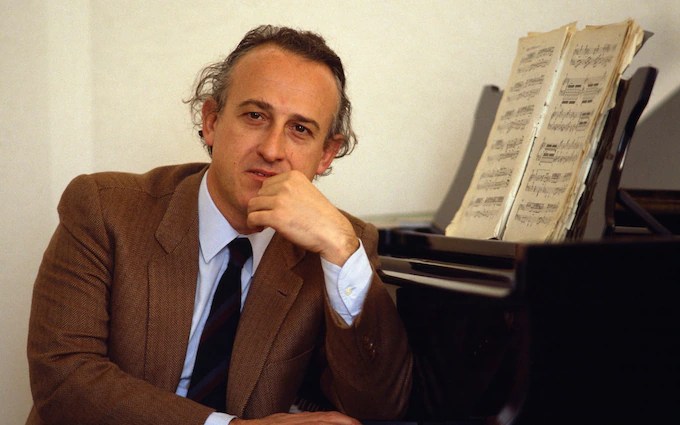
This tribute first appeared on Facebook. Thank you to François-Frédéric for allowing me to reproduce it here
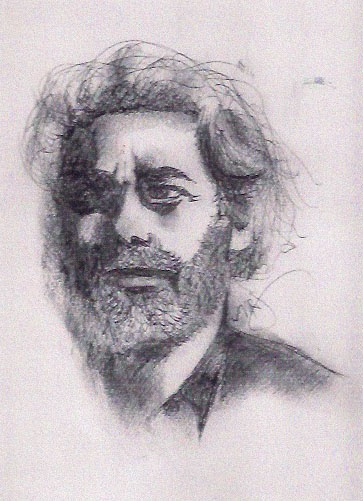 Guest interview by Michael Johnson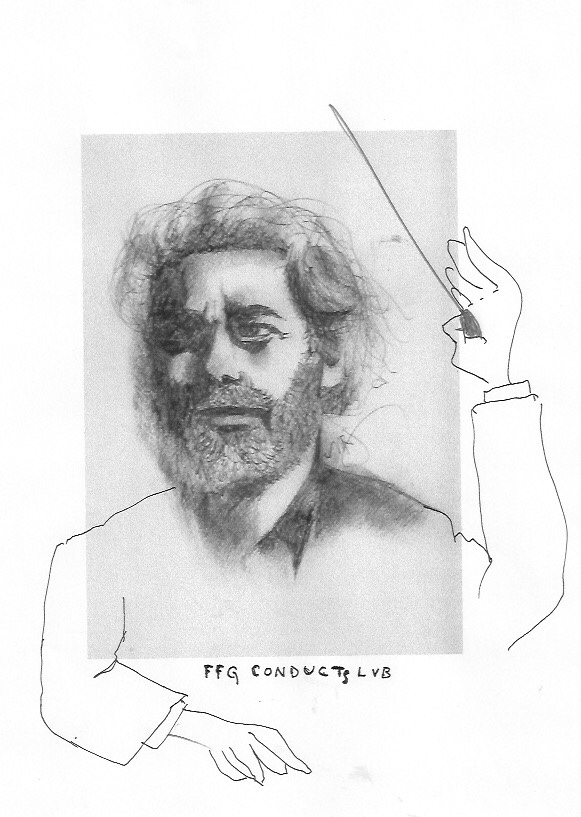




 The Cross-Eyed Pianist