Guest post by TC

The score is the backbone of a film’s emotional landscape, serving as an integral element that enhances storytelling, deepens characters, and elevates or emphasises cinematic moments. Composed to underscore the narrative and visuals, a good score can transform the viewing experience from ordinary to extraordinary, subtly guiding audience reactions and infusing scenes with mood and meaning.

Good music can really make a film (and bad music can really harm a film), and is a very powerful tool. Music can be used to set the mood and move on, or delay, and inform the action. Some film scores enjoy iconic status: Brief Encounter uses Rachmaninov’s Second Piano Concerto, and the rich romanticism and pathos of this music truly enhances the narrative.

It’s no accident that some of the best modern and contemporary classical music (using the term loosely here) comes in the form of film scores (think composers like Erich Korngold, William Walton, Bernard Herrmann, Howard Shore, Maurice Jarre, John Williams, Ennio Morricone, Hans Zimmer, Yann Tiersen….) and is performed outside of the cinema by leading international orchestras. These programmes are enormously popular with audiences, not only because the scores are familiar from the films, but also because the music itself is so good that it can stand alone from the visuals.

The popularity of film music is regularly reiterated by radio stations such as ClassicFM, which regularly broadcast excerpts from the soundtracks of, for example, Lord of the Rings (Howard Shore), The Mission (Ennio Morricone), The Hours (Philip Glass) and more, and certain composers of film scores enjoy near-legendary status in the world of film and music

I’ve been to several film screenings with live score, an experience which can enhance one’s experience of both the film and the music, together and separately (and such performances do, I think, really highlight a good score).

The film Blade Runner (released in 1982) has an arresting score by Vangelis – considered by some to represent the very essence of Vangelis’ sound, with its shimmering synthesisers, sweeping orchestral passages, and haunting melodies. It has expansive majesty but also moments of tenderness, intimacy and poignancy. It is possibly one of the best film soundtracks ever.

Image credit: Paul Sanders

We went to a screening of Blade Runner: The Director’s Cut (2007) at the Bournemouth International Centre (BIC), a building of unrelieved dreariness, more used to hosting political party conferences than cult films with orchestra. Previously, we’ve seen films with live score at the Royal Festival Hall, which boasts comfy seats and pleasant social areas. The screen was perhaps too small, the film itself interrupted by subtitles (which as the action progressed fortunately became easier to ignore).

If you are familiar with Blade Runner, you will know that it is, on the surface at least, a science-fiction film, set in a dystopian future Los Angeles in which synthetic humans called Replicants are bio-engineered by the Tyrell Corporation. Renegade replicants are hunted down by ‘blade runners’. Harrison Ford plays Deckard, a disllusioned, world-weary policeman/blade runner. It’s based on a book by Philip K Dick, Do Androids Dream of Electric Sheep?, and it poses philosophical questions on the meaning and power of memories, lived experience, and, above all, what it means to be alive. This is most powerfully portrayed by the character Roy Batty (leader of the renegade Replicants, played by Rutger Hauer), who knows his time on earth is finite and his life is precious. He provides an important foil to the weary Deckard. In the closing scenes of the film, Roy’s touching death monologue reinforces the message of the entire film and expresses the fundamental experience of everyone who has ever lived. And it was here that the live score really highlighted the power and the poignancy of this message.

From the outset, despite the rather grim venue, performed live by the Avex Ensemble, the unsettling low-register rumbling, shimmering harp-like synthesiser lines and eerily descending scales set up what is to come. As the sound blooms and swells, it draws you in, placing you right in the heart of the film’s atmosphere, and you focus not just on the film itself, but also the shifting soundscapes of that transcendent, memorable and melancholic soundtrack. At times I found myself listening more intently than actually watching. The live score offered new nuances on the film, at times heightening and magnifying the action, intensifying emotion and intimacy, while also conjuring up the broad vista of a future world and worlds beyond our world.

Other notable highlights were the haunting solo saxophone in the love scene and live vocals in ‘Rachel’s Song’ from a female singer with a voice reminiscent of Beth Gibbons of Portishead.
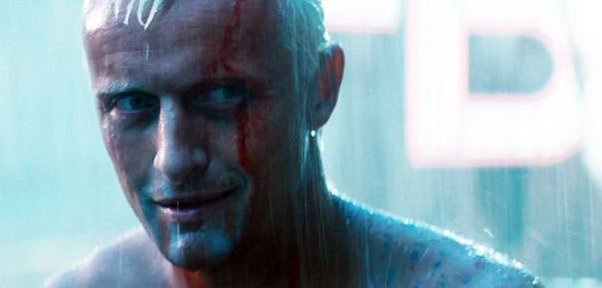
Rutger Hauer as Roy Batty

Headshot_AlexandraHarwood

Who or what inspired you to take up composing, and pursue a career in music?

I started writing music when I was four, so I have no memory of why this was! My mother said that when I was three, I would watch television, go to the piano and play the music I’d just heard. I also loved placing my favourite story-books on the piano and would make up accompaniments as I read them. When I started school (Bedales School) aged four, I had piano and theory lessons and the head of music encouraged me to compose musicals! I wrote my first musical, ‘The Wombles’ aged four, which the school produced and then during the rest of my school life there (until I was 18), I wrote several more musicals, which were all performed. I never questioned that I was anything other than a composer (even though I learned the piano and clarinet during those school years), except I had a secret fantasy to be a heart surgeon!! I was a huge film and television addict as a child, which I think laid the ground for my career as film composer.

Who or what were the most significant influences on your musical life and career as a composer?

Along the way I’ve had some incredible teachers to whom I am indebted for their guidance, encouragement and teaching and to list them all would take a whole page, but Melanie Fuller at Bedales and Joseph Horovitz, during my undergraduate study at the RCM gave me the most formative and solid foundation that I rely on still to this day. Milton Babbitt, when I did my Masters at the Juilliard School, gave me much worldly advice and shared his experience and knowledge, even though musically we were worlds apart. For concert/classical compositions, my most significant influences are Stravinksy, Prokofiev, Ravel, Britten, Shostakovich and Sondheim; put those all in a pot and stir them up and out comes something like me!

For my theatre and film compositions, it is normally the film or play, director and producer that will dictate what music is needed and I can write in a wide variety of styles, but in the end I think my melodic voice comes through.

What have been the greatest challenges/frustrations of your career so far?

As a classical composer, earning a living was by far the greatest challenge! And in my 40s it was juggling being a single parent of three children whilst trying to start a new path towards film composing. I owe my children everything for their eternal patience during the time I did a second Masters degree at the National Film and Television School and since then for practically having no mother available when I’m chained to my desk up against tight film deadlines!

What are the special challenges/pleasures of working on a commissioned piece?

It was a very unexpected moment when Leon Bosch commissioned me to write four pieces for I Musicanti’s 2017/18 concert series at St John’s Smiths Square. In my mind, I’d turned my back on writing concert music, once I’d decided to focus on being a film composer. Ironically, last year, in a recording session for a feature film that I scored for Disney, ‘Growing Up Wild’, Leon was in the session orchestra and discovered my music through that. His commissioning me was like life tapping me on the shoulder, making sure I did not forget my roots!

I have found writing concert music again frightening, as I’ve got so used to writing to picture and having a film to support. even if I prefer having those constraints!

What are the special challenges/pleasures of working with particular musicians, singers, ensembles and orchestras?

For a commissioned piece, it’s important to know the ability of the players you are writing for, along with the planned time they have to rehearse. I think for a future life of any piece, it’s important for the musicians to know this is a piece they can program again and that it’s performable! With these particular commissions for I Musicanti, I am aware I have virtuosic musicians to write for, and I worry that I’d let them down by not writing something that gives them a platform to show their skills and gift. But at the same time, I have tried not to let this cloud my idea of what the piece should be as a whole.

There is no greater pleasure than hearing my work brought to life my real musicians and in the case of i musicanti, world-class musicians.

Of which works are you most proud?

There are a few pieces I wish could be performed again. I composed two pieces that had Royal premieres; a piano quintet for my father’s 70th birthday that was ‘Theme and Variations’ of Happy Birthday, performed in front of Prince Charles and a piece for chamber choir, ‘God of the Sea’ performed for Princess Margaret at Windsor.

I think the concert piece I am most proud of was my cantata ‘The Happy Prince’ which was performed with narrators, choir and orchestra at St John’s Smith’s Square in 1993. The reviews it received recommended it was performed at the Proms and that is still something I dream of. My father wrote the libretto and we would both love to hear it performed again.

How would you characterise your compositional language?

My concert work is melodic and probably the best description of its harmonic language would be neo-classical/bi-tonal.

How do you work?

I have a studio at home for my film composing, which involves a computer, screens and full size Roland RD700 weighted keyboard. But right behind me sits my Steinway Grand, which I bought in the New York Steinway showroom after I graduated from Juilliard. It’s my most treasured possession and signed inside by Steinway’s grandsons.

Most of my film work and all my concert work begins at the piano, with manuscript paper and pencil, and eventually gets put into the computer for editing.

Who are your favourite musicians/composers?

I have very eclectic taste and impossible to list all, but to name a few, other than my main influences I listed above, I’d include (in no particular order): Leonard Bernstein, John Williams, James Horner, Chet Baker, Bach and Stevie Wonder!

What is your most memorable concert experience?

Seeing Robert Carson’s production of Britten’s opera, ‘A Midsummer Night’s Dream’ in Aix-en-Provence’s open-air theatre in 1991. One of the most magical experiences I’ve ever had.

What do you consider to be the most important ideas and concepts to impart to aspiring musicians?

Perseverance, don’t listen to naysayers and keep a still centre!

What is your idea of perfect happiness?

Hanging out with my three grown up kids and dogs at home, wearing pjs and drinking cups of tea and watching a movie with them! This is always perfect happiness for me.

What is your most treasured possession?

My late mother’s wedding ring, that I wear, and my Steinway Grand piano.

What do you enjoy doing most?

I’m most at peace when I’m working.


Alexandra Harwood is an award-winning film composer, whose films have screened worldwide and include awards and nomination for BAFTA Cymru, BIFA, Anima Mundi, Edinburgh Film Festival, IDFA and Locarno.

After graduating from the Royal College of Music (Dip Mus) and then The Juilliard School (MA) Alexandra was composer in residence for the Juilliard Drama Division, during which time wrote for theatre productions in New York and England. Amongst numerous commissions that have been performed world wide are The Happy Prince (cantata for soloists, chorus and orchestra) libretto by Ronald Harwood, St John’s Smith’s Square, London; Untitled (voice and percussion) for Audra MacDonald, Avery Fisher Hall, NY; and  Sonatina (alto flute and pianoThe National Flute Convention, chosen repetoire,  2009,USA ; Theme and Variations-  written for Sir Ronald Harwood’s 70th Birthday, performed in the presence of HRH The Prince of Wales.

Experience in theatre and concert work led to taking an MA in film composition at the National Film and Television School, which began a career as a film composer.

Film scores include, Dancing in Circles (BAFTA Cymru winner 2015 dir. Kim Strobl), What A Performance! Pioneers of Popular Entertainment (BBC) , Z1 (BIFA winner 2013 dir. Gabriel Gauchet), Girlfriend in a Coma (BBC), Harry Potter Celebration (Warner Bros.), The Substitute (dir. Nathan Hughes-Berry), Satan Has a Bushy Tail (Film London. dir. Louis Paxton), Kids Say (Flourman Productions. dir. Lilian Fu), The Key (MewLab Productions. dir. Kim Noce and Shaun Clark), No Man’s Land (IDFA nomination 2013 dir. Michael Graverson), Four and Flat Frog (Inkymind Studios), Automatic Flesh (Ballet Rambert).

alexharwood.com

image1

Who or what inspired you to pursue a career in music?  

My Mum and Dad. They gave me the opportunity to have piano lessons and I’ve never looked back. A few years later they encouraged me to learn more instruments so I chose the clarinet and harp initially, but my Mum said no to the harp because it was too big, so I chose the marginally smaller cello as an alternative. I was enrolled in dance lessons from the age of 4 so learnt to love performance from a young age. I loved to put on shows with my cousins for our parents and grandparents. I took this to another level when I forced my sister and a friend to perform a rendition of a track from the show Starlight Express whilst on roller skates in a school assembly. My piano teacher and music teacher encouraged me to pursue performance and composition. To be honest I never imagined doing anything other than music so I think I have always been pursuing a career in music without actually realising it.

Who or what have been the most important influences on your musical life and career? 

I’ve never really had one or two important influences. More a continual building collection. Daily I’ll be influenced by many different things whether that be a piece of music, a painting, photograph, philosophical article or an approach someone takes on life. I’m a very reflective person so can be influenced by the simplest of things like watching a bird splash about in a puddle. I’m driven by the belief that there is only one life we live in our current form. Therefore we should either be striving to achieve a goal or, at the very least, enjoy what we are doing. Not everyone has this choice so we shouldn’t take it for granted.

What have been the greatest challenges of your career so far? 

The first thing I think of is staring at a blank page when I know I need to compose a piece for a deadline. But this is a daily challenge. The greatest challenge of my career though is probably getting people to listen to my work when there are so many other artists work they could also be listening to.

Which performance/recordings are you most proud of?  

There are two pieces I composed for a pitch for an advert. There are also some cues from a film score that I’m particularly proud of because of their emotive drive. The type of music which makes your hair stand on end.

Favourite pieces to listen to?  

This changes weekly, even daily. Today I’m really enjoying Beautiful Lie by Hans Zimmer and Junkie XL

Who are your favourite musicians? 

There are too many too name. My favourite musicians are ones whose music has elements which will intrigue me and which I have an uncontrollable urge to immediately analyse. Whose music is utterly captivating to listen to because of all the different compositional elements. To name just a small number would be Alexandre Desplat, Danny Elfman, Johann Johannson, Max Richter, Clint Mansell, Kronos Quartet, Goldmund, Nils Frahm, The Glitch Mob…there really are too many from so many different styles.

What is your most memorable concert experience? 

Unfortunately I have a very poor memory so I expect there have been many. However, there are a few I still talk about. One was when Muse performed at SWSX many years ago before they were as big as they are now. They were absolutely incredible. The type of musicians where you can tell they breath music. For the same reason, Jill Scott and Mumford and Sons were also extremely memorable. But more recently, I’ve seen a few film score composers in concert who have been absolutely wonderful. Namely Danny Elfman and Hans Zimmer. I came away more in awe than when I went in. There are a number of theatre productions that have literally left me speechless as well.

What do you consider to be the most important ideas and concepts to impart to aspiring musicians? 

Explore concepts you feel uncomfortable with. Face your weaknesses. Learn to take a step back from your work and hear it from a different perspective. Don’t ignore your gut instinct. Learn to accept and see criticism as constructive feedback but also be confident in your own mind and opinion where necessary.

Where would you like to be in 10 years’ time?  

To still be making a living out of composing music.

What is your idea of perfect happiness? 

Working from a studio that looks out to the ocean.

Aleah Morrison-Basu’s first narrative piano and electronics album ‘Evolving Reflections’ is released on 8th July 2016. 

Aleah is a London-based composer working out of her studio in central London. Always enthusiastically looking for new and interesting collaborations with musicians, composers, Film, TV and Theatre directors as a composer, arranger, orchestrator, music supervisor and co-composer. 

Distinctive melodies, emotive scores. Nominated for 2015 MAS Award for Best Original Score for Feature Film and Best Original Score for Short Film. Music composer for feature films, TV series, short films, TVC’s, branding films, interactive theatre. 

Aleah has composed scores for a number of award-winning short films and recently co-composed her first feature film, released in September 2015 in UK, USA and Canada. 

Also, has been composing scores for a number of TV documentary series, currently working on her third score.

Clients include BBC, HBO, Head, Adidas, Kia, Hyundai, Wilko, Three mobile, America’s Cup, Philip Stein, The American Heart Foundation, McVities, Georgia Tech, Harvard amongst many others. 

While composing, arranging, orchestrating and music supervising for Zelig Sound, Aleah is continuing her passion for collaborations in other creative art forms working as a freelance composer and arranger for film/ TV/ and theatre directors.

www.aleahmorrison.com

IMG_7394

Who or what inspired you to take up composing, and pursue a career in music? 

A career in music is something I’ve always aspired to, since poking out simple original tunes on the piano as a child, which led to a long formal musical education, with piano at the centre. But other influences led to a career in finance and technology instead.

In my adult life, the impetus to take my hobby music a step further wasn’t any single individual but rather a whole musical community which thrived in the early days of music streaming platform SoundCloud.

It was the collective positive and encouraging response from like-minded music-makers which spurred me on to do something more. To pursue a serious and bill-paying career in music

This pursuit is strong and ongoing, and I find myself at a point where I have just resigned from 11 fruitful years at one employer, in a concerted effort to rebalance my efforts in the long-run.

Who or what were the most significant influences on your musical life and career as a composer? 

When watching a film, I am always more captivated by the sound and music than by the picture or story. I am pathologically distracted by it to the degree that I almost don’t notice the plot. 

And so my list of personal influences matches the list of the most celebrated film composers of our time: John Williams, Ennio Morricone, Howard Shore, Hans Zimmer, Alexandre Desplat, I couldn’t possibly complete the list of beloved and inspiring composers in this wordcount.

Bringing it a little closer to home though, there are several people in my circles who have successfully taken bold steps out of one career and into a career of composing for the screen. Outside of lucky breaks, it is an exceptionally difficult and long-playing effort to generate commercial success in music, but I see clearly now that it is in reach, whether or not you have a ‘backup’ career.

What have been the greatest challenges of your career so far? 

In a marketplace flooded with exceptional talent, getting your own work heard above the crowd, by people who hold the purse strings, is pretty much everyone’s ongoing challenge. It’s a challenge I haven’t addressed by any formal means of promotion, but I seem to have accidentally addressed it by simply being active, engaged and present in musical communities like SoundCloud, SCOREcast and some thriving Facebook groups.

One other challenge is time management. I feel lucky to have more work than I can handle right now, which means having to say no to things I would love to do, but not all of that work has immediate revenue. I’ve got a ton of work being live-recorded by strings players and singers but I won’t see a penny out of that for a year or more. The only way I can address that challenge is to judge incoming work on a balance of enjoyment and return on investment. Work which is both fun and high ROI comes first.

What are the special challenges/pleasures of working on a commissioned piece? 

Mind-reading is both a challenge and a pleasure when working on a commissioned piece. Your vision will rarely match the vision of the commissioning director, so you make sure you have a high quality brief and have a first stab. Sometimes it’s a direct hit, and that really hits the reward centre of your brain, that you’ve successfully empathised with your director’s vision. Sometimes it’s version 9, and you’re just relieved it’s over.

What are the special challenges/pleasures of working with particular musicians, singers, ensembles and orchestras?

My first experience combining live parts into a coherent whole was in online collaborations with musical friends on SoundCloud a few years ago. What a difference a single live part makes in an otherwise virtually arranged piece.

That experience led to my busy pipeline of remote session work on the piano. The baby grand in my professionally sound-treated studio is permanently mic’ed up for recording work for myself and other composers and I get a good stream of work via SessionExchange.org.

This year is a milestone year for me in live orchestral work. One family of production music labels requires and commissions live parts in strings and choirs and I’ve written around 30 pieces for it so far this year, some of which you can hear on my SoundCloud page. Many have been performed by the Royal Liverpool Philharmonic Orchestra players, up at Parr St studios in Liverpool, and many have been performed by a small ensemble in Vienna.

Which works are you most proud of? 

Oh dear, that’s like choosing your favourite child

If I judge it by number of plays, my trilogy The Muse has generated nearly half a million plays and still tugs my heartstrings when I play it to myself, given that the inspiration for them was a series of crises in my life

If I judge it by commercial success, that would by my improvisational solo piano album Won Love which peaked at number 2 in the iTunes UK Instrumental chart this year, behind Richard Clayderman

My current personal favourite is probably a single piece called Dystopia, a dark and epic piano/orchestral piece that was a lot of fun to write

Who are your favourite musicians/composers?

Having already listed my favourite contemporary composers, I’ll bring up my favourite historic ones here: Chopin was at the centre of my love of the piano and I’ve played over half his entire opus, including most of the Etudes, Ballades, Waltzes and Preludes. Rachmaninoff is a close second and of all the pieces I’ve enjoyed playing, one day I’d love to finish learning the 2nd piano concerto, which I abandoned after the fiery first and ‘easy’ second movement.

Other favourites include Liszt, Bruckner, Holst and Wagner, the latter 2 of which remain major influences of modern film scoring

What is your most memorable concert experience? 

I’ll take the audience seat of this question as opposed to the performance seat, where I’ve enjoyed playing in some concerts but it has not been a major feature of my musical career.  

From the audience seat, I will never forget the live performance and screening of Interstellar, with music by Hans Zimmer, at the Royal Albert Hall this year. Not only did the music blur my eyes almost throughout, but I also had a chance to see some of our generation’s most iconic people all in one place in one night as hosts of the evening: Stephen Hawking, Michael Caine, Kip Thorne, Brian Cox, and Hans Zimmer himself

What do you consider to be the most important ideas and concepts to impart to aspiring musicians? 

Some choose only to model others closely, some choose to express only their own voice. I don’t think the key to success lies in either extreme but in a balanced blend of the two.

To write music based on a template established by successful composers can only get you so far, soon you will blend in with the crowd and it will never be truly fulfilling. To write music expressing only your own voice may fulfill you artistically but the reality is that commercially successful music does demand a modicum of convention and a niche sound doesn’t always succeed.

Where the magic lies is in opening yourself to continuous learning from successful artists who have paved the way, accumulating the skills and musical vocabulary required to express your own voice in a well established medium.

What do you enjoy doing most? 

Entertainment is a bilaterally rewarding pursuit, where the entertainer can get as much pleasure as the entertained. In music, I thrive both ways, getting as much of a thrill creating a body of musical work as I do enjoying the creations of other musicmakers.

What I enjoy doing most is living music.

Oliver Sadie is a freelance composer and session pianist for film and tv, with an alter ego as a finance technology specialist. Operating from his purpose-built studio outside London, Oliver provides full-service soundtrack and song production, as well as live-recorded piano on demand.

With live orchestral parts performed by Royal Liverpool Philharmonic Orchestra players, blended with a full toolkit of virtual instruments, Oliver writes for production music libraries Gothic Storm Music, Lovely Music, The Library of the Human Soul, Getty Images Music as well as several non-exclusive online libraries. Some of Oliver’s portfolio of 500+ tracks can be heard at http://soundcloud.com/oliversadie.

On-screen credits include indie New Mexico film THE GARDEN (2015), upcoming UK action comedy film DEAD MEET (2016), independent Hollywood film GLASS PRISON (2013), sports documentary series SVEN DECKER, US slavery documentary MADMEN OR MARTYR, and a number of promotional and advertising spots for end-clients including Sony, Gärtnerbank, Black Bear International.


