Who or what inspired you to take up the violin and pursue a career in music?

My mother studied piano at the Royal Academy of Music in London and my dad loves classical music so they really wanted me to learn the violin. Sadly I was hoping for tap dancing lessons at six years old so I think the first few weeks with my violin were quite disappointing for me. I have had the last laugh though as I just started private tap tuition in January fulfilling my life long dream! Let’s just say I don’t think I was destined for Broadway but amazingly I’m still on good terms with my neighbours.

Who or what were the most important influences on your musical life and career?

I had three amazing teachers who all worked in top orchestras which I think drew me to that area of music, Beryl Auty who taught me until I was 15 and sadly passed away last year. Belinda Bunt-Broughton who regaled many tales of life in London orchestras and the session world and then Erich Gruenberg at the Royal Academy who at one time led the LSO. But I would say meeting Iona Brown when she directed National Youth Chamber Orchestra was a turning point. She heard me lead the NYO in Mahler 3 at the Proms and invited me to tour with the Norwegian Chamber Orchestra the following month in the USA. I missed the first five weeks as a student at the RAM but this invaluable opportunity shaped my love of orchestras, from the playing side, and just as importantly, the camaraderie. I really would say hand on heart that those experiences of music making as a teenager have stayed with me today. 

What have been the greatest challenges of your career so far?

Working hard for my LSO audition. I had been playing in the orchestra firstly as part of their student string experience scheme, then as an extra player and I loved it so much but there was no vacancy. I freelanced for a couple of years until a job became available and of course by then I desperately wanted it so I really had to make the hard work and audition count. I can honestly say I was terrified. Working for auditions is such a tough thing, it’s an unreal situation hence I was really happy to write a post for the Strad magazine last year.  http://www.thestrad.com/cpt-latests/how-to-be-successful-in-an-orchestral-audition/

and last month I gave a talk with a colleague in the Barbican concert hall as part of the LSO’s international violin festival about how to prepare and get through auditions without a feeling of dread! http://www.thestrad.com/cpt-latests/strad-panel-discussion-surviving-orchestral-auditions/

Which performance/recordings are you most proud of? 

Three years ago the LSO asked me to perform a duo recital at LSO St Luke’s as they wanted to stream the concert live online having not used that technology before. That was immense fun performing with my friend and colleague Rhys Watkins and I was proud to think they trusted tutti players to do a good job. When you are playing full time in an orchestra, solo and chamber opportunities don’t come round very often and you do feel somewhat exposed in these situations. You can’t help but think, “where are the other 90 people I’m supposed to share the stage with?!” But I do like to challenge myself when I can to keep things ticking over. I have another opportunity on 26th June at LSO St Luke’s, this time with another LSO player Philip Nolte who will perform on violin and viola. The recital will also be streamed live over the internet so hopefully it’ll be a success.

Which particular works do you think you perform best?

I was always a big fan of virtuoso music as a student which means in the orchestra I prefer playing romantic and twentieth century music with fantastic violin writing such a Mahler, Richard Strauss and Prokofiev. I guess I always liked to show off and that has stayed with me! I also love playing film music, I think the orchestra sounds fantastic recording and performing big soundtracks which is good as in my time in the orchestra we’ve recorded at least fifty at Abbey Road and Air studios. 

How do you make your repertoire choices from season to season?

Being in an orchestra that area is all taken care of! I look in the schedule which stretches a couple of years in advance and I play what’s asked to the best of my ability, sometimes with great joy and sometimes I make a note to take off a particular piece next time it comes round if I haven’t enjoyed it so much.. 

Do you have a favourite concert venue to perform in and why?

Suntory hall In Tokyo is one of my favourite touring venues for various reasons including proximity to the hotel, backstage facilities (free wifi!), the hall itself, the warmth of the audiences and the fact that I love Japan. HK is always special as I have so many family members there. Closer to home I love the Royal Albert Hall during the Proms season. That is so special although very nerve-wracking too with such a line up of world class orchestras night after night. The Proms’ atmosphere is unlike any other I’ve experienced.

Favourite pieces to perform? Listen to?

I don’t really listen to classical music on my down time. I don’t find it so relaxing as I find it hard to detach from the feeling of performing. My iPod is an eclectic collection of musicals, film soundtracks, pop and old Gershwin numbers I imagine myself tap dancing to. Mahler is hands down my favourite composer to perform. There is so much fantastic writing for the violins and I just find his music so incredibly moving, I love all his symphonies. Most people would groan when a Mahler cycle comes round but I’m like “bring it on!”

Who are your favourite musicians?

I admire so many soloists who come into the LSO to perform, especially ones who I have grown up idolising. I can’t help but be drawn to the violinists, Janine Jansen, James Ehnes, Nikolaij Znaider to list a few. On a personal level Sarah Chang is my best friend and I’m always in awe at how much work goes on behind the scenes at that level of performance and the endless travel. I’m a big fan of my friend Ray Chen too who is not only a stunning violinist but has really broken so many barriers between musicians and audience with his hilarious social media postings and humorous videos poking fun at the profession. I can’t wait for him to come and play with the LSO! 

What is your most memorable concert experience?

I felt pretty awed at the LSO centenary concert, realising I was a part of something so historic was special. The yearly open air Trafalgar Square concerts are also very memorable. I’m amazed 10,000 people can sit/stand so quietly through music (minus the car horns honking!) that is never obvious (Stravinsky and Shostakovich for example).

What do you consider to be the most important ideas and concepts to impart to aspiring musicians?

I’m a big fan of the “Quora” app and am always astounded how many people write questions such as, “How long does it take to become a virtuoso on the violin?” Or “If I start the violin at 16 will I get to be a concert soloist?’ If I reply I generally always say the same thing, you don’t get anywhere in life without hard work and a healthy dose of reality. I truly believe that working hard coupled with the right attitude can really take you far in life if you are realistic. A sprinkling of luck helps too!

What do you enjoy doing most?

Tough call between shopping and eating out! I will go with the latter, as so many of my happy memories are with friends and family around a table devouring wonderful food. Often when we are off on tour or reminiscing it’s not the concert hall we can instantly recall but the restaurants!

Maxine Kwok-Adams performs with Philip Nolte on Friday 26th June at Jerwood Hall, LSO St Luke’s. Further information here

As a teenager Maxine Kwok-Adams, ARAM, was heard by violinist Iona Brown leading the National Youth Orchestra of Great Britain performing Mahler’s 3rd Symphony at the Royal Albert Hall “Proms” concert and was promptly invited to tour the USA with the Norwegian Chamber Orchestra the following month. Later in the year she took up her scholarship place as a student at the Royal Academy of Music but carried on touring with orchestras such as the Academy-of-St-Martin-in-the-Fields.

Before graduating with an Honours degree, Maxine was awarded a place on the London Symphony Orchestra’s coveted String experience scheme, and in 2001 achieved her dream by becoming a full-time member of the 1st violins. As a strong supporter of opportunities that give youngsters a chance to experience performing in professional concerts, Maxine nowauditions and mentors the violins of the LSO String experience scheme.

At the forefront of the LSO’s online presence, in 2010 Maxine was asked to play a duo recital for the orchestra which was streamed live over the internet, the first time the LSO used this technology. She can be seen on YouTube as the LSO violin representative for the series of master classes designed to help violinists prepare for the YouTube Symphony Orchestra auditions. She is currently preparing to host the LSO’s first “google-hangout” chat about life in the orchestra which will be streamed live through YouTube.

Playing in the LSO has taken Maxine regularly into Abbey  Road studios where she has participated in over 40 film recordings since joining the LSO, including soundtracks to Star Wars, Harry Potter and The Queen. The LSO records with artists as diverse as Paul McCartney and Jennifer Lopez to Joe Hisiashi and Lang Lang.In 2010 Maxine was invited to contribute a chapter to the book, “Soundtrack Nation” by Tom Hoover, which focuses on professionals in the film music recording industry

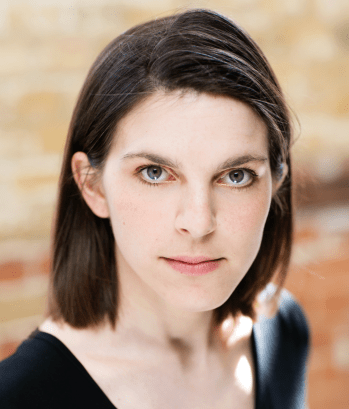
 

(photo credit: Gareth Barton)

Violinist Fenella Humphreys and pianist Nicola Eimer celebrate the 150th anniversaries of Jean Sibelius and Carl Nielsen in a concert combining works for violin and piano by these two composers, together with new works by contemporary composers.

Alongside works by Sibelius and Nielsen, the duo will premiere a new set of five pieces composed on the footprint of Sibelius’s Five Pieces op.81 by Cheryl Frances-Hoad, Alasdair Nicolson, Matthew Taylor, David Knotts and Anthony Powers.

Programme

Jean Sibelius: 4 Pieces for violin & piano, Op.115
Cheryl Frances-Hoad: New work for PUR 4 Feb 2015 after Sibelius’ 5 Pieces for violin & piano, Op.81
Alasdair Nicholson: New work for PUR 4 Feb 2015 after Sibelius’ 5 Pieces for violin & piano, Op.81
David Knotts: New work for PUR 4 Feb 2015 after Sibelius’ 5 Pieces for violin & piano, Op.81knotts da
Matthew Taylor: New work for PUR 4 Feb 2015 after Sibelius’ 5 Pieces for violin & piano, Op.81
Anthony Powers: New work for PUR 4 Feb 2015 after Sibelius’ 5 Pieces for violin & piano, Op.81
Jean Sibelius: Sonatina in E for violin & piano, Op.80
Interval
Carl Nielsen: Violin Sonata No.2 in G, Op.35

The concert takes place on 4th February 2015 at the Purcell Room, Queen Elizabeth Hall, Southbank Centre. Further information and tickets here

‘Fenella Humphreys responds to its elegiac reflection and technical display at top flight level’ (Orchestral Choice CD, 5* BBC Music Magazine)

‘Nicola Eimer is an outstanding artist’ (The Strad Magazine)

Who or what inspired you to take up the violin and make it your career?

My father is a violinist and my mother a cellist. As a small child I used to play on a spare violin as if it was a cello. When I was eight my father gave me my first five-minute lesson on how to play the violin ‘the right way round’. I liked it so much better and knew that I had to learn this instrument so I could play just like him! In the end, the inspiration to make violin playing my career came from my experience in the National Youth Orchestra. The feeling of being in the middle of such an extraordinary sound was one that I wanted to be a permanent part of my life.

Who or what were the most important influences on your musical life and career?

My violin teachers have all been hugely influential on my outlook. My childhood teachers Joan Penrose and Susan Collier taught me how to love my playing and how to practise effectively and efficiently, as well as giving me a really solid technical start. I always hear the voices of my two music college teachers (Yossi Zivoni and Richard Deakin) in my head while I practise and feel immense gratitude towards them for their great wisdom and encouragement. My parents’ continual love of music and performing for others is a constant inspiration.

What have been the greatest challenges of your career so far?

The greatest challenge was overcoming a long period of performance anxiety. This is something that many performers shy away from talking about, which is a shame. I think we could all help one another if we talk about it more. A few years on, I feel a much stronger and more resilient musician as a result of the experience.

More recently, I performed in Aurora Orchestra’s Prom. We played a Mozart symphony from memory. It was at once completely terrifying and exhilarating.

Which performance/recordings are you most proud of?

Ensemble Matisse gave its Southbank Centre debut in January performing Triada by Christobal Halffter. I doubt I will ever come across a piece of chamber music so techinically challenging. We rehearsed the piece for more that forty five hours! The performance, in the presence of the composer himself, went brilliantly. We all had an enormous sense of pride and satisfaction!

How do you make your repertoire choices from season to season?

I choose repertoire based on two things: what does the concert promoter/ music society want? Which pieces am I longing to play? Then I also try very hard to programme creatively and intelligently so that there is a sense of balance, continuity and variety in every concert. Whenever possible, I try to stretch myself technically and step outside of my comfort zones.

Do you have a favourite concert venue to perform in and why?

I absolutely love playing at the Albert Hall. I think this is mainly because I have many wonderful memories of going to listen to BBC Proms there as a teenager and longing to be on stage. Now that I am often given the opportunity to perform there, I feel so lucky! There is no feeling quite like a standing ovation at a packed Albert Hall.

For chamber music I really enjoy playing house concerts. It can be great to be so close to the audience as you get very direct feedback while you are playing. Large concert halls can feel really impersonal sometimes.

Favourite pieces to perform? Listen to?

Both to perform and listen to: Beethoven’s Violin Concerto. I don’t think I could ever get bored of it.

Who are your favourite musicians?

Leonid Kavakos, Janine Jansen, Ella Fitzgerald, Roby Lakatos…

What is your most memorable concert experience?

Well – I’m afraid this one is memorable for all the wrong reasons and mainly because it was completely ridiculous…

I once accidentally got involved with a performance at an experimental art exhibition. We ended up having to perform one of Brahms’s sublime string quartets a with our wrists all chained to one another’s. It was impossible and impossibly funny. Sorry Brahms.

What do you consider to be the most important ideas and concepts to impart to aspiring musicians?

Some things I wish I had discovered/ realised sooner:

  1. Performing should be about your audience’s enjoyment. Getting too sidetracked by minutiae could be at the expense of them having a good time. Get your priorities in order!
  2. The most important things your teacher will teach you are the things you didn’t even know were a problem. Your teacher should be teaching you to practise. A ‘good’ lesson is not necessarily a lesson where you play well.
  3. Practise is an art. Be proud of being an amazing practiser. I love practising. I wish I had more time for it.

What are you working on at the moment?

I am preparing to give five world premieres written for my group Ensemble Matisse at the New Dots autumn event “Interference Patterns” at Kings Place on the 3rd of November. We will play four works composed in collaboration with film makers by Lisa Illean, Daniel Kidane, Ewan Campbell and Liam Taylor West. We will also give the first performance of ‘Degrees of Freedom’ by renowned Dutch composer Jan Vriend.

What is your most treasured possession?

The most treasured object in my life is definitely my violin, but this does not feel like a possession- rather more that I am its caretaker for a while. Apart from that I think my most treasured possession is my good health.


Violinist Francesca Barritt recently graduated with destinction as a Master of Arts from the Royal Academy of Music in London where she studied with Richard Deakin and was previously a pupil of Yossi Zivoni at the Royal College of Music. Francesca was chosen to lead the symphony orchestras at both the RCM and the RAM. She has held the position of principal 2nd violinist in the prestigious Sainsbury Royal Academy Soloists ensemble for the entirety of her time at the Academy and has appeared with the group at Wigmore Hall and Seoul Arts Centre, South Korea.

She has been the recipient of awards from The Stephen Bell Charitable Trust, Arts and Humanities Research Council and has been awarded the Ian Anderson, Leverhulme Orchestral Mentorship and Marjory Bunty Lempford awards by the Academy. Francesca recently participated in a masterclass with Maxim Vengerov.

Francesca has given chamber and duo performances in venues such as the Purcell Room, St. James’s Piccadilly and the Kings Place, Bath, Norfolk and Norwich and Lake District Summer Music festivals. She is also much in demand to perform with established chamber groups and has recently collaborated with section leaders of the ECO, Halle, LPO and past members of both the Allegri and Lindsay string quartets. In 2011, Francesca performed 1000 bars by Kevin Volans as part of a BBC Proms composer portrait, which was broadcast on Radio3. More recently her performance of Hugh Wood’s Horn Trio at the Bath Festival was broadcast on Radio3.

As a freelance orchestral musician, Francesca is gaining much experience through extra work with orchestras such as the Philharmonia, English Touring Opera and Opera North and her regular work with the much-acclaimed John Wilson Orchestra has included performances at the BBC Proms, various tours of Britain and several recordings for EMI.

Francesca’s recent concerto engagements have included performances of Sibelius and Brahms concertos and a series of five performances of Beethoven’s triple concerto. This season she will perform Beethoven’s violin concerto with the Stamford Chamber Orchestra.

Francesca is a member of Ensemble Matisse.

Meet the Artist……Rozenn le Trionnaire

Ensemble Matisse


1538879_10152137519852220_1092949528_nWho or what inspired you to take up the violin, and make music your career? 

I originally began my studies on the piano, but I was a very bad student and very lazy in my practice.  One day I saw my piano teacher with a student on her main instrument (the violin) and I fell in love.  Over the following months I constantly nagged to learn the violin and eventually my mother and the teacher gave in.  I took to it very quickly, practiced relentlessly and progressed rapidly.  I never really felt that the violin would be my career (my parents wanted me to be a vet), it was always an obsession.  But when it came to higher education I could think of nothing I’d rather do than play my violin.  After my formal education I was quickly asked to perform both recitals and as a soloist with orchestra and I have continued to do so and love every second of it.

Who or what were the most important influences on your playing? 

Drama and imagery. My pianist Daniel Roberts and I always say the music must not interrupt the drama.  Also I often (and without meaning to) associate the pieces I perform with literature.  For example, I often associate The Lark Ascending with Thomas Hardy.

What have been the greatest challenges of your career so far? 

Performing a chamber recital in a windy concert hall, the music blew closed and the pianist’s page turner had to rescue me (this was also broadcast live).  I have also created my own Orchestra (The WPO) which performed in  February 2014 – this has been quite a challenge.

Which performances/recordings are you most proud of?  

I’m very proud of a recital I gave at Southwark Cathedral with Daniel Roberts: it was the first time we performed the Franck Sonata together and there was electricity to the performance.  I am also proud of my recording of The Lark Ascending.

Do you have a favourite concert venue to perform in? 

I particularly like the sound of St. Brides (Fleet Street) and would like to record there in the future.  I also quite liked performing in the Foundling Museum.  It’s quite a small venue, but seems extremely well suited to chamber concerts with a perfect balance.  I was performing Mozart, and it felt like I had gone back in time.

Favourite pieces to perform? Listen to? 

I change my mind like the weather on my favourite pieces.  But currently it is Brahms Violin Sonata No. 3, Beethoven Violin Concerto and I really love the contemporary composer Nimrod Borenstein’s work.  His latest piece (If you will it, it is no dream) is extremely good.

Who are your favourite musicians? 

Any musician who can give me inspiration.  This would include pianist Daniel Roberts, violinist Leland Chen.  I love the Primrose Quartet and I’m a huge fan of Julia Fischer.  Plus Heifetz.

What is your most memorable concert experience? 

It was actually when I was a child.  I had joined the county youth orchestra (I was accepted younger than the minimum age restriction because of my standard of playing, so I was the youngest and least experienced there).  I didn’t really know too much about the pieces we were playing or the composers.  In fact, I didn’t even know that the inside player turns the pages.  We played this boring piece with very little melody, which I hated.  On the day of the concert a solo violinist stood up and it turns out our ‘piece with very little melody’ was the accompaniment.  The piece (and the playing) was so beautiful that I forgot to play and just stopped to listen.  The piece was The Lark Ascending, and to this day I have a love of Vaughan Williams’ music.

What do you consider to be the most important ideas and concepts to impart to aspiring musicians? 

Love and enjoy every aspect of music.  Enjoy the physicality, enjoy the technique, and enjoy the emotions.  Read about the composers, watch concerts.  Play solo, chamber and orchestral and love the variety of ways we can make music.  Teach others to play.  Listen and appreciate other instruments and styles.  But most importantly always question and always learn.

How do you make repertoire choices from season to season?

As far as repertoire for my chamber music goes, Daniel and I have developed a close friendship over time and are often suggesting pieces that would suit each others playing, the only problem is that we can’t play it all at once. With Concerto and solo repertoire, I often choose pieces that touch me in some way, that I feel a need to perform.

What are you working on at the moment? 

I am working on Delius Sonata No. 3, which I’ll be performing in the Wales Millennium Centre and Anteros Arts Norwich with pianist Daniel Roberts. I’m also working on ‘Autumn’ from the Four Seasons and the Beethoven Violin Concerto but these are more long-range projects.

Which pieces do you think you perform best?

I think it would have to be ‘The Lark Ascending’, though I am pleased with my performances of the Brahms Violin Sonata No. 3.

What is your most treasured possession? 

My most treasured possession is obviously……my violin

Hannah Woolmer is a highly respected violinist with prolific experience as a recitalist.  She has performed in many of the UK’s classical music venues including St. Brides, Southwark Cathedral, Ely Cathedral, Bristol Cathedral, the London School of Economics and the London Festival of Contemporary Music.

Hannah’s performances have been broadcast on radio and 2012 saw the release of her  single ‘Lark Ascending’ which has been distributed on iTunes and with Amazon and reached #14 in the classical download charts.  Hannah also enjoys performing regularly as a soloist and has performed ‘The Four Seasons’ with Baroque Orchestra in London, Southend and Chelmsford, ‘The Lark Ascending’ with the University of Cambridge Philharmonic Orchestra in 2011 and Bruch Violin Concerto in 2012.  

Hannah has performed with conductors Mark Galtry, Patrick Bailey and Jacques Cohen.  She has attended masterclasses and workshops with Bernard Gregor-Smith, John Thwaite, Susanne Stanzeleit and Robin Ireland.  Hannah has a great passion for the tradition of chamber music, and tries to bring aspects of her chamber experience into her solo performance, often resulting in a great rapport with the conductor and an intimacy with the audience very rarely seen in large scale works. 

Hannah’s collaboration throughout 2012 with Ukrainian Pianist Larysa Khmurych was met with critical acclaim.  They toured their recital programme to large scale concert venues, with Bristol and Ely Cathedral standing out as particular highlights in their calendar this year.  They quite quickly made a name for themselves with their fiery and heart-felt performance of Beethoven at the centre of their programme.  Hannah’s most recent collaboration is with pianist Daniel Roberts.  As well as continuing their busy recital schedule together which includes Wales’ Millennium Centre, Southwark Cathedral, the Anglo Japanese Society and The Foundling Museum to name a few.  They are currently recording their debut album together.


