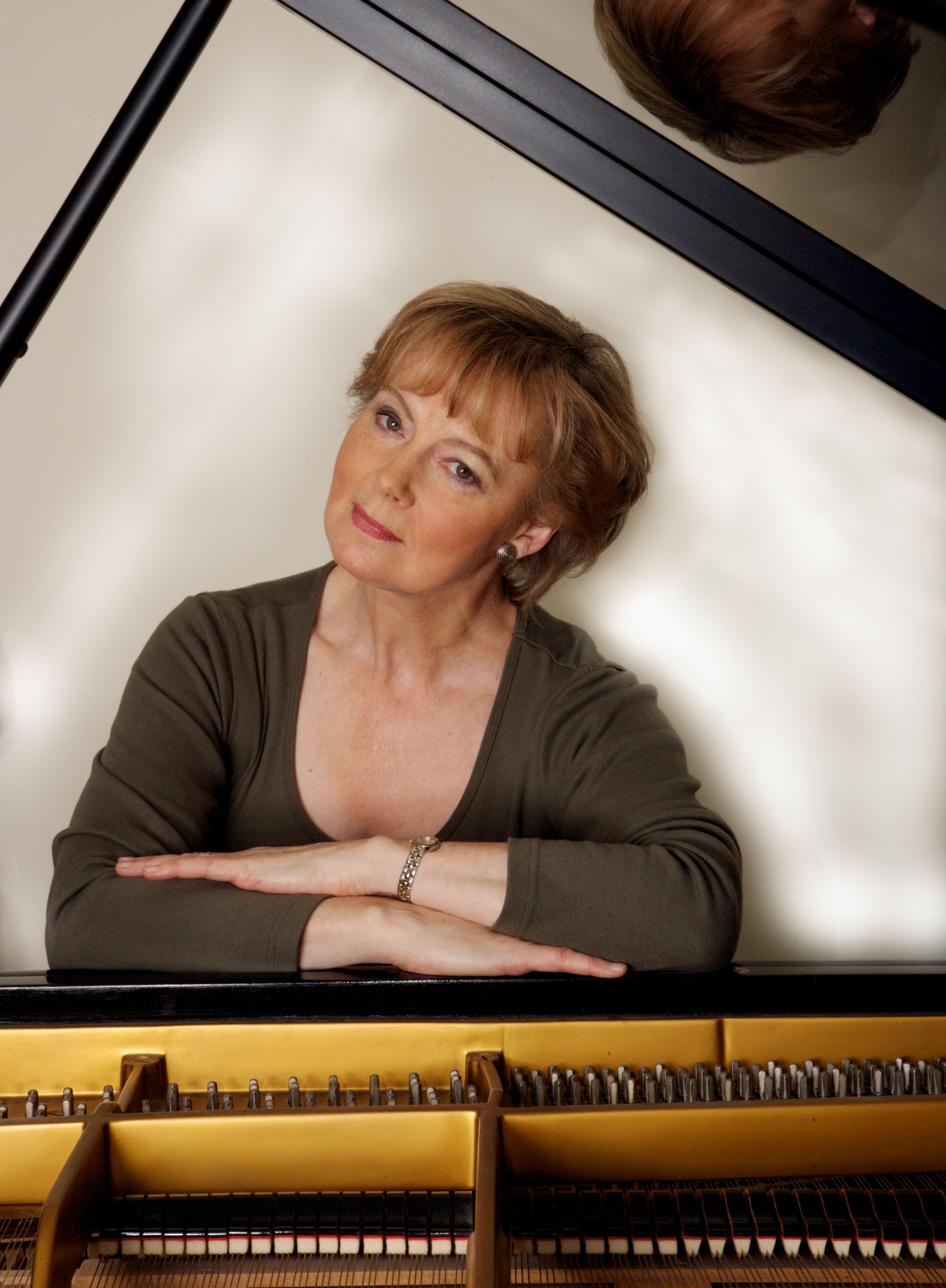
Who or what inspired you to take up piano and make it your career?

When I was 8 years old, I had a chance to play for a renowned pianist in Korea and I was very nervous for a whole week. One day before meeting her, I had a nightmare that she told me not to play piano and I cried a lot. That was the point when I realised that I want to play piano my whole life, no matter what. In fact, she was very lovely in person.

Who or what were the most important influences on your musical life and career?

My piano teacher for 5 years from age 10. She was a very active performer and I went to her every concert. From the moment when she would enter the stage with the conductor until the end of concert, the audience was enchanted by her. She was my absolute idol. She always told me that your music starts when you enter the stage and at her concerts she demonstrated to me what she meant. She was magnificent and it was my dream to be a pianist like her.

I am grateful that I have met so many wonderful musicians who are a big influence in my life and not just in music: especially Leon McCawley, Deniz Gelenbe, Gabriele Baldocci, Pascal Roge, Karl-Heinz Kämmerling, Ola Karlsson and Peter Grote.

What have been the greatest challenges of your career so far?

For a long time I played piano for someone else. One day I lost that person and I was really lost for a year. Slowly I learnt to love music again and play piano for myself. Now I will always have a reason to play my music because it is finally truly who I am.

Which performance are you most proud of?

I am fortunate to have played at prestigious concert venues all around the world. I enjoy playing at big halls, and was surprised when I had a life-changing experience at a lower standard hall. After the recital an elderly lady came to me crying. She was speaking Spanish, which I could not understand, but I could feel how happy she was. I was really touched and proud that I could make people happy, or happier, with my music. After that point I was reminded of the origin of music and my purpose in being musician.

Which particular works do you think you play best?

The music that means something to me.

How do you make your repertoire choices from season to season?

I aim to have a mixed repertoire so that there is something for me and for the audience.

Do you have a favourite concert venue to perform in and why?

Wigmore Hall in London, Palau de la Musica in Valencia and the Berlin Philharmonic are amazing and at the top of my favourites list.

On one occasion I played a solo recital on a big stage (the stage itself has a capacity of 500 people) in Korea. It was interesting for me as it was hard to control the acoustic. It was very challenging but gave me joy.

Favourite pieces to listen to?

I love listening to Chopin piano concerto recordings. Every pianists has a different interpretation.

Who are your favourite musicians?

Alfred Cortot and Jacqueline du Pre

What is your most memorable concert experience?

Performing the Prokofiev Piano Concerto no.3 for Alzheimer’s patients and a solo recital at an army base. I never had such a concentrated and enthusiastic audience.

What do you consider to be the most important ideas and concepts to impart to aspiring musicians?

Know yourself. Physically and psychologically.

What are you working on at the moment?

I am preparing two world premieres for a Wigmore Hall recital this month, by Stephen Montague and Gwyn Pritchard. These works were commissioned as part of my project to commemorate lives lost at sea – an idea that came to be after the tragic disaster of the Korean ferry MV Sewol on the 16 April 2014. I sometimes forget the many different sides of nature and tend to label it based on what is visible on the surface. For the second part of my recital I have selected pieces related to this idea, including the two premiered pieces.

What is your most treasured possession?

My Spotify subscription and Edwin Fischer’s recording of Bach’s Well-Tempered Clavier.

Identified by Gramophone as the ‘talent of tomorrow – today’, Jenna Sung gives her debut Wigmore Hall recital on 16th November 2014 as a prize for the 2013 Jaques Samuel Pianos Competition. The programme includes works by Haydn, Skryabin, Chopin and Ravel, together with the premiere of new works by Stephen Montague and Gwyn Pritchard. Further information and tickets here
Jenna Sung’s biography

(photo: Roberto Masotti)

Who or what inspired you to take up the piano and pursue a career in music? 

I was inspired by the music and my never-ending desire to be part of such a unique art form, be absorbed by it, forgetting everything around me and becoming the music itself by bringing it to life under my fingers. Only then, being able to communicate it to others.

Who or what were the most important influences on your musical life and career? 

Musicians and artists around me, such as the countless performances, concerts, operas, ballets, expositions I was enriched with since I was a child and now. Also, my teachers, contemporary music and the art and the beauty I was surrounded by in my native Tuscany.

What have been the greatest challenges of your career so far? 

Playing Stockhausen for Stockhausen. I was really nervous, and being very young I wasn’t sure at all if what I had carefully prepared by myself was simply “right”.

Which performance/recordings are you most proud of?  

My next recording, which will be out soon.  It focuses on the evolution of Stravinsky’s music, starting from his folk roots, his native Russia and traditional folk tunes and themes featured in Petrushka. Stravinsky is then inspired by returning to music of ancient Classicism also following his refusal of the new revolutionary Russian ideals, and it is what we call now his “neoclassicist” period. Here I linked it with the Suite for piano or harpsichord by living French composer Karol Beffa. It features at the same time Stravinsky’s concept of “non descriptive” music as “the music expresses it-self”. It is followed by his serial period: Stockhausen and Stravinsky influencing each other. Stockhausen was influenced in his youth by listening to the Rite of Spring. Less obvious is the influence of Stockhausen’s serial groups music on Stravinsky’s later production.

Which particular works do you think you play best? 

Everything I love.

How do you make your repertoire choices from season to season?

Ideally every recital I play would feature one new piece and a juxtaposition of music picked from my repertoire. I always follow my wishes when choosing new repertoire.

Do you have a favourite concert venue to perform in and why? 

I love to perform at the Wigmore Hall: the projection of sound is very clear and transparent yet rich and warm.

Favourite pieces to perform? 

I have many, and these have been changing over years. At this particular moment I would say Chopin Piano Concerto n. 1, the 4 Chopin Ballades, Petruska by Stravinsky, and Brahms Paganini Variations among others.

Listen to? 

The Rite of Spring

Who are your favourite musicians?

Igor Stravinsky, Sviatoslav Richter, Natalia Gutman.

What is your most memorable concert experience? 

One of them was performing Liszt Piano Concerto n.1 at the Berliner Philharmonie: just before walking on stage the conductor I was playing with said to me the following words: “just think about music”. I will remember that forever, and it gave me huge confidence. Only after the closing chord of the Concerto performance I realized I was surrounded by thousands of people in this amazing artistic architecture.

What do you consider to be the most important ideas and concepts to impart to aspiring musicians? 

We do it to make people’s lives better.

What are you working on at the moment? 

On my next recitals: chamber music programmes, concertos and recitals including Schumann’s Adagio and Allegro, 5 Pieces in Folktunes, Janacek Pohadka, Tsintsadze 5 Pieces, Rachmaninov cello and piano Sonata, Chopin Polonaise Brillante for cello and piano, Bartok Romanian Dances, Beethoven Spring Sonata, Franck Sonata, Chopin Ballades, Rachmaninov 2nd Concerto, Arensky and Shostakovich 1st Trios, C.M. Weber and Nino Rota and Tchaikovsky Trios and a solo recital programme featuring Mozart and Liszt, up to December 2014.

Where would you like to be in 10 years’ time?

Around the world performing every day.

What is your idea of perfect happiness?

See above plus my and my dears’ health.

What is your most treasured possession?

Hand written notes.

What do you enjoy doing most?

Being surrounded by friends, reading, travelling.

What is your present state of mind?

In constant pursuit of perfection.


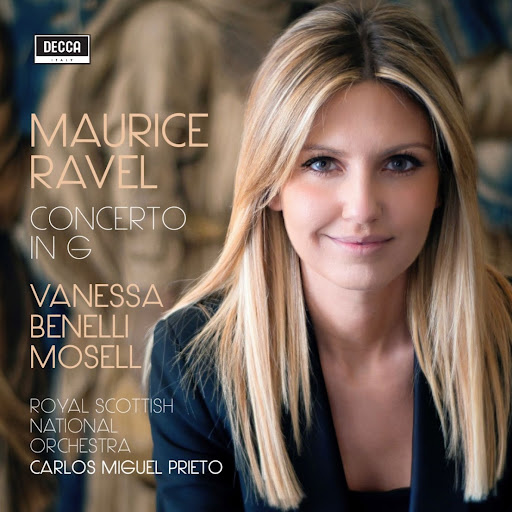
Vanessa Benelli Mosell is a rising star on the international music scene. She is continuously praised for her virtuosity, her technical brilliance and the sensitivity of her musical insight, which have been shaped significantly in mentorships with Karlheinz Stockhausen and Yuri Bashmet.

Benelli Mosell gave her debut appearance at eleven years old with pianist Pascal Rogé, who described her as “the most natural musical talent I have encountered in my entire life”. She has since performed with orchestras such as the Münchner Symphoniker, Berliner Symphoniker, the Zurich Chamber Orchestra and Orchestra del Teatro Comunale di Bologna.She also performed with the Moscow Soloists, replacing Martha Argerich in 2012. In the same year, Vanessa gave her celebrated debut at Londonʼs Wigmore Hall. Last year was one of new encounters including a tour to South America, concerts with the Jerusalem Symphony Orchestra and the Orchestre Philharmonique de Strasbourg, as well as a sell-­out solo recital at Hamburgʼs Laeiszhalle.

Vanessa Benelli Mosell began her comprehensive musical studies when she was exceptionally admitted at the International Piano Academy in Imola at seven years old, where she studied with Franco Scala. In 2007 she was invited to the Moscow Tchaikovsky Conservatory to study with Mikhail Voskresensky. Vanessa entered the Royal College of Music in London in 2007, where she graduated in 2012 studying with Dmitri Alexeev, generously supported by the Russell Gander Award.

Full biography

www.vanessabenellimosell.com

Who or what inspired you to take up the piano, and make it your career? 

When I was 4, my parents bought a piano from a friend.  No one in my family plays an instrument, so it happened by chance.  Soon after, my musical abilities were discovered – I had perfect pitch and good musical memory, and I started taking piano lessons and other musical classes at the music school in my hometown, Dnepropetrovsk, Ukraine.  Another turning point was when I was accepted at the age of 13 to study at the Special Music School for gifted students in Kharkov, Ukraine.  Somehow, I never questioned my desire and intended to become a musician after that.

Who or what were the most important influences on your playing? 

My piano teachers – Victor Makarov in Ukraine, probably one of “the most wanted” teachers in the country at that time, whose knowledge, musicianship and energy still inspires me; Alexander Volkov in Israel, who taught me to better hear and convey beauty of music; and Solomon Mikowsky, who helped me to refind my musicianship and find my own voice.

What have been the greatest challenges of your career so far? 

To find the true meaning of every piece I work on, and to match my inner image to what comes out my fingers.  Also, to find fresh view on the pieces I’ve performed many times.

Which recordings are you most proud of? 

My all-Schubert CD

Do you have a favourite concert venue to perform in? 

Palau de la Musica Catalana in Barcelona; Preston Bradley Hall at the Chicago Cultural Center, Tel Aviv Museum of Art

Favourite pieces to perform? Anything by Schubert; Schumann Humoreske

Listen to?  Mozart Symphonies, anything by Bach.  Also, recently – music for Soviet cartoons (I discovered that those are masterpieces! Listening together with my now 11 month old daughter)

Who are your favourite pianists? 

Sviatoslav Richter, Emile Gilels, Vladimir Horovitz, Arthur Rubinstein

What is your most memorable concert experience? 

Performing in a two-piano encemble with a blind pianist, Carlos Ibay in a concert dedicated to 60th birthday of Israel in Jerusalem in 2008.

What do you consider to be the most important ideas and concepts to impart to aspiring musicians? 

Stay true to yourself.  Do not try to copy anyone, or “please” anybody.  Try to find your own, unique calling in music.

What is your idea of perfect happiness? 

To be busy working on many interesting projects alone or with inspiring musicians (this may happen!), and to have an adequate time to spend on those projects, family, and rest (this may never happen!)

Inesa Sinkevych is a Ukrainian born Israeli concert pianist, currently living in New York. Her recent CD, ‘Schubert Piano Works’ was released in 2012. She has performed as a soloist with the Israeli Philharmonic, Minnesota Symphony, Gulbenkian Symphony, Gran Canaria Philharmonic Orchestras, as well as solo recitals in such venues as the Purcell Room at the Queen Elizabeth Hall in London, Palau de la Musica Catalana in Barcelona, and Merkin Hall in New York. She was awarded top and special prizes at the Arthur Rubinstein International Master Piano Competition in Tel Aviv, Piano-e-Competition in Minneapolis, Vianna da Motta International Piano Competition in Portugal, among others. She received her DMA from the Manhattan School of Music.

inesasinkevych.wordpress.com


(photo credit: Rory Isserow)

Who or what inspired you to take up the piano, and make it your career? 

I don’t remember not playing the piano! But as a career – the London-based Swiss pianist, Albert Ferber, with whom I was studying, encouraged me to make my debut at Wigmore Hall in 1974.

Who or what were the most important influences on your musical life and career? 

All my teachers in different ways; musical members of the family; friends and colleagues who believed in me. The composer William L Reed was a marvellous mentor and facilitator. Perhaps most important of all, a passion for the music I had found and a powerful desire to communicate it.

What have been the greatest challenges of your career so far? 

To focus on priorities.

Which performance/recordings are you most proud of?  

The ones where there has been that special communication with listeners – whether in the concert hall or in feed-back from far-flung corners of the world. I do not wish to be solely defined by the many Grainger ones, but they have presented much repertoire that is new, fresh, entrancing, life-enhancing – hard work, but what a joy!

Which particular works do you think you play best? 

The particular ones for which I feel a gut instinct, whether by Bach, Beethoven, Schumann, Brahms, Chopin, Ravel, Debussy, Rachmaninov …. the list goes on.

How do you make your repertoire choices from season to season?

That is dictated by the projects I am undertaking.

Do you have a favourite concert venue to perform in and why? 

I have enjoyed different venues for different reasons – the Melbourne Recital Centre is lovely, but so too is London’s Kings Place for its vibrant sense of enterprise (and very fine hall), and St John’s, Smith Square for its beauty. I have often relished the pin-point acoustics of Wigmore Hall, and the warm atmosphere of the Purcell Room. It was a thrill to play on the stage at Covent Garden for a gala Australia Day concert and at the Royal Festival Hall in Grainger’s ‘The Warriors’. By contrast, a good piano in a large music room can be perfect for a recital where one introduces the music.

Favourite pieces to perform? Listen to? 

Most recently Bach transcriptions and originals for a Bach CD on LIR Classics. And see above……

Who are your favourite musicians? 

To hear: I so loved the Pollini Beethoven cycle, and in different sonatas, Brendel (the last three) and, unexpectedly, Barenboim in some of the early ones. Of course, that force of nature, Argerich!  On disc – Dinu Lipatti, Solomon and Richter.

For many years I played two piano programmes with my friend and colleague, John Lavender. We gradually developed a way of creating one texture from two pianos. We recorded much new Grainger repertoire on three discs and John also made some splendid two piano versions of such works as Tchaikovsky’s ‘Romeo and Juliet’ overture as part of an all-Russian programme.

I have been lucky to work with so many fine artists – in earlier days, the mezzo Muriel Smith, more recently, certain outstanding singers – Stephen Varcoe, Martyn Hill, James Gilchrist and Della Jones, in the Chandos Grainger recordings and in concert. Wayne Marshall was a memorable colleague both as pianist and conductor. It has been a great pleasure to work with the cellist, Rohan de Saram, who has recently returned to the standard repertoire along with his extraordinary abilities and achievements in the field of contemporary music. Earlier women pianists who inspired me in concert included

Lili Kraus, Alicia de Larrocha and Rosalind Tureck. Also Hephizibah Menuhin, whom I knew and admired as a friend.

These are but a few names amongst many others…

What is your most memorable concert experience? 

Too many memorable experiences to choose one – but playing in 1980 in the Beijing Conservatoire and to a radio audience they told me averaged 50 million – was certainly the largest audience ever!

What do you consider to be the most important ideas and concepts to impart to aspiring musicians?

Be yourself. Find your unique path. Work hard. Know that beyond failure there is always the next step. Cherish your friends and the wonderful opportunities we have to share our music.

What are you working on at the moment? 

A concert at King’s Place, London, to mark 40 years since my London debut.

It will be a programme filled with melody and shared with some good friends, the Fitzwilliam String Quartet and a group of gifted young professionals, as we shall be premiering a piano concerto movement written by Grainger when he was just 13 years old.

I’ll start with mighty Bach arr. Liszt and progress through Grieg (lovely Grieg) by way of Grainger to the Dvorak Piano Quintet Op 81 – what an utterly gorgeous work.  

What is your present state of mind? 

Expectant.


Penelope Thwaites’ 40th Anniversary Concert takes place at London’s King’s Place Hall One on Wednesday 8th October. She is joined by the Fitzwilliam Quartet and outstanding young professional artists in a programme of music by Bach arr. Liszt, Grieg, Grainger and Dvorak. Further details here


London-based pianist and composer Penelope Thwaites has performed and broadcast in over thirty countries on five continents. Since her Wigmore Hall debut in 1974, she has appeared regularly as recitalist in major concert halls, and in a wide repertoire she has built a reputation as an intensely communicative artist. As concerto soloist she has appeared with the Philharmonia, the London Philharmonic Orchestra, City of London Sinfonia and the BBC Concert Orchestra, and with leading orchestras in Australia, Europe and America.