Kapustin: Between the Lines

Ophelia Gordon, piano

Nikolai Kapustin (1937–2020) occupies a distinctive place in 20th- and 21st-century music. A classically trained pianist and composer, Kapustin cleverly fused the formal, structural rigour of classical music with the rhythmic vitality and improvisational idioms of jazz. His works defy easy categorisation: though they sound spontaneously jazzy, they are entirely notated in classical form, leaving no space for actual improvisation. This paradox became the hallmark of his style.

Born in Horlivka, Ukraine, Kapustin studied piano at the Moscow Conservatory, under Alexander Goldenweiser, at a time when jazz was still viewed with suspicion by Soviet authorities. Kapustin’s fascination with American jazz pianists like Art Tatum, Oscar Peterson and Erroll Garner led him to explore the genre secretly and he absorbed its harmonic language, rhythmic energy, and phrasing to create his own compositional language. His music is vibrant, cerebral, witty, exuberant and alive.
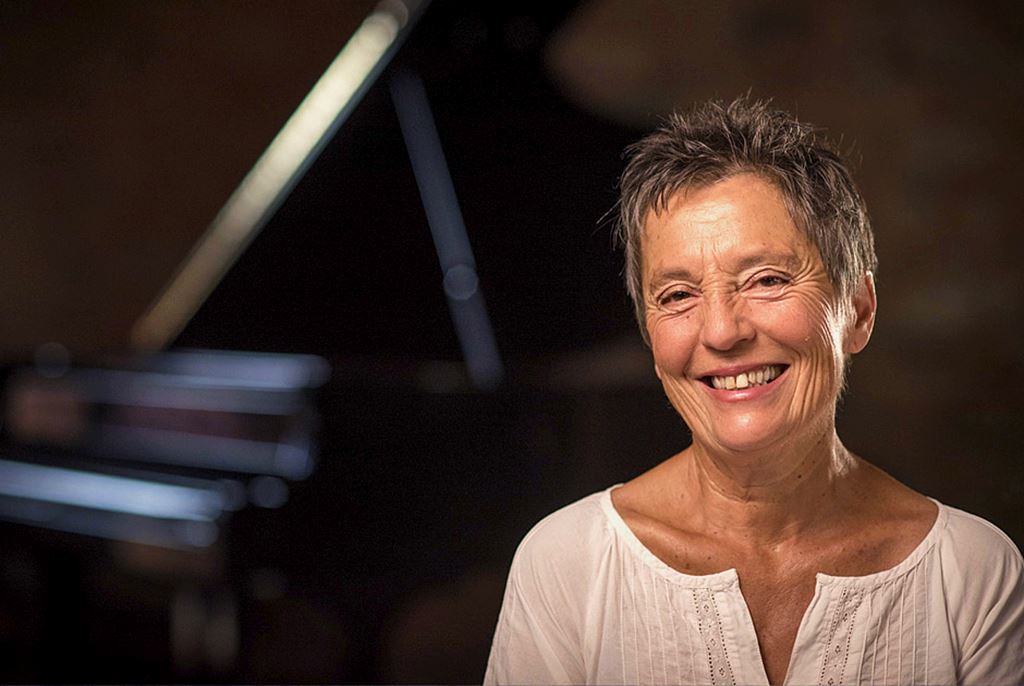
British pianist Ophelia Gordon makes a striking recording debut with this album of works by Nikolai Kapustin, drawn to his music as it reflects her own background (she grew up in a household full of music, both jazz and classical), her musical versatility and her desire to challenge the barriers between different genres of music.

Ophelia says, “I dream of a world where classical and jazz musicians can perform side by side, with no gatekeeping or barriers. Kapustin’s music makes that dream feel possible. It sits beautifully in the space between genres. It speaks directly to jazz musicians through its harmony and rhythm, and to classical musicians through its texture and form.”

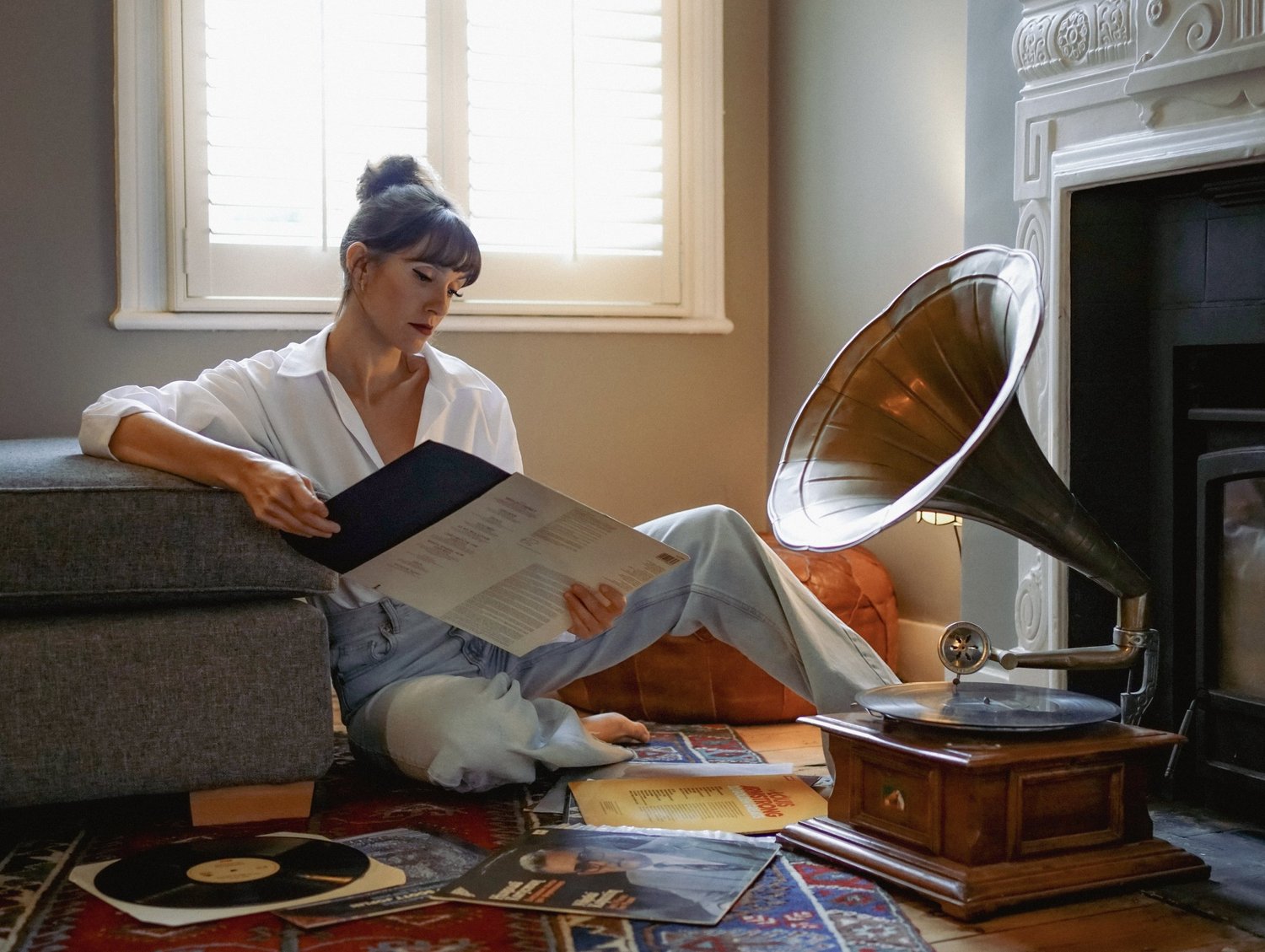
This album is a celebration of the space “between the lines” where Kapustin’s music sits. In preparation for the recording, Ophelia tracked down many long out-of-print vinyl recordings of the composer’s own performances to find the essence of Kapustin’s voice. The recording is also a milestone in that it’s the first full release of Kapustin’s music by a female British pianist.

The album opens with Big Band Sounds, Op. 46 (1986), a piece rich in swing and the textures and timbres of Big Band jazz. Ophelia sashays through it with panache, making a bold opening statement for the rest of her debut album.

Selections from the 24 Preludes follow. Based on Chopin’s model, most of the Preludes presented here are upbeat and foot-tapping, but No. 5 in D Major is more wistful, with hints of Bill Evans. Contemplation follows, a gentle, introspective piece which conjures up a late-night smoky jazz club. Ophelia gives this a wonderful spaciousness, so much so that it sounds improvised there and then.

The Paraphrase on “Aquarela do Brasil” is Kapustin’s take the famous Brazilian standard “Brazil,” composed by Ary Barroso in 1939. Ophelia played along with a samba beat “to lock into the groove” and the piece has a joyful, pacey mood, rich in colour and textures, with occasional moments of almost Lisztian bravura.

The eight Concert Etudes are probably Kapustin’s most well-known pieces and each has a distinct character – punchy, impressionistic, groovy, funky, the Etudes reflect the influences of jazz greats such as Erroll Garner, Art Tatum, Bill Evans, Chick Corea and Herbie Hancock. Ophelia really revels in this music, switching effortlessly between the different characters of each Etude – from the shimmering sixths (perhaps drawn from Chopin?) to the driving energy of Toccatina. There are sonorous bass sounds and hints of Rachmaninov in some of the chords, reminding us of Kapustin’s heritage. Performed here as the complete set, the Etudes are witty, poetic, fierce, relentless, and often beautiful too.

To close, the Paraphrase on Dizzy Gillespie’s “Manteca” for Two Pianos. With its nod to the virtuosic paraphrases of Franz Liszt, with its dramatic flourishes and sparkling fioriture, the piece has a wonderful vibrant energy. Unable to find another pianist with whom to record the piece, Ophelia learnt both parts herself:

“The process was lengthy and difficult but incredibly rewarding. I split the parts into “rhythm” and “melody.” Though both switch roles, it was essential to record the rhythm part first, then play the solo part alongside it. I now perform this live with the rhythm coming through a PA system!”

Recorded on a characterful 1961 Steinway, the piano sound is rich and warm, colourful and immediate, and engineered with a microphone setup designed to balance the immediacy of a jazz trio with the depth and clarity of the classical solo piano. Ophelia plays with a natural virtuosity which never feels contrived nor forced, completely at home with Kapustin’s rhythmic vitality, and myriad harmonies and textures. She clearly loves this music because, as she herself says in the notes, it allows her to “be all of myself at the piano”.

With detailed notes by Ophelia Gordon herself, lending a more personal take on traditional liner notes, this is an impressive debut recording that leaves one wanting to hear more from this bold and authentic artist.

Kapustin: Between the Lines is released on 14 November on the Divine Art label (CD and streaming).

(Artist image: Ben Cillard)

Guest post by Karine Hetherington


With, ‘Variations’, pianist Joanna Kacperek has chosen to focus on the humble variation. Like many other composers before them and since, Beethoven, Robert and Clara Schumann, Brahms and Chopin, composed many variations. On this album, Kacperek artfully displays the creative possibilities of these variations, which were a way of exploring a theme for these composers, often not their own, and taking it to the next sublime level.

Variations have also been the means by which one composer honoured another. Thus, we hear Robert Schumann’s little-known variations, based on a theme by Beethoven, in this case, Beethoven’s Symphony no.7 and more precisely the Allegretto movement. To hear Beethoven’s solemn theme being repeatedly played and tweaked and then transformed by Schumann, is a thrill and gives the much-loved Beethoven melody a new mesmeric quality.

Clara Schumann’s variations meanwhile, celebrate the rich relationship (musical and emotional) she enjoyed with her husband, Robert. These intimate variations reveal every facet of their emotional life; joy, pain, yearning, eventually unfolding into a marvellous resolution where gratitude seems the overriding emotion.

Impressed by Kacperek’s debut album, Karine Hetherington from ArtMuseLondon went to interview this breakthrough artist.

Had you always planned to have a musical career and become a professional pianist?

Actually, yes! I started my private piano lessons at the age of 6. From the age of 7 onwards, I was educated in state music schools in Poland that are quite strict and take your musical development very seriously. 

Of course all this wouldn’t’have happened without the support of my parents. 

What led you to the idea of doing an album of musical variations? What does it bring to the listener?

I really love the idea of taking something really simple, like a 16-bar theme, and developing it in any way possible; I find it really exciting from both a pianistic and musical point of view. In a way, it feels like pushing the boundaries – how far can we go? How creative and expressive can we be, starting with such simple musical material? 

The album started with my obsession with Clara Schumann’s Variations Op. 20 which she composed on her husband’s theme – I just knew this piece was special. The other thing that influenced this programming was my discovery of Robert Schumann’s Studies on a Theme by Beethoven – a composition that survived (thanks to Clara) and was not published during Robert’s life. It is such a tremendous set that deserves more spotlight! Then, I started adding other sets of variations that complemented the ones by the Schumanns – hence Beethoven Op. 34 (which links to Schumann-Beethoven Studies), and Brahms Op. 18b (the birthday present from Brahms to Clara Schumann). 

Because all of the works I have mentioned had a personal story behind them, I decided to add Dutilleux’s Choral and Variations from his Sonata Op. 1 – the piece dedicated to, and premiered by his wife, concert pianist Genevieve Joy. Then – Cecile Chaminade’s Thème varié Op. 89  – a little gem, so rarely performed and recorded (my recording is only the 4th in the world!) showcasing yet another brilliant pianist-composer; finally Chopin – which is not only a nod towards my Polish roots, but at the same time it links to Dutilleux and Chaminade through their Paris residency. 

Where are you performing next? What musical projects do you have in the pipeline?

2025 looks exciting. I have performances planned in France, Germany, the Netherlands, Poland, Ireland and of course in the UK. January will start with two performances in West London of Beethoven’s 3rd Piano Concerto with an incredible arrangement for a string quintet.

How do you relax?

Playing the piano can be a lonely profession, so to relax, I love being around people.I enjoy the gym and group fitness classes that involve cardio, boxing or dance. Apart from that – quiet evenings with my cat on my lap is also one of my favorite things. 

Joanna Kacperek’s album Variations is available on the Rubicon label and via streaming

joannakacperek.com


This article first appeared on The Cross-Eyed Pianist’s sister site ArtMuseLondon.com

(Artist photo by Paul Marc Mitchell)

Guest post by Michael Johnson

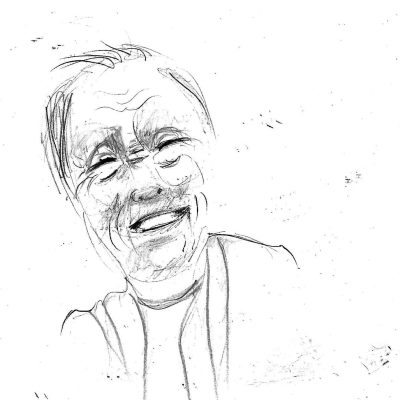
Illustration by Michael Johnson

A noticeable stir arose in piano circles around Bordeaux recently when Maria Joao Pires scheduled a rare recital in the city’s Auditorium concert hall. One of the greatest living pianists of our time, she has become increasingly absent from the concert stage in the past few years. Her commitment to interests outside of the music world has taken over much of her time and interest.

In Bordeaux she played a modest programme of Mozart sonatas and two Debussy pieces. For 90 minutes without intermission, she displayed her famous keyboard touch, her blinding virtuosity and her respect for the score. Gracious bows between numbers showed her appreciation for the audience which, she said, came for the music, not the show.

As she said in our interview (below), “It’s not about me, you know.” She believes we have “more values to protect – nature and art, life itself “.

We met backstage at the Auditorium on a sunny June afternoon. She was relaxed in conversation, with an easy smile and a refreshing frankness about the piano world and about the effects of ageing.

A highlight of her teaching avocation was her U.S. production of her Partitura Workshop at Northwestern University in Chicago and at the Gilmore Festival in Kalamazoo, Michigan, last year.

Gilmore director Pierre van der Westhuizen recalled for me the impact she made in Kalamazoo. “Ms Pires took us back to the way music should be instructed,” he said. “These pianists almost became as apprentices. (The six participants) spent the whole day together, learning together, socializing together. Ms Pires asked as many questions of them as they of her.”

Ms. Pires also recalled the warmth and enthusiasm she encountered in Chicago and Kalamazoo.

In our interview, she spoke about life at 80. Her playing is hampered, she said, by a case of dystonia but she is not ready to retire. In the Autumn she heads for Asia, playing in Japan, Taiwan and South Korea. She will skip China because she has been blacklisted there for playing at a conference that the Dalai Lama attended.

She explained her restricted repertoire by showing me her small hands. She placed her palm against my “piano hands”, which easily engulfed hers. She avoids composers such as the big Russians, Rachmaninov and Prokofiev, whose demands on the pianist stretch well beyond the reach of an octave.

In our wide-ranging discussion, she said she still needs to practice, sometimes for one hour a day, sometimes for five hours. “What shrinks is not only your skills, it’s your repertoire. That’s life,” she said.

Here is an edited transcript of our interview.

MJ: At your recent recital in Bordeaux, the audience went wild. You got a standing ovation over your very fine Mozart and Debussy programme.

MJP: It’s not about me, you know. The real ovation should be about the dialogue with the music. We don’t need the ovation because we have more values to protect — nature and art, life itself.

You have just turned 80. Your fans have been expecting you to retire for some time. What does your agenda say?

No, I am not ready to retire. I have a couple of concerts coming soon, then I need a vacation, then in the fall I go to the Far East, to Taiwan, Korea, Japan.

What? Not China, site of the world’s biggest piano craze?

I have played a lot in Japan over my career but I don’t play in China any more because they won’t grant me a visa.

Did they give you a reason?

Yes, at a conference a few years ago l played for the Dalai Lama. To the Chinese leaders, that’s a no-no! But I still have many private students in China working with me online.

In Asia there are large numbers of serious piano students – too many for their local needs. Some of them will become great artists and they will come to the West, won’t they?

Certainly.

Are you concerned about the influx awaiting us?

I’m very concerned . Mainly about the number of people who don’t get the transmission of knowledge from a school or a culture to them, the players.

Your Gilmore workshop in Kalamazoo last year had six students, five of whom were Asians. Is that a sign of the future?

It is. No more comment.

Isn’t piano study a big problem in the USA, with all the electronic games and distractions from music lessons?

The problem is also in Europe. We have lost a lot of quality, in terms of knowledge behind the music. The schools do not make the transmission from the composers to us. We owe that to the composers. And it’s very sad because now we focus on goals and competition, and competition does not go well with art.

You had a life in the competition world, did you not?

Not really. At about age 28 I was obliged to compete because I was chosen by the (Salazar) dictatorship in Portugal and I had to go to the Beethoven Competition in Brussels.

You won that first prize didn’t you?

Yes but I am absolutely not proud at all of that.

Do you have an opinion about competitions?

I have an opinion, a very strong opinion. Competition and art do not go together. Unfortunately young people believe that if they don’t participate in competitions, they cannot earn a living. That’s an illusion, I promise you, it’s a total illusion. A pianist with skills and knowledge can do many other things.

Don’t young pianists from wealthy backgrounds have an easier way forward?

I have nothing against money or rich people. But I have something against how much can this can disturb our view. I see more and more young people being distracted by that idea. Money is replacing everything. It is replacing the clear view over everything. We need more empathy with other people. If we don’t have that empathy we are blind, in terms of consciousness. This is the worst thing that could happen.

Are you still playing regularly?

Yes, but I have a big problem with my right hand dystonia [involuntary muscle contractions in the hands]. This is taking too much effort. I also have small hands, so I always have problems. Age just makes it worse. [She presses her open palm against my “piano hands”. I easily envelope hers in mine.]

Ashkenazy also has tiny hands and yet he manages to jump octaves, even tenths.

Tiny is one thing. This is another. I have a child’s hands and that’s different from “tiny” hands.

Your repertoire seems tightly controlled, with accent on Bach, Mozart, Chopin, Schubert, Debussy.

Even among the French impressionists, I play with great difficulty. It’s not easy. And neither can I do the Russians, Rachmanniov, Prokofiev. But I like to teach pieces that I don’t play.

You have recorded Schumann and Brahms.

Yes, but I play them but in very small amounts.

You have been quoted as blaming Liszt for inventing the modern solo piano format.

No, Liszt was a great composer. How can I blame him? If I cannot play some pieces, it’s my fault, not his.

Over the past twenty years, workshops and teaching are taking you more and more away from the concert stage.

Yes, I have always been interested in the transmission of skills and knowledge. As an adult, I realized that the transmission is cut back. So the transmission of art is not happening any more. I wish we could be stronger in our complaining about what’s going on. We have no clear view over future generations. How to teach them, how to deal with problems.

How much energy do you have left? How much more stamina is there in you, living in hotels, taking planes and trains throughout Europe and Asia? Doesn’t that wear you down?

Yes, it does, and I was sick really badly for six months and this was a very good lesson for me. My body and spirit were saying “Come on, take care of yourself.” I still have a bit of energy but I rest when I need to rest.

You have said you suffer from stage fright.

I have a lot of stage fright. We have this responsibility, and that can give you a lot of pressure. So you don’t want to go on stage. I prefer if I wake up on a day that I have nothing on stage, I am happy. And if I don’t have to go into an airplane, I am happy. It is not a pleasant life. But it is a life that brings a lot of experience. A vision of the world, and of the people — how they react to things.

Are you still uncomfortable playing in public?

Yes, but I am comfortable with people who collaborate with me, people who are there to listen to the music. I feel they are friends.

Do you still need to practice?

Yes, I need to practice more and more. Sometimes an hour a day, sometimes five, sometimes nothing. What shrinks is not only your skills, it’s your repertoire. That’s life.

If you could choose, how do you want to be remembered after your time runs out?

No problem. I have no wish at all. All right, I have one wish. When I die, I don’t want to die stupid or mean.


Michael Johnson and Frances Wilson recently published a collection of interviews with concert pianists, under the title “Lifting the Lid”. The book is available through Amazon.

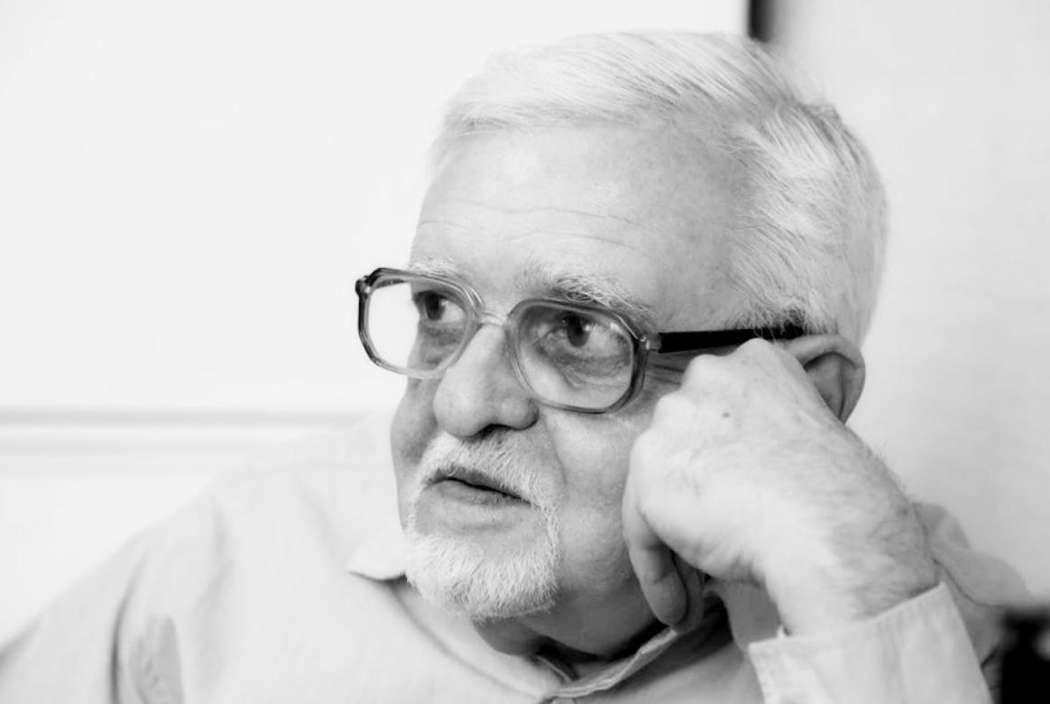
MICHAEL JOHNSON is a music critic and writer with a particular interest in piano. He has worked as a reporter and editor in New York, Moscow, Paris and London over his journalism career. He covered European technology for Business Week for five years, and served nine years as chief editor of International Management magazine and was chief editor of the French technology weekly 01 Informatique. He also spent four years as Moscow correspondent of The Associated Press. He is a regular contributor to International Piano magazine, and is the author of five books. Michael Johnson is based in Bordeaux, France. Besides English and French he is also fluent in Russian.

Mozart wrote 18 piano sonatas and American pianist Orli Shaham has recorded all of them for the Canary Classics label, the final two volumes of the series being released in February this year. These sonatas have an enduring appeal, for players, both professional and amateur, and audiences alike.

For Orli Shaham the fascination with Mozart’s piano music began at an early age: this recording is the result of an exhilarating 40-year journey through the sonatas, getting to know them intimately, studying them deeply to appreciate their individual characters, and to understand the composer’s musical methods and motivations. “Was he trying out that piano? Was he writing for someone’s daughters? I want that something from every single one of them.” (Orli Shaham)

The recording was made in August 2019 and August 2020, at Mechanics Hall in Worcester, Massachusetts. The timing was deliberate to ensure consistent humidity in the hall: the result is a wonderful clarity and evenness of sound.

The piano sonatas reveal Mozart’s compositional genius in microcosm – from big orchestral gestures and brass fanfares to chamber music textures and eloquent operatic arias. Shaham pays great attention to the changing textures of Mozart’s writing but also his chiaroscuro – those remarkable emotional shifts from light to dark and back to light which occur in phrases or indeed a single bar. This is most evident in the slow movements where Shaham finds particular intimacy, poignancy and depth of expression – for example, as here in the Adagio from the sonata no. 2 in F Major, K.280:

There’s a delightful clarity too, in Shaham’s approach, with impeccable attention to details of dynamics, phrasing and articulation combined with tasteful use of pacing and rubato to create drama (take the opening movement of the sonata K.310, for example, where she takes time to appreciate the increasing operatic tension). There are moments of wondrous spaciousness, especially in the slow movements, where the contrasting hues of Mozart’s compositional palette are really brought to the fore.

I interviewed Orli Shaham to find out more about the pleasures and challenges of recording the complete Mozart piano sonatas

Congratulations on completing your recording of Mozart’s piano sonatas. What have been the particular challenges and pleasures of recording this cycle?

From a pianistic point of view, the greatest pleasure has been feeling Mozart’s hand at the keyboard and the way that he must have used his musculature, the technique. When you play all of these sonatas you feel like you know how it felt to be inside his hands and some of the brilliant ideas that he came up with of getting your fingers around the keyboard in virtuosic and delightful ways.

The complete sonatas run from his earliest maturity to quite late in his output. Therefore, the musical trajectory of how he put together notes, how he was thinking from a formal point of view, how he was thinking of the storytelling of a sonata and how the audience would be engaged throughout that whole time, that’s been a tremendous pleasure to learn from him.

The challenges are many. Mozart had a tremendous technique, so the sonatas are challenging to play because he was such a master of the keyboard and was so free to express himself in so many different ways. Internalizing what that is and getting to the place where I felt comfortable to convey as many of his intentions as possible, was certainly a wonderful challenge from the beginning.

There’s no question that part of the challenge of playing his sonatas is the fact that I’m playing them on a beautiful modern Steinway, which of course he didn’t have access to. While I love that, and it is a pleasure, the question of how do I make this as close to what I think he would have done if he were around in 2020 to record it is definitely challenging and something that I put a lot of thought into.

In terms of the recording sessions of the sonatas, we had a great challenge. Our first session was in August 2019. The world looked quite different when we recorded the second session in August 2020, during the first months of the Covid pandemic, and we came up against quite a lot of challenges. This was before any of the technologies were available for remote recording and remote engineering. We had to use 27 different apps and programs to make that second recording session possible.

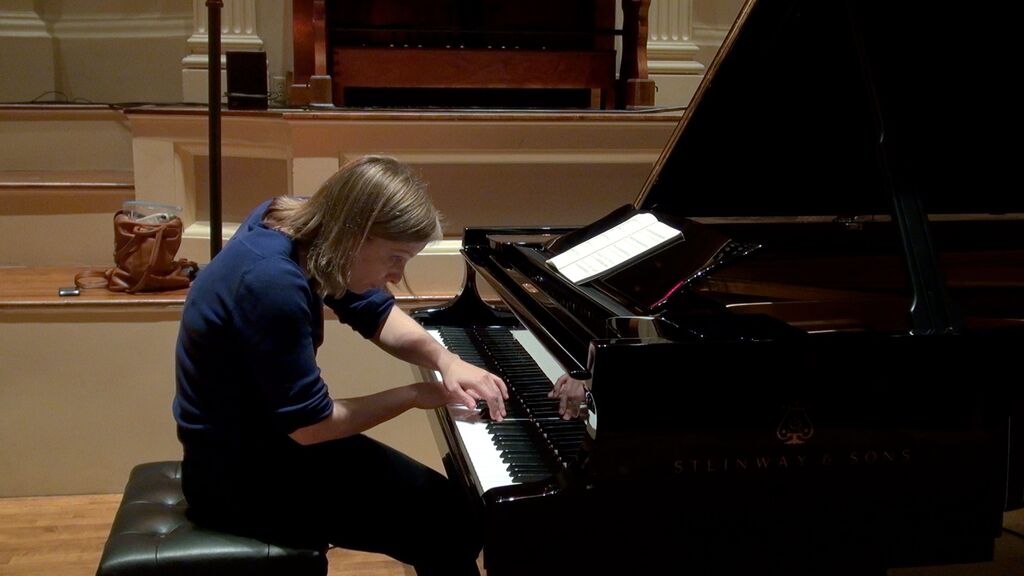
Orli Shaham in the recording studio

A particularly tough moment was when I had just finished playing the first movement of the C Minor Sonata, which is so emotional and such a moment of vulnerability for the performer. I played my heart out, and then there was radio silence from my wonderful producer Erica Brenner hundreds of miles away in Cleveland, because the internet service for the entire neighborhood had failed. Luckily, the audio was captured, and a few hours later, using a lot of workarounds, we were able to continue recording.

Schnabel said of the sonatas “too easy for children, and too difficult for artists”. What do you think he meant by this statement?

It’s a really interesting commentary. I’m not sure I entirely agree with “too easy,” but there are places in those sonatas where the writing is something that makes sense for a student to play because it’s so idiomatic for the keyboard. It will teach you how to use your hand correctly at the most basic level. But at the same time, he’s doing it with such grace and artistry and intelligence that there are layers and layers of meaning to unpack, even with the simplest phrase.

Why, in your opinion, do Mozart’s piano sonatas have an enduring popular appeal, with both artists and audiences?

They have an enduring popular appeal because Mozart had an enduring popular appeal in mind. I love that that’s so, so true. You see it in his letters. He writes to his father, “Don’t worry. I’m putting something in for the really super educated. I’m putting something in for the ones who really don’t know anything about music yet. I’m putting something in for the ones who want to play themselves but aren’t that good.” He thought about everybody and he tried from very early on to consciously put all of that into every sonata, into every work of music that he wrote, actually. I love that he was very mindful of his audience. Of course, that’s part of where he was in time. He was one of the first composers to try to get by without the benefit of somebody’s patronage, meaning he had to appeal to the audience.

Do you have a favourite sonata out of the entire cycle?

Yes. The one I’m playing at the moment.

Orli Shaham’s complete Mozart Piano Sonatas are available in 6 volumes on the Canary Classics label and via streaming

Photo credit Karjaka Studios