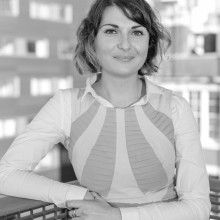
26-apr-soul-zisso-contemporary-voices-web-131063328970695992Who or what inspired you to take up composing, and pursue a career in music?
When I was 14 I started writing songs and realised I had so much music in my head that I didn’t know how to write down, as I couldn’t play any instruments. This led to a ‘eureka’ moment where I just knew that composition was what I was meant to do in life, which resulted in my deciding to go away to boarding school to study for an A Level in music from scratch when I was 15. 

Who or what were the most significant influences on your musical life and career as a composer?
My teachers (both composition and instrumental/vocal) and friends have had the most significant positive impact on my career. They have taught and supported me, always being honest and therefore helping me improve and acknowledge both the good and bad. 

What have been the greatest challenges of your career so far? 
Having only started studying music at age 15, my greatest challenge was catching up with everyone else: first with general music and performing and then with composition. This meant always making sure I was working harder than everyone around me, and not giving up even when it meant not seeing the light at the end of the tunnel for years and years on end.  

What are the special challenges/pleasures of working on a commissioned piece? 
Each piece is different and special in its own way. I treat the compositional process as a type of meditation, seeing the players playing in the hall inside my head, hearing what they’re playing and how it works spatially in the space. Once the initial idea of the piece is established, it’s all about answering all the different questions about what the piece is trying to do and how, until I can hear the whole structure in my head and can write it down.

What are the special challenges/pleasures of working with particular musicians, singers, ensembles and orchestras?
Every different instrumentation brings with it lots of possibilities and new ideas, which is always exciting. Working with musicians I know and admire is particularly great as it’s easier to write a piece that is influenced by them as players / singers and has that added element of being written especially for them. I find writing pieces for myself to perform (as a soprano) the most challenging – it’s like a constant battle between my performer side wanting to perform strange extended vocal techniques and my composer side needing to justify every choice compositionally.

Which works are you most proud of? 
Poke – a piece for large mixed ensemble I wrote two and a half years ago for a workshop with BCMG. Even though it was the only piece I’ve written in the last three years that has only been workshopped rather than performed, I worked on it for a solid three months and am very proud of the level of detail and complexity in it. I hope it’ll someday get a proper performance. 

From the Darkness, for symphony orchestra – this was my first attempt at writing an orchestral piece fresh from finishing my undergraduate studies and my chance to use all I’ve learned about orchestral writing from sitting in on weekly rehearsals and watching countless concerts (another attempt to catch up, this time by a 1st study singer catching up on orchestral knowledge). I’m still proud of this piece because it shows how much I’ve progressed in just a few years, from a singer who couldn’t tell apart oboe and clarinet colours to using the orchestra in ways I haven’t even seen being done before. 

Who are your favourite musicians/composers?
Ligeti, Beethoven, Prokofiev, Radulescu, Saariaho

What is your most memorable concert experience? 
A few years ago I was fortunate enough to have my first orchestral piece ‘From the Darkness‘ chosen to be workshopped and then performed by BBC National Orchestra of Wales. The experience of having my piece played by one of my all-time favourite orchestras when I didn’t think it even stood a chance to be chosen was surreal and overwhelming, one which gave me hope for the future and that I would never forget. 

What do you consider to be the most important ideas and concepts to impart to aspiring musicians? 
That pieces of music need to have a reason to exist, be it an idea or structure that comes across – there’s no point to writing pieces that just sound pretty without having something to say. 

Where would you like to be in 10 years’ time?
Working professionally as a freelance composer and teaching composition at a University / Conservatoire 

What is your most treasured possession?
I have a few items that, to someone who doesn’t know me, might seem childish and bizarre but actively help me compose. These include a ‘touchy-feely’ hamster book, a squeezable orange octopus toy (with its knitted hat), and my personal scores for the Berio Sequenza III for female voice and Beethoven’s ‘Moonlight’ Sonata (which are both symbolic in reminding myself I can overcome massive challenges when I set my mind to it)

How do you work?

I usually compose in what I like to call my ‘office’, which is essentially sitting on the floor in the hallway of the Conservatoire, opposite the composition notice board. It may sound bizarre (and passers-by keep wondering what I’m doing there or assume I’m queuing for a practice room), but it really helps to think about new pieces away from a piano or any other instruments at first in order to get a clear idea in my head of what I want the piece to sound like and do. The sound of lots of different students practising nearby actually becomes a kind of white noise that helps clear my head and I really prefer it to silence, and lots of people walk by so it doesn’t feel too alone. To add to the weirdness, I’m usually surrounded by my ‘composition aides and mascots’ which help me deal with stress – quite often I’ll be sitting there hugging my copy of Berio’s Sequenza III and petting my hamster book. I heard I’ve become quite a mystery for pianists who frequently practice on that floor.
How would you describe your compositional language?

I really like using different types of microtones to explore less common soundworlds. My pieces used to be mostly harmonic-series based but in the last year or two I’ve been frequently experimenting with other microtonal soundworlds, which feels like exploring a wealth of unexplored territory. As part of my doctoral research at Birmingham Conservatoire I am researching microtonal singing in order to create my own unique microtonal language that will incorporate voices as well as instruments, which is why I’m currently trying out lots of different ways of using microtones. Another side of my compositional language is influenced by my work as a performer – using extended techniques and/or a greater sense of acting/performing, especially for voices.


Carla Rees and Xenia Pestova premiere Hidden Elegy for alto flute and piano at The Forge, Camden, on 6th September 2016. Further information and tickets here

Ever since commencing on her music studies at the relatively late age of 15, Soul has been dedicated to her dream of becoming a composer. She graduated from Cardiff University, studying with Arlene Sierra and Robert Fokkens and for a brief time studying with Alison Kay, before commencing on a Masters and later a PhD in composition at Birmingham Conservatoire under the tuition of Joe Cutler and Howard Skempton.

Her music, which has been described as “curiously original” (Wales Online) and having “real character and sensitivity” (Wales Arts Review), has been performed by the likes of BBC National Orchestra of Wales, Orchestra of the Swan, Xenia Pestova and the Fidelio Trio across the UK, Europe and Canada in a wide range of venues including Wells Cathedral, Hoddinott Hall and Stratford Town Hall, and festivals such as the Cheltenham Music Festival, Occupy the Pianos and Frontiers new music festival.

Her interests range from the use of different microtonal soundworlds and textures to children’s books and the exploration of various extended techniques. She is also interested in writing for dance and has composed music for Rambert Dance’s Vintage Rambert project.

In addition to composing, Soul is also a singer, specialising in performing contemporary repertoire, including Berio’s Sequenza III for female voice. She is a member of Via Nova chamber choir, has performed as both soloist and choral singer across the UK (including at the Wigmore Hall and at the Huddersfield Contemporary Music Festival) and abroad and is committed to promoting new music, which includes premiering many new pieces, particularly ones for solo unaccompanied voice.

www.yfatsoulzisso.com

image1

Who or what inspired you to pursue a career in music?  

My Mum and Dad. They gave me the opportunity to have piano lessons and I’ve never looked back. A few years later they encouraged me to learn more instruments so I chose the clarinet and harp initially, but my Mum said no to the harp because it was too big, so I chose the marginally smaller cello as an alternative. I was enrolled in dance lessons from the age of 4 so learnt to love performance from a young age. I loved to put on shows with my cousins for our parents and grandparents. I took this to another level when I forced my sister and a friend to perform a rendition of a track from the show Starlight Express whilst on roller skates in a school assembly. My piano teacher and music teacher encouraged me to pursue performance and composition. To be honest I never imagined doing anything other than music so I think I have always been pursuing a career in music without actually realising it.

Who or what have been the most important influences on your musical life and career? 

I’ve never really had one or two important influences. More a continual building collection. Daily I’ll be influenced by many different things whether that be a piece of music, a painting, photograph, philosophical article or an approach someone takes on life. I’m a very reflective person so can be influenced by the simplest of things like watching a bird splash about in a puddle. I’m driven by the belief that there is only one life we live in our current form. Therefore we should either be striving to achieve a goal or, at the very least, enjoy what we are doing. Not everyone has this choice so we shouldn’t take it for granted.

What have been the greatest challenges of your career so far? 

The first thing I think of is staring at a blank page when I know I need to compose a piece for a deadline. But this is a daily challenge. The greatest challenge of my career though is probably getting people to listen to my work when there are so many other artists work they could also be listening to.

Which performance/recordings are you most proud of?  

There are two pieces I composed for a pitch for an advert. There are also some cues from a film score that I’m particularly proud of because of their emotive drive. The type of music which makes your hair stand on end.

Favourite pieces to listen to?  

This changes weekly, even daily. Today I’m really enjoying Beautiful Lie by Hans Zimmer and Junkie XL

Who are your favourite musicians? 

There are too many too name. My favourite musicians are ones whose music has elements which will intrigue me and which I have an uncontrollable urge to immediately analyse. Whose music is utterly captivating to listen to because of all the different compositional elements. To name just a small number would be Alexandre Desplat, Danny Elfman, Johann Johannson, Max Richter, Clint Mansell, Kronos Quartet, Goldmund, Nils Frahm, The Glitch Mob…there really are too many from so many different styles.

What is your most memorable concert experience? 

Unfortunately I have a very poor memory so I expect there have been many. However, there are a few I still talk about. One was when Muse performed at SWSX many years ago before they were as big as they are now. They were absolutely incredible. The type of musicians where you can tell they breath music. For the same reason, Jill Scott and Mumford and Sons were also extremely memorable. But more recently, I’ve seen a few film score composers in concert who have been absolutely wonderful. Namely Danny Elfman and Hans Zimmer. I came away more in awe than when I went in. There are a number of theatre productions that have literally left me speechless as well.

What do you consider to be the most important ideas and concepts to impart to aspiring musicians? 

Explore concepts you feel uncomfortable with. Face your weaknesses. Learn to take a step back from your work and hear it from a different perspective. Don’t ignore your gut instinct. Learn to accept and see criticism as constructive feedback but also be confident in your own mind and opinion where necessary.

Where would you like to be in 10 years’ time?  

To still be making a living out of composing music.

What is your idea of perfect happiness? 

Working from a studio that looks out to the ocean.

Aleah Morrison-Basu’s first narrative piano and electronics album ‘Evolving Reflections’ is released on 8th July 2016. 

Aleah is a London-based composer working out of her studio in central London. Always enthusiastically looking for new and interesting collaborations with musicians, composers, Film, TV and Theatre directors as a composer, arranger, orchestrator, music supervisor and co-composer. 

Distinctive melodies, emotive scores. Nominated for 2015 MAS Award for Best Original Score for Feature Film and Best Original Score for Short Film. Music composer for feature films, TV series, short films, TVC’s, branding films, interactive theatre. 

Aleah has composed scores for a number of award-winning short films and recently co-composed her first feature film, released in September 2015 in UK, USA and Canada. 

Also, has been composing scores for a number of TV documentary series, currently working on her third score.

Clients include BBC, HBO, Head, Adidas, Kia, Hyundai, Wilko, Three mobile, America’s Cup, Philip Stein, The American Heart Foundation, McVities, Georgia Tech, Harvard amongst many others. 

While composing, arranging, orchestrating and music supervising for Zelig Sound, Aleah is continuing her passion for collaborations in other creative art forms working as a freelance composer and arranger for film/ TV/ and theatre directors.

www.aleahmorrison.com

tumblr_ntlggdoxxr1rjavlio1_1280

Who or what inspired you to take up composing, and pursue a career in music?

Music has been my number one passion since I was a child. I started with classical piano, but then had a realization that I wasn’t fully fulfilled performing others’ music, and that I needed to take a risk and try to find my own musical voice. I went on to study electronic music composition and piano at the university, and have been on an obsessive never-ending journey since!

Who or what were the most significant influences on your musical life and career as a composer?

Growing up my biggest influences were my grandmother and father. Both were very passionate about classical music. My grandmother played classical piano and organ until her early 90’s, and my dad listened to classical music constantly and took our family to Chicago Symphony Orchestra concerts. Then in my teens the big influence was Chicago house and Detroit techno, and then next IDM music on labels like Warp and Ninja Tune, pre-fusion jazz, and soul music. It was inspiring to be in Chicago in the 90’s when post-rock took off too. Thrill Jockey and bands like Tortoise were combining electronics into rock music in a new way, and it was an exciting time to experience music evolving.

What have been the greatest challenges of your career so far?

The biggest challenge was rising above being a local musician. Taking my career from local shows to other cities in the states, and then touring and releasing music internationally, took a lot of hustle. My husband is also from Chicago, so it wasn’t easy for us to pick-up and leave. He agreed we could move to London if I was accepted into the Royal College of ‘Music Composition for Screen’ Masters program. The program accepts about ten students per year, but I was determined! I felt trapped and like I’d hit a creative wall in Chicago. So I think the greatest challenge was extracting myself from that situation, and putting myself in a better place to create and expand.

What are the special challenges/pleasures of working on a commissioned piece?

I love working on commissioned pieces. Whether a film score, a song for a compilation, or a bespoke piece for a performer, I really enjoy having set parameters going into it. Like Stravinsky’s famous quote, “The more constraints one imposes the more one frees one’s self. And the arbitrariness of the constraint serves only to obtain precision of execution.”

What are the special challenges/pleasures of working with particular musicians, singers, ensembles and orchestras?

The biggest challenge is organizing it! We’re all busy people, so finding a time we can all be in the same room can be like a Tetris game. There are so many pleasures. I’ve met so many incredible people who dedicate their lives to their passions and bettering themselves. It’s a a great little bubble of a world.

Which works are you most proud of?

The debut London Electronic Orchestra album. This is a few years of exploration and experimentation all coming together, and I’m very excited for it’s release.

Who are your favourite musicians/composers?

John and Alice Coltrane are two of my favorite musicians. My favorite composers are Chopin (piano works), Eric Satie, Philip Glass, and Steve Reich.

What is your most memorable concert experience?

The first big London Electronic Orchestra concert in 2014 for a 36-piece orchestra at the Britten Theatre. I was figuring it out as it went along, but we pulled it off! It gave me the confidence to keep going with the project.

What do you consider to be the most important ideas and concepts to impart to aspiring musicians?

Believe in yourself and focus on your craft.

Where would you like to be in 10 years’ time?

I would like to be touring internationally with London Electronic Orchestra, composing new music, and writing film scores. Basically continuing on the same path.

London Electronic Orchestra

DEBUT ALBUM RELEASED MAY 6, 2016 ON THE VINYL FACTORY LABEL

Purchase the album

Kate Simko has carved an international career as an electronic music producer, film composer, live performer, and DJ. Hailing from Chicago, Kate’s music reflects the influences of the city’s underground sounds, as well her background in classical piano and jazz music.

www.katesimko.com

soosan-220x220Who or what inspired you to take up composing, and pursue a career in music? 

I always enjoyed music as a child and played recorder and then oboe growing up. I only really got into composing at the age of 16 when I was experiencing such horrific stage fright that it became clear I needed a different outlet. However, I came from a completely non-musical family so had no concept of how to turn this thing I enjoyed doing into an actual career. Perhaps the penny dropped at some point in my third year of undergraduate – studying Social and Political Sciences – when I realised that composing gave me the greatest pleasure of any activity in my life, and that if I wasn’t doing something creative I would lose my mind.

Who or what were the most significant influences on your musical life and career as a composer? 

All of my teachers who have helped me more than I can say, but especially Cecilia McDowall, Oliver Leaman, Dominic Murcott, Stephen Montague and Reza Vali. Also, hearing ‘Atmospheres for Orchestra’ by Ligeti completely changed my life.

What have been the greatest challenges of your career so far? 

Believing that I can do it, having the courage to make an artistic statement, dealing with failure, organising my life and work despite the total absence of a schedule, making money.

What are the special challenges/pleasures of working on a commissioned piece? 

Commissioned pieces are wonderful because you know you are working with people who are excited about contemporary music and keen for a challenge. There is always that worry that you’re going to deliver something that they will absolutely hate, but you can’t think about that, as then you will simply never write anything. You just have to believe that if you do something with enough integrity, it will work as a piece of art.

What are the special challenges/pleasures of working with particular musicians, singers, ensembles and orchestras? 

I’ve done quite a bit of work with children and voluntary musicians so that has its own challenges in terms of how difficult you can make the parts, but also how interesting they have to be too. If you’re writing for an orchestra of children and you make the trombones count 200 bars rest then it’s likely those trombonists will be put off contemporary music forever. I feel that in a case like that, I have a duty to make their parts interesting so in the past I have experimented with handheld percussion and singing in the context of a large ensemble. The great thing about working with an ensemble like The Hermes Experiment is that you feel nothing is off limits. When I told them I wanted to write a piece that combined the melodies of Iranian classical music with Renaissance Counterpoint, they didn’t even bat an eyelid. And that was wonderful.

Which works are you most proud of?  

The pieces where I held onto an artistic idea in spite of being terrified it wouldn’t work; working my way through that vulnerability and coming out the other side intact always makes me feel quite proud.

Who are your favourite musicians/composers? 

Ligeti is my shining beacon of inspiration at all times. Also Stravinsky, Berio, Morton Feldman, Rebecca Saunders and Xenakis. And I believe Bach is good for the soul.

What is your most memorable concert experience? 

Memorable concerts seem to either be incredibly exciting or make me sob uncontrollably. One was Johannes Moser playing the Lutoslawksi Cello Concerto and then a Bach Cello Suite as an encore (I sobbed in my cheap seat). Another was Lisa Batiashvili performing Shostakovich’s 1st violin concerto which was just incredible. And also a rehearsal of the Berlin Phil conducted by Simon Rattle performing Mahler 2 (I couldn’t get a ticket for the performance), in which I cried throughout.

What do you consider to be the most important ideas and concepts to impart to aspiring musicians? 

That self-doubt is both productive and good and will make you a better artist in the end. That you should strive at all times to do something new, whatever that may mean. To remember to be nice to people, as everyone in music is baring their soul and doing the best they can. To not neglect your personal life and relationships: practising the piano for 8 hours a day may make you a great pianist but it won’t ultimately make you happy, only people can do that.

Where would you like to be in 10 years’ time? 

I actually wrote a 10 year plan as an exercise with some friends last year. It involved composing, teaching, travelling and love. I don’t want to tell you the details as for some reason I’m scared it won’t then come true.

New works by Soosan Lolavar will be premiered by The Hermes Experiment at The Forge, Camden, London on 16th February, together with works by Giles Swayne, Ed Scolding, Claude Debussy and Richard Rodney Bennett. Further information

Soosan Lolavar is a British-Iranian composer, sound artist and educator who works in both electronic and acoustic sound, and across the genres of concert music, contemporary dance, installation, film, animation and theatre.

Her work has been performed at the Royal Festival Hall, V&A,  National Maritime Museum,  ICA, Chisenhale Gallery,  LSE New Academic Building, Blackheath Concert Halls,  Jacqueline Du Pré Music Centre,  Bonnie Bird Theatre, Circus Space and broadcast on BBC Radio 3.

In 2013 she was selected as one of two Embedded composers in residence at the Southbank Centre and received funding from Arts Council England, Jerwood Charitable Foundation and Iran Heritage Foundation to pursue ‘Stay Close’, a ten-month project exploring contemporary classical music as a means of cultural exchange between the UK and Iran. In 2012 she won the John Halford Prize for Composition awarded by Ian Pace and was selected as part of the Adopt a Composer scheme funded by PRS for Music Foundation and run by Making Music, in partnership with Sound and Music and BBC Radio 3.

She holds degrees in Social and Political Sciences (University of Cambridge), Musicology (University of Oxford) and Composition (Trinity Laban Conservatoire of Music and Dance) and her research interests include the politics of gender and sexuality, post-colonialism and the music industry and postmodernism in electronic musics. She has worked as an Assistant Lecturer at Trinity Laban Conservatoire, leading a course on music, gender and sexuality and at City Lit Adult Education college where she teaches classes on music and opera appreciation, film music and music gender and sexuality.

www.soosanlolavar.com