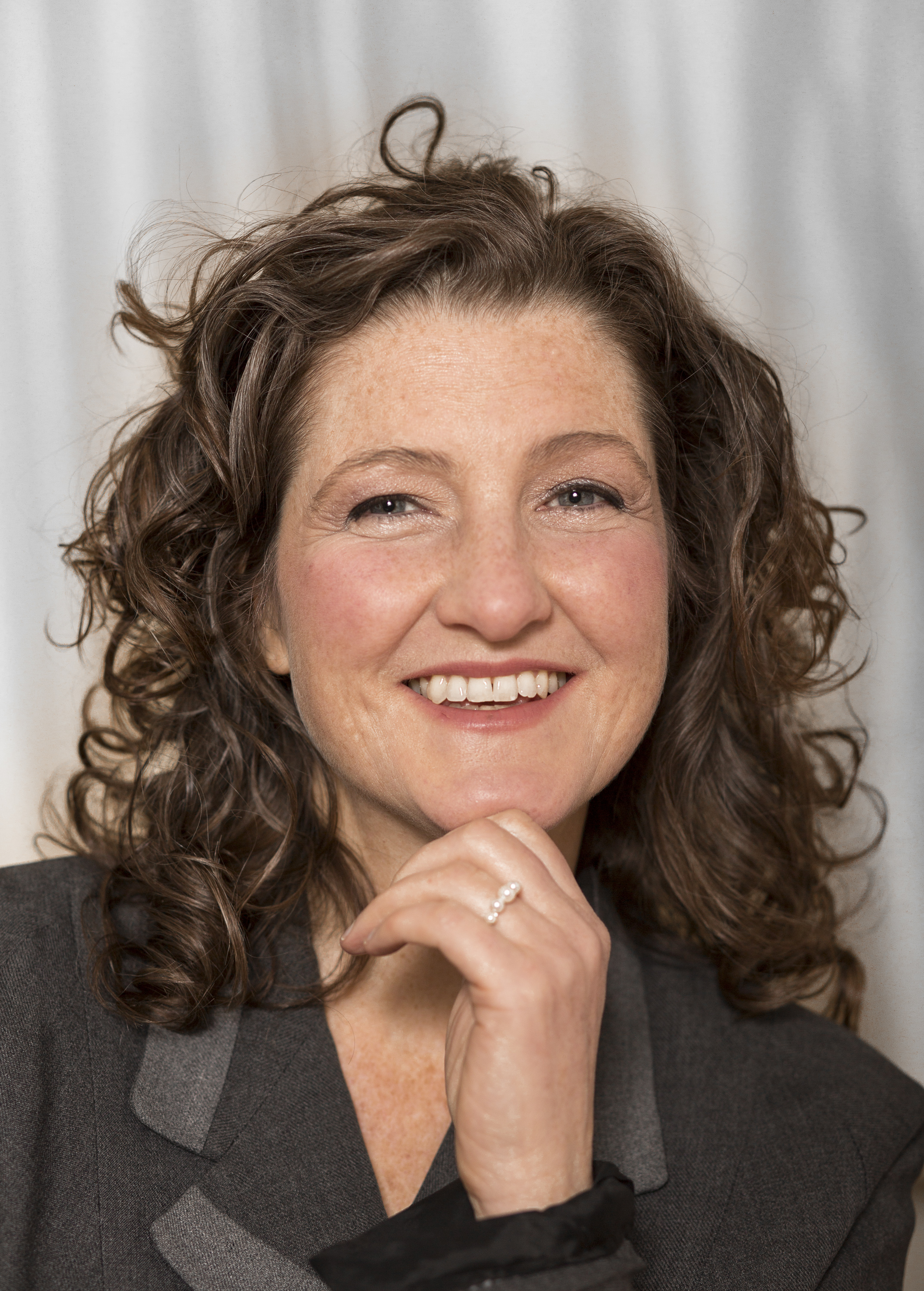
Who or what inspired you to take up composing, and make it your career? 

I’ve always been interested in melody, and when I started to learn the piano at about 8 years old, as well as learning the standard repertoire, I was also fascinated by how melodies worked and wanted to compose my own tunes. It was much later, when I studied at music college, that I realised that I wanted it to be my career. Although I love playing the piano, I was much more interested in creating and composing my own music.

Who or what were the most significant influences on your musical life and career as a composer? 

There were two big influences. One was a music teacher at the Junior department at Trinity College of Music, Philip Colman, who instilled a passion for music-making and a love of inprovisation which I’ve taken through into my professional life. The second was my composition tutor at Guildhall School of Music & Drama, Buxton Orr, who was an inspiring and brilliant teacher.

What have been the greatest challenges of your career so far? 

Writing large scores in a very short space of time is always a challenge, but it’s something that I find much easier now than I did, say, 10 years ago. It’s a skill that is acquired with experience, and recently I scored a film called “The Whale” in just 3 weeks. The film had 45 minutes of orchestral music. My score for the film “Wilde” was written in just three and a half weeks, with around 60 minutes of orchestral music.

What are the special challenges/pleasures of working on a commissioned piece, and on film/tv scores? 

The great delight of working on a film is that the inspiration is right in front of you, on the screen. It’s also hugely rewarding to hear your music performed by the very best orchestral musicians, usually as the ink is still drying on the manuscript paper! The challenges are always the time constraints – everything is composed to a deadline, and the deadlines seem to be getting tighter and tighter!

What are the special challenges/pleasures of working with particular musicians, singers, ensembles and orchestras? 

We are so fortunate in London to have the most talented musicians to perform our music. I am constantly amazed by the professionalism, skill, and musicality of our session musicians and orchestras. I’ve worked with a vast array of brilliant session musicians, and I have also recorded many times with the Royal Philharmonic Orchestra.

Which works are you most proud of?  

I’m very proud of my score for the French film “Arsene Lupin”. It was an enormous challenge as there was over 2 hours of music in the film, and a huge variety of musical styles within the score too. We recorded over 3 days with the Royal Philharmonic Orchestra at Abbey Road Studios and it was wonderful hearing the score brought to life by the orchestra.

Do you have a favourite concert venue? 

I’ve been very fortunate to have conducted at both the Royal Albert Hall and Cadogan Hall and I love both venues! I have a concert coming up with the Royal Philharmonic Orchestra on December 8th at Cadogan Hall which is always great fun. Come along! (Details here)

Who are your favourite musicians/composers? 

I have many, but I do love the playing of Maxim Vengerov. He always tells a story with his performance which appeals to me as, when you’re composing for pictures, you are constantly aware of the story and the drama, and that the music must help the telling of the story.

What is your most memorable concert experience (as performer and/or as composer)? 

The last concert Christmas concert that I conducted at Cadogan Hall with the RPO was wonderful. The hall was packed and the audience were very responsive – we even had them clapping along during the encore!

What do you consider to be the most important ideas and concepts to impart to aspiring musicians? 

To be dedicated, hard-working and completely focussed on the music, whether playing it or writing it.

What do you enjoy doing most? 

I enjoy being at the piano, writing music. It never loses its wonder and magic.

Interview date: October 2013

Judith Bingham (photo credit: Patrick Douglas Hamilton)

Who or what inspired you to take up composing, and make it your career? 

I started when I was very small – my mother said I was 4, but I don’t think she really knew. The attraction was its secrecy I think – I was already playing the piano, and liked the fact I could have a secret world that no-one else could influence. I think the person who influenced me to make it my career was Berlioz, my teacher and friend during my teen years when no-one else took me seriously.

Who or what were the most significant influences on your musical life and career as a composer? 

Apart from Berlioz, two people really encouraged me when I was young, Colin Davis and Hans Keller: both were very selfless with their time though, of course, I didn’t appreciate that until I was much older. I was very lucky to have Hans as a teacher, – his Viennese background with its rigors and psycho-analytical slant suited me very well. He had a hugely improving effect on my writing and was also very kind. Musical influences were The Fires of London, French Baroque music, and probably singing in big choirs.

What have been the greatest challenges of your career so far? 

Being a composer for a living is continuously challenging! But I think the biggest challenge is being truthful in a world that worships fashion. Inner voices make you doubt what you are doing but there is no Art without Truth. I think as I get older there is a challenge of being brave and fresh and not just doing what you know you’re good at.

What are the special challenges/pleasures of working on a commissioned piece? 

I like the fact that every commission inhabits a separate world, it’s a totally different project from the last. As I was a performer myself for so many years I love working with musicians – I know that sounds obvious, but it is such a magical experience, the transformation from the page to the open air. Trying to get it right – the act of fulfilling the brief – while remaining uncompromised is the great challenge, especially in church music where there are so many restrictions.

What are the special challenges/pleasures of working with particular musicians, singers, ensembles and orchestras? 

Whether they can do what you’ve written! That’s the heaven and hell of life for composers. All composers get a lot of bad or inadequate performances either through their own fault, – having written something that’s miles too hard for the commissioners – or short rehearsal time – or lack of empathy, or all three. A piece has to be very banal for people to get it straightaway, but often there isn’t enough rehearsal time for people to get beyond the stage of getting the notes right. This is the English disease. Often it isn’t to do with money but with a British distaste for too much emotional involvement. There is an idea that repeated performances take the place of rehearsal. But it’s tragic when people commission a big piece, only do it once, and spend most of the rehearsal time doing the Beethoven. The pleasure is when people really engage and go the extra mile – of course, they get more out of it this way, and the experience for everyone becomes extremely uplifting. The real magic happens when people feel free from worry about the notes and start to bring themselves to the performance, then the piece can really travel.

Which works are you most proud of?  

That would be a variable thing, and pride isn’t quite the right word, more a transient sort of satisfaction. But I would choose ‘The Ivory Tree’, a kind of dance drama I did for the Cathedral at Bury St. Edmunds. It was a project that went on for years and had some extremely fraught moments, but ended it fantastic performances.  I like mixing dance and singing, and would love to write an opera-ballet.

Who are your favourite musicians/composers? 

I am really eclectic with composers, though I have stopped listening to any sort of pop music. This might sound snobby, but it is more that there is only so much time. At the moment I’m listening to a lot of Prokofiev. He is a composer with enormous range, and I love the ambiguity of his music. I am trying listen more to women composers, as more and more music is being recorded now, alas, generally by women. I like the discovery of Italian baroque music by nuns, which is gorgeous. Favourite musicians: Roger Norrington, Philippe Herreweghe, Marc-André Hamelin, and people I’ve worked with – Stephen Farr, Tom Winpenny, Peter Skaerved Sheppard, Chamber Domaine, Andrew Carwood – too many to mention.

What is your most memorable concert experience? 

There are some terrible ones! But I can’t really do a league table of the good ones. When I was a student, performing in the Proms was overwhelming, especially Berlioz and Mahler. My first experience of the great roar of a full Albert Hall was extraordinary. Sometimes it is the small unrecorded events that stay with you, or a particular feeling of telepathy with other performers. You might expect big events, big names to be memorable. But it is often something more intimate where a transcendental kind of communication happens.

What do you consider to be the most important ideas and concepts to impart to aspiring musicians? 

I like what Peter Maxwell Davies said to students: ‘my first piece of advice is – don’t listen to anything I say!’ or words to that effect. I think I would say that integrity matters: this is even more true in today’s world, where things are remembered for ever on the web. The more you dilute your ideas and your identity the less anyone will value what you do. In the (very) long run what people want from a composer is individuality, and truth. It doesn’t mean an easy life though. Develop your ideas – the music doesn’t think for you. Read and think, and develop ideas on the big mysteries of life. There’s a lot of junk out there: the world doesn’t need any more.

Where would you like to be in 10 years’ time?

Still alive, please, and compos mentis.

What is your idea of perfect happiness?

No such thing.

What do you enjoy doing most?

Thinking, starting a new project, researching pet subjects.

What is your present state of mind?

Stressed as usual.

Born in Nottingham in 1952, and raised in Mansfield and Sheffield, Judith Bingham began composing as a small child, and then studied composing and singing at the Royal Academy of Music in London. She was awarded the Principal’s prize in 1971, and 6 years later the BBC Young Composer award. Recent composition prizes include: the Barlow Prize for a cappella music in 2004, two British Composer Awards in 2004 (choral and liturgical) one in 2006 (choral) and the instrumental award in 2008.

Read Judith’s full biography here
Interview date: October 2013

Who or what inspired you to take up composing, and make it your career? 

My grandfather was a composer, so he definitely inspired me. My mum did a music degree when I was about 9 years old so we had a small music studio at home where I learnt to use Cubase. It was around then that I remember writing my first composition, a Morris dance that was used in a local production of A Midsummer Night’s Dream (my mum wrote the rest of the music for the production).

As for making it my career, I actually came to it fairly late – 8 years after completing my degree. At the time, I didn’t think it was possible to make a living from composing and I didn’t want to teach, so I took an office job to bring the pennies in. It’s only since getting married and having a baby that I’ve been able to stay at home and write music, but it’s been the best decision I ever made!

Who or what were the most important influences on your composing? 

I consider myself to be a self-taught composer, as I don’t recall ever receiving much direct feedback on my work. Even at university, our composing sessions consisted of listening to new music rather than learning compositional techniques and tips. This is my memory of it anyway! So my composing hasn’t been directly influenced by any teachers.

Instead, I would say that my main influence initially was music I had played in orchestras. I used to say that I wanted my music to have the harmonies of Debussy, the rhythms of Stravinsky, the Englishness of Vaughan-Williams, and the passion of Rachmaninov. However, since returning to composition in 2011, I’ve opened my ears to the wealth of new music that has been written since the time of those composers, right up to music being created in the present. As a result, my style has changed a little, I have learned a lot, and my ideas are more creative. I’ve started to look outside of music to find influences, for example ancient history and nature.

What have been the greatest challenges of your career so far? 

As I left it so long after university, I didn’t have any tutors to promote me, enter me for competitions, or show me how to turn this from a passion into a career. I have had to do a lot of research into how composers get paid, how to be noticed, how to get my music performed, etc. I have also had to find the performers for myself, something which would have been a lot easier had I still been at university and surrounded by musicians. This has actually been a good thing though, as I have made connections with a lot of fantastic performers.

Which performances/compositions/recordings are you most proud of?  

I’m extremely proud of winning the Yorkshire Late Starters Strings composing competition 2011/12 with my 15 minute piece “Battle of the Winwaed”. The piece was written for the YLSS, who comprise adult string players of grades 2-8. To get round the challenge of writing for mixed abilities, I split the cellos into parts 1 and 2, along with the usual 1st and 2nd violins, violas and basses. I also wrote parts for a solo violin and solo cello, to add more complexity for those players of the highest standard. The orchestra performed the piece twice in 2012.

I’m also very proud of my third string quartet, “Cross Quarter Days”, which was recorded in 2012 and has been released on iTunes, Amazon, and on my website. The piece is in 4 movements, each representing one of the four key dates in the Pagan calendar that divide the year into quarters. It represents a big leap in terms of my development since the second quartet, written just a year earlier, and I feel it’s the work that best represents me as a composer.

Favourite pieces to listen to? 

One of my favourite pieces to listen to is Michael Torke’s July for saxophone quartet. It’s so funky, I don’t think I could ever get tired of it! Other favourites include the Rite of Spring, Turangalîla, the Planets, Ravel and Debussy’s string quartets, White Man Sleeps by Kevin Volans, Gabriel Prokofiev’s Jerk Driver… I also listen to a lot of 80s pop music and Steely Dan!

What is your most memorable concert experience? 

Performing Turangalîla with the County Youth Orchestra at Snape Maltings, I think it was in 2003. Such an overwhelming piece to perform, and in such a fantastic venue. I feel very privileged to have had that experience. I remember walking off stage with my cello at the end and saying to the conductor, “wow, that was amazing!”.

Regarding performances of my own work, the most memorable is probably when I performed my own concerto for cello and string orchestra at university in 2002. Having my Christmas carol “On A Gentle Winter’s Night” performed in Guildford cathedral in front of 1000 people in 2001, and then its second performance in New Zealand last year, are also very memorable occasions!

What do you consider to be the most important ideas and concepts to impart to aspiring musicians? 

Be true to yourself. Don’t give up. Have an open mind. Listen. Network. Take criticism constructively. Make things happen, don’t sit around waiting to be noticed.

What are you working on at the moment? 

I’m currently about halfway through my largest commission so far – a 25 minute suite for full symphony orchestra entitled “Legends of the Tor”. The work will be in 5 movements, each referencing a different legend relating to Glastonbury Tor in Somerset. The piece has been commissioned by my local symphony orchestra, after they successfully applied for a highly competitive “Community Music” grant from the BBC Performing Arts Fund. The community element will be the involvement of 5 local schools, who will each have a group of children composing their own music on the theme of “Myth and Legends”, with the help of workshops led by myself and members of the orchestra. The children will perform their pieces at the concert in June when the orchestra will premiere my piece.

Where would you like to be in 10 years’ time? 

My goal is a commission for the BBC Proms! I’ve set myself a 10 year target, so we’ll see what happens! Failing that, I’d be happy to have my music performed regularly and to continue receiving commissions so that I can carry on writing.

Alison Wrenn’s new work for piano trio Between the Mountains and the Sea receives its premiere at the Halstatt Classics Music and Literature Festival on 17th August. Further details here


Alison Wrenn (b.1981) is a British composer, whose style brings together influences from the English Pastoral Tradition, elements of popular music and media music as well as strains of Celtic and some aspects of American minimalist music.

Full biography

Jocelyn Pook (image credit: Matthew Andrews)

Who or what inspired you to take up composing and make it your career? 

I came from a family in which music and art was important. To this day I don’t know how my mother, a single woman raising 3 children with no money, managed to pay for piano lessons for all of us, but I’m glad she did. There were free violin lessons offered at my primary school so I took up the violin when I was 8, then changed later to viola. I had inspiring and encouraging teachers along the way, in particular my first piano teacher Jean Marshall who also encouraged my early interest in composing.

Who or what are the most important influences on your playing/composing? 

I used to compose simple songs on the piano as a child, but it didn’t occur to me to take this further, and when I went to music college it was as a performer, studying viola and piano. After I left, I began working as a professional viola player – sometimes performing in theatre companies and pop bands. Seeing how untrained musicians, some of whom couldn’t even read music, were able to compose, inspired me and gave me confidence, so that when small composing opportunities subsequently came my way – such as writing music for my quartet, or a friend’s video, a colleague’s dance piece, etc. – I seized the opportunity.

What have been the greatest challenges of your career so far? 

I am usually filled with trepidation at the start of every new project. Each feels like the biggest challenge at the time. My last piece, Hearing Voices, a song cycle for voice, orchestra and recorded voices, was the first commission for symphony orchestra (for the BBC Concert Orchestra) so that was a big challenge.

What are the particular challenges/excitements of working with an orchestra/ensemble? 

Working with a symphony orchestra was exciting because there are so many possibilities of texture and timbre and combinations of instruments. It’s fun to play with large forces, especially percussion and brass sections which I have less experience of using, and it’s always so thrilling when you hear it all come alive.

Which recordings are you most proud of?  

My albums Flood, Untold Things and Desh.

Do you have a favourite concert venue? 

No, there are many I love!

Who are your favourite musicians? 

Yehudi Menuhin, Daniel Barenboim, Nigel Kennedy and Gustavo Dudamel are amazingly talented artists whose passion for music has inspired and communicated so widely. And they don’t shy away from ethical and moral issues.

Plus, singers such as Kathleen Ferrier and ones I’m lucky enough to work with: Melanie Pappenheim, Natacha Atlas, Tanja Tzarovska, Manickam Yogeswaran, Parvin Cox and Lore Lixenberg.

What is your most memorable concert experience? 

A gypsy ensemble that played in our living room in Serbia.

Tell us about your upcoming performances at Tête à Tête Opera Festival?

Tonight my multimedia song-cycle Hearing Voices will be performed at the festival at King’s Place. I first performed the piece in 2012 and have reworked it for a second performance this year. I’ll be joined again by director Emma Bernard and mezzo-soprano Melanie Pappenheim for this performance in addition to Laura Moody, Susi Evans and Preetha Narayanan. The piece focuses on the topic of mental health and I used recordings of my mother, Bobby Baker and Julie McNamara as well as videos by Dragan Aleksic. It’s a very personal piece for me as my family have been touched by mental illness for three generations.

Tomorrow night is my vocal work Anxiety Fanfare and Variations which is also about mental health. I’ll be joining the Nottingham People’s Choir and my Jocelyn Pook Ensemble to perform the work with soloists Donna Lennard, Melanie Pappenheim, Jonathan Peter Kenny and Richard Morris. Anxiety Fanfare looks at the day-to-day feeling of anxiety which affects so many people now.

What else do you have coming up?

The west-end play King Charles III is transferring to Broadway in October at the Music Box Theatre which is hugely exciting – I’m off to New York for rehearsals in September. It was a great project to work on and it’s amazing to see how far it’s come, I can’t wait to see what the American audiences think too!

What is your most treasured possession? 

My daughter.

What do you enjoy doing most? 

Writing music and spending time with family and friends

What is your present state of mind? 

Pretty chilled out considering I’m writing this on a flight back from China!

Further information/links:

The DESH soundtrack is available on CD now on Pook Music (PM001) and the single ‘Hallelujah’ is available to download on iTunes.  DESH returns to Sadler’s Wells in June for a third run after a sell-out world tour.

Jocelyn Pook’s next collaboration with Akram Khan, iTMOi, will be performed at Sadler’s Wells Theatre in London, Tuesday 28 May – Saturday 1 June.

The Brodsky Quartet and singer Lore Lixenberg premiere a new song cycle, which includes music by Jocelyn Pook, at Drapers’ Hall on Monday 24 June as part of the City Of London Festival.

To find out more information about Jocelyn Pook, visit her website www.jocelynpook.com

Best known for her score for Stanley Kubrick’s Eyes Wide Shut, Jocelyn Pook is an award-winning composer who writes music for film, television, theatre, dance and the concert platform.

Jocelyn graduated from the Guildhall School of Music and Drama in 1983, where she studied the viola. She then embarked on a period of touring and recording with artists such as Peter Gabriel, Laurie Anderson and PJ Harvey and as a member of the Communards. She has also toured extensively with The Jocelyn Pook Ensemble, performing repertoire from her albums and music from her film scores. For her music-theatre piece Speaking in Tunes she won a British Composer Award and, for the National Theatre’s production of St Joan, she won an Olivier Award. Jocelyn has worked with a variety of acclaimed choreographers including, most recently, Akram Khan Company on the contemporary solo work DESH. Jocelyn has established an international reputation as a highly original composer of screen music following her score for Eyes Wide Shut, which won a Chicago Film Award and a Golden Globe nomination. Other film scores include: The Merchant of Venice starring Al Pacino (Dir: Michael Radford), Time Out (L’Emploi du Temps, Dir: Laurent Cantet) and Brick Lane (Dir: Sarah Gavron). She also contributed a piece to the soundtrack of Gangs of New York (Dir: Martin Scorsese).

Jocelyn has composed scores for television shows and commercials, and was nominated for a BAFTA for Channel 4’s The Government Inspector (Dir: Peter Kosminsky). With a blossoming reputation as a composer of electro-acoustic works and music for the concert platform, Jocelyn continues to celebrate the diversity of the human voice. Her work Mobile was a commission from the BBC Proms and The King’s Singers and is a collaboration with the Poet Laureate Andrew Motion. Portraits in Absentia was commissioned by BBC Radio 3 and is a collage of sound, voice, music and words woven from the messages left on her answerphone. Ingerland, Jocelyn’s first contemporary opera, was commissioned and produced by ROH2 and performed in the Royal Opera House’s Linbury Studio Theatre in June 2010 to wide acclaim. Jocelyn has chaired and been a judge on various panels including the British Composer Awards, Ivor Novello Awards and BBC Proms Young Composers Competition.