Who or what inspired you to pursue a career in music?

To be honest, I was forced into the family trade as a musician!  Both of my parents are classical musicians and music teachers, and I started on the piano at age 3, violin at 6, and cello at 7.  Playing music and performing was a mandatory activity but it wasn’t until I was 18 and moved to Los Angeles to go to university (studying Classical Cello Performance) at USC when I started really pursuing ways to make my own music and just work as a cellist in order to pay the bills.  I did a lot of work as a session musician and hired gun, and it helped me learn and familiarize myself with all genres of music, but my main love and obsession has always been Industrial Metal.  I’m lucky that my ‘day job’ of being a session musician has a lot of crossover with my own music.

Who or what have been the most important influences on your musical life and career?

Rammstein, Marilyn Manson, System of a Down and Jaqueline du Pré – she was amazing!

What have been the greatest challenges of your career so far?

At the beginning of my career when I had just moved to Los Angeles, I had exactly $0 to my name and didn’t own an instrument (the cello and bow I used were on loan to me while I was in university by a foundation).  It was extremely difficult to get by as I had no outside financial help.  I remember putting up ads daily on musician classifieds online and playing with any band or artist that was wiling to pay $50 for a rehearsal and show, and I played in every club on Sunset Strip.  I taught music students for $20 a hour, and played cello at endless weddings, funerals, Bar/Bat-Mitzvahs etc.  Even though I had a full scholarship for tuition to USC, it didn’t cover living expenses,  additional school expenses like books, etc., so I amassed a good amount of student loans and credit card debt for the 2½ years I was attending.   After 2½ years of school, I left since I wasn’t able to balance performing/working and going to school full time, and I decided to go 100% into music.   It wasn’t until after 7 years of grinding away as a session musician, living in a garage with no kitchen, heat or air  conditioning to be able to make payments on the 1880 Gand & Bernardel Cello I purchased using an instrument loan and 3 credit card advances, multiple failed metal band projects, and using what little money I made to buy music equipment so I could record and self-release my own music, that I was finally offered a position as a soloist with Cirque du Soleil on Electric Cello.

I toured with the Michael Jackson ‘THE IMMORTAL’ World Tour for two years from 2011-2013, and during those years I only had 2 suitcases of belongings and saved religiously, spending only $20 a week. I started taking online courses in investing and began purchasing stocks and investing in Peer-to-Peer lending.  I was able to build a financial foundation for myself because of that opportunity!  I also brought along my studio equipment on the road to continue doing recording sessions for composer and producer clients, and also composed/released 3 of my own albums during that period.  I think being able to figure out how to survive financially has been a major struggle, as well as identifying a clear image of what my own music is, since I love and have delved into so many different genres of music.  During my years in university, I did perform as a classical soloist with smaller orchestras, and also enjoyed my work in the studios recording for soundtracks, as well as my own metal projects on which I worked.  Looking back now, all 10 of my albums have been wildly different in style and approach, but I do feel like they are all genuinely me as I explored different parts of my musical self through the years through these recordings and compositions.

Of which performances/recordings are you most proud? 

My very first music video, ‘Queen Bee’ which was from my album THE JOURNEY is something I’m very proud of!  That music video led to me being offered the position with Cirque du Soleil, and also working with Hans Zimmer after he saw it on YouTube.  I was in the early stages of exploring my own version of Industrial Metal Cello – inspired heavily by the band Rammstein and Marilyn Manson – and used  something a bit obvious as the base (the Flight of the Bumble Bee) but felt like that artistically and stylistically the video is truly *me* at my essence.  I was very lucky to work with an amazing team for that video!  To finance it, I spent every penny I had  as I told myself it would be my last “hurrah” at trying to pursue Industrial Metal.  It took a bit of a different turn as I suddenly was approached by composers here in Los Angeles to record my “metal style” cello on their soundtracks after the video was released.  I feel like 9 years later, it’s worked out perfectly and having the opportunity to perform at WACKEN recently, the biggest metal festival in the world, with two amazing bands SABATON and Beyond the Black, was truly a dream come true.  There are many paths leading to the final destination and I love the path that I have been on, which I never would have guessed!  Having my first adventure into New Age Music nominated for a GRAMMY was a huge surprise

The entire album was recorded in one day, completely improvised with myself and Peter Kater the pianist, never having played together in order to capture the purest form of improvisation and musical meeting.  I’ve played with rappers, country artists, DJs, and musically it has helped me expand so much!

Which particular works do you think you perform best?

Passionate Romantic-era classical pieces, soundtrack music that is very open to interpretation and Industrial Metal!

How do you make your repertoire choices from season to season?

I am open to anything and everything, and a lot of my musical activity is recording for various soundtrack projects, so the film, tv show, or video game determines the repertoire!  I’ve backed away somewhat from performing classical music with orchestras as I’m trying to focus now more heavily on my own original music projects and compositions.

Do you have a favourite concert venue to perform in and why?

So far, my favorite has been at Wacken Open Air! 125,000 people, amazing wonderful energy, lots of fire and screaming!

What is your most memorable concert experience?

The very first time I performed in an arena in Montreal at the premiere of Michael Jackson ‘The Immortal” World Tour – I was so incredibly nervous!

As a musician, what is your definition of success?

  1. Being able to make the music you love.
  2. Having financial security so that you are in the mind space and energy to not worry about concerns related to poverty- having been in it, I can tell you that it’s incredibly difficult to be musically inspired and focused when you don’t know how you will pay for your next meal!

What do you consider to be the most important ideas and concepts to impart to aspiring musicians?

I am very passionate about entrepreneurship and learning about every aspect of the business side of music as much as possible to educate yourself.  So much knowledge is available to us, for free online, with technology growing and changing at such a fast pace, and so many alternative routes for musicians and creatives to monetize their work.  I have a lot of videos discussing finances, investments, etc., on my YouTube channel if anyone would like to check it out in addition to music videos, concert videos, tutorials, product reviews, and other random things.

What is your idea of perfect happiness?

My fiancé Rambo and I with our two Fur Babies (our two dogs, Bagel and Pizza) up in the mountains in a cabin with a snow storm outside, fireplace roaring, a Large pepperoni and pineapple pan pizza from Domino’s, coffee, furry Blankets, a big bed and Netlflix on a huge TV!

Tina Guo’s single ‘The Circle of Life’ from The Lion King is available now. More information


Internationally acclaimed, GRAMMY Award-nominated and BRIT Female Artist of the Year-nominated musician Tina Guo has established an international career as a virtuoso acoustic/electric cellist, multi-instrumentalist, composer, and entrepreneur. Known for her unique genre-crossing style, she is one of the most recorded Solo Cellists of all time and can be heard on hundreds of Blockbuster Film, Television, and Game Soundtracks.  In 2018, Tina signed as an official brand partner with Bentley Motors, composing, performing, and producing the launch music for the luxury hybrid vehicle, Bentayga Hybrid.  In 2019, Tina partnered with the Ritz-Carlton to create a soundtrack to the endless possibilities and unforgettable moments experienced at The Ritz-Carlton. Tina will visit four destinations — New Orleans, Dove Mountain, Toronto and Maui — and compose original scores inspired by these dynamic locations.

Read more


Who or what inspired you to take up the cello, and pursue a career in music?

When I was growing up, there was always music playing in the house, and my parents started me on the recorder at 4, the piano at 5, and then the cello at 6. I was very lucky to start with a fantastic cello teacher (Marina Logie) who is a family friend and lives very close by. She really instilled a love and curiosity for music in me, and also set me up very well technically. When I began with my current teacher, Leonid Gorokhov, at 11, this feeling was encouraged even more, and I think that I have them both to thank for my career in music!

Who or what have been the most important influences on your musical life and career?

Apart from my two teachers, the pianist Alison Rhind (who coached me for several years) was incredibly important in my musical development. I am lucky to have worked with some amazing musicians who have very much influenced my playing and my development as a person, including Petr Limonov, Tom Poster, Huw Watkins, and Krzysztof Chorzelski.

Winning the BBC Young Musician Competition definitely shaped the trajectory of my career, and left me with a really special relationship with the BBC.

Which performance/recordings are you most proud of?

I am really proud of the CD ‘1948’ I recorded with Petr Limonov, as we took every effort to approach the project with great care and love for the music. I also am proud that I had the courage to wait until I felt I was ready to record my first CD, which isn’t always easy with the pressures of the music industry!

Do you have a favourite concert venue to perform in and why?

So far I am really enjoying exploring lots of different venues, but I think that the Wigmore Hall could come to have a special place in my heart. The acoustic is stunning, and its history of having hosted such incredible performers makes it very exciting to perform there!

Who are your favourite musicians?

That’s a very hard question, as I find inspiration in so many people’s playing (and there are so many insanely talented people around at the moment!). I’m a huge fan of the ‘old-style’ musicians including Heifetz, Szeryng, Shafran, Piatigorsky, Fritz Wunderlich and many more.

What is your most memorable concert experience?

I think that the final of the BBC Young Musician will always be up there with the most memorable performances for me, as it was the first time I had played with such a good orchestra and conductor, in such an amazing hall.

As a musician, what is your definition of success?

For me, it is to find, and stay true to, my own voice. Success is to never stop learning; complacency would be failure for me. I also think that being able to collaborate with people who inspire me is a form of success!

Where would you like to be in 10 years’ time?

In 10 years I would like to have 10 years of exciting new experiences behind me, with lots of travel and playing in many different situations with different people. At that point I might consider getting a teaching position somewhere, but It’s too far ahead to know how my desires will change in the process!

What is your most treasured possession?

Definitely my cello. I am so so lucky to have been given a beautiful Ruggeri cello by some private benefactors. It makes (almost) every practice session a joy


Winner of the 2012 BBC Young Musician of the Year Competition, Laura van der Heijden has been making a name for herself as a very special emerging talent, captivating audiences and critics alike with her imaginative interpretations and probing musicianship.

Laura van der Heijden’s critically acclaimed debut album ‘1948’ (Champs Hill Records, 2018), with pianist Petr Limonov, focuses on music for cello and piano from the Soviet era, and has received BBC Music Magazine’s Newcomer of the Year award.

Read more


If you enjoy the content of this site, please consider making a donation towards its upkeep:

Buy me a coffee

Who or what inspired you to pursue a career in music?

As a young child there was a lot of music around the house and I listened to Jacqueline du Pré play Bach’s Cello Suites every night before bed. I am not sure how attentive a listener I was – I believe the aim was for me to drop off to sleep! – but I refused to accept any other interpretation of that music! As for my decision to make cello my career, I became accustomed to the life of a touring artist on a series of cruises starting when I was five years old, during which I had fantastic experiences performing amongst top professionals, signing autographs and even being interviewed by Richard Baker before rushing back to the swimming pool!

Who or what have been the most important influences on your musical life and career?

I grew up attending my father’s concerts with cellist Alexander Baillie and listening through the door to their rehearsals at home. Musicians were often guests at our house and I remember discussing the finer points of ‘Lord of the Rings’ with Dame Emma Kirkby, whose individual approach to singing has always seemed the most natural to me. Lately, I have been influenced more by ideas and principles of making music than by specific performers: I am not aiming to emulate any cellist in particular but to reach my own personal sound in ways I am discovering myself. There are cellists whom I greatly admire such as Mstislav Rostropovich and János Starker, but I have been more often inspired by musicians in other fields such as the conductors Claudio Abbado and Carlos Kleiber, the violinist Julia Fischer and pianists Claudio Arrau and Arthur Rubinstein.

What have been the greatest challenges of your career so far?

The greatest challenges have been projects that I embarked upon with a view to expanding the repertoire of the cello. In 2014 I performed Jan Vriend’s ‘Anatomy of Passion’, a 30 minute work for cello and piano composed in 2004. It was a formidable challenge, not only because of great technical demands and complex rhythms to coordinate with the piano, but also because I decided to perform the piece from memory which I believe made my performance more convincing. More recently, I arranged and performed Bach’s iconic ‘Ciaccona’ from the Violin Partita No. 2 in venues including London’s Wigmore Hall and King’s College Chapel. This was an enormous statement, to take a piece which means so much to people and adapt it to another instrument which made it essential for me to transcend the substantial technical difficulties of performing this on the cello and create a performance which was musically worthwhile and not just an impressive show of technique.

Which performances/recordings are you most proud of?

I try to make every performance better than the last, but rather than pride, I experience enjoyment when I play. My performances of the two pieces mentioned above have been some of the most rewarding concert experiences of my life. I am also happy that the recording I made at nineteen years old of the Chopin Cello Sonata still seems relevant to me despite the six years of development I have had since then.

Which particular works do you think you play/conduct best?

I play a wide range of repertoire, from Bach through to brand new pieces and I try to approach every type of music with the same philosophy – to take a fresh look at the score and try to interpret what that particular composer means in their notation. I then put one hundred percent of myself into every moment of the music, no matter what the style. Having said that, I think music by Benjamin Britten, Prokofiev and Shostakovich suits me well and I find the technical challenges of music from the 20th and 21st centuries to be the most fascinating. In terms of conducting my repertoire is smaller, but I have most enjoyed conducting 19th and 20th century music. In particular, I conducted Strauss’ Metamorphosen with the Seraphin Chamber Orchestra in 2017 and since I felt a particular affinity with the piece I found it very natural to memorise and perform.

How do you make your repertoire choices from season to season as a performer and also as conductor?

My repertoire choices are often taken in collaboration with musicians I am working with and I am very lucky to perform regularly with my father, pianist James Lisney. We both enjoy crafting programmes with a unifying theme and have toured several of these ‘project’ concerts with titles such as the Beethoven Grand Tour (the five Cello Sonatas), Cello Song and Russian Connections. I enjoy playing contemporary music so I make a particular effort to fit some new music into most of my recital programmes. As for concerti and chamber music that is often a little more out of my control but I am eager to play all sorts of music!

You are also a composer and conductor. How do these disciplines impact on your performing career and vice versa?

My work as a composer impacts directly on my cello career as I often perform my own music. My conducting contributes less obviously to the rest of my career (though I have conducted my own music) but I believe that the experience of leading an orchestra through various types of music has improved my concerto playing and opened my eyes to particular considerations in composition. My experiences as a cellist are central to everything I do and it is almost impossible to separate it out. Of course, the technical knowledge is crucial to composing for string instruments but also the experience of performing gives me a certain empathy with musicians I am writing for; I take great care to ensure that the music I compose is rewarding both to perform and to hear.

As a composer, how would you describe your compositional language?

This is a question we composers are asked very regularly and I am still struggling for an answer! The aspects of my music which might constitute a style or language are by nature the ones that recur in many of my pieces and as such, they are the very elements it is difficult to identify in one’s own music. My orchestration is often detailed and delicate, but I am not adverse to thicker symphonic textures. I do not write in a strictly tonal idiom but I think it is clear to listeners that I have a background in western classical music, and tonal direction is central to my music. I am very motivically-led and this is often the focus of my compositional process. I begin with one or two ideas which I develop, combine and transform in the same way Beethoven, Wagner and so many others have done before.

How do you work, as a composer?

Since I have never had my own piano I have become accustomed to working in silence at a desk. I tend to start out on manuscript paper and when I begin writing I usually have a significant portion of the piece mostly if not fully composed in my head. At some point in the process I will ‘run out’ of music and at that point I look back at what I have written so far and examine the possibilities. Later on I type everything into Sibelius [music notation software] but I do not use the playback function except for checking mistakes – I am much more likely to hear a typo than see one!

What are the special challenges/pleasures of working with particular musicians, ensembles and orchestras?

I find it very rewarding to write specifically for certain players or ensembles. For example, in 2017 I composed ‘Thread of the Infinite’ for the Cambridge University Chamber Orchestra in the knowledge that they would perform this piece unconducted, directed from the violin by Thomas Gould. In this case I made sure that the coordination between parts was clear enough not to require a visual cue from a conductor and inserted several soaring violin solos for the Leader. I have recently written a piece ‘Spiralen’ for Ensemble Recherche, who specialise in the highly complex music of composers such as Brian Ferneyhough and Helmut Lachenmann. My music is far removed from this idiom but I found it very rewarding to work out what new things these musicians were capable of and how I could absorb this into my own style.

What, for you, is the most challenging part of being a conductor? And the most fulfilling?

Many of the most challenging aspects of being a conductor are administrative! At this stage in my career I am running my own orchestra which involves a lot of non-musical tasks such as organising parts, venues and marketing. This means however that I have autonomy over the artistic direction the orchestra takes which I find very exciting. I love rehearsing with musicians and find it very interesting to think about how different musicians respond to words and visual cues. I often have to say something in two or three different ways to get all the players in a section to respond in one way. If I want a particular quiet sound, for example, some of the violinists might pick that up from my beat, others would benefit from some metaphorical suggestion and the final group might respond best to a specific technical instruction such as bow position and speed of vibrato.

How exactly do you see your role? Inspiring the players? Conveying the vision of the composer?

I see my role as a facilitator with a interpretative opinion… I wish to give the players both the framework and the freedom to perform, which involves bringing everyone together to a unified vision of the music. I hope that in a concert situation I can help inspire the players to find something magical and then very often as a conductor our work is done – less is more.

Is there one work which you would love to conduct?

There are many works I would love to conduct, particularly some works by George Benjamin such as ‘At First Light’.

ce599-jl-conducting-sco
Joy Lisney conducting Seraphin Chamber Orchestra

As a musician, what is your definition of success?

I feel entirely free when I am performing and my main motivation in pursuing a career in music is to get the opportunities to show people the music that I love and believe in.

What do you consider to be the most important ideas and concepts to impart to aspiring musicians/composers?

What I have learnt so far is to approach every work with humility and love; look at every work from a composer’s perspective, put one hundred per cent of yourself into it and value that input. I have also learnt that your understanding of something you take the time to discover by yourself is so much deeper than something given to you fully-formed. The journey is essential.

Where would you like to be in 10 years’ time?

10 years sounds an unimaginably long time and I cannot immediately see where my current trajectory will take me. I suppose that my ultimate goal is to be able to perform the music I want to perform to a willing audience(!) and I hope that I can combine the three strands of my career – cello, composition and conducting – to have a fulfilling musical life.


Joy Lisney is one of the most exciting young musicians to emerge in recent years. Her early promise as a cellist was highlighted by Carlton Television when they chose her, at the age of six, as a possible high achiever of the twenty first century.

She has since fulfilled expectations with a distinguished international career, launched by a debut series of two concerts at the Amsterdam Concertgebouw in 2012.

Joy has enjoyed collaborations with artists including Dame Emma Kirkby, Alexander Baillie, Howard Williams, Huw Watkins, the Allegri Quartet and the Wihan Quartet and also performs regularly in duo with her father James Lisney. Venues for duo recitals have included Amsterdam’s Concertgebouw, Queen’s Hall Edinburgh, St. George’s Bristol, the Leipzig Gewandhaus and St. John’s Smith Square. In 2014 she performed all five Beethoven cello sonatas in a single concert in a tour concluding with a sold-out performance at London’s Southbank Centre. Projects in 2017 have included a Schubert Quintet Tour with the Allegri Quartet, concerto performances by Prokofiev, Haydn and Turnage and the Cello Song recital tour.

As a passionate advocate of new music Joy has commissioned two new works from the Dutch composer Jan Vriend, the first of which she recorded on her debut CD in 2012. In 2014 she performed as a London Sinfonietta Emerging Artist at the BBC Proms in a concert broadcast on Radio 3 to celebrate the 80th birthday of Sir Peter Maxwell-Davies. In April 2017 Joy performed on the opening night of the Park Lane Group Recital Series at St. John’s Smith Square, giving a solo recital including two premieres, one of which was her own composition ScordaturA. Joy has also given European premieres of works by Judith Weir and Cecilia McDowall.

As a composer, Joy has won the Ralph Vaughan Williams and Sir Arthur Bliss Prizes and she was also Composer in Residence at Cambridge University Music Society for 2016-17. Joy is in the second year of her PhD in Composition at King’s College, Cambridge, supported by the AHRC, and is Honorary King’s College Vice-Chancellor’s Scholar. Her first string quartet was premiered by the Arditti Quartet and she has since had music performed at the King’s Lynn and Aldeburgh Festivals and the Park Lane Group Series.

Forthcoming performances this season include the Elgar Cello Concerto and the Brahms Double Concerto (with Emma Lisney), the premiere of her new work for chamber ensemble, and concerts at Temple Music Foundation, West Road Concert Hall in Cambridge, St George’s Bristol, the Purcell Room, and St John’s Smith Square.

Joy is also the founder and conductor of the Seraphin Chamber Orchestra, a string orchestra which combines the best players of Cambridge University with young professionals from the South of England.

joylisney.com

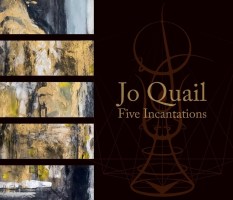
jo-quail-five-incantationsAdrian Ainsworth nominates Jo Quail: ‘Five Incantations’


In recent years, my listening has evolved and expanded from rock/folk/electronica more and more towards the labyrinth of listening options that is ‘classical music’… So perhaps it’s no wonder that one of my favourite artists is someone who is continually developing along those lines as a musician.

Jo Quail is a cellist and composer who produces work primarily (but not exclusively) for performance on her own electric cello, plus loop station. This electronic aspect allows her to write pieces that develop layer upon layer into something genuinely, and at times overwhelmingly, orchestral. Part of the exhilaration of seeing her live is to watch how the tracks build: the total absence of trickery, the obvious presence of melodic/harmonic invention, and rhythmic precision.

Because she emerged from, broadly speaking, the avant-garde ‘underground rock’ world, it’s still perhaps most common to encounter JQ supporting a heavy instrumental guitar band, or quietly wowing a festival crowd on the continent. But when she stages a concert of her own, she gives her ‘classical’ side equal weight – as with her recent composition for electric and acoustic cellos, percussion and choir, ‘This Path with Grace’. (To me, it’s a mystery why a label like NMC or ECM aren’t paying more attention – perhaps it’s a side-effect of JQ building her fanbase in all corners of the music-going public?)

However, her latest recording ‘Five Incantations’ is, in its own way, her most ambitious and fully-realised project yet. The ‘incantations’ are related movements that form a kind of suite, or single-player concerto, for cello and electronics. As we’re guided through the elements, the mood shifts between driving, stately anthems and near-ambient, gliding pauses for reflection. Overall, the work is designed for listening in one sitting – and JQ plays it live, entirely solo, in an unbroken, 40-minute sequence.

That said, ‘Gold’ is perhaps the section that can most readily stand alone. Before the album’s release, JQ issued an alternative mix of this particular track, and I’m very fond of it – I return to it often, especially if I don’t have time to play the whole CD. It encapsulates the attractions of her music beautifully. The unhurried patience of the tune as it nestles in your brain; the heartbeat rhythm (created by striking the cello) dovetailing with the harsher, bowed punctuation points that kick in after around five minutes; the way the loops allow various parts to ‘slot’ in and out until finally fitting together like a musical jigsaw.

If you like this, please investigate further on JQ’s Bandcamp page (https://joquail.bandcamp.com/album/five-incantations), where you can listen to – and buy – her music.

(To give an idea of the ‘live’ experience with something a little more pacy than ‘Gold’, here is a performance of ‘Laurus’ from the previous album ‘Caldera’ – the video allows you to see the quickfire use of loop pedals, all managed in a near-balletic style while playing an absolute blinder with the hands!)

Meet the Artist……Jo Quail

Adrian Ainsworth writes for a living, but mostly about things like finance, tax and benefits. For light relief, then, he covers his obsessions – overwhelmingly music, but with sprinklings of photography and art – on the ‘Specs’ blog, which you can find at

Twitter:
