I first discovered this wonderful set of variations through a concert pianist friend, who performed them in a salon concert some years ago. As a lifetime lover of Schubert’s music, I was struck by how “Schubertian” this music is, especially in the minor key variations, where Haydn finds great emotional depth and expression.

The piece was composed in 1793, and was described as a Sonata ‘Un piccolo divertimento’ in the autograph manuscript, written for a “Signora de Ployer” (probably the pianist Barbara Ployer, for whom Mozart composed the piano concertos K449 and K453). It was written at a time when the pianoforte was developing fast – Haydn would have encountered the new Broadwood piano with its more sonorous bass on his visits to London – and this piece really capitalises on the range and sonority of these bigger, stronger instruments.
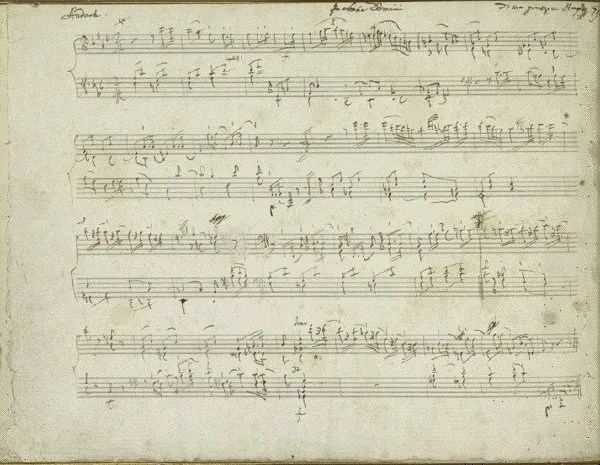
Autograph ms of f minor variations

The piece is a set of double variations, with the first theme in melancholy f minor and the second in warm F major. Two variations of each theme and an extended coda follow. While the music may look forward to Schubert’s lyricism and expressivity in its minor key episodes, it is also replete with Haydn’s characteristic wit achieved through articulation, dramatic pauses and embellishments, while his mastery of structure, harmonic innovation, and thematic development is evident throughout.

Haydn achieves a very effective and dramatic operatic dialogue as the music seamlessly transitions between passages of stark intensity and moments of delicate lyricism. For instance, the first variation introduces a more agitated character, with rapid figurations and abrupt dynamic shifts that inject a sense of urgency into the music. In contrast, the following variation may offer a more introspective mood, with subdued dynamics and lyrical embellishments suggesting a more intimate realm of expression.

Despite the relatively constrained harmonic palette, Haydn manages to infuse each variation with harmonic surprises and innovations that keep the player and listener engaged. Whether through unexpected modulations, chromaticism, or clever reinterpretations of harmonic progressions, Haydn demonstrates his ability to push the boundaries of tonal expression within the classical style. The result is a captivating, multi-faceted musical journey.

For the pianist, the music demands a high level of technical proficiency, particularly in terms of finger dexterity and agility. The variations encompass a wide range of technical challenges including rapid passagework and intricate ornamentation which require great precision. Minimal use of the pedal will ensure these passages retain their clarity. The music also requires sensitive dynamic shading to create contrast – from the softest pianissimo to dramatic fortissimo. A keen sense of the overall architecture of the piece will enable the player to balance the main themes with the diversity of the individual variations. Overall, this piece is very satisfying to play and its richness and complexity offers plenty of scope for expression.

Here is Alfred Brendel


This site is free to access and ad-free, and takes many hours to research, write, and maintain. If you find joy and value in what I do, why not
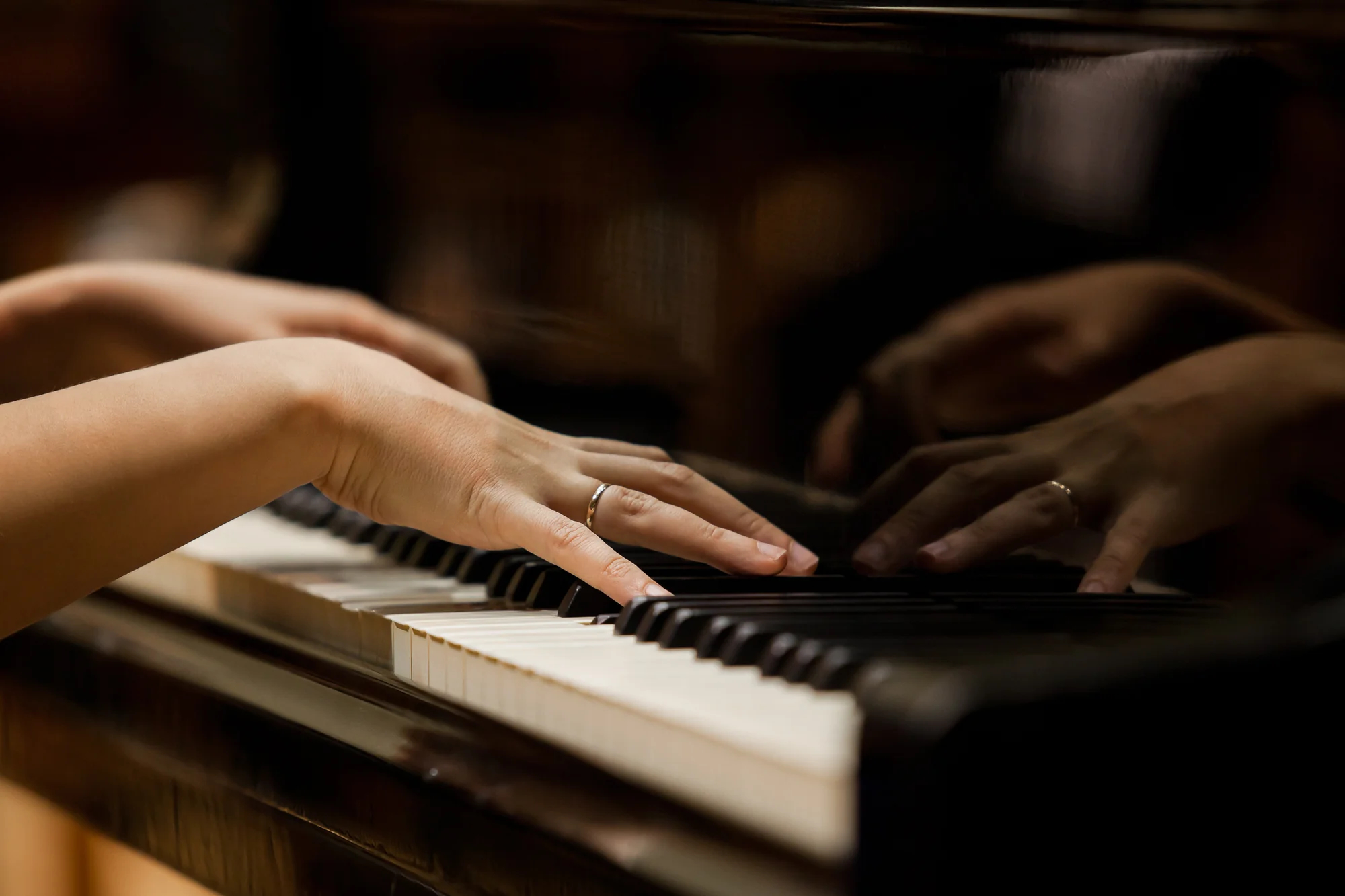
I haven’t touched the piano for months. I have a beautiful early 20th-century Bechstein model A grand piano which has been sitting, untouched, in my piano room/office. There is music open on the stand – Schubert’s Piano Sonata in A, D664 – suggesting intent, but I have not played it seriously in over six months.

Why? Lack of motivation, lack of time, yes. But also something which I think is particular to the amateur musician – the knowledge that, unlike the professional musician who must practice regularly to maintain their skill and artistry, one can come back to the instrument at any time and pick up where one left off.

But it can be hard and the first line of that wise saying of violinist Jascha Heifertz – “If I don’t practice one day, I know it…” holds true as much for the amateur as for the  professional musician. The more time passes, the harder it becomes to start over again.

But it’s not impossible.

Rekindling the habit of practicing and playing the piano after a pause, however long, can be both challenging and rewarding. The key to a successful return lies in setting realistic goals, cultivating patience, and reviving your passion for music. Here’s a guide to help you navigate this journey back to the piano:

Set Realistic Goals

One of the first steps in returning to piano practice is setting achievable goals. Begin by assessing your current skill level and recognising that you may not be able to play at the same proficiency as before. Setting short-term goals that focus on gradual improvement, such as playing music that is already well-learnt or attempting a short piece or study, help you reacquaint yourself with the instrument, build confidence and provide a clear sense of progress.

Establish a Routine

Consistency is crucial in developing any skill, and piano playing is no exception. Create a practice schedule that fits comfortably into your daily routine. Practice “little and often”: even 15 to 30 minutes a day can make a significant difference over time. Ensure your practice sessions are regular, but also be flexible and kind to yourself if the demands of daily life/work interrupt your schedule.

Revisit Familiar Pieces

Playing pieces you were once comfortable with can be immensely satisfying and a great confidence booster. It allows you to gauge how much you remember and where you need to focus your practice. These familiar pieces can act as a bridge, easing you back into more challenging repertoire while providing a sense of accomplishment.

Explore New Repertoire

While revisiting old favourites is comforting, exploring new music can really reignite your interest. Choose pieces that inspire you and reflect your musical tastes. Don’t feel you have to learn certain pieces because they are good for you; play the music that interests you. Learning new repertoire not only keeps practice sessions interesting but also broadens your musical horizons and challenges your skills in different ways.

Seek Guidance and Support

If you have taken a long break from the instrument, consider taking lessons, even if only temporarily. A teacher can provide personalised guidance, help you set realistic goals, and correct any bad habits that may have formed during your hiatus. Additionally, joining a music meetup group can offer support, motivation, and opportunities to share your progress with others.

Be Patient and Positive

Returning to your instrument after a break requires patience and a positive mindset. Progress may be slow at first, and you might feel frustrated by the gap between your past abilities and your current performance. Set realistic goals and celebrate small victories – and, above all, remind yourself of the joy that playing the piano brings. With time and persistence, your skills will improve, and the music will flow more naturally.

Enjoy the Process

Ultimately, the journey back to the piano should be enjoyable. Embrace the process of relearning and rediscovering your love for the instrument. Allow yourself to experiment, make mistakes, and have fun. Remember, the ultimate goal is the joy and fulfilment that comes from making music.

Happy practicing!


This site takes many hours each month to maintian and update. If you find value and pleasure in what I do, why not

I was moved to write this post after reading this article on the wonderful Brain Pickings site, in which Nassim Nicholas Talib (author of Black Swan) talks about the writer Umberto Eco’s “anti-library” of some 30,000 books, many of which he has not yet read. This article struck a chord with me, as a few years ago I read a fascinating book by French psychoanalyst and University of Paris literature professor Pierre Bayard, How to Talk About Books You Haven’t Read, in which the author makes a very good case for freeing ourselves from the conventions and obligations of being “well read”. Professor Bayard explains that reading is a way of engaging with literature in various ways – books we’ve read, books we’ve skimmed through, books we’ve heard about, books we’ve forgotten, books we’ve never opened. As both Bayard and Taleb both state, the books we haven’t read are the most interesting for they offer new possibilities in broadening our knowledge and widening our cultural horizons. In the world today, knowledge can be accrued incredibly easily and quickly via the internet, and this accrual of knowledge becomes a compulsive need to enable us to rise in the hierarchy of  perceived “intelligence” or “knowledgeability”. In fact, all those books which haven’t been read yet represent a wondrous research tool, for they are all waiting to be explored.

The same can be said of music. Today, with a huge variety of recordings, films and live concerts and opera available to enjoy every hour of every day, we can feel under tremendous pressure to be seen to have covered all the “classics” (the big warhorses of the classical repertoire by Bach, Haydn, Mozart, Beethoven, Schubert, Brahms, Wagner, Mahler et al – not to mention 20th century and contemporary classics……) and to know them. I admit to some hefty gaps in my musical and listening knowledge, gaps at which certain friends and colleagues are apt to pull their eyes and wring their hands: “What? You don’t listen to Wagner???!!!”. But for me, those gaps stand for something rather special and exciting.

Just as the large pile of books by my bed attests, so the huge library of music waiting to be explored – via CDs, streaming services, concerts, sheet music and more –  represents a wondrous journey of discovery, and one about which I am very excited. In fact, this journey began at a young age, when I first became aware of classical music through my parents’ own listening and concert-going. By the time I reached my teens, I had developed fairly trenchant ideas about the kind of music I liked, and would touch at the piano. Growing musical maturity and an irrepressible inquisitiveness have led me to discover a wealth of music, but still I have hardly scratched the surface. The great thing is that I know there is plenty more out there, just waiting to be heard and explored.

It is for this reason that I grow increasingly frustrated with concert programmes at London’s mainstream venues (where I spend a lot of time, in my role as a concert reviewer and ardent live music fan). The same diet of largely the same “classics” by Mozart, Beethoven, Schubert, Chopin, Mahler, Brahms comes round year after year. There are too many “safe” programmes, not enough brand new music, nor even 20th-century repertoire being performed. Sometimes it feels like one is picking up the same dog-eared favourite copy of Austen or Dickens. There’s nothing wrong with the programmes, nor indeed those authors, per se, but our listening horizons would benefit greatly from the opportunity to explore more unusual or lesser-known repertoire.

When selecting concerts, either as a reviewer or simply for pleasure, I tend towards those programmes which include unusual juxtapositions (for example, a recent concert at the Wigmore Hall by the Rubenstein Competition winner, which paired Scarlatti with Ligeti and Chopin with Messiaen), or music which I haven’t heard before. I may not like all I hear (and by the way, it really is ok to admit that you don’t like Schoenberg or Birtwistle: it doesn’t make you a lesser person!) but I intend to remain open-minded and open-eared at every concert I go to.

As an active musician, the voyage of discovery is even more potent: so much repertoire out there just waiting to be explored! The prospect is hugely exciting.

How to Talk About Books You Haven’t Read – article on Brain Pickings

Umberto Eco’s Antilibrary

(image credit: http://www.goodwp.com)


