Guest post by Eva Doroszkowska

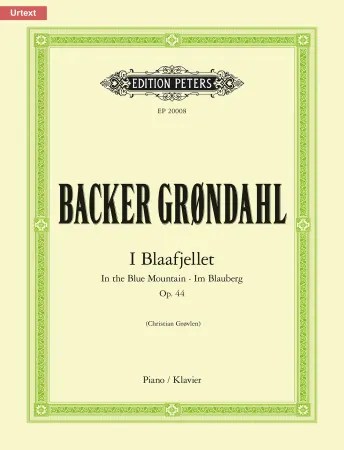
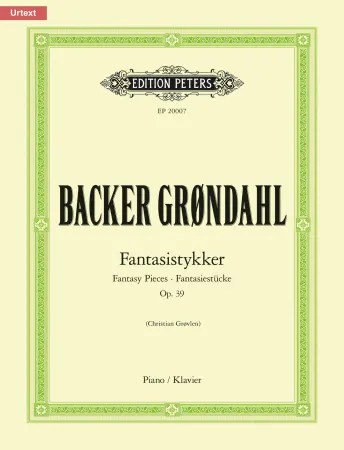
If patience is a virtue, then it could be coined a female trait. Hildegard von Bingen waited 900 years for a resurgence of interest in her music. Fortunately for Agathe Backer Grøndahl, it was only a century before she was honoured with a republica-tion and urtext edition of 2 of her piano cycles. The albums, Fantasistykker (Fantasy Pieces) Op. 39 and I Blaafjellet (In the Blue Mountains) Op. 44 have been re-issued, thanks to the work of pianist and editor Christian Grøvlen and Faber Music for Edition Peters.

Grøvlen, Director of Music at the Composer’s Homes for Kode, has been promoting the works with a flurry of concerts showcasing these sparkling bright new albums whilst championing one of Norway’s greatest pianists and folklorist composers. So it was on a cold February night, that I was fortunate to attend an event at the beautiful home of the Norwegian Ambassador’s residence in Kensington, London. Outside the velvet winter sky contrasted with the pale luminosity glowing from drawing room windows, as musicians, publishers and journalists alike, were welcomed into the warmth.

The audience were transported to a world of Nordic magic in a setting that provided the perfect backdrop for the poetry of Norwegian landscapes encap-sulated by the visual reminder of paintings of fjords that hung on the walls. Grøvlen elicited both curiosity and laughter from the audience as he regaled with insightful anecdotes from the composer’s life and performed with a lyrical intensity.

Of special interest was his comparison of Grøndahl’s style to her colleague and passionate advocate and supporter, Edvard Grieg. Grøvlen deftly demonstrated similarities and differences between the two composers with musical cadences summarising their respective characters. Grøndahl’s music hinted at a subtler darker enigmatic underworld, more mysterious in harmonic complexity.

Grøvlen traced a link between Grøndhal, her envrironment and relations to her sis-ter Harriet Backer’s paintings which include many intimate scenes of music making often featuring Grøndahl at the piano. The exhibition last year at the Musee d’ Orsay of Harriet’s work was entitled “Music of Colour”. This evening could have been entitled an exhibition, “Sounds of Light and Shade” as tone painting and hints of impressionism within Grondahl’s music were displayed. Also explained was the influence of the poetry of Vilhelm Krag (1871-1933), noted for his symbolism, melancholy and connections to nature. This resonated with what I knew of Grøndahl’s own life. Krag explored the melancholic side of the human mind and within Grondahl’s music there is this Nordic melancholy – her music often filled with an inexplicable darkness, despite the light that shines from within. An artist who struggled with depression and ill health, music was her refuge. Music, she wrote, helped her forget slush and rain, encouraging her to daydream instead. “There are no feelings or passions which it cannot create, arouse to the highest degree of randomness, you can cry or rage, be gripped by the most excited enthusiasm and feel more wretched and humble than the felon in chains.”

Yet whilst I was filled with pride to see the music about which I had written and talked celebrated in brand new print, the beautiful cream pages bound by a cover surrounded by the distinctive spring green border of Edition Peters, I left feeling frustrated. Yes, it is time her music is made approachable with worthy inclusions of smart title pages, credits and contents, academic preface and full scale portaits of Grøndahl in modest flowing dress, and cap. Yet despite all this, I couldn’t stem the mild irritation that here again sympathy was portrayed for a woman and what more she might have achieved were she a man?
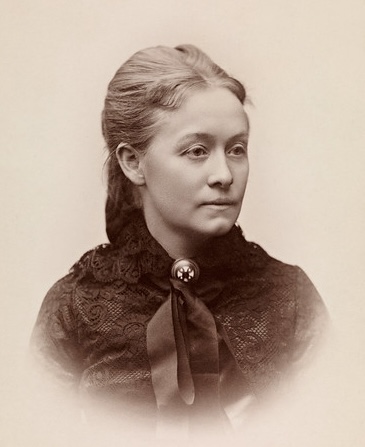
Here a woman was glimpsed through the 21st-century lens of expectations of what was missing, rather than seeing what was remarkably there burning bright in her own time. Presented by Grøvlen was an artist described as restrained, yet look deeper and a new picture emerges. Here after all is a woman who, as I wanted to yell from my seat, wrote a dawn chorus for the suffragette movement, who did indeed write and perform with and for orchestras and promoted herself despite the required modesty of the time. Why was that not mentioned? Here is a human who showed inconceivable will power pushing through boundaries to a life that was hard won for a woman of her era. Agathe Backer Grøndahl may have been “aggravatingly modest” as her era demanded, but she was also a woman whose bravery and courage took her to Europe as a young lady with a black jack truncheon in her pocket to protect herself from any angry or rowdy soldiers as pianist and recording artist of Grøndahl’s works, Sara Aimee Smiseth has pointed out. Look hard enough and what emerges is not the picture of a retiring wallflower chained unwillingly to a kitchen sink, but that of an exceptional artist fighting to follow her own creative path whilst fulfilling a role as mother and wife.

If you adjust the lens in the other direction another perspective emerges. Our gen-eration may be frustrated by the ideals of 19th-century decorum, but it was precisely the women’s salons of history where arts, celebrated in domestic settings, played an essential role in the flourishing of cultural traditions through the centuries. It was often in salon settings that the latest ideas were carried on chatter through windows out to the larger world. By virtue of Grøndahl’s career as a mother, musician and teacher firmly rooted to Nordic soil, she also had first hand access to her beloved folk music. Grøndahl more than Grieg transcribed these melodies, preserving them for future generations of male and female artists.

It is her work at home as a much-loved teacher and pianist that helped keep her name alive whilst raising standards of music in Norway.

Grøndahl may not have had the compositional career benefits of male gender, but in her own words to Bernard Shaw it is this “experience as a wife and mother that makes her an artist.”

Perhaps Grøndahl with all of her 400 songs and piano pieces wisely understood that it is by composing “salon miniatures” – the music of everyday inner details – and by experiencing the intricacies of life that her art will travel more feasibly than an epic sonata of grandiose ideas played by the few. Just as valuable as the giant sweeping brush strokes are the small yet miraculous details to be shared amongst generations of musicians at home as well as in the concert hall.

Whilst we celebrate the wonderful work of Edition Peters for replacing overcrowded print of antiquated editions and marching them into the clarity of the elegantly printed realm, let us also celebrate the achievements of a remarkable woman. Let us hope her story will not slip through the cracks of history.

Grøndahl brought to life the inner landscape of the soul. Perhaps this scattering of musical seeds will in the long run bear more fruit? I hope at least these informative editions will do much to contribute to hearing Grøndhal’s music, in the words of Vilhelm Krag, “grow beyond the frost of iron”.

Eva Maria Doroszkowska is an international pianist and teacher
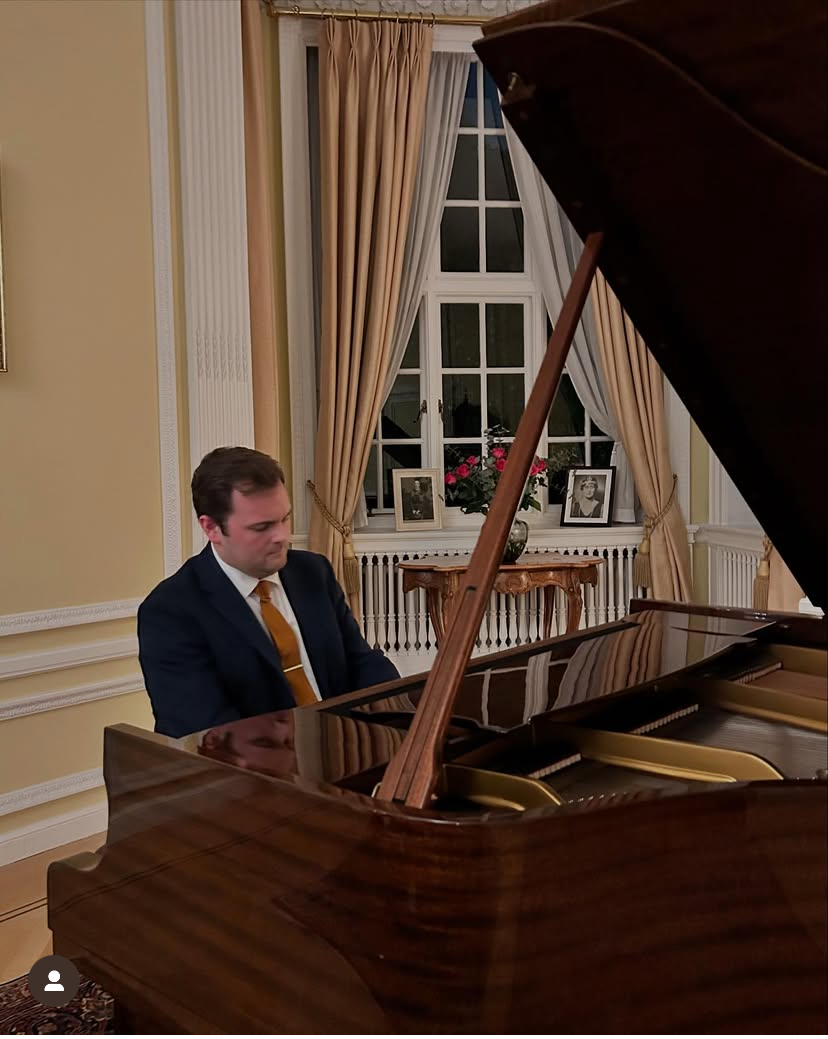
evamaria.co.uk

Last week I attended a reception and recital hosted by H.E. Tore Hattrem, Ambassador of Norway, and Mrs Marit Gjelten, together with Faber Music and Kode Art Museums & Composers Homes to celebrate the first ever Urtext edition of Fantasistykker (Fantasy Pieces) Op. 39 and I Blaafjellet (In the Blue Mountain) Op. 44 by Norwegian composer Agathe Backer Grøndahl. The exclusive event for leading music professionals took place at the Ambassador’s residence in London, an elegant mansion close to Kensington Palace.

Agathe Backer Grøndahl (1847-1901) was a Norwegian pianist, composer and music teacher. She studied with Franz Liszt and Hans von Bulow, amongst others, and was a contemporary and close friend of Edvard Grieg. She wrote over 400 works, mainly for piano and voice, and, like Grieg’s, her music blends Norwegian folk elements with Romantic influences. The English writer and music critic George Bernard Shaw described her as one of the foremost pianists in Europe, and at the time of her death in 1907, she was hailed as one of the great names of Norway’s musical heritage. Yet, over the following years her music was overshadowed by her famous compatriot and has remained relatively unknown, until now.

The music was performed by Christian Grøvlen, who gave some fascinating insights into Backer Grøndahl’s life and her compositional output. Although these works can be defined as “salon pieces” , they display an intriguing range of styles, textures and musical colours – at times impressionistic or nodding towards Bartokian folk idioms and dance rhythms; at other times, energetic, virtuosic and sweepingly Romantic, with a depth of emotion that goes beyond far beyond the salon miniature.  

The Fantasy pieces resemble Grieg’s Lyric Pieces yet they can also be seen as tone paintings with their programmatic titles (Summer Night, In the Boat, Bird’s Winter Song, for example). And while beauty and charm may lie on the surface of these pieces with their elegance and decorativeness, there is smouldering darkness beneath – and this is the core of Agathe Backer Grøndahl’s music.

This darkness is more evident in the suite I Blaafjellet (In the Blue Mountain), one of Grøndahl’s major works, dedicated to her sister, the painter Harriet Backer. It owes something to the programmatic music of Liszt in that the suite takes the listener on a journey, not unlike the first year of Liszt’s Annees de Pelerinage. The ‘fairytale’ suite evokes the different moods of the magical mountains of Norway, replete with trolls and wood nymphs, and from the outset, despite the relatively calm opening piece ‘Night”, there is an unsettling sense that something is afoot…. The suite builds in intensity, as the troll emerges from the mountain, heralded by portentous, almost aggressive chords, and unnerving jazz-like rhythms.

This was a splendid introduction to Backer Grøndahl’s piano music, characterfully performed by Christian Grøvlen, whose affection for and appreciation of it shone through every note.

The first-ever Urtext editions of two of Backer Grøndahl’s greatest piano works are published by the distinguished music publisher Edition Peters. Edited by Christian Grøvlen, they are based on the original manuscript and the first edition of 1898, which was out of print for many years. Now, in these new critical editions, the beauty and inventiveness of Backer Grøndahl’s writing for piano can be brought to a wider audience and enjoyed by pianists professional and amateur alike.

“I hope these new editions will make more people play, explore, understand and love Backer Grøndahl’s music” – Christian Grøvlen, pianist

 Find out more


Support The Cross-Eyed Pianist

This site is free to access and ad-free, and takes many hours to research, write, and maintain. If you find joy and value in what I do, why not

BUY ME A COFFEE

When is the right time to start teaching piano technique?

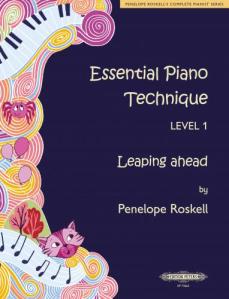
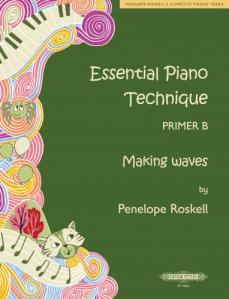
Renowned pianist and pedagogue Penelope Roskell believes that technique should be taught from the start and her new series of books aimed at children turn learning technique into an enjoyable and stimulating series of exercises, games/quizzes and imaginative original pieces.

Author of the award-winning The Complete Pianist, Penelope Roskell is recognised as a leading exponent of healthy piano technique which leads to “natural artistry and a lifetime of pleasure at the piano”. In her new trio of books for children, from the outset Penelope aims to encourage these early piano students to explore the keyboard as widely as possible: the first volume is called ‘Hop, Skip and Jump’ (by contrast, many beginner tutor books tend to start in the Middle C position, which can be very limiting). Through a series of fun exercises and short pieces and songs composed by Aaron Burrows and Carl Heap, accompanied by delightful illustrations by Eilidh Muldoon, the student is introduced to techniques such as lateral movement, playing staccato, hand positions, playing sustained notes, legato and more – all aspects of technique which are, or should be very familiar to the advanced pianist. The final volume, ‘Leaping Ahead’, builds on the techniques learnt in the previous two books, while also introducing new challenges, including playing hands together, chords and broken chords, leaps, slurs, chromatic scales, two-octaves scales, fingering and rotation.

As the introduction to the books makes clear, these are technique books, not method books, and as such can be used alongside the teacher’s favoured method books or personal teaching approach to ensure technique is taught in an enjoyable and stimulating way.

In addition to the exercises and pieces, each book includes teaching endnotes, complete with a video demonstrations which can be accessed via a QR code or by visiting https://www.editionpeters.com/essentialpianotechnique1. Learning Objectives and Teaching Tips are concise and informative.

Drawing on the best current pedagogical practice, the books use imagery and gesture to develop ‘piano technique’ in the broadest sense of the term, and remind both teacher and student that technique should always serve the music, rather than be taught and studied in isolation. Thus, this approach ensures the young pianist is equipped with all the necessary skills to play with both technical assurance, confidence and artistry, without tension and with a rich palette of sounds.

Having studied myself with Penelope Roskell for six years (the first few months of which were a crash course in all the technique I was not taught when having piano lessons as a child and teenager), at a time when I was myself teaching piano to young and early students (children and adults), I can attest to the value and ease of her approach to piano technique. She would often demonstrate something to me and then suggest I try it with my own students, using appealing imagery and gestures, and I quickly realised that learning and teaching technique need not be complicated – in fact, it is very simple and I believe the approach laid out in these new books can be easily adapted for older students and even adult learners.

Following the success and acclaim of The Complete Pianist, Penelope Roskell continues to make a vital contribution to piano pedagogy. These new books lay the crucial foundations for a lifetime of secure technique coupled with immense pleasure at the piano and are an excellent addition to piano teaching literature. I cannot recommend them too highly.


Essential Piano Technique (Primer A, Primer B & Level 1) by Penelope Roskell is published by Edition Peters

Who or what inspired you to take up the piano and pursue a career in music?

I was brought up in a small seaside town, and was extremely lucky to find there an excellent teacher, who had studied with Tobias Matthay at the Royal College of Music. I loved piano playing from day one. Later, I joined the junior college at the Royal Northern College of Music, and it was then that I decided to pursue a playing career.

Who or what have been the most important influences on your musical life and career?

Each of my teachers has influenced me in their own way. Sir William Glock (a Schnabel student) worked a lot on phrasing. George Hadjinikos was a very philosophical musician and Guido Agosti was the pinnacle of refinement. Perlemuter gave me a direct line to Ravel (he studied all Ravel’s works with the composer himself). I have also learnt a great deal from working with other instrumentalists and singers.

I am also very grateful to some key musicians who have helped shape my career, for instance Carola Grindea who encouraged me to become involved with EPTA (the European Piano Teachers Association), and BAPAM (British Association for Performing Arts Medicine) where I now advise injured musicians.

What have been the greatest challenges of your career so far?

There were two main turning points in my career. As a young pianist, I thought I was invincible. I was working with a teacher who pushed me very hard technically, and in my third year at music college, I developed tenosynovitis (severe pain in my right thumb). This forced me to reconsider my whole approach to technique, and led to my life-long research into healthy piano playing.

I continued focussing primarily on performance for many years, until I had several years of bad health, followed by the birth of my children. This resulted in a second change of direction, in which I reduced my touring and focused more on teaching, which I have found very fulfilling.

I keep having to remind students who have major challenges or setbacks of one kind or another, that if one door closes, we can look for a different door.

What is your most memorable concert experience?

Impossible to say! I love performing and have been fortunate to play in both major concert venues and very intimate settings – I enjoy both. Sometimes one plays one’s best in the least expected places. When I was in my twenties, I played a lot of concerts abroad for the British Council, sometimes playing to audiences who had rarely heard classical music played live before. In those circumstances, I felt a huge responsibility to bring across the music’s message very strongly, over and above any technical concerns. This proved very liberating and I think that it is very valuable training for any young pianist to gain experience of a wide range of audiences and venues – it also helps you develop resilience and adaptability.

In addition to performing, you have a distinguished career as a teacher. Who or what inspired to you start teaching?

I started teaching while still at school, teaching some of my fellow students and helping them prepare for their piano exams. I partly funded myself through college by teaching, and then was lucky to be offered a teaching post at Keele University in my postgraduate year. I am eternally grateful to Sir William Glock for recommending me to the post at Keele which later led to conservatoire teaching posts. I have been teaching at Trinity Laban (formerly Trinity College of Music) for twenty years now, alongside work at other colleges and a private practice.

Who/what have been the most significant influences on your teaching?

I was fortunate to experience a range of dedicated and inspiring teachers from an early age. Each had a very different approach, (and at times I even worked with two very contradictory teachers simultaneously). This worked well for me as the contradictions stimulated me to question everything and to try to work out the best solutions for myself. However, I do not recommend this for everyone – I think every pianist needs a regular, committed teacher who can oversee their longer-term development.

My experience of other movement techniques including yoga, Tai Chi and Alexander technique, my collaboration with an osteopath, and my research into anatomy have also been invaluable. However, it took many years of research and experimentation before I could work out how to apply all this knowledge directly to piano playing.

Having come across many pianists who missed out on a thorough grounding in their early years, I feel passionate about the need to train a new generation of enthusiastic, committed and knowledgeable teachers. Music colleges still tend to focus predominantly on performance, yet so many pianists would enjoy teaching more if they knew how to do it really well. Confident and knowledgeable teachers nurture enthusiastic students, who in turn inspire the teacher’s work further. There are some good piano teaching courses available, but in order to fill a perceived gap in the understanding of teaching technique, I am starting up a teacher training course next winter, in which teachers can explore new methods of teaching technique, based on the exercises in The Complete Pianist.

What are your views on music exams, festivals and competitions?

I think this depends very much on the individual. Some thrive and feel motivated by exams and competitions, others prefer to play concerts, or just to play piano for their own pleasure. I think there is a role for everyone in music. As a young pianist, I much preferred playing concerts to competitions, as I played better in front of a real audience. Having said which, I now very much enjoy being a member of competition juries, especially those that support and nurture young musicians. It’s a major challenge and a huge responsibility to have to judge one talented student against another.

Your new book ‘The Complete Pianist’ is published on 20 February. Tell us more about the motivation for producing this and what you hope pianists will gain from it.

Over my lifetime, I have acquired an enormous amount of experience and understanding on all aspects of playing and teaching, and about fifteen years ago, I finally decided that I was ready to share this for the benefit of future generations. I started by writing magazine articles, mainly in Piano Professional magazine, which I always intended to build into a book eventually. A friend introduced me to Peters Edition, who said they ‘had been looking for this book for ten years’ so it was an ideal match! They encouraged me to be more and more ambitious, and once we had settled on the title of ‘The Complete Pianist’, it became clear that the book had to be as comprehensive as possible. (It now includes more than 500 pages of text, 250 exercises of my own devising and access to 300 videos in which I demonstrate all the main points myself). This posed an interesting challenge: it forced me to think in depth about some aspects of playing that I had not yet fully clarified in my own mind (a process which has, incidentally, also greatly enhanced my own teaching.) Several years on, the book is finally finished.

I think The Complete Pianist has much to offer every pianist, whether professional or amateur, teacher or student, and I have included musical examples which range from elementary to concert repertoire. I have also tried to recognise and address the differing needs of a wide range of pianists (for instance, I may recommend different exercises for pianists with weak hands to those with strong but rather inflexible hands). I think it is true to say that it’s one of the few major books on piano playing which has seriously addressed the additional challenges that pianists with smaller-than-average hands face.

For me, it is never enough just to tell a student what to do – I feel that it is incumbent on me as a teacher to explain very precisely and simply how to achieve that pianistically. In the book, therefore, each new aspect of playing is addressed through a series of practical exercises which guide the readers step-by-step towards healthy, inspired playing. The book covers all aspects of playing, from a whole-body approach, through every aspect of piano technique to informed interpretation. I also delve into the way we think about music: from mental preparation, effective practising and motivation to developing confidence for inspired performance.

I have tested all the exercises repeatedly on my own students. Many of my students are teachers themselves who have also used the exercises for their own students at different levels and given very valuable feedback.

I hope that the book will help many pianists overcome obstacles and realise their full potential at the piano.

As a musician, what is your definition of success?

Good question – what is success? I think success is doing whatever you do with absolute commitment and to the best of your abilities. There is still a tendency amongst musicians to relate success to prestigious venues, fame and money. It is quite natural for young pianists to aspire to that, but that kind of celebrity status only comes to a small number of pianists per generation. I think that success, and achieving a real sense of job satisfaction, is much more complex than that. Although external appreciation is encouraging, it can be fickle, and it is unwise to build our self-esteem mainly on the recognition of other people. Ultimately it is the knowledge that you are doing good work that is the most important thing. Musicians should take pride in their own and their students’ successes, whether that be playing a major concerto or just encouraging a new student to play a simple piece beautifully. Success is about genuine sharing of music making in a way that touches others, through playing or through teaching.

What do you consider to be the most important ideas and concepts to impart to aspiring musicians?

That the music comes first! Still I hear of many pianists who have been taught to focus on technical ability above all else. This suppresses natural artistry and is more, not less, likely to lead to injury and disillusion. Cultivate your imagination and your humanity and it will shine through in your music and sustain you through a lifetime of playing.

The Complete Pianist: from healthy technique to natural artistry by Penelope Roskell is published on 20 February by Edition Peters and is available from shops and online: www.editionpeters/roskell


Penelope Roskell is Professor of Piano and Piano Pedagogy at Trinity Laban Conservatoire of Music and Dance and at the Royal Welsh College of Music and Drama. As a soloist she has played in major concert halls in more than thirty countries. She is the leading UK specialist in healthy piano playing, and Piano Advisor to the British Association for Performing Arts Medicine, where she holds a clinic for pianists with tension or injuries.

peneloperoskell.co.uk