Piano101 is a new podcast presented by Fran Wilson The Cross-Eyed Pianist with Dr Michael Low, a pianist and teacher based in South Africa.

Piano 101 aims to cover all things piano, from practising and repertoire to teachers and teaching, stagecraft and more…. Piano101 welcomes comments and suggestions for topics for future episodes.

In this first episode, Fran and Michael discuss that perennial issue for so many pianists, professional and amateur – performance anxiety

Thank you for listening!

Listen via YouTube

Or if you prefer audio only, listen via BuzzSprout

The lockdowns, imposed by our governments in response to the coronavirus pandemic, had little, if anything, to recommend them, but for me one of the more positive aspects of the long monotonous months of the UK lockdowns were my regular conversations with my friend Dr Michael Low.

Michael lives in South Africa. I first “met” him online through Graham Fitch, with whom Michael studied, and who taught me when I was preparing for my FTCL diploma. Some years ago, when Michael was visiting his family in the UK, we met for lunch in London’s Chinatown and we talked, and talked, and talked…..about the piano, pianists, repertoire, and more.

During the lockdowns, my regular conversations with Michael were an opportunity to talk not just about the piano, pianists and music in general but also about politics and our respective government’s response to the pandemic. It was both refreshing and comforting to know there was a kindred spirit on another continent.

Many of us found our creativity severely impaired by the lockdowns – at first the opportunity for endless practising, or writing, or other creative pursuits felt like a treat for those of us who lead busy lives, but it quickly sapped creative impulses. Not so, Michael, whose Lockdown Liszt Project was recorded in the summer of 2021.

Michael recorded two works by Franz Liszt, the Vallée d’Obermann from the Swiss book of Années de pèlerinage, and the Ballade No. 2.  I first heard Michael’s Obermann when I was reading Paul Roberts’ new book ‘Reading Franz Liszt’ and my head was full of the literary and poetic inspirations behind this and many other of Liszt’s works. What Michael captures so wonderfully in this performance is not only the poetry and drama of Liszt’s writing but also the evocation of the monumental, awe-inspiring landscape of the Alps, which Liszt himself would have experienced during his travels in Europe.

There’s a wonderful spaciousness in Michael’s performance and he really savours the drama of silence as well as that of sound – of which there is great variety in the colours and timbres he offers. The portentous opening theme, restated throughout the piece, is contrasted with moments of great lyricism and introspection, perfectly capturing the dilemma of the character of Obermann as well as the physical drama of the Alpine landscape.

The Ballade No. 2 is similarly picturesque, and like the Ballades of Chopin charts a fantasia-like narrative (pianist Claudio Arrau maintained that the piece portrays the Greek myth of Hero and Leander) through 15 minutes of operatic grandeur, rapidly shifting moods and contrasting soundscapes.  Here, as in Obermann, Liszt confronts the listener with wide-ranging, often extreme emotions – from menacing, stormy rumblings in the bass to a serene hymn-like melody and clusters of chords high in the treble. There’s beauty in the darkness of this Ballade and Michael really appreciates this, relishing the contrasts in note-saturated, complex textures without any loss of clarity or expression. It’s an absorbing performance and the quality of the recording has an immediacy which really suits this music.

Watch both performances on Michael Low’s YouTube channel


Dr Michael Low will be in conversation with Frances Wilson, The Cross-Eyed Pianist, in a new podcast series, Piano 101, launching soon

Shameless begging bit:

This site is free to access and ad-free, and takes many hours to research, write, and maintain. If you find joy and value in what I do, please consider making a donation to support the continuance of this site

Make A Donation

Long read guest post by Dr Michael Low (read Part 1 here)


My journey back to playing the piano started when I casually suggested to a new colleague that perhaps we should play some chamber music together. I honestly didn’t think that she would take me seriously, but the next day I found the scores of Schubert lieder and Puccini arias in my pigeon-hole. Although one part of me wanted to go back on my word, the other told me to just get on with learning the notes, and I was grateful for the latter. The most valuable lesson I learnt from working with a singer is the shaping and the breath of the musical phrase, no melodic line is rushed, and the sense of rhythmic pulse is often relative to the direction of the music. Following my brief appearance as a repetiteur, I founded a chamber ensemble amongst my colleagues to perform the chamber music versions of Mozart piano concertos and movie soundtracks.

My new musical project was not without obstacles, both logistically and musically. Because initially there were only six of us, the piano has to ‘fill in’ the missing parts – this meant that I had to play both the solo part as well as the orchestral tutti, a challenge that I relish (having studied my fair share of Romantic transcriptions, the orchestral reduction of the tutti passages were to be the least of my worries). However, nerves still presided over my performance, but the ensemble was generous in their support and patience. ‘It gets better with every rehearsal’, was one member’s assessment of my playing. Another told me that it is just a matter of ‘practising performance’, and I will never forget the words of our leader (sadly no longer with us) when I felt that I could have played better after one particular rehearsal. ‘That’s why we are here to practise’, he smiled at me. Away from the music and the piano, I met Laverne, who was to become my wife in the not-too-distant future.

I was no longer the rhythmically wayward student, yet something was still not clicking. Physical tension still existed which translated into uneven semiquaver passages. I found myself with a sense of musical déjà vu, but told myself that I was no longer that hot-headed student: ‘Everything is difficult at the beginning, but once you have worked it out, then it is easier.’ I also reminded myself that my repertoire was predominantly 19th-century, and Mozart still a composer I had yet to study in detail. I turned to my doctoral supervisor, Hendrik Hofmeyr, for advice. Hendrik told me that in order to eliminate the tightness in my playing, I would have to adopt a different mindset. He showed me a way of playing the piano which utilises the bigger muscles of the body, especially the weight of the arm.

https://youtu.be/7HzzoLTZJCY

I eventually understood what Hendrik was after but only after weeks and months of frustration and tears: every time I felt strain and pressure during practise, I would stop and retrace my steps, and play even slower. The primary objective was now to find a position of the hand (and body) that enabled me to play with the greatest ease whilst freeing myself of any physical tightness. The biggest breakthrough came when I adjusted the way I sit at the piano, but it was to be at least another two and half years before I could feel the difference in my playing.

For over two years I studied Mozart piano concerti and very little else. More importantly, I relearnt the significance of one particular musical gesture that makes up so much Classical and Romantic music – the Mozartian slur, sometimes known as the classical slur; this completely changed the way I view and interpret music especially when I revisited old repertoire. The Mozart concerti were followed by Beethoven’s first and last piano concerti. I then studied Schumann’s Opus 54, which is more akin to an augmented piano quintet, and what a glorious one it is! The Schumann Concerto was followed by Rachmaninoff’s second and third piano concertos, as I finally got comfortable with my new way of playing the piano.

As patient as the ensemble were, they were beginning to wonder if there would at least be some performances at the end of all the rehearsals. Although I was tentative, a concert was eventually scheduled and we made our debut in front of an audience of about two hundred people. The performance was well received but old musical wounds resurfaced. Yet again I walked off stage haunted by musical discrepancies despite the standing ovations and calls for an encore. I recalled the words of a former professor, ‘Something very intense inside you is preventing you from playing the intensity of the music’. Laverne encouraged me to keep going and play further performances, but I was reluctant, and a heated argument ensued. I told her my belief of how some were chosen whereas other chose to perform and faced a backlash, ‘This is such b***sh**t! The people who get it right on stage are those who get up there and do it over and over again until they are comfortable. As talented as you are, you are not going to play the “Emperor” Concerto brilliantly on your first attempt!’ Furthermore, Laverne also assured me that it is the audience’s perception of my performance that is ultimately more important than my own: ‘You have the ability to connect to the audience through your playing, surely this is more important than the odd wrong notes and occasional memory lapse?’

Laverne’s insightful words were of great comfort to me, and it was on her recommendation that I began to address my musical wounds in the formal setting of psychotherapy. ‘I think it will help you to reconnect the dots and explained why certain things happened the way they did,’ she told me before my first session with my psychologist. Ultimately, Laverne was right. It was not Christianity or God, nor was it table tennis, golf or CrossFit, but the work that I did with my psychotheraphist that provided me with the most conclusive explanation to my performance anxiety and stage fright.

I agree with Zach Manzi that there is plenty to dislike about the Classical music industry – an industry resistant to change, safeguarded by numerous holier-than-thou gatekeepers who have placed themselves on a musical pedestal. I like Manzi’s idea of making Classical music more ‘accessible and inspiring,’ and I certainly would like to find out more about his ‘audience first’ concert format design. However, it is my humble opinion that audiences around the world don’t attend live concerts just to hear Bach, Beethoven or Wagner anymore. This has partly to do with the fact that there is no definitive way of interpreting a piece of music. What the Classical music industry has been promoting since time immemorial is the cult of the personality. People now go to concerts to hear the performer rather than the composer: Schiff’s Bach, Barenboim’s Beethoven, Trifonov’s Rachmaninoff, Thielemann’s Wagner, etc. And this is perhaps the main reason why concert agents and managements are more likely to look for a ‘performer’ than a musician when filling their concert diaries. In other words, if we don’t think you can sell tickets, then why the hell should we book you? Performers are more sought after than musicians, as the commercial value of the former trumps that of the latter.

Please don’t get me wrong. I am not, for one second, suggesting that some of the great performers are not great musicians first and foremost, but if you look at the artists signed by major recording and distributing companies in the last decade or so, you will find that many of them fit a certain marketable profile in terms of looks, dress code, and perhaps the most importantly, being able to say the right thing at the right time, especially in front of the cameras.

There is one side of me who believes that the route currently taken by the Classical music industry is inevitable, as it has to adapt and keep up with increased commercialism, and Classical music has never been the art form for the masses. At the same time, I find it problematic that some of those who hold the industry’s most prominent positions are not often the best people. It is an industry that still favours nepotism and the ‘old-boys’ network’ (if I may use such a term), which means that it is often a case of who you know, or rather whose ego you are willing to stroke (and, by the same token, how successful you are at negotiating politics), that gets you places. I also don’t think that it is right when so much power is placed in the hands of those in authority, especially teachers: the one person who can make a student feel completely sh*t about him/herself is the only person who can also galvanise the student. There is something fundamentally unhealthy about this, and when it is coupled with the abuse of power and trust (which has been shown in amongst numerous high-profile musical cases in recent times), it only makes the Classical music industry even less desirable. Hence it is not difficult to see why the more sensitive artists are less inclined to trade their souls, knowing full well that Mephistopheles doesn’t deal in refunds.

Despite its unpleasantness and Weinstein-esque overtones, I have never regretted my decision to pursue a career in Classical music. I knew that the cards were stacked against me, yet I was determined to make something of it. When I swallowed the red pill and saw the industry for what it is, I realised that I have one of two choices: b*tch and cry that life is unfair or find another way forward, and I am glad that I did the latter. To borrow Laverne’s phrase, ‘Once you have decided what the system is, then you can choose how far removed or how far involved you want to be.’

I am eternally indebted to all my professors, especially Graham and Hendrik, but my greatest teacher has been life itself. It has taught me that there is no such thing as a timeline or timeframe in my quest for artistic truth. If you are not an international prize-winner by the time you are in your late twenties it doesn’t necessarily mean that you haven’t ‘made it.’ By the same token, if ‘it’ doesn’t happen for you now (whatever ‘it’ may be) ‘it’ might still happen: when the future is uncertain, anything is possible. You might not necessarily end up where you envisaged, but it is exactly the place you need to be in the present moment. Ultimately, the one person truly responsible for your own musical ambition is you yourself: don’t sit around waiting for the phone to ring, go out and make things happen. Be bold, promote yourself, build communities, surround yourself with like-minded colleagues, and embrace your musical flaws and technical limitations as an artist. Allow yourself the license to play wrong notes and have the odd memory lapse, and try not to crucify yourself after every performance, as there will always be people who will do that for you. Music is a reflection of life, and life itself is far from perfect.

When Laverne and I visited the heritage part of Penang in 2018, we were humbled by way of lives of the street food vendors, who spent their life perfecting one local dish with the recipe handed down from past generations. There is something very humbling about knowing your place in your community and doing your best to be part of that. We often underestimate our own work, but someone else may deem our contribution invaluable. I know of many excellent musicians and performers who are not part of the world’s ‘famed’ orchestras, nor do they regularly perform at venues such as the Carnegie Hall or London’s Royal Festival Hall, but this doesn’t mean their performances are any less committed or engaging. At the end of the day, I think it is the beauty of music as well as the desire to keep on learning that keeps all musicians going.

I leave you with a conversation that took place between a former student and myself.

Student: ‘Dr Low, I am going to stop piano lessons now, is that OK?’

Me: ‘Sure, I have never believe in making someone do something they don’t want to, but at least tell me the real reason behind you wanting to stop.’

Student: ‘Well Sir… I will never be rich and famous if I play the piano, right?’

Me: ‘(The student’s name), the joy is in the playing.’

Student: (Blank stare)

Michael Low, January 2022
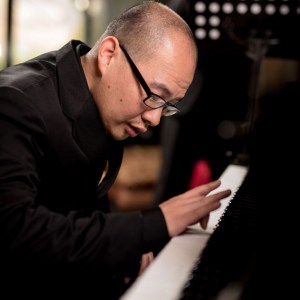

As a teenager, Michael Low studied piano under the guidance of Richard Frostick before enrolling in London’s prestigious Centre for Young Musicians, where he studied composition with the English composer Julian Grant, and piano with the internationally acclaimed pedagogue Graham Fitch. During his studies at Surrey University in England, Michael made his debut playing Tchaikovsky’s First Piano Concerto in the 1999 Guildford International Music Festival, before graduating with Honours under the tutelage of Clive Williamson. In 2000, Michael obtained his Masters in Music (also from Surrey University), specialising in music criticism, studio production and solo performance under Nils Franke.

An international scholarship brought Michael to the University of Cape Town, where he resumed his studies with Graham Fitch. During this time, Michael was invited to perform Tchaikovsky’s First Piano Concerto for The Penang Governer’s Birthday Celebration Gala Concert. In 2009, Michael obtained his Doctorate in Music from the University of Cape Town under the supervision of South Africa greatest living composer, Hendrik Hofmeyr. His thesis set out to explore the Influence of Romanticism on the Evolution of Liszt’s Transcendental Etudes.

In 2013, Michael started a project in Singapore collaborating with The Kawai School Elite in a series of masterclasses and workshops for teachers and students. Having grown up in the East and lived his life in the West, Michael believes that both cultures has much to offer and envisage an exchange between Singapore and Cape Town in the future.

Michael is also the co-founder of the Elvira Ensemble – a Classical Chamber Orchestra specialising in the Piano Concertos of Mozart and Beethoven as well as Soundtracks from Blockbuster Hollywood Movies. The Ensemble have given performances at several high-profile events such as the wedding of Justin Snaith, South Africa’s leading race-horse trainer. In January 2020, the ensemble was engaged to perform at the wedding of the former Miss Universe and Miss South Africa, Miss Demi-Leigh Nel Peters.

Michael has also worked with numerous eminent teachers and pianists, including Nina Svetlanova, Niel Immelman, Frank Heneghan, James Gibb, Phillip Fowke, Renna Kellaway, Carolina Oltsmann, Florian Uhlig, Gordon Fergus Thompson, Francois du Toit and Helena van Heerden.

Michael currently holds teaching positions in two of Cape Town’s exclusive education centres: Western Province Preparatory School and Herschel School for Girls. He is very much sought after as a passionate educator of young children.

Michael has also served as a jury member in the 2nd WPTA Singapore International Piano Competition in 2020. He has been engaged for a series of talks and masterclasses with the WPTA Indonesia in September of 2021.

Michael Low’s website

Long read guest post by Dr Michael Low, in part in response to this article by Zach Manzi


For as long as I can remember, Classical music has touched me in a way no other musical genre was able to. This, coupled with my love for playing the piano, made it inevitable that I would dedicate my life to these two overlapping fields.

‘Musicians must be the luckiest people alive!’ I recall saying to my father as a wide-eyed teenager, ‘They travel the world and play beautiful music. Imagine the joy of sharing something that is so personal to you with thousands and thousands of people; I want to be a musician one day.’ My father was an amateur French horn player who went into finance and business to support his family, but, despite his career change, he never lost his love for music, and was supportive of my decision to dedicate my life to music.

Unfortunately, the same could not be said of everyone to whom I pitched my dream career, though hindsight shows that rejection and setbacks are just part of the journey in all walks of life. One extended family member was dismissive of my career choice and told me that I would end up ‘cleaning tables in restaurants for money’ (a derogatory statement itself aimed at those in the hospitality industry). Needless to say, I have not seen or been in touch with this particular person since I left England for South Africa.

My piano teacher at the time, Richard Frostick, also expressed his reservations about my choice of career. Richard told me that the views expressed by this particular member of my extended family were done out of care rather than cruelty, and that a reality check was needed on my part. However, it was the words of Graham Fitch, my teacher during my studies at London’s Centre for Young Musicians, that gave me the greatest hope: ‘If this is your dream, then I would like to believe that anything is possible.’ Graham warned that the competitive nature of Classical music grows in inverse relation to the ever-decreasing career opportunities, but added, ‘there will always be a place for someone who is talented and works hard.’

Because I was a late starter, a lot of catching up was needed on a technical and musical level. And I was willing to forsake my academic subjects for the purpose of pianistic and musical developments. Unfortunately, in my desire to be ‘on par’ with my pianistic contemporaries, many short cuts were taken and numerous corners slashed. I hadn’t taken time to learn the true value of rhythmic discipline and develop my sense of internal rhythm, which meant that everything was very approximate (in other words, I would play what I thought the music should be, as opposed to what is actually written). But I got away with it (at least for the time being) thanks to my musical temperament, as well as the uncanny Chinese ability to (more or less) replicate my favourite recordings. It was not until a few years later when I read Artur Rubenstein’s biography that I understood the following quote: ‘To Hell with the Germans and their exact fingers! TEMPERAMENT!!!’).

Failed auditions and disappointing performances mark every musician’s journey, but I kept my eyes firmly on the prize. The summer of 1996 was to be a watershed moment. I met an eminent piano professor at a summer school who expressed an interest in my playing. He openly told everyone during a masterclass that I had ‘a marvellous musical temperament, but very little else.’ At the same time he assured me that when all the aspects of my playing had developed, that I will be ‘some’ player. I was encouraged by these words and further lessons were arranged. Sadly, our last meeting was not a positive one. He reduced me to tears by laughing and ridiculing my playing. A few years ago I found out that the same professor has passed on. I sometimes wondered what he would make of my playing if he were to hear me now.

My university years proved to be some of the most productive in my life. I threw myself into learning some of the most challenging piano repertoire and listening to many of the 20th century’s greatest pianists. What is so special about their playing? What is their ‘X factor’? These were some of the questions that I often asked myself when I was in the listening library. Unfortunately, many of my contemporaries didn’t understand my obsession. One of them called me ‘a sad f**k’ when we crossed paths for the second day in a row. A final year student asked me, ‘Why do you insist on learning all these difficult pieces when you will never get the opportunity to perform them?’ I responded with just a smile, as I didn’t want to come across as rude, always reminding myself that I could spend the rest of my musical life ‘polishing,’ but the structural labour on the musical sculptures had to be done right now.

I was proud that all my efforts were not in vain, and there was validation amongst my lecturers and peers in regards to my hard work. One of the highlights of my student years was making my concerto debut performing Tchaikovsky’s First Piano Concerto. But all of this came at a cost: one of my closest friends wrote me a letter when she was going through a particular difficult period during her final year, asking, ‘Where were you when I most needed you, Michael?’ I replied with, ‘I am sad to say that I was nowhere’. I was willing to sacrifice everything for an ideal while neglecting the more important aspects of life, such as the relationship between friends. I consoled myself with the excuse that some of the most creative personalities have never been ‘people’s people’, and how wrong was I? It was only years later that I came to the realisation that piano playing has always been a reflection of life, whereas life has never been just about playing the piano.

In spite of my enormous desire to make huge musical and pianistic strides, my playing was riddled with idiosyncrasies and plagued with physical tension. In hindsight, I can only thank my lucky stars that I didn’t pick up some form of physical injury, especially when I was practising up to six hours daily. I was told that I had ‘massive technical problems,’ but the reality was that my lack of rhythmic discipline and internal pulse finally caught up with me. The big musical structures of works such as Liszt’s ballades and Beethoven’s sonatas fragmented into intimate miniatures, and there was little awareness of the longer melodic line especially in the musical direction of the composition. ‘Moments of brilliance are often followed by moments of incompetence,’ was one lecturer’s assessment of my playing. I was also a ‘nightmare’ student to mark, according to the hierarchy, because I was so inconsistent. Though my lecturers may have had a point, one part of me didn’t take their criticism too seriously as another part of me strongly felt that their words had more to do with my inability to negotiate departmental politics. I reassured myself with the thought that the musicians who made the greatest impression on me were often some of the most controversial. Who on earth wants to play a mediocre 75 per cent in a performance anyway? At least I could hit the 90s, even though at times I was wide of the mark. ‘Just keep going and one day everything will fall into place,’ I told myself.

VIDEO (Michael Low plays Beethoven/Alkan)

South Africa gave me a chance to press the reset button, but the stakes were too high. I told myself that being an international scholarship student meant that I had to be close to ‘perfect’ every time I performed, when this was far from the truth. I yielded to my musical neurosis by spending hours on end polishing my repertoire when I should have taken advantage of the considerable performing opportunities available. And because I raised the performance bar to near impossibility, it only meant that I had that much further to fall when things didn’t go as planned. Every time I walked off stage, I was haunted by wrong notes, memory lapses as well as other interpretive discrepancies. That is not to say that there weren’t moments where I made an impression, but the consistency that I so desperately craved never materialised, and it often felt like the harder I worked, the further away I was straying from my musical goal. ‘If it doesn’t happen for you now, maybe you have to accept the fact that it will never happen,’ was one professor’s assessment of my progress. Another told me that while he found my playing ‘very sensitive and very musical,’  he also wondered if I had what it takes to ‘stomach my nerves.’ The same person also assured me that, ‘There is no shame in this, I know a lot of wonderful musicians who cannot quite make things happen on stage.’ These words may sound harsh, but they were nothing like the brutal assessment given by a visiting professor, who told me, ‘Sort out your rhythm, or stop playing the piano entirely.’ I was desolate because I knew that was the truth. I looked on as my musical peers gained scholarships to study with some of the industry’s most prolific performers in Europe and America. Although I feel a sense of happiness and pride for them, I now knew the inevitable: I would never have a career as a concert pianist.

When I started teaching in my late twenties, I was determined that none of my students would be as rhythmically undisciplined as I was. Hence, I started formulating my own teaching method and in doing so found some form of closure with regard to my inability to become a performer. The fabled stories of Adele Marcus and some of the 20th century’s greatest pedagogues gave me hope: ‘The greatest performers don’t necessarily make the greatest teachers,’ I said to myself. I was determined to be the best educator I could be. Even though I still perform in the occasional soirees and private functions, the fire within me that longs for the stage no longer burns with the same intensity. I then found Christianity, which affirmed my ability as a mere mortal. ‘There are those who are chosen by God to be performers,’ I recall saying to a colleague, ‘and then there are people like myself who chose to do music as a career, and that is the difference.’ The elders in my congregation praised me for my insightfulness, while my Christian friends commended me for entrusting my life in the hands of the Almighty. ‘Everything seems to make sense now’, I said to myself. Little was I to know that in the years to come, the one person who would challenge both my spiritual and musical beliefs turned out to become the most important person of my life.

Piano and Classical music took a further ‘back seat’ when I fell in love with the game of golf. I saw a lot of parallels between this strange yet beautiful game and playing the piano. I traded the practice room for the driving range, and I signed up to become a member of one of South Africa’s top golf clubs. For the next three years I learned only one piece of piano music – Scott Joplin’s Bethena Waltz – which haunted me for weeks after I watch David Fincher’s movie adaptation of The Curious Case of Benjamin Button. Any spare time I had was spent forging a repeatable golf swing or inputting musical scores into Sibelius as I looked to finish my PhD in Music. Playing the piano was now a distant memory, and the truth is that I had not given myself a timeline as to when I would reconnect with my black and white friend again.

In Part 2, Michael Low describes how he reconnected with the piano.


As a teenager, Michael Low studied piano under the guidance of Richard Frostick before enrolling in London’s prestigious Centre for Young Musicians, where he studied composition with the English composer Julian Grant, and piano with the internationally acclaimed pedagogue Graham Fitch. During his studies at Surrey University in England, Michael made his debut playing Tchaikovsky’s First Piano Concerto in the 1999 Guildford International Music Festival, before graduating with Honours under the tutelage of Clive Williamson. In 2000, Michael obtained his Masters in Music (also from Surrey University), specialising in music criticism, studio production and solo performance under Nils Franke.

An international scholarship brought Michael to the University of Cape Town, where he resumed his studies with Graham Fitch. During this time, Michael was invited to perform Tchaikovsky’s First Piano Concerto for The Penang Governer’s Birthday Celebration Gala Concert. In 2009, Michael obtained his Doctorate in Music from the University of Cape Town under the supervision of South Africa greatest living composer, Hendrik Hofmeyr. His thesis set out to explore the Influence of Romanticism on the Evolution of Liszt’s Transcendental Etudes.

In 2013, Michael started a project in Singapore collaborating with The Kawai School Elite in a series of masterclasses and workshops for teachers and students. Having grown up in the East and lived his life in the West, Michael believes that both cultures has much to offer and envisage an exchange between Singapore and Cape Town in the future.

Michael is also the co-founder of the Elvira Ensemble – a Classical Chamber Orchestra specialising in the Piano Concertos of Mozart and Beethoven as well as Soundtracks from Blockbuster Hollywood Movies. The Ensemble have given performances at several high-profile events such as the wedding of Justin Snaith, South Africa’s leading race-horse trainer. In January 2020, the ensemble was engaged to perform at the wedding of the former Miss Universe and Miss South Africa, Miss Demi-Leigh Nel Peters.

Michael has also worked with numerous eminent teachers and pianists, including Nina Svetlanova, Niel Immelman, Frank Heneghan, James Gibb, Phillip Fowke, Renna Kellaway, Carolina Oltsmann, Florian Uhlig, Gordon Fergus Thompson, Francois du Toit and Helena van Heerden.

Michael currently holds teaching positions in two of Cape Town’s exclusive education centres: Western Province Preparatory School and Herschel School for Girls. He is very much sought after as a passionate educator of young children.

Michael has also served as a jury member in the 2nd WPTA Singapore International Piano Competition in 2020. He has been engaged for a series of talks and masterclasses with the WPTA Indonesia in September of 2021.

Michael Low’s website

Video credits:

Director: Bill Chen https://vimeo.com/billagechen

Sound Engineer: Liam Pitcher https//www.liampitcher.com