Kapustin: Between the Lines

Ophelia Gordon, piano

Nikolai Kapustin (1937–2020) occupies a distinctive place in 20th- and 21st-century music. A classically trained pianist and composer, Kapustin cleverly fused the formal, structural rigour of classical music with the rhythmic vitality and improvisational idioms of jazz. His works defy easy categorisation: though they sound spontaneously jazzy, they are entirely notated in classical form, leaving no space for actual improvisation. This paradox became the hallmark of his style.

Born in Horlivka, Ukraine, Kapustin studied piano at the Moscow Conservatory, under Alexander Goldenweiser, at a time when jazz was still viewed with suspicion by Soviet authorities. Kapustin’s fascination with American jazz pianists like Art Tatum, Oscar Peterson and Erroll Garner led him to explore the genre secretly and he absorbed its harmonic language, rhythmic energy, and phrasing to create his own compositional language. His music is vibrant, cerebral, witty, exuberant and alive.
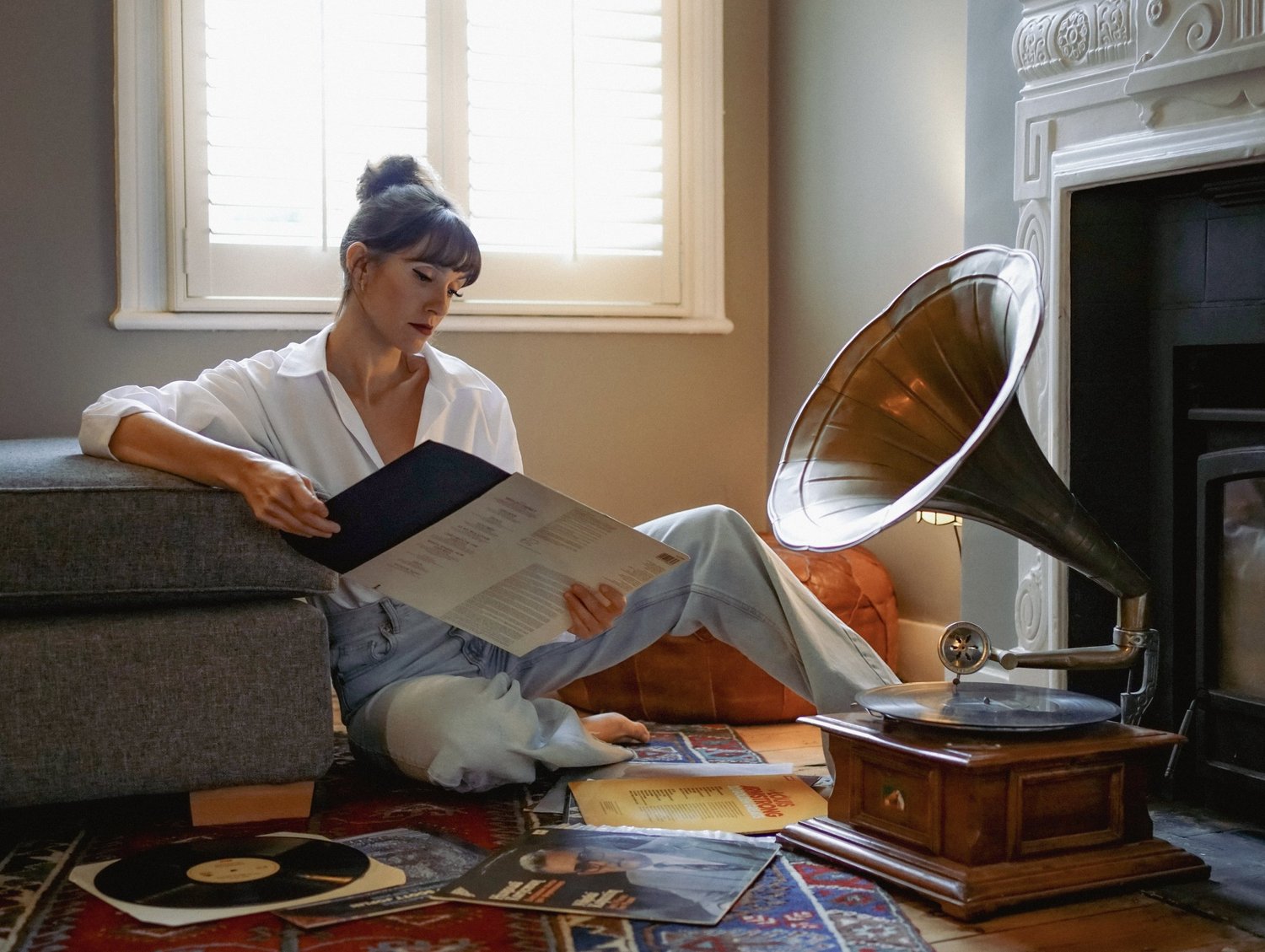
British pianist Ophelia Gordon makes a striking recording debut with this album of works by Nikolai Kapustin, drawn to his music as it reflects her own background (she grew up in a household full of music, both jazz and classical), her musical versatility and her desire to challenge the barriers between different genres of music.

Ophelia says, “I dream of a world where classical and jazz musicians can perform side by side, with no gatekeeping or barriers. Kapustin’s music makes that dream feel possible. It sits beautifully in the space between genres. It speaks directly to jazz musicians through its harmony and rhythm, and to classical musicians through its texture and form.”

This album is a celebration of the space “between the lines” where Kapustin’s music sits. In preparation for the recording, Ophelia tracked down many long out-of-print vinyl recordings of the composer’s own performances to find the essence of Kapustin’s voice. The recording is also a milestone in that it’s the first full release of Kapustin’s music by a female British pianist.

The album opens with Big Band Sounds, Op. 46 (1986), a piece rich in swing and the textures and timbres of Big Band jazz. Ophelia sashays through it with panache, making a bold opening statement for the rest of her debut album.

Selections from the 24 Preludes follow. Based on Chopin’s model, most of the Preludes presented here are upbeat and foot-tapping, but No. 5 in D Major is more wistful, with hints of Bill Evans. Contemplation follows, a gentle, introspective piece which conjures up a late-night smoky jazz club. Ophelia gives this a wonderful spaciousness, so much so that it sounds improvised there and then.

The Paraphrase on “Aquarela do Brasil” is Kapustin’s take the famous Brazilian standard “Brazil,” composed by Ary Barroso in 1939. Ophelia played along with a samba beat “to lock into the groove” and the piece has a joyful, pacey mood, rich in colour and textures, with occasional moments of almost Lisztian bravura.

The eight Concert Etudes are probably Kapustin’s most well-known pieces and each has a distinct character – punchy, impressionistic, groovy, funky, the Etudes reflect the influences of jazz greats such as Erroll Garner, Art Tatum, Bill Evans, Chick Corea and Herbie Hancock. Ophelia really revels in this music, switching effortlessly between the different characters of each Etude – from the shimmering sixths (perhaps drawn from Chopin?) to the driving energy of Toccatina. There are sonorous bass sounds and hints of Rachmaninov in some of the chords, reminding us of Kapustin’s heritage. Performed here as the complete set, the Etudes are witty, poetic, fierce, relentless, and often beautiful too.

To close, the Paraphrase on Dizzy Gillespie’s “Manteca” for Two Pianos. With its nod to the virtuosic paraphrases of Franz Liszt, with its dramatic flourishes and sparkling fioriture, the piece has a wonderful vibrant energy. Unable to find another pianist with whom to record the piece, Ophelia learnt both parts herself:

“The process was lengthy and difficult but incredibly rewarding. I split the parts into “rhythm” and “melody.” Though both switch roles, it was essential to record the rhythm part first, then play the solo part alongside it. I now perform this live with the rhythm coming through a PA system!”

Recorded on a characterful 1961 Steinway, the piano sound is rich and warm, colourful and immediate, and engineered with a microphone setup designed to balance the immediacy of a jazz trio with the depth and clarity of the classical solo piano. Ophelia plays with a natural virtuosity which never feels contrived nor forced, completely at home with Kapustin’s rhythmic vitality, and myriad harmonies and textures. She clearly loves this music because, as she herself says in the notes, it allows her to “be all of myself at the piano”.

With detailed notes by Ophelia Gordon herself, lending a more personal take on traditional liner notes, this is an impressive debut recording that leaves one wanting to hear more from this bold and authentic artist.

Kapustin: Between the Lines is released on 14 November on the Divine Art label (CD and streaming).

(Artist image: Ben Cillard)
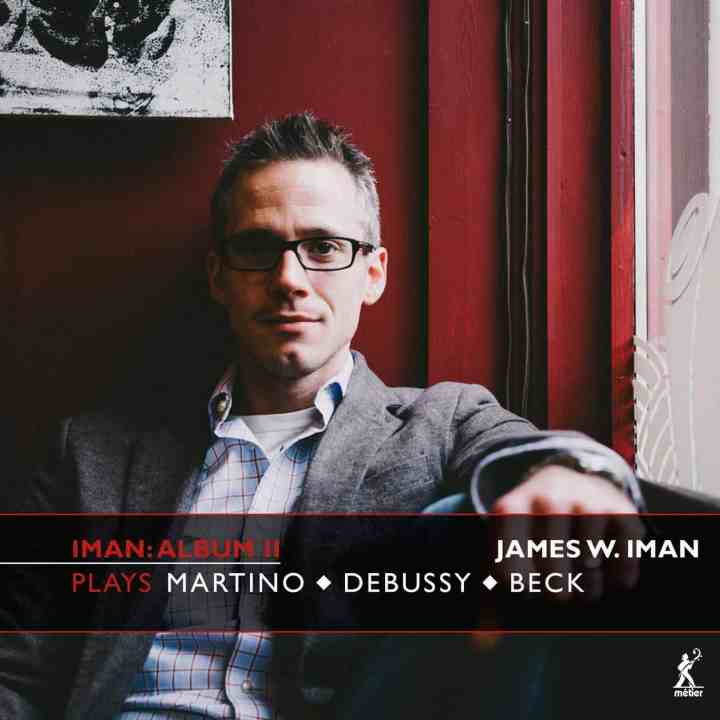
In his latest album, American pianist James Iman places Debussy’s everygreen Images alongside works by Jenny Beck and Donald Martino


IMAN: ALBUM II James W. Iman, piano (Divine Art Recordings)

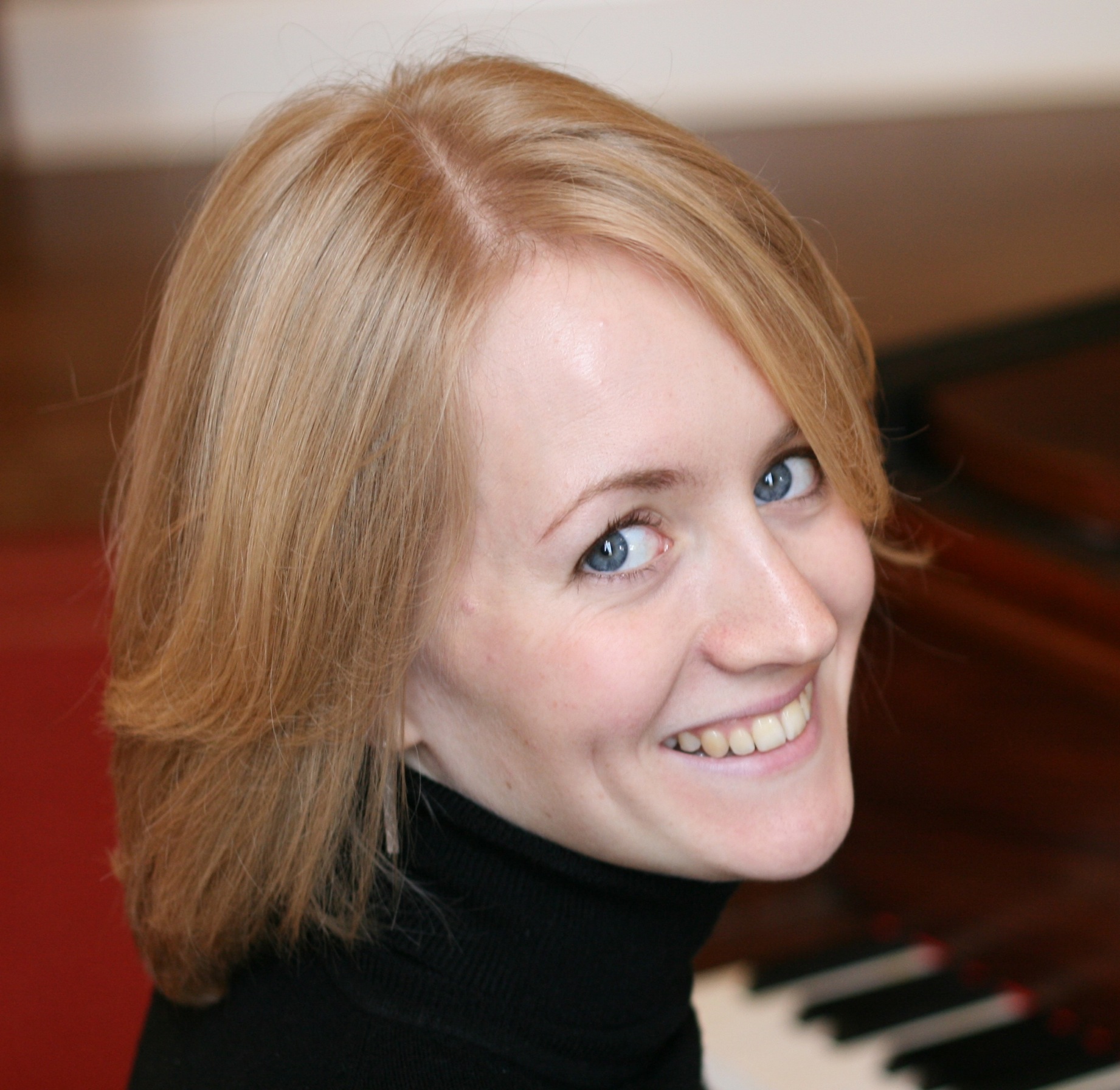
This second album from American pianist James Iman places Debussy’s ‘Images’ alongside works by Donald Martino (1931-2005) and contemporary composer Jenny Beck (b.1985), whose work ‘Stand Still Here’ receives its premiere recording on this disc.

A specialist in music written since 1900 – with an emphasis on music written since 1945 – James Iman’s repertoire spans many stylistic developments since Debussy. He is particular in his study and research of the music he performs and records to enable him to find fresh interpretations and approaches to the familiar, as well as presenting the new and more leftfield corners of the repertoire to listeners. When I reviewed his debut album, I was impressed by his willingness to rise to the challenge of this music and meet it head on with conviction and musicality, alert to its myriad details and quirks. He is perhaps most at home in the contemporary and more unusual, yet on this second album, he displays a remarkable appreciation of Debussy’s music which I really enjoyed, allowing me to hear these well-known pieces afresh.

James Iman has, by his own admission, taken a very different approach to Debussy, one which some may find controversial. I asked James to explain how he arrived at his interpretation of the works by Debussy on this disc:

There are a few factors that went into my conception of these pieces. The first was a general frustration with recordings, and the homogeneity of most performances. This, of course, isn’t a new phenomenon, nor one specific to Debussy but, for whatever reason, it bothers me more in his music. While first digging into these pieces, my approach was probably similar to most pianists; you digest the text, and find the bits you think are interesting, and come up with an interpretation that highlights them. At first, my goal wasn’t to present a radical departure from typical interpretations, but the further into Debussy I dug, the more it seemed necessary. Improvisation was almost a character trait of Debussy. He would improvise at the piano before class, and for hours at parties. Moreover, Debussy’s performances of his own pieces were said to sound improvised. Likewise, one of the things that Debussy expressed, repeatedly, was his desire to compose music that sounded as though it was being improvised. This was, of course, mainly an aesthetic concern – Debussy was looking to overcome the strictures of convention, and was (primarily, perhaps) referring to the perceived structure of his works and not necessarily the nature of the performance.

Two things crystalized all of these ideas for me. First was my discovery of the recordings by Paul Crossley. I don’t know how well-known his performances are, but they were new to me, and a revelation. Absolutely every measure is inflected! Every single note feels important. Somehow, miraculously, he avoids making the music sound manic. Second was discovering Debussy’s own recordings of his works. It’s really difficult to describe just how radical Debussy’s playing is! Notes of the same duration are two distinct speeds within the same phrase and occasionally within the same bar. He pushes and pulls tempo without warning and to degrees that would be regarded as well-outside what we might consider “good taste.”

All of these things together made it clear to me that, not only could I approach these pieces differently, but that I should. We’re a history-obsessed culture – we’re excessively concerned with the fidelity of a text (the “letter”), whether it’s law or religion or music. I wanted to concern myself more with the spirit of the text – get the notes, of course, but try to capture what Debussy has clearly shown was his intention.”

Iman’s ‘Images’ are bold and direct, brightly-lit and vividly hued: no impressionistic veils of sound here nor excessive use of the pedal. Mouvement thrums and pulsates; Hommage à Rameau has a stately grandeur that feels at once ancient and modern; the darting fish of Poissons d’or are not shy goldfish but bold, muscular Koi carp. Debussy’s vibrant musical language comes to the fore in Iman’s playing with an emphasis on the more piquant or crunchy harmonies and timbres, rather than melody. Attention to these details perhaps comes from Iman’s experience with more contemporary repertoire: there are passages where Debussy sounds ultra-modern when Iman highlights interior or bass details which are sometimes lost or underplayed in other performances of this music. Given Debussy’s dislike of the term “impressionist” in relation to his music, I suspect he may have enjoyed Iman’s interpretation.

After the myriad colours, harmonies and rhythms of Debussy, Jenny Beck’s ‘Stand Still Here’ – a suite of five terse miniatures each no longer than four minutes at most – provides an extraordinary contrast. These introspective, intimate pieces have a remarkable emotional presence, yet expressed so sparely, almost minimalistic. Yet, like Debussy, Beck exploits the timbres and sonorities of the piano to create a hypnotic intensity. Of this work, Iman says, “I have played Stand Still Here more times than any other work in my repertoire”. Through a deep familiarity, and affection, for this work, Iman is able to achieve a wonderful sense of spontaneity and improvisation: notes linger, vibrate, shimmer and fade. It’s a deeply absorbing interlude on this fascinating disc.

The final works are by Donald Martino. He studied with Roger Sessions and Milton Babbitt, two of America’s foremost twelve-tone composers, but did not adopt the practice himself until he studied in Italy with Luigi Dallapiccola (though he never described himself as a “twelve-tone composer”). From Dallapiccola, Martino took a more lyrical approach to composing twelve-tone music, which culminates in his Fantasies and Impromptus. Like Debussy and Jenny Beck, Donald Martino enjoyed the myriad sonorities the piano offers. Iman gives a masterful performance of this collection of pieces which combine virtuosity and expression, improvisation and structure, making them the perfect complement to Debussy.

IMAN II is available on the Divine Art label and via streaming platforms


This review first appeared on my sister site ArtMuseLondon.com

elspeth_wyllie-320x439Who or what inspired you to take up the piano, and pursue a career in music?

I didn’t plan on becoming a pianist or a professional performer until studying with Raymond Fisher while at university; he gave me the technique and self-belief to give it a go. Before that, I got a huge buzz from being surrounded by other enthusiasts and immersed in music day in, day out at music school. I’d studied recorder and clarinet too, but gradually came to realise that the piano appealed the most – because of the wealth of repertoire and playing opportunities it offers. My family wasn’t particularly musical, but my mum could strum a guitar so we sang lots of songs when I was pretty small, and I loved listening to records.

Who or what were the most important influences on your playing?

Obviously my teachers – I’m very grateful for my time with Richard Beauchamp who is disarmingly modest, open-minded and curious. The quality and quantity of chamber music on offer at school has undoubtedly given me a passion for collaborative playing. I like to think I have a reasonably open-minded attitude and curiosity for all arts and music – growing up in Edinburgh with it’s annual festivals and inspiring live performances of music, dance, theatre and wealth of art exhibitions has helped that.

What have been the greatest challenges of your career so far?

Staying focused and productive in personal practice, balancing commitments between different projects, being efficient with admin, and working out what’s next in a field that offers such huge flexibility for developing your career.

Which performances/recordings are you most proud of?

The projects where there’s a shared attitude and natural understanding with the people I’m working with, or in new projects that involve an element of challenge or risk and stretch you further than you thought possible. Specific things I’m really proud of: solo performances of Beethoven’s Choral Fantasy and Elgar’s Enigma Variations, duo performances of Bowen’s Sonata for flute and piano with Claire Overbury, Amalie Trio’s school workshops about the drama and skills of chamber music, and my recent debut recording bringing together lots of colleagues, Enigmas.

Do you have a favourite concert venue to perform in?

Anywhere with a decent piano that’s not too cold, and an open-minded audience!

Favourite pieces to perform? Listen to?

To listen to: Barber’s Violin Concerto, Mozart’s Clarinet Quintet, Schubert’s three last piano sonatas, any of Brahms’ violin sonatas… Mind you, I don’t often listen to classical music in my downtime. I dance and sing along to bands like Snarky Puppy, the Divine Comedy, Count Basie and Stornoway, or listen to Cerys Matthews and Craig Charles on Radio 6 Music. To perform, I love finding compelling repertoire that’s less well-known: trios by Nicolai Kapustin and William Bolcom, an Azerbaijani suite by Fikret Amirov, songs by Bernard Stevens. I love it when the audience hasn’t heard of a piece or composer but enjoys the discovery. It’s way more interesting to me than being the 3000th person to play Beethoven’s Ghost Trio, however good the piece is!

Who are your favourite musicians?

Those who find endless expressive nuance without distorting the overall shape of the music, and who prioritise the music and avoid any on-stage presence of ego. I’ve been blown away by concerts and recordings by Adrian Brendel, Imogen Cooper, Stephen Hough, Kathryn Stott and Steven Osborne, and outside the classical world by the creativity of Stornoway and Chick Corea, and the skill of Courtney Pine and Joshua Redman.

What is your most memorable concert experience?

Hmm. They’re often memorable for the wrong reason. Performing extremely badly but with total swagger aged 7, with two painfully-bandaged knees due to a pre-performance backyard incident! Nerve-wrackingly page-turning for Martha Argerich and Nelson Goerner in the Edinburgh Festival. Good ones: Beethoven’s Choral Fantasy (from memory, which is unusual for me), Enesco’s Violin Sonata no. 3 in my final recital at music college, the rapport with new colleagues in our very first performance together of Mendelssohn’s Piano Trio in C minor.

What do you consider to be the most important ideas and concepts to impart to aspiring musicians?

Play pieces you really believe in, and nothing beats being properly prepared.

Where would you like to be in 10 years’ time?

Performing more frequently with my regular chamber music partners and doing more 1-1 coaching with adults – I enjoy accompanying and working with them to release potential musical expression and overcome frustrations. I also love working with choirs, so continuing to develop that alongside my performing work.

What is your idea of perfect happiness?

A productive days’ work, or being outside somewhere rural in good weather, or good food in relaxed company.

Elspeth Wyllie performs throughout the UK and abroad as a solo pianist, chamber musician and accompanist. She has appeared at the Purcell Room, Fairfield Halls, The Brunton, and on Classics Unwrapped for BBC Radio Scotland. She is a founder member of the Métier Ensemble (with flautist Claire Overbury and cellist Sophie Rivlin) and the Amalie Trio (with mezzo-soprano Catherine Backhouse and violist Alexa Beattie), performing regularly with them and in projects with other musicians from major ensembles, orchestras and opera companies.

In addition to chamber music, Elspeth rehearses and performs with choirs. Particular highlights have been a performance of Beethoven’s Choral Fantasy and piano duo performances of Brahms Ein Deutsches Requiem and Liebeslieder Walzer. Her experience includes engagements with the BBC Symphony Chorus, the National Children’s Choir of Great Britain, and animateur Gareth Malone, as well as regular work with Clapham’s Festival Chorus and several other amateur choirs. Elspeth also teaches, coaches and accompanies, both privately and for workshops and courses. In the studio, she has recorded sessions at Abbey Road, AIR and Dean Street Studios, and for Novello publications.

Elspeth studied piano with Richard Beauchamp and Audrey Innes at St Mary’s Music School in Edinburgh, and continued with Raymond Fischer while reading music at the University of Oxford. She completed her professional training with a PGDip from the Royal Academy of Music, London, studying piano and accompaniment with Andrew West and Colin Stone and winning many prizes, including the RAM Club Prize for Accompaniment, the Vivien Langrish Prize, Evelyn German Prize and J E Reckitt Award. She was supported during her studies by the Oldhurst Charitable Trust and was shortlisted for the 2011 Park Lane Group Award with duo partner Claire Overbury. She has enjoyed lessons and masterclasses with many wonderful musicians, including Julius Drake, Susan Tomes, Adrian Brendel and Tasmin Little.

‘Enigmas: solo piano and chamber works’ is released by Divine Art Records on 19 May 2017

www.elspethwyllie.co.uk
