
While others headed to the grander country house operas at Grange Park or Glyndebourne, we drove from the very bottom of south-west Dorset to south Somerset for an evening of music and words at Wyke House, an attractive Georgian farmhouse set in 7 acres of grounds in the village of Wyke Champflower, near Bruton.
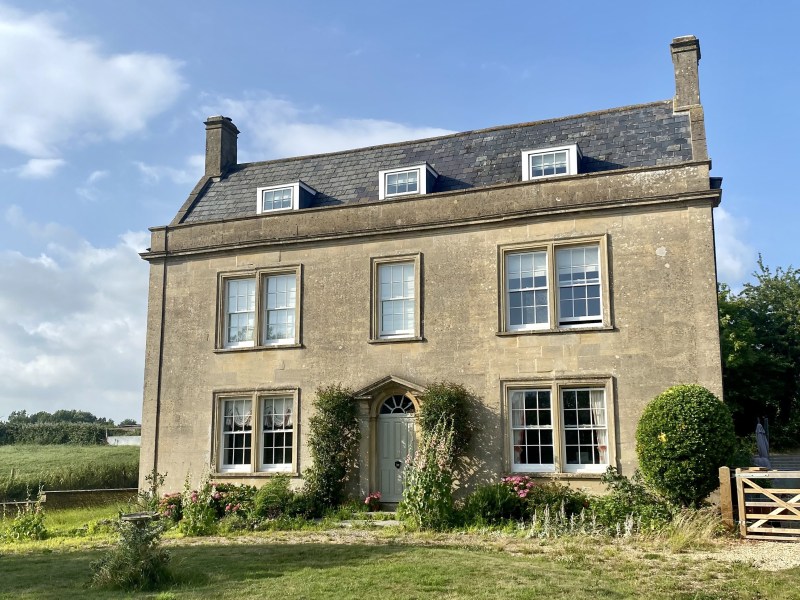
A narrow winding lane dotted with helpful hand-painted signs directing us to “Opera” led to a couple of marshalls who directed us to a field to park the car. Crossing the lane, we were met by Poppy, chatelaine of Wyke House and host of the event, who suggested a sunny spot in front of the house where we might like to picnic. A quick ticket check and, glass of complementary fizz and programme in hand, we wended our way down a path mown through the grass to a dingly dell next to a lily pond where the first act would take place. A simple twisted branch arch and straw bales adorned with velvet cushions provided the set; nearby a quartet of musicians were settling in. The audience drifted in, chatting, laughing, some clutching already-opened bottles of Prosecco…. We assembled in this casual auditorium on straw bales, garden seating, picnic chairs….and the performance began.


Purcell’s ‘The Fairy Queen’ isn’t really an opera: this “Restoration spectacular” is an anonymous adaptation of Shakespeare’s A Midsummer Night’s Dream. Purcell’s didn’t actually set any of Shakespeare’s words to music but instead created a series of short masques for each act of the play. In this performance at Wyke House, poems were interspersed with the musical episodes, which in themselves created the sense of a modern masque.
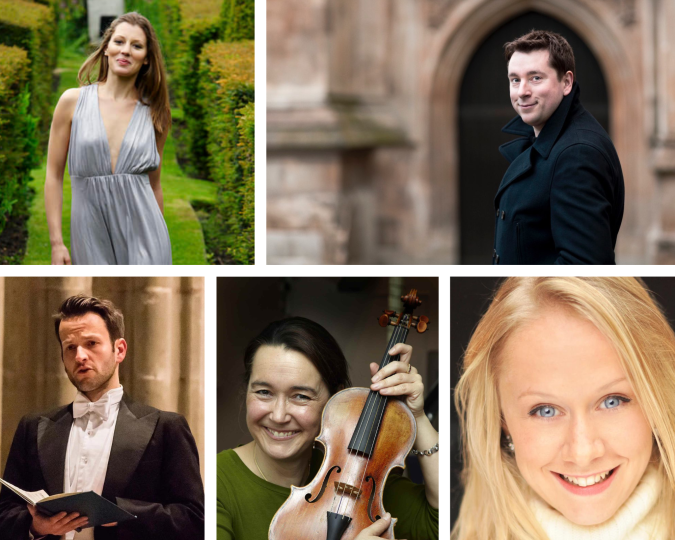
The singers and musicians are all highly respected performers, who work with some of our leading ensembles (the Orchestra of the Age of Enlightenment, Scottish Opera, Glyndebourne Touring Opera, the Dunedin Consort, ENO, Garsington Opera, amongst others), and who specialise in Baroque and Classical repertoire. Performing outdoors can be challenging and a stiff breeze competed with musicians and singers in the first half, adding to the bucolic ambiance of the event. Impressive projection by all four singers ensured that almost every word was audible, and beautifully enunciated. There was also some very impressive ensemble singing between the four of them: the sweet, elegant voices of the two sopranos Amy Carson and Emily Vine melded wonderfully with tenor Thomas Hobbs, whose warm voice was complemented by Timothy Dickinson’s resonant bass.


A relaxed picnic interval on the lawn followed before we were directed to a different setting for the second part of the evening. Now lanterns and fairy lights garlanded branches of fruit trees, flares lit the path and braziers provided some additional warmth for those who had come without a blanket. Now the wind had dropped, and the smaller size of this pastoral ‘stage’ offered a charming intimacy for more musical and poetic delights.
This was an impressive and hugely enjoyable evening, undoubtedly enhanced not only by the superb performances but also the lovely rural setting and relaxed ambiance. From a practical point of view, it was also extremely well-organised: it was easy to purchase tickets online or on the door on the day, the carparking was easy and there were even proper loos. I know from my conversations with bass Timothy Dickinson that they have performed at Wyke House before and I do hope this becomes a regular venue: it’s a real gem for music and opera lovers in the west of England and is also a valuable platform to showcase performers based in this part of the world and to celebrate the musical talent we have here in the west.
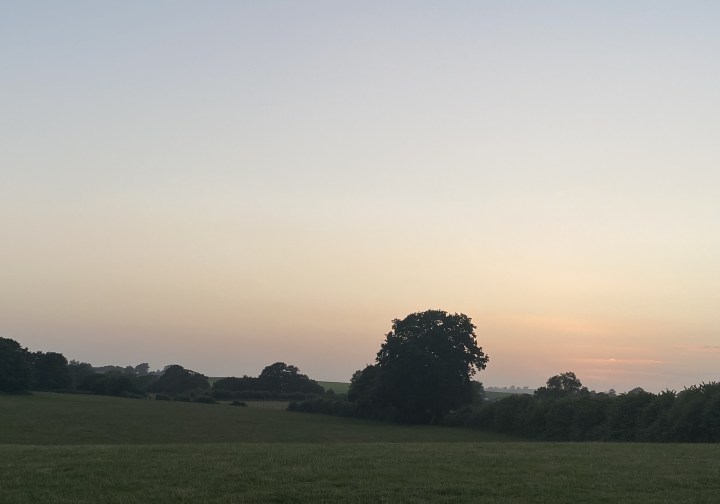
Driving back to south Dorset, the almost-full moon lighting our way for the final part of our journey, we saw a hare, a barn owl and innumerable bats.





 The Cross-Eyed Pianist