Guest post by Cordelia Williams


You are somehow there when Bach was composing this piece, and you are working with him, and then you forget everything that is around the area you are living in; you’re somehow there, with your hero, your mentor… I don’t want to play notes, like a robot, I want each note and each rhythm to mean something or, to like, touch someone’s heart.

Teddy Otieno, 2021, Nairobi

Arriving in Nairobi, Kenya, on New Year’s Day 2021 for six months of performing, masterclasses, filming a documentary, and escaping London lockdown with my young family, I had no idea what to expect of the pianistic landscape. I’d previously played Rachmaninov’s Paganini Variations with Nairobi Symphony Orchestra (a roughly equal mix of Kenyan and expat amateurs – Kenya has no professional orchestra) and given piano recitals in the city; this time I planned to work as much as possible with aspiring young pianists and learn a bit more about what provision there may be for advanced piano studies in Kenya. I was set up to work with the charities Ghetto Classics and Art of Music Foundation, and also had funding from the Royal Philharmonic Society’s Enterprise Fund to make a film about the young classical musicians I met there. I’m generally fascinated by other people’s lives, so I was excited to learn how the experience of aspiring Kenyan musicians might compare with my own.

It was a wonderful experience to make that film (available online – watch below). The musicians I worked with, mostly self-taught, made me feel inspired and quite naïve. We take so much for granted in Europe. We may complain about a lack of interest from the wider public but we nevertheless have a strong classical music infrastructure: institutions and established paths of support for talented youngsters. Benaars, who wanted to be a full-time pianist but was instead studying as an economist, told me with wonderful understatement “There are lots of people who want to study music but the financial prospects are rather grim, you know. The parents talk them down.” There was simply no money available in classical music in Kenya. The possibility of making a living as a performer, he said, “is really clearly out of the picture”, and because of that there is no-one able to guide younger students in the discipline and dedicated technical work required of a soloist. Benaars again: “I wish I’d just had that… someone not just challenging me, you know, but insisting.”

There is wonderful musical outreach work going on in Kenya, not least Ghetto Classics, which takes music and self-belief into the most underprivileged areas such as Korogocho slum in Nairobi. The ABRSM graded exams are also very popular and highly respected. Everyone I spoke to, though, agreed that there is little tuition available from the higher grades onwards, other than occasional masterclasses from visiting professionals such as myself. As a result, there is a lack of consistency and a lack of awareness as to what effective practice entails. David Ralak, a violinist then aged 28, explained “learning this instrument is really difficult if you don’t really meet a teacher face to face, because some things you hear them describing… it’s not as easy. You know, they describe them very easily because they do them very easily. But then, when you try and do it, there seems to be a whole layer of information missing. I knew what I had to do. It’s either I find money and go to Europe… or I just figure it out myself.” David is the one person I met who is just about managing to squeeze out a living as a musician: performing, coaching through various organisations, founding a string quartet (which plays at functions) and teaching privately a lot. After a fluke chance to attend a summer school in the UK a decade ago, he decided to devote himself to the violin and ‘figure it out himself’. But this is a very lonely path, every day is a struggle to survive, and it takes an incredibly unusual person to make it work. (Watch David’s story below)

In the first class I gave in Nairobi I had an inkling I’d found someone else quite unusual. Teddy Otieno (quoted above) was 19 and had come through the Ghetto Classics scheme in Korogocho, initially learning tuba because that was the instrument no-one else wanted to play. He had no piano, instead practising whenever he could at a community centre and teaching himself the piano using online videos. These were his first ever regular piano lessons, but I immediately noticed his natural musical instinct and passion, and astounding focus and determination to learn. Talking about his dream to perform as a soloist, he said “It makes me hopeless somehow, because there’s no-one to look up to in terms of that level right now… Because no-one is bothered on what to do. Like how much practice one needs to put in to the piano.” We worked together on Bach, Chopin and Debussy, and after my return to the UK he continued sending me videos of his playing for feedback and practice tips. I was excited to see his potential and his self-motivation. I persuaded Teddy to apply for conservatoire, just to see what would happen, and by the spring he had been accepted on a scholarship to study piano at the Royal Birmingham Conservatoire, something which he had never dreamed could be possible. After an immense effort to fundraise the remaining international fees, living costs and flights, he moved to Birmingham in September 2022 and is now starting his second year.

This summer I returned to Nairobi to continue teaching and performing, interested to see all these musicians again. There is a new express road in Nairobi which has improved daily life there no end. There were many more participants in the masterclasses now (42 registered to attend, giving me an enjoyably busy time), quite a few of them students of Benaars and Teddy. I also learnt about two new piano shops open in Nairobi.

What was really noticeable was the number of classical music events happening: during the time I was there the newly established (and self-run) Junior Chamber Orchestra gave two concerts, Mendelssohn’s Hymn of Praise was performed at the cathedral, and there was a concert called ‘The Opera Experience’, as well as the two concerts I gave. Violinist Ken Mwiti has, since my last visit to Nairobi, set up a flourishing musical booking agency, booking classical musicians for concerts as well as functions. Ken is studying music business as well as teaching violin, performing himself, and running his agency. I also heard word of plans for a new concert hall in Karen, a leafy area of Nairobi comparable to Richmond. I hope that however this hall is run will allow for budding musicians to perform more regularly in public, building their experience and their ambition for excellence.

It feels like a new era in the life of classical music in Kenya. A small number of Teddy’s generation, including his twin brother Lameck (viola), are currently embarking on musical studies in America, thanks to the support of sponsors in the States. A very eloquent and thoughtful friend of mine (Lemuel Agina, who was behind the camera for the documentary I made) told me it feels like Nairobi’s classical musicians have been working towards level 10 for a long time, and over the last year or two have had a real feeling of achievement and excitement at the way things are going – they’re finally at 10! But now it’s like starting again at 11, working towards 20… There is still, in some quarters, suspicion towards any kind of ‘instrumental music’ i.e. classical music, not surprisingly with some undertones of ‘colonial beef’, as Lemuel tactfully put it. There is certainly a lack of respect for classical performance – for example, the kind of quiet setting for a concert that we would take for granted in the UK – and familiar ideas of elitism. But Teddy for one is full of hope for the future and for what more he can learn this year, and next year, and the following year…

David, the violinist, has been following a hard path for many years now, with no support and little recognition. We performed together last month and his playing has deepened and matured to an extraordinary extent since I last played with him in 2021. However, even though the environment in Kenya is changing, he has felt frustrated by the lack of measurable progress, the lack of ‘give’ from the world he is trying to make his way in. He had been considering a move abroad to refresh his energies, which would be a real loss for Nairobi. But I was delighted to hear, when I spoke to him again last week, that a surprising number of concert opportunities have recently arisen (as well as a prestigious teaching position at an international school), and he is now feeling more hopeful about the viability of his performing career. Although it feels slow to those individuals making their way, he concedes that the public music scene is changing remarkably quickly. I feel confident that as the next serious young musicians like Teddy and David emerge, their paths will be that much smoother, and more encouraging – I am already excited about my next visit.

Teddy and Cordelia will be featured in a BBC Radio 4 documentary ‘How to Spot Potential’ every morning at 9.45am from 30 October.


Cordelia Williams’ new album on SOMM Recordings, Cascade, featuring music by Beethoven, Schumann and Prokofiev is out now: https://somm-recordings.com/recording/cascade/

Polish-Welsh-English pianist Cordelia Williams is recognised for the poetry, conviction and inner strength of her playing and the depth of her interpretations. She has performed all over the world, including concertos with the English Chamber Orchestra (in Mexico City), City of Birmingham Symphony Orchestra and Royal Philharmonic Orchestra (at Barbican Hall, London), as well as recitals at Wigmore Hall, Royal Festival Hall and Beijing Concert Hall. She broadcasts regularly for BBC Radio 3.

Read more

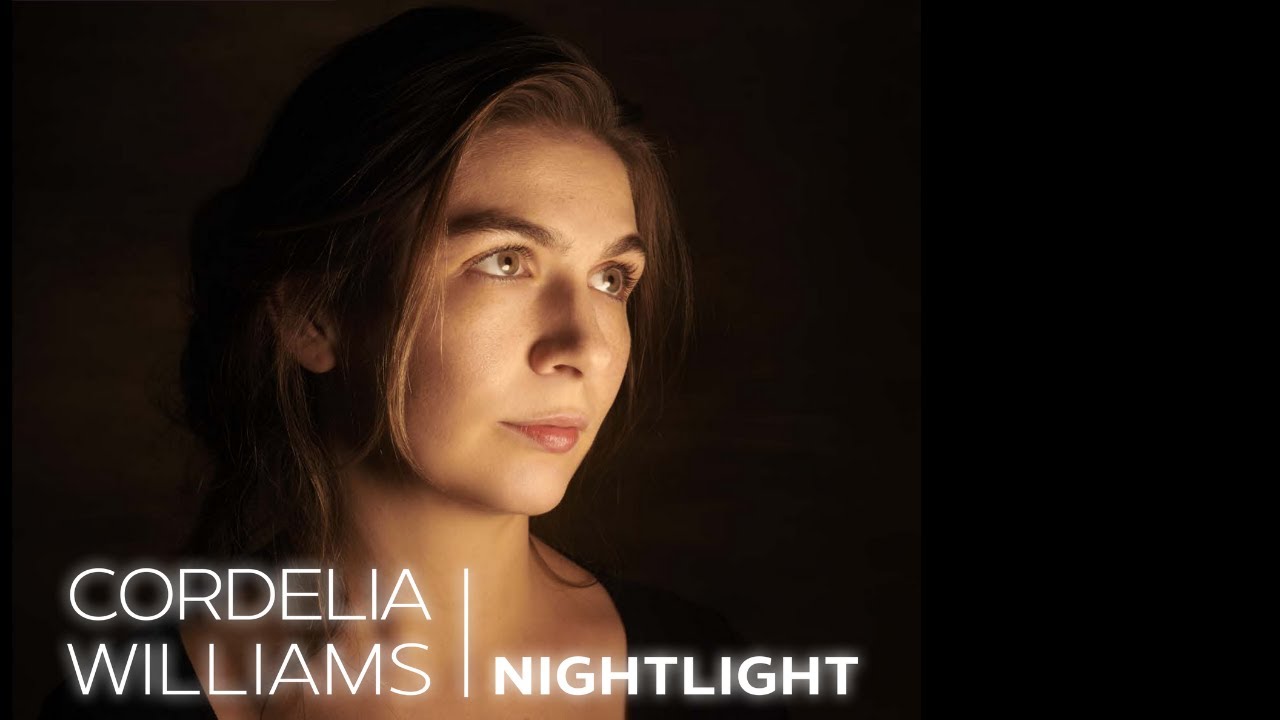
Darkness and light pervade Cordelia Williams’ latest release, Nightlight, which explores the many facets of nighttime – its turmoil, terror and tenderness, and the longing for and consolation of light – through a programme of brooding, atmospheric and ultimately consoling music.

The album was conceived over several years when Cordelia was nursing her newborn sons in those countless broken nights of early motherhood, where one hovers in a strange, shadowy realm between sleep and wakefulness, alert to the slightest murmur from the baby. The recording is dedicated to “those who experience despair or sublime melancholy during the hours before dawn, who are searching for solace, peace or impossible hope. To anyone lost who is waiting to be found by the light.” (Cordelia Williams).

When preparing the music for the album Williams pondered the phrase “dark night of the soul”, now used to describe our most profound trials and challenges, but which actually comes from the late sixteenth-century poem of St John of the Cross. Here “dark night” refers to the process of leaving behind the self on a journey towards an unknowable destination of light. The organisation of the music on this disc follows a similar path, from the melancholy and anxiety of Mozart’s Fantasia in D minor to the hope and consolation of Schumann’s Gesänge der Frühe (Songs of Dawn). The result is an intense chiaroscuro journey through music that is both disturbing and consolatory.

The disc opens with Mozart’s unsettling, almost hallucinatory Fantasia K.397, here played with a brooding intimacy, perfectly paced and poised. The piece neatly introduces the themes of this album with its switch to the joyous brightness of D major before reprising the darkly-hued introductory measures, and ending on a single open D (not the “traditional”, more familiar ending for this piece). The pedalling here is exquisitely managed, creating a romantic, ambiguous wash of harmony.

Scriabin’s Piano Sonata No. 2 portrays the sea at nighttime, from “the quiet of a southern night on the seashore” (Scriabin) to the agitation of the deep ocean, briefly relieved by gentle moonlight on the water. This is most powerfully portrayed in the molto perpetuo finale whose turbulence is tempered by episodes of lyricism, warm and light as themes and textures spill and wash over one another.

Two tender Consolations by Liszt, both in warm E major, provide an interlude of quiet contemplation before we are plunged into the disturbed, dislocated world of Schubert’s Sonata in C minor, D958. This is the biggest work on the album and like the Mozart Fantasia, it presents all the themes of the disc in an exceptionally fine performance which is sensitive to Schubert’s quixotic shifts of mood and harmony. The Adagio has a special stillness in its opening before descending into a darker, more psychotic realm. There is little consolation in this sonata and the finale, a swirling fevered Allegro dance.

Out of the darkest recesses of Schubert comes Thomas Tomkins’s A Sad Pavan for these Distracted Times, a work which seems to encapsulate our strange Corona days in its sense of isolation and regret. It is elegantly presented by Williams who appreciates both its composure and stark poignancy. The music wears its age lightly (it was composed in 1649 after the execution of King Charles I): played on the piano, it has an appealing contemporary crispness.

The unadorned melancholy of the Pavan contrasts beautifully with the Chopinesque filigrees and hypnotic ostinato of Bill Evans’ Peace Piece, a work which bears more than a passing resemblance to Chopin’s Berceuse in its structure and idioms, and which is increasingly finding its way onto classical albums. Williams’ performance is tender, warm and leisurely, a welcome lullaby during the long, dark night.

The final work on the disc is Schumann’s Gesänge der Frühe (Songs of Dawn). Composed three years before he died, it shares some characteristics with the late piano music of Brahms in its introspection and intimacy, but ultimately this is where darkness is replaced by shimmering light as the terrors of the night are forgotten in the dawning of a new day. The hymn-like Im ruhingen Tempo gives way to more lovely, quirky movements and a sense of lightness and joy but tempered by the more unsettled Bewegt. The final movement is gentle and contemplative, tinged with valediction, but ultimately uplifting. Here at last light and hope shine through.

Thoughtfully conceived and exquisitely performed, Nightlight is also notably for the fine sound quality of the recording – a perfect mix of warmth and colour, intimacy and depth. This could well be my album of 2021

Highly recommended.


Nightlight is released on the Somm label and is also available to stream.

Leon McCawley – Schubert piano music (SOMM)

This enjoyable account presents Schubert’s often overlooked Drei Klavierstucke D946 alongside song transcriptions by Liszt and a rollicking Wanderer fantasy. The Klavierstucke (literally, “piano pieces”) were written in 1828 and are impromptus in all but name. They share the same structure as the popular D899 and D935 sets and are works of startling variety, colour and mood. McCawley neatly captures Schubert’s mercurial nature but never dwells too long in the melancholic, reminding us that though these pieces were written the year Schubert died, their composer was still very much alive. This is most clearly demonstrated in the third of the triptych, an energetic scherzo with a hymn-like middle section, and throughout the three works, McCawley highlights their songful qualities and dramatic contrasts.

Schubert’s songs, refracted through Liszt’s genius into wonderfully absorbing pieces for solo piano, are here given warmth, virtuosity and heroism in equal measure – for example in the gradual climatic grandeur of Auf dem Wasser zu singen, beautifully paced by McCawley. Meanwhile, McCawley’s Wanderer is a muscular majestic canter, positive in message but also replete in subtle harmonic shadings and an eloquent sensitivity to Schubert’s shifting emotional landscape.


Olga Stezhko – Et la lune descend: Claude Debussy

Appropriately, I listened to this generous new release from Olga Stezhko while reading a review of the new Pierre Bonnard exhibition which has recently opened at London’s Tate Modern.

Comprising of five suites, the album ‘Et la lune descend’ marks the centenary of Debussy’s death and charts the development of his writing for piano solo from the very first ‘Suite bergamasque’ to the much lesser known last suite ‘Six epigraphes antiques’. – Olga Stezhko

Like Bonnard’s paintings, Olga’s Debussy is vivid and richly-hued, the finer details of the music revealed through sonic clarity combined with a suppleness of pulse and tempo which never feels contrived or forced. Interior voices and details are sensitively highlighted. The piano sound in the upper register is particularly fine, with a harp-like crystalline clarity; one can almost sense the absolutely tautness of those high treble strings.


Anna Szalucka – A Century of Polish Piano Miniatures (Naxos/Grand Piano)

Another album to mark an anniversary, Anna Szalucka’s debut disc was released to coincide with the centenary of Polish independence in 2018. Each work represents a significant moment in the country’s musical and political history and the album pays tribute to the bravery of composers who stood up for freedom in art and culture during politically turbulent times. Appropriately, the album opens with works by Ignacy Jan Paderewski, a passionate advocate for Polish independence and appointed the country’s prime minister in 1919. Miniatures by Szymanowski, Bacewicz, Gorecki, Mykeityn and Panufnik bring us almost to the present day and demonstrate the variety and inventiveness of the heirs to Chopin. While others may dwell on sentimentality, Anna takes a simpler (but never superficial) and more direct approach in her interpretations. Her playing is committed and authoritative with a piano sound that is warm and bright.


Adam Swayne – (Speak To Me): New Music. New Politics (Coviello)

Another musical journey in Adam Swayne’s new album and one which touches on the politics of present-day America in two works reflecting art’s ability to offer commentary on contemporary events and popular culture. Kevin Malone’s ‘The People Protesting Drum Out Bigly Covfefe’ was commissioned by Swayne and integrates popular songs captured live at anti-Trump rallies in the UK and the US – a permanent testament to the circumstances surrounding the piece’s creation. It’s energetic and urgent, and Swayne handles it with an assured aplomb and wit. This work sits well with Rzewski’s North American Ballads, which are based on American folk and work songs, and draw on folk musician and activist Pete Seeger’s work. Meanwhile, Amy Beth Kirsten’s Speak to Me, a work in three parts, includes vocalisations by the performer. Although based on the Echo and Narcissus myth, the political inference is clear in the “censoring” of the performer’s voice in the final movement where we hear the piano alone. Again, Swayne handles this music with assurance, creating an unsettled calm in the last movement. The album is bookended by Gershwin’s Three Preludes and Morton Gould’s Boogie Woogie Etude, and Swayne brings a toe-tapping energy and swagger to the Gould and the first and last of the Gershwin Preludes, while the middle of three is soulful and sensuous, deeply redolent of ‘Summertime’ from Porgy and Bess.


Karim Said – Legacy (Rubicon)

This interesting new release from Karim Said juxtaposes Byrd, Morley, Bull and Tomkins – with piano music by Schoenberg and Webern. Said takes Joseph Kerman’s assertion that William Byrd had a “pervasive” influence on Arnold Schoenberg as the inspiration for the repertoire included on this disc and his fascination with the way composers influence one another, in this case across the distance of 400 years, is demonstrated in the organisation of the works on the disc. The Renaissance pieces take on a new dimension when heard alongside Schoenberg’s Suite for piano, op.25 and Webern’s ‘Kinderstuck’. This thoughtful disc is a wonderful example of how the old can shine a new light on the new, and vice versa, and Said’s tasteful, elegant playing brings the music to life with grace and clarity.


Cordelia Williams – Bach & Part: Piano Works (SOMM)

These two composers are natural companions as both share a deep spirituality and clarity of expression. The works on this disc reveal each composer’s interest in the way musical lines overlap, intertwine and respond to one another. While Bach’s counterpoint is concerned with the interplay of voices and motifs, Part’s explores timbres and intervallic relationships between the melodic lines; both share a striving for essence and economy of expression. Williams’ clarity is complemented by exquisite phrasing and musical sensitivity, a tender intimacy and simplicity in the works by Part, and elegance of expression in the Bach Inventions and Prelude.

