Stress testing (sometimes called torture testing) is a form of deliberately intense or thorough testing used to determine the stability of a given system or entity. It involves testing beyond normal operational capacity, often to a breaking point, in order to observe the results (Source: Wikipedia)

Performing in front of others is stressful, whether it is to a group of friends at an informal gathering or to a full house at Carnegie Hall.

In order to prepare ourselves for such performances, particularly important performances such as an exam, audition or formal recital, it is crucial to “stress test” our repertoire by playing the entire programme in a variety of situations. This process is commonly used by professional musicians, who may choose to play a programme at regional venues before performing at an important venue such as London’s Wigmore Hall. Each time we perform, new things are revealed about our music which inform subsequent practise sessions and help us make our music more refined and, more importantly, secure, thus protecting us against errors, or at least allowing us to skim over slips and minor mistakes so that the “flow” of the performance is not disturbed.

This last week I and a friend have been “stress testing” our respective programmes for forthcoming concerts. I am fortunate in that I own a very beautiful antique grand piano, which piano-playing friends of mine love to come and play (and I love hearing the piano played well by others). Playing for a couple of friends, in a relaxed atmosphere with cups of tea and cake, allows one to play in a “safe zone”. In these situations, we know that our friends are not judging us, they listen attentively and offer encouragement and applause afterwards. Of course, it can be difficult playing to other pianists – but it can be a sympathetic experience too as we all understand how very hard it is to play the piano!

I played three pieces, by John Field, Schubert and Schumann, which form the solo element of a longer concert which I am giving with a singer. In practise, the pieces felt secure and well-known, but, interestingly, weak spots were revealed when I played to my friends which subsequently  enabled me to practise with care and focus.

In addition to helping us focus on practising, “stress testing” our repertoire allows us to gauge aspects of our performance, from our concert attire and stagecraft to the vibrancy and expression of our playing (and yes it is important to do a “dress rehearsal” to make sure clothing and shoes are appropriate and comfortable). It also enables us to better understand and handle anxiety and stage fright: and the more times you practise performing a programme before The Big Day, the better you become at recognising and accepting the symptoms of performance anxiety.

Of course this preparation for performance presupposes that one has done all the careful, detailed work learning the music, including being able able to work both too slowly (a musical challenge) and too fast (an efficiency challenge), one hand thinking the other and using the wrong hand (see Graham Fitch’s useful article on symmetrical inversion), working with and without the metronome, studying the music away from the piano and in one’s head, and creating a vivid, perfect interior model of the music, while all the time guarding against routine and a lack of mindfulness. It’s hard work: there’s no getting around the fact that playing the piano is very difficult, regardless of one’s ability – as Graham said to me the other day, “if it was easy, everyone would do it!”.

Returning to the subject of practising for a performance, I had an interesting experience with one of my more advanced students recently, a teenage girl who was preparing to take her Grade 6 piano exam. I have done a lot of work on confidence and stagecraft with her, and at the last lesson before her exam, she wanted to run through her pieces. After three false, frustrating starts to the C P E Bach ‘Solfeggio in c minor’, with me sitting quietly next to the piano, I suggested we try something different. I told her about the Canadian pianist Angela Hewitt whose stage presence suggests someone who loves performing and who can’t wait to share her music with the audience. “Channel your inner Angela Hewitt!” I suggested to my student, and then asked her to leave my piano room, wait in the hall (as if backstage at the Wigmore) and then “come on” to the “stage”. Meanwhile, I moved away from the piano and sat “in the audience” on my sofa. The transformation in her performance was remarkable: she was confident and poised and she made a wonderfully vibrant sound. She was thrilled with her performance, and when she saw me after the exam, she explained that she had done the same visualisation/acting exercise in the moments before she went into the exam room. I am delighted to report that she passed her exam with a high Merit and received very complimentary comments from the examiner about the communication and expression in her playing.
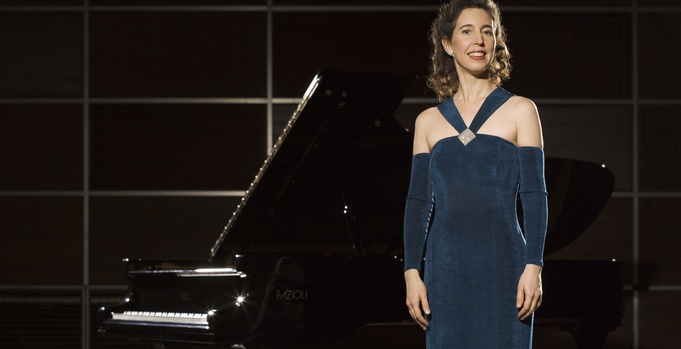
angela-hewitt_c_jpg_681x349_crop_upscale_q95
Angela Hewitt (photo Medici TV)

As performers, we have to be actors, partly to enable us to cope with the feelings of anxiety, but also to allow us to step into the character of each piece we play. All these aspects need to be practised and tested before the The Big Day. Curiously, the more of this work we do in the weeks and days leading up to the important performance, the better able we are to “let go” in the actual performance, to play in the moment and to allow the creative and artistic side of our personality (often called “right brain thinking”) to take flight.


Stage fright remains a largely taboo and highly sensitive subject amongst musicians, yet the anxiety of performance is a common feeling experienced by many, including some of the world’s top-flight artists. Learning how to manage performance anxiety is a crucial part of the performing artist’s craft, and musicians of all levels and ages can learn from the professionals who have developed effective strategies to manage the stress associated with performing.

The Beyond Stage Fright online summit is a series of video interviews given by top international soloists and principal orchestral players, along with leading writers and teachers who all share their unique take on managing performance stress. Host Charlotte Tomlinson, pianist and author of Music from the Inside Out, uncovers the whole topic, giving you a rare chance to look into the inner world of the professional musician. The interviews are fascinating, insightful and inspiring!

To get access to the summit, you need to sign up to the website: www.beyondstagefright

The summit goes live on Friday May 29th and once you register, you will receive access to two video interviews a day for 11 days in your inbox.

Musicians, writers and teachers taking part: • Hilary Hahn (violinist) • John Lill (pianist) • Martin Roscoe (pianist) • Tracy Silverman (US electric violinist) • Claire Jones (harpist) • Amy Dickson (classical saxophonist) • Zuill Bailey (US cellist) • Paul Harris (educator/composer) • Janice Chapman (singing teacher) • David Krakauer (US clarinettist) • Swingle Singers • Maya Beiser (US cellist) • Martin Owen (principal horn BBCSO) • Louisa Tuck (principal cello RNS) • James Rhodes (pianist) • Louise Lansdown (Head of Strings, Birmingham Conservatoire) • Michael Whight (clarinettist) • Roderick Williams (opera/concert singer) • Elise Batnes (leader Oslo Philharmonic) • Eric Maisel (US writer on Performance Anxiety) • Diane Widdison (Musician’s Union)

Last week, I hosted a workshop on performance anxiety for the London Piano Meetup Group. We used a small room with a grand piano at The Music Studios on London’s Marylebone Lane, just around the corner from the Wigmore Hall, appropriately. The aim of the workshop was to offer strategies for coping with anxiety for a small group of mostly novice performers, of varying levels, from near-beginner to diploma. Seated in a rough semi-circle around the piano, one of the participants admitted that it was rather like an Alcoholics Anonymous meeting – hence the title of this post.

In fact the AA analogy is not inappropriate, for there is a great deal of taboo and shame surrounding performance anxiety, with many people feeling they should not admit to feeling nervous ahead of and/or during a performance. So, to kick off the workshop, I stressed the fact that performance anxiety is normal and that even top professional musicians suffer from the unpleasant effects of nerves and stage fright. We then talked about individual symptoms from headache and cold hands to nausea and shaking, palpitations and sweating. People described particular instances where they felt nerves had got the better of them and spoiled or harmed a performance or exam. The overriding theme of this discussion was “fear” – fear of making mistakes, of looking stupid in front of one’s peers or the audience, or the fear of receiving negative feedback from colleagues, peers and others.

The unpleasant physical symptoms of performance anxiety are due to the effect of the release of adrenaline, the “fight or flight hormone”. It’s the hormone that, when we lived in caves, made us decide whether to run away from the sabre-toothed tiger, or stay and fight it. Now, performing it nothing like fighting a sabre-toothed tiger, though for some it can feel as momentous, frightening and difficult. Adrenaline can be used in a positive way too and it can actually raise our performance, making us “play up” and play with more expression, emotional depth and communication.

For me, the most significant and useful process in conquering my performance anxiety (which had developed over many years of hardly playing the piano, and limited performance experience when at school) was reaching a state of acceptance: accepting that the state of mind and body is normal and that one is “allowed” to feel nervous. Giving ourselves this permission can help us let go of some of the negative psychological effects and messages we give ourselves when we are nervous.

A couple of members of the group then admitted that when they had said to themselves “oh I don’t care, I’ve probably failed this exam anyway!” their playing improved. This is another aspect of ‘acceptance’.

We then discussed pre-empting one’s performance with negative messages such as “I know I’m going to play badly”, “I played this better at home”, “I’ll probably make a mistake”. Instead, one should replace such harmful messages with positive affirmation such as “I know my pieces” (to quote Vladimir Horowitz), “I feel nervous but I am also excited about performing these pieces”, and “I can do it!”.

We also talked about performance rituals and drugs, including the use of products such as Rescue Remedy and beta blockers (which should be used under the guidance of a doctor), and “good luck charms”, including favourite shoes, clothing or jewellery, which can help create positive feelings. Finally, we all did some deep breathing exercises, which can be wonderfully useful in helping one feel calmer and centred, both before and during a performance.

Finally, each participant gave a short performance, with the rest of the group offering supportive comments and enthusiastic applause. We talked about how we felt after we had performed, and I hope everyone who took part in the exercise found the workshop useful and positive. You can download my notes from the meeting here.

Remember, don’t feel embarrassed about admitting that you suffer from performance anxiety: it is perfectly normal!

Pieces played at the workshop:

Beatrice – Little Prelude in C minor BWV 999/JS Bach

Phillipa – Minuet in A/Krieger

Tina – Etude op.10 no. 3 ‘Tristesse’/Chopin

Steven – The Power of Love

Rick – Sonata in G/Scarlatti

Alison – Ivan Sings/Khachaturian

Fran – A Sad Song/Kabalevsky


The Music Studios, Marylebone Lane

The Inner Game of Music – a blog post by pianist Alisdair Hogarth on performance anxiety

