As Borough New Music‘s new season begins on 3 October 2017, Artistic Director Clare Simmonds surveys the exciting new piano music on offer from October 2017 to June 2018.

Borough New Music sets out to share music by living composers and the music of today. In each of the eight Series of concerts this season, we feature a different instrument. For Series 2 – which is five free concerts every Tuesday in October 2017 at 1pm at St George the Martyr SE1 1JA – it’s the piano.

In fact, the piano became the featured instrument for this second Series simply because of the preponderance of piano premieres that month. These include a fascinating new piano sonata by Ben Gaunt, based around the architectural principles of light, written for the wonderful pianist Christopher Guild (24 October 2017); eight miniature ‘cryptograms’ by Patrick Nunn, each inspired by composers who have in some way influenced his output; and two works written specially for the virtuoso José Menor: a mighty five-movement cycle by Sam Hayden and a sparkling Toccata by fellow Catalan Tomas Peire Serrate (all on 3 October 2017). Plus there is a selection of new works written specifically for the pianists who will perform them, by composers Michael Worboys , Harry Palmer, Rotem Sherman and Toby Ingram – all outcomes of the 2017 Trinity Laban John Halford Piano and Composition Competition, a little-known public event held every April, which deserves high praise for its innovation.

But that’s just Series 2 – the tip of the iceberg. One of the most fascinating things about the piano is that every player makes it sound different. Over the 2017-18 season, we have the opportunity to hear the voices of 14 very different pianists. That includes established contemporary pianists such as Philip Mead (1 May 2018), who gave the UK premiere of George Crumb’s ‘Makrokosmos’ at the Southbank in 1977, and the first London performance of Henry Cowell’s piano concerto in 2013.


Plus, there is the master improviser Douglas Finch (17 April 2018), toy piano specialist Kate Ryder (20 March 2018), as well as Matthew Schellhorn  (30 January 2018), Aleksander Szram (26 June 2018), Christopher Guild (24 October 2017) and José Menor  (3 October 2017); and young artists such as Joe Howson, Ieva Dubova, Mahsa Salali, Rotem Sherman and Neus Peris Ferrer (31 October 2017). The pianist Ben Smith  deserves special mention not only for his repertoire for piano and electronics (14 November 2017), but also for appearances in six different concerts (November 2017 and February 2018)! Here he is performing Helmut Lachenmann’s ‘Serynade’:


It is always interesting to hear what a composer chooses to give a pianist to play – and what pianists write or improvise for themselves to play. With compelling musical material in hand, what else is important to them: the listener’s impression, the player’s strengths, or the instrument’s potential? When pianists compose, do they opt for an easy life, and write what they find straightforward, or do they demand the (almost) impossible, to show their superhuman virtuosity? (Sometimes I think that’s the equivalent of those gourmets who go for the hottest vindaloo on offer!) It is not hard to be mesmerised by the multifaceted capabilities of the piano, and the programme this season certainly explores that. From a world premiere by Joseph Horovitz (even though he is over 90!) on 30 January 2018, to Edward Henderson’s refreshingly alternative look at piano performance (10 April 2018), the bluesy, frantic etudes of Nancarrow (21 November 2017) to the works of Janet Graham, Haris Kittos, Daryl Runswick and Simon Katan, there is a compelling range of piano works to discover.
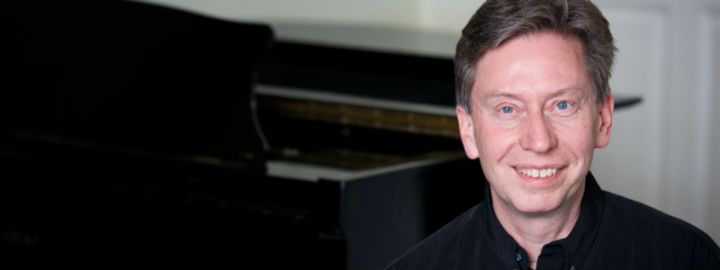
douglas_finch_800x300
Douglas Finch

Borough New Music concerts take place every Tuesday at 1pm from 3 October 2017 to 26 June 2018 at St George the Martyr Church, Borough High Street, London SE1 1JA (just a short walk from London Bridge and Borough tube stations). Admission is free to all events, and light refreshments are served afterwards.

For a full programme, visit www.boroughnewmusic.co.uk.

Here is a selection of concerts in the 2017-18 season involving the piano (note the impressive number of premieres):

Series 2

Tuesday 3 October 2017, 1pm ‘Resonate’

José Menor (piano)

· Patrick Nunn (b. 1969) – Cryptograms I-VIII (2011-15) (PERFORMANCE PREMIERE)

· Sam Hayden (b. 1968) – Becomings (Complete) (2017) (WORLD PREMIERE)

· György Ligeti (1923-2006) – Piano Etude Book 2 No 9 Vertige (1994)

· Tomas Peire Serrate (b. 1979) – Toccata (2017) (WORLD PREMIERE)

Tuesday 24 October 2017, 1pm ‘Reverberate’

Christopher Guild (piano)

· Ben Gaunt (b. 1984) – Piano Sonata No. 1 (WORLD PREMIERE)

· Poul Ruders (b. 1949) – Piano Sonata No. 2 (1982)

Tuesday 31 October 2017, 1pm ‘Reward’

Trinity Laban John Halford Piano and Composition Competition Prizewinning Recital

Pianists: Joe Howson (winner), Ieva Dubova, Mahsa Salali (commended), Marisa Munoz Lopez (commended), Neus Peris Ferrer. Composers: Harry Palmer, Michael Worboys (winner), Rotem Sherman (commended), Toby Ingram

· Harry Palmer (b. 1994) – Birthday Song for Erwin (2017)

· Kaikhosru Sorabji (1892-1988) – Transcendental Etude 20 ‘con fantasia’ (1944)

· Thomas Ades (b. 1971) – Concert Paraphrase on Powder Her Face (2009) (Movts I & IV)

· Michael Worboys – Bone Memories (2017)

· Toby Ingram (b. 1998)- Into the Unknown (2017)

· Rotem Sherman – Home (2017)

· Hans Werner Henze (1926-2012) – Präludien zu Tristan (2003)

· Frederic Rzewski (b. 1938) – Piano Piece IV (1977)

Series 3

Tuesday 7 November 2017, 1pm ‘Last Words’

Patricia Auchterlonie (soprano), Antonia Berg (flute), Ben Smith (piano), Yoanna Prodanova (cello)

Salvatore Sciarrino (b. 1947) – Due melodie per soprano e pianoforte (1978)

· Ben Smith (b. 1991) – New Work (WORLD PREMIERE)

· Kate Soper (b. 1981) – Only the words themselves mean what they say (2010-11) (UK PREMIERE)

· Salvatore Sciarrino – Ultime rose (from Vanitas) (1981)

Tuesday 14 November 2017, 1pm ‘Babbitt-Haas-Emmerson’

Ben Smith (piano), Patricia Auchterlonie (soprano)

· Milton Babbitt (1916-2011) – Philomel (1964)

· Georg Friedrich Haas (b. 1953) – Ein Schattenspiel (2004)

· Simon Emmerson (b. 1950) – Time Past IV (1985)

Tuesday 21 November 2017, 1pm ‘Sensations’

PERFORMER: Ben Smith (piano)

· Robert Reid Allan (b. 1991) – The Palace of Light (2016) (LONDON PREMIERE)

· Colon Nancarrow (1912-1997) – Three Canons for Ursula (1988)

· Julian Anderson (b. 1967) – Sensation (2015-16)

Tuesday 28 November 2017, 1pm ‘Haikus’

FEATURED COMPOSER: Eva-Maria Houben

Antonia Berg (flute), Patricia Auchterlonie (soprano), Ben Smith (piano), Yoanna Prodanova (cello)

· Eva-Maria Houben (b. 1955) – Haikus for four (I, V, VIII, IX) (2003-04) (UK PREMIERE)

Series 4

Tuesday 16 January 2018, 1pm ‘Islands’

Carla Rees (flutes), Ian Mitchell (clarinets), Clare Simmonds (piano)

· Robert Percy (b. 1961) – Touching the Void (WORLD PREMIERE)

· Dan Kessner (b. 1946) – Genera

· Robert Percy (b. 1961) – New work (WORLD PREMIERE)

· Tom Ingoldsby (b. 1957) – The Cathedral (WORLD PREMIERE)

· Robert Percy (b. 1961) – Beacons (version for piano, flute and clarinet)

Tuesday 30 January 2018, 1pm ‘Muscle Memory’

Matthew Schellhorn (piano)

· Roger Briggs (b. 1952) – Jitterbug

· Robert Percy (b. 1961) – Chopsticks

· Edwin Roxburgh (b. 1937) – Prelude and Toccata

· Colin Riley (b. 1963) – Joplin Jigsaws

· Joseph Horovitz (b. 1926) – Pierrot’s Hornpipe (WORLD PREMIERE)

Series 5

Tuesday 6 February 2018, 1pm

Ben Smith (piano), Kirsty Clark (viola), Patricia Auchterlonie (soprano)

· Helmut Lachenmann (b. 1935) – Got Lost (2008)

· Peter Maxwell Davies (1934-2016) – The Door of the Sun (1975)

· Martin Lodge (b. 1954) – Pacific Rock (1999)

Tuesday 20 February 2018, 1pm ‘Songwriters of 2018’

Robert Reid Allan (glockenspiel/melodica), Ben Smith (piano, glockenspiel/melodica), Siân Dicker (soprano), Mimi Doulton (soprano), Delphine Mégret (soprano), Krystal Tunnicliffe (piano)

· Jake Dorfman (b. 1993) – Short Songs on Liberty (2016)

· Clare Elton (b. 1993) – Escape (2017)

· James Garner (b. 1992) – Emily Dickinson Settings (2015)

· Jules Pegram (b. 1991) – Valentines (2015)

· Mo Zhao (b. 1993) – Just Watching (2017)

· Rasmus Zwicki (b. 1979) – Fly Little Birdy (2017)

Tuesday 27 February 2018, 1pm ‘Two Sopranos, a Cello & a Piano’

Patricia Auchterlonie (soprano), Mimi Doulton (soprano), Urška Horvat (cello), Clare Simmonds (piano)

· Harrison Birtwistle (b 1934) – Nine Settings of Lorine Niedecker (1998-2000)

· André Previn (b 1929) – Four Songs for Soprano, Cello and Piano (1994)

· John Tavener (1944-2013) – Akhmatova Songs (selection) (1993)

Series 6

Tuesday 13 March 2018, 1pm

The Durufle Trio: Henrietta Hill (viola), Rosie Bowker (flute), Clare Simmonds (piano), Janet Oates (soprano)

· Rob Keeley (b. 1960) – Trio in One Movement (2017)

· Tom Armstrong – From Consort Music (2016): Monody & Concertino (WORLD PREMIERE)

· Janet Oates – Singings and Sayings (2017) (WORLD PREMIERE)

· Colin Riley (b. 1963) – New Work (2018) (WORLD PREMIERE)

· Rhiannon Randle (b. 1993) – New Work (2018)

Tuesday 20 March 2018, 1pm ‘Ear ring’

In collaboration with World Toy Piano Week

Kate Ryder, piano/toy piano

· John Cage – Suite for Toy Piano (1948)

· Stace Constantinou (b. 1971) – Cactus Prelude 6 for Toy Piano and Fixed Media(2014)

· Christian Banasik (b. 1963) – TRIMER for Toy Piano and Fixed Media (2001)

· Julia Wolfe (b. 1958) – Earring (2000); East Broadway for Toy Piano and Boombox (1996)

· Brian Inglis – New work for Toy Piano (WORLD PREMIERE)

· Yumi Hara – Farouche (2008)

· Katharine Norman (b. 1960) – Fuga Interna (begin) (2011)

· Meredith Monk (b. 1942) – Rail Road (travel song) for Solo Piano (1981); St Petersburg Waltz(1994)

· Stephen Montague (b.1943) – Mirabella – A Tarantella for Toy Piano (1995)

Tuesday 27 March 2018, 1pm

Loré Lixenberg (voice), Chris Brannick (marimba), Clare Simmonds (piano)

· Gregory Rose – Birdsongs for Loré, Volume 1 (WORLD PREMIERE)

· Gregory Rose – Quelques gouttes d’eau sur une surface (WORLD PREMIERE)

· Gregory Rose – Aphrodite and Adonis (UK PREMIERE)

· Gregory Rose – Music for a Kytherian Amphitheatre (WORLD PREMIERE)

Series 7

Tuesday 3 April 2018, 1pm

Elisabeth Swedlund (soprano), Jean-Max Lattemann (counter-tenor), Clare Simmonds (piano)

George Crumb (b. 1929) – Apparition: Elegiac Songs for Soprano and Amplified Piano

· HK Gruber (b. 1943) – Three Single Songs

· Ross Edwards (b. 1943) – The Hermit of Green Light

· Julian Grant (b. 1960) – The Owl and the Pussycat

Tuesday 10 April 2018, 1pm

Clare Simmonds, piano

· Edward Henderson – Black Box Flight Recorder (2012)

· Edward Henderson – Hold (2017)

· Edward Henderson – Tape Piece (2014)

Tuesday 17 April 2018, 1pm ‘Sound Clouds’

Douglas Finch (piano), Martin Speake (saxophone)

· Improvisations

Series 8

Tuesday 1 May 2018, 1pm

Philip Mead, Piano

· Tim Raymond (b. 1953) – Orbit of Venus (2014)

· Richard Blackford (b. 1954) – Sonata (2016) (LONDON PREMIERE)

· Jonathan Harvey (1939-2012) – Purgatory from 4 Images After Yeats (1969)

· Edward Cowie (b. 1943) – Preludes 1 and 2 from 24 Preludes (2004-2005)

· Lisa Reim – Pebbles (2004)

Tuesday 22 May 2018, 1pm ‘Cello, Electric Guitar & Piano’

Audrey Riley (cello), James Woodrow (electric guitar), Clare Simmonds (piano)

· Tom Armstrong – Diversions 3

· Stuart Beatch (b. 1991) – Three movements

· Joel Järventausta (b. 1995) – Elegy for Solo Piano (WORLD PREMIERE)

· David Ryan – New work (WORLD PREMIERE)

Tuesday 29 May 2018, 1pm

Joseph Spooner (cello) and Rebeca Omordia (piano)

· Matthew Taylor (b. 1964) – Sonata No. 1 (op. 29)

· Sally Beamish (b. 1956) – Gala Water (1994)

· Sally Beamish – The Wise Maid (1998)

· Matthew Taylor – Fantasy Pieces (op. 30)

Series 9

Tuesday 19 June 2018, 1pm

Janet Oates (soprano, flute), Clare Simmonds (piano), Jill House (mezzo soprano),

Nancy Johnston (cor anglais) Olivia Moss (soprano)

· Janet Oates – Atomic songs and fancies

· Jonathan Harvey (1939-2012)- Ah Sunflower (2008)

· Janet Oates – Blind Fool Love

· Tansy Davies (b. 1973) – Destroying Beauty (2008)

· Janet Oates – Arse-elbow (WORLD PREMIERE)

· Joel Järventausta (b. 1995) – New work (WORLD PREMIERE)

· Janet Oates – A Lover (WORLD PREMIERE)

· Frederick Viner (b. 1994) – New work (WORLD PREMIERE)

· Dai Fujikura (b. 1977) – Away we play

Tuesday 26 June 2018, 1pm

Aleksander Szram (piano)

· Hollie Harding – Suite P

· Janet Graham (b. 1948) – Sonata for Piano (2016) (WORLD PREMIERE)

· Daryl Runswick (b. 1946) – Scafra Preludes Book 2

· Haris Kittos – Athrós (2001)


Clare Simmonds performs regularly as a soloist and ensemble pianist, and enjoys presenting unconventional programmes. From 2016-17 she was a staff accompanist at the Guildhall School of Music and Drama for Jane Manning’s contemporary song classes, as well as performing in several chamber groups. She also provides online marketing services to promote contemporary music and is a publicity consultant for Prima Facie Records.

Who or what inspired you to take up composing, and pursue a career in music?

I came to composing by a rather unusual route. I was studying cello at Birmingham Conservatoire and during a musicianship course was asked to compose a piece in the style of Bartok. I quickly realised how much I had enjoyed doing this and within a few weeks had an interview to change onto the composition course. In the following couple of years I became familiar with Mark-Anthony Turnage’s music and this inspired me to keep going and find my own voice. Two years later, after accepting to teach me for my Masters Degree at the Royal College of Music, Mark continued to inspire me, this time in person.

Who or what were the most significant influences on your musical life and career as a composer?

My family have been the most significant influence. Without their continual support and understanding I am sure I would not have a career as a composer.

What have been the greatest challenges/frustrations of your career so far?

I find the greatest challenge to be balancing my time between composing and all the other things a composer must do to maintain one’s career. Being able to do this successfully whilst still finding the concentration and imaginative space one needs should not be underestimated.

What are the special challenges/pleasures of working on a commissioned piece?

Imagining the sound of the musicians and the process of working together with them on a new piece is something that I find incredibly motivating since this is a highlight of the whole process. When the ideas are flowing, I find the working process of composing very pleasurable.

What are the special challenges/pleasures of working with particular musicians, singers, ensembles and orchestras?

Building a long relationship with a particular ensembles make the experiences of working together all the more pleasurable. Birmingham Contemporary Music Group stands out for me in this regard. I got to know the ensemble and organisation as a student, received opportunities to develop my compositional voice through working with them, and continue to have a strong relationship now in my career as a professional composer. Their virtuosity and brilliance makes every encounter special.

Of which works are you most proud?

When I achieve something in a piece that is ‘new’, adventurous or challenging for me, that is when I am most proud.

How do you work?

I start composing first thing and work through until I feel my concentration diminishing. I work with pencil on paper for much of the process, moving to Sibelius when I feel I have enough of an idea about the piece. I use a keyboard and sometimes my cello too, especially to try things out later on.

Who are your favourite musicians/composers?

My friends. I find nothing more enjoyable that hearing and watching a friend perform or a friends’ music being performed; feeling their sound, expression and interpretation, each time knowing them a little deeper.

What is your most memorable concert experience?

My Proms debut in 2012 with ‘At the Speed of Stillness’. I’ll never forget the feeling of standing on that stage for the first time to take a bow.

What do you consider to be the most important ideas and concepts to impart to aspiring composers?

Write the music that you want to hear.

And performers?

Play music that is being written now, before it is too late.

Where would you like to be in 10 years’ time?

Somewhere unexpected.

The composer Charlotte Bray has emerged as a distinctive and outstanding talent of her generation. Exhibiting uninhibited ambition and desire to communicate, her music is exhilarating, inherently vivid, and richly expressive with lyrical intensity. Charlotte studied under Mark Anthony Turnage at the Royal College of Music and previously under Joe Cutler at the Birmingham Conservatoire. She participated in the Britten-Pears Contemporary Composition Course with Oliver Knussen, Colin Matthews and Magnus Lindberg, and at the Tanglewood Music Centre with John Harbison, Michael Gandolfi, Shulamit Ran and Augusta Read-Thomas.

Read Charlotte’s full biography

(picture © Michael Wickham)

simon-vincent-c2a9-anna-agliardi-2015
]

Who or what inspired you to take up composing, and pursue a career in music?

When I was growing up, my parents and brothers always played records in the house, ranging from opera and instrumental classical music through to rock and blues. I listened to the charts regularly as well as all the things my family played and started buying my own records from when I was about 5 years old.

I would spend hours with my head between the speakers of the stereo, captivated by the production and ‘sound stage’ of the recordings, and I would spend just as much time recording soundtracks from the TV and things outdoors. Although I used to enjoy making short cassette tape constructions as well as exploring the pedals and strings of the piano we had at home, it occurred to me quite late that I should attempt to develop my ideas into something more compositional, or even try and notate them.

In 1986 I went to the University of East Anglia to study languages. Once there I discovered its wonderful music department and thought that this would be a ‘once in a lifetime’ opportunity to explore music further. Inspired, quite literally, by Dave Brubeck’s example, I changed to study music and have never looked back. I have the composer Denis Smalley, my then teacher, to thank for opening my ears to so many unknown musical worlds and for setting excellent standards in both composition and performance.

Who or what were the most significant influences on your musical life and career as a composer?

I am always influenced by the things around me, as I like to keep my ears and eyes open. I hope that that will never change and I still enjoy keeping up to date with pop music and other dance and club-oriented things, something I was able to pursue professionally as a DJ for a while. But my musical life has also been influenced by any explorations of structure, space and narrative (political, spiritual or otherwise) that I find interesting, ranging from the buildings of Zaha Hadid and Denys Lasdun, the poetry of Adrienne Rich and Seamus Heaney, to the speeches of Martin Luther King Jr. to name but a few.

Musically Dave Brubeck’s daring improvisations and the intensity of his voice have certainly been a big influence on me, as has, for example, Miles Davis’ stunningly adventurous conception of sound. Karlheinz Stockhausen has, however, been perhaps the biggest influence. The clarity, playfulness, and the human quality of his composed/improvised music is something I learned from enormously. I have a postcard from him on which he wrote “balance your music!”, after he listened to one of my compositions. That’s something I’ve tried to adhere to.

What have been the greatest challenges/frustrations of your career so far?

Of all the challenges I suppose finding new paths, being original (but never at the expense of the quality and intention of the work) and ‘remaining true to myself’ are the greatest. Of course, they could easily become frustrating but I always see them as something positive, something that helps me grow and learn.

Getting pieces heard can however be frustrating as can the sadly often conservative programming of so-called ‘experimental’ concerts and festivals. The musical landscape has changed dramatically in the last 20 years, and so the challenge to be open to new spaces, open to the development of new musical languages but at the same to be true to oneself and to produce works of quality certainly doesn’t diminish in importance.

What are the special challenges/pleasures of working on a commissioned piece?

I really like working on commissioned pieces for two reasons: Firstly, if the piece is either for myself to perform or simply for electro-acoustic playback, I enjoy having free reign to explore what I need to explore; secondly if the work is for someone else, I very much enjoy being influenced, even slightly, by the tastes, characteristics and abilities of the performer in question. That way, the work becomes tailor-made in some aspects. Mr Gee’s Magical Trombone Case, a suite of 3 electro-acoustic miniatures commissioned by Principal RPO trombonist Matthew Gee, contains for example many of his performance gestures and my reflections on his sense of humour. It is a lot of fun to work with him.

What are the special challenges/pleasures of working with particular musicians, singers, ensembles and orchestras?

I suppose very similar to the above. We are all humans and I love each player’s idiosyncrasies. Working with musicians in that way is a very human exchange and leads to an often unique experience and dynamic.

Of which works are you most proud?

‘Pride’ is a word I never use to describe my creative activities, or indeed myself as a whole. There are certainly compositions which I have feel have successfully reached the goal and expressed the message that I may have had in mind, and even though the very act of composition will sometimes take me in a new and surprising direction, I might still feel satisfied that some good work has been done, that the goal has been reached and the message successfully communicated. Such pieces might be 5 Portraits for Solo Piano (1992), Comma 02 (2006), Falling Man, Rising Woman (2015), and three very recent pieces from 2016 La Mia Coppa Trabocca for Piano & Electronics, Mr. Gee’s Magical Trombone Case and Stations of the Cross for Solo Piano.

How would you characterise your compositional language?

Searching, questioning.

How do you work?

Earlier in my career, I would compose 3-4 days per week, but now, I’m experiencing a flood of ideas that I have to get out. I can’t keep myself away from the studio or away from the piano, but I am organised and work methodically, even sometimes late into the night. I also like to work in isolation.

Who are your favourite musicians/composers?

There have been (and still are) so many but to name just a few: Dave Brubeck; Miles Davis; Karlheinz Stockhausen; Beethoven; Bartók; Haydn; Morton Feldman; Trevor Wishart; J.S. Bach (he scares me, in a good way); Mitsuko Uchida; Julius Drake; the very sound itself of acoustic and electro-acoustic instruments, which all have their own characteristics and personalities.

In my direct circle of friends, I would have to say Roland Fidezius and Rudi Fischerlehner, both members of The Occasional Trio. They are simply a joy and always an inspiration to work with. Also Tom Arthurs, who is without doubt one of the finest musicians I know. And finally Sophie Tassignon, an artist who uses her voice to create fantastic clouds of sound.

What is your most memorable concert experience?

Again, there have quite a few but to name two of them: A Brubeck concert in 1997 in Bath, where he took some breathtaking harmonic and rhythmic risks that I still remember clearly

to this day; Michael’s ‘Reise um die Erde’ from Stockhausen’s Donnerstag aus Licht which I saw performed in 2016 in Berlin. The music was so exquisite and touching, that I cried at the end of the concert and couldn’t speak for quite a few hours afterwards.

What do you consider to be the most important ideas and concepts to impart to aspiring musicians?

Explore, find your voice, and let no one stand in your way.

Where would you like to be in 10 years’ time?

Composing and performing.

What is your idea of perfect happiness?

Peace and tranquility, a moment’s rest from everything, to be able to sit and watch the world. A meal together with friends. To work at the piano or in the studio and be inspired.

What is your most treasured possession?

My soul. It guides me and I treasure it dearly.


Nominated in 2014 for a Paul Hamlyn Award for Artists, Simon Vincent is a performer and composer of acoustic and electronic music, who has been challenging the boundaries of genre and musical expression with a highly personal language since the early 1990’s.

“Visionary and expressive”, “rich and surprising”, “beautiful music”, “intelligent”, “delicate”, “impressionistic”, “fresh”, “incredibly individual”, “masterful compositions”, Simon’s music has attracted praise and radio play from critics as varied as Ben Watson, Julian Cowley, Nick Luscombe, Massimo Ricci, Gilles Peterson, Mr. Scruff, Fourtet, AtJazz, and has been reviewed internationally in many publications including The Wire, De:Bug, Knowledge Magazine, Dragon Jazz, Extranormal and Kudos.

Releasing work on Erstwhile Records, EMANEM, L’innomable, Good Looking Records, as well as  own label Vision of Sound, Simon’s unique work has led to appearances worldwide at the Glastonbury Festival, Rotterdam Film Festival, Akademie der Künste (Berlin), ICA London, London Fashion Week, Club Transmediale (Berlin), National Museum (Stockholm), Progression Sessions (London), Huddersfield Contemporary Music Festival, Internationale Ferienkurse für Neue Musik (Darmstadt), Q-02 (Brussels), Visiones  Sonoras (Mexico City), Making New Waves (Budapest), >Sync 2013, as well as on Resonance FM, BBC Radio 3, Ministry of Sound Radio, and FM4-Austria among many others.

He started Vision Of Sound Records & Publishing in 1997 to promote his contemporary classical and experimental music, and is currently recording selected solo piano compositions for release in April 2017, as well as composing new works for London-based trombonist Matthew Gee and Malmö-based pianist Jesper Olsson.

 
 (photo: ©Anna Agliardi)

warwick-blair

Who or what inspired you to take up composing, and pursue a career in music?

My sisters used to play this track by Danny Kaye called ‘Thumbelina’, at 33 and a third, it was originally a 45 RPM recording, but they played it at a much slower speed, and consequently it used to freak me out, it used to scare me. I was only 3 or 4 years old, but it was the idea of the transformation of material. It remains very important to me and it marked a milestone, and if we’re talking a thread, that’s definitely one.

Who or what were the most significant influences on your musical life and career as a composer?

Although I have worked with Xenakis, and studied with Andriessen and Gilius Bergeijk; perhaps those composers can be viewed as more abstract.The fact that I was brought up in a household where Chopin’s music was revered, and played constantly, is a significant influence, resulting in an appreciation of lyricism and perhaps gesture. When I was living in London in the late 80s, I saw Dead Can Dance play at Sadler’s Wells, again a definite high point, showing me the possibilities of integrating pop cultural influences with a more classical music sound world. This shows itself in my practice today in the collision of styles, demonstrating a search for a deeper meaning, where eclectic diversity and temporal associations offer exceptional musical freedoms, where all sound is equally relevant and musical hierarchies are leveled, so that something more abstract, more universal, can emerge.

What have been the greatest challenges/frustrations of your career so far?

Although I am ambitious, being a New Zealander living in New Zealand, trying to bring my music to the world, via the UK. As I grow older and realise “who” I am; a composer, I will never stop writing music and that is the journey that I must accept and am on.

What are the special challenges/pleasures of working on a commissioned piece?

Apart from the obvious financial and emotional reward of being asked to write a commissioned work, there is no difference between a commissioned work and a non- commissioned work in terms of pleasure; they are equally pleasurable.

What are the special challenges/pleasures of working with particular musicians, singers, ensembles and orchestras?

The challenge of working with particular performers is an understanding of psychology (or sometimes psychiatry, ha ha). After all did not Ravel say performers are slaves?

Of which works are you most proud?

The work that I’m most proud of originates from 1985 called Dream State, an electronic work that is a precursor to Generative music, using the Japanese modular synthesizer, Roland System 700. I’m proud of it because it’s quite pioneering in a way. The instrumental work Electric (aka State of Being) is an opera dating from 2013, which had its world premiere at the Tête à Tête opera festival. The scene called ‘Love’, I find especially moving.

How would you characterise your compositional language?

My compositional language is quite eclectic, but broadly speaking folk or tonally influenced. There’s a sense of egalitarianism, as Louis Andriessen has said, I am working at a new kind of ‘world’ or ‘universal’ metaphysical musical language. Perhaps in a way, I’m trying to find the ‘truth’.

How do you work?

I use a variety of equipment to aid my compositional process, be it a computer, iPad, iPhone or pencil & paper. i use a lot of sampling techniques. there seems to be a conceptual approach that informs my technical processes.

Who are your favourite musicians/composers?

They tend to be mavericks, who exist outside an established or accepted system, but cross all styles, for instance whether it be pop, world or classical.

What is your most memorable concert experience?

Dead Can Dance 1988 at Sadler’s Wells.

What do you consider to be the most important ideas and concepts to impart to aspiring musicians?

Music should have a conceptual reason behind it, for instance we don’t need another string quartet to add to the canon and history of string quartets, but a work such as my Stars, a 24 hour work, could be said to have value from its very nature; it being unique, although inspired by (Gandharva music). To have something to say, to have a point of difference, not to follow the mainstream, and to listen to all sorts of music constantly. To never give up and keep going, and to share love with the world.

What is your present state of mind?
To share love with the world.


Warwick Blair Ensemble, featuring musicians from both UK and New Zealand, perform at Club Inégales (1 June), offering a unique insight into the work of the ‘enfant terrible’ of contemporary Antipodean music.

Hailing from New Zealand, Warwick Blair has a reputation of one of the most eminent composers New Zealand has produced in years. Having studied under Louis Andriessen and Iannis Xenakis, Blair’s music fuses classical and indigenous traditions with electronics in a mesmerizing minimalistic soundscape. In this London residency, he will examine the concept of memory, with the ability of the mind to retain certain information and yet reject other selective memories has fascinated the composer for many years. His performances will become his personal explorations of a musical palette that draws on various seemingly opposing genres or styles, creating a compelling and challenging soundscape.

The concerts will offer two his most eminent works, Melusine (2015) and Etuden (2014), both premiered last year during his Kingston University residency. While the former demonstrates the influence of Puccini’s lyrical melodies and Wagner’s pioneering chromaticism, but also draws on serialism, the avant-garde and contemporary songwriters, such as Lorde & Rowland S Howard, Etuden is a work that combines the influences of Chopin and Billie Holiday.

warwickblair.com


