A fascinating work to review, this. A deliberate hybrid of artforms: the soundtrack element combines features of electronica, classical composition and sound art, while the video it accompanies is more verbal than visual, a series of facts and figures displayed over an unchanging, neutral background colour.
As Clancy is first and foremost a composer, I paid most attention first time through to the music. It is described as ‘drone-based’, so –repeating and sustained patterns of notes and chords, occasional percussion… here, all created on synthesisers. It’s an intense listen: the rhythmic taps near the start reminded me of Reich’s ‘Drumming’, and the flurries of ‘blips’ which follow increasing the sense of bustle, agitation. Even at its most stretched-out, there are often elements of dissonance or slight distortion that underline this unsettled vibe.
As this composer was new to me, I listened to some of his previous work, in particular the album ‘Small, Far Away’. In many ways, much of that record seems to capture – in bite-size tracks – an approach that Clancy is pushing to almost ‘concept album’ limits on ‘Ireland England’. The music suggests to me a grounding in an ambient, freeform soundworld, invaded by more industrial, hyperactive influences… where a Brian Eno recording might be respectfully – but not too reverently – taken apart by sonic disruptors like Aphex Twin or Shackleton.
I’ve now mentioned the ‘concept’ – and this is where ‘Ireland England’ in fact becomes a multimedia proposition, as you watch the text video while listening. Like art in a gallery, then, the interpretation is provided to us – we’re not left to our own devices. There are two key strands running through the piece. As ideas, they are linked, but as the music plays through, they run more or less in parallel without meeting.
The whole work represents the flight Clancy regularly takes from Dublin to Birmingham. He has divided it into seven sections (“safety announcement / taxi / take-off / cruise / descent / landing / taxi”). This is all explained in the opening stages of the video, which then pursues the second strand, detailing other journeys made by Irish travellers to England, and their reasons for doing so. My impression is that while the stages of his own commute have given Clancy a framework, his composition really takes flight with this second idea – as the intensity levels of the piece seem to increase at points where the migrations are at their most heart-rendingly stressful (fleeing unrest, seeking abortions).
I suspect that if the visuals had pushed into even artier territory – maybe found some way to illustrate the commuter flight alongside the statistics – the piece could have soared higher. But that is to review something the work isn’t, rather than focusing on what it is.
In the face of such emotive subject matter and such a strong folk tradition, it’s fascinating in itself that a composer has sought to express these scenarios through the ‘colder’ medium of electronics. There are ghosts in the machines.
I like to think that ‘Ireland England’ – outside its mission, so to speak – will find a future as an opportunity for electro-classical musicians and groups to experiment with levels of extremity across single, extended performances. The score Clancy has prepared for the work (some instructions and a single sheet’s worth of notation) seems to allow players to re-interpret almost every element, including its length. The composer’s own 35-minute recording is as precision-tooled as it gets, with the sheet music allowing for performance times of up to an hour or so. It would be interesting to hear a ‘cover version’ and see where someone else might take this blueprint.
In the meantime, I’ll be looking out with interest for whatever Clancy decides to do next.
ireland england by Seán Clancy. Released 1 February 2019
Seán Clancy is a composer and performer who writes music for electronic and acoustic instruments. Through defamiliarisation, repetition, fragmentation, and the use of drones, his music tries to reach out to people and say hello… He lives in Dublin and is a senior lecturer in composition at Royal Birmingham Conservatoire in the UK.
Adrian Ainsworth writes for a living, but mostly about things like finance, tax and benefits. For light relief, then, he covers his obsessions – overwhelmingly music, but with sprinklings of photography and art – on the ‘Specs’ blog, which you can find at http://www.adrianspecs.blogspot.co.uk
Who or what inspired you to take up the recorder, and pursue a career in music?
As a child, I wanted to play the piano, but when my best friend started to play the recorder, I decided to join her. Best decision ever!
When I had to start playing the piano later in preparation for musical studies (in Germany, playing the piano is mandatory if you want to study music), I realised how limited the piano is and how much I was missing sound-wise.
I was regarded a great talent from early age on, so it felt natural to pursue a career as a freelance musician. Freedom and self-management are very important parts of my being a musician – I love to explore, create, experiment, and also to say “no!”, if needed.
Who or what have been the most important influences on your musical life and career?
Mostly non-musical people first, like my grandmother, who told me to listen to my heart rather than to other people; later fellow musicians, teachers, etc..
I was puzzled when I looked around and mostly found men in charge and visible everywhere in the music business. At that point, my focus on fostering the multi-disciplinary artistic work of woman developed, and I started looking for like-minded people, like, for example, composer and fellow activist Dr. Dorone Paris. Together, we founded the organisation ArtEquality, and are on our way to turn the world into a better place through #ArtAsActivism.
What have been the greatest challenges of your career so far?
To end the belittlement regarding my instrument and the difficulties of being a woman in the music business. Since I am active in the acoustic as well as the electronic sector, there is always a bunch of guys supporting their fellow guys to deal with. It is such a pity that so much creative energy by women has to be wasted on fighting repression and harassment…
Which performance/recordings are you most proud of?
My solo recording “Windserie” with my own works from basically the last 20 years, and my solo recitals from the series “the sadly unknown”, also the inter-disciplinary work with artist Carola Czempik, …
Which particular works do you think you play best?
The “fun fact” about the recorder is everybody thinks they know the instrument, but when they start to compose for it, it turns out to be a quite interesting and difficult challenge.
The works I play best are the works written for me, by composers who do the necessary research on the instrument, interact with and involve me, etc., like Nicoleta Chatzopoulou, Marc Yeats, Jeanne Strieder, Catherine Robson, Mathias Spahlinger, to name a few beacons in the luckily steady growing group of risk-taking composers.
With Jeanne Strieder, I also perform in an industrial-doom-electronic project called Catenation (as well as in two death metal bands, Coma Cluster Void and Infinite Nomad).
How do you make your repertoire choices from season to season?
I am in the very lucky position of having a pool of incredible and diverse works, and also being presented with stunning new works regularly. Since I also travel a lot, many aspects have to be taken into account while creating a new programme: Where is the concert, festival, concert series? How many instruments do I need? (bear in mind that I need a different instrument for every single piece of music on the programme – recorders are very sensitive, and can only be played a certain amount of time on a daily basis, due to air pressure and condensation). Is it possible to use electronics and / or visuals / projection? Is there any composer I know and / or who has written for me residing at the place, or a person I would like to collaborate with? Which part of the world is the concert going to happen, what’s the temperature / air pressure / humidity, plane or train or car, and so on. So my programmes are always exclusively built and adapted for every occasion, place, and audience.
Do you have a favourite concert venue to perform in and why?
No, not really – I like many places for different reasons, like acoustics or atmosphere.
Who are your favourite musicians?
The ones I work with on a regular basis: violin player Alexa Renger (for over 20 years now), the Reanimation Orchestra, oboe player Freddi Börnchen, tenor saxophone player Dr. Dorone Paris, and partner-in-crime Jeanne Strieder.
What is your most memorable concert experience?
Performing in Mexico in a contrasting concert programme of Bach fugues and contemporary music. The (mostly young) people greeted the performance with such a heartfelt enthusiasm, like a rock concert – an incredible experience!
The audience in general seems to be very mixed in age; you have the whole range from newborns to seniors. Unlike in germany, people want to express their feelings and gratitude, and love to talk to artists about their experiences: in the concert hall, in the parking garage, at the rest room… Everybody is so open and highly interested, it is just lovely to be and perform there.
As a musician, what is your definition of success?
To be creative, to be content with my artistic output, to be able to bring my music and my artistic creations to the global public, to be able to interact with other arts and disciplines, to be fostering a network and work towards equality.
What do you consider to be the most important ideas and concepts to impart to aspiring musicians?
Find your own way, and take your time! Don’t simply repeat, create!
What is your most treasured possession?
My collection of recorders from sopranino to sub-doublebass in different woods, models, and tunings.
What is your present state of mind?
Forward-looking, but impatient regarding the uprise of the right-winged. nevertheless, without art, there is no hope nor solace.
Praised for her equally fierce and bold dramatic performance style, Sylvia Hinz is one of the leading recorder players worldwide, specialised in contemporary music and improvisation.
Who or what inspired you to take up composing, and pursue a career in music?
I was born in the small town of Kavajë on the Adriatic coast. As a child I felt there was always music around me; there was certainly plenty of singing and dancing around, especially at weddings, which were taken very seriously in Albania! They would last for something like a whole week! Starting with small gatherings of family members on a Monday, the music would get louder, as if with a crescendo, reaching a climax with professional folk musicians on Friday and Saturday – and everyone was invited! I must have been about five years old when my uncle (the youngest child in my father’s family) got married, and I remember dancing during the whole week! I also remember that as a child, I would use my spoon and fork as ‘drum-sticks’ at the dinner table, and my mother thought that my ‘drumming’ was a ‘signal’ to her that I was hungry!
These qualities, apparently, didn’t go unnoticed: it was my uncle (he played clarinet in the town’s big-band and, of course, played quite a bit of folk music and sang himself), who ‘alerted’ my parents that I must be sent to a music school – and that is what happened. I enrolled in a professional music school in the neighbouring city of Durrës when I was 14 years of age, studying oboe, accordion, harmony & counterpoint, and composing bits and pieces. Since then, music has been a way of life for me!
Who or what were the most significant influences on your musical life and career as a composer?
As a teenager I liked going to the cinema, and the films I liked I watched them more than once! I would learn by heart stretches of dialogues, especially those that made me laugh, and would recite them out-loud at home! But something that has stuck in my memory, and I remember this because I’ve never forgotten it, is that in the main hall of the cinema there was a striking portrait of a very famous actor, Aleksandër Moisiu, whose origin is from my home town. Looking at Moisiu’s portrait and seeing his captivating pictures in various roles (he played, among others, Hamlet, Oedipus, and Faust) was very inspiring, as if he was saying to me ‘you cannot imagine how beautiful the world of art is!’
Moisiu settled in Vienna in his 20s, and began an international career which took him all over Europe and in the Americas in the first half of the 20th Century. He had a particularly musical and resonant voice. I later discovered that Arnold Schoenberg knew Moisiu and mentions him in his correspondence; whereas Alban Berg saw Moisiu playing Fedya in Tolstoy’s The Living Corpse, and in a letter to his wife in September 1917 described him simply as ‘magnificent’!
After the music school in Durrës, I enrolled in the State Conservatory of Music in the capital Tirana, studying composition. It was very tough to get a place in the conservatoire in those days: the year I got in, there were only four places in composition; for the whole country, that is, which is the same size as Wales!
Tonin Harapi, my composition teacher who had studied at Moscow Conservatoire, was a wonderful human being with a sharp sense of humour. He didn’t want his students to write the music that he wrote, so he ‘let me free’ to pursue my own interests – as free as one could be in a Stalinist regime where Stravinsky, among others, was in the government’s bad books and was banned completely. But Debussy, Prokofiev and some Bartok (not the ‘harsh’ works of the middle period) were allowed, so I could listen to them, and managed to hear the ‘Firebird’ secretly! It was a strange feeling of awe and apprehension, created by the raw quality of the music of Firebird, and the fact that it was banned! I also liked the music of Feim Ibrahimi, who I felt was at the sharp end of the Albanian music of the time. I seem to have had an appetite for ‘spicy’ sounds in those days!
I came to England when I was 33, and started all over again – da capo! During my postgraduate studies for a PhD in composition at York University, I studied with David Blake who introduced me to the Second Viennese School, and I immersed myself into the music that was banned in my native country. Bartok and Stravinsky aside, Berio, Boulez, Birtwistle, Xenakis, Lutoslawski et al. have all had their input during my study years at York. But it was with the music of Ligeti and Kurtag that I felt I discovered something very special, which was more than an inspiration to me.
What have been the greatest challenges/frustrations of your career so far?
I came to England in May 1991, and my English was just two months old! To begin with I spoke French, but my good friends in North Yorkshire gave me only two weeks to speak French; after that, they said, ‘it’s English only; OK?’
And I said… ‘ça va!’
I couldn’t afford to get lessons in English, so I just immersed myself in reading, and ‘invented’ a rule for myself: if I encountered an unknown word (and there were quite a few of them!) three times, I would look it up in the dictionary and write it down. I used an English – Italian dictionary that I had brought with me from Albania; it was easier for me to remember the words from Italian, because quite a few of them had the same root. After six months I was able to give a seminar presentation at York, but the most important ‘new language’ for me was ‘the other one’ – the musical language – which took a little bit longer!
There were many ‘challenges’ for me during this time, which I will not bore you with here, but I will mention one: I applied to settle in this country as a creative artist, but in order to get this status I had to wait for nearly three years; and during this time my father died! Anyone who doesn’t go to one’s father’s funeral must have a very strong reason, and my reason was that I … didn’t know my father had died. My mother had decided not to tell me (and advised all relatives to respect this), because she knew that if I had to leave the country whilst my application was under consideration by the Home Office, I wouldn’t be able to return; and she knew how much it meant to me studying at a western university.
But this is all water under the bridge now; my frustration at the moment is that it’s so difficult to get my orchestral works done in this country. My Concerto for Orchestra, which was awarded the Lutoslawski Prize in 2013, chosen among 160 anonymous submissions from 37 countries, is yet to receive its UK premiere! This is frustrating, especially as I would like to write more works for orchestra, for I feel that I have a lot more to say with orchestral sounds. I recently read Primo Levi’s novel entitled: ‘If Not Now When’.
What are the special challenges/pleasures of working on a commissioned piece?
The joy of a commission for a composer is not only knowing beforehand that a new piece is about to start its life, but you also know the musicians who are going to bring this to fruition. My latest piece was written for six musicians of Klangforum Wien. When I first heard Klangforum ensemble live in a concert conducted by Bas Wiegers at HCMF a few years ago, my jaw dropped! So, I was over the moon when was asked to write a new work for them, employing the same instrumentation as Boulez’s Derive I, which was also in the programme. Most importantly, the musical idea for this new piece is closely linked to the ‘composition’ of the ensemble itself –hence the title Klang Inventions! The structure of the new work was then based on what I’ve called ‘family resemblances’, and various ‘instrumental alliances’ within this ensemble. I felt uninhibited when composing this piece, and wrote challengingly for the ensemble as whole, giving each player a meaningful role to play. There are quite a few notes in it, and they played them all!
What are the special challenges/pleasures of working with particular musicians?
Knowing who you are writing for is very important to me. My latest String Quartet (No 5), commissioned by the HCMF and first performed in 2015, was written specifically for Quatuor Diotima. Having worked with them for some 10 years, one cannot fail to notice their individual and sensitive approach to sound and colour, and their huge range of expression. I have tried to embody these idiosyncratic Diotima qualities in both string quartets I have dedicated to them. And I am so pleased that, thanks to an award by the PRSF Composers Fund in 2018, both quartets (Nos 4 & 5) and other works (a piano quintet and solo works performed by Joseph Houston, including a new piece written for him), will be recorded later this year for a new CD with the Swedish label BIS Records to be released in 2020 – so watch this space!
Of which works are you most proud?
This is a tough one! There is a saying in the Albanian language: ‘All fingers of one’s hand hurt the same!’ In a composer’s career there are, of course, some works whose significance is greater than others, in that they ‘announce’ stylistic or idiomatic approaches that have an impact on future works and in that sense are considered as milestones in the composer’s oeuvre. But I always feel proudest with my latest works – and there have been a handful of them in the last three years: The Scream for String orchestra based on the iconic painting by Edvard Munch received its world premiere in 2017 performed by the BBC Concert Orchestra. The BBC producer said to me after the dress rehearsal: ‘I can see the picture here.’ – this was certainly music to my ears!
Other works include, ENgREnage for Violin & Piano written for Peter Sheppard-Skaerved and Roderick Chadwick, Klang Inventions written for and dedicated to Klangforum Wien, L’image oubliée d’après Debussy, written for James Willshire in response to a commission by the Late Music Series in York to commemorate the centenary of Debussy’s death, and La Leggiadra Luna for mixed choir a cappella, which received its world premiere by the 24 vocal ensemble at the University of York. I can’t wait to hear La Leggiadra Luna at the 2019 ISCM Festival in May, where it will be performed by the Grammy Award-winning ensemble the Estonian Philharmonic Chamber Choir! This is a setting of a poem by Sappho, translated from ancient Greek into modern Italian by the Nobel Prize-winning Sicilian poet Salvatore Quasimodo.
As is the case with all my works selected for the ISCM Festival over the years (and there have been ten of them), this piece too was submitted directly to the international jury, and it is one of the three works representing the UK at this prestigious festival in May. I am certainly proud of this one, for it concisely sums up what I have been trying to do for some years now, to focus on an idiom where ancient and modern aspects of utterance, musical or otherwise, interact and complement each other.
How would you characterise your compositional language?
This is one of those ‘one million-dollar questions’!
It’s difficult to describe with words what can be best expressed with sounds! And this is particularly challenging in the musical climate of our time which is characterised by a pluralistic approach towards style, where one cannot speak of anything like ‘lingua franca’! Having said that, I could mention here that there is often something in my works, be that a gesture or a motivic idea, which the listener can latch onto. I could also say that an important characteristic of my musical language is putting together elements from disparate musical cultures. Often, complex chordal structures or multi-layered textural formats are reduced to just one single note which becomes a kind of ‘atomistic compression’ with a magnetic quality, as it were, around which various colouristic elements orbit freely! This drone-based type of linearity is a salient characteristic of the ancient musical aura of the Balkans, and I’ve been interested in it and the resulting heterophonic textures for some time now. This began in the early 80s when I worked as music director in a remote town in Southern Albania, right at the border with Greece, and the first-hand experience I had there, working with some amazingly virtuoso folk musicians for three years, has had a lasting effect in my own music. It was very interesting to read Ligeti’s comments in an interview with Stefan Niculescu published in the Romanian magazine Revista Muzica in 1993, where he sad that “These types of drones, the origin of long and sustained sound that supports melismatic melodies can be found on a large scale especially in Southern Albania….”
If I could mention just one example, it would be my new work for violin & piano, called ENgREnage, and this idea is not only visible ‘on the tin’, but most importantly, it is, I believe, audible in the music. In this work the middle D is prominent throughout, and it is precisely this D which has the ‘authority of the home-key’ to brings this journey to a close!
How do you work?
I work very hard on every single work (small and large) and every note!
Who are your favourite musicians?
This could be a long answer, but I will be as short as possible! I have written a number of works for the so-called ‘ideal’ player, but I’ve always felt good when I knew who I was writing for. This is very important to me, because the performer is my first listener; and over the years I’ve been fortunate to have had the opportunity of working with some amazing musicians in this country and on the continent. In the UK, it all began with Peter Sheppard Skaerved and the Kreutzer Quartet. I first made contact with Peter in 2000, and asked him if he would be interested in a new work, which had just been premiered at the ISCM Festival of that year, and he replied in seconds, saying ‘I’m always interested in new works for violin’; and when I asked him whether he wanted to hear the recording, he said: ‘oh no, I’m a violinist’! Since then, our collaboration grew steadily, and I have written a number of works for Peter, and the Kreutzer Quartet has recorded two of my string quartets. Most recently, Peter and Roderick Chadwick have recorded four works for another CD, alongside works written for Christopher Orton, and Joseph Houston. Both are longstanding collaborators: Chris commissioned the recorder piece which received a British Composer Award from BASCA in 2009, whereas Joe has performed a number of my works, including the world premiere of Deux Esquisses, which I composed for his Wigmore Hall debut. This CD is due to be released on Naxos Records any day now!
As well as Quatuor Diotima mentioned above, I have worked with some of the finest ensembles in contemporary music such as Klangforum Wien, Musikfabrik of Koeln, and Copenhagen Sinfonietta; and some wonderful soloists, such as Rohan De Saram and Neil Heyde in London, Lorina Wallaster in Vienna, Florian Vlashi in Spain, Petrit Çeku in Zagreb, Klaidi Sahatçi – leader of the Tonhall Orchestra in Zurich and many others!!
Whilst some of my works are more challenging than others, I have written a number of pieces which can be played equally by professionals and amateurs – I even have pieces included in the ABRSM Syllabus. I’ve recently made several instrumental versions (duos and trios) of a folk song, My Beautiful Morea, which uses an ancient tune, whose origin stems from the Albanian community in Calabria, and enormously enjoyed doing it! This remarkable tune of some 500 years old lends itself to any instrument (almost!), in a variety of combinations! There is also a vocal version performed by the 24 vocal ensemble of York University. The newest version (Violin, Cello & Guitar) will be premiered very soon!
An important part of my output is Soliloquy Cycle – a series of solo works for various instruments, where a protagonist speaks in different languages, as it were; or to use a metaphor from the theatre, an actor playing different roles, where each character makes a considerable use of its own dialect. I have so far written six works in this series, and there are more to come! Composing for Sarah Watts and Chris Orton was a memorable experience – they booth encouraged me to push the boundaries of the bass clarinet and recorder as much as I could – and I did! I am currently working on a new project with the Paris–based clarinettist, Jérôme Comte – member of the Ensemble Intercontemporain. Most recently I met Tamara Stefanovich and Pierre-Laurent Aimard, and heard them live playing solo and together – I hope I will one day be able to work with them.
What is your most memorable concert experience?
There have been a number of such experiences over the years! For me all the world premieres are memorable, in that they announce the birth of a ‘new baby’! Here I will mention the premiere of Soliloquy I for Solo Violin, which is certainly memorable; it was given at the 2000 ISCM Festival in Luxembourg. Before submitting the piece to the international jury, I showed it to Ferneyhough during a summer school at California State University, and he looked at it in some detail, and encouraged me to send it to the ISCM Festival. And so I did, and it was selected – Irvine Arditti, among others, was in the jury. In the rehearsal I had with the violinist Vania Lecuit, I asked her how many music stands she was going to use in the concert, and she replied: ‘I don’t know, but I’ve learnt it by heart’!
I was flabbergasted! I know it too well the challenge this piece represents for the performer and it was never my intention that it should be performed by heart, but there you are!
Vania played it from memory at the ISCM Festival – this was a breakthrough for me, my first real success on international level. And there have been a number of works selected at this festival, but here I would like to mention one performance at a local level: in a concert in York last November, where my String Quartet No 5 was performed by the Diotimas, a member of the audience, unknown to me, seemed to have enjoyed the piece very much, and said to me during the interval, ‘can I buy you a drink’? A friend of mine had already offered and was getting one for me, so I said: ‘there is a queue, I’m afraid, but this is the best compliment I’ve had’!
What do you consider to be the most important ideas and concepts to impart to aspiring musicians?
Being a composer in our modern time, where everything seems to be driven by a culture of doing things fast, in order to get rich and famous as soon as possible, is not an easy thing to do! Our work is measured with minutes, and we spend hours and hours to compose a minute of music, but I do it because I can’t do without it! I am still optimistic, for me the glass has always been half-full. My belief is that, when it comes to creativity, one should at least try to speak with one’s voice, however small that might be! I’ve been teaching composition for some 20 years now, and often say to my students: ‘Write the music that you want to hear, not the music that I want to hear, because that one, I can write it myself!’
Multi award–winning composer Thomas Simaku graduated from the Tirana Conservatoire and gained a PhD in Composition from the University of York, where he studied with David Blake. Simaku was the Leonard Bernstein Fellow in Composition at Tanglewood Music Centre, USA studying with Bernard Rands, and a fellow at the Composers’ Workshop, California State University with Brian Ferneyhough. Thomas Simaku’s music has been reaching audiences across Europe, the USA and further afield for more than two decades, and it has been awarded a host of accolades for its expressive qualities and its unique blend of intensity and modernism.
Who or what inspired you to take up composing, and pursue a career in music?
I have written music ever since I started playing the piano (around age 6 I think). I used to feel guilty for making up pieces when I felt I should have been practising ‘seriously’! I had a lot of encouragement from various instrumental teachers, and at school, and later at the RCM junior department. However, this encouragement was towards a career as a performer, not a composer. I never studied composition and it would never had occurred to me to do so. I’m not even sure that I knew you could! When I was doing GCSE music composition, my music teacher at school told me I should be concentrating on composition seriously and I should take lessons at junior RCM. I actually had a bit of an argument with her about this as I thought it was a crazy suggestion – I was going to be a viola player and most composers I’d heard of were dead!
Halfway through the undergrad course at the RCM, I injured my left hand quite badly and was told that was it basically, as far as a professional career playing the viola was concerned. I did my final year at a university, mainly by writing a huge dissertation on the Bartok viola concerto (!), but also taking the advanced composition module as I felt it was something I might have a chance of passing. After I graduated I just carried on writing and once I had three pieces I thought were fairly respectable I applied for a masters in composition at Goldsmith’s College. Starting there was a massive shock – I knew nothing about composition really and very little about contemporary music outside of the viola repertoire!
Who or what were the most significant influences on your musical life and career as a composer?
There are so many great composers writing now, and I think it’s a very interesting time for women composers in particular. I am very conscious that my work is insignificant compared to many others, but this inspires me to carry on improving my writing. I am grateful to my first composition teacher, Judith Bingham, for helping me when I was first starting out and to Kenneth Hesketh for really challenging me in my writing.
What have been the greatest challenges/frustrations of your career so far?
I was incredibly lucky with my early compositional career. Up until I was about 30 or so, things really went along pretty nicely and easily. I was doing all the usual young composer stuff and getting some good commissions. Things then went downhill a bit as I was struggling a lot with the conflict between writing how I wanted to write and how I felt I ‘should’ write. There were some challenging things going in in my life as well at that point, and I didn’t write anything for about 3 years. I then had a baby and started writing again! This is probably not a recognised way to rejuvenate your composition, but it worked for me! The frustrations now are that I have very little time to devote to the business side of composition and living out of London makes it extremely hard (both time wise and financially) to travel in for concerts and networking. I also need to be a lot more practical in terms of making money as I have my son to support, so I spend most of my working time teaching.
What are the special challenges/pleasures of working on a commissioned piece?
Since the birth of Edward (now 3 years old), I have only written a few pieces and they have all been commissions. Even before then, I pretty much always wrote with a specific performance or performer in mind and I would find it very hard to write any other way. The challenge for me now, with a young son, is the deadline, but without it I would probably never write anything at all!
What are the special challenges/pleasures of working with particular musicians, singers, ensembles and orchestras?
I have found that the stranger the compositional brief, the better the results can be! Sometimes, I find that too much freedom and choice can be a bit overwhelming and haven’t resulted in my best pieces. I have written a couple of pieces for Carla Rees (rarescale) and her quarter tone alto flute. This was a challenge for me, but one that was easily met as she was so generous with her time and advice during the early compositional stages. By the time I was half way through the piece what I was doing felt totally natural to me and the piece was written relatively easily.
Of which works are you most proud?
I am proud of all my pieces in the sense that they all exist in their own time, for a specific purpose. Even the few which I would happily never hear again have played a part in my compositional journey. I know which works I think are ‘better’ in terms of compositional technique or which ones have been more successful, but this doesn’t mean I am any prouder of them.
How would you characterise your compositional language?
I’m afraid I can’t answer this one!
How do you work?
I think a lot before starting the piece and usually have it sketched in my head before I start. Once I can hear bits of it reliably then I get to work with manuscript paper planning out the structure and what ideas will come where. If there’s a time limit (which there usually is) then this bit is very important, and I won’t move on from it until I am happy. It saves so much time in the long run. Then I just write the piece from beginning to end! I will sketch each section on manuscript paper until I am happy with it and only when I have a large chunk of ‘finished’ music will I go anywhere near Sibelius [score-writing programme]. Some of my composition pupils write directly onto Sibelius and I would find that extremely hard.
Who are your favourite musicians/composers?
This is a hard one, but I never tire of listening to Mendelssohn, Schumann or Stravinsky. I love Bach but I’m a bit embarrassed to admit that I find Beethoven’s music a bit of a struggle to enjoy – even though I obviously admire his work a great deal.
Among more contemporary composers, long time favourites are Julian Anderson, Thomas Ades, Judith Weir and Oliver Knussen and from the younger generation I like what Ed Nesbit, Helen Grime and Charlotte Bray are doing very much.
I love listening to recordings of ‘old school’ string players such as Fritz Kreisler, Albert Sammons, William Primrose etc. The fact that the performances aren’t ‘perfect’ or anywhere near today’s sound quality somehow adds to the appeal for me.
As a musician, what is your definition of success?
I am making a living from music (a mixture of composition and teaching). I feel very lucky to be doing something I enjoy, so in that respect I feel successful.
What do you consider to be the most important ideas and concepts to impart to aspiring musicians?
Don’t expect to do everything at once and make the most of every opportunity while you can.
Where would you like to be in 10 years’ time?
Alive – and still enjoying my writing.
What is your idea of perfect happiness?
I’m not sure that this exists other than for brief moments. I feel content if my family is healthy and happy and there aren’t too many outstanding bills to pay!
What is your most treasured possession?
My sanity.
Elizabeth Winters has established herself in the UK as one of the leading composers of the younger generation. Her music is regularly performed throughout the UK, by performers as diverse as the London Symphony Orchestra, BBC Philharmonic, BBC Singers, Ensemble 10/10, Rarescale, The Orlando Consort, Aurora Nova and the Choir of Canterbury Cathedral. Her works have been programmed as part of LSO Discovery, the Presteigne Festival, the Royal Opera House ‘Exposure’ Series, the Leeds International Concert Season, the European Capital of Culture Concert Series, the Aldeburgh Festival and during services at St Paul’s and St Alban’s Cathedrals. Several works have been broadcast on BBC Radio 3.
Elizabeth won a British Composer Award (2009, Making Music Category) for her orchestral piece The Serious Side of Madness. Other competition successes include first prize in the 2015 Orion Orchestra Composer Competition and first prize in the Liverpool Capital of Culture New Composer Competition. Elizabeth recently received funding from The Composers’ Fund to support the creation of a composition studio. The Composers’ Fund is a PRS for Music Foundation initiative in association with the Esmée Fairbairn Foundation.
Born in 1979, Elizabeth studied at the Royal College of Music and Goldsmith College, where she gained her MMus in Composition with Distinction. Her principal composition teachers were Judith Bingham and Kenneth Hesketh. She has also worked with Julian Anderson, John Casken (Lake District Summer Music Composer Residency) and Colin Matthews, Michael Gandolfi and Oliver Knussen (Britten-Pears Young Artist Programme). Elizabeth also enjoys working with young musicians and been commissioned by the National Youth Recorder Orchestra and the Farnham Festival.
The Cross-Eyed Pianist is free to access and ad-free, and takes many hours every month to research, write, and maintain.
If you find joy and value in what I do, please consider making a donation to support the continuance of the site

 Guest review by Adrian Ainsworth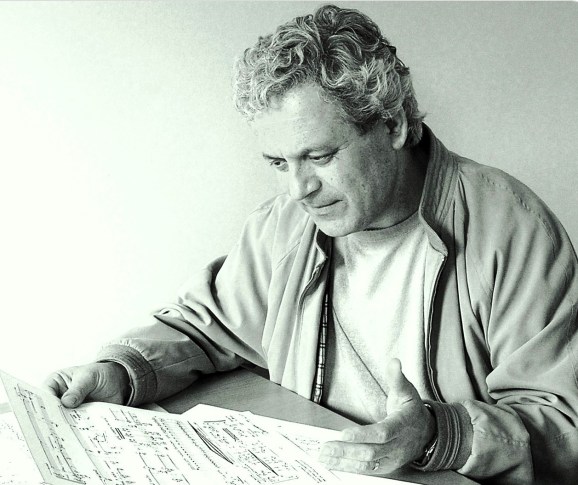




 The Cross-Eyed Pianist