A busy week of enjoyable and varied concerts in Brighton and London. Here’s my round up:

Sunday 4th May – Helen Burford, piano, Brighton

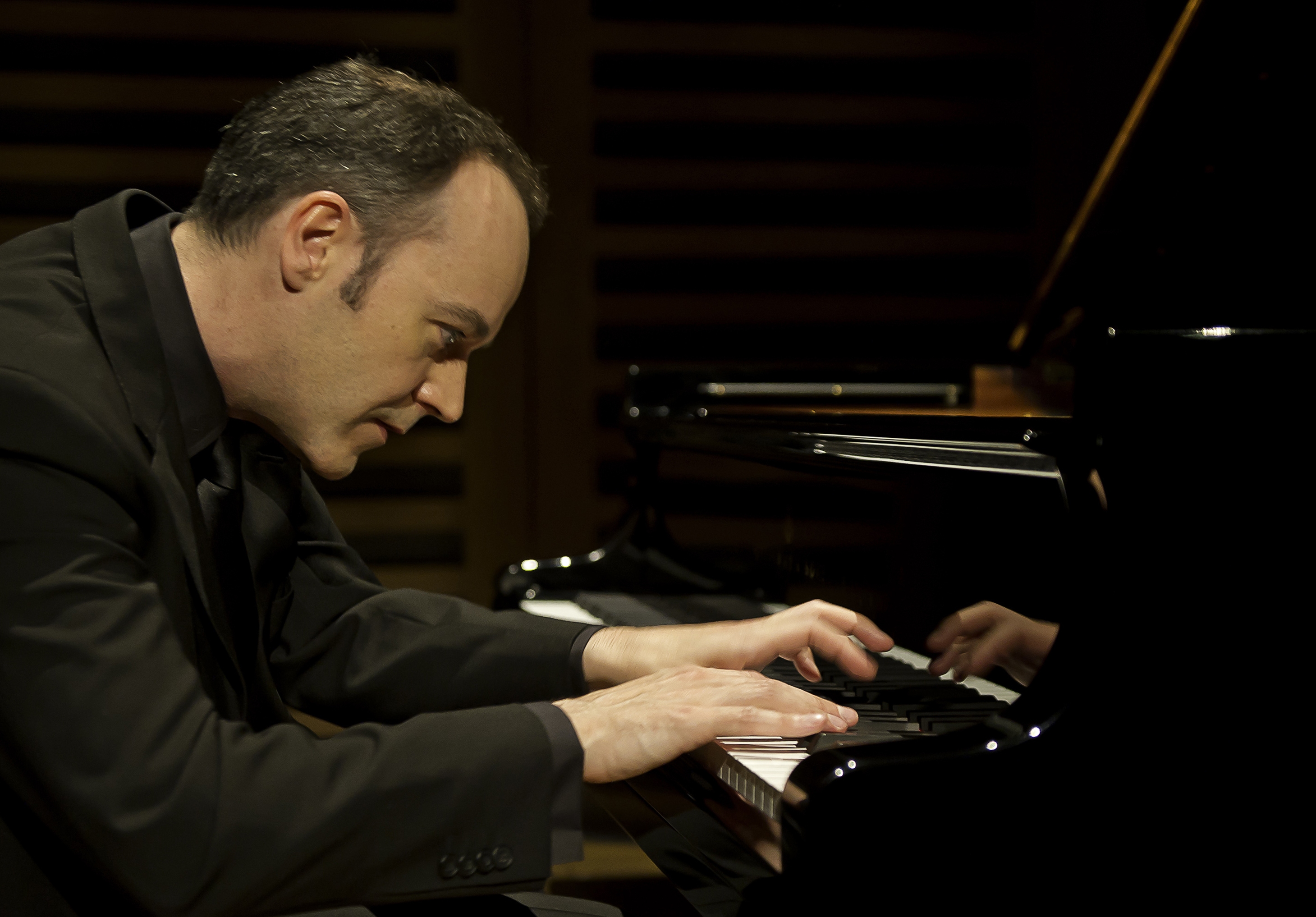
Helen has a particular interest in contemporary British and American music, and an unerring ability to create imaginative and eclectic concert programmes which combine her interests with more mainstream repertoire. For her afternoon recital as part of the Brighton Fringe Festival, she opened with Somei Satoh’s haunting Incarnation II, a work which allows one to fully appreciate the full range of sounds and resonance possible on the piano. An extraordinarily absorbing and unusual work. The Japanese connection continued with Debussy’s evocative Pagodes, followed by Haydn’s C major Piano Sonata Hob. XVI No. 50 with two witty and sprightly outer movements enclosing a slow movement played with expression and warmth. In typical style, Helen cleverly paired Hush-A-bye, a work by contemporary American composer Julie Harris, with Debussy’s much-loved Clair de Lune. Both pieces recall nighttime – the first has night sounds combined with fragments from the lullabies, “All the Pretty Little Horses” and “Hush Little Baby Don’t Say a Word”, while the veiled harmonies and rippling semiquavers of Debussy evoke moonlight. Helen closed her programme with a lively and foot-tapping Rumba Machine by Martin Butler.

Monday 5th May – Jonathan Biss at Wigmore Hall

Biss is a musician I was curious to hear live, having enjoyed interviews with him, and his insightful and intelligent writing about Beethoven. His recital opened with an early Beethoven Sonata, Op 10, No. 2, and there was much to enjoy in his nimble and witty rendition of the first movement. However, the second movement lacked shape and the final movement was too rushed. The second Beethoven of the concert was the ‘Waldstein’ which lacked structure and a clear sense of the underlying “four-square” nature of Beethoven’s writing. The end result felt rather superficial. Sandwiched between the two Sonatas were selections from Janacek’s On An Overgrown Path. These were enjoyable but lacked a certain sensitivity to the emotional depth inherent in these miniatures.

Wednesday 7th May – Behind the Lines: Music from the First War, MOOT, Brighton

Another lunchtime concert, hosted by Music Of Our Time, a wonderful music collective organised by the indefatigable Norman Jacobs. This year’s focus is on music and composers from the First World War, and the concert, duets and solo works performed by Helen Burford and Norman Jacobs, was a touching, tender and occasionally humorous tribute to composers such as Cecil Coles (who was killed in April 1918) and Frank Bridge, a committed pacifist who was profoundly affected by the war. There were also works by Debussy and Stravinsky, and the concert ended with a four hands version of ‘Mars’ from Holst’s Planets suite. The concert took place on the 99th anniversary of the sinking of the Lusitania, which gave the concert an added poignancy.

Friday 9th May – David Braid, guitar & Sergei Pobdobedov, piano

The end of the week and a concert at the delightful 1901 Arts Club, a converted schoolmaster’s house not five minutes from the bustle and noise of Waterloo Station. One of London’s hidden gems, the venue seeks to recreate the ambiance and ethos of the European musical salon, with its gold and crimson decor and friendly, convivial atmosphere. It is the perfect place for intimate chamber music, and this evening’s concert was no exception.

I interviewed David Braid earlier this year and I was curious to meet him and hear him in performance, for his musical landscape and influences accorded, in part, with my own interests. He plays an electric archtop guitar, more usually associated with jazz or rock/pop musicians. He makes transcriptions for this instrument, with piano accompaniment (his duo partner Sergei Podobedov), of works by Renaissance and early Baroque composers such as Byrd and Sweelinck. The concert included music by these composers and Bach, together with piano solos of works by Chopin (two Scherzi, handled with stylish aplomb and energy by Sergei) and Schubert/Liszt, and some of David’s own compositions. Taken as a whole, this was a most intriguing and unusual concert, beautifully presented. It is hard to describe the sound of the archtop guitar with the piano: at times it recalls the Renaissance lute (which David also plays) while also sounding entirely contemporary, thus making the music sound both ancient and modern. David’s own compositions were haunting, delicate, fleeting – the Waltzes in particular had great poignancy and tenderness – and his contrapuntal writing connects his music to the Baroque masters whom he also plays. One of the nicest aspects of the evening, apart from the high-quality music, was that during the interval instead of disappearing upstairs, the musicians stayed in the salon to talk to the audience, further enhancing the sense that this was very much an evening of music amongst friends.

(photo: Gilbert Francois)

Ukrainian-born pianist Valentina Lisitsa first performed at London’s Wigmore Hall in late 2007. Since then, she has gone on to achieve an almost cult following on YouTube, due in no small part to her selfless posting of videos of her practice sessions, usually the most private and personal preserve of the musician’s working life.  I suspect that these glimpses into her daily musical routines have endeared her to her followers, proving that she, like the rest of us, has to work hard for her art. Clearly adept at harnessing the relatively new medium of YouTube and its associated social networking applications, she has enjoyed a cool 70 million clicks on her videos together with concerts at The Yellow Lounge, a neat concept established in Berlin in 2006 to bring classical music to a much younger audience by holding concerts in nightclubs.

I admit to being slightly wary of anything or anyone that is labelled “a sensation” or “must see/hear” (ditto “iconic” – a word which should probably be banned from all publicity material and reviews of musicians, books and art exhibitions!). However, I was curious to hear Valentina Lisitsa in concert as I had read largely positive things about her live performances, so I went to hear her at Wigmore Hall on Monday lunchtime with ears and mind very much open and receptive.

Ms Lisitsa is tall and slender, with long blonde hair, her lissome frame accentuated by a simple black gown and spindly stiletto sandals. Her stage presence is modest, demure almost: there are no flamboyant gestures or crowd-pleasing piano pyrotechnics beyond those technical theatrics necessarily for the music and when she plays she seems entirely focussed on the task in hand. For her lunchtime programme she presented two very well-known and highly dramatic sonatas – Beethoven’s ‘Tempest’ and the craggy, Herculean Liszt B-minor, serious fare indeed.

The opening arpeggio of the Beethoven seemed unnecessarily elongated, so that its natural drama threatened to veer into the realms of cliché. However, taken with the explosive agitated first subject, when this motif reappeared, once again over-stretched, the effect was mysterious and convincing. A slow movement of beguiling warmth and tenderness prefaced an elegantly-turned finale, its tempo sufficiently reined in to allow us to enjoy Beethoven’s expression and inventiveness. I heard Maurizio Pollini play the same Sonata at the Royal Festival Hall a fortnight ago, and while the Italian maestro may have offered a more probing account born of many years spent living with this music, there was much to admire in Ms Lisitsa’s performance and there was no doubting her commitment, meticulous preparation, technical fluency and attention to detail. This proved a highly engaging reading of one of Beethoven’s best-loved Sonatas.

Liszt’s B-minor Sonata is a strange creature: heard on disc it can sound sprawling and disparate, but heard live and done well, it is a staggering music edifice. (Liszt scholar Alan Walker described it as “arguably one of the greatest keyboard works … of the nineteenth century”.) It takes an intelligent and daring pianist to pull all the elements together to create a whole. Divided into defined sections, demarcated by different tempo and expression markings – in effect, “movements” – these sections flow into one another, creating a single movement of non-stop music, lasting about 30 minutes.

Ms Lisitsa’s account had the requisite power and darkness in the opening statements, the famous theme which returns throughout the work. Her transitions between the sections were sensitively nuanced, creating a continuous, coherent narrative. There were moments of great transparency of sound, lyrical cantabile playing and delicate pianissimos. Her foot may have strayed to the una corda pedal a little too often in these passages, but overall her account was authoritative, at times thrillingly precipitous in the allegro and presto sections.

Checking with Sara Mohr Pietsch, the BBC Radio Three presenter for the concert, that an encore would be “allowed”, Ms Lisitsa gave a serene performance of Liszt’s transcription of Schubert’s Ave Maria. This was followed by a coruscating Chopin Etude (Op 10, No. 12), proving that she is very much a “real pianist” and one who, by her own admission on Twitter in the hours following the concert, “here to stay”.


Maurizio Pollini (© Cosimo Filippini)

How does one define “greatness” in a pianist? Is it the willingness to tackle a broad sweep of repertoire from Baroque to present-day? Profound musicality and penetrating insights, founded on pristine technique? A fearless approach to risk-taking in live concerts? Italian pianist Maurizio Pollini is the sum of these parts – and much more – as his recent concerts in London have demonstrated. Here is an artist who is equally at home in the elegance of Bach, the intimacy of Chopin’s miniatures and the spiky modernism of Pierre Boulez, always bringing supreme pianism and fresh insights to his performances.

For his second International Piano Series concert at a packed Royal Festival Hall, Pollini trod a more traditional path in an all-Beethoven programme. Traditional, but also ambitious: to perform three of the most well-known, revered and technically demanding of Beethoven’s thirty-two piano sonatas would be a challenge for any artist. For a man of seventy-two (and he looks older and frailer) this was a monumental programme, which scaled the highest Himalayan peaks of pianism…..

Read my full review here http://bachtrack.com/review-maurizio-pollini-beethoven-apr-2014

Leon McCawley (Photo credit: Clive Barda)

BEETHOVEN: Sonata in C minor Op. 10, No. 1
MENDELSSOHN: Song Without Words, Op. 38, No. 2 in C minor
MENDELSSOHN: Song Without Words, Op. 19, No. 6 in G minor
MENDELSSOHN: Song Without Words, Op. 30, No. 1 in E flat major
BRAHMS: Two Rhapsodies Op. 79 (No. 1 in B minor and No. 2 in G minor)
RACHMANINOV: 13 Preludes, Op. 32

Leon McCawley, piano

Deep in the heart of Belgravia, just five minutes from Victoria Station, is St Peter’s Eaton Square, an early nineteenth-century neo-classical church which has undergone extension modernisation following a fire some years ago. It is home to Eaton Square Concerts, now in its fifteenth season, which showcases established artists and rising talent.

For the first concert of the Spring 2014 season, Leon McCawley, one of Britain’s foremost pianists, performed works by Beethoven, Mendelssohn, Brahms and Rachmaninov. The concert was introduced by managing director Carl Anton Muller, and Leon McCawley was received most enthusiastically – and indeed throughout the entire evening.

Beethoven’s early piano sonatas should never be dismissed as “juvenilia” – for in them we find a composer already fully conversant with this genre. Many of the early sonatas display characteristics of style, form and expression which prefigure the later, more well-known piano sonatas, and the Opus 10, No. 1 in C minor is no exception. This sonata looks forward to the more famous ‘Pathétique’ with its robust outer movements enclosing a middle movement of great serenity with a beautiful cantabile melody.

McCawley gave an energetic account of the first movement, its dark and angular opening sentence contrasted with a lyrical second subject, the entire movement crisply articulated with fine attention to the string quartet and orchestral writing and startling dynamic changes. The middle movement offered a respite from the darkly-hued outer movements. Scored in warm-hearted A -flat major, it was an opportunity to enjoy some fine legato playing. The final movement was a burst of nervous energy, only just held in check by McCawley, which allowed him to highlight not only the dramatic possibilities inherent in Beethoven’s writing, but also the composer’s wit: the movement ends with a slower coda and a final sentence which is almost a whisper.

In the Songs Without Words by Mendelssohn there was further opportunity to enjoy McCawley’s exceptionally fine legato playing. Beloved of Victorian salons, Mendelssohn invented the concept of the Lieder Ohne Worte, and produced eight volumes of these varied and lyrical miniatures. McCawley’s selection of just three from the Opp 38, 19 and 30 was intimate, expressive and poignant.

Brahms’ Two Rhapsodies Op 79 closed the first half of the evening, McCawley giving free rein to the climactic nature of these works and capitalising on the rich bass sonorities of the piano. It also set the scene for the Rachmaninov which followed after the interval.

Rachmaninov was following the precedent set by Chopin’s Preludes, and his two sets Op 23 and 32 complete the twenty four. In the Op 32 set, Rachmaninov uses four pairs of parallel keys (E, F A and B, major/minor) but no relative keys. Each Prelude opens with a tiny melodic or rhythmic fragment on which the whole is built. Alert to the contrasting and varied nature of these short works, McCawley gave an account that was committed and emotionally charged, highlighting both the expansiveness of Rachmaninov’s writing as well as the interior details of each piece.

What better way to close than with an encore of Schumann’s Traumerei, tenderly delivered.

This was my first visit to Eaton Square Concerts and I was impressed not only with the fine acoustic of the venue, but the high quality music. I very much look forward to attending further concerts at Eaton Square.


Meet the Artist……Leon McCawley (interview from April 2012)

www.eatonsquareconcerts.org.uk