Who or what inspired you to take up the piano and pursue a career in music?

My mother sent my father to the American G.I. flea market to buy a western suit in order to attend a cousin’s wedding. My father came home without a suit; instead, he returned with an old turntable and a stack of LP records. In the stack of LPs were all of the most important works from Mozart’s violin sonatas, to Tchaikovsky’s sixth symphony, Beethoven’s piano concerti and symphonies, as well as Rimsky Korsakov’s Scheherazade. My father wanted all of his children to learn how to make music, so he forced me to take up the piano. He took me to live concerts where I found the experience took me to the most beautiful world that humans can experience. I remember those blissful hours in concert halls watching artists strive to achieve something that seemed so impossible from a child’s point of view, and that inspired me to want to be one of them. I am always trying to achieve something that is beautiful and inspiring. 

Who or what have been the most important influences on your musical life and career?

I have to say it is my husband David Finckel, who is one of the most disciplined and imaginative musicians. To have a lifetime partner that is committed so deeply to an unwavering belief in the power of music, is so determined to uphold the highest standard, and is in constant quest for excellence in his musical life has influenced and affected me every single day. It is a blessing to have a lifetime partner who is in the same pursuit as a musician and artist.

What have been the greatest challenges of your career so far?

I am a very optimistic person. I love to be challenged, so I don’t really remember meeting any challenges, I only remember seeing opportunities. 

Which performances/recordings are you most proud of?

My recordings are like my children, I cannot possibly tell you which one I like more than the others. And I rarely have a performance that I am completely satisfied with, but I am always proud of the concert as long as my audience seems happy. 

Which particular works do you think you play best?

I love Schubert, Chopin, Dvorak and Beethoven. That doesn’t mean I play them best, but I know that I always try my best when I perform any works.

How do you make your repertoire choices from season to season?

I carry a large repertoire each season, between 40 to 60 pieces. My repertoire choice usually comes from the design of specific program. In the program, you need to find balance and variety. It is a combination of my passion that particular season and my program design where I find that magic formula that provides audiences with the most satisfying musical experience. 

Do you have a favourite concert venue to perform in and why?

Alice Tully Hall in New York City, one of the greatest halls, with its warmth and beauty of sound, as well as its complete silence. Alice Tully Hall also has the greatest piano in the world. It is an oasis for any musician to make music in such a beautiful space with such perfect acoustics. The color of the wood is modeled after the most gorgeous Italian string instruments, and the intimacy between the audience and the performers provides all the inspiration one would need. 

Who are your favourite musicians?

My favorite musicians are Vladimir Horowitz, Martha Argerich, Mstislav Rostropovich, Jascha Heifetz…

What is your most memorable concert experience?

I played three concerts the week after September 11, 2001 for the most attentive audience. In all of the slow movements I could hear the sobs of the audience, as well as my own. Those were the most important concerts that I ever played in my life. 

As a musician, what is your definition of success?

My definition of success is that I improve everyday, I try my best all of the time, and I make music that hopefully touches people’s hearts. 

What do you consider to be the most important ideas and concepts to impart to aspiring musicians?

I tell young musicians to be truthful to the score, always work hard, and be ready to be a strong advocate on behalf of great music, the music you truly believe in. 

What is your idea of perfect happiness?

My idea of perfect happiness is to play a great concert, have a great martini and a great meal afterwards, get a good night’s sleep, and wake up in time to catch my next flight.


Wu Han LIVE III is the third collaborative release between the ArtistLed and Music@Menlo LIVE labels, featuring pianist Wu Han’s recordings of Fauré’s magnificent piano quartets from past Music@Menlo festivals.

More information


Wu Han is a Taiwanese-American pianist and influential figure in the classical music world. Leading an unusually multifaceted career, she has risen to international prominence through her wide-ranging activities as a concert performer, recording artist, educator, arts administrator, and cultural entrepreneur


(Artist photo: Liza-Marie Mazzucco)
Who or what inspired you to pursue a career in music?

I had played the piano for some years, and was playing occasional concerts by my early-teens, but for me the epiphanic moment was watching Jorge Bolet giving masterclasses and performing on BBC television. I suppose it came at just the right point in my musical and personal development, but suddenly I was obsessed, and pretty much every waking moment became about playing, listening to and reading about music – rather to the detriment of my school work.

Who or what have been the most important influences on your musical life and career?

Here I have to mention my first teacher, June Luck (who died recently). She was my local piano teacher in Ipswich, and had certainly never had a performing career, but she instilled one truly great maxim that has shaped my life and career: you can be anything you want as long as you’re willing to work hard enough. Then there were two teachers at the Royal College where I studied for my undergraduate and master’s degrees – John Barstow, who was really responsible not only for teaching me how to really control the instrument but also how to make friends with it, and the composer Edwin Roxburgh, who really opened my ears to contemporary music for the first time. After college, of course, there were many other teachers and mentors including Lev Naumov in Moscow, David Dubal in New York and Martino Tirimo in London, but special mention must be made of Ronald Stevenson. By the time we met at the end of my 20s I had established a performing and academic/lecturing career and was fairly well-known for my passion for Busoni. Ronald, who was the preeminent authority on Busoni and his circle made me understand the much larger perspective around early Modernism and its relationship to the piano, and led me along so many ‘paths less travelled’ in our epically long days in his music room and library which he called his den of musiquity!

What have been the greatest challenges of your career so far?

Of course, the early years, establishing a career are always difficult, but my particular career as a pianist-lecturer seemed to baffle friends, colleagues and promoters alike – I suppose, back then before the internet and the portfolio career as a norm, it seemed strange that I didn’t fit into an easy pigeon-hole. Fortunately, the Royal College of Music awarded me a fellowship for two years during which time I was able to show how such a career could and did work, and indeed it set me on my third, rather unexpected path as an academic professor.

Which performances/recordings are you most proud of?

I’m soon to be performing the Busoni piano concerto in London. I’ll never forget the day when I discovered John Ogdon’s recording of it in a second-hand record shop, and then a few weeks later, listened through to it with a score borrowed from Westminster Library. It was simply overwhelming, and as I started to pick my way through the score’s complexities, I couldn’t really begin to imagine how I could ever learn it. Eventually, about ten years ago, I gave a series of performances of it in the UK and New York with my amazing friend and colleague, Aleksander Szram playing the orchestral parts at a second piano (although we also had a live choir for the last movement). A couple of those performances are up on YouTube and although I certainly play it differently now, I am inordinately proud of the journey I made with that music.

Which particular works do you think you perform best?

I’m very influenced by the idea of ‘Sprezzatura’ which was a term used by 16th-century courtiers to refer to a noble disdain. The idea is that you have to study every detail of your task, and then throw away the rulebook. I think I probably perform best those compositions which respond to such an approach – certainly Liszt, Busoni and Enescu amongst them.

How do you make your repertoire choices from season to season?

Of course, I’m still influenced by promoters and venues, so for instance I recently gave some Medtner recitals in Bengaluru to celebrate the life of the Maharajah of Mysore, and a little while back was asked to give the premiere of the Edwin Roxburgh Piano Concerto. However, for the last few years I have also ensured that each season I include a work or two from my ‘bucket list’ which I’ve kept since my teens. This year it was the Schulz-Evler transcription of the Blue Danube, whilst previous offerings have included the Godowsky Passacaglia and Sorabji’s Jardin Parfumée. I realise I’ll never complete the list, but it’s really important to still treat myself to works I’ve always wanted to learn.

What is your most memorable concert experience?

For the last few years I have been living in India (my family home) for a few months each year, partly trying to offer educational opportunities to young musicians and teachers and partly giving concerts in my capacity as the first Indian Steinway artist. The concerts are sometimes quite traditional, but the really memorable ones have been where audiences have literally never seen a piano or knowingly heard Western music before. That’s a real privilege and responsibility, but it also sometimes reminds me of the memoirs I’ve read of the early years of the piano recital – the piano circus life as Liszt called it. So, I’ve headlined music festivals (even had a review in Rolling Stone magazine for performing Liszt!), given recitals to with brand tie-ins from wine to sports cars, and played for royalty (and was given the snuff-box to prove it!).

As a musician, what is your definition of success?

Leading others (students and audiences) away from the increasing mundanity of our everyday lives to see the truly extraordinary in our world, ourselves and one another – whether just for a few minutes in a concert, or as an inspiration for future living.

What do you consider to be the most important ideas and concepts to impart to aspiring musicians?

To have an imagination, and then to work hard in order to turn into a reality both for themselves and their audiences, whilst at the same time trying to avoid the perils of narcissism (especially in the age of the selfie).

Where would you like to be in 10 years’ time?

I’d like to have helped to create the first degree-awarding conservatoire in India, and have my own den of musicquity by the sea on the south coast of England, with a Great Dane by my side.

Karl Lutchmayer performs Busoni’s Piano Concerto in C at St John’s Smith Square on 30 November, with Seraphin Orchestra, conducted by Joy Lisney. This concert is the culmination of his 3-day concert series ‘Busoni – The Romantic Modernist’ which explores Busoni’s music beyond his well-known transcriptions of J S Bach.

Further details and booking


Karl Lutchmayer is equally renowned as a concert pianist and a lecturer. A Steinway Artist, Karl performs across the globe, and has worked with conductors including Lorin Maazel and Sir Andrew Davis, and performed at all the major London concert halls. He has broadcast on BBC Radio 3, All India Radio and Classic FM, and is a regular chamber performer. A passionate advocate of contemporary music, Karl has also given over 90 world premieres and had many works written especially for him.

Read more

Who or what inspired you to pursue a career in music?

There was always music being heard at home because both my parents are music lovers but actually playing the piano was introduced relatively late to me. I had many friends my age (8 at the time) who were playing an instrument and so my parents simply thought, why not?

It wasn’t until much later that I realised just what it might mean to be a concert pianist which was when I went to hear the Tchaikovsky first piano concerto at the Royal Festival Hall. The concerto captures your attention from start to finish and you can imagine how impressive it was to a child aged eleven. Of course my reaction then and what thoughts whirled in my head would not be how I hear the concerto now, but I learnt at that moment about the communication of music.

Who or what have been the most important influences on your musical life and career?

My many professors, of course, have all had an impact to my music making. One of my first professors was Christopher Elton. I was at the Purcell School and searching for a new teacher. I was introduced to Christopher and he accepted me in his class but I was this incredibly shy child who didn’t talk much to adults but was determined to make efforts through playing. Christopher was incredibly patient with me, and has, in in a way, been a musical father to me, as he has seen through all my career phases. Many, many years later, we still keep in touch and a friendship has developed since, which is always one of the nicer aspects of a musical relationship.

Then there is Maria Curcio-Diamond, who transmitted so many pearls of wisdom but I was too young to fully appreciate when I studied with her and now refer back to constantly today.

Lev Naumov was just a brilliant mind and musician and I was immensely fortunate to have had the opportunity to participate regularly in his classes.

John Lill has also been influential but I would say that however, it was the years I spent alongside Ruggiero Ricci that has had the most impact with my approach to music making today. He was heralded as a prodigy as a youth, a virtuoso as an adult violinist (a term he disliked) and the first violinist to have recorded all the Paganini Caprices. He was so modest and lived through so many experiences. I would often accompany his students in masterclasses and I learnt so much from watching him teach and from when we played together. There was something so natural and straightforward in his music making. It’s something I have tried to transmit in my own performances. It was also these years spent with Ricci that opened many doors for me, notably by meeting other musicians, some very well known, others less, as well as non-musicians but music lovers who have all had an influence into my approach to performing and life today on and off the concert circuit.

What have been the greatest challenges of your career so far?

Juggling between raising two small children and keeping up with the rhythm of giving concerts have been challenging but extremely rewarding. Before my children, my focus before and during performances would hinge entirely around the concert, but today, now with my children, I am somewhere in the back of mind, thinking, “I hope they had a good day at school, I hope they have eaten well, I hope they are sleeping well”. The usual worries all parents have!

Which performances/recordings are you most proud of?

Always wanting to improve on the last performance/recording is a common trait in performers and I share this!

Of course there have been certain performances that have been more satisfying than others, not only in terms of my particular performance, but also when the audience is so reactive and appreciative, it is a very special moment. I really appreciate also when sometimes members of the public write to me following a performance to let me know how much they enjoyed that particular concert or how much they enjoyed the last album.

Which particular works do you think you perform best?

In giving an interpretation to any one work, I really try to show what might be new to discover in the piece. In this sense, I think I convey Beethoven quite well. The French composers also seem to suit me; maybe it’s being married to someone French!

How do you make your repertoire choices from season to season?

What’s great about mixing chamber, duo and solo repertoire in a season is that there is an abundance of choice! It’s common these days to link a theme to a programme so that gives me a certain guideline. Otherwise for concerto dates, it’s quite often what the promoter has in mind for the season alongside the choice from the conductor so I need to be quite flexible for these dates.

Do you have a favourite concert venue to perform in and why?

Of the more well known venues, like many other performers, I would have to say the Wigmore Hall. Its reputation precedes it and the hall doesn’t disappoint. That said, there is a venue in France called Prieuré Sainte-Marie du Vilar that has to be included. It is a restored Romanian Orthodox Church, lost in the middle of the Pyrénées Orientales, and each year the monks and nuns organise a music festival for the community. The rawness of the venue and being surrounded by the stones impregnated with history gives a very unique atmosphere.

What is your most memorable concert experience?

I gave a series of concerts in Greece and one of the venues was in Patras. What was most striking about the make-up of this audience was that it was treated as a family outing. The children were all placed in the front rows, some not abiding by the ‘silence code’ of a concert, but it didn’t matter. At the end of each work, they applauded enthusiastically and seemed to enjoy the concert as much as the adults. It reminded me of my first impressions of attending performances and I hope I was able to communicate something to them with the Mozart concerto that I performed at the time.

As a musician, what is your definition of success?

When you feel you have found your voice and you have the opportunities to express this.

What do you consider to be the most important ideas and concepts to impart to aspiring musicians?

Never be afraid to be wrong and learn from everyone. Watch and watch and listen and listen again. There is so much archive available on the internet today. It’s important, I think, to be open to all interpretations and techniques of playing before creating and defining your own.

What is your idea of perfect happiness?

Two answers to this question. It would be either to find the time between concerts and practice for a good dance session with my husband and children because we always end up by collapsing in laughter. Otherwise it would be to take time out from playing to be by the sea with the family and catch up reading and a good glass of wine to hand.


Min-Jung Kym’s debut recording of Beethoven’s Piano Concerto No. 4 and Mendelssohn’s Double Concerto is available now. Further information

Min-Jung Kym is establishing herself as an artist bringing fresh quality and musicianship to her performances. Since her London solo concert debut at the age of just 12, she has performed at the Barbican Centre, Wigmore Hall, Cadogan Hall, Royal Festival Hall, Queen Elizabeth Hall, UNESCO in Paris, the National Museum of Korea in Seoul, South Korea and many, many other venues.

www.minjungkym.com


(artist photo: Arno MiseEnavant)

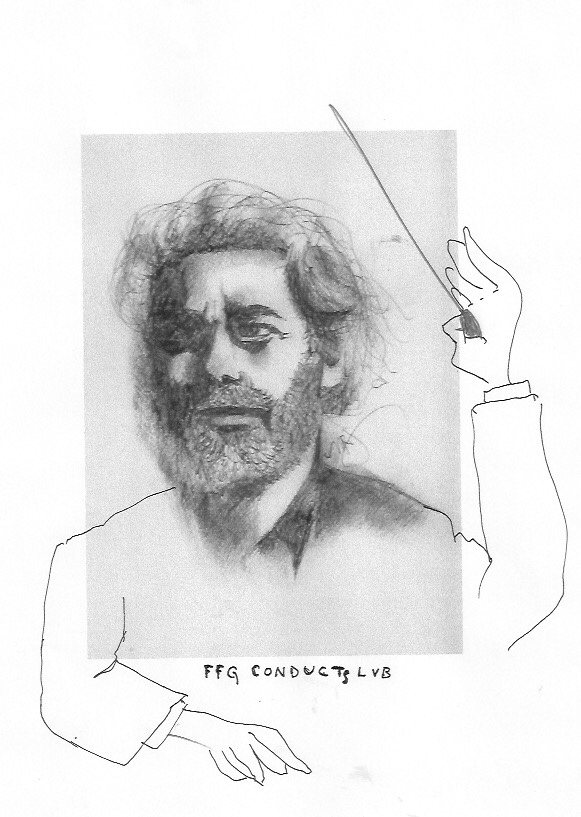
FFGuy for F&AGuest interview by Michael Johnson

François-Frédéric Guy was just finishing his 20th performance at the piano festival of La Roque d’Anthéron in the south of France. The 2200-seat outdoor amphitheatre was almost full as Guy displayed his love of Beethoven – playing two of his greatest sonatas, No. 16 and No. 26 (“Les Adieux”). After the interval, Guy took his place at the Steinway grand again and shook up the audience with the stormy opening bars of the Hammerklavier sonata. It was like a thunderclap, as Beethoven intended. The audience sat up straight and listened in stunned silence. Monsieur Guy joined me and a colleague after his concert for a question-and-answer session about his playing, the role of the piano in his life, and his future as a conductor of Beethoven symphonies.

Question: Can you describe your technique for creating such a stormy opening for Hammerklavier? The audience was thrilled.

Answer: I try to achieve several things at once with those opening bars – signaling immediately the dimension of the complete work, its conquering majesty, and the vital energy that begins to build from those enormous, outsized chords. I try to give it weight and pace, as Beethoven wanted. It is as if Beethoven was saying, “Let’s go conquer the universe!”

Q. And your surprising low-key encore? What were you thinking?

A. I enjoy the idea behind this little piece which is probably the best-known and simplest work of Beethoven. I chose it to come immediately after the most dense and complex of Beethoven’s work, one that is relatively little known to the general public. But “Elise” is also Beethoven and can, as you say, touch people to the point of tears.

Q. What does music mean to you, as a career pianist. Since we have known each other – nearly 25 years – you have dedicated yourself entirely to music.

A. Music fills my life, my existence. Even when I am not at the instrument, even when I am speaking of other things…. Through music, one can express things that words cannot.

Q. I see you are busy – 50 concerts and recitals per year.

A. Yes, now it’s closer to 60, apportioned among concertos, chamber music and solo recitals. I try to maintain a balance of about one-third for each format.

Q. Your new career seems to be taking off – now you are an orchestral conductor …

A. Yes, I am doing some conducting. I started by conducting from the keyboard, the so-called “play and conduct” format. Seven or eight years ago I started doing the Beethoven piano concertos that way, and it’s becoming more a part of my life. Now I have booked about ten play-and-conduct engagements in which I add a performance on the podium, conducting the full orchestra.

Q. Alone on the podium? What drove you to undertake this new challenge?

A. Actually it’s an old dream dating back to adolescence. I started conducting from the keyboard, and gravitated to the podium. My conducting has been well-received so I am continuing. For the moment, I conduct only Beethoven.

Q. Only the symphonies?

A. Yes, I have already done the Fourth and Fifth at the Théâtre des Champs Elysées and will conduct the Seventh in October at the Opéra de Limoges, with its very good orchestra that I have worked with frequently. I enjoy it very much, and will conduct Beethoven’s “Fidélio” there in 2022.

Q. Will you do what Rudolf Buchbiner did in Aix recently, all five piano concertos in one day?

A. Yes, I am scheduled to do just that in January, again at the Théâtre des Champs Elysées. We will start at 7 p.m. with Nos. 1 and 3, then a break, returning for Nos. 2 and 4, and finally at 10 p.m. the Fifth.

Q. This sounds like a major exploit!

A. That’s not at all why I am doing it. I merely want to take the public on a journey with me to better understand the evolution of these concertos. I find this idea very exciting and I think the public will as well. In addition, these concertos are all works of genius and so individual – each one has its own character. They do not encroach on each other. It’s like a great crossing of seas on an ocean liner. I will be taking the public with me.

Q. I was also thinking of it as a physical marathon.

A. Yes, both musically and intellectually. It’s even more true in a play-and-conduct format because I have to control what’s going on around the piano. We must remember, though, that in Beethoven’s time all concertos were performed like this. There were no conductors. Same goes for Mozart.

Q. So you are putting yourself in Beethoven’s and Mozart’s shoes, so to speak?

A. Well yes, somewhat, a bit. It’s a return to the concertos as they were intended. The piano is not king – it’s there for a dialogue with the instrumentalists, like a big family.

Q. Do you like the feeling of disappearing into the orchestra when you play-and-conduct?

A. Yes indeed. The pianist turns his or her back on the audience and is encircled by the other players. So there is a sort of fraternity – no rivalry – but it’s not easy. Sometimes it works, sometimes it doesn’t. But when it does, there is a kind of unity, and that’s what is so interesting.

Q. You have said that keyboard conducting gives you a new understanding of the music. What do you mean? Does it really change your perspective?

A. Absolutely. When you play traditionally with a conductor, one must be familiar with the orchestral parts while concentrating essentially on the piano part – that’s our role. But when the pianist and the conductor are the same person, it becomes clear how completely the piano is integrated into Beethoven’s concept, and Mozart too, and then later Brahms and Schumann.

Q. How did you go about studying for your role as a conductor?

A. Well I am largely self-taught, an autodidact. But I have been counseled by some eminent conductors, notably Philippe Jordan, conductor of the Bastille Opera and soon to direct the Vienna Staatsoper, when he leaves the Bastille next year. He is a fabulous conductor, an extraordinary talent. He has helped me tremendously. And another one is Pascal Rophé, conductor of the Orchestre des Pays de Loire – Nantes and Angers. He has been a big help with the Beethoven symphonies. But I am essentially self-taught and I have no ambitions to become a full-time conductor.

Q. Ah no? That was my question – isn’t there a temptation to leave the piano behind? Solti, Bernstein and many others abandoned the piano to conduct.

A. No, no, that’s not my plan. Conducting is an extension of my interests in music. For example, I have played practically all of Beethoven’s piano music, all his chamber music, all his important piano works. And it seemed natural to try conducting. I could not imagine NOT conducting one of the symphonies. So I had to learn how to do it.

Q. Contemporary music in one of your big interests. You have collaborated with the composer Tristan Murail, I believe, and others?

A. Yes, I am currently on a concerto Tristan Murail is composing for me. What matters for me is new ideas in composition that still retain traditional structures. I want innovation, ideas that change the piano and the orchestra. Sounds we have never heard before. That’s what interests me with Tristan Murail.

Q. Are you spending your life focused solely on the piano to the exclusion of all other activities? Some pianists wear blinkers.

A. I am not wrapped up in a bubble. Nothing stops me from following important events, such as Korea, or the relations between the two Koreas.

Q. You are in touch with people outside the world of music?

A. Yes, I am very involved in astronomy, for example. I study mushrooms!

Q. Mushrooms?

A. Yes. The other day I found ten kilos of cepes on my property in the Dordogne. I have always had a passion for mushrooms of all types.

Q. John Cage was also a mushroom enthusiast. He wrote books about them. He even created the New York Mycological Society for the study of mushrooms.

A. I am a specialist too. I know all the names of different species in Latin.

Q. Tell us about your tenth Beethoven cycle planned for Tokyo. What does it consist of?

A. What it means is that I will play all of the 32 Beethoven sonatas from memory over a ten-day period, about three weekends, for the tenth time. Almost twelve hours of music.

Q. Do you have a loyal fan base in Japan?

A. Yes, yes. I usually play in a very beautiful hall in the Shinjuku district of Tokyo. Two years ago I played there with the Dresden orchestra conducted by Michael Sanderling. And last year I played all the Beethoven violin and piano sonatas there.

Q. If you give 60 recitals and concerts a year, as you said at the start of this interview, can you still find time to develop new repertoire?

A. Yes, I try to master one or two important works every year. I recently accepted to learn and play a concerto by Enescu. I always try to put aside time for new works.

Q. But at your age, don’t you find you learn more slowly?

A. Yes, I am 50 years old. But I have many things I want to do in music. I am not stopping.


Artist portrait by Michael Johnson


Michael Johnson is a music critic with particular interest in piano. He worked as a reporter and editor in New York, Moscow, Paris and London over his writing career. He is the author of five books and divides his time between Boston and Bordeaux. He is a regular contributor to The Cross-Eyed Pianist


(This article first appeared on the Facts & Arts site. Illustrations by the author.)