In the apparent constant need by concert promoters, venues and others to attract “younger audiences” to classical concerts and to make them more “inclusive”, it seems to me that the artform’s core audience is being overlooked or even alienated.

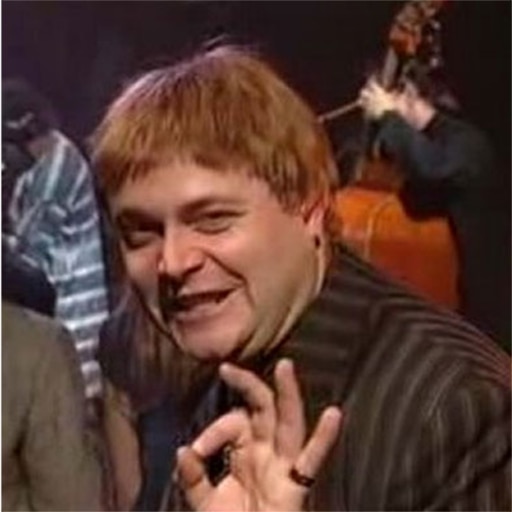
John Thomson, Jazz Club from The Fast Show

The latest suggestion to “trendify” classical music and make concerts more appealing to that elusive younger audience is posited in an episode of BBC Radio 3’s The Listening Service, presented by the affable Tom Service. In it he suggests that audiences should be more vocal; that they should chill, let it all hang out, and behave more akin to their rowdier 18th- and 19th- century concert-going predecessors, or be more like audiences at jazz or even pop gigs where a great improv sequence or a particularly juicy number is met with applause, whistling and more. In short, he wants us whooping in the stalls (the inference here being that silence is terribly elitist and all this listening quietly makes classical music hugely inaccessible and exclusive; nevermind that the same etiquette applies to theatre performances….).

When, 3 minutes into the Tristan prelude you next see me leap to my feet yelling “Whoo! F**king NAILED that cor anglais solo!” you must accept that this is precisely what Wagner would have expected and wanted…

– Richard Bratby on Twitter

For many of us, the chief attraction of classical music concerts, apart from the music itself, of course, is the opportunity to escape into quiet introversion for a few hours. There is also the ‘social code’ of the classical concert: knowing when to keep quiet for the benefit of other people, including the performers. We’ve all been to concerts which have been marred by people whispering loudly, opening blister packs of cough sweets, or – horror of horrors! – a mobile phone going off. I was at a recital of Scriabin piano music at Wigmore Hall some years ago where a couple a few rows ahead of me snogged loudly throughout the performance, and were reprimanded with a sharp rap on the shoulders with a rolled up programme by the person immediately behind them. And quite right too! They should have got a room, not seats at WH!

Joking apart, and at the risk of coming over all communist about it, it’s really a simple case of accommodating the many not the few: because even a small interruption can spoil the experience for the majority. It’s also a basic common courtesy to one’s fellow concert-goers.

And, curious as this may seem in our noisy, extrovert modern times, classical music audiences actually like to listen in silence so that they can enjoy and appreciate the music being performed.

So let’s let classical audiences remain quiet. We show our appreciation in other ways – by applauding, cheering and bravo-ing at the end of the performance, and while these behaviours may seem antiquated, or even elitist (they’re not!) to some, to the regular concert-goer this is what comes out of silence.

Just like the music.

A painter paints his pictures on canvas. But musicians paint their pictures on silence. We provide the music, and you provide the silence.

– Leopold Stokowski, May 1967

Nearly a month into this year’s Proms and the debate about clapping between movements has reached nigh on fever pitch, and is showing no sign of subsiding.

Rather like Brexit, there’s no middle ground in this debate: opinions are thoroughly polarised into two camps – those who don’t object to applause between movements and those who do.

This habit of applause between movements seems largely confined to Prom concerts: you’d never get it at the sacred shoebox of the Wigmore Hall, for example. Some would point to the fact that the Wigmore audience is “better educated”, or “more intelligent”, or “well behaved”. This implies that the Proms audience is ignorant, badly behaved, or just plain rude.

In a way, Prom concerts are not like other classical music concerts in the UK. Originally conceived by Robert Newman and Henry Wood to introduce classical music to a wider audience, the atmosphere at the Proms tends to be rather more relaxed, though often no less reverential, and the audience demographic far broader. The Proms attracts the classical music newbie and the committed classical music geek, who goes to every single concert in the season, and in between there’s a whole host of other people who enjoy the Proms experience. The etiquette is less rigid at the Proms – it’s much more “come as you are and enjoy yourself”, but in spite of this, the issue of applause remains a tricky one.

The custom of not applauding between movements of a symphony or concerto or other multi-movement work developed during the latter part of the nineteenth century. Both Mendelssohn and Schumann made attempts to prevent audiences from applauding between movements. Mendelssohn asked that his ‘Scottish’ Symphony, premiered in 1842, should be played without a break to avoid “the usual lengthy interruptions” and Schumann took charge of the matter in a similar way in his piano and cello concerti as well as his Fourth Symphony, but it was Richard Wagner who really instigated the custom as we know it today during the premiere of his opera ‘Parsifal’. By the turn of the twentieth century the concert hall had become the hallowed place it is today, and the conductor Leopold Stokowski even went so far as to suggest clapping be banned altogether lest it interrupt the “divinity” of a performance (there’s the reverence thing again….). This view persists today, particularly amongst the most trenchant anti-clapping faction of concert-goers.

The curious thing is that this attitude would have been totally alien to Mozart or Beethoven, Brahms or Grieg. In an earlier age, concerts were noisy affairs, the music played to the accompaniment of people talking and laughing, eating and drinking, and wandering in and out of the venue (indeed, at early Prom concerts, patrons were requested “not to strike matches” during quiet passages in the music). Applause was given freely and spontaneously, indicating appreciation and enthusiasm for the performers and the music. There was numerous applause during the premiere of Grieg’s piano concerto, while Brahms concluded his first piano concerto was a flop because there was so little audience response (except for the hissing, that is….). Today the pauses between movements are often filled with the sound of guttural throat-clearing or noisy unwrapping of cough sweets (far more intrusive in my opinion than the sound of clapping), and applause is reserved for the end of the work being performed. In the last 100 years, we have settled into this relatively recent habit of remaining silent during a performance, but maybe it is time for these habits to be reviewed and “modernised” a little?

Personally, I don’t have an issue with applause between movements. At the Proms I regard it as a sign of spontaneous appreciation and a sense that people feel relaxed in the atmosphere of the Royal Albert Hall. I don’t join in myself, nor do I squirm inwardly while thinking “blooming ignorant oafs!”. I’d never mention applause between movements in a review I’d written of a concert and I certainly wouldn’t describe the offenders as “selfish”, “ignorant” or a “Saturday-night tourist crowd”.

“this selfish group never left any of the silences alone”

“Encouraging this plays into the Classic FM-isation of music”

Sadly, such snobby attitudes towards those who applaud between movements only serves to reinforce the long-held and now very firmly entrenched notion that classical music is elitist and accessible to the few, not the many. And to link such people with a classical music radio station other than hallowed BBC Radio 3 is, in my opinion, offensive and patronising.

As an aside, it is interesting to note that Classic FM enjoys an audience amongst the under-35 age group of c1.2m (figures as at August 2017), and I like to think that these listeners also attend the Proms. After all, we’re supposed to be encouraging a younger audience to engage with classical music. Reminding them of the stuffy snobbish “etiquette” exercised by some at such concerts is not helping attract new audiences: many classical music ingenues (my husband included) have strong pre-conceived ideas about the habits and rituals surrounding classical music, the most frequently-mentioned being “I wouldn’t know when to clap”.

So please stop sneering at the clappers and consider instead of how to allow people to enjoy classical music in ways which make them feel comfortable, excited, engaged and eager to return for more.

I will end with a quote from David Pickard, Director of the BBC Proms, on the subject of applause between movements:

“I think that it is a wonderful sign of excitement and respect from the audience.”


One of the secondary pleasures of going to live music in concert is “audience watching”. Different artists and repertoire attract different audiences (the music of Scriabin, for example, seems to attract a particularly ‘unusual’ audience…..). The ritual of concert going and the habits of audiences have fascinated and intrigued me since I was a young child when my parents took me to the Proms and concerts at Birmingham Town Hall (where the CBSO was based before Symphony Hall was built).

I love the very palpable sense of “collective listening”, that curious vibration in the concert hall when everyone is listening very intently, or when the musician/s creates a remarkably intense connection via his/her performance and the power of the music. At the end of a particularly concentrated performance, one senses the audience uncurling and flexing, like an animal, before exhaling a collective breath and applauding. At a recent lunchtime concert at my local music society, I was amused to observe the reactions of several members of the audience to some rather outré contemporary music which was being performed by a piano and percussion duo. The final piece in the programme, during which the performers alternated between throwing themselves onto the piano keyboard and clapping (including some quite intricate “Pat-a-Cake” clapping patterns), seemed particularly “challenging” for certain members of the audience. Some people shifted uncomfortably in their seats, presumably because they found the music unpleasant or difficult to understand. Another person rested his head on his left hand, feigning boredom or sleep; others lowered their heads or looked down at their laps in embarrassment. Luckily no one walked out, though I suspect a couple of people might have considered doing so. When the piece ended, some of the applause felt like relief, that this curious “musical” experience was over, though in general I felt the applause was given generously, as it always is at my local music society’s concerts.

scientist-crowd-surf
Crowd-surfing is generally not acceptable at a classical music concert…..

I think it’s important to be challenged by music and that listening should not necessarily always be a passive activity – though of course a concert can, and should, be a relaxing and enjoyable activity as well. I have experienced sidelong glances from other audience members when I have laughed at the wit of Haydn or Beethoven, or a certain gesture by a performer to highlight a moment of humour in the music. These days I quite regularly cry at concerts, overwhelmed by the music and the emotional experience of hearing it (a friend of mine believes I suffer from Stendhal Syndrome with this regard). Yet the etiquette of the concert hall, a mode of behaviour which developed at the end of the nineteenth century when concert going became more formal, and largely remains so today, can make people feel constrained, obliged to sit in rigid reverential silence for the duration of the performance. It is this etiquette which can also put people off attending classical concerts, and the unwelcoming attitude of some fellow concert-goers, and the conventions of the concert hall – how to behave, in particular when to applaud – can make concert-going a behavioural minefield for the ingenue concert-goer. There is a small contingent of audience members who wish to maintain these conventions and they manifest their antagonism to the more relaxed concert-goer by curious (mostly) passive aggressive behaviour including glaring at the person who accidentally drops their programme or loudly shushing others. Sometimes these are the same people who bellow “Bravo!” at the end of the concert, or start applauding almost before the final note has sounded. All of this behaviour would probably seem very alien to the likes of Mozart and Beethoven, and even Brahms and Tchaikovsky, who were used to a much more rowdy and noisily engaged audience. Somehow we need to find a middle way between the very formal behaviour which still dominates classical concert going and a more relaxed attitude akin to an earlier age which allows people to react spontaneously to what they hear, feel and experience……

640px-james_tissot_-_hush21
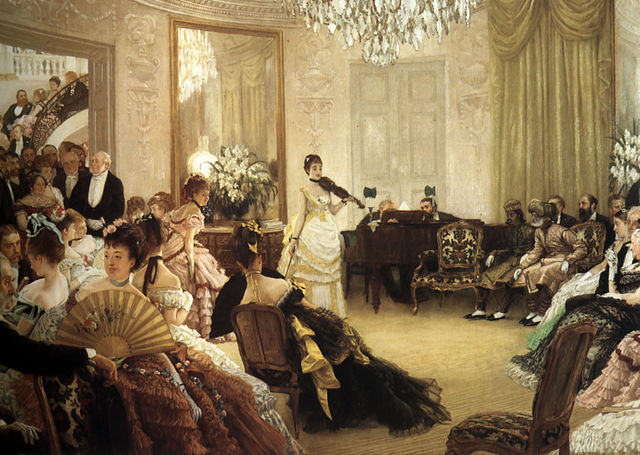
Hush! (The Concert) by James Tissot

Every year, around the time of the start of the BBC Proms, that wonderful 2-month long festival of music, the thorny issue of when to applaud rears its head. In fact, the debate over the appropriateness of applause is ongoing, but it seems to become more vociferous during the Proms season. And why? Because at Proms concerts clapping may be audible between movements! This year there seems to be more applause between movements than ever before – and more entrenched  and noisy views expressing an extreme dislike of this practice……

In a way, the Prom concerts are not like other classical music concerts in the UK. Originally conceived by Robert Newman and Henry Wood to introduce classical music to a wider audience, the atmosphere at Prom concerts tends to be rather more relaxed, though often no less reverent, and the audience demographic far broader than at, say, London’s pre-eminent chamber music venue, the Wigmore Hall. The Proms attracts the classical music newbie and the committed classical music geek, who goes to every single concert in the season, and in between a whole host of other people who enjoy the Proms experience. The etiquette of the classical concert is less rigid at the Proms – it’s much more “come as you are and enjoy yourself”, but in spite of this, the issue of applause remains a tricky one.

“I’ve never experienced anything more embarrassing. After the first movement the hall was silent.”

– Herman Levi, on conducting Brahms’ second symphony, 1878

The custom of not applauding between movements of a symphony or concerto or other multi-movement work developed during the latter part of the nineteenth century. Both Mendelssohn and Schumann made attempts to prevent audiences from applauding between movements. Mendelssohn asked that his ‘Scottish’ Symphony, premiered in 1842, should be played without a break to avoid “the usual lengthy interruptions” and Schumann took charge of the matter in a similar way in his piano and cello concerti as well as his Fourth Symphony, but it was Richard Wagner who really instigated the custom as we know it today during the premiere of his opera ‘Parsifal’. By the turn of the twentieth century the concert hall had become the hallowed place it is today, and the conductor Leopold Stokowski even went so far as to suggest clapping be banned altogether lest it interrupt the “divinity” of a performance. Now if one dares to applaud between movements one may be met with angry hisses of opprobrium, shushing, tutting or very stern looks.

Music evokes emotions and people should be able to express them freely – with respect to the performers of course

– Kirill Karabits, conductor

Some concert-goers regard applauding between movements as ignorant or boorish behaviour, an indication that you do not know the music properly (while the aforementioned concert-goers clearly do!). For some it is downright sacrilegious. Others regard it as disrespectful to the performers or disruptive because it can interrupt the flow of the performance. The curious thing is that this attitude would have been totally alien to Mozart or Beethoven, Brahms or Grieg. In an earlier age, concerts were noisy affairs, the music played to the accompaniment of people talking and laughing, eating and drinking, and wandering in and out of the venue. Applause was given freely and spontaneously, indicating appreciation and enthusiasm for the performers and the music. There was numerous applause during the premiere of Grieg’s piano concerto, while Brahms concluded his first piano concerto was a flop because there was so little audience response (except for the hissing, that is). Today the pauses between movements are often filled with the sound of people coughing or unwrapping cough sweets, and applause is reserved for the end of the work being performed.

For the ingenue concert goer, knowing when to applaud can be stressful. I attended an all-Brahms Prom a couple of years ago, conducted by Marin Alsop, and shared a box with a family who were attending the Proms for the very first time. We got chatting and after some pleasantries about the programme and the performers (the Orchestra of the Age of Enlightenment), one of the party said “We’re really worried about clapping in the wrong place!”. I assured him that it didn’t matter at the Proms, and that he could clap when I did if that helped. I thought it was rather sad that these people, who really enjoyed the concert, felt so anxious about something so trivial, and it is this anxiety about how to behave, and specifically when to applaud, which inhibits some people from attending classical music concerts.
applause_sign

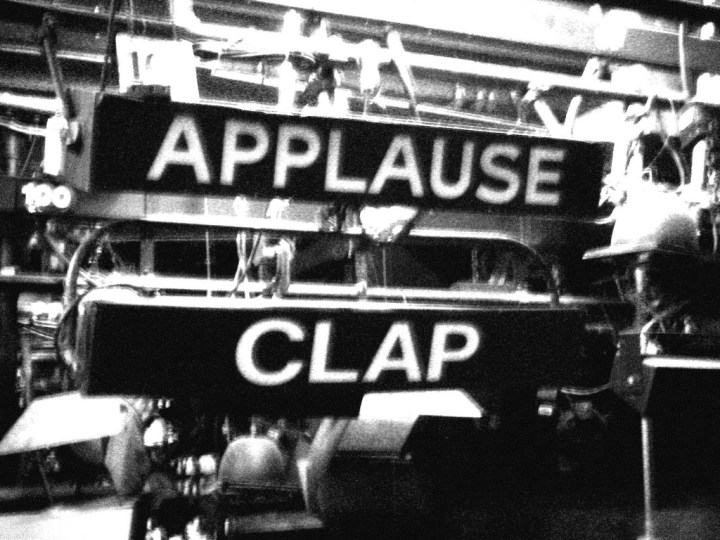
The current director of the Proms, David Pickard, declares that he “loves” hearing spontaneous applause at concerts, while some die-hard concert goers are horrified by his attitude, regarding such behaviour as “barbarous” on the part of other audience members. The curious thing is that at opera no one gets upset if you applaud after a particularly beautiful aria or chorus set piece, and it is almost de rigeur to do so. Ditto in jazz concerts, after some sparkling improvisation or a fine solo by one of the musicians. And conductors and musicians can of course control when applause occurs through their body language: a conductor may keep the baton raised aloft for a period of time after the last notes have faded away, or a pianist may keep his or her hands “in play” over the keyboard, defying anyone to break the spell with premature applause.

In addition to the issue of when to applaud, there is also the how of applauding. Some people seem desperate to applaud almost before the final notes have sounded (this is common at Prom concerts) and it does lead one to wonder whether this is in fact a form of attention-seeking, a “look at me! I know this piece so well I know exactly when to applaud!”. For some this can be really intrusive, especially at the end of the very intense or profound work. Sometimes, as if collectively impelled by an unseen force (in fact, the power of the music), there is a period of silence after the music has ended, and a sense of the audience holding its collective breath, savouring what has gone before. And occasionally (especially in contemporary repertoire in my experience), no one is really sure when to applaud and the impulse to clap is led by a discreet member of venue staff.

I am more bothered by those rare times when people feel the need to rush in to applaud at the final note of a piece without regard for the mood if it is a quiet ending

– Marin Alsop, conductor

applause-chart

At the Proms this year, it seems that the “applaud between movements” faction is gaining more currency. I attended a Prom performance of Schubert’s Unfinished Symphony and Mahler’s tenth symphony and there was applause – spontaneous and appreciative (to my mind) – between every single movement of both works (though as some wag suggested since both works were unfinished, perhaps members of the audience applauded because they didn’t know when the work had ended!), and other Prommers have mentioned there is noticeably more applause between movements this year. For some this is not an issue, but for others it clearly is a problem. Whatever your view, the most important thing is to show appropriate appreciation for the musical performance and those who created it, rather than worrying what the person sitting next to you might be thinking about your concert etiquette! The music, after all, belongs to us, the audience, the listeners – not to the snobs and critics.

Why not go the whole hog and bring back smoking, talking, eating and all the other disruptions that progress has excised – MR via Twitter

I think it will become noteworthy when there isn’t applause between movements at the Proms – HJ via Facebook

If given a choice between people coughing like bastards, the rustling of sweet papers, mobile phones beeping, and talking (!) during quiet movements (when did that become a thing?) or a rapturous applause in appreciation of the music I choose applause… every time – DO via Facebook


https://open.spotify.com/track/5Rty8OPVOnqIpJN8ZD1cpy


https://open.spotify.com/track/6U70qJA6gRi8ZrH1Bm7e8k