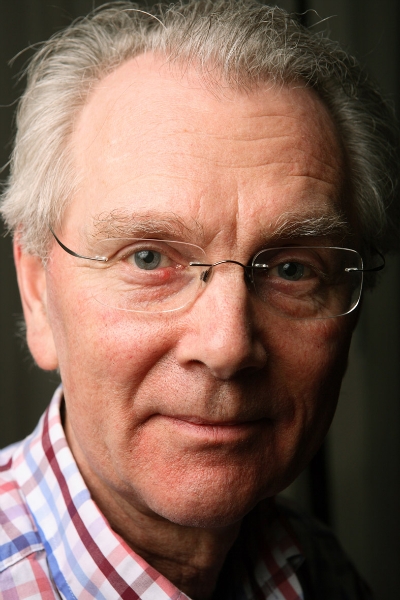
What inspired you to take up the piano, and make it your career?

I loved the sound of the cembalo (harpsichord) very much when I was a child. Having no musical background whatsoever, my parents sent me to a local music school, where I was told that I would need to learn some piano before I could learn the cembalo. I fell in love with the piano immediately and quickly forgot about Bach’s harpsichord concertos!

In my teenage years, playing the piano was the activity I loved most. Nobody had to tell me that I should practice. As soon as I came home from school, I ran to my piano and played for hours. My time at the piano was quite evenly split between playing classical music and improvising or composing my own music. When I was discovered by a manager at age fifteen, I knew already that music would always be my main career, although my role as an interpreter of classical music – mainly of the romantic repertoire – was outweighing my activities as a composer at that time.

After two intensive years of touring and recording, I felt burned out. The growing success as a concert pianist had no positive impact on my happiness at all, quite to the contrary: I felt more and more isolated, and it became clear to me that I could not ignore my need to compose any longer. My manager considered my compositions as some kind of private hobby, but to me it was much more. As much as I love the music by the great masters, and as much as I enjoy playing it, composing (and performing) my own music had to come first. It was a difficult decision, since my possibilities as a soloist seemed to be endless and so many promising opportunities were at my fingertips. But I did what I had to do as an artist: I withdrew from the traditional career as concert pianist and immersed myself into the development of my musical language.

Who or what were the most important influences on your composing?

Being so well acquainted with the romantic repertoire, the music of Chopin, Liszt, Rachmaninov and Scriabin definitely had a strong influence on my early style. But since I am a child of the 20th century, I have also drawn inspiration from pop and rock music, maybe also a little bit from jazz music. When I discovered Keith Jarrett’s solo concerts and Arvo Pärt’s music in the late nineties, I was deeply moved by the sheer beauty that was still “allowed” in our time. My educational background had suggested to me that contemporary music had to be disharmonic, to put it politely, and I never cared for serialism and all the cacophony that followed. So, essentially, I am in constant search for truth and beauty in my music. My love for Gregorian chant, religious choral music and my Catholic faith have a great influence not only on my compositional style, but also on my understanding of music as a whole.

What have been the greatest challenges of your career so far?

When the Cistercian Monks of Stift Heiligenkreuz asked me to compose piano accompaniments for the follow-up of their hugely successful album ‘Chant – Music for Paradise’, I did not want to mess up. They were putting “their” sacred chants into my hands and let me interpret them! In plainchant you have so much freedom and detachment from clearly definable emotions in the sense that have become so accustomed to over the last centuries. It is indeed the most universal and pure musical language on our planet. Putting a piano part underneath it would naturally interpret the chants in some direction. Through hard work and constant rewriting of many passages I found a very personal, yet worthy and unsentimental style for these pieces. The monks liked them so much that they commissioned another four chants for their latest album ‘Chant – Stabat Mater’, which was released  recently.

Which compositions are you most proud of?

Many of my choir pieces are very special to me. Unfortunately, not many of them have been performed so far, which makes me all the more excited that the wonderful Platinum Consort under the direction of Scott Inglis-Kidger will sing the world premiere of my ‘Consecration Prayer’ on 16th November, which is a very personal composition of mine. I am also very happy with my piano piece ‘Obsculta’ and the really beautiful video that my friend Vitùc created for it.

Who are your favorite musicians?

At the moment I am very fond of so many magnificent British choirs: Tenebrae, The Sixteen, Polyphony, Platinum Consort, to name a few. You really are blessed with a unique choral tradition in England!

There are countless pianists that I admire and love, but if I had to pick one, it would be Dinu Lipatti. I love his unpretentious and pure musicianship. I try to follow this role model, and I have never liked musicians who take themselves too seriously and want to be more important than the music. It is the musician’s duty to serve the music, not the opposite.

What is your most memorable concert experience?

I was crying from beginning to the end when I attended my first live performance of Bach’s B minor Mass in Luxembourg ten years ago. I have never been so moved by a piece of music. It was then that I realised that there is no such thing as old or new music. If music is true, it is timeless and will always reveal a glimpse of eternity to us mortal beings.

What do you consider to be the most important ideas and concepts to impart to aspiring musicians?

For the interpreter:

  • Never take yourself too seriously.
  • Always play with open ears and an open heart.
  • Look for the essence behind the notes and remain faithful to the text.
  • Find your personal sound by pursuing meaning rather than virtuosity.
  • Practice hard and value technical exercises and scales. They help you to become better servants of the music you love.

If you’re a composer:

  • Compose with open ears and an open heart.
  • Look for the essence inside your musical ideas and omit what can be left.
  • Let the music write itself by listening as deep as you can.
  • Always question your work. If it can still be improved, don’t shy away from the work.
  • Study the masters, again and again, but be yourself when you compose.

What are you working on at the moment?

I practice Brahms’ Cello Sonata in E minor for a performance with a very special young talent next week. After that I will orchestrate my children’s opera ‘The Little Gnome’ which will be premiered on 19th January in Luxembourg. And I expect the master CD of my new solo album ‘Prayers of Silence’ (which I recorded in August) to be ready any day soon, so I will definitely spend some time with listening and preparing the publication of my most important album so far. In December I will play Beethoven’s Choral Fantasy, a piece that is not in my repertoire yet, so I’ll have to practice a lot in November.

What is your idea of perfect happiness?

Perfect happiness is a gift of the moment and it wouldn’t be special if it were a constant state of being. That being said, I can say that I suffer from failures and bad moments like everyone else, but I am also regularly blessed with happiness when I compose or when I play the piano. But the most blissful moments are those that I spend with my family and especially with my three little children. I should also mention that I find peace in prayer, and it is the hidden driving force of my life.

David Ianni’s ‘Consecration Prayer’ receives its world premiere in a concert by Platinum Consort, under the direction of Scott Inglis-Kidger, on Friday 16th November. Further information and booking here

David Ianni was born in Luxembourg in 1979. He was accepted in the piano class of Daniel Feis in the Conservatoire d’Esch-sur-Alzette at the age of nine. At fifteen, he completed his piano diploma in Luxembourg with a “Premier Prix avec grande distinction”. He continued his studies in London at the Purcell School and later with Tatiana Sarkissova, teacher at the Royal Academy of Music. He also studied with Dimitri Bashkirov, Anatol Ugorski, Radu Lupu and Dirk Joeres. In 2005, he completed his studies with Tonie Ehlen at the Maastricht Conservatory.

After winning a number of prizes in national and international competitions, the sixteen-year-old musician began a career as a concert pianist, performing solo recitals as well as with orchestras in many European countries, India and Japan. His debut CD, with works by Beethoven, Rachmaninoff and Scriabin, was released in 1997. In 1999, the recording ‘Theodor Kirchner: Piano Music’ followed.

Since 1998, David Ianni has increasingly dedicated himself to composing his own works. He has written about 100 works, including the oratorio ‘Abraham’s Children’, ‘Pater Noster’ for piano and orchestra, a children’s opera, a string quartet, chamber music as well as numerous choral and piano compositions, which have been performed in Luxembourg, Germany, Austria, France, Italy, India and Japan.

David Ianni’s album Night Prayers with his own piano compositions was published in 2011.

That same year he composed and recorded the piano accompaniments for the album Chant – Amor et Passio by the Cistercian Monks of Stift Heiligenkreuz, which was awarded a Platinum award in Austria. In 2012 the monks commissioned David to compose and play four chant accompaniments for their album Chant – Stabat Mater.

His new solo album ‘Prayers of Silence’ will be released by Obsculta Music.

http://davidianni.com/

Tim Benjamin (photo credit: Gabrielle Turner)

Who or what inspired you to take up composing and make it your career?

It was my first instrument, the trombone, that led me to composition. I was unhappy with the exercises I’d been set to practice after my first few lessons, so I decided to write some alternatives. I found this much more interesting than practicing, and so that’s how I started composing!

After that I couldn’t get enough of it. I would write alternative harmonisations of hymns while not singing in the choir at church, and I went through one phase of about a year of writing a new little piece every day (for the exercise rather than for performance).

Although things like this account for about my first 7 or 8 years of composing, I only became “seriously” interested when the composer Steve Martland visited my school for a BBC education project and decided to take me under his wing and encourage me. So I’d say he was one of my first inspirations to make a serious go of it.

Who or what are the most important influences on your composing?

The most direct influences are other composers, in particular the German late romantic / early modern tradition, from Wagner through Mahler to Schoenberg, and in particular Berg. Not a huge amount of newer music, but certainly that of Messiaen, Xenakis, Andriessen among relatively recent composers. But I am also influenced by music that I play (I do a lot of playing, at an amateur and occasionally professional level), which can be anything from wind/brass band music to jazz standards to a wide variety of orchestral and chamber music. Music that I play has a habit of finding its way, heavily filtered, into music that I write. At the moment for example Schubert’s “Death and the Maiden” is spending a lot of time in my head as we’re learning it in the quartet in which I play viola!

What have been the greatest challenges of your career so far?

I hesitate to describe my composing as “a career” as that implies there is a) some structure to it and b) some financial reward, whereas in reality there is neither. The greatest challenge is probably the same for any composer – to simply keep writing, and find a reason to keep writing, in the face of public indifference! And of course, to persuade people to perform your music.

What are the particular challenges/excitements of working with an orchestra/ensemble?

Without question, the first moment of hearing your piece come alive. While it’s the first time the players might have seen it, you the composer have come to know the piece intimately from its first sketches, so you have to be patient and wait for it to emerge. Sometimes the reality can turn out to be quite different to what you imagined, but over time you try to get better at accurately imagining during the composing process.

I really like the process of working with performers. It’s the unexpected touches they put in that really bring a piece to life – their “interpretation”, notes that are fractionally late, rhythms slightly slower than written, their frustrations with it, or whatever; it’s the unplanned bits that make music come to life and make it infinitely more exciting than hearing a computer play it!

Which recordings are you most proud of?

I haven’t got many recordings of my pieces, but I usually get at least one for each piece that’s performed. The one I’m most proud of would be the London Sinfonietta playing my piece Antagony, which won the 1993/94 BBC Young Musician of the Year award for composers – I was 17 at the time and writing a 20 minute piece for two wind bands, amplified strings, and 6 percussionists seemed quite practical. Fortunately, for the BBC and the Sinfonietta, and conductor Martyn Brabbins, this posed no problem! And today I have a great recording and a great memory of a special occasion.

Do you have a favourite concert venue?

The Purcell Room at the Southbank Centre – I first played there in a brass ensemble at 15 and have played there (and heard my music played there) many times since. There’s something timeless about the backstage area and things like the odd signs for performers in Russian that they used to have that’s really special, and the staff are really friendly and professional. I also think that the leather seats in the auditorium are the most comfortable in any concert hall in the UK. I’d much rather my listeners were comfortable when being confronted with my music!

Who are your favourite musicians?

They are the ones I play with most regularly – my quartet, local brass band, etc. They are definitely not well-known international concert artists but some of them are really outstanding musicians and great fun to play with!

What is your most memorable concert experience?

Hearing Louis Andriessen’s De Snelheid and Stravinsky’s Oedipus Rex played by (I think) the BBC Symphony Orchestra at the Royal Festival Hall when I was a teenager. I was brought there by Steve Martland (see above) and it was the moment when I vividly remember thinking “THIS is what I want to do with my life”.

What is your favourite music to play? To listen to?

To play – perhaps boringly, I really enjoy playing the music of the old masters: Bach, Beethoven, Mozart, Schubert, etc. There’s a reason why they are considered great composers and it’s so clear every time you play their music. There’s also so much that can be learnt by playing music like that!

To listen to – I have very broad tastes but I actually don’t listen to a huge amount of music. At the moment I enjoy listening to random avant-garde electronic music by people on Soundcloud or to odd online classical music radio stations and just seeing what’s on. I’m a great believer in serendipity!

What do you consider to be the most important ideas and concepts to impart to aspiring musicians/students?

To follow what you want to do; don’t get put off by public indifference and by chasing easy fame by playing (or writing) crowd-pleasers. If you aren’t moved by what you do then no-one else will be.

What are you working on at the moment?

An opera about the Suffragette Emily Wilding Davison, for premiere in July 2013, 100 years after her famous / notorious death under a racehorse while protesting at the Derby. Please have a look at: http://www.emilyopera.co.uk!

Where would you like to be in 10 years’ time?

Taking a curtain call to a rapturous audience at Bayreuth after the successful premiere of my latest opera. Failing that I’ll settle for being happy, healthy and not too poor in some part of the world with nice landscape!

What is your idea of perfect happiness?

Being outdoors somewhere spectacular without any worries about anything or anyone.

What is your most treasured possession?

My brain.

What do you enjoy doing most?

Other than carefree time with my wife and daughter, I’d say playing great music with other people – music that everyone finds challenging but just within their technical ability…

What is your present state of mind?

A state of constant restlessness.

Tim Benjamin (b. 1975) is an Anglo-French composer, and has studied with Anthony Gilbert at the Royal Northern College of Music, privately with Steve Martland, and with Robert Saxton at Oxford University where he received a doctorate. He is the founder and Director of the critically acclaimed contemporary music group Radius.

Tim Benjamin was winner of the BBC Young Musician of the Year Composer’s Award in 1993, at the age of 17, with his work Antagony. He also won the Stephen Oliver Trust’s Prize for Contemporary Opera, for his first opera The Bridge. Benjamin’s music has been widely performed, by groups including the London Sinfonietta, the BBC Philharmonic Orchestra, and at the BOC Covent Garden Festival, and broadcast on BBC 2 and BBC Radio 3.

Past commissioners include the European Community Chamber Orchestra (Möbius), the Segovia Trio (Hypocrisy), the BBC Philharmonic Orchestra (Un Jeu de Tarot), the London Design Festival (The Corley Conspiracy), and CNIPAL (Le Gâteau d’Anniversaire). Tim Benjamin lives and works in Todmorden, Yorkshire, and also plays the trombone.

Tim Benjamin is also the co-founder of Clements Theory, the leading e-learning resource for ABRSM and Trinity Guildhall Grade 5 Theory. Tim has written a comprehensive set of Grade 5 Theory study guides which are used on the website, and he also designed and edited many of the questions. Further information here

www.timbenjamin.com


Jan Vriend

Who or what inspired you to take up composing, and make it your career?

It grew as I made my way into the musical world. From early childhood composers inspired me – and still do. The ‘urge’ to create is not unlike feeling hungry or any other ‘needs’, part genetic (nature), part imparted (nurture). The rest is discipline and hard work as you keep learning (which is also an urge) and developing (which keeps the urge alive) – voilà, a virtuous circle. Out of all the things I have done in music, practical and theoretical, composing slowly began to take over.

Who or what are the most important influences on your composing?

‘Inspiration’ or ‘influence’ comes from many sources, from nature to books, from people to science and technology, from a musician’s special skills to the nature of a commission, from a problem to the search for a solution. In different stages of my career, different influences dominated. For example, when I was infatuated with Xenakis, his music and writings, his persona and reputation left noticeable traces in my music.

What have been the greatest challenges of your career so far?

To stay alive and make a living out of a profession which has become ever harder to pursue in a musical world that tends to cling on to the familiar rather than to taking risks – especially in times of hardship, such as now.

Apart from that, the greatest challenge was to discover my strengths and weaknesses, to acknowledge that I cannot be Bach, Beethoven, Debussy, Stravinsky or Varėse, and find Jan Vriend.

Which compositions/recordings are you most proud of?

Huantan (1968), Heterostase (1981), Jets d’Orgue (1985-91), Hallelujah II (1988), Hymn to Ra (2002), Anatomy of Passion (2004), Echo 13.7 (2006), Meden Agan (2006)…

Who are your favourite musicians?

Young people, who are still full of curiosity and passionate in their commitment to the cause of the music they play, as opposed to the pursuit of fame and fortune or as a chore to making a living.

What is your most memorable concert experience?

A concert in Amsterdam in the 1960s, when Yuji Takahashi performed Eonta by Xenakis with a brass ensemble from Paris conducted by Konstantin Simonovich. Details of that experience are in a book I am about to finish.

What do you consider to be the most important ideas and concepts to impart to aspiring musicians/composers?

The question encompasses too many issues (ideas and concepts) for an easy answer. But here is a thought: whatever sounds you choose to work on in whatever combinations, the point of their interactions is to make musical sense. To find out what that means is a lifelong preoccupation, something we put to the test again and again in each new composition (project) we undertake.

What are you working on at the moment?

A work for string orchestra – a challenge, an ambition I have been harbouring for many years but never had the chance to concentrate on. The difficulty is that I haven’t yet been able to find an ensemble to take it on, which makes it a somewhat fortuitous (gratuitous?) enterprise and has given me my first ‘writer’s block’ in many years.

Where would you like to be in 10 years’ time?

On holiday in a sunny resort by the sea.

What is your idea of perfect happiness?

Being in love and in the closest possible proximity of the beloved.

What is your most treasured possession?

My piano – since I cannot claim my two daughters among my ‘possessions’.

What do you enjoy doing most?

Work… when it goes well.

What is your present state of mind?

It’s in survival mode. But, overall, I look on the bright side.

More details are on my website and the real ‘story’ is, of course, in my music.

Jan Vriend’s ‘Degrees of Freedom’, written specially for Ensemble Matisse, receives its premiere on 3 November 2014 in music and media event ‘Interference Patterns’ at London’s Kings Place . The work aims to explore the provocative idea that freedom cannot exist without boundaries. Further information and tickets here

Jan Vriend on SoundCloud:

Interview first published May 2012

Thomas Hewitt Jones

Who or what inspired you to take up composing and make it your career?

I have composed ever since I was a child. My maternal grandfather was a nuclear engineer, but the grandparents on my father’s side were both composers: Tony was a good craftsman; he studied with Nadia Boulanger and predominantly wrote choral music. His wife Anita was very adept at composing fantastic educational music. I suppose having composition in the family contributed to my experimentation with ‘finding sounds’ at a young age, originally writing purely on one’s own terms. I later learned that being able to fulfill a brief is a prerequisite to being professional composer.

Who or what are the most important influences on your composing?
At 9 years old I was playing hymns at school assemblies and I think this taught me a lot about harmony, melody and basic structure – you have to learn the rules before you break them. My father, a cellist in the orchestra of the Royal Opera House, took us to see dress rehearsals on Saturday mornings from a young age and I love the emotional depth of 19th Century orchestral music. I’m a lover of great melody, and I try to write music that speaks in a direct way but is underpinned by complex harmonic movement. This extension of a neo-romantic approach is very compatible with the cinema, which is probably why I’ve landed up doing that as well as standalone instrumental and choral music.

What have been the greatest challenges of your career so far?

Getting commissioned as a composer is about diversity, and being able to turn one’s hand to whatever projects come in. You can’t afford to be choosy, especially at the beginning. I feel lucky to have had some great early commissions – from a carol ‘Child of the Stable’s Secret Birth’ published by Oxford University Press and three ballet scores for Ballet Cymru, through to a piece for full orchestra at a Richard Stilgoe Concert at the Royal Festival Hall. On the commercial side, my first scores were very low-budget, written for children’s audiobooks. I did them under a pseudonym, and would recommend this approach to composers starting out; it enables you to gain writing experience and confidence before having to own up! If you go into any Waterstones there are rows and rows of them by someone with a silly name – but I’m not telling you who it is!

Which compositions/recordings are you most proud of?
I have very much enjoyed writing for ballet, and two out of my three ballet commissions for Ballet Cymru have been recorded and released on CD. Writing for dance is very refreshing because dancers think about music in a completely different way. Unlike composing for film where the musical narrative is tightly dictated by the picture, with ballet you can tell a story through a series of scenes or tableaux, and the narrative musical journey can be more fluid.

Alongside instrumental music, I particularly enjoy writing choral works. Recently I completed ‘The Same Flame’ for Boosey & Hawkes; an exciting new choral work written in collaboration with poet and lyricist Matt Harvey. It’s a positive song-cycle focused on humanist values that will receive its premiere in July in a concert conducted by choral director David Ogden.

Do you have a favourite concert venue?
For a small venue the Cadogan Hall isn’t bad. I’m going there on the 1st May when my old school will be premiering my ‘Psalm 150’. It’ll feel a bit like going full circle, because it was singing Benjamin Britten’s setting of the religious text that left a real impression on me and encouraged me to compose when I was a kid. I was delighted when my alma mater commissioned a new setting.

Who are your favourite musicians?
I couldn’t say; there are so many fantastic ones around. The best musicians are those who lift the music off the page, translating the mere dots into something with real shape. Like composers, they have to be able to understand emotion, and really be able to tell a story. Players with a good personality always convey this through the music.

What is your most memorable concert experience?
In December 2010, my carol ‘Child of the Stable’s Secret Birth’ received two joint premieres within a few minutes of each other – by John Rutter and the Royal Philharmonic Orchestra at the Royal Albert Hall, and over the road at the Royal College of Music by members of the Junior Department chamber choir and orchestra. There’s nothing as exciting as a first performance – especially when two happen at the same time!

What is your favourite music to play? To listen to?
I was an organ scholar at university and enjoy playing Bach – counterpoint doesn’t get better. I was fortunate to be a member of the National Youth Orchestra in my teens, and Jill White, then Director of Music, was intent on offering us a rich palette of the very best of 19th-century orchestral music. The highlight of my 8 years as cellist and latterly principal composer with the NYO was playing Mahler 8 with Sir Simon Rattle, and the same year conducting a premiere live on Radio 3 with NYO players.

What do you consider to be the most important ideas and concepts to impart to aspiring musicians/students?
I’m going to be blunt here. Music enjoyment/participation is for everyone at all levels, but don’t rely on making a living from the music profession unless you are so genuinely passionate about it that you would give up everything for it.

What are you working on at the moment?
Having just put the finishing touches to the score for the final animation of the 2012 Olympics Mascots film series, I am currently working on two further commissions. Hopefully they will be finished by 1 May, which is when I am scheduled to start work on a large-scale commission for choir and orchestra for Sloane Square Choral Society who are premièring it in December 2012.

Where would you like to be in 10 years’ time?
In a composing hut somewhere remote by the sea. With a tolerant wife and kids, if I’m lucky.

What is your idea of perfect happiness?
The little things. Despite the emotional complexity of being a composer, I’m a simpleton really.

What do you enjoy doing most?
I think an exciting answer would be ideal here, but I am ashamed to say that I’m very happy when composing. When I was about 3 or 4, I remember being in a toy shop and looking up in awe at all the toys that were there to play with. For better or worse, composing feels the same, and I never get tired of it. Maybe I will one day.

What is your present state of mind?
Tired. I’ve recently delivered the masters for the score to the new 2012 Olympic Mascots film, ‘Rainbow to the Games’, which is being released in UK cinemas on 5th May.

Origonal interview date: April 2012

Thomas Hewitt Jones is an award-winning composer of both concert and commercial music. Winner of the 2003 BBC Young Composer Competition, he studied music at Cambridge University where he was also organ scholar of Gonville and Caius College.

His concert work has been heard on BBC Radio, Television and in many of the major concert halls in the UK, including the Royal Festival Hall, London’s South Bank centre and the Royal Albert Hall. Thomas has worked with numerous acclaimed ensembles such as the Britten Sinfonia, Sounds Positive, Members of the Royal Opera House orchestra and the Carducci Quartet. He has had pieces published by Faber Music, ABRSM, Novello & Co, Universal Music and Oxford University Press.

Thomas has worked in Hollywood assisting on the film scores for the films ‘Forbidden Kingdom’ (the Kung Fu epic featuring Jackie Chan & Jet Li, dir. Rob Minkoff) and ‘Town Creek’ (dir. Joel Schumacher), and has written music for radio and TV stations including BBC Radio 4 and ITV.

Thomas has written extensively for ballet, including the 2008 Welsh Independent Ballet commission ‘Under Milk Wood’, and an adaptation of Llewellyn’s novel ‘How Green was my Valley’ in 2009.

Thomas recently composed a new ballet, ‘The Lady of the Lake’, based on the Welsh folk tale for a UK tour of the Welsh national ballet company, ‘Ballet Cymru, that toured throughout 2010 including Lilian Baylis Theatre, Sadlers Wells, London in November.

Other recent commissions include composing and recording the music for the London 2012 / LOCOG Mascot Animated Films for the London Organising Committee of the Olympic Games and Paralympic Games the latest instalment of which was ‘Adventures on a Rainbow’ (performed by the National Youth Orchestra of Great Britain and conducted by Thomas).

www.thomashewittjones.com