by Michael Johnson

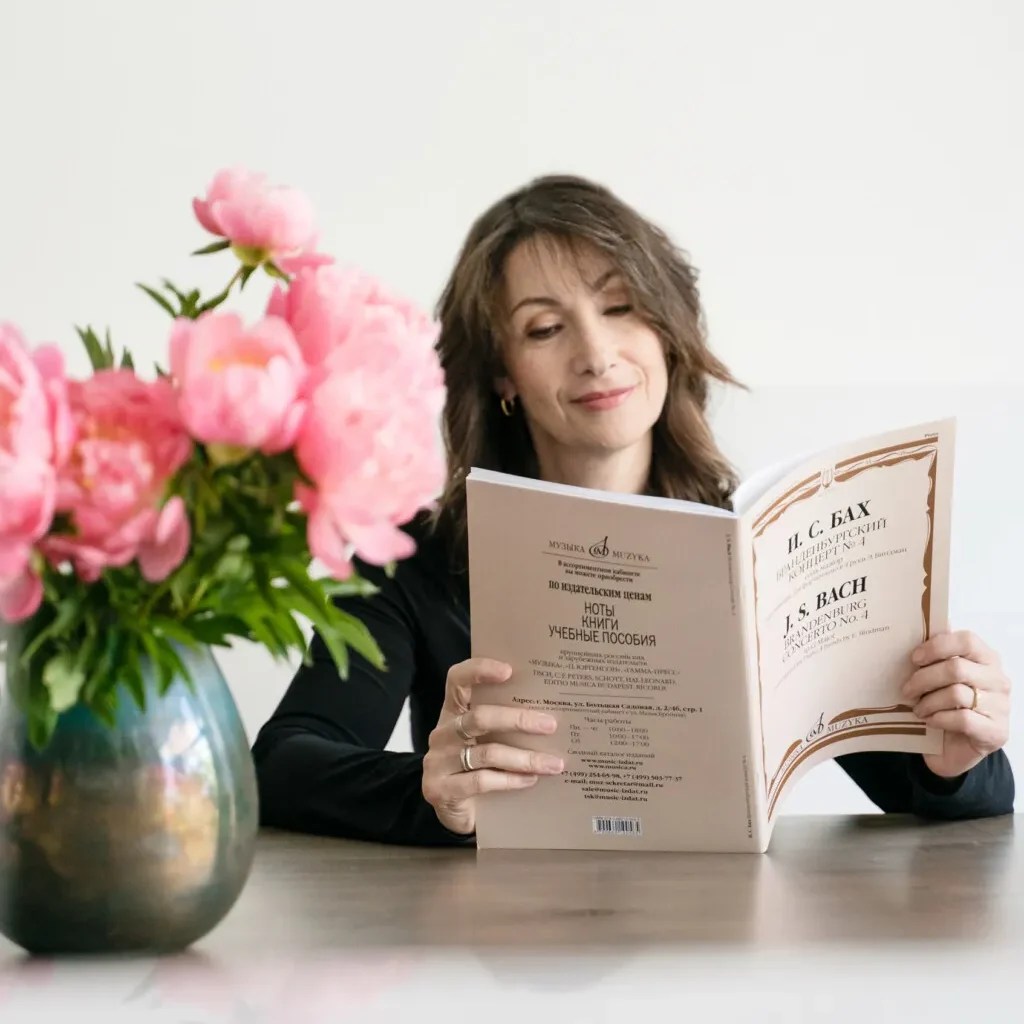
Latvian-American pianist Eleonor Bindman has often surprised pianophiles with her unique transcriptions, dating from Bach onward. The great cello suites, reworked for the modern piano, found new audiences in Europe, Asia and the United States. And her four-hand arrangements of all six Brandenburg concertos broke CD sales records.

She is achieving her ambitious aims – to widen the appeal of past keyboard and orchestral works, mainly the music of Bach, through her fresh and adventurous transcriptions.

And she is still doing it. Her new CD, which she cleverly titled AbsOlute, brings a flowing sense of joy to the Bach lute suites. They have never been heard like this.

“I don’t want to bore the listener,” she tells me in an extended interview. “I try to make my intentions clear about what I am doing.

Traditionally, transcribers and arrangers have felt constrained by Bach’s already “perfect” compositions. But she is not about improving Bach, she says. “Not being a composer myself, I find that transcribing still gives me a feeling of creating something new.

An imported New Yorker, Ms. Bindman speaks in an accent she brought with her from her native Riga, Latvia’s capital. Her American career has flourished as a performer, a transcriber and teacher. For several years she taught private students in her New York home, playing her beloved “mellow” Bosendorfer, perfectly chosen to enrich her lute scores. In recent years she has taught less frequently, being overwhelmed with massive transcription projects such as the four-hand piano version of the Brandenburgs and the larger Bach orchestral suites.

Is she Russian-trained? Not quite. She never studied in Moscow but her first teacher came from the great Heinrich Neuhaus line. Her professor Theodore Gutman was a Neuhaus student and her second teacher was Lev Natocherny, a product of the Moscow Conservatory, so the Russian tradition found its way into her sensibilities.

She cites the Russian pianist and conductor Vladimir Feltsman as a major influence. We have “similar temperaments” she says, so his teaching was easy to assimilate.

It is now time to focus on getting a fresh perspective, she says, a new look at Bach’s music. “In the past year or so, I’ve become a little less hesitant, a little less inhibited, even adding ornamentation that does not agree with any particular convention.”

Ms. Bindman has relied on lute recordings to help her find the piano voice she wanted. She cites the CDs of Italian Evangelina Maccardi as an influence and probably the best of the lutenists playing today.

Critical acclaim seems to have come easily to her. Some reviewers praise her transcriptions and Bach originals without holding back. One fell in love with her Partitas, calling her a “marvellous Bach performer”. “The prelude from Partita 1, he wrote “is deliciously slow and expressive, with unexpected marking of inner voices, beautiful ornamentation, shimmering tone.… There’s not a bad movement in the bunch.

In this YouTube clip, Lute Suite in C minor, BWV997, her easy mastery of the transcription can he seen, heard and felt:

Ms. Bindman balances her note-perfect clarity with rubato touches that bring out the emotion that some Bach interpreters eschew. Her strong feelings emerged when I raised the subject of respecting the score to a fault. Bach should be very emotional, she insisted. “It’s not about playing the right notes at the right time. He wanted to leave room turn it into your Bach”.

Among her collection of videos posted on YouTube and on her own internet site are glimpses of her impish wit. In one version of the suites BVW 996-998 she dressed in 17th-century attire, including a voluminous wig and custom-made shoes. In this clip, note the swaying body language and confident, if silent, foot-tapping (both feet simultaneously). Her joy is uninhibited.

Edited excerpts from our Q&A interview:

You were obviously enjoying this. Smiling and rocking on the bench, you are conveying the joy Bach intended. Is there an actor in you trying to get out?

No, I don’t think so, but I’m glad I wasn’t the only one who had fun.

You cannot sit still while playing Bach. You almost dance to his music, don’t you? How do you reconcile your changes with the “perfect” scores you started with?

Well, not being a composer, I find that transcribing still gives me a feeling of creating something new. Some musicians feel constrained from doing very much with it. Not I!

Aren’t you also a jazz fan?

Yes, I also love jazz and the freedom it gives you, and I always try to bring a fresh, improvisatory element to my playing.

Bach predated the modern piano by more than 200 years so how does one try to recreate what his compositions would have sounded like in his day?

His lute suites were originally composed for the lautenwerk or lautenwerck (lute-harpsichord), one of Bach’s favourite instruments, similar to the harpsichord.

The 17th-century lute came to his attention through his son CPE Bach who was personally acquainted with a prominent lutenist of the day. Inevitably the lute became part of the Bach family.

You have remained independent-minded in your development as a musician but perhaps you could name principal teachers who have guided you?

Of course there were various teachers along the way, with pianist and conductor Vladimir Feltsman being the most important one.

You mix the Bach clarity with your own emotions, to make us love the music you are playing. How do you dare?

I am concerned about the listening experience. I don’t want to bore the public. I try to make my intentions clear about what I am doing. Bach can and should be very emotional. Playing him is not about hitting the right notes at the right time. He leaves room turn it into your Bach. Now that I have done my cello suites and the lute suites I feel I have a lot more data. I studied the scores so I could decide what I could do with them.

Haven’t you helped bring some international attention to these delicate lute suites?

Yes, many pianists do not know this music until they try the transcriptions.

Your reputation rests on your personal treatments of Bach. What other composers attract you?

Bach’s music is an endless source of wonder. But I also love Liszt, especially his poetic and mystical side, and have had some transformative experiences while playing his music. I feel a special affinity for the musical personalities of Schumann and Brahms, and the Russians, of course – Mussorgsky, Rachmaninov – since they permeated my upbringing. I absolutely revel in Spanish music, particularly Albeniz.

In an interview with The Cross-Eyed Pianist, you were asked what your definition of success is.

Being able to hold people’s attention and transport them into a different time and place.

AbsOlute is available on CD and streaming on the Orchid Classics label

eleonorbindman.com

‘The World of Yesterday’ – written & performed by Sir Stephen Hough with the Bournemouth Syphony Orchestra, conducted by Mark Wigglesworth. Wednesday 26th February, Lighthouse, Poole

British pianist Sir Stephen Hough hadn’t intended to write a piano concerto. But during the dark days of the COVID pandemic, he was approached to write a score for a film about a concert pianist writing a piano concerto… With little to do but take Zoom calls, “it seemed like a wonderful way to keep me busy”, and, intrigued by the film’s plot, he began jotting down ideas.

As the world emerged from the pandemic, the film project stalled and Stephen’s concert diary began to fill up again, but he still had the sketches for the film score and, with the support of four orchestras (the Utah, Singapore and Adelaide symphonies, and the Hallé) he wrote his piano concerto ‘The World of Yesterday’. It received its world premiere with the Utah Symphony Orchestra in January 2024 and a recording made with the Hallé and Sir Mark Elder is available on the Hyperion label.

I had the pleasure of hearing Hough perform his concerto with the Bournemouth Symphony Orchestra in a well-conceived programme called Notes of Nostalgia. Given its theme, the concerto sat perfectly between Brahms’ Third Symphony and Elgar’s Enigma Variations – all three works infused with a certain wistfulness interposed with personal reflection, warmth and wit.

Hough’s concerto takes its inspiration, in part, from Austrian author Stefan Zweig’s atmospheric memoir of the same name, which depicts Vienna and Viennese culture in the last golden days of the Habsburg Empire before Europe was torn apart by war. You can almost smell the aroma of Viennese coffee and taste the Sacher-Torte in the quieter passages of the piece.

The music is rich in nostalgia, but without the heart-tugging poignancy of Chopin, for instance: it’s a more reflective yet positive reminiscence of another time. Scored in a single movement but with distinct sections, ‘The World of Yesterday’ has a filmic quality (“something from the 1940s”, my husband commented as we left the concert hall) – you certainly hear nods to Korngold’s film scores, and it shares Korngold’s romantic sweep, but there are also references to Rachmaninov (particularly in the very glittery virtuosic solo sections), Copland, the Warsaw Concerto…but at no point do these references feel like pastiche. And if you’re familiar with Hough’s wonderful transcriptions of Rodgers and Hammerstein, you’ll find similar idioms here (I half-expected Hough to segue into the Carousel Waltz at one point). And yes, there is a waltz too – not so much a Viennese waltz but something more sultry, redolent of Bill Evans and a smoky, late-night jazz club.

Hearing the composer play his own work was like a bridge across time to another world of yesterday, a time when composers wrote piano concertos which they performed themselves: Mozart, Beethoven, Mendelssohn, Chopin, Liszt, Rachmaninov and Prokofiev all performed their own concertos. Showcasing their prowess and personality as both performer and composer, these works becoming their “calling cards” as they toured to give concerts.

The music has an almost “vintage” quality: surprisingly traditional in its direct communication with orchestra and audience, and its idioms, motifs and references to other composers (there’s not a hint of that “squeaky gate” atonality one often associates with contemporary classical music). The piano enjoys Brahmsian interactions with the orchestra and Rachmaninov-esque cadenzas, but Hough’s does break with tradition in a few significant ways. First, the concerto has a narrative title, rather than just an opus number or key, which undoubtedly guides the audience, even without a programme note. Additionally, the cadenza, traditionally heard at the end of a movement, comes very early, after an orchestral ‘prelude’. Here the piano is solo, notes and motifs sparkling in the upper register (later mirrored by the piccolo).

Above all, The World of Yesterday is a richly textured, virtuosic and joyful celebration of past influences, rather than a poignant glance back to a better time. It’s full of warmth and wit, affection and humour: it made me smile, it thoroughly uplifted.

After all, isn’t that what music should do?

The World of Yesterday’ is released on 28 February on the Hyperion label

ABSOLUTE

J.S. Bach: Lute Suites BWV 996-998Transcribed for piano and performed by Eleonor Bindman

All my transcriptions are motivated by the desire to play my favourite music on the piano. – Eleonor Bindman

A lifelong love of J S Bach has led pianist Eleonor Bindman to produce a number of important transcriptions for solo piano and piano duo of his music for other instruments, including the evergreen Cello Suites and the Brandenberg Concertos.

In addition to recordings demonstrating ‘Bach playing of the highest order’ (Pianodao), Eleonor has also produced sheet music and anthologies of her transcriptions, primarily aimed at amateur pianists and piano teachers. Her two-volume ‘Stepping Stones to Bach’ features intermediate piano arrangements of the Baroque master’s most famous tunes, including the Gavotte from the Violin Partita, No.3, and the Badinerie from the Orchestral Suite, No. 2. In making these transcriptions, she is following in the footsteps of the master himself: Bach regularly transcribed his own and other composers’ music and created different instrumental versions of the same piece.

The resulting musical statement may be a faithful reproduction …, a transformation beyond recognition or something in between. Regardless of the outcome, the original source is of such exceptional depth and appeal that for the past three centuries it attracted a steady stream of pilgrims, ready to sacrifice their time and energy for the joy of communion.

Eleonor Bindman

In her latest project, she has turned her attention to works originally composed for the lautenwerk or lautenwerck (lute-harpsichord), one of Bach’s favourite instruments, similar to the harpsichord, but with gut (or nylon today) rather than metal strings, which results in a more mellow tone. Generally performed on harpsichord, lute, and guitar, Eleonor’s new recording of the Lute Suites brings a fresh perspective on these rarely-explored masterpieces, showcasing their intricate structures, rich textures, and emotive character on the modern piano.

Eleonor Bindman’s Bach pianism is all about clarity and order. Her strong and assertive fingerwork complements her firmly centred rhythm

Gramophone magazine

Highlights include BWV 997 and 998, featuring stunning fugues with ornate middle sections unlike typical keyboard fugues, and a heartfelt arrangement of “Betrachte, meine Seele” from St. John’s Passion, which serves as a moving conclusion to the album.

Fans of Eleonor Bindman’s previous transcriptions – such as The Brandenburg Duets and The Cello Suites – will appreciate this latest addition to the pianist’s catalogue, recorded on a Bösendorfer piano which truly captures the remarkable richness of Bach’s writing.

Eleonor Bindman writes, ‘Transcriptions can revive interest in original compositions, and I am hoping that a piano version of Bach’s Suites BWV 996, 997, and 998 will increase their popularity. Just like Bach’s other solo collections, these suites present a technical and musical tour de force for their performers and deserve their rightful place alongside Bach’s suites for keyboard, violin, and cello.’

Eleonor Bindman celebrates J S Bach’s 340th birthday and launches her new CD with a special concert at the 1901 Arts Club, London’s most stylish small venue, on Sunday 23 March at 3pm. Tickets/info here

ABSOLUTE is released on Friday 7th March on the Orchid Classics label. Available on CD and via streaming. Pre-order here

eleonorbindman.com

Guest interview by Michael Johnson

A legend in contemporary piano music, Ursula Oppens has just turned 80 and shows no sign of trimming back her busy life of recording, performing, teaching and commissioning new works from American composers. She fights the aging process with tremendous vitality and mostly wins.

But as she told The New York Times recently, “The eyesight goes, the fingers, the retention”.

A few weeks later in my telephone interview with her, she was more optimistic. “My mind is still functioning the way I would like it to function. I am lucky to be very active at this time and I plan to continue.”

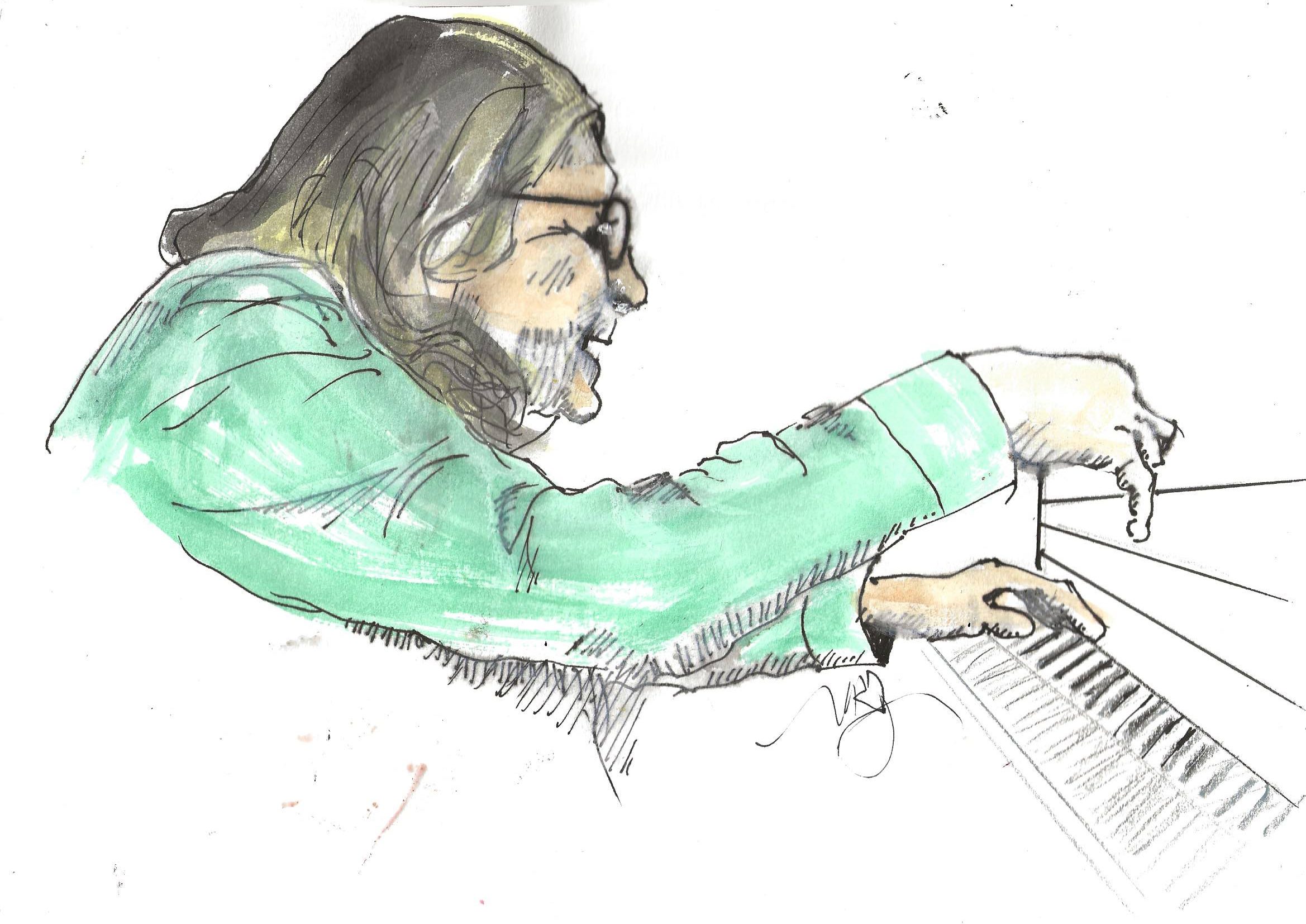
The Times rather bluntly described her as “a little fragile, tiny and stooped”. I tried to capture some of that in my portrait of her.

But she is also recognized as a powerful performer who tackles the thorniest of new pieces. As she said in our interview, she remembers hearing the difficult works of Julian Hemphill for the first time and thinking “This is for me!”.

Composers who have been commissioned by her or who have written works for her include such leading lights as Frederic Rzewski, William Bolcom, and Charles Wuorinen.

Perhaps her best known collaboration was with expatriate American Rzewski with whom she became “very, very, very close friends” and produced the now standard “People United will Never be Defeated”, a magnificent set of 39 variations. Some critics have classed it alongside Bach’s Goldberg Variations and Beethoven’s Diabelli Variations.

She worked together at a distance with Rzewski during the pandemic, ending with his musical tribute “Friendship”. As Oppens told me, we could not meet in person for two years but “he could write and I could play”.

In this clip she plays Rzewski’s “Friendship” on a Fazioli grand.

Her attraction to modernity took shape when she attended lectures and a concert at Radcliffe College with the young French composer Pierre Boulez. She was musically smitten and never looked back.

Edited excerpts from our recent conversation, recorded while she was at a music festival in North Carolina:

You have helped shape contemporary American music through your commissioning of new works. How did you become so interested in modernity?

My parents were refugees from Europe and they felt they had left a great culture behind. I found out much later in life that my mother had taken a course with Anton Webern. And my father joined the ISCM (International Society for Contemporary Music). So they had been interested in new music all along. I didn’t know that as I was growing up but it might have been an influence in ways I didn’t understand.

You are perhaps best known for your commissioning. Are there other people out there also looking for new works? Or are you alone?`

Oh no. There are people like that all over the place.

Where has the commissioning money come from? Family funds?

No, some has come from foundation grants. For example, I received a big grant from the Washington Performing Arts Society. But funding commissions can come from all kinds of sources.

When did you start commissioning?

I didn’t really commission until after college. The first composers I approached to write pieces for me were Tobias Picker and Peter Lieberson. I recorded both their pieces. One composer who had a great influence on me was composer John Harbison. I also played with this wife, the violinist Rosemary Harbison.

I believe the late Fredric Rzewski was among your friends. You knew him, didn’t you?

Oh yes, he was a very, very very close friend. I commissioned his “People United Will Never be Defeated”. The most recent piece I commissioned from him was “Friendship”. It was very much a pandemic piece. For two years we couldn’t see each other but he could write and I could play. He died at 83 in Italy during the pandemic.

You have a new CD coming out soon?

Yes, it’s the music of Charles Wourinen. Mostly solo piano but there’s also a ballet for two pianos that we still have to record. I knew Charles well and worked with him from 1966 to his death in 2020, maybe the longest relationship I’ve had.

What was your relationship with Julian Hemphill?

I lived with Julian for almost twelve years. He is a fine composer and a wonderful man. When I heard his difficult music I thought, “This is for me!”

In your CD “Winging It”, you featured the John Corigliano music that you had commissioned. Does that happen often? You commission something, the composer writes it and you record it. Is that how it works?

That’s what it’s all about. Yes, when you commission a piece it’s a little bit like having a child. You let the child go out into the world, make his own friends, and live his own life. What’s exciting is that after a while other people start playing it.

You seem to be focused on the American composers.

Basically yes, because American composers are people I can work with, people I can bump into. You want this personal contact and you become their friends, like Thomas Picker — I am very honored to be a friend of his, you know. Working with him has made my life very exciting.

Your fans worry about your health. Should they?

Not really. I work more slowly. I don’t run any more. But I’m perfectly healthy as far as I can tell. Of course as one gets older things get a little creakier. My mind is still functioning the way I would like it to function. I am lucky to be very active at this time and I plan to continue. I have had a wonderful share of happiness in my life.

What has aging done to your piano technique?

Luckily I don’t have any serious problems but I cannot say I play as well as I did when I was fifty. I am careful about expanding my repertory. I don’t take on impossible pieces, like Prokofiev’s eighth Sonata.

Are you slower, are you careful about your repertory?

Yes, recently I was teaching the Prokofiev. It was very sad that I had never played it. It’s too difficult a piece for me to learn at this point. I could practice but I probably would not be able to perform it.

But you could still teach it?

Oh yeah.

It is like a master class, I suppose? You play a few bars to show the way?

Not necessarily. You can point out the phrasing, and this and that. You’ve got to hear this note to make sense of the next one — and stuff like that.

Most of the musicians I talk to avoid contemporary music because it requires a lot of learning and they are not sure it’s worth the trouble. Is it really that difficult to master?

It can be difficult, yes, but often it is absolutely wonderful. There is no limit to how exciting it can be. It’s very, very thrilling. You bring to life something that has not existed before.

What about the limited reception by people who are not tuned into contemporary sound worlds? They say well, it’s not Mozart. Doesn’t that drive you up the wall?

No. Live music in a small hall with an audience of sixty people can be so wonderful. Sometimes I tell the audience to listen for certain passages. It makes it an exciting experience for them.

Do you have any fear of being slightly crowded out by the Asians who have suddenly discovered us?

No. If immigration were not part of America I would not exist. I am the daughter of immigrants. We are a mixture, and that is fantastic. I know some of the great young pianists are Chinese. There are people everywhere who can run better, who can jump better, and there are people who can play the piano better.

Do you have a swan song in mind? Are you even thinking of your legacy after the inevitable end?

I will keep making music as long as I can. I know that one day I won’t be able to, and that’s a normal part of life. But I don’t wish to be playing the harp for eternity.

(Ursula Oppens, portrait by Michael Johnson)


MICHAEL JOHNSON is a music critic and writer with a particular interest in piano. He has worked as a reporter and editor in New York, Moscow, Paris and London over his journalism career. He covered European technology for Business Week for five years, and served nine years as chief editor of International Management magazine and was chief editor of the French technology weekly 01 Informatique. He also spent four years as Moscow correspondent of The Associated Press. He is a regular contributor to International Piano magazine, and is the author of five books. Michael Johnson is based in Bordeaux, France. Besides English and French he is also fluent in Russian.

Michael Johnson, in collaboration with The Cross-Eyed Pianist (Frances Wilson), has published ‘Lifting the Lid’, a book of interviews with concert pianists. Find out more / order a copy