Pianist Anastasiya Bazhenova explores the fragility of the human condition in her debut album
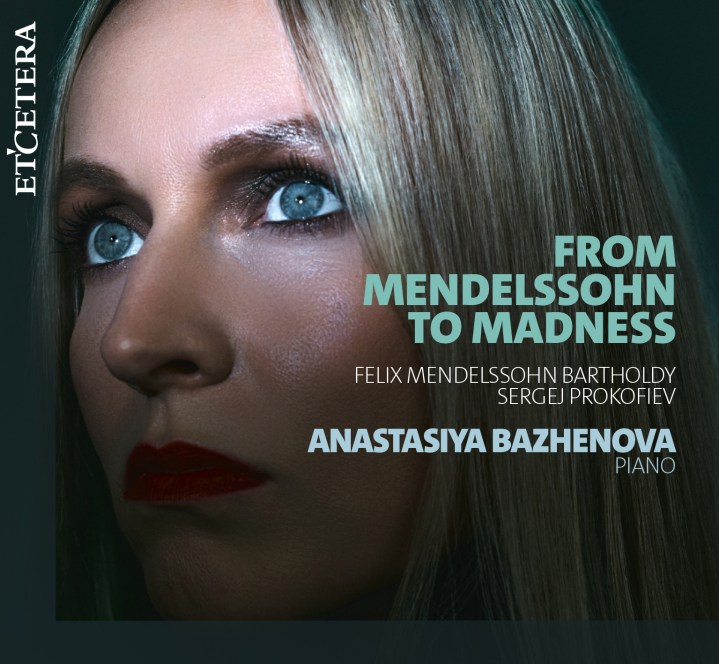
In her debut recording, pianist Anastasiya Bazhenova presents a programme that goes beyond a simple chronological survey of keyboard music. From Mendelssohn to Madness is not just about contrasting different historical periods; it is a deep exploration of the human condition and how our inner worlds change when external stability starts to fade.

For me, the tension is already present in the Mendelssohn. His music often sounds lyrical and balanced, but there is also something fragile in it, as if the stability could break at any moment. The Fantasia in F-sharp minor begins to open up that tension — it is more restless, more searching. And by the time we reach Prokofiev, the tension is no longer hidden. It becomes direct, physical, almost violent. So the “madness” in the title is not only the destination. It is something that slowly reveals itself along the journey.

Anastasiya Bazhenova (interview with Indie Boulevard magazine)

The album begins within the world of Felix Mendelssohn Bartholdy, a composer whose music hails from an era where form offered a sense of reassurance. In his Songs Without Words, Bazhenova uncovers a serene human voice that communicates with the confidence that it can still be heard without exertion. During this period, qualities such as clarity, proportion, and beauty were not merely ornamental; they were fundamental tools for understanding both oneself and reality.

However, even within this transparent beauty, a subtle tension begins to emerge. In the Fantasia in F-sharp minor, this balance is no longer an automatic state but a conscious effort. Here, the music becomes a battleground where light and darkness clash, symbolising an inner struggle to preserve wholeness against forces that seek to dismantle it. For Mendelssohn, form serves as a final battleground against chaos.

The narrative takes a sudden turn with Sergej Prokofiev’s Sixth Sonata, which opens the space beyond the rupture of the old order. This is music for a world that no longer promises stability—a world where the pace of change has quickened beyond our ability to comprehend.

Within this sonata, intense emotional states coexist in a raw, exposed form: fear, fury, despair, irony, and paranoia. The music forsakes the pursuit of traditional harmony, opting instead to record reality in its most unfiltered state. As the album moves from Mendelssohn to Prokofiev, the listener undergoes a inward shift: a transition from trusting in form to living without guarantees, and from viewing beauty as a support to acknowledging the need to live without it.

Rather than viewing these pieces as a collection of separate works, Bazhenova considers the programme as a single internal trajectory. The album does not seek to resolve the tensions it presents or provide simple explanations. Instead, it allows the music to unfold as a continuous process – a musical narrative of a human being who keeps feeling, thinking, and searching for meaning even when the structures of the past have broken down.

We often think of madness as something extreme or pathological, but in reality it is much closer to ordinary human experience. It can grow out of fear, obsession, loneliness, or simply from the unbearable tension between what we feel inside and what the world expects from us. In that sense, “madness” in this album is not something distant or theatrical. It is something that lives quietly inside many people. Music simply gives it a voice.

Anastasiya Bazhenova

From Mendelssohn to Madness is released on CD and streaming 1 April 2026 on the Etcetera Records label

Anastasiya Bazhenova performs in London at the 1901 Arts Club, a delightful salon-style concert venue, on 24th April. Details here https://www.1901artsclub.com/24-apr-2026-from-mendelssohn-to-madness.html
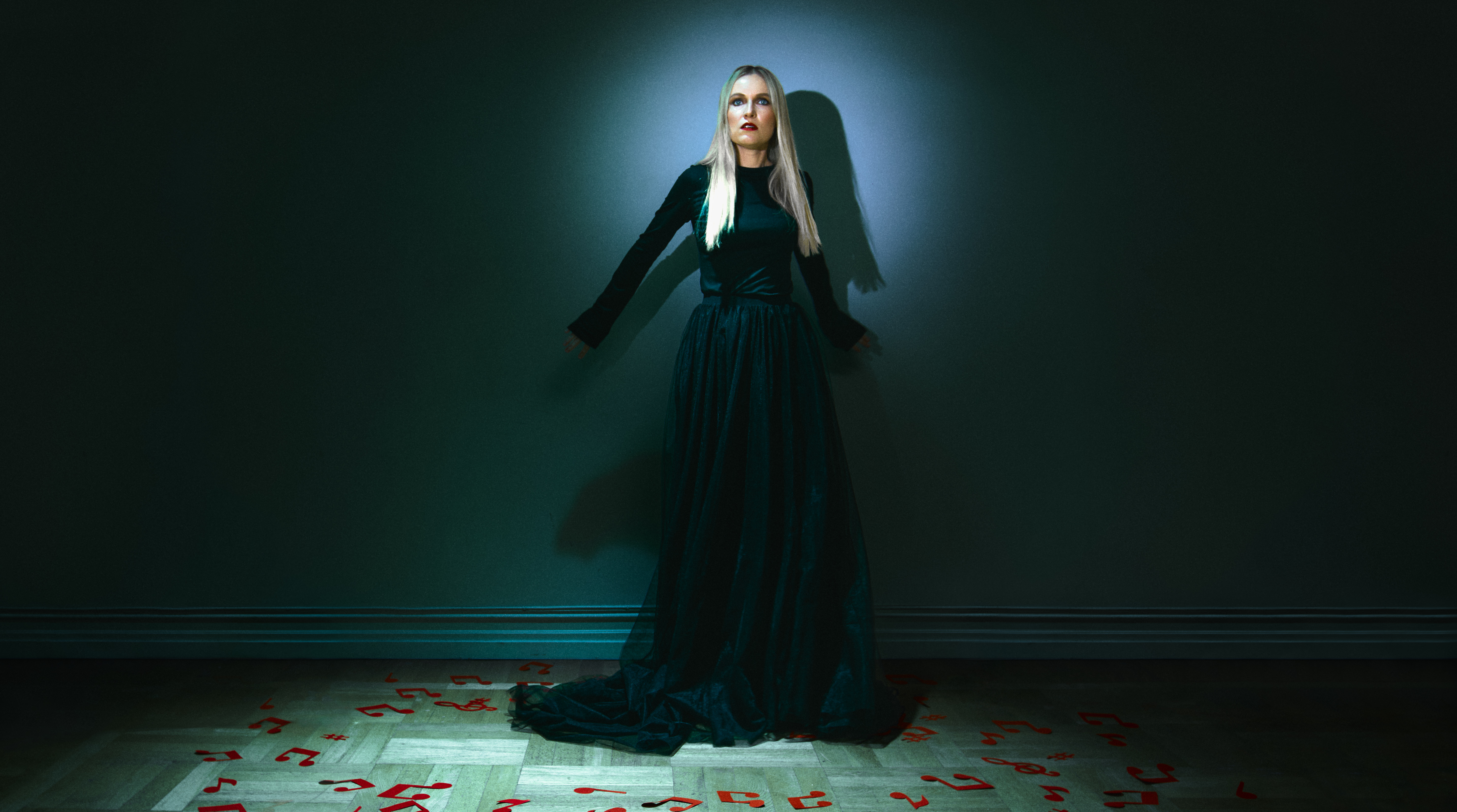
Anastasiya Bazhenova pianist

Photo credits Torgeir Rørvik

Guest post by Noah Bradley

AI has caused a bit of a fuss in Art. Classical music has long subsisted on a few immortal masterpieces a century. Before long, will we be swamped?

I think most people would agree that classical music is an art of a different kind to pop music, advertising, and cooking. To compare Beethoven and Michelangelo is fair enough, but Beethoven and fried chicken less so. The word we have for the former kind (the latter would be “pre-concert KFC”), is “high art” which sounds perhaps a little pretentious, so we shall simply call it “art”.

With Beethoven as a starting point, it becomes clear that Bach is really the same sort of thing, and that Stravinsky is too. And Hucbald of St Amand? Well not really. Nonetheless, it has been traditional to lump all four of them together; sharing as they do, a place in the history of European music.

Of late, it has seemed rather arbitrary that Hucbald gets to be associated with “classical art”, whereas Ravi Shankar doesn’t. So nowadays (because of its extraordinary refinement) we call that type of Indian folk music “Indian classical”, and classical “Western classical”. I believe this has muddied the waters, and I shall explain why.

This takes us to 19th-century Munich, where “kitsch” was invented to describe paintings that were very clearly not art (it has since taken on another meaning). The difference between “art” and “kitsch” the theorists say, is that kitsch doesn’t need a soul; it doesn’t need refinement or sincerity, only lustre.

Which brings us to our first distinction, that real art has a soul, and that if something is utterly soulless, then it is not art. I can hear a soul in Bach, but in a (average) pop song, only lustre. Now our second distinction; that there are two types of art- one where you can feel cultures, and another where you can feel individuals. The first type is called “folk art”, whereas the second type doesn’t really seem to be called anything.

There is a bit of a grey line, because in a work of art you can sometimes feel a culture and an individual. In other cases it is simpler: of all the great cathedrals of Europe, none are by a single hand. They were also designed according to tradition- one of the main precepts of folk art.

But isn’t it common to hear it said that Mozart and Haydn sound rather similar? And isn’t Bach unimaginable without the heavy air of Protestantism? Well even if Mozart and Haydn share twinkly melodies, simple harmonies, and regular symmetry, they both have their own, separate, heartbeats. The trappings of the eighteenth century or the atmosphere of German Protestantism is not what moves us; what does is the soul of the individual.

If all this sounds terribly abstract, it is a comfort to know that it is true in practice. No computer, no matter how many instructions you give it, will ever make a real work of art. It is all mediocre because the surest route to mediocrity is copying. Composers who do nothing but copy, do not write art, they write kitsch. And if in Saint Hildegard you can hear the cold damp air of Eibingen Abbey, and not her own heartbeat, then maybe she is a folk artist. But it is important not to confuse clarity of thought with mediumship, and I only hope to make such subjective judgements a little clearer.

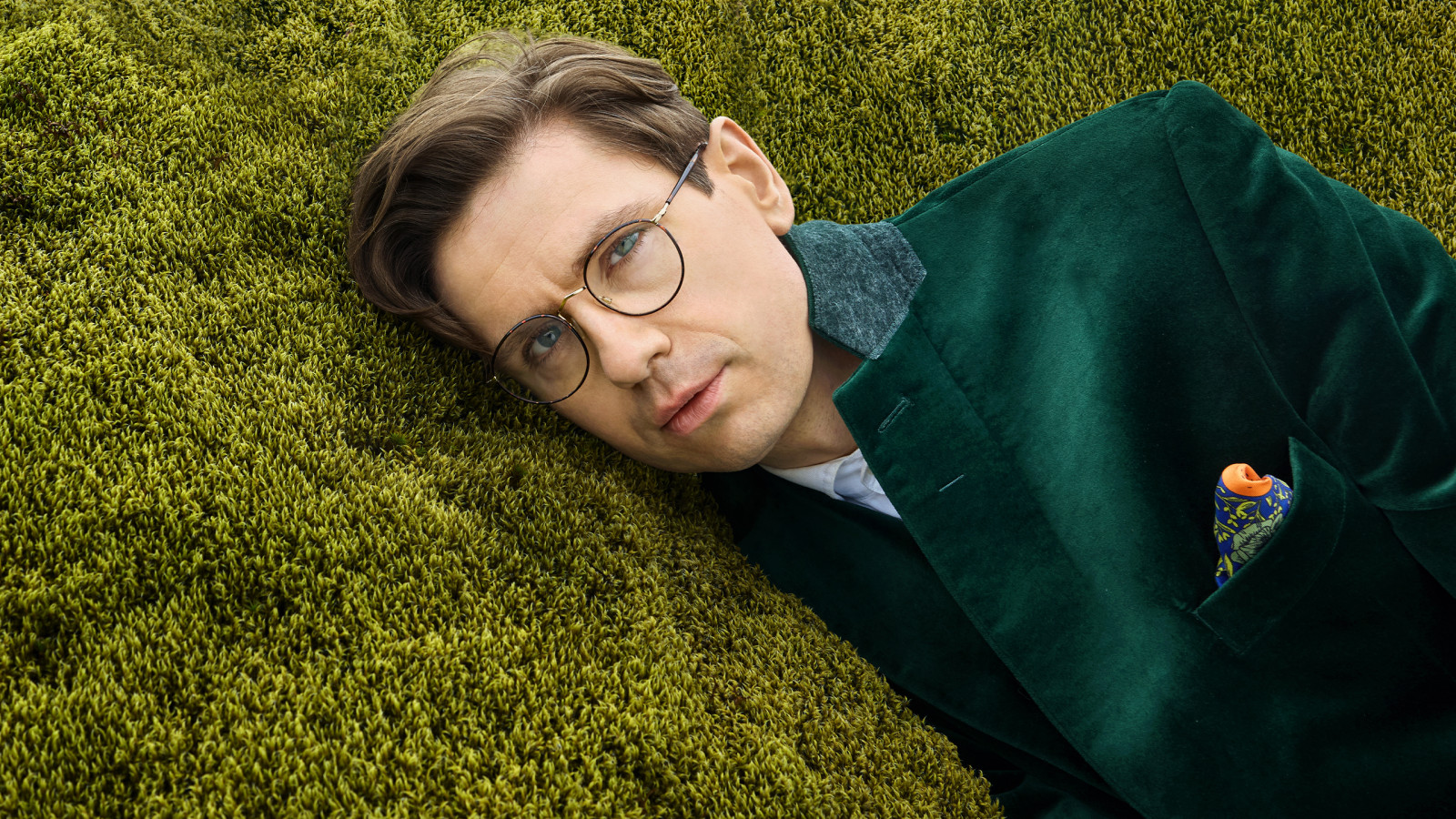
Noah Bradley is a young composer, writer and polymath, deeply passionate about the art of music. He has written for Music Teacher magazine and InterludeHK

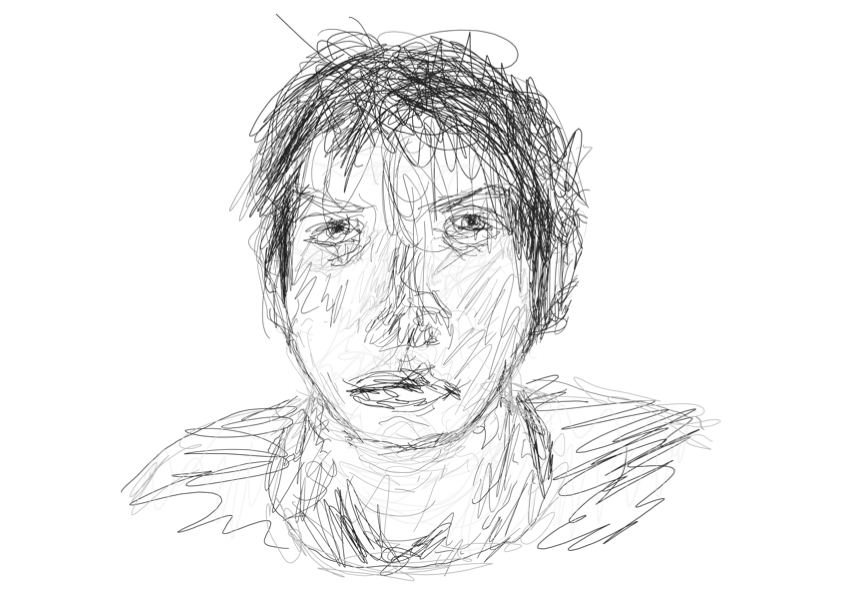
Self Portrait by Noah Bradley

I hate to say it, but classical music still suffers from an image problem; an image crisis in fact. Despite the best efforts of performers, promoters, venues and music lovers, the artform is perceived by many as elitist and only accessible to the few, not the many. It wasn’t always like this: when I was growing up in the UK in the 1960s and 70s, there seemed to be classical music everywhere – on the radio and tv (including live broadcasts of orchestral concerts and wonderful programmes presented by André Previn), in tv adverts and in shops.

Now if you mention you are a fan of classical music, people may look at you slightly askance. Or, as has happened to me on several occasions, ask, “did you come to like classical music as you got older?” – because, yes, the demographic for classical music is generally in the over 50 bracket. (I’ve always liked classical music, ever since I was a little girl.)

Yet venues and promoters obsess about capturing that elusive (and often not especially interested) “younger/youth audience”, at the risk of alienating their core audience/demographic. One particularly depressing current example of this is London’s Southbank Centre, which is “leaning more heavily on describing classical music with a different language. Well-meant pieces to camera demystify the genre for this untapped, cynical and supposedly disinterested audience, the word ‘bangers’ used to describe popular works and sundry other nerve-jangling scores.” (Thoroughly Good blog). Alongside this, the venue has launched a classical music podcast for which “you don’t need a PhD to listen to”.

It has never been necessary to hold a PhD to enjoy classical music – or indeed any genre of music (though I might make an exception for jazz, which I find far more esoteric,  exclusive and mystifying than classical music – but that’s just me!). Which is why I am drawn to this phrase “audience needed – no experience necessary” (borrowed from this image):

The phrase “audience needed – no experience required” reframes classical music from something exclusive and intimidating into something open, welcoming, and participatory. It signals that listeners don’t need prior knowledge, training, or cultural “credentials” to belong – only curiosity and willingness to listen. Added to that, it doesn’t patronise or use “trendy” language. It tells newcomers that their lack of expertise isn’t a disadvantage but rather an asset, a starting point for discovery.

Musicians can use the message to bridge the gap between performer and audience. It frames them not as distant experts, but as fellow explorers eager to share something beautiful and immediate.

And instead of focusing on technicalities (composers, historical context, musical analysis), this kind of marketing can tap into the emotional and sensory appeal of live performance – the sound, the atmosphere, the shared moment. The phrase evokes a sense of adventure and discovery.

It also connects with modern cultural values. Today’s audiences respond to inclusivity, authenticity, and accessibility. “No experience required” aligns with those values, suggesting classical music is for everyone – not a rarefied art form, but a living, breathing experience.

This site is free to access and advert-free, and takes many hours each month to compile and edit. If you find value and joy in this site, please consider making a donation to support its continuance:

Opus 109 – Vikingur Olafsson

A late masterpiece by Beethoven lies at the heart of this new release by Icelandic pianist Vikingur Olafsson to create a dialogue across the centuries.

The works of Beethoven’s third creative period feel both intimate and cosmic. It is the music of the future, yet it is fuelled by the music of the past – the music of Bach.

Vikingur Olafsson

Olafsson eschews the usual custom of presenting Beethoven’s final three sonatas together and instead places the transcendent Opus 109 alongside pieces by J S Bach and Franz Schubert as well as Beethoven’s Sonata Ppus 90 to create a ‘concept album’ where pieces connect and reflect.

For Olafsson, it was Bach’s Goldberg Variations (which he recorded in 2023) that drew him to Beethoven’s last three sonatas. He “felt the presence” of Bach in these late masterpieces, works where Bach’s influence is most strongly felt in their “wild polyphony”. The Sonata Opus 90, meanwhile, offers a prelude to the Opus 109 with its intimate, fleeting first movement and warm second movement, while also looking forward to Schubert’s early period sonata in E minor, D566, also scored in two movements. The other works on the album are Bach’s prelude in E major from the Well-Tempered Clavier and the imposing E minor Partita, perhaps the greatest of his keyboard suites.

Another unifying thread through the album is that all the pieces are in the key of E (major and minor modes) which for Ólafsson, who has a form of synaesthesia, represents lush and vibrant shades of green.

The album opens with the Prelude No. 9 in E from Book 1 of the Well-Tempered Clavier, played with Olafsson’s trademark luminous tone. It’s an intimate opener and contrasts with the drama of Beethoven’s Sonata No. 27, the first movement of which is imposing yet carries with it, especially in the second movement, the same airy elegance of the Bach Prelude.

The E minor Partita is serious, majestic, articulated with clean Baroque detachment and sensitive voicing. Olafsson finds the same intimacy in the middle movements of the Partita, in particular in the Allemande, which is almost tender in its counterpoint. The Sarabande, prayer-like and sombre, has an improvisatory quality. The closing Gigue, meanwhile, is energetic and crisply articulated.

We stay with E minor in Schubert’s two-movement Sonata D566. Olfasson’s transparent sound and subtle phrasing suit Schubert and he brings a warm cantabile to the music, in particular in the second movement.

With his characteristic clarity, poetic imagination and instinct for colour, Ólafsson approaches Beethoven’s late-period masterwork as a living, breathing meditation – fragile, searching, ultimately transcendent. The opening movement is natural, almost spontaneous, with a conversational quality in its phrasing.

The middle movement bursts forth with a controlled ferocity. Here, Ólafsson’s articulation is exceptionally clean, almost crystalline, but never merely virtuosic.

The emotional heart of this sonata is the third movement, with its tender, prayerful theme. Each variation has its own emotional landscape, shaped with meticulous attention to detail and rich in genuine feeling, yet Olafsson never loses sight of the overall narrative arc of this movement. His voicing allows inner lines to glow while the delicate filigree in the upper registers shimmers delicately. The music seems to unfold in a single, unbroken breath, time almost suspended in the later variations. Here is the music’s spiritual core and Olfasson invites us to bask in its radiance.

The album closes with the Sarabande from the E major French Suite, as Olafssons takes us back to the beginning, as it were, with J S Bach, the daddy of them all.

As with his previous releases, notably his recordings ‘Rameau and Debussy’ and ‘From Afar’, Olfasson brings a fresh perspective to well-known repertoire through thoughtful programming, finding intriguing connections and shining a new light on the familiar. And it’s all beautifully presented too.

Opus 109 is released on Deutsche Grammophon on CD and streaming