The fifth Young Artist Showcase concert, hosted by Chamber Music Weymouth (formerly Weymouth Lunchtime Chamber Concerts) took place at St Mary’s Church, Weymouth, on Sunday 6 July.

Devised by CMW Artistic Director and concert pianist Duncan Honeybourne and Concerts Manager Frances Wilson, these events offer young musicians who are still in full-time education or are just embarking on a professional career the opportunity to perform in a formal concert setting. They also offer audiences a chance to enjoy a range of music, performed by these talented young people.

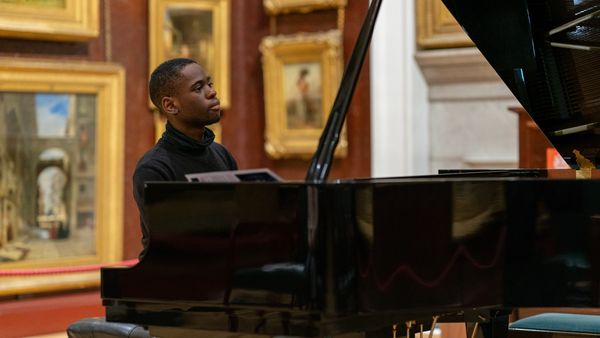
This year’s concert included a varied and impressive range of music and talents. Opening with Michael Howell, a composer and singer from West London who was a finalist in Channel 4’s The Piano (season 2), the audience were treated to Michael’s own compositions, which blend influences from both classical music (especially Bach) and jazz, together with his extraordinary, other-worldly countertenor voice.

The Alma Trio from Poole/Bournemouth impressed with their confidence and musical maturity in Rachmaninoff’s Trio élégiaque No. 1. It was especially fitting that this work, written when the composer was just 18, yet already showing immense talent and emotional depth, was performed by a trio of very poised young musicians of a similar age and equal talent. All three are heading to music college in the autumn.

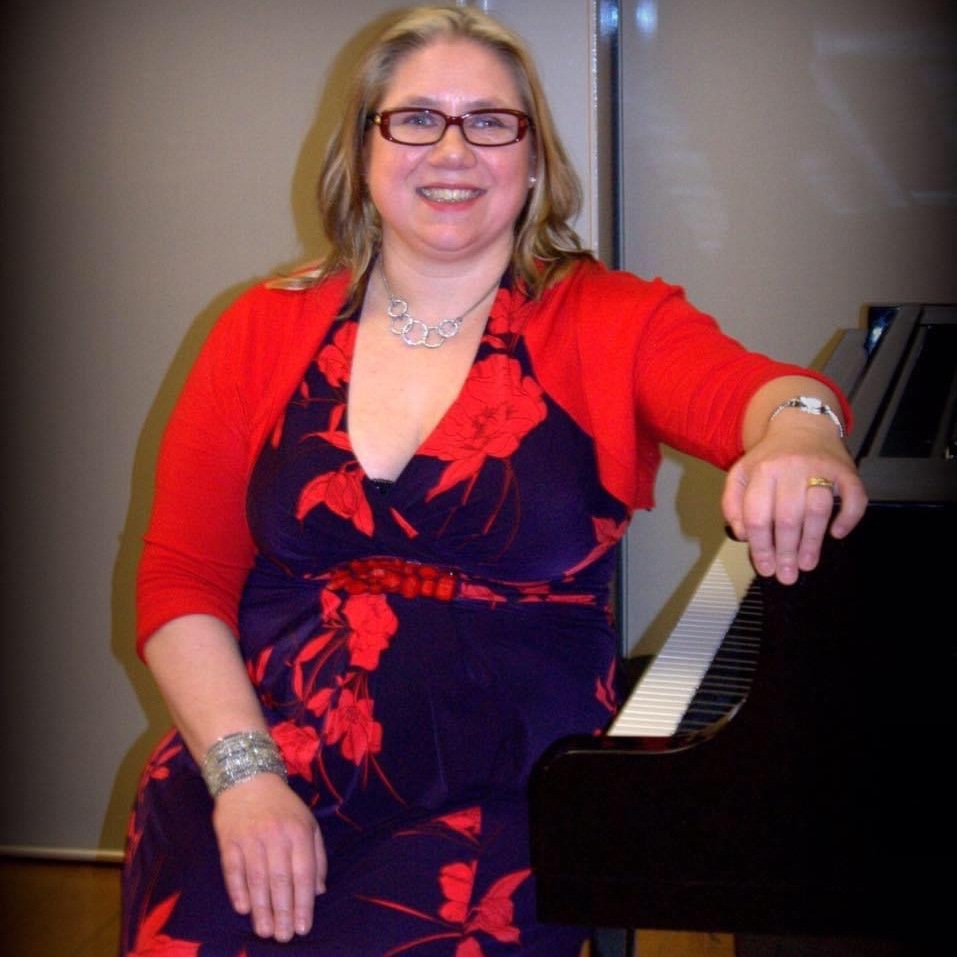
Edie Wells, a pianist studying with Duncan Honeybourne at the University of Southampton, treated us to her Diploma programme, which presented a range of music, from Bach to Gershwin, and allowed Edie to showcase her ability to handle works of different styles and eras. I particularly enjoyed her Beethoven (Piano Sonata in E major, Op 14, No 1), but the highlights were the two pieces by George Gershwin: the romantic The Man I Love followed by I Got Rhythmn, which got the audience’s feet tapping!

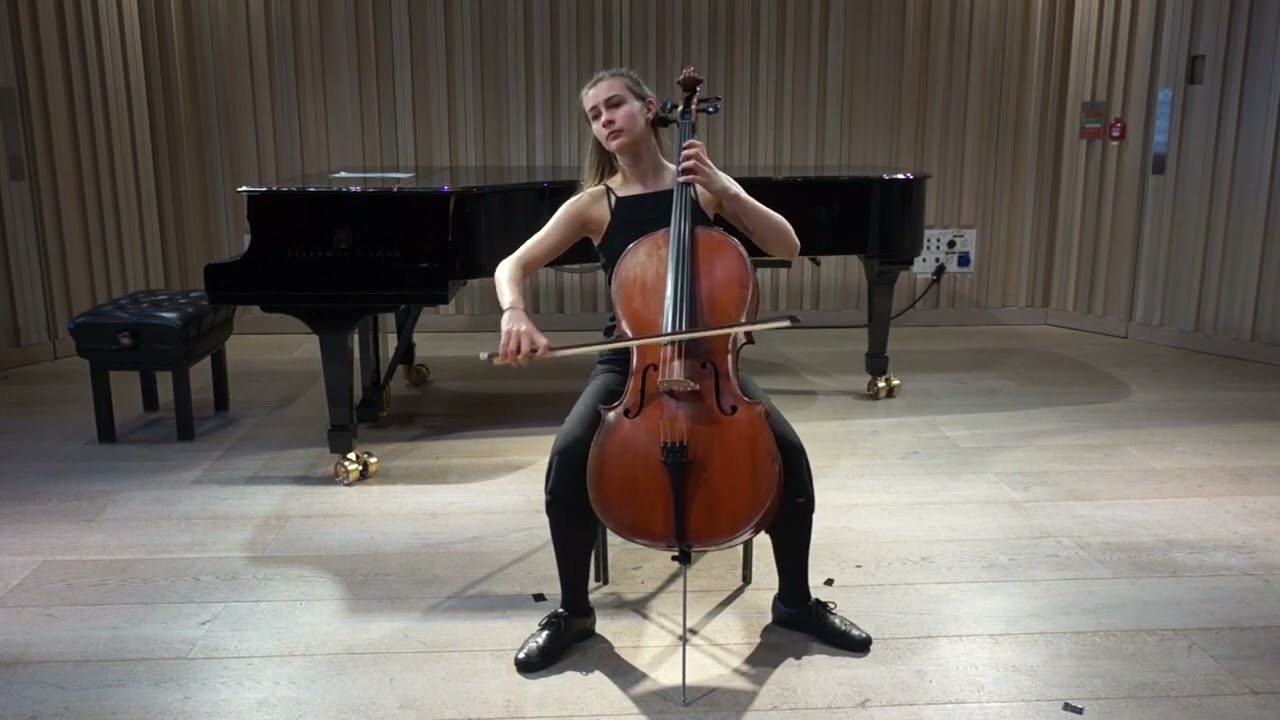
Finally, Lia Matos Wunderlich, a prize-winning teenage cellist who performed in the CMW Young Artist Showcase in 2024, gave a vibrant, heartfelt performance of Schumann’s Adagio and Allegro op.70, accompanied by Duncan Honeybourne (with whom she studies piano at the Junior Royal Academy of Music). Ending with a spirited flourish, Lia brought this splendid recital to a close.

Chamber Music Weymouth was founded in 2002 by Duncan Honeybourne. Monthly lunchtime concerts take place in St Mary’s Church in the centre of Weymouth, together with a short summer season of Sunday concerts. Find out more here

Weymouth Lunchtime Chamber Concerts (WLCC), which celebrated its 20th anniversary in 2022, is undergoing a ‘rebrand’ to reflect exciting expanding plans to bring more high-quality classical music and musicians to the popular Dorset seaside resort.

The series, founded by Weymouth-born pianist Duncan Honeybourne on his return to his hometown at the age of 25, has become well known as a platform for young professionals and established artists, and is now taking its activities up a gear. Last year’s summer concert, featuring chamber musicians coached by Duncan at the Royal Academy of Music Junior Department, was such a success that this year a special summer series of four extra Sunday afternoon concerts is being presented under the organisation’s new name CHAMBER MUSIC WEYMOUTH.

In addition to two Young Artist Showcase events on 9th and 16th July, Chamber Music Weymouth will also present a special concert of sea shanties and music inspired by or evocative of the sea and coastal landscapes with Lyme Bay Moonrakers and Duncan Honeybourne (14th July). The summer series will conclude on 28th July with a song recital given by baritone John Barker and pianist Helen Cawthorne.

Artistic Director Duncan Honeybourne says, “We’ve always made a point of welcoming young musicians, and last year’s young piano trio thoroughly enjoyed their trip to the seaside, eating ice cream on the beach after playing Mendelssohn to a large, supportive and enthusiastic audience. Everyone loved the event, and there were calls for a repeat, so this year we decided to expand the enterprise.”

Frances Wilson, herself a major voice in the piano world through her blog ‘The Cross-Eyed Pianist’, joined Duncan in 2019 as Concerts Manager, and together they plan to put their stretch of the Jurassic Coast firmly on the musical map. Frances says, “We have enjoyed record audiences since we returned to our regular monthly concerts following the challenges of the covid lockdowns, and we look forward to capitalising on this enthusiasm for what we do here with an expanded programme of concerts and other related events as we approach our 25th anniversary in 2027.”

Thanks to a generous donation from the Weymouth Music Club, which closed in 2023 after presenting concerts in the town for almost 80 years, Chamber Music Weymouth will, in addition to the regular monthly lunchtime concert series, offer further opportunities to young musicians at the start of their professional careers. Future plans also include a music festival, piano competition and masterclasses/piano courses.

The first Young Artist Showcase concert, presented by Chamber Music Weymouth, takes place on Sunday 9th June at 3pm at St Mary’s Church in central Weymouth. Students of Duncan Honeybourne from the Royal Academy of Music Junior Department and the University of Southampton will perform music by Mozart, Lalo, Paganini, and Beethoven. Tickets cost just £5, available online or on the door.

Book tickets

Full details of all concerts/events and a detailed history of the series can be found at weymouthchamberconcerts.com

a really special concert series” – Joseph Tong, pianist

“Weymouth is truly fortunate to have a concert series that benefits both local people and the wider musical community…..this is a valuable initiative that deserves continuing support and celebration.” – James Lisney, pianist


Launched in 2002 by concert pianist and Weymouth resident Duncan Honeybourne, Weymouth Lunchtime Chamber Concerts presents high-quality chamber music in the heart of Weymouth and offers a platform for musical partnerships with friends and colleagues. The concerts also give young musicians, often recent graduates from conservatoire or university, valuable performing experience to a friendly, loyal audience.

Programmes are varied and imaginative, mixing well-known works with lesser-known repertoire and composers, and all concerts take place in the attractive surroundings of St Mary’s Church, an early 19th-century church in central Weymouth, built of Portland stone.

Since its return to normal concert-giving following the covid lockdowns, the series has enjoyed record audience numbers with concerts by, amongst others, pianists Margaret Fingerhut, Joseph Tong, Allan Schiller and John Humphreys, Viv McLean, Penelope Roskell, James Lisney, Matthew Schellhorn and Katharine Lam, cellist Joseph Spooner, bass-baritone Timothy Dickinson, violinists Peter Fisher, Christopher Horner and Leora Cohen, and clarinettist Poppy Beddoe, as well as talented young musicians or recent graduates from conservatoire. Featured contemporary composers include Sadie Harrison, Adam Gorb, Ben Gaunt, Liz Dilnot Johnson and Fazil Say.

The series receives no funding or sponsorship, and all artist fees and other costs are met through ticket sales alone.

Weymouth Lunchtime Chamber Concerts (WLCC) is delighted to announce its 2021/22 season of concerts which take place once a month at St Mary’s Church, Weymouth. This season is particularly special as not only does the series return to full capacity concerts, it also celebrates its 20th anniversary in 2022.

Despite the disruption caused by the coronavirus pandemic, WLCC was able to present four concerts in its 2020/21 season which were enthusiastically received by a socially-distanced audience – proof that people really craved and appreciated live music.

The first concert of the 2021/22 season will be given by Penelope Roskell, who was brought up in Weymouth, and was fortunate to study piano with Elsie Monckton from an early age. As a child she played regularly at Weymouth Arts Centre. Since then, she has gone on to a stellar career as an international concert pianist, writer and Professor of Piano at Trinity Laban Conservatoire of Music and Dance. Penelope’s programme features three much-loved works for piano by J S Bach, Fryderyk Chopin and Franz Schubert, spanning over 100 years from the Baroque period to the Romantic era.

Future performers include pianists Margaret Fingerhut, Jelena Makarova, Nina Savicevic, Alan Schiller, John Humphreys and Duncan Honeybourne, violinist Peter Fisher, bassoonist Antonia Lazenby, and cellist Ulrich Heinen.

Founded in in 2002 by concert pianist and Weymouth resident Duncan Honeybourne, Weymouth Lunchtime Chamber Concerts presents high-quality chamber music in the heart of Weymouth and offers a platform for musical partnerships with friends and colleagues, many of whom enjoy international acclaim. The concerts also give young musicians, often recent graduates from conservatoire or university, valuable performing experience to a friendly, loyal audience.

WLCC programmes are varied and imaginative, mixing well-known works with lesser-known repertoire and composers, and all concerts take place in the attractive, welcoming surroundings of St Mary’s Church, Weymouth. WLCC is very fortunate to have use of an excellent Yamaha grand piano maintained by Weymouth Pianos Ltd. Tickets cost just £5, which represents extremely good value considering the very high quality of WLCC performers and programmes. WLCC is grateful for the support of staff at St Mary’s Church in ensuring concerts are covid-secure, safe and enjoyable for performers and audience alike.

Penelope Roskell performs on 15th September 2021 at 1pm. BOOK TICKETS

Full details of WLCC’s concerts can be found at weymouthchamberconcerts.com/.

Weymouth Lunchtime Chamber Concerts provide the whole musical package. Their programme includes established artists and emerging talent; and the conditions are superb for audience and performer alike.

Under the professional and experienced guidance of Duncan Honeybourne and Frances Wilson, Weymouth is truly fortunate to have a concert series that benefits both local people and the wider musical community…..this is a valuable initiative that deserves continuing support and celebration.

James Lisney, concert pianist

The series is organised by Duncan Honeybourne and Frances Wilson (The Cross-Eyed Pianist)


Duncan Honeybourne – Founder/Artistic Director

Commended by International Piano magazine for his “glittering performances“, Duncan enjoys a diverse profile as a pianist and in music education. His concerto debut in 1998 at Symphony Hall, Birmingham, and the National Concert Hall, Dublin, was broadcast on radio and television, and recital debuts included London, Paris, and international festivals in Belgium and Switzerland. Duncan has toured extensively as soloist and chamber musician, broadcasting frequently for the BBC and radio networks worldwide. His many recordings reflect his interest in 20th and 21st century British piano music. He is a Tutor in Piano at the University of Southampton.

duncanhoneybourne.com

Twitter: @DuncanHoneybou1

Frances Wilson – Concerts Manager

Frances is a writer, reviewer and publicist. Described by international concert pianist Peter Donohoe as “an important voice in the piano world“, Frances’ blog The Cross-Eyed Pianist has an international reputation and enjoys a large following. She also writes for Hong Kong-based classical music website Interlude and has contributed articles to Pianist magazine and The Schubertian, the journal of the Schubert Institute UK. She has appeared on BBC Radio Three’s Music Matters programme to discuss the role of music criticism today and the effect of the internet on music journalism. An advanced amateur pianist, Frances holds Licentiate and Associate Diplomas in Piano Performance (both with Distinction) and has studied with or received mentorship from a number of distinguished pianist-teachers, including Penelope Roskell, Graham Fitch, Murray McLachlan, Stephen Savage and James Lisney.

Twitter: @crosseyedpiano

The 2020/21 concert season has been difficult for all of us, from the largest venues and orchestras to small, local festivals, music clubs and concert series like the Weymouth Lunchtime Chamber Series (WLCC), which I co-organise with pianist Duncan Honeybourne.

Because of the coronavirus restrictions, we managed only three concerts in 2020 – one in February, before the first lockdown, and just two further concerts in October and December. Our autumn concerts were presented in accordance with government Covid guidance, which meant we could only admit a limited number of audience members (it goes without saying that the financial implications of reduced audience numbers are stark). But, like so many other musicians, promoters, venues and cultural organisations, WLCC adapted to the “new normal”: we have initiated an online and telephone booking system, and present two shorter recitals to allow as many people as possible within the current restrictions to attend. Our audience have adapted too, returning to our live concerts with enthusiasm, albeit in smaller numbers.

After five months of silence in 2021, our series resumed in June with a lovely performance by Duncan Honeybourne of piano sonatas by Schubert and Beethoven. It was a double celebration – the resumption of live classical music in Weymouth and also WLCC’s 200th concert (watch the livestream here).

On 7th July, pianist James Lisney closed our 2020/21 season with a generous, poetic performance of Schubert’s D935 Impromptus and selected Liszt transcriptions of Schubert’s Schwanengesang.

***

Schubert composed two sets of Impromptus, written late in 1827, the year before he died, and he numbered the D935 set 5, 6, 7 and 8, suggesting he intended them as a continuation of the D899 set.

The entire D935 is a much more substantial suite of pieces than the first set, and this is especially true of the f minor Impromptu, the first of D935, whose tone moves between quasi Beethovenian drama and assertiveness in its opening section to a contrasting, almost dream-like fragmented duet in the central sections. It is these sections which really tear at the heartstrings, yet James Lisney was careful to avoid too much introspection or sentimentality through sparing use of the sustain pedal, lively rhythms and tasteful rubato.

By contrast, the second Impromptu is serene and good-natured, its opening section reminiscent of Beethoven’s Piano Sonata No. 12, which is also scored in A-flat major. A middle section of burbling triplets moves from warmth to regret with the introduction of the minor key and thence to resignation before the opening theme returns. A more lively tempo and bass highlights emphasised the waltz rhythms of this Impromptu.

The third, in B-flat, is the most famous of the set. A set of variations, its theme resembling the incidental music Schubert wrote for the ballet Rosamunde, this Impromptu is graceful and mercurial, occasionally tongue-in-cheek, and James brought an appealing sense of warmth and wit to the music, especially in the later variations where the textures grow increasingly florid, though never dense.

The final Impromptu of the set is a wild, stomping Hungarian dance, with brilliant passagework, rapid scales and arpeggios, trills, off-beat accents, and cross modulations which take the music to unexpected places, thus creating vibrant shifts in mood and tone. The piece ends with a rapid plunge down the piano, in a scale “which tells you when to clap” (James Lisney). It was lively and boisterous, with supple tempi and improvisatory flourishes.

James Lisney has a long-standing affinity with the music of Franz Schubert, and it shows in his naturally flexible tempi, lyrical treatment of melody and songlines, an appreciation of the essential drama and introspection in Schubert’s music, and an acknowledgement that the interpretation of this music is not settled, that it is in a state of flux. He brings clarity to this music through a thorough appreciation of Schubert’s phrasing and architecture, but also finds the essential “soul” of this music through an eloquent sensitivity to the tiniest details of the score, often revealing inner voices or unexpectedly piquant harmonies.

Liszt’s great skill as an arranger, and his sensitivity to the originals, is very evident in his beautiful transcriptions of Schubert’s songs, but this is also very much his own work in the way he changes the piano texture to provide a personal commentary on the original song text and the music. Liszt sometimes takes Schubert very literally, at other times he adds flourishes and embellishments, but he always retains the essential melodic structure of the song. These three love songs were contrasting, tender and intimate – appropriately, given the small size of the audience – and we might have been in Liszt’s salon, such was the intensity of feeling, closeness and poetry portrayed in these miniatures.

This was an extremely special close to the WLCC 2020/21 season, and a fitting prelude to the new season, which will celebrate the piano – as both a solo and a chamber instrument. The season launches on 15th September with a recital by Penelope Roskell, which will include Schubert’s final piano sonata. All being well, there will be no restrictions on audience numbers and we will revert to our usual practice of a single recital of 60 minutes at 1pm.

Watch the livestream of James Lisney’s recital here


Weymouth Lunchtime Chamber Concerts were founded in 2002 by pianist Duncan Honeybourne. Concerts take place once a month on a Wednesday at St Mary’s Church, Weymouth. Visit the WLCC website for full details and to join the mailing list.
cropped-unnamed-file