Last week I went up to Hertford, the attractive county town of Hertfordshire, to attend an inaugural concert and reception, ahead of this year’s Hertfordshire Festival of Music (HFoM) which runs from 7 to 14 June.
I have been involved in the Festival since its founding by conductor Tom Hammond (who tragically died in 2021) and composer James Francis Brown, initially in an ad hoc way by sharing details of the festival here and on my social networks, and since 2020 as the Festival’s publicist.
Now in its ninth year, the festival has grown from a weekend to a full week of concerts and related events/activities. The ethos and aims of the festival have remained largely the same – presenting world class classical music and musicians in the heart of Hertfordshire alongside education and outreach projects within the local community – and each year sees a different Principal Artist (Emma Johnson, Ben Goldscheider, Steven Isserlis and Stephen Hough to name a few) and Featured Living Composer (e.g. Judith Weir, CBE, David Matthews), as well as musicians who live and/or come from Hertfordshire (flautist Emma Halnan, pianist Florian Mitrea). The concert programmes are varied and imaginative, and the range of artists is impressive. Previous performers/ensembles have included ZRI, the Rosetti Ensemble, pianists Katya Apekisheva and Charles Owen, violinists Litsa Tunnah, Mathilde Milwidsky and Chloe Hanslip, cellist Guy Johnson, and guitarist Jack Hancher.
Potential audiences (and reviewers) who live in London are often reluctant to journey too far out of the metropolis to experience live music (it was via an online discussion about this issue that I first met Tom Hammond, back in 2015), yet the ease with which one can travel to Hertfordshire was quite evident when, after having lunch with my father near Kings Cross, I took the Circle Line a few stops to Moorgate and thence a train to Hertford North station (Hertford has 2 railway stations; trains from Hertford East go to Liverpool Street). The journey was less than an hour, comfortable and pleasant, and my hotel was an easy 10-minute stroll from the station to the attractive historic centre of town. Hertford is also easily accessible by road, again less than an hour’s drive from London.
HFoM concerts take place in the town’s two main churches, St Andrew’s and All Saints, both of which are within walking distance of the town centre. Other events take place at the Hertford Quaker Meeting House (the oldest meeting house built by Friends that has remained in unbroken use since 1670), and other local venues.
If you were to make a mini break or weekend visit to Hertford, or even just a day trip, you’ll find the town has a good range of independent shops, cafes, restaurants and pubs. Ahead of the evening event, I enjoyed a stroll around the town in unexpectedly mild sunshine.
This year’s festival runs from 7 to 14 June. I can’t reveal the full programme yet but I can tell you that this year’s Festival theme, ‘Shadows to Light: Musical Journeys in Conflicts and Peace’, which celebrates the universal language of music through times of adversity and peace, and touches on the 80th anniversary of VE Day alongside contemporary global conflicts. From young musicians to established international artists, jazz music, the Hertford Community Concert Band, and even a special Festival Church Service, this year’s Festival offers something for everyone and features over 30 events across music and outreach activities, of which 50% are free, with concessions applied to ticketed events.
You can enjoy early access to Festival news by signing up to the HFoM newsletter or by following the festival on social media.
Hertfordshire Festival of Music is built on the involvement, support and encouragement of Hertford and the county’s communities who help build a thriving and rich Festival for the communities HFoM wishes to serve.
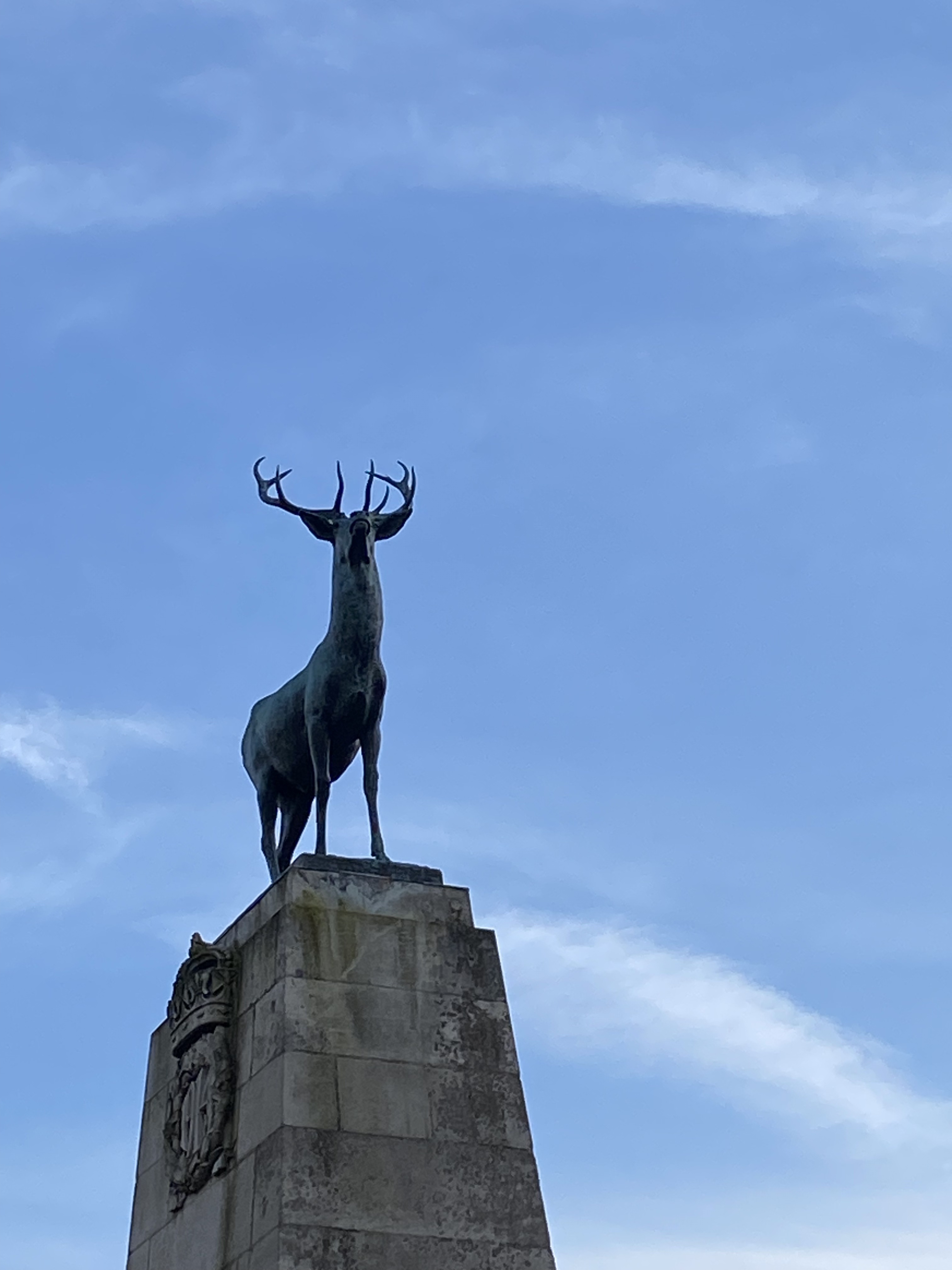
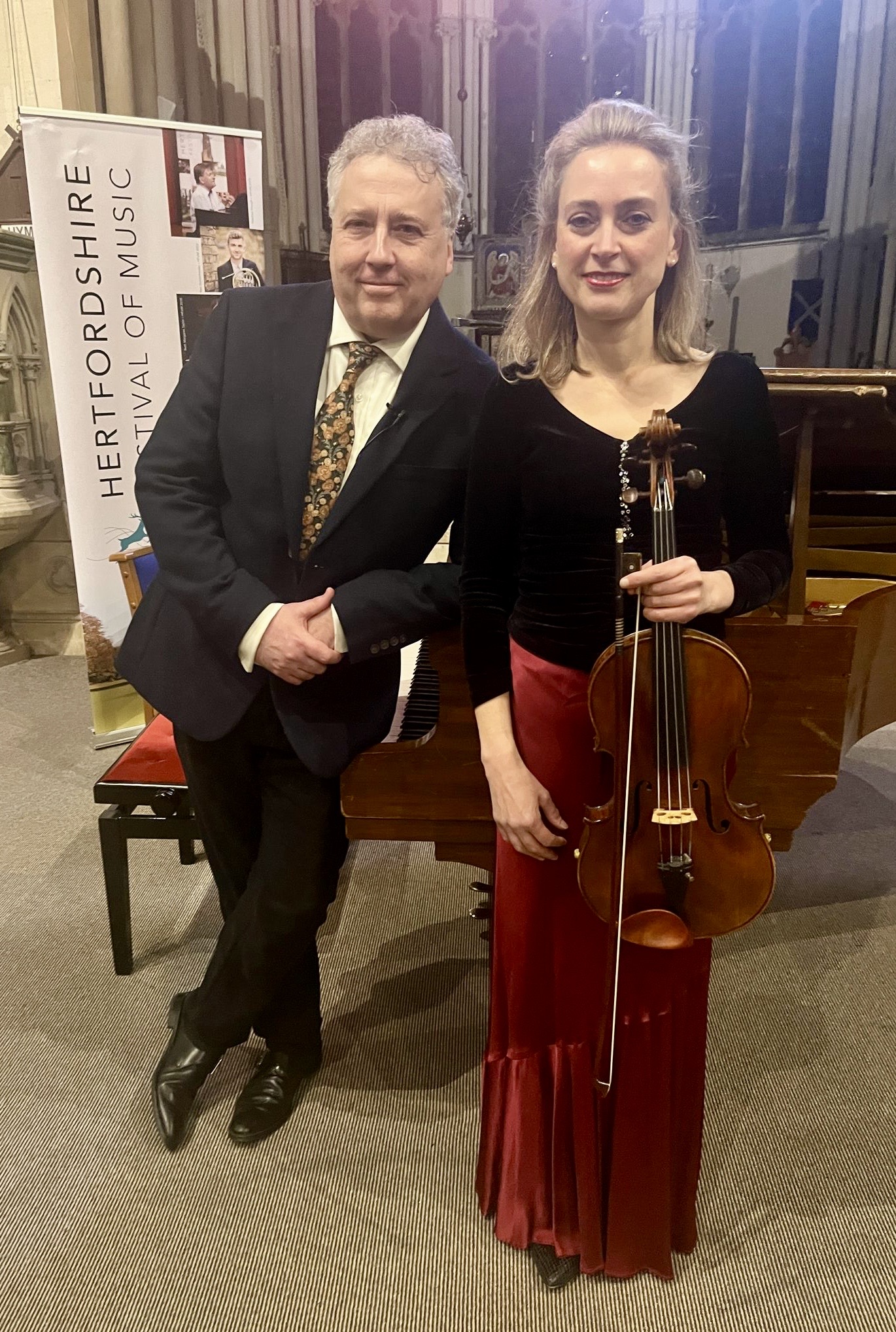
The Hertford hart Artistic Director/pianist James Francis Brown & volist Sarah-Jane Bradley
An interview with celebrated baritone Benjamin Appl ahead of his appearance at this year’s Leeds Lieder Festival
Who or what inspired you to pursue a career in music and who or what have been the most important influences on your musical life and career?
I started to sing when I was pretty young. Although no one in my family had trained as a professional musician, we sang a lot together while my mother accompanied us on the guitar. Aged ten I followed my two brothers and joined one of the most renowned boys choirs, called the Regensburger Domspatzen (which means the ‘cathedral sparrows of Regensburg’). Originally I wasn’t so fond of boys singing together – I disliked the sound and thought it sounded shrill – but after being part of this choir community and experiencing that amazing feeling of making music together on such a high level, I then really loved it. I think this was the moment when this addiction was first planted inside me, the feeling that life without music would not be the same.
Then, as a professional musician, of course it was my teacher and mentor Dietrich Fischer-Dieskau. To have had the privilege of working with him is one of the highlights of my career to date. He was a real mentor in many ways and taught me so much, not just vocal technique or interpretation but much more beyond this: he taught me the essence of being a musician, and the responsibilities with which that comes.
I was deeply impressed by his level of preparation, and the seriousness with which he achieved such a deep level of understanding of the music. Every time I went to his home he had prepared himself for our session, looking through the scores again, reading about the poetry and the background of the songs – doing all this even though he had already spent a lifetime on it. But this is also one of the most wonderful aspects of this profession: you never can be too well prepared.
What have been the greatest challenges of your career so far?
I think what’s important is to find a personal connection with the music and how to present it and how to communicate it to people. If you’re yourself and you try to find a good emotional connection and how to communicate it, then it can be fairly easy. Generally, though it’s quite a difficult job in that as a singer, you carry your instrument with you 24 hours a day! We can’t, like a pianist for example, leave the instrument at home for two hours in the evening and go to the pub. That’s also something else we have to live with regarding our instrument – we have to accept when it’s not working and to be kind to it. That does mean that it can be difficult not to become too self-centered and think only about ourselves. That is something very challenging and we have to find ways to cope with it.
Of which performances/recordings are you most proud?
Actually, it will be one of my forthcoming album releases, a project I have been involved with for quite some years now. Together with one of the greatest contemporary, living composers György Kurtág, I am recording some of his compositions as well as songs by Franz Schubert, where he, aged 97, plays the piano. The working process with him is incredibly detailed and challenging, but the rewards are at a level you normally never experience anywhere else.
Which particular composer do you think that you perform best?
I probably would say Franz Schubert. With him and his music I feel most at home, not only because I spent the most time with his music and learned around 400 of his songs by heart. There is something in his music which gets right into my heart – how he creates an environment, a beautifully carpeted pathway, for the poetry to speak directly to the listeners. There is no extraneous material or conceit; the musical textures ar. He is a composer who somehow stands with both feet on the ground. His music feels somehow deeply rooted inside me and I resonate with his sentiments in his music – and therefore I think I can transfer this connection the best also to the audience.
What do you do off stage that provides inspiration on stage?
Finding inspiration is a key element of our profession. We give so much on stage and every evening try to give what we can that we actually have make sure that we fulfil own our inner inspirations – to go to museums, to casually observe life passing by in the underground in how people move around and suddenly think “This is a character in this song.” I enjoy wonderful times with other inspiring people, listening to their stories, being curious, having every pore of your body open so as to find inspiration again a new way of interpreting songs. Also always questions about why we do it this way, why this tempo, why do we take time here, why is this word important for us etc so that we actually create and never just deliver.
How do you make your repertoire choices from season to season?
It really depends on the different kinds of inspiration I get from outside or from within myself. Often reflecting on processes lcan ead to a different direction which you didn’t plan on and then of course the choices also depend on the interesting offers which are given to you.
Do you have a favourite concert venue to perform in and why?
Of course there are certain parameters which are important in a venue. Mostly it’s about the acoustic, so that you as a singer have the feeling that the space is giving you something back, and enhancing the reverberation of your own voice. But just as important is an ambience which makes you feel welcomed and comfortable when you enter. A good piano for my accompanist doesn’t hurt either!
But what would even an ideal venue be without an open and attentive audience? Especially for song recitals which are in many ways presented as a dialogue: even though one party is usually silent, it is an exchange of emotions and very much a shared experience. So the ideal really is to have a wonderful audience who is willing to be taken by the hand to go on a journey together.
What is your most memorable concert experience?
There are a few. Of course someone now would expect me to name performances in the biggest, most prestigious halls around the globe. But for me very often these ‘stellar moments’ happen under different circumstances: music is a comfort for me in moments of solitude or sorrow, and exaggerates my happiness in joyful moments. Performances which stay with me forever are very often linked with big moments which happened in my private life at the same time, like the loss of my grandparents, when I had to go out on stage and sing songs about facing death or mourning the loss of beloved ones; but also when I fell so deeply and freshly in love.
As a musician, what is your definition of success?
Often I hear people say that art song is dead or that we cannot connect anymore to all those old texts and music. And I think exactly the opposite. All these songs are about emotions and feelings we carry very deeply in us, essentials like falling in love, being disappointed, loss of a beloved person or solitude – strong feelings we all can connect with and have experienced. I think within this art form there lie many opportunities and I am constantly searching for ways of combining it with other art forms or putting it in a current context. As a performer I experience very strongly that these songs make me understand myself and others better: My definition of success is when the same happens to my audience, that people connect with each other, go together on a journey and start a process of reflecting.
What advice would you give to young/aspiring musicians?
Find the right balance in life of the amount of performances, travel, working hours and try to have an interest or hobby outside music, which gives you the opportunity to put music aside for a moment and find pleasure and happiness somewhere else as well. It will only enrich your musicianship in the end.
What do you feel needs to be done to grow classical music’s audiences?
The field of Art Song is a bubble within the classical music world, which is a bubble in itself. So, I am very much aware that we will never have huge audiences or huge crowds and millions of people listening to us, but that is also fine to accept. I think that generally, elderly people who have more time in their lives, who don’t have to worry about small kids, or making a lot of money in their jobs, or having to learn a lot in schools etc have the luxury of time. And when you do some recitals, you have to focus fully on the music and the text. It’s not something which you can listen to on playlists or during to a fancy dinner. It really requires one’s full attention. And that’s challenging in the 21st century when everything’s very hectic and people have a short attention span. So that’s a reason why I think particularly people listening to song cycles are very often are in the second half of their lives.
I’m trying with my own programmes to go into schools and bring this Art Song to schoolchilren to try and make them curious about this music. It’s very important to plant the love I feel for this music into the hearts and ears of these young people so that at least they have the chance to encounter it at a young age and to see that other people are passionate about it.
What’s the one thing in the music industry we’re not talking about which you think we should be?
I think it’s wonderful that there are so many young people interested in studying singing or classical music. In colleges there are so many applications, like never before, so that’s something very positive. I find the lack of interest in politics and about people in the arts quite worrying. There are so many studies around the world which show the impact of music on human brains, on children such as how it makes them better human beings with better social skills, but also they learn other subjects faster, like languages etc. There is only good in it and I find it strange that no politicians really see the huge impact of music and how important it is. We have to plant music and art into the brains and hearts of young people. And even if they don’t like it in the beginning, I think it’s important that they have the chance to encounter it so that when they get older and listen to classical music they feel familiar with it. If they don’t get the chance from the very beginning it’s very hard later on to really understand this world which is so important in shaping for everyone. That’s something I feel very passionate about.
What’s next? Where would you like to be in 10 years?
There are so many ideas and interesting places to perform. I would love to perform song recitals for example like Schubert’s ‘Winter Journey’ in the Arctic. Pushing boundaries with other art forms, and strong collaborations. I have so many ideas in my mind that it’s sometimes overwhelming! I definitely have to write them all down, firstly not to forget them, but also to focus my mind on one idea. I have so many ideas all the time and would love to go in different directions, work with different people and never loose the joy and filfillment in performing. Just probing the horizon, being curious, not thinking in boxes but outside my box, and appreciating other people and their work and their love.
What is your idea of perfect happiness?
Despite the stress and demand of my life as a professional singer I always try to remember that it is a huge privilege to live this life. Sometimes I ask myself the question if there is anybody in this world with whom I would like to swap lives and I can always truly say that I am most happy and there is no one with whom I want to exchange life – as long as I can say that, I am very happy with this accomplishment.
What is your most treasured possession?
Due to my profession, I feel like I spend a huge amount of my time researching and booking transport and then travelling from one concert hall to the next. In work circumstances, I often have to prioritise speed as time can be tight and pressure is high. As an antidote to that, a few years ago I bought an old Volkswagen Beetle: a beautiful red convertible from 1974 which I love to drive around the beautiful Bavarian landscapes with their with mountains, lakes and castles. Driving my little car relieves all the stress I typically experience whilst travelling and it calms me in a wonderful way. Also when the roof is open, I get the feeling that I can appreciate the surrounding nature so much more.
What is your present state of mind?
I often ask myself how does doing the kind of work I am doing in the arts change me as a person and as a creator. In this process of reflection, we have to be open, we have to find inspiration and that’s something, of course, that has a huge influence on ourselves as musicians. As singers, if we change our daily routine, we have to be careful with our voice, we can’t have the wildest life before performances, and so on. And the curiosity we have as an artist influences us very much.
The way of reflecting about ourselves, that we try to become better and better, is also something which changes us. I think of course, the art and the voice are so dominant in our lives as singers and really leading our lives, that we have to follow the music and the voice as a person within our life.
Benjamin Appl appears at this year’s Leeds Lieder Festival which runs from 13 to 21 April 2024. Full details/tickets here
Last week I went up to Hertford, the attractive county town of Hertfordshire, to attend an inaugural concert and reception, ahead of this year’s Hertfordshire Festival of Music (HFoM) which runs from 7 to 14 June.
I have been involved in the Festival since its founding by conductor Tom Hammond (who tragically died in 2021) and composer James Francis Brown, initially in an ad hoc way by sharing details of the festival here and on my social networks, and since 2020 as the Festival’s publicist.
Now in its ninth year, the festival has grown from a weekend to a full week of concerts and related events/activities. The ethos and aims of the festival have remained largely the same – presenting world class classical music and musicians in the heart of Hertfordshire alongside education and outreach projects within the local community – and each year sees a different Principal Artist (Emma Johnson, Ben Goldscheider, Steven Isserlis and Stephen Hough to name a few) and Featured Living Composer (e.g. Judith Weir, CBE, David Matthews), as well as musicians who live and/or come from Hertfordshire (flautist Emma Halnan, pianist Florian Mitrea). The concert programmes are varied and imaginative, and the range of artists is impressive. Previous performers/ensembles have included ZRI, the Rosetti Ensemble, pianists Katya Apekisheva and Charles Owen, violinists Litsa Tunnah, Mathilde Milwidsky and Chloe Hanslip, cellist Guy Johnson, and guitarist Jack Hancher.
Potential audiences (and reviewers) who live in London are often reluctant to journey too far out of the metropolis to experience live music (it was via an online discussion about this issue that I first met Tom Hammond, back in 2015), yet the ease with which one can travel to Hertfordshire was quite evident when, after having lunch with my father near Kings Cross, I took the Circle Line a few stops to Moorgate and thence a train to Hertford North station (Hertford has 2 railway stations; trains from Hertford East go to Liverpool Street). The journey was less than an hour, comfortable and pleasant, and my hotel was an easy 10-minute stroll from the station to the attractive historic centre of town. Hertford is also easily accessible by road, again less than an hour’s drive from London.
HFoM concerts take place in the town’s two main churches, St Andrew’s and All Saints, both of which are within walking distance of the town centre. Other events take place at the Hertford Quaker Meeting House (the oldest meeting house built by Friends that has remained in unbroken use since 1670), and other local venues.
If you were to make a mini break or weekend visit to Hertford, or even just a day trip, you’ll find the town has a good range of independent shops, cafes, restaurants and pubs. Ahead of the evening event, I enjoyed a stroll around the town in unexpectedly mild sunshine.
This year’s festival runs from 7 to 14 June. I can’t reveal the full programme yet but I can tell you that this year’s Festival theme, ‘Shadows to Light: Musical Journeys in Conflicts and Peace’, which celebrates the universal language of music through times of adversity and peace, and touches on the 80th anniversary of VE Day alongside contemporary global conflicts. From young musicians to established international artists, jazz music, the Hertford Community Concert Band, and even a special Festival Church Service, this year’s Festival offers something for everyone and features over 30 events across music and outreach activities, of which 50% are free, with concessions applied to ticketed events.
You can enjoy early access to Festival news by signing up to the HFoM newsletter or by following the festival on social media.
Hertfordshire Festival of Music is built on the involvement, support and encouragement of Hertford and the county’s communities who help build a thriving and rich Festival for the communities HFoM wishes to serve.
The Hertford hart Artistic Director/pianist James Francis Brown & volist Sarah-Jane Bradley
Hertfordshire Festival of Music celebrates live classical music in Hertfordshire with an exhilarating programme of magnificent classical music, both traditional and modern – an opportunity to enjoy world class music in the heart of Hertfordshire.
“The friendly, accessible vibe of Hertfordshire Festival of Music was accompanied by the very highest level of music-making and extremely imaginative programmes in beautiful locations.” – Judith Weir CBE, Master of the King’s Music
With a theme that explores the fascinating relationship between music and art, HFoM will unite the local communities of art and music lovers through illuminating talks and imaginatively devised concert programmes. The Festival will also mark the Coronation of King Charles III with two special events.
HFoM is honoured to have Emma Johnson, one of the world’s finest clarinettists, as this year’s Principal Artist, performing a captivating recital with the talented pianist Gregory Drott. There is also a special opportunity to observe her artistic insight in a masterclass for young and aspiring players at the beautiful Queenswood School in Hatfield. Emma Johnson will also be in conversation with Artistic Director James Francis Brown to talk about her musical journey, her passions and her interests, and to share insights and opinions on music, art and life.
Featured artists at this year’s Festival include:
Emma Johnson, Katya Apekisheva, Gregory Drott, Jack Hancher, Hertford Chamber Choir, Manvinder Rattan, Rossetti Ensemble, Daniel Swain, Litsa Tunnah, Daniel Grimwood, William Whitehead, ZRI
Highlights of this year’s Festival include:
Coronation Celebrations in Hertford
HFOM marks the coronation of King Charles III with two special events in Hertford. At Hertford Castle, the HFoM Community Concert Band musicians will perform arrangements of music associated with royalty in a fun, relaxed performance. The Hertford Chamber Choir and Manvinder Rattan take up the theme in a special performance at All Saints’ Church, including exquisite solo works for organ performed by William Whitehead.
The ever-popular ZRI ensemble return to HFoM with their genre-bending and audience thrilling ‘Cellar Sessions’, recreating the atmosphere of the legendary Red Hedgehog bar in Vienna, at the McMullen Brewery courtyard in Hertford.
Pianist Katya Apekisheva makes her Festival debut performing one of the war horses of art-inspired music, Mussorgsky’s Pictures at an Exhibition. Festival newcomer violinist Litsa Tunnah shares her passion for music and colour in a recital, and she will be in conversation with Artistic Director James Frances Brown exploring the rare phenomenon of synaesthesia, where sounds can trigger colours or shapes, and discussing how music can create visual impressions.
Guitarist Jack Hancher returns to Hertford with a solo recital of music inspired by art, and there will also be a special appearance of the highly regarded Rossetti Ensemble in a performance of music by David Matthews and Festival Artistic Director, James Francis Brown.
Emma Johnson
ZRI
Jack Hancher
Litsa Tunnah
Daniel Grimwood
Rossetti Ensemble
Gregory Drott
Katya Apekisheva
Manvinder Rattan
William Whitehead
HFoM plans 15 events/outreach projects in community venues, anticipating engagement with around 1,500 individuals (performers, audiences, participants/beneficiaries). Eight of the events are free, with discounted ticket prices for concessions where possible.
As part of the Festival, and with the support of community sponsor, Network Homes and collaboration with Sing from the Heart, HFoM’s Music in Mind project offers a series of interactive sessions for people living with dementia, as well as their carers and families, in selected care homes across Hertfordshire. These sessions are led by specially trained musicians who share the gift of music with compassion and sensitivity. Music can have a positive impact on the symptoms of dementia, as well as bringing joy and happiness to those who participate.
In addition, HFoM is delighted to continue its vitally important education projects with exciting plans to get schoolchildren up and singing, in collaboration with Hertfordshire Music Service and Queenswood School, taking place later in the year.
Hertfordshire Festival of Music is the vision of the late Tom Hammond and composer James Francis Brown, and is registered as a charity supported by a board of Trustees and a team of volunteers.
Now in its eighth year, HFoM has grown rapidly from a small weekend event to one of the UK’s major summer music festivals, featuring international artists and ensembles alongside innovative outreach and educational projects, all based in and around the attractive historic county town of Hertford. Since its launch, HFoM has presented concerts that have inspired extraordinary audience responses to artists such as Tasmin Little OBE, Dame Emma Kirkby, Stephen Hough CBE, Steven Isserlis CBE, Ben Goldscheider, the Carducci Quartet, the Galliard Ensemble, Chloë Hanslip, ZRI and The Prince Consort.
HFoM is fortunate to receive support from a number of charitable trusts and foundations, county, district and town councils, while a growing Friends Scheme allows individuals to play an important role in supporting the Festival and furthering its scope and potential.
The Festival offers affordable ticket prices, several free events, concessions for those under 24 in full-time education, free tickets for the under 8s and a complementary ticket for a carer accompanying those patrons with access needs.
HFoM exists to celebrate and nurture exceptional music-making, featuring some of the world’s finest performers. The Festival also supports professional and young musicians from Hertfordshire, presents fascinating music by living composers and devises major, innovative projects for education and participation. Hertford is just over twenty miles from central London, easy to get to by rail and road but nestled in the beautiful countryside of the Lea Valley. Most concerts take place within a ten-minute stroll of the town’s centre, which boasts excellent restaurants, many independent shops and accommodation.
The Cross-Eyed Pianist is free to access and ad-free, and takes many hours every month to research, write, and maintain.
If you find joy and value in what I do, please consider making a donation to support the continuance of the site







 The Cross-Eyed Pianist