
Georgian pianist Khatia Buniatishvili played an absorbing programme of works by Liszt, Chopin and Prokofiev to a sold-out Wigmore Hall on the evening of 6th December 2011.
Read my review for Bachtrack here

Georgian pianist Khatia Buniatishvili played an absorbing programme of works by Liszt, Chopin and Prokofiev to a sold-out Wigmore Hall on the evening of 6th December 2011.
Read my review for Bachtrack here
Say ‘Mazurka’ and most people will reply ‘Chopin’. Chopin wrote at least 69 pieces in this form: 45 published during his lifetime, 13 published posthumously, and a further 11, which are known but where the mss are in private hands or untraced. He took the rough Polish peasant dance and refined it, as he did with the Waltz and the Polonaise (also of Polish origin), elevating it to drawing room “art music”. His Mazurkas remain perennially popular; some are much more famous than others and are performed regularly (for example, Op. 7, No. 1, Op. 17 (1-3), Op. 33 No. 2) . I first came across the genre when, in my late teens, I was a Saturday pianist for the local ballet school in Rickmansworth, where I would belt out bouncy Mazurkas on a rather ropey upright, and a group of little girls in pink tutus would prance about the studio before curtseying to ‘Miss Frances’ at the end of the lesson.
Chopin’s Mazurkas show great range and variety. Some are lively, full of rhythmic vitality, others more soulful and melancholy. They are some of Chopin’s freshest and most original works, yet all retain features of their folk origins. One the last Mazurkas, indeed one of his final works, Op. 68, No. 4 in f minor, is one of the most plaintive and heart-rending pieces Chopin ever wrote, suffused with zal, with striking, sliding chromaticism, and an interesting marking (Chopin’s own) after the Trio, senza fine, literally “without end”, suggesting that instead of a regular da capo al fine, the piece should go on indefinitely, or simply fade away to nothing.
The Mazurka, or mazurek, originated in the Polish region of Mazrovia, near Warsaw, a dance in triple time, with an emphasis on the second or third beat. The true folk origins of the Mazurka are two other Polish musical forms, the slow, plaintive Kujawiak and the fast, lively Oberek. The mazurek always has either a triplet, trill, dotted quaver pair, or an ordinary quaver pair before two crotchets. A closer reading of Chopin’s Mazurkas will reveal these different aspects of the Mazurka: for example, the Op. 68, No. 4 is a Kujawiak, while the much-loved Op. 7, No. 1, draws direct influence from the Oberek.

Chopin’s composition of Mazurkas suggested new ideas of nationalism in music, and influenced and inspired other composers, mostly eastern European, to support their national music. Franz Liszt was a big mover and shaker in this respect, claiming (somewhat inaccurately) that Chopin had been directly influenced by Polish national music. What is more likely is that Chopin heard national music of his homeland when he was growing up. When he left Poland, never to return because of the political climate, the Mazurka and the Polonaise became central genres in his compositional output, allowing him to retain a connection to his homeland.
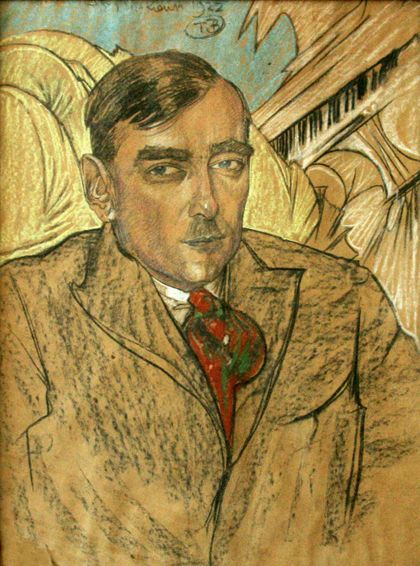
Fellow countryman, Karol Szymanowski (1882-1937) wrote two sets of Mazurkas, Opus 50 and 62 (22 works in total). He drew musical influences from Chopin, but also from Wagner, Richard Strauss, Max Reger, Scriabin, Debussy, Ravel and nationalists Smetana and Bartok. I discovered Szymanowski’s music, in particular the Etudes for piano, after a friend said “If you love Chopin, you’ll like Szymanowski”. They were right. However, listen to his Masques or Metopes, and you could easily mistake him for Debussy or Ravel, with their misty, uncertain harmonies, flutters and shimmers of sound, and ambigous keys.
Szymanowski travelled extensively, and from the 1920s, he spent a great deal of time at the resort of Zakopane, in the Tatra highlands of Poland, where he discovered the local folk music or Górale. With its typical rustic fiddles and flutes, drone basses and pedal points, this became the template for his own music. Like Chopin, he was loyal to the idea of musical nationalism, but neither was he intimidated by it. So, while retaining many of the traditional features of the Mazurka in all its forms (Oberek, Kujawiak and Mazurek), he also extended it beyond the strict 4-phrase dance measure. As a result, Szymanowski’s Mazurkas defy the traditional symmetry of the dance, and instead expand and contract. The longest are just over three minutes long, the shortest just under two. Some are wistful, plaintive and meditative, others bounce and leap, some are witty and acidic, other are just rough and noisy. Within each one, tempos contract and expand, and one might find a slow Kujawiak-inspired passage right next to a section which is pure Oberek. It is these clever juxtapositions which give Szymanowski’s Mazurkas such life and piquancy.
I am including the first two of the Opus 50 Mazurkas in my Diploma programme. The first, a Kujawiak, opens with a plaintive descending figure, redolent of a rustic violin or shepherd’s flute, with a bagpipe-like drone on an open fifth in the left hand, before the introduction of distinctly Debussyan chords at bar 3. The opening melody is then repeated and embellished. The marking ‘molto rubato’ suggests plenty of freedom in the tempo here (while, of course, retaining an underlying sense of pulse), which adds to the wistful nature of this section. The organisation of material here suggests the typical Górale ensemble of first and second violins, and bass. The music then moves into more familiar Mazurka territory, with a repeated drone bass in the left hand and two strands of melody in the right hand, a hint of Górale polyphonic writing. At bar 25 a very characteristic Mazurka rhythm is introduced, repeated in octaves at bar 29, but marked ‘pp dolciss.’ (very soft and sweetly), which suggests a reminiscence, rather than a straight repeat. And this is what I love about these pieces – the way the composer takes distinctive elements of the form and then tweaks them to give subtle hints and nuances, as if the melody were heard from afar.
Interestingly, there is no full double bar between the first and the fourth of the Opus 50, which suggests all four should be played straight through, without a break, and I like to segue straight into the second from the first. The second is much more characteristic of Górale folk music, with off-beat drones, asymmetric phrasing, dissonance, falling melody, abrupt dynamic shifts, voice-crossing between the parts, and bouncy Oberek-inspired repeating rhythmic motifs. However, at bar 53, there is a section drawn directly from the Kujawiak, a plaintive, melancholy dance strongly redolent of Chopin’s f minor Mazurka, Op. 68, No.4. This is fleeting: the Oberek is restated, and once again the music sets off on a lively, astringent strut. But at bar 95, there is another ‘reminiscence’, in a section marked ‘sostenuto’. The opening melody reappears, shared between the hands and rising in pitch, while fading to pianissimo, before an emphatic, sfzorzando and accented closing chord.
Of all the Opus 50 Mazurkas, the first is probably the most popular for many pianists, including Artur Rubenstein, to whom it was dedicated.
(Links open in Spotify)
Vladimir Ashkenazy – Chopin: Mazurka No.1 in F sharp minor Op.6 No.1
Vladimir Ashkenazy – Chopin: Mazurka No.3 in E Op.6 No.3
Vladimir Ashkenazy – Chopin: Mazurka No.5 in B flat Op.7 No.1
Piotr Anderszewski – Szymanowski: 3 Masques, Op.34: Scheherazade/Shéhérazade (lento assai, languido)
Marc-André Hamelin plays Szymanowski’s Mazurkas Op. 50 Nos. 1 and 2
For those of us who had piano lessons as children, I’m sure we can all remember our first teacher. Mine was Mrs Scott, in Sutton Coldfield, who seemed ancient to me, and really quite scary, with her big grand piano, her elegantly manicured and scarlet-painted nails, her pearls (jewellery, not wisdom!). I learnt dull pieces, and early Czerny and Clementi studies and sonatinas. I took an exam a year. I recall being quite bored by my lessons.
One friend of mine remembers, with a shudder, the teacher who rapped her knuckles with a ruler and, on occasion, dropped the lid of the piano on her fingers (this was in the 1970s, not the 1870s!). Another has never forgotten the teacher’s withering words about his playing – and his parents’ insistence that he keep taking lessons (he didn’t – but started learning with me a year ago).
My music teacher at secondary school was enthusiastic and inspirational (I can still hear him, when I say to my students “pretend you’re a trumpet/cello/clarinet”), and the piano teacher, recommended by him, was energetic and motivating. I learnt quickly with her, always the sign of good teaching, in my book, because she encouraged me, and engaged my interest and excitement in the music I was studying. I was very sorry to leave her when I went to university.
When I decided to resume piano lessons in my mid-40s, I was fortunate to study with several respected and highly-skilled teachers, who were themselves taught by some of the greatest pianists and pianist-teachers of the twentieth century.
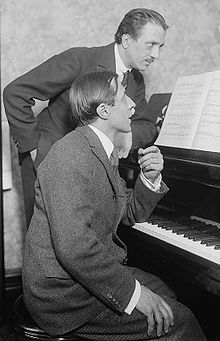
This connection to earlier teachers and pianists interests me: one of my teachers’ teachers, Vlado Perlemuter, studied with Maurice Ravel, and was a student of Alfred Cortot who was a student of Descombes who was, possibly, a student of Chopin. Thus, I could, albeit somewhat tenuously, claim to be a great-great-great-grand-pupil of Chopin! Students of British pianist Phyllis Sellick (1911-2007) can trace a direct lineage back to Chopin via Isidor Philipp and Georges Mathias. Another of my teachers’ teachers, Guido Agosti, was a student of Busoni. Yet another, Maria Curcio, studied with Artur Schnabel, who was a student of Theodor Leschetizky.
A good teacher is like a doorway, a connector to earlier teachers and mentors, and, most importantly perhaps, to the music. One feels a tremendous sense of continuity through these generational connections, and such musical ‘provenance’ is invaluable and inspiring when one is learning. A teacher can act as a spy on the past, if you will, passing on ‘secrets’ handed down from earlier teachers, and enriching one’s experience of previous performers and performances. This musical genealogy also enables a good teacher to be eloquent and articulate about what makes a good performance – and what makes a really great one.
When learning at an advanced level, a good teacher is less a didactic tutor, more a guide and a mentor, and, ultimately, a colleague. It always excites me when my teacher asks me what I thought of something, why I played this or that passage in a particular way, or how I might translate an aspect of technique to suit my most junior students. Such exchanges prove that teaching is an ongoing learning process in itself: the best teachers are often the most receptive too, and engage in continuing professional development to ensure they remain in touch with current practices and theories. Mix this with that wonderful heritage of past teachers, an ability to communicate well, patience and empathy, and a positive attitude, and you should have a truly great piano teacher.
More on teachers and mentors here




 The Cross-Eyed Pianist