VIVUM MUSIC RELEASES CHORAL SINGLE TO CELEBRATE LINDSAY GRAY AND HIS CHORAL MUSIC LEGACY

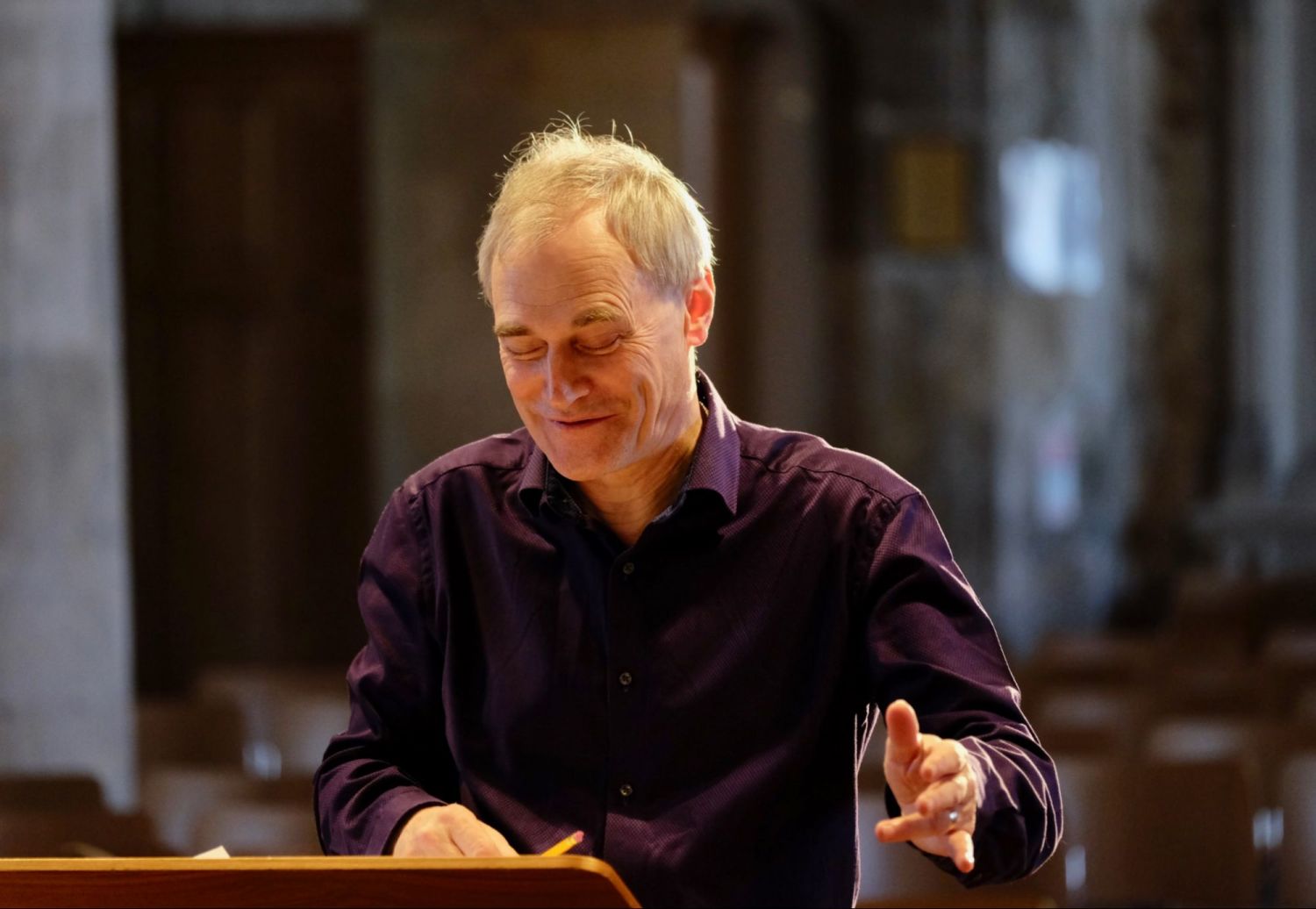
‘May the Spirit Sing in Your Heart’ by Thomas Hewitt Jones is a choral single, originally composed for the 70th birthday of Lindsay Gray on 22 July 2023. This release marks the retirement of Lindsay from his role as founder and conductor of Caritas Consort, and celebrates his choral music legacy. The anthem is in the rich key of A-flat major, and sets a new text by Gordon Giles, which celebrates spirituality and the value of music. The piece was commissioned by Lindsay’s daughter Susanna, who sings soprano on the recording, and the music is published by Encore Publications.

Lindsay Gray says, ‘I feel very honoured indeed to have been the recipient of such a fine piece of music written for my 70th birthday by such a highly regarded composer! It has been fabulous to work with Tommy [Hewitt Jones] over the years, and we have greatly enjoyed performing his music in Caritas ever since the choir’s very first ever concert in March 2013, which Tommy so kindly attended. Warmest thanks; this is massively appreciated by me, by Caritas and by the Nepal charity which has also benefited so much!’

Thomas Hewitt Jones says, ‘Lindsay’s wonderful legacy in choral music needs to be celebrated, as does his tireless work raising money for good causes. As well as an esteemed musician. Lindsay has championed countless young musicians over the years (including me, when I started out). I am delighted to call him both a friend and colleague and very pleased we could release this recording to help celebrate the legend that is Lindsay Gray!

MAY THE SPIRIT SING IN YOUR HEART

Music by Thomas Hewitt Jones, words by Canon Gordon Giles

Caritas Consort conducted by Lindsay Gray

Recorded in St German’s Church, Cardiff, by Thomas Hewitt Jones for Vivum Music

Available now on all major streaming platforms


ABOUT LINDSAY GRAY AND CARITAS CONSORT

Lindsay Gray has had a distinguished career as singer, conductor, musical director and educator. He served as Director of the Royal School of Church Music (RSCM) from his appointment in 2007 through to 2012, having previously been a school headmaster for sixteen years, including fourteen at The Cathedral School, Llandaff. After his tenure at the RSCM, he continued to promote choral excellence through initiatives such as the Caritas Consort, embodying his lifelong commitment as an educator, enabler and supporter of sacred music and charities.

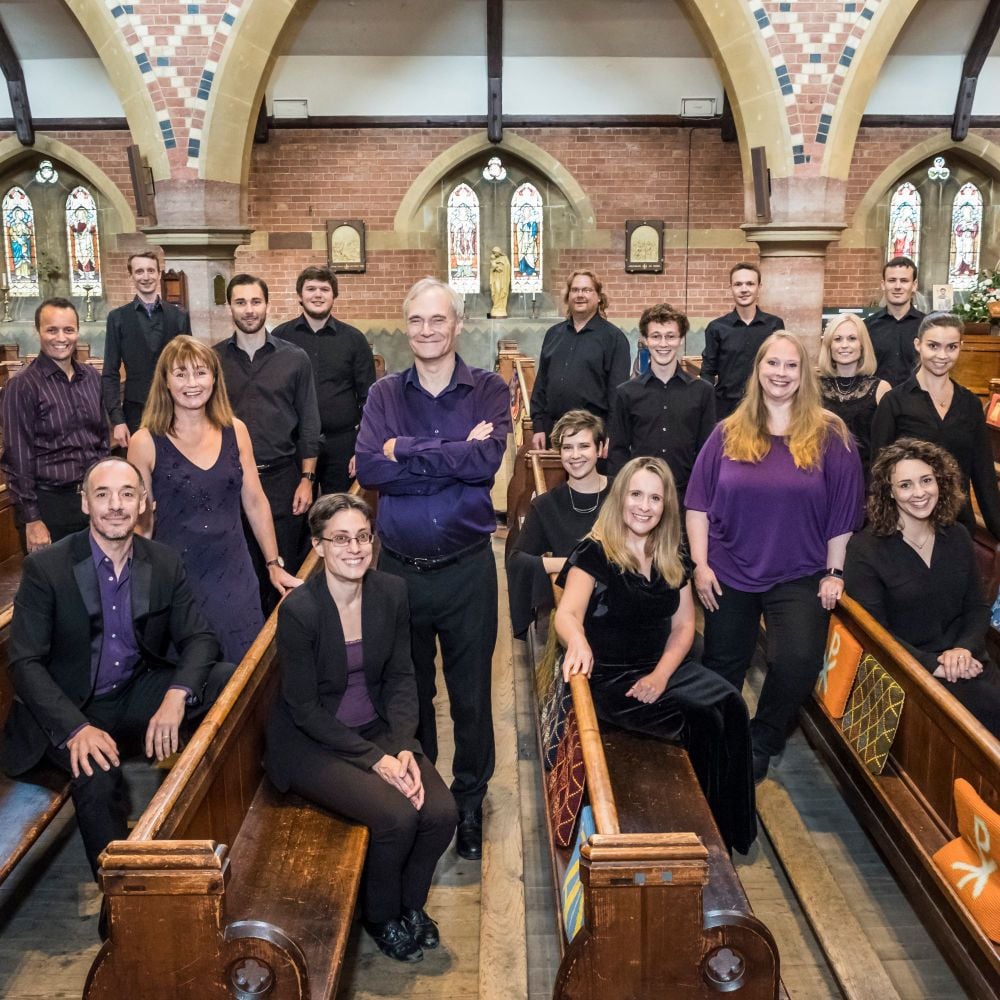
In 2013, Lindsay founded the Caritas Consort, a chamber choir that performs concerts to raise funds for charities and other good causes, directing it with a focus on high-quality sacred and classical music. Under his leadership, the ensemble has supported a wide range of causes, with over £80,000 raised from performances and donated to over 70 charitable organisations working in areas such as health, community support and education; in the case of this recording, £500 was raised for a project which supports disadvantaged families in Nepal.

In September 2025 Lindsay hands over the reins of Caritas Consort to focus on his other charitable work, in particular as Director of the Cardiff and District Branch of Samaritans, a leadership rôle in which he oversees 140 volunteers; this release helps celebrate his musical legacy.


www.caritasconsort.org

Claudio Monteverdi

The Vespers of the Blessed Virgin – Claudio Monteverdi (1567-1643)

Saturday 8th December 2012, Landmark Arts Centre, Teddington

Twickenham Choral Society & Brandenberg Baroque Soloists

Sopranos: Philippa Boyle & Grace Davidson

Tenors: Peter Morton & David Webb

Basses: Lukas Kargl & Charles Rice

Conductor: Christopher Herrick

Twickenham Choral Society, with the Brandenberg Baroque Soloists, and six solo singers, gave an enjoyable and very committed performance of Monteverdi’s Vespers to a sold out Landmark Arts Centre in Teddington.

Contrary to popular musical myth, Monteverdi did not write the Vespers especially for St Mark’s in Venice, though they may have been performed there. Nor were they specifically an ‘audition piece’ for the post of maestro di cappella. The work may have been written for wedding festivities in the church of St Andrea, Mantua, for the text contains the sensuous love poetry drawn from the Song of Solomon. The birth of the composer’s daughter, whose namesake was that of the Blessed Virgin, may also have been a motivation for the composition. Whatever the origins of the work’s composition, it is Monteverdi’s first sacred work. Published in Venice in 1610, the work is monumental in scale, requiring a choir large enough to cover up to 10 vocal parts in some movements, and split into separate choirs in others. The choir is also required to accompany several soloists.

Vespers were recited or sung in the evening, and the text of Monteverdi’s vespers adheres to the traditional order of the office of Vespers: it includes recitation of psalms, the singing of the Marian office hymn Ave Maris stella, and culminates in a Magnificat (the Song of Mary). The psalm settings are those used for the feast days of Mary and other female saints. In addition to these standard movements, Monteverdi also included motets for one, two, three and six voices, and an instrumental sonata movement into which the chant Sancta Maria ora pro nobis is skillfully woven. The work has become one of the most popular from this period of late Renaissance/early Baroque music, not least because it combines the profundity of the liturgy with secular music, and presents an array of musical forms – sonata, hymn, motet and psalm – without comprising the scale or cohesiveness of the complete work.

The venue for the concert, The Landmark in Teddington, a deconsecrated church turned arts centre, was perfect for this music in both atmosphere and acoustic, and there were times, particularly in the Concerto: Audi coelum, a tenor duet with “echoes” and choir, during which one of the tenors sang the echoes from the back of the apse, to the accompaniment of theorbo, when we might have been in San Marco, Venice 400 years ago.

The choir were joined by the Brandenberg Baroque Soloists, a new orchestra which plays period instruments, including three sackbuts, chamber organ, Baroque cornetti and theorbo. They provided an authentic accompaniment, underpinning the singing with devices distinct from this period such as ground basses, drones, and some fine ostinato ‘cello lines.

Founded in 1921, Twickenham Choral Society is an amateur vocal ensemble, which draws its membership from a wide area of west London, and has a proud tradition of performing a broad repertoire from every era. They rose to the many challenges of Monteverdi’s music and text (it is isn’t always easy to sing well in Latin) to give a highly committed performance which combined great clarity of diction and attention to detail, dynamic shading and colour, and at times deep emotion and drama. The polyphony and counterpoint were handled with aplomb, allowing us to enjoy the many strands of Monteverdi’s writing, and the choral set pieces were complemented by intimate writing for solo voices, accompanied by a single instrument, such as theorbo or ‘cello, or the choir. The first half closed with a rousing Psalm 147: Lauda Jerusalem, which shone with the celebratory joy implicit in the text.

This was an impressive and meticulously prepared performance, brought together under the skillful baton of conductor Christopher Herrick, who has been working with Twickenham Choral Society since 1974. I look forward to further performances by the society.

For further information about forthcoming concerts, please visit www.twickenhamchoral.org.uk

Brandenberg Baroque Soloists