Guest post by Alexandra Westcott

This article about learning the piano, the skills and the memories was lovely, and jogged my own memories of myself both as student and teacher.

I was about 6 when I used my sister’s books to learn the piano – they had photos for hand positions and finger numbers and that seemed all I needed (I’ve no idea to this day how I learned the rhythm and counting; I don’t remember reading about it but I must have!). I raced through the books and started fiddling with any music floating around, which was a fair amount as my Mum was a singer and also played the piano. I remember having the C major Mozart sonata at home and learning two pages during each holiday when home from boarding school at around 8 or 9. At this point Mum asked me if I wanted lessons, and because all my friends hated it (they hated the
practice); I said no because I loved playing, but she obviously ignored me and I ended up with a teacher I adored with whom I became very close.

I played the piano in all my spare time to the extent my reports used to say ‘she spends a lot of time at the piano’ and during prep, having done my homework as fast as possible, would skip off to the music rooms. I was fussy even then about the piano I played, and only the teachers’ or the grand in the assembly hall would do! None of the awful practice pianos for me!
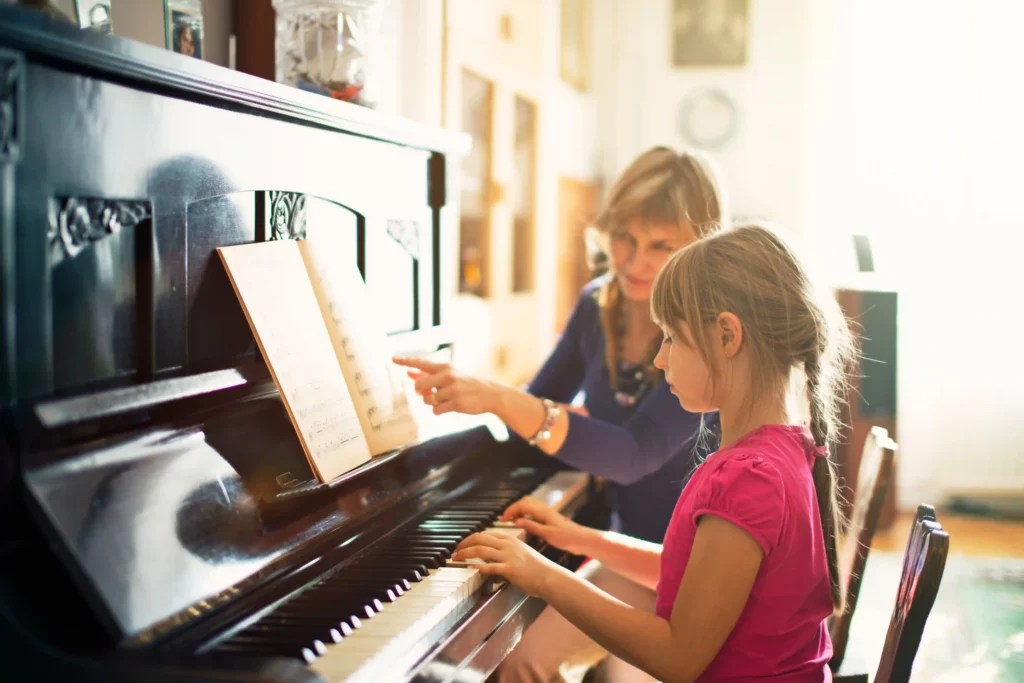
During my time at school with this wonderful teacher, me and a group of friends would be taken away for a weekend each term to him and his wife at his amazing ancient cottage. He was the church organist and ran the church choir so we ate well on local Devon produce that he was given by local friends and members of the church. At times we also had breakfast in bed (often sugar on toast!), It was all very idyllic and I stayed in touch with him and his wife until they died.

For the 6th form I left there and went to a college local to my home, so I changed teacher and went to a local music school during my A levels. A completely different teacher and one the parents were scared of but the pupils loved. We did Sunday concerts at her house, always with cake, and a large concert once a year at the 6th form college at which she got her advanced students to do a movement of a concerto with her school orchestra. I did the first movement of the Schumann. I never wanted to be a concert pianist but this was good experience and I later had the chance to play on a few occasions with another orchestra, and for one of the concerts performed the whole of the Schumann. It brought back many memories.

I had another teacher for my degree, and then had a break in formal lessons before returning to a commitment to my own playing in my 20s. I had a local teacher for a year but then met Nelly Ben Or and knew I had to learn with her.
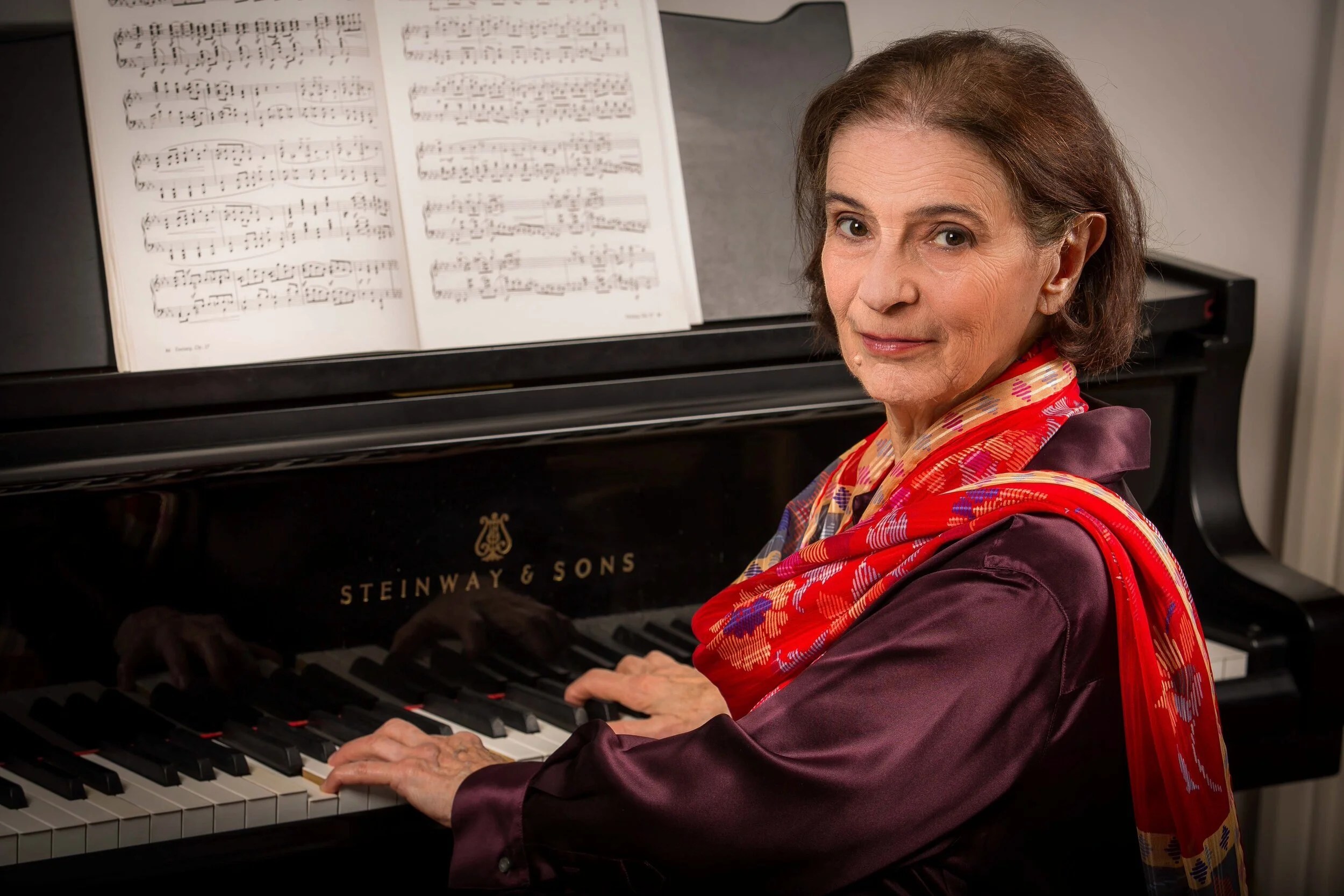
Nelly Ben Or

I studied with Nelly for many many years undoing my bad habits in order to acquire new and better ones and becoming a much better pianist, and a better teacher for that. I would often have lunch along with my lessons, and, again, house concerts and other performances enhanced the lessons. And, yes, you guessed it, always with accompanying food and drink.

As a teacher myself I became the sort of teacher I had grown up with; I had close bonds with my students, always had house concerts and local concerts both with tea parties afterwards, usually some chocolate for after lessons, and often would become close friends and either take them out for tea when young, or stay in touch later on.

Piano teachers, or any instrument teacher, hold a particular place in the life of a child. Such a close bond is formed and often many confidentialities shared. There needs to be trust for something that is hard to learn and something that needs self expression in execution. It is maybe not surprising that the bond becomes a firm friendship (and, often, one that needs physical as well as sustenance)!

I often wonder about my students’ memories of their time with me and whether they have similar memories as I do about my own mentors. I hope they hold the same  happy and cherished memories in their hearts for all the hours we spent and fun we had together as I do for my own teachers.

Alexandra Westcott is a piano teacher based in north London who specialises in understanding the piano in the light of the Alexander Technique, as studied with Nelly Ben Or, and encourages all areas of learning in a creative way. Find out more here

If you would like to share your piano memories, whether you are a teacher or pianist, or bothm, please get in touch


This site is free to access and advert-free. If you find joy and value in the content of this site, please consider making a donation to support its continuance, and to ensure it remains free to read.

If you, like me, had piano lessons as a child, I expect there were rather too many times when you sat at the piano and wondered what this thing called “music” was all about? The daily grind of practising, tedious technical exercises, seemingly endless scales and arpeggios, dull pieces which you played without imagination in a way which would please your teacher and earn you rewards and praise. And then each summer the excruciating and artificial experience of displaying your pianistic abilities to an examiner who had probably already heard 20 versions of the same pieces you were playing. When the exam results were published, you would start on the next grade’s repertoire, and so the process would repeat itself. There never seemed to be much fun, or joy, in the activity of playing music.

When people discover I’m a piano teacher, they often confide in me about their childhood piano lessons, their memories of their piano teachers and how the experience obscure the pleasure and joy of music making. Some shudder at these memories, and such anecdotes often reveal how much baggage from our childhood we carry into our adult lives, and how these experiences inform and influence the way we approach our music making as adults. I’ve come across adult pianists who seem stifled by fear that their childhood teacher could rear up beside them at any moment, and heap criticism and disapproval upon them. I have encountered adult pianists in masterclasses who, when asked why they approach a certain passage in a certain way, reply “My teacher told me to do that”. Their body language and their piano sound hints at great inner tension, resulting from fear of criticism, fear of making mistakes; and the recollection of those difficult, joyless childhood piano lessons.

Some of the young people I teach, and have taught in the past, seem to be accumulating similar tensions (though not, I hope, from their lessons with me). One student told me of her previous teacher who regularly made her cry, another whose lessons were dull and boring (and even dull and boring lessons can have a profound effect upon our attitude to music and music making). Some of my students still find it hard to appreciate that music and music making is meant to be pleasurable, stimulating, exciting, entertaining and satisfying.

I blame this partly on the U.K. state education system with its obsession with “results” and league tables. Kids are tested so much these days it’s as if the creative spirit has been sucked out of them. They aren’t encouraged to think or behave creatively at school and so being asked to be creative at the piano is almost anathema to them. They have also been peddled the idea that classical music is universally “serious”: it took nearly a year of coaxing to demonstrate to one student the wit and humour in a Rondo by Diabelli. The day that student made me laugh out loud in his rendering of this piece was a significant step forward for him (and me).

Parents too can be unintentionally complicit in this stifling of creativity, insisting that only the repertoire set by teacher should be practised, and using exams (yes, more testing!) as the only benchmark of progress and success. It piles pressure on the child – I see it every week in the student who is overly anxious and apologises to me for “playing badly” (she doesn’t) or who says “you must think I’m a terrible pianist” (I don’t – and she’s not!). She loves music, loves the piano and violin and playing in the local youth orchestra, but she places far too much emphasis on right notes and forgets that music is enjoyable, and that people get a great deal of pleasure out of her hearing perform. As for what needs to be practised, if a student comes to a lesson having learnt something without any input from me, which is not assigned “homework”, I’m not going to tick them off. Instead, I’ll praise them for their initiative and independent learning. Although most of my childhood piano lessons were quite boring, I was lucky because I was actively encouraged to seek out new repertoire, whether it was assigned by my teacher or not. I would take my discoveries to my teacher and she would help me find a way through the more challenging sections – and she never once said “You shouldn’t be learning that”. Yet as an adult pianist, I have encountered an attitude amongst some teachers and professional pianists that certain repertoire is “off limits” to amateur pianists. Such attitudes can only discourage adult pianists in their quest, and I take issue with anyone who says some repertoire is the exclusive preserve of the professional.

Some professional musicians lose sight of what the music and music making is about too. The pianist who described his working day to me as “strictly 9 to 5”, reducing his wonderful craft to nothing more than a “day at the office”; or the international concert pianist who complained in an interview with me that the rigours of keeping the repertoire going combined with the demands of the career – concerts, traveling, recording, making a living – could obscure one’s love for the music to the point where one begins to resent it. Another professional pianist told me she “envies” amateurs because they can play for pleasure whenever they like.

Here is the cellist Steven Isserlis responding to one of Schumann’s statements from his ‘Advice to Young Musicians’:

Nothing great can be achieved in art without enthusiasm

Yes – what’s the point in even trying to be a musician if you don’t love, love, LOVE music with all your heart? Great music is the best possible friend one could have: it will be with you in times of happiness and of sadness; and it will never let you down or abandon you

Last weekend I attended an event at St John’s Smith Square, that beautiful baroque church in central London which is home to many fine concerts and other musical events throughout the year. I performed there as part of Music Marathon, 24 hours of music making to coincide with the annual Open House London weekend. The week before had been rather difficult for me: I’d just found out I’d failed an important (for me) professional performance qualification and the comments from the adjudicators still stung when I recalled them, despite the reassurances of friends and trusted colleagues that I was a dedicated and skilled musician. In short, it was a major knock to my confidence. Playing at St John’s, and hearing others play, was the most potent reminder of why we do it, why we make music. It’s about sharing – sharing our love for the music with others, sharing great works, such as Beethoven’s Piano Sonatas or Bach’s WTC, sharing the experience of music as performer and/or listener (I am fortunate to do both regularly). Music is about emotions and emotional release, escapism and storytelling, excitement, pleasure, contemplation, humour, philosophy…….and so much more than that. It’s personal and highly subjective, and it can provoke profound emotional responses in both performers and listeners. It’s not about dry exercises and “getting it right”; or about playing a certain piece in a certain way to “please teacher”. At the SJSS event, I met several other pianists whom I had either interviewed or corresponded with online. All three of them (one of whom is a young concert pianist) revealed their passion for the music – in their performances and the conversations we had afterwards. Regardless of our level of ability, our enthusiasm and commitment to the music shone through. For me, having come through several difficult days of reflection and re-evaluation about my own musical life, to be amongst like-minded people doing the thing we love in a place as beautiful as St John’s Smith Square was the perfect tonic.

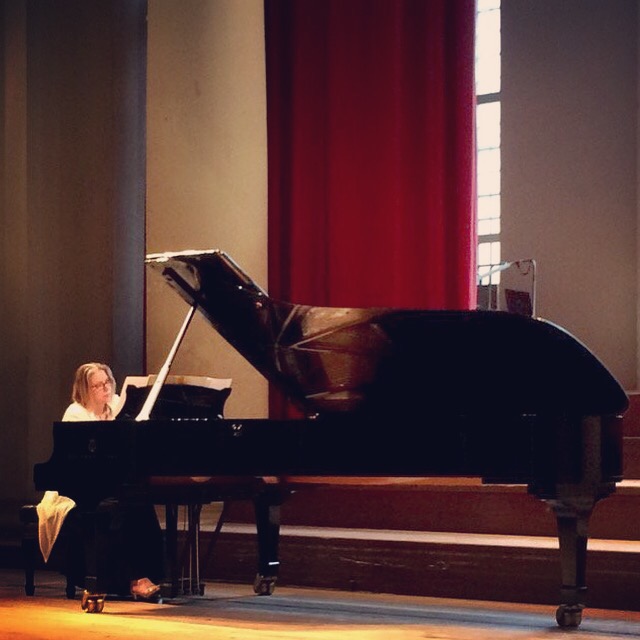
Playing at St John’s Smith Square Music Marathon

I’ll leave you with some further thoughts from Robert Schumann, and Steven Isserlis:

If music comes from your heart and soul, and if you feel it inside yourself, it will affect others in the same way

Yes: if your music comes from deep inside you, it will speak to a place deep in others


(Quotations from Robert Schumann’s Advice to Young Musicians: revisited by Steven Isserlis)

