
Pianist Anastasiya Bazhenova explores the fragility of the human condition in her debut album
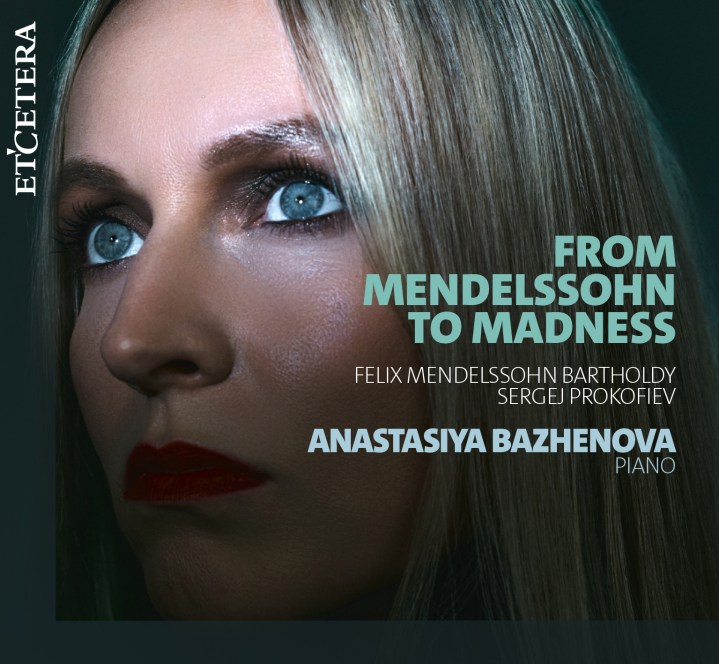 In her debut recording, pianist Anastasiya Bazhenova presents a programme that goes beyond a simple chronological survey of keyboard music. From Mendelssohn to Madness is not just about contrasting different historical periods; it is a deep exploration of the human condition and how our inner worlds change when external stability starts to fade.
For me, the tension is already present in the Mendelssohn. His music often sounds lyrical and balanced, but there is also something fragile in it, as if the stability could break at any moment. The Fantasia in F-sharp minor begins to open up that tension — it is more restless, more searching. And by the time we reach Prokofiev, the tension is no longer hidden. It becomes direct, physical, almost violent. So the “madness” in the title is not only the destination. It is something that slowly reveals itself along the journey.
Anastasiya Bazhenova (interview with Indie Boulevard magazine)
The album begins within the world of Felix Mendelssohn Bartholdy, a composer whose music hails from an era where form offered a sense of reassurance. In his Songs Without Words, Bazhenova uncovers a serene human voice that communicates with the confidence that it can still be heard without exertion. During this period, qualities such as clarity, proportion, and beauty were not merely ornamental; they were fundamental tools for understanding both oneself and reality.
However, even within this transparent beauty, a subtle tension begins to emerge. In the Fantasia in F-sharp minor, this balance is no longer an automatic state but a conscious effort. Here, the music becomes a battleground where light and darkness clash, symbolising an inner struggle to preserve wholeness against forces that seek to dismantle it. For Mendelssohn, form serves as a final battleground against chaos.
The narrative takes a sudden turn with Sergej Prokofiev’s Sixth Sonata, which opens the space beyond the rupture of the old order. This is music for a world that no longer promises stability—a world where the pace of change has quickened beyond our ability to comprehend.
Within this sonata, intense emotional states coexist in a raw, exposed form: fear, fury, despair, irony, and paranoia. The music forsakes the pursuit of traditional harmony, opting instead to record reality in its most unfiltered state. As the album moves from Mendelssohn to Prokofiev, the listener undergoes a inward shift: a transition from trusting in form to living without guarantees, and from viewing beauty as a support to acknowledging the need to live without it.
Rather than viewing these pieces as a collection of separate works, Bazhenova considers the programme as a single internal trajectory. The album does not seek to resolve the tensions it presents or provide simple explanations. Instead, it allows the music to unfold as a continuous process – a musical narrative of a human being who keeps feeling, thinking, and searching for meaning even when the structures of the past have broken down.
We often think of madness as something extreme or pathological, but in reality it is much closer to ordinary human experience. It can grow out of fear, obsession, loneliness, or simply from the unbearable tension between what we feel inside and what the world expects from us. In that sense, “madness” in this album is not something distant or theatrical. It is something that lives quietly inside many people. Music simply gives it a voice.
Anastasiya Bazhenova
From Mendelssohn to Madness is released on CD and streaming 1 April 2026 on the Etcetera Records label
Anastasiya Bazhenova performs in London at the 1901 Arts Club, a delightful salon-style concert venue, on 24th April. Details here https://www.1901artsclub.com/24-apr-2026-from-mendelssohn-to-madness.html
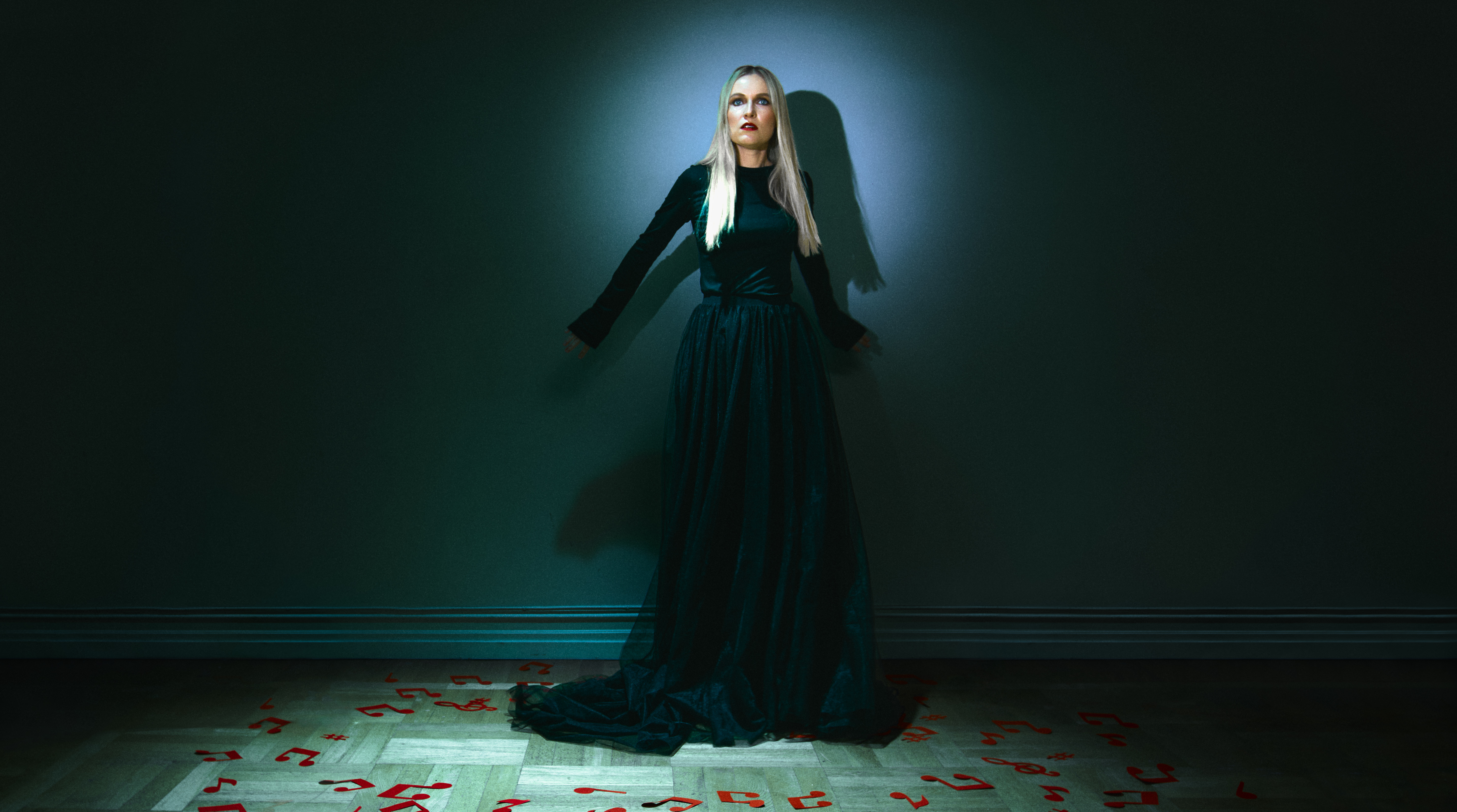
Photo credits Torgeir Rørvik
 Born in London in 1940 to Russian-Polish parents, Norma Fisher’s talent was evident from a young age. Mentored by Ilona Kabos, Gina Bachauer and Annie Fischer, as a young woman, barely out of her teens, she won prizes at major piano competitions, including the Ferruccio Busoni International Piano Competition, and shared the Piano Prize (with Vladimir Ashkenazy) at the 1963 Harriet Cohen International Music Awards; that same year she made her Proms debut. She appeared at major concert venues around the world and with some of the “greats” of the era, amongst them Jacqueline du Pré. Hailed as one of the finest pianists the country had ever produced, she broadcast extensively for the BBC in the 1950s and 60s – at a time when this was the key to succeeding as a classical musician in the UK – yet these performances were never committed to disc. In the 1990s she noticed a tremor in her right hand, which was eventually diagnosed as focal dystonia, one of the cruellest conditions to befall a musician, and withdrew from the concert stage.



 The Cross-Eyed Pianist