Who or what inspired you to take up the piano and pursue a career in music?

I picked out tunes on our piano at home, then my grandfather showed me how to play showtunes by ear on his Hammond organ. My first professional jobs were as a church organist (including an inspiring year at Lincoln Cathedral), a jazz pianist in bars all over the Midlands, and a one-man backing-group for a Patsy Cline tribute act! I came to accompanying when singers at university started asked me to play for them in their recitals. I immediately loved the experience of playing in a duo and was fascinated the idea that it is possible to ‘play words’ as well as notes. I’m still fascinated by it now…

Who or what have been the most important influences on your musical life and career?

David Whittle (a music teacher at school), John Streets and Malcolm Martineau could hardly be more different, but were inspirational and incredibly generous teachers. I’ve also been influenced and inspired by many of the singers and musicians I’ve worked with. One of the first was Anthony Rolfe Johnson, whose straight-from-the-heart singing I will never forget.

What have been the greatest challenges of your career so far?

The biggest challenge for a piano accompanist is also the most interesting part of the job: to reinvent constantly the way you play pieces you know well and have played many times to reflect new ideas brought to the table by different partners.

Which performance/recordings are you most proud of?

I’m excited about two I’ve just finished making, both of which will come out early next year. I’ve always loved his music of Percy Grainger and was thrilled when Claire Booth asked me to collaborate on a disc of his folksong arrangements. I also really enjoyed unearthing the little-known songs of Donald Swann (of Flanders and Swann fame, but also a ‘serious’ composer) for a recording with Felicity Lott, Kathryn Rudge, John Mark Ainsley and Roderick Williams.

Which particular works do you think you play best?

I find that very hard to answer and will have to leave it for others to judge!

How do you make your repertoire choices from season to season?

A lot depends on what I’m invited to do by the singers and instrumentalists I work with – and it’s nice to be surprised. My own projects are often motivated by an interest in finding new ways to present old music, such as a recent venture to present the Schubert song cycles in new English translations by Jeremy Sams.

Do you have a favourite concert venue to perform in and why?

I love the Wigmore Hall for its unique atmosphere and audience. There is a special excitement to playing in Carnegie Hall, but I also love the modesty and intimacy of the Holywell Music Room in Oxford. I also really enjoy the wonderfully varied venues of the

Ryedale Festival that I’ve got to know so well – from Castle Howard to remote country churches.

Favourite pieces to listen to?

I love early English music, especially Tallis, Byrd, Gibbons and Purcell. Anything and everything by Bach, Mozart, Haydn and Schubert. Operas by Verdi and Janacek, string quartets by Bartok and Shostakovich, piano music by Chopin, Liszt, Mussorgsky, Debussy, Fauré and Ravel. Orchestral music by Elgar, Tchaikovsky, Sibelius, Bruckner, Mahler and anything recorded by Harry Christophers’ choir The Sixteen. Favourite albums by Leonard Cohen, Edith Piaf, The Smiths and Joni Mitchell. I also love musicals, my new favourite being Tim Minchin’s amazing Groundhog Day.

Who are your favourite musicians?

My musical heroes include Sviatoslav Richter, Alfred Cortot, Martha Argerich, Gerald Moore, Clara Haskil, Benjamin Brittten, Andras Schiff, Daniil Trifonov, Bernard Haitink, Trevor Pinnock, Jacqueline du Pre, Peter Schreier, Janet Baker, Maria Callas and Victoria de los Angeles.

What is your most memorable concert experience?

The experience of taking part in the Passion project with Streetwise Opera and The Sixteen was unforgettable. We staged Bach’s St Matthew Passion with professionals performing alongside people with experience of homelessness – the results were moving and inspiring.

What do you consider to be the most important ideas and concepts to impart to aspiring musicians?

‘Beauty is truth, truth beauty’. Learn how to read a score and acquire the technique you need. Then feel like you are improvising. Tell stories and paint pictures in music. Distrust anyone who thinks they have all the answers. Stay curious.

Where would you like to be in 10 years’ time?

Still playing – and able to say I’ve done something to bring classical music to a wider audience. Also to have written my book and a hit musical (some way to go on both those last two!)

What is your idea of perfect happiness?

The sort that appears when you least expect it and aren’t looking for it.

What is your most treasured possession?

A first edition of Schubert’s Schwanengesang.

What do you enjoy doing most?

Spending time with my children and those closest to me. A pint in a good pub with a friend.

What is your present state of mind?

Excited, as I’m deep in planning for my festival – the Ryedale Festival – next year.


Christopher Glynn is a Grammy award-winning pianist and accompanist, working with leading singers, instrumentalists and ensembles in concerts, broadcasts and recordings throughout the world. He is also Artistic Director of the Ryedale Festival, programming around 60 events each year in the many beautiful and historic venues of Ryedale, North Yorkshire.

Described by The Times as having ‘beauties and insights aplenty’ and praised in Gramophone for his ‘breathtaking sensitivity’, Chris has performed with singers including Sir Thomas Allen, John Mark Ainsley, Sophie Bevan, Claire Booth, Susan Bullock, Allan Clayton, Lucy Crowe, Sophie Daneman, Bernarda Fink, Michael George, Anthony Rolfe Johnson, Christiane Karg, Jonas Kaufmann, Andrew Kennedy, Yvonne Kenny, Dame Felicity Lott, Christopher Maltman, Mark Padmore, Joan Rodgers, Kate Royal, Kathryn Rudge, Toby Spence, Bryn Terfel, Sir John Tomlinson, Robin Tritschler, Ailish Tynan, Roderick Williams, Catherine Wyn Rogers, Elizabeth Watts and many others.

He has also performed with instrumentalists including Julian Bliss, Andrej Bielow, Adrian Brendel, Michael Collins, Nicholas Daniel, David Garrett, Tine Thing Helseth, Daniel Hope and Steven Isserlis; with ensembles including the Elias, Heath, Fitzwilliam and Szymanowski Quartets, London Winds, Britten Sinfonia and Scottish Chamber Orchestra; and with choirs including The Sixteen.

Chris was born in Leicester and read music an organ scholar at New College, Oxford, before studying piano with John Streets in France and Malcolm Martineau at the Royal Academy of Music. His many awards include a Grammy, the accompaniment prize in the 2001 Kathleen Ferrier competition, the 2003 Gerald Moore award and the 2002 Geoffrey Parsons award.

Since making his debut at Wigmore Hall in 2001, Chris has performed in major concert venues and festivals throughout Europe and North America, and toured to Japan, China, Brazil, Sri Lanka, Russia and Canada. He has made over 20 recordings on labels including Hyperion, Decca, Erato, DG, Coro and Signum. He has also made many studio recordings and live broadcasts for BBC Radio 3.

Chris enjoys working with young musicians and is a Professor at the Royal College of Music, an Associate of the Royal Academy of Music, a coach for the Jette Parker Young Artist Programme at the Royal Opera House, and a course leader for the Samling Foundation. He has been an adjudicator for many international competitions.

Recent highlights include recording the piano soundtrack for the forthcoming film ‘Altamira’ (starring Antonio Banderas), the world premiere of a newly-discovered work by Mendelssohn on BBC Radio 4, performances at the BBC Proms, collaborations with the Richard Alston Dance Company and Rufus Wainwright, rediscovering the ‘serious’ songs of Donald Swann for a forthcoming CD, and ‘The Passion’ with The Sixteen and Streetwise Opera.

Future plans include a series of concerts entitled ‘Songbooks’ that he will curate for Wigmore Hall, Winterreise with Mark Padmore at the Endellion Festival, and a forthcoming CD of Grainger songs and piano pieces with Claire Booth. Chris will also join Toby Spence, Roderick Williams and Sir John Tomlinson for the first performances of new English translations he has commissioned from Jeremy Sams of Schubert’s song cycles.
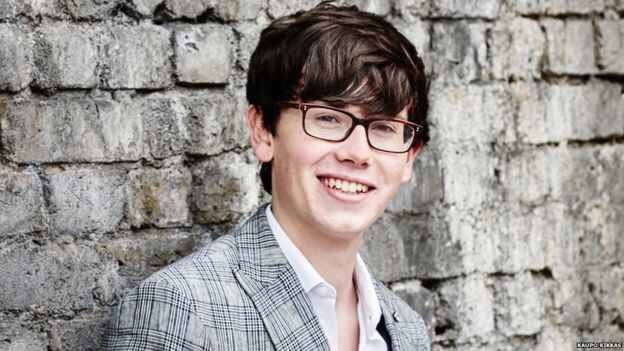

 
(interview date: November 2016)

Who or what inspired you to take up the piano and pursue a career in music?

I played all kinds of instruments when I was young, but the piano is like a universe. You can use it to compose and to perform – it represents so many different styles of music from early French keyboard music and Bach, to Beethoven and John Cage, jazz and blues. I’ve always loved the piano, and loved listening to other pianists.
I’m devoted to practicing and studying music, mainly. It’s the physical and intellectual stamina it requires that I still find so exciting; I really enjoy talking a pencil and marking the score, and spending hours with a work. It’s allowed me to travel all over the world, which I never expected, as a performer. I love teaching, and collaborating with other artists and composers.

Who or what were the most important influences on your musical life and career?

My mother had me when she was young, and I was her first piano student. She was very imaginative in her musical tastes: together we played Bach, Mozart, Dave Brubeck’s Take Five, Beatles songs, and gospel music. Being taken on by YCAT (Young Concert Artist Trust) in my twenties was a fantastic apprenticeship; I built up a big repertoire, and learnt to communicate with audiences.

David Sigall was also undoubtedly a major influence. He was my manager until he retired last year. He taught me to see the long game, and encouraged me to be a curator and artistic director. He seemed totally unfazed by anything I got up to, whether it was starting a record label, conducting or collaborating with world musicians.

I’ve also been heavily influenced by jazz musicians; the way they collaborate, make things happen, hang out together, and support each other’s gigs.

What have been the greatest challenges of your career so far?

I’ve always loved playing at the BBC Proms – my first one was nearly thirty years ago! And broadcasting live is tough – you have to be on top of everything.
My most treasured memory is working with Pierre Boulez, twice; first on a European tour with the Philharmonia and later with the Chicago Symphony Orchestra. He was witty, warm, elegant, gossipy and just a gorgeous musician to be with, both on and offstage.

Which recordings are you most proud of?

Impossible to say, as they’re all flawed to my ears, of course. But for different reasons, Messiaen’s Vingt Regards; Deep River with the saxophonist Andy Sheppard, which explored music of the Deep South; and my most recent recording, the complete Chopin Mazurkas.

Very early on in my career I recorded Charles Ives’ First Sonata, an absolute epic, at Snape Maltings. I still love his music very deeply.

Which particular works do you think you perform best?

I seem to gravitate towards intense miniatures – Gubaidulina’s Musical Toys, Chopin Mazurkas – or huge cycles – Messiaen, Beethoven, Bach’s Well-Tempered Clavier. I like architecture; on the other hand I also like playing in the moment. I find so much music is a mixture of structure, and unfolding, like following a fork in the road.

How do you make your repertoire choices from season to season?

It depends on the venues, and what I’d like to add to my repertoire. I still learn new pieces – this year it was Schubert’s last sonata in B flat, coupled with some late Liszt and Ligeti. I’m not at all rigid about the number of recital programmes or concertos I’ll carry around in any one season. It depends on all the other collaborations and new work I’m doing; I always seem to be working on new projects with poets or artists, as well as other musicians.

Do you have a favourite concert venue to perform in and why?

Many favourites – the Mozarteum in Salzburg, the Bimhuis in Amsterdam; the Wigmore Hall, the medieval hall at Dartington. Something to do with intense atmosphere and audiences.

Favourite pieces to perform?

I always love Bach and Beethoven; I love practising them. I’m heavily into Chopin’s fifty-eight mazurkas at the moment, played chronologically; rather like reading someone’s personal diary.

Who are your favourite musicians?

So many. The pianists I listen most to (at the moment) are Edwin Fischer, Rubinstein and Maria João Pires. I adore spending time with Alfred Brendel; I admire great improvisers and slip into their concerts all the time.

What is your most memorable concert experience?

Probably playing Shostakovich First Piano Concerto at the Last Night of the Proms – memorable for all kinds of reasons, including the controlled hysteria backstage. Being invited to play the Goldberg Variations at the Albert Hall by John Eliot Gardiner was pretty exciting for me.

What do you consider to be the most important ideas and concepts to impart to aspiring musicians?

Individuality, fearless talent, creativity, and the ability to design opportunities – fundamental to building a long career. The piano students at the Royal Academy of Music (as Head of Piano there I mentor them all) come with a very high degree of technical skill and musicianship. But I encourage them to develop other skills—curating, improvising, working with multimedia, commissioning composers, conducting from the keyboard, having a working knowledge of early keyboards—that will help them flourish at the beginning of their careers. Every summer we run a Piano Festival, which is largely curated now by the students themselves, and it’s a testament to their imagination and unstoppable energy.


Joanna MacGregor is one of the world’s most innovative musicians, appearing as a concert pianist, curator and collaborator. Head of Piano at the Royal Academy of Music and Professor of the University of London, Joanna MacGregor is also the Artistic Director of Dartington International Summer School & Festival.

As a solo artist Joanna has performed in over eighty countries and appeared with many eminent conductors – Pierre Boulez, Sir Colin Davis, Valery Gergiev, Sir Simon Rattle and Michael Tilson Thomas amongst them – and orchestras, including London Symphony and Sydney Symphony orchestras, Chicago, Melbourne and Oslo Philharmonic orchestras, the Berlin Symphony and Salzburg Camerata. She has premiered many landmark compositions, ranging from Sir Harrison Birtwistle and Django Bates to John Adams and James MacMillan. She performs regularly at major venues throughout the world, including Wigmore Hall, Southbank Centre and the Barbican in London, Sydney Opera House, Leipzig Gewandhaus, the Concertgebouw in Amsterdam and the Mozarteum in Salzburg.


Top of the list of competitors is twenty-year-old British pianist Martin James Bartlett. Winner of BBC Young Musician of the Year in 2014, Martin now studies at the Royal College of Music.  

Martin James Bartlett

FORT WORTH, Texas, March 7, 2017—The Cliburn announces today the 30 competitors selected to participate in the Fifteenth Van Cliburn International Piano Competition, taking place May 25–June 10, 2017, at Bass Performance Hall in Fort Worth, Texas, USA.

Two hundred and ninety pianists submitted applications to participate in the 2017 Cliburn Competition, and 141 auditioned live in front of a five-member screening jury in London, Hannover, Budapest, Moscow, Seoul, New York, and Fort Worth in January and February 2017. 

After an exhilarating and quite thorough process, I am extremely happy with the 30 pianists who will come to the Cliburn Competition in Fort Worth this May. They are engaging and skilled, and—most important—will inspire and move you,” said Jacques Marquis, Cliburn president and CEO.

The 2017 Cliburn competitors hail from all over the world, representing 16 nations: Russia (6), South Korea (5), the United States (4), Canada* (3), Italy (2), Algeria*, Austria, China, Croatia, Germany, Hong Kong, Japan, Poland, Romania, Taiwan, and the United Kingdom (*one competitor has dual Algerian/Canadian citizenship, and both nations are counted here). There are 21 men and 9 women, and the competitors range in age from 18 to 30.

2017 CLIBURN COMPETITORS

Ages are as of June 10, 2017, the final day of the Competition.

Martin James Bartlett, United Kingdom, age 20

Sergey Belyavskiy, Russia, 23
Alina Bercu, Romania, 27

Kenneth Broberg, United States, 23

Luigi Carroccia, Italy, 25

Han Chen, Taiwan, 25

Rachel Cheung, Hong Kong, 25

Yury Favorin, Russia, 30

Madoka Fukami, Japan, 28

Mehdi Ghazi, Algeria/Canada, 28

Caterina Grewe, Germany, 29

Daniel Hsu, United States, 19

Alyosha Jurinic, Croatia, 28

Nikolay Khozyainov, Russia, 24

Dasol Kim, South Korea, 28

Honggi Kim, South Korea, 25

Su Yeon Kim, South Korea, 23

Julia Kociuban, Poland, 25

Rachel Kudo, United States, 30

EunAe Lee, South Korea, 29

Ilya Maximov, Russia, 30

Sun-A Park, United States, 29

Leonardo Pierdomenico, Italy, 24

Philipp Scheucher, Austria, 24

Ilya Shmukler, Russia, 22

Yutong Sun, China, 21 

Yekwon Sunwoo, South Korea, 28

Georgy Tchaidze, Russia, 29

Tristan Teo, Canada, 20

Tony Yike Yang, Canada, 18

ABOUT THE FIFTEENTH VAN CLIBURN INTERNATIONAL PIANO COMPETITION

Established in 1962, the quadrennial Van Cliburn International Piano Competition is widely recognized as “one of the world’s highest-visibility classical-music contests” (The Dallas Morning News) and remains committed to its original ideals of supporting and launching the careers of young pianists, ages 18–30. 

[source: press release]

(Picture: BBC)

A tribute from Divine Art Recordings

Described by The New York Times as “a man whose nature was designed with pianos in mind”, Anthony Goldstone was recognised as one of Britain’s most respected pianists. This exceptional musician passed away 2 January at the age of 72. As a major figure in the Divine Art Records catalogue (as well as recording for Toccata and previously Olympia and Gamut) both as a soloist and duo partner with his wife Caroline Clemmow, he will be very sadly missed. Held in the highest esteem by critics worldwide, for some reason he never quite achieved the international media recognition he deserved. Divine Art is currently working on Goldstone’s last solo recording which is likely to be released in the summer (“Piano at the Ballet, Vol. 2”) and also the re-release of the stunning 7-CD set of the complete works for piano duet by Franz Schubert, which when first issued by Olympia in 1999, established Goldstone and Clemmow as Britain’s leading piano duo.

Born in Liverpool, Anthony Goldstone studied at the Royal Manchester College of Music, now the RNCM, which later honoured him with a Fellowship, where his piano professor was Derrick Wyndham, and later in London with Maria Curcio, one of Schnabel’s greatest pupils – which incidentally makes him a sixth-generation pupil of Beethoven. Inspired by this wonderful heritage, Goldstone always regarded the classics and Romantics as being at the heart of his repertoire; this is illustrated by two specific CD projects: a series of rare Russian Romantics – Rebikov, Lyapunov, Arensky and Glière – and a series of six CDs devoted to the major solo works of Schubert which were very highly praised: “Goldstone is a native speaker of Schubert in the highest degree. This is perhaps the greatest version of the work [Sonata, D. 959] I have ever encountered, either live or on disc.” – Fanfare, USA. His series of solo CDs for Divine Art have ranged from Beethoven and Mozart to 20th century British composers (all with new completions and including many rarities and premiere recordings) to transcriptions from ballet and opera, all of which have received the highest accolades.

International prizes in Munich and Vienna and a Gulbenkian Fellowship launched him on a busy schedule of recitals and concertos. His travels took him to concert appearances in Europe, North and South America, Asia, Africa and Australasia, prestigious festival invitations and many broadcasts. Numerous London appearances included important solo recitals and Promenade Concerts, notably the 1976 Last Night, after which Benjamin Britten wrote to him, “Thank you most sincerely for that brilliant performance of my Diversions. I wish I could have been at the Royal Albert Hall to join in the cheers.” This was one of four Proms appearances.

Complementary to the mainstream repertoire was his avid interest in exploring intriguing musical byways – not only unknown works by acknowledged masters, leading to première recordings and performances of works by Parry, Sibelius, Bruch, Franck, Mendelssohn, Dvořák, Holst and many more but also unjustly neglected nineteenth-century composers such as Goetz, Herzogenberg, Alkan and Moscheles.

A personal reflection from Divine Art founder and CEO Stephen Sutton:

“Tony first told me of his illness back in the summer of 2016; it had developed rather quickly and long term treatments were scheduled, but sadly liver failure brought his life and creativity to an early end. Until the very last week, he was writing to me about his projects, retaining an amazing level of wit and even frivolity in what must have been extremely difficult circumstances, referring to the ongoing Schubert Duets project as ‘Sherbert Dips’.

I first met Tony and his wife Caroline, who I am also honoured to call a friend, in late 2000 (if I recall correctly without digging up files!) when he approached me about the release of his recordings of Schubert solo piano works; I believe he had been introduced by one of our other artists. Long story short – we issued three double CD sets of the Schubert Masterworks which received the most wonderful reviews, and led to my encouraging Tony and Caroline to submit more projects. This they did in spades: both solo and duo recordings appeared at the rate of two or three a year, forming the backbone of our piano repertoire. And while Tony was not enamoured of the avant-garde, his delight in finding unpublished manuscripts and unfinished pieces, which soon became new performing editions, matched our own ethos of expanding the recorded repertoire, not only in new music but from all ages. His completions of unfinished works by Schubert, Mozart and others also garnered much praise for the seamless ‘invisible joins’ – testament to Tony’s high skill as a composer. Through the years Tony and Caroline (though we met but infrequently) became very special to me; for the quality of musicianship and performance, but also efficiency and speed in providing detailed program notes – models of their type – that avoided the delays and foot-thick files that some projects seem to engender! Always a perfectionist, our main quibbles usually centered around whether an apostrophe in a certain typeface should be curly or straight. What most customers (and critics) have not realized, because we did not promote the fact, is that practically all of the Goldstone recordings were made by Tony himself at his local church of St John the Baptist, Alkborough, which has housed the couples’ twin Grotrian-Steinweg instruments for many years. To do this and be given so much praise for sound quality is another facet of Tony’s skill and dedication.

In the early spring of 2016 Tony presented his last solo recording; this will be released later this year as ‘Piano at the Ballet, volume 2’. (In fact, the contract for this project, which he signed last week, arrived in my office today – 4 January). Whilst still a fantastic performance by any standard, I could tell that it was not Tony at 100%. I said nothing but was less surprised to hear, some months later, of the illness that was afflicting him. As well, the 7-CD box set of Schubert’s Complete works for piano duet is in progress for release in early summer. Both recordings will be suitable memorials to a wonderful musician, and a lasting gift for Caroline.”

