Who or what inspired you to take up a career in music?

As a teenager I was lucky to have Jeremy Carter as my piano teacher. I also revered the rock’n’roll pianism of Jerry Lee Lewis (and still do).

Who or what were the most important influences on your musical life and career?

I struggled during my first couple of years on the demanding joint course between Manchester University and the RNCM, but my third year was something of a revelation. I learnt reams during my piano lessons with John Gough (including, crucially, a fresh and non-stuffy approach) and also took composition lessons with John Casken and lectures in postmodern music from Kevin Malone and Shostakovich from David Fanning. It was at this point I knew I didn’t want to do anything else. Fulbright studies in the US with Ursula Oppens sealed the deal.

What have been the greatest challenges of your career so far?

Juggling a range of disciplines and trying (hard!) to excel in all of them. Alongside piano I compose frequently for many varied ensembles (that, strangely, hardly ever include piano – for example this one) and I regularly conduct performances of (mainly) new music. My work with CoMA (Contemporary Music for All) is really important because it involves getting amazing people from all walks of life participating in the music, and I also serve on the board of the Riot Ensemble in order to get the most cutting-edge of this stuff out there in concert. I love teaching and am lucky to supervise over 80 groups of all styles and genres as part of my role as Head of Chamber Music at the University of Chichester, and I also have a clutch of brilliant and talented students at the Junior Royal Academy.

Which performance/recordings are you most proud of?

I played Rzewski’s colossal ‘The People United Will Never Be Defeated’ in three venues last year, and I think I am proud to have scaled that particular pianistic mountain (although I haven’t been brave enough to listen to the recording yet!). I’m also pleased to have performed Lutoslawski’s terrific concerto – here’s a clip of the ending in my performance with the Northwestern Symphony Orchestra and Victor Yampolsky.

Which particular works do you think you play best?

Probably pieces by Shostakovich. I relate well to nervous energy, tragedy…. and comedy!

How do you make your repertoire choices from season to season?

Whatever I think will be fun to prepare and fun for people to listen to.

Do you have a favourite concert venue to perform in and why?

Hmm, tricky one. I like venues where it is easy to blur the boundaries between the performers and the listeners, so it’s more of a community experience. Maybe St Martin-in-the-Fields?

Favourite pieces to perform? Listen to?

Kevin Malone wrote me a wonderful and hilarious piece involving plenty of theatre called Count Me In. You can watch a performance here. I also love the sound of wind orchestras and have been lucky to have been involved in quite a few over the years. You can’t beat the Americans for their brass sound.

Who are your favourite musicians?

I’d have to include Pierre Boulez – a great musical polymath with an amazing conducting style. You can see every single composerly detail in the gesture. My American conducting teachers (especially Mallory Thompson) taught me the importance of this. At other ends of the spectrum I love Eddie Cochran and The Who.

What is your most memorable concert experience?

Probably my first outing of Amy Beth Kirsten’s ‘Speak to Me’ in which I have to adopt the persona of two female goddesses as well as play some really imaginative piano music. (You can listen to a performance here.) I’m playing this again in a Riot Ensemble concert on January 30th.

What do you consider to be the most important ideas and concepts to impart to aspiring musicians?

Just to give 100% energy and commitment to whatever is being asked of you, however big, small or unusual.

What are you working on at the moment?

This morning, the John Ireland ‘Phantasie’ Trio. I play in a piano trio with Ellie Blackshaw (violin) and Peter Copley (cello) and we are on a mission to present all three of the Ireland trios. They are wonderful and really reek of Sussex, which is where I live.

Where would you like to be in 10 years’ time?

Doing the same sorts of things, but with less anxiety about note learning/ preparedness.

What is your present state of mind?

Anxious about note learning/preparedness!

Adam Swayne works with a vast range of musical media and styles that go beyond conventional labelling. He is just as at home giving a solo piano recital or conducting an orchestra as he is organising musical installations in art galleries or composing for amateur ensembles. He takes an inclusive, informative and innovative approach to his music making that is drawing an increasingly large audience.

Adam is a graduate of the joint course between Manchester University and the RNCM. He gained first class degrees from both institutions, and an MMus from the RNCM. Manchester University gave Adam their highest award (Sir Thomas Beecham Medal) along with other prizes including the Recital Prize. Prizes from the RNCM included the John Ireland Prize and an award for performances of contemporary music.

In 2003 Adam was awarded a Fulbright Scholarship to begin doctoral studies at Northwestern University, U.S.A. He graduated in 2006 with distinction, having presented several U.S. premières of works by British composers.

Adam is now Senior Lecturer and Head of Chamber Music at the University of Chichester and piano tutor at the Junior Royal Academy of Music.

Adam’s Swayne’s full biography can be found on his website:

www.adamswayne.com

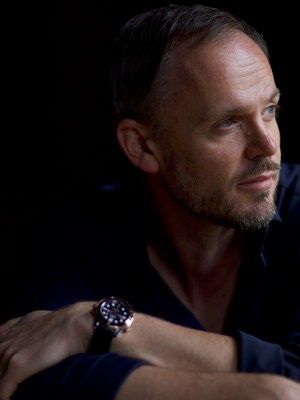
(photo credit: Gareth Barton)

Violinist Fenella Humphreys and pianist Nicola Eimer celebrate the 150th anniversaries of Jean Sibelius and Carl Nielsen in a concert combining works for violin and piano by these two composers, together with new works by contemporary composers.

Alongside works by Sibelius and Nielsen, the duo will premiere a new set of five pieces composed on the footprint of Sibelius’s Five Pieces op.81 by Cheryl Frances-Hoad, Alasdair Nicolson, Matthew Taylor, David Knotts and Anthony Powers.

Programme

Jean Sibelius: 4 Pieces for violin & piano, Op.115
Cheryl Frances-Hoad: New work for PUR 4 Feb 2015 after Sibelius’ 5 Pieces for violin & piano, Op.81
Alasdair Nicholson: New work for PUR 4 Feb 2015 after Sibelius’ 5 Pieces for violin & piano, Op.81
David Knotts: New work for PUR 4 Feb 2015 after Sibelius’ 5 Pieces for violin & piano, Op.81knotts da
Matthew Taylor: New work for PUR 4 Feb 2015 after Sibelius’ 5 Pieces for violin & piano, Op.81
Anthony Powers: New work for PUR 4 Feb 2015 after Sibelius’ 5 Pieces for violin & piano, Op.81
Jean Sibelius: Sonatina in E for violin & piano, Op.80
Interval
Carl Nielsen: Violin Sonata No.2 in G, Op.35

The concert takes place on 4th February 2015 at the Purcell Room, Queen Elizabeth Hall, Southbank Centre. Further information and tickets here

‘Fenella Humphreys responds to its elegiac reflection and technical display at top flight level’ (Orchestral Choice CD, 5* BBC Music Magazine)

‘Nicola Eimer is an outstanding artist’ (The Strad Magazine)

Ashley Wass pianist

Who or what inspired you to take up the piano and make it your career?

My (non-musical) parents ran a seafront guesthouse and had an electric organ standing (unused) in the corner of the lounge. I’m an only-child and got nominated fairly early on to be the one who’d put it to use. (As a 5 year-old I suppose I couldn’t really argue.) I used to play Christmas carols and Richard Clayderman hits to the guests and haven’t looked back since.

Who or what were the most important influences on your musical life and career?

I think it was Stravinsky who said “great artists steal”. Now, I’m not calling myself a great artist by any means, but I do empathise with that quote; I feel I’m constantly learning – or ‘stealing’, if you like – from other musicians. I guess we all do really; part of what ultimately defines our individual musical personalities is the process of choosing which bits of ‘stolen’ information we nurture and which bits we cast aside.

What have been the greatest challenges of your career so far?

Deciding exactly what kind of career it is I want.

Which performance/recordings are you most proud of?

I’m (thankfully) quite fond of my last two CDs. The first – Bach to the Future – features a collection of solo pieces that have been particularly significant in my life and career to date. It was actually recorded just a couple of weeks after my daughter was born, so the fact I managed to produce something vaguely coherent is quite an achievement. More recently, my piano trio released its debut album. It’s called The Seafarer and includes a collaboration with Willard White and a brand new transcription of Debussy’s La Mer by Sally Beamish. It’s a project which took a tremendous amount of time and effort to realise, so it’s lovely to see it hit the shelves.

Which particular works do you think you play best?

Ha – that’s a question which is probably best answered by others. I know what I enjoy playing, but musicians are often their own worst judges.

How do you make your repertoire choices from season to season?

I love the process of developing repertoire-led ideas into fully-fledged projects that can be toured (and sometimes recorded) over a full season. They tend to be getting more eclectic and adventurous as I get older; I think I’m driving my poor agent mad.

Do you have a favourite concert venue to perform in and why?

St. George’s in Bristol. It has the best acoustic of any chamber hall in the UK, a fine piano and – best of all – is within 30 minutes of my home. It means I can play a concert in a beautiful space and still be home in time for Match of the Day. That’s the ideal set-up as far as I’m concerned.

Favourite pieces to perform? Listen to?

In truth, I hardly ever listen to music these days unless I’m in the car, and then it’s either jazz (my choice) or nursery rhymes (my daughter’s choice). The Wass household is a strict no-music zone (piano practice aside).

Who are your favourite musicians?

Ella Fitzgerald, Nina Simone and Oscar Peterson. Oh, and I’d better say my trio [Trio Apache] partners – Matthew Trusler and Thomas Carroll – too. They’d kill me otherwise.

What is your most memorable concert experience?

Probably my Proms debut. Though that’s less because of the performance itself and more because I’d got engaged to my now-wife during the overture.

What do you consider to be the most important ideas and concepts to impart to aspiring musicians?

Variety. It’s essential, both to the maintenance of a career and to one’s musical well-being.

What are you working on at the moment?

I’m working on a big project with Matt Trusler for 2015 which involves commissioning 12 pieces from 12 different composers, plus a yet-to-be-written script, so that’s taking up a huge amount of time. It’s going to be awesome – watch this space.

Where would you like to be in 10 years’ time?

Doing what I’m doing now, but with another ‘0’ added to my fees.

What is your most treasured possession?

Photos of my trek to Everest Base Camp. Not only because going there was a dream come true, but because it also reminds me that I was once relatively fit.

The Seafarer‘, Trio Apache’s debut album, featuring Sally Beamish’s transcription of Debussy’s La Mer alongside her original work, The Seafarer Trio (with Sir Willard White narrating), is now available on the Orchid Classics label.

Ashley Wass, began playing the piano at 5, and studied music at Chethams Music School from age 11. In his teens he studied on scholarship at the Royal Academy of Music, where his teachers included Christopher Elton and Hamish Milne. Wass later studied with Murray Perahia. He is the only British winner of the London International Piano Competition (1997), prize-winner at the Leeds Piano Competition, and a former BBC Radio 3 New Generation Artist.

Described as an ‘endlessly fascinating artist’, Ashley Wass is firmly established as one of the leading performers of his generation. Increasingly in demand on the international stage, he has performed at many of the world’s finest concert halls including Wigmore Hall, Carnegie Hall and the Vienna Konzerthaus. He has performed as soloist with numerous leading ensembles, including all of the BBC orchestras, Philharmonia Orchestra, Orchestre National de Lille, Wiener Kammerorchester, Hong Kong Philharmonic, Royal Liverpool Philharmonic Orchestra, and under the baton of conductors such as Simon Rattle, Osmo Vanska, Donald Runnicles, Ilan Volkov and Vassily Sinaisky.

Ashley Wass’s full biography

www.ashleywass.com

The well-established music publisher Editions Peters has launched a new recording label, Edition Peters Sounds, which will focus on recordings made by artists represented by Edition Peters’ artist management company, EPAM, including tenor Paul Phoenix and vocal group Apollo5.

The label launches with a new disc of Fauré’s ‘Nocturnes’ by British pianist Daniel Grimwood. Recorded on a Steinway D at Wyastone in Monmouth, this elegantly presented collection is notable for the beauty and transparency of Grimwood’s tone, particularly in the upper registers of the piano. Grimwood’s sensitive and refined playing perfectly befits these lyrical, gracious and suave works.

Grimwood says of Fauré, “It is hard to name another composer who enjoys such renown in his homeland and such relative neglect elsewhere. Like Liszt, Fauré’s fame rests on a small percentage of his output; an output which is consistently excellent. That pianists tend to shy away from his works strikes me as a peculiar quirk of my profession”.

Listen to a track from the album

The disc is available now via iTunes and other retailers. Read more about Fauré and the Nocturnes on Daniel Grimwood’s website