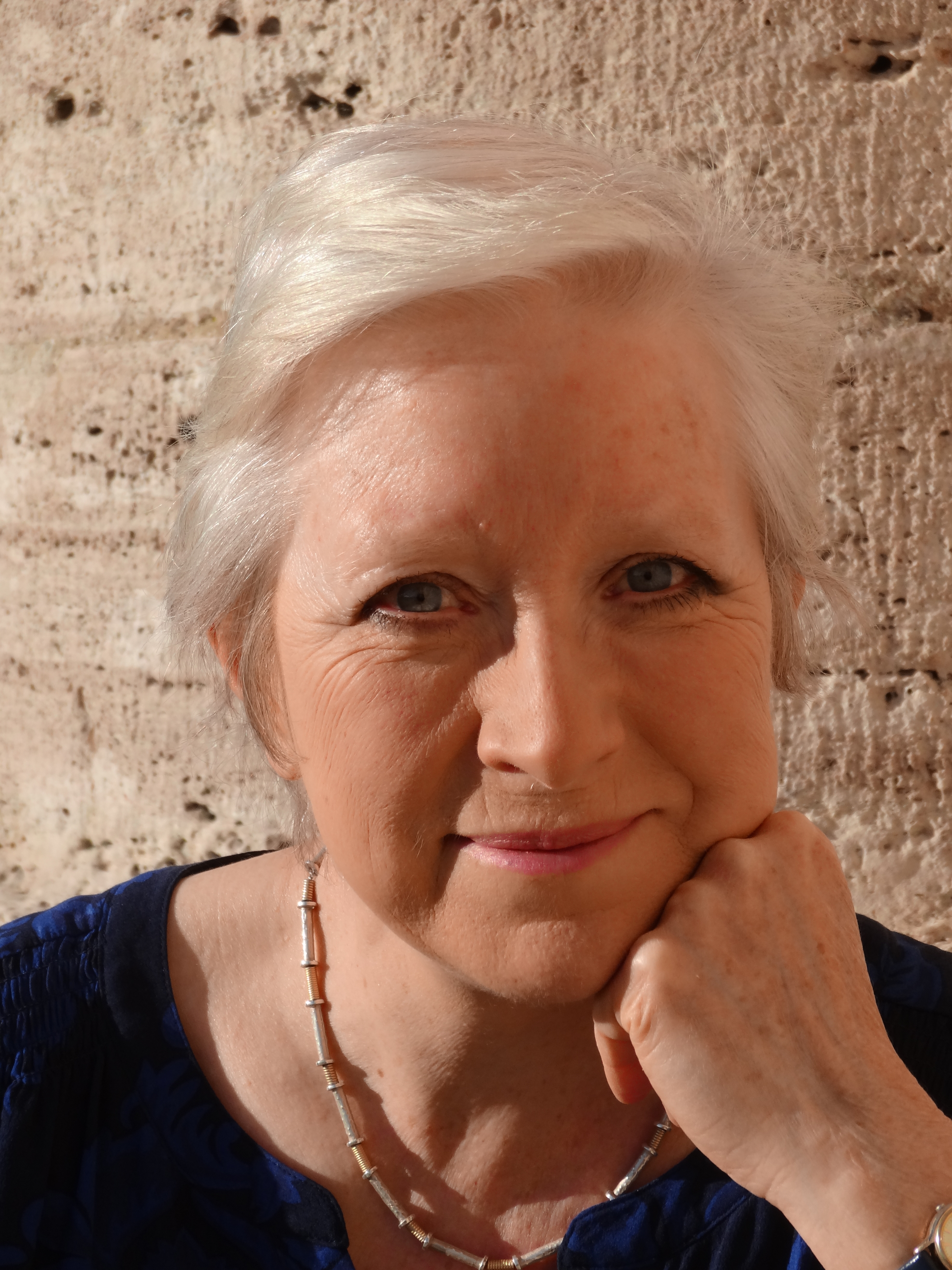
(photo: Robert Philip)

Who or what inspired you to take up the piano and make it your career? 

We didn’t have a piano in the house when I was little, but gradually my friends’ parents started reporting that I had been trying to play their piano when I came to their house. My parents were surprised (neither of them had had the opportunity to learn an instrument) but intrigued, and eventually they decided to take the plunge and acquire an upright piano. It was a make of piano I’ve never come across since: Eungblut & Eungblut. I remember that when it arrived in our living-room I already felt it was an old friend and I ‘knew how to play it’, though I can’t really account for that feeling as I hadn’t yet had a piano lesson.

Who or what were the most important influences on your musical life and career?

I think I’d have to name various professors I met at masterclasses when I was in my twenties and had officially ‘finished my musical education’. In some ways, it was yet to begin! I met the Hungarian violinist Sandor Vegh at the International Musicians’ Seminar in Prussia Cove, Cornwall. Later on I met the Hungarian pianist Gyorgy Sebok when I was spending a semester at the Banff Centre in Canada. Those two musicians with their very different personalities and pedagogical approaches were hugely influential, opening my eyes and ears to a larger, more profound and multi-layered way of thinking about music.

What have been the greatest challenges of your career so far? 

I suppose being an introvert in a ‘public performance’ profession has been my greatest challenge. It isn’t straightforward, of course – I seem to have a deep need to communicate music to an audience and get their reaction, and I love to be appreciated, but there are many other aspects of being ‘on show’ that don’t come naturally. I’m very interested in people, but I’m quite a private person and need lots of time to myself. I suppose the friction between those things has been the reason that I took to writing about music and being a musician [I’ve written four books]. I find that writing about performance helps me to come to terms with the self-imposed challenge of being an introvert in an extrovert profession.

Which performance/recordings are you most proud of?  

I feel very fortunate in having lots and lots of concerts I’m proud of having been part of. I’ve worked with so many amazing musicians. Recording-wise, it’s a little different because I’ve never much enjoyed the process of making records. Nevertheless I am proud that many of my recordings have been well-received and have meant something to people. I guess my favourite one is still the first: the Domus recording of Fauré piano quartets. We were all novices then, of course, but we also had a very special bond. I can still hear our freshness and idealism when I listen to that recording.

Which particular works do you think you perform best? 

I really hope I can say Mozart’s works, because he has always been my favourite composer, and I’ve spent a great deal of time trying to live up to his beautifully lucid yet deep and subtle music. Other favourites are Schumann, Schubert and the French composers of the end of the nineteenth century; I adore the piano music of Debussy, Ravel and Fauré. Then there are two ‘greats’, Beethoven and Haydn, whom I used not to feel so close to, but with time I’ve come to appreciate them more and more, and when I perform their music I feel more confident that I have something to say about it.

How do you make your repertoire choices from season to season?  

That’s always a blend of things that people ask me to play, and suggestions I put forward if I have the opportunity. Unfortunately, programmes usually have to be planned far in advance, which means that you find yourself committed to play something you suggested two years ago, and may not feel like playing quite so much when it comes to it! But somehow, just because you’re committed to playing a certain work on a certain date,  the appetite to prepare and perform it does develop when the time approaches.

Do you have a favourite concert venue to perform in and why? 

For years and years I have loved the Wigmore Hall, where I first played as a child and have been fortunate to play in regularly ever since. Other favourites? Well, there was Domus’s white portable geodesic dome, in which we played memorable concerts and tried to forge a new way of presenting chamber music to new audiences. I also remember a wonderful old hall in Bilbao, very similar in character to the Wigmore in a way. I loved the feeling of Carnegie Hall, where the auditorium seems to open up before you in a very pleasing way as you look from the stage. The Konzerthaus in Vienna is pretty special; I was impressed by a beautiful new hall in Zaragoza, and I have a happy memory of playing in Grieg’s house in Bergen, where the audience sang me ‘Happy Birthday’! I always enjoy playing ‘house concerts’, especially in beautiful drawing-rooms; I often feel that these are the kind of rooms, and the kind of audiences, for which a lot of the classical repertoire was conceived. I love the intimate atmosphere and the closeness of the audience.

Favourite pieces to perform? Listen to? 

I don’t really have favourite pieces to perform; I find that whatever I’m working on occupies my imagination and becomes my ‘favourite’, or at least my obsession. Funnily enough, at the moment I don’t listen to all that much music when I’m away from the piano. When you spend a lot of time practising or rehearsing, you don’t particularly feel the desire to listen to even more music just for fun. I often listen to jazz radio when I’m working in the kitchen, but in fact I just as often enjoy silence.

Who are your favourite musicians? 

I couldn’t single out particular people from the amazing list of musicians I’ve been lucky to work with. There are so many different ways of being a good musician, and so many ways of collaborating with other musicians. Over the years I have been inspired by the attitude and standard of playing of many of the musicians I’ve met and worked with in Prussia Cove, both during the ‘masterclass seminars’ in April, and during ‘Open Chamber Music’ in September. Many of those people have become my long-standing musical colleagues. People travel from all over the world to be in Prussia Cove, and I’ve lost count of the illuminating and stimulating musical experiences I’ve had there. In general, I’ve always got most out of people who are interested in being good chamber musicians rather than single-minded soloists.

What is your most memorable concert experience?

As many writers say when asked which of their books is their favourite, I’d probably say that my most recent concert is the one that’s most vivid in my mind. I don’t have a ‘most memorable’ experience – there have been so many. Just for fun I might mention my first-ever piano trio concert when I was a teenager, still at school. Fellow students and I performed the Arensky piano trio, which we had learned in after-school sessions. Unbelievable fun, and we had such a sense of achievement!

What do you consider to be the most important ideas and concepts to impart to aspiring musicians?

For me, the most important thing to impart to students is that great music is not ‘entertainment’, nor just a social accomplishment, but a reflection of life. Most of the music I care about is a metaphor for life, of its complexity (and sometimes its simplicity). Great composers have found a way of channelling their thoughts and life experiences into music, in such a way that the rest of us can receive a kind of ‘distilled understanding’ through the music. Once a young musician has grasped this point, working on music becomes much more than a surface task, and they can begin a huge journey of exploration.

Where would you like to be in 10 years’ time?

In ten years’ time I’d love to be reading in the press that older women have outstripped every other kind of artist in popularity. They will be top of every concert hall’s agenda; they’ll be the toast of the town because of their wit and wisdom, and governments will plead with them to head important initiatives. Images of glamorous young musicians will disappear from adverts and brochures, to be replaced by iconic portraits of wise women. (We can dream – that’s one thing you learn as a musician!)


Susan Tomes is a leading UK pianist, a rare example of a woman who has achieved several decades as an acclaimed chamber music pianist. In 2013 she was awarded the Cobbett Medal for distinguished services to chamber music.

Born in Edinburgh, she was the first woman to study music at King’s College, Cambridge. She has been at the heart of three internationally admired ensembles: Domus, the Gaudier Ensemble, and the Florestan Trio, winners of the Royal Philharmonic Society Award in 2000. With these groups she has performed and broadcast all over the world. She is a long-standing participant at the International Musicians’ Seminars in Prussia Cove, Cornwall, where she met many of her chamber music partners. She has made over fifty CDs, many of which have become benchmark recordings, winning Gramophone Awards, Classic CD awards, Diapasons d’Or in France, and Deutsche Schallplattenpreise. At Hyperion Records’ 20th anniversary, Gramophone wrote that ‘Susan Tomes’s playing is always magnetic and concentrated whatever the repertory, a rare gift which she consistently employs not for her own glorification but in the cause of corporate music-making.’ Her recital repertoire focuses particularly on French music, Mozart, Schubert and Schumann; as a soloist, she has recorded Mozart piano concertos and 1920s piano music by the Savoy Hotel’s Billy Mayerl.

As well as performing, Susan is a champion of the art of the chamber music pianist, illuminating the role and promoting the status of the collaborative pianist over many years in radio talks, newspaper and magazine articles, keynote speeches, seminars, and masterclasses. She is the author of four books on performance issues: Beyond the Notes (2004), A Musician’s Alphabet (2006), Out of Silence (2010) and Sleeping in Temples (October 2014), which has already been a Books of the Year choice, a Christmas Books selection and Editor’s Choice in various journals. Her books are now studied in ‘performance practice’ courses in various parts of the English-speaking world. She has been a guest on the BBC flagship radio programmes, ‘Today’ and ‘Woman’s Hour’. She has served on many international competition juries and is often invited to give masterclasses at music conservatoires. She is a guest tutor at the European Chamber Music Academy, and holds her own masterclasses every year in London, attracting international chamber groups.

Susan is currently engaged on a long-running duo series with the Austrian violinist Erich Höbarth. They focused on Mozart for two years, and are now exploring the sonatas of Schubert. Susan is the solo pianist on a  record made by the Royal Scottish National Orchestra to celebrate Creative Scotland 2012 with the gift of a special CD for every child born in Scotland during the year.

www.susantomes.com


It is a mark of the popularity of the BBC Radio 3 lunchtime concerts at London’s Wigmore Hall, and the high calibre of the performers, that these hour-long recitals are regularly sold out. Indeed, when I arrived at the Wigmore to hear Steven Osborne in a programme of music by Rachmaninov and Mussorgsky, there was a long queue of people waiting for returns. I relinquished my spare ticket (concert companion was indisposed) so that someone else could enjoy Osborne’s superb pianistic mastery and sensitive musicality. The theme of the concert was pictures: Mussorgsky’s popular and evergreen Pictures at an Exhibition preceded by a selection of Rachmaninov’s Etudes-Tableaux from the lesser-known Op.33.

Read my full review

Steven Osborne © Benjamin Ealovega


Listen to the concert on BBC iPplayer

Rachmaninov’s Etudes-Tableaux – an earlier article on the Opus 33

Pianist Clare Hammond (photo Julie Kim)

The piano study or ‘Étude’ has long engaged and challenged pianists, and the practice of writing etudes to provide practice material for perfecting a particular musical skill or technique developed in the early 19th century alongside the growing popularity of the piano. Many of us will remember working on studies by the likes of Clementi and Czerny as young piano students. But it was Fryderyk Chopin who elevated the student study into a work of great artistry and beauty, turning humble exercises into glittering concert pieces, and his Opp. 10 and 25 Études remain amongst the most popular works written for piano. Other notable composers of Études were Liszt, Alkan, Rachmaninoff, and Debussy, and the practice of writing piano etudes has continued into the modern area with composers such as Ligeti, Cage and Kapustin.

On her new disc for BIS, British pianist Clare Hammond explores the Étude in works by Lyapunov, Szymanowski, Kapustin and Chin, a truly international line up of composers (Russia, Poland and South Korea). The imaginative programme combines some of the most electrifying and adventurous piano works of the 20th and 21st centuries, ranging from the impassioned late-Romanticism of Sergei Lyapunov to the jazz-inspired rhythms of Nicolai Kapustin and the mercurial, post-Debussyan soundworld of Unsuk Chin. For Clare Hammond the choice of works on this disc represents some of the most innovative, invigorating and imaginative writing for piano and  the opportunity to explore what the piano is truly capable of. All the Études on the disc fulfil the traditional criteria of the Étude (in the Chopinesque sense) of a piece which combines the excitement of technical and virtuosic display with expression, colour and compositional inventiveness.

This disc is not only a showcase for the variety and ingenuity of these composers,  but also a fine vehicle for Clare Hammond to demonstrate a sparkling technical sure-footedness, clarity of touch and musical sensitivity (particularly in the Études by Chin, which are, by Clare’s own admission, extremely difficult). The works by Chin are more closely aligned to Clare’s particular interest in lesser-known and contemporary piano repertoire, for which she has received much praise, and these virtuosic and playful études skip and dance across the keyboard with wit, colour and vitality.

Clare brings a richness to the works by Lyapunov with which the disc begins. They recall the soundworld of Rachmaninoff in their scale and textures, and are modelled directly on Liszt’s set of the same title (Études d’exécution transcendante).

Karol Szymanowski’s Twelve Etudes, Op 33 share Chin’s interest in pianistic colour, and are more closely related the Études of Debussy rather than his fellow countryman Chopin. Fleet and mercurial, Clare deftly captures their transitory moods and luminous colours, dancing rhythms and haunting sonorities, while handling their technical demands with aplomb.

Finally, Five Études in Different Intervals complete this fascinating survey of the enduring appeal of the piano etude. Composed by Nikolai Kapustin, they are characteristic of his output, fusing formal classical structures with idioms drawn from jazz, which Kapustin studied from the age of 16. Clare pulls them off with precision and wit, and an evident relish for this kind of writing for the piano.

‘Étude’ by Clare Hammond is available on BIS Records label and is available from all major online retailers. 

Creating the Definitive Recording – an article by Clare Hammond on the process and experience of creating Étude

A guest post by pianist Clare Hammond


As a child, I used to curl up on the floor in front of the imposing speakers of my grandfather’s sound system and work my way through his extensive collection of LPs. A lover of the core classical repertoire, he had little beyond Haydn, Mozart and Beethoven, but these composers were amply represented. While listening to Beethoven symphonies, piano sonatas by Mozart and Haydn’s string quartets, I imbibed a sense that these works were made permanent, somehow concrete, by their incarnation on disc. It seemed that these renditions were ‘definitive’, in a way that I didn’t feel when listening to live music. I hoped that one day, I too would be able to record ‘the’ Moonlight sonata and somehow set my interpretation in stone.

Despite this orthodox musical education, my specialisms now veer somewhat to the side of the mainstream repertoire and I find myself releasing a disc of études by composers from across the globe; two Russians (Sergei Lyapunov and Nikolai Kapustin), a Pole (Karol Szymanowski) and a South Korean (Unsuk Chin). These études represent some of the most innovative, invigorating and imaginative writing for piano and have given me the chance to really delve into what the piano is capable of (and, rather less pleasurably, where my limitations lie!)

I started preparing for this disc many months before the recording sessions. This was partly because the repertoire is extremely difficult technically, and also because this was a very personal project in which I had invested a great deal of emotional and creative energy. I have developed a reputation for playing works that lie at the more elaborate and frenetic end of the musical spectrum, so these études are essentially my ‘core’ repertoire, where I felt most at ease and most stimulated creatively.

I practised the pieces on different pianos, in varying acoustics, and performed them to different audiences, in order to explore the sonic options available to me. I listened to recordings of the études by other pianists, to orchestral repertoire by the composers, and read about their work in order to ‘live’ the pieces and make them my own. I had long abandoned the idea of a ‘definitive’ recording or interpretation, but I thought that I had a clear idea of what I, personally, wanted to achieve. At least, I did before I set foot in the studio…

The first few minutes in front of a microphone soon put a stop to any notions of creating my ‘ideal’ recording, although not in as devastating a way as you might expect. When recording, as in performance, you are suddenly faced with a single instrument which you may not have played before. In my case, at Potton Hall in Suffolk, I had a beautiful Steinway Model D which had been expertly regulated and tuned. However, all pianos have their foibles and if yours doesn’t have the bloom in the higher register that you had set your heart upon, or the percussive timbre that you sought in the bass, you have to find an alternative solution.

I had not anticipated how dramatically altered my physical state would be. I was nervous, though in a different way from live concert performance. We had a finite amount of time (5 days) to record two discs of challenging repertoire, these études and works by Andrzej and Roxanna Panufnik. I wasn’t quite sure how far I could push myself, or for how long (8 hours per day before my wrists give up entirely…) as I’d never done anything this demanding before. The awareness of just how much effort both I and the wonderful team at BIS Records had put into assembling the project, and that my performance over the next few days could potentially undermine all of this, added an extra frisson of anxiety.

Fortunately, I was able to collaborate with producer Thore Brinkmann whose calm demeanour and consummate expertise made the whole process far easier and more enjoyable that I could have expected. We spent the first half hour warming up, with me at the piano and Thore at his desk altering the levels of the seven microphones poised some 12 feet off the ground in a semicircle around the piano. When I heard the first ‘playback’, I was astonished at the sound he had captured. It was so different from what I had heard at the piano. There was a clarity and a crystalline quality in some passages which had not been audible at ground level. Thus began my five-day guessing game where I made alterations at the keyboard whose result I could only hear minutes later in playback.

The specific character of one instrument, the resonance of an acoustic, or the choice of one brand of microphone, would seem to place limitations on the ‘ideal’ performance that I had in mind but, of course, in real life the most interesting results often come when you have to be most pragmatic. I started to respond to the situation and to find creative possibilities that I hadn’t previously considered. While I wouldn’t countenance incorporating the heady cry of a randy pheasant into a recording (and there was one point where I thought I would have to chase a number through the undergrowth away from the hall), certain effects were suggested by the depth of the sustaining pedal on the piano and, fancifully enough, by the vibrations of an aeroplane engine that had ruined a previous take.

It takes some time to fully appreciate that a recording is its own medium and most certainly not a convincing simulacrum of a live performance. For a start, there is no audience and the sense of reciprocal communication that you experience onstage is absent. Secondly, certain effects work much better on tape than they do in the hall. Why this should be, I do not know but there were a number of occasions where a take that I thought unusable, because of its vulgarity or my ineptitude, was by far the best in playback. While we tried to keep editing to a minimum, as with almost any recording, ours involved cutting and pasting tracks together to create a performance that never actually existed. Some may complain that ‘authenticity’ is lost but, again, this assumes that the aim of a recording is to recreate an ‘ideal’ performance for posterity. In reality, people listen to recordings very differently from a live performance and demand a greater level of accuracy and precision than a human being is capable of in one take. As a musician, knowing that if the next passage doesn’t go well you can always redo it, without having to jettison the performance up to that point, is enormously liberating. You are able to take risks that you would rarely contemplate in concert and that adds a vitality that is unique to the recording.

Fast forward nine months and I was able to hear the first edit of my Etude CD, around the time that the other disc, Reflections, of the music of Andrzej and Roxanna Panufnik was released. This was a sufficiently long time that the pieces sounded ‘fresh’ to me and I was intrigued to hear what my family and friends thought of the recording. I was struck, as I am again now that the disc has been released, by how differently people listen to a piece. The concept of a ‘definitive’ performance is only meaningful if you can find a ‘definitive’ listener and, of course, both are a nonsense. Listeners bring their own experience, preferences and emotions to a recording and respond accordingly. While this might seem frustrating for the musician, it is actually an intriguing process and has certainly opened my ears to elements that I didn’t initially hear when performing in the studio.

If this is my experience as a pianist, how does the composer feel, compelled to translate their ideas into inadequate notation and submit them to the whims of a performer, and that’s before encountering the uncertainties of the recording studio? It’s important to remember that in order to be authentic, any art-form must be to some extent human and imperfect. The loss of control that one experiences, whether performing on stage or recording, can and should become an integral part of the creative experience. Learning to do this is difficult, and I can’t say that I have succeeded, but the process of becoming receptive to uncertainty is an extremely important part of anyone’s musical and artistic development. When I was younger, I felt that I should strive towards an abstract ‘perfection’ in music. The messy reality is far more interesting.

Clare’s new disc, ‘Etude’, has just been released by BIS Records and is available from all major online retailers. 

“unfaltering bravura and conviction”, Gramophone Magazine

“style and substance”, The Observer

“imagination and bravura”, The Sunday Times

Acclaimed as a pianist of “amazing power and panache” (The Telegraph), Clare Hammond is forging a reputation as an advocate of new and unfamiliar repertoire. In 2014, she gave debut performances at 7 festivals across Europe, including the ‘Chopin and his Europe Festival’ in Warsaw, and world premieres of works by 10 composers. Clare has now released two discs with BIS Records; Reflections, of works by Andrzej and Roxanna Panufnik, and Etude, with études by Unsuk Chin, Sergei Lyapunov, Nikolai Kapustin and Karol Szymanowski.

More information is available at www.clarehammond.com/etude.html

Debussy updated for the modern age: Unsuk Chin’s Six Piano Etudes – guest post by Daniel Harding

Meet the Artist…….Clare Hammond


