327A2574

Who or what inspired you to pursue a career in music? 

It was my mother who first took me off to piano lessons age five although I can’t really say it was a particular calling at that age – I’m fairly sure I was going to be Prime Minister. It was not until I was a bit older and not really practising enough that my mum made me sign a contract promising that I would practise every day or the piano and the lessons would be gone! It was only then that I began to realise just what an important part of my life music was and became determined to dedicate myself to it further. Actually pursuing a career in music was never a particular ambition, however, until age 16 I was on the Chetham’s Piano Summer School and one of the professors simply said ‘why are you not here?’. Well, I didn’t have an answer so the next year I enrolled as a student and haven’t looked back since!

Who or what have been the most important influences on your musical life and career? 

I’ve been so lucky with my piano teachers over the years and they have all been hugely influential, but the person who really believed in my abilities as a pianist and really challenged me to be the best I could be, was John Railton. John was an astonishing man – with only one arm he managed to have a successful career as a pianist and conductor, recording for the BBC, conducting at the major concert halls and being the central point of many different communities music making. He had a total disregard for potential obstacles and just believed firmly that I would be a pianist – I really wouldn’t be here without him!

What have been the greatest challenges of your career so far? 

The biggest challenge for me is performance anxiety – I wouldn’t say I get crippling nerves but I have found it frustrating sometimes when I can’t achieve the same focus on the music because my mind is worrying about being worried! The challenge is to find techniques to control any anxiety and transform it from something destructive into a positive energy. As an accompanist I have also had to become very time efficient. Our job often involves learning lots of repertoire in very short periods of time and the ability to practise efficiently without getting injured is paramount.

Which performance/recordings are you most proud of?  

I recently launched the Devon Song Festival and I was so pleased with our inaugural concert. There was an unusual amount of pressure in organising the event, trying to keep the audience happy and performing but it went brilliantly and our reception was so enthusiastic. I’m so thrilled it was success and we can expand the festival next year.

Which particular works do you think you play best? 

I definitely feel most at home in the song repertoire, specifically German lieder and English song though I also love the sound world of cello and piano sonatas and am beginning to explore this further. I love playing with singers because I am able to find a deeper connection to the music when text is set. I rarely perform as a solo pianist these days but when I do it’s nearly always Russian: Rachmaninoff and Prokofiev being particular favourites!

Do you have a favourite concert venue to perform in and why? 

Last year I played at the Wigmore Hall for the first time and I absolutely loved it. It’s such an intimate space and from the piano it feels perfect as a hall for song. There is incredible clarity in the acoustic and you can really challenge yourself as to how quiet you can play and what extremes of articulation you can reach. It of course helps that the piano is absolutely beautiful too!

Favourite pieces to perform? Listen to? 

This year I’ve been working on Stephen Hough’s ‘Other Love Songs’ (for a performance at Wigmore in May 2016) and it is just the most brilliant cycle. It was written as a companion piece for the Brahms Liebeslieder waltzes and really cleverly picks up on themes from the original work but set to a wonderful selection of texts covering all forms of love and emotions from the heart-breaking to the comic. My personal highlight in the performance comes near the end where the pianists get to join in singing and my part is mostly just hitting the piano!

Who are your favourite musicians? 

I’m lucky enough to be taught by one of my favourite musicians, Eugene Asti. I have huge admiration for his attention to detail and respect for the score and the history of every work he plays. Importantly it is not only theoretical but you can really hear all that detail in his playing and it brings the music to life amazingly. Another is Iain Burnside, his playing is so robust and clear and I find his recordings of English song especially moving in their simplicity.

What do you consider to be the most important ideas and concepts to impart to aspiring musicians? 

I suppose as I’m still a student I would consider myself to be still aspiring! But I definitely think all young musicians need to think about more than just practise and performing. I’ve been working with Alisdair Hogarth recently and he has shown me the importance of being savvy when it comes to self-promotion and the commercial side of music making. He suggested that we should be spending as much time promoting performances and developing our career as we do practising. Whilst I can’t quite bring myself to do that just yet, I can see that when I leave music college, working hard to find performances and creating appealing programmes will be just as important as working on technique!

Where would you like to be in 10 years’ time? 

In ten years’ time I would like to be living in London enjoying a fledgling career as a song accompanist and working as a broadcaster for Radio 3. Basically, I would like to follow in the footsteps of Iain Burnside!

Originally from Devon, Natalie Burch initially studied with John Railton before moving to Manchester to study solo piano with Peter Lawson at Chetham’s School of Music. In 2014 she graduated with first class honors from King’s College London where she studied musicology and took lessons at the Royal Academy of Music with Daniel-Ben Pienaar and Andrew West.  Natalie is currently studying for a masters in accompaniment at the Guildhall School of Music & Drama under the tutelage of Eugene Asti and Andrew West.

Recent and future highlights include performing at the Wigmore Hall alongside Alisdair Hogarth and the Prince Consort, a new commission for the Leeds Lieder festival, rehearsal pianist for Tchaikowsky ‘Rococo Variations’ with Guy Johnston, a recital for the Elgar Society and a number of concerts and masterclasses as resident pianist for Opera Prelude.

Read more about Natalie here
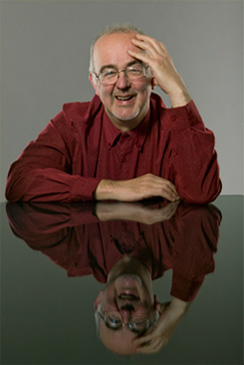


Who or what inspired you to pursue a career in music?

Hmm…that’s hard to say. I think by the time I knew I wanted to music I hadn’t really met anyone or seen any concerts – I just knew that I loved playing the piano and making up little tunes. It wasn’t really until I found Jazz that I knew exactly what it was that I wanted to be doing. Before that I was quite unfocused and split my time between doing the grades and playing music from musicals and coming up with my own arrangements of them. My old piano teacher used to give me hell for not playing what was on the page, but I think that I’d always enjoyed playing around with music made the transition into Jazz piano at the age of fifteen more comfortable.

Who or what are the most significant influences on your musical life and career?

My classical piano teacher at Guildhall, Laura Roberts, has probably had the biggest influence on my musical life. She’s been a close friend and ally over the years and even though we rarely see each other now she still has a big influence over me. She pulled me out of so many bad habits at the piano – before I met her I really had very little idea of how to play the piano properly so she really turned my life around. I’m still trying to work on the simple ideas she presented me ten years ago.

For Jazz if I had to name one figure it would be Keith Jarrett. He was my first real love in music and the first pianist I ever heard. I’d never listened to any famous classical pianists before, or really even any piano music in general and when I first heard Jarrett it was mind-blowing and I devoured everything I could get my hands on. What can I say about Jarrett that hasn’t already been said! To me he’s the biggest musical genius of all time. 

Other than Jarrett there came a time in my life around the age of 21 where I felt like the African-American lineage of Jazz Piano had a greater pull for me. Before then I was quite into the Bill Evans – Brad Mehldau – ECM sound, and I still love that, but the Duke Ellington, Thelonious Monk, Wynton Kelly, Herbie Hancock lineage really took over at some point. Its all beautiful and it ultimately all comes from the same place but I always want to keep on working on what is a Black American art form. Even though my own music comes from a lot of influences outside of Jazz I won’t ever stop trying to get together what Charlie Parker and Bud Powell were doing in the 1940s.

What have been the greatest challenges/frustrations of your career so far? 

I think anxiety has held me back massively. Its only been in the last two years where I’ve felt happy on stage. I used to be a nervous wreck and it showed. That’s really held me back and I feel like I need to make up for lost time but I’m generally a lot happier and settled than I was in my early and mid-twenties.

How would you characterise your compositional language?

I would say that the music I’ve written over the last four or five years has come from not thinking of tonality or chords. None of the music from my new record has any chord symbols in it. I wanted to get away from the sound that I felt that I’d heard too much of in the London Jazz scene – music which has been clearly written with a single melody line over a set of sometimes quite bleak chords. Kenny Wheeler has been a huge influence on a lot of people in London but I had to get as far away from that sound as I could. When I write music these days the composition is first and the improvising is second. At some point I’ll go back to writing very small compositions that serve as vehicles for improvising but right now with my band Klammer the music is about the compositions.

How do you work?

I work very slowly, which is of great annoyance to me. I know some people who can write several tunes in one sitting, but I don’t think that works for me. I’ll write a couple of bars and then I’ll forget about it for days on end, and then come back to it and add a few more. I’d like to get things out faster but sometimes I think leaving things can cause you to come back afresh and take the music somewhere else. 

Often I think its helpful to know what you want to write before you start. That’s worked well for me in the past where I’ve wanted to write the fast tune/the ballad/the straight 8’s odd time tune, but these days I just sit and see what comes out.

Who are your favourite musicians/bands/composers?

Modern musicians/bands that pose a huge influence on me these days are Jason Moran, Django Bates, Matt Mitchell, Steve Lehman, Steve Coleman, Radiohead, Animal Collective, Deerhoof, John Hollenbeck, Wayne Shorter, Steve Reich, Liam Noble, people like that. I love hip hop, techno, ambient, singer-songwriter music too and it all runs together.
And from the past – Thelonious Monk, Stravinsky, Ravel, Bach, Schubert, Billie Holiday, Mahler, Messiaen.

What is your most memorable concert experience?

Seeing the Wayne Shorter Quartet playing music from outer space in 2006 at the Barbican Centre. It was without doubt the most incredible music I’ve ever heard. People in the audience were screaming during the encore, it was so super-charged. There’s a recording of it out there somewhere…That band is on the farthest outer edge of what’s possible. No one is doing what they can.

Do you have a favourite concert venue to perform in and why?

Ronnie Scott’s. It took me a long time to make peace with the piano – that piano kicked my ass! I had to really learn how to play grand pianos and its only been in the last two years where I’ve felt comfortable playing one – but now I love playing there. The atmosphere and sound are perfect and I would play there every week if I could. I’ve had some great gigs there recently with Leo Richardson’s Quartet and it just feels like the perfect place for that music.

What do you consider to be the most important ideas and concepts to impart to aspiring musicians?

Be friendly. Get your social skills together. Never, ever rely on what you perceive to be as your talent, its not enough. When I was younger I didn’t feel confident in some social situations and used to hope that I could just get by on my playing. You can’t – you have to go out there and meet people and make friends.

For Jazz musicians I’d say get as much together as you can. Don’t just do one thing, get it ALL together. It’s all as equally important and the more you have in your tool box the more exciting your improvising will be. It’s not fun when you know how someone is always going to sound. Jazz should be the sound of surprise. Tape yourself. Play classical music too, its all in there.

Other than that just practice as much as you can, see as much of life as you can and don’t worry if things don’t happen straight away. Never get lazy or complacent. When I was younger I noticed that some older musicians who I used to worship had done so and I vowed I would never slack off. The only person who can help you get better is yourself.

Where would you like to be in 10 years’ time? 

Still practicing and trying to get better. I still feel like a beginner and I still don’t feel like I’ve achieved anything and I don’t really want that feeling to go away. It keeps you moving. That said, if I’m still doing what I’ve done over the last few years in ten years time I’ll be very happy. I’d just like to do more of it and eventually move into teaching at one of the music colleges. I love this life and I just want it to last a long, long time!

Rick Simpson’s new album with his band Klammer is available now on the Two Rivers Records label

Rick Simpson is based in London playing a wide variety of music, and leads his own group playing original jazz music. Rick is a regular performer at Ronnie Scott’s, the 606 Jazz Club, Pizza Express Dean Street, The Vortex, The Bull’s Head, and he has appeared at larger UK venues such as the Royal Festival Hall and the Purcell Room. In 2008 Rick won a Yamaha Scholarship Prize for Outstanding Jazz Musicians. A recording of Rick’s band was put on the front cover of Jazzwise Magazine.
Since graduating from the Guildhall School of Music and Drama in 2008 he has performed with musicians such as Christian Scott, Eric Harland, Joe Sanders, Michael Janisch, Ernesto Simpson, Martin Speake, Earl Burness Travis, Stan Sulzmann, Jeff Williams and Brandon Allen as well as younger musicians in London. Rick plays in the ensembles of Jay Phelps, Tim Thornton, Tommy Andrews, Leo Richardson, Paul Riley, and US Jazz Singer Hailey Tuck amongst others

Rick also teaches on the prestigious MEhr Clef courses alongside Stan Sulzmann, Steve Waterman, Alan Barnes, Malcolm Edmonstone Mark Hodgson, Lee Gibson, Ursula Malewski and Martin France.

www.ricksimpsonjazz.com

picWho or what inspired you to take up the piano and pursue a career in music?
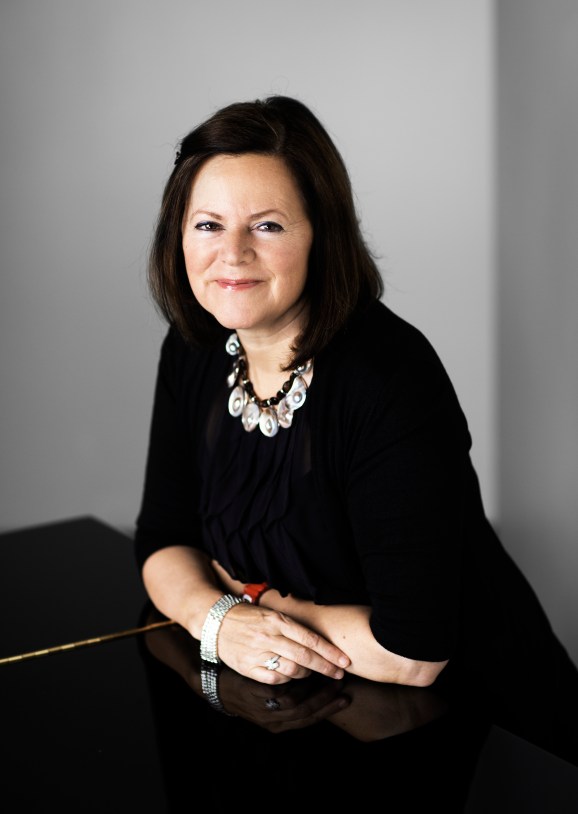

I started piano aged 6 and didn’t show much interest in the first few months but a family trip to London when I was just 7 included a night at the Proms, with Malcolm Sargent conducting the Berlioz Symphonie Fantastique which just blew me away. When I got back home they couldn’t get me off the piano ! As far as a career was concerned I really had no idea what was entailed … I just drifted into it…one thing led to another. 

Who or what have been the most important influences on your career as a musician?

My teachers to start with: Marjorie Clementi, who sorted out my technique when I went to her aged 13 and who taught me to listen to myself for the first time. Gordon Green, who taught me how to practise in so many imaginative ways, and whose infectious love and enthusiasm for music overall was very inspiring. He really was a great human being. When I was a student Alfred Brendel’s early recordings were a great inspiration, and also the playing of so many pianists… Richter, Rubinstein , Kempff and Curzon to name a few of the most important.

What have been the greatest challenges of your career so far?

Recording all the major Schubert works for Radio3 in the 1980’s and more recently recording all the Beethoven Sonatas for Deux-Elles. Playing at the Proms was a great experience , but very challenging!

Which performances/recordings are you most proud of?

My performance of Rachmaninov’s Second Concerto at the Proms in 1989, and my recordings of the Beethoven Sonatas

Which particular works/composers do you think you play best?

Beethoven and Schubert for sure. Mozart’s Concertos, Brahms, Dohnanyi, and Debussy.

How do you make your repertoire choices from season to season?

I’ve started to play themed programmes in the last few seasons….The piano and nature for example this year including Beethoven’s Pastoral Sonata and shorter works by Liszt, Schumann, Dohnanyi Ireland and Debussy all inspired by nature. Next year The piano and Art …works by Liszt, Debussy and Granados culminating in Mussorgsky’s Pictures. Also a lot of all Beethoven programmes when recording the sonatas. Now all Schubert programmes in preparation for recording his works.

Do you have a favourite concert venue to perform in and why?

S0 many! – but Manchester’s Bridgewater Hall for concertos…. The clarity and immediacy make it so exciting. For solo it’s difficult to beat Kings Place. For chamber the warmth of sound in the Wigmore is very special

Favourite pieces to perform? Listen to?

Too many to list….but for listening I’m still as obsessed by Wagner now as I was when I discovered his music as a teenager. Haydn Quartets are an endless treasure trove…..

Who are your favourite musicians?

Again, where to start ? Just recently I heard two stunning performances from very contrasting pianists whose work I love and admire…….Richard Goode and Martha Argerich

What is your most memorable concert experience?

Taking part in the final concert of Kathy Stott’s Piano 2000 festival at the Bridgewater Hall in Manchester…all the Rachmaninov Concertos in one evening. I played No.2

What do you consider to be the most important ideas and concepts to impart to aspiring musicians?

Fidelity to the score and the communication of the music without personal interference. Meaning is more important than style, yet a sound knowledge of style is also necessary. An interest in all the works of the major composers, not just the piano music.

What do you enjoy doing most?

Apart from playing Schubert and Beethoven, walking on the hills of Scotland and the Lake District, cooking, watching films, and listening to Wagner


With an extraordinary career spanning over 4 decades, Martin Roscoe is unarguably one of the UK’s best loved pianists. Renowned for his versatility at the keyboard, Martin is equally at home in concerto, recital and chamber performances. In an ever more distinguished career, his enduring popularity and the respect in which he is universally held are built on a deeply thoughtful musicianship allied to an easy rapport with audiences and fellow musicians alike.


Read more about Martin Roscoe here

r8a9075_11
(photo Nikolaj Lund)

Who or what inspired you to take up piano, and pursue a career in music? 

I’m not sure I was particularly inspired by anyone at the age of 5, but we had an upright piano in the house as my mother gave piano lessons to little ones after her day job. I don’t remember she pushed me to start but I was easily drawn to the instrument and picked up the basics pretty quickly. I had no wish to sit there for hours on end, so I think my saving grace was being able to read music quickly and get on with whizzing through my little book! I’ve never felt that I made a conscious decision to pursue a career in music. I went to the Yehudi Menuhin School at the age of 8 and it just naturally led to studies at the Royal College of Music – actually I never felt there was a choice NOT to continue!

Who or what have been the most important influences on your musical life and career? 

Although my lessons were infrequent with Vlado Perlemuter, he did influence me a lot in the way he approached clarity and intensity of sound. Nadia Boulanger influenced my ears to be as wide open as is humanly possible but the teacher who actually had the most profound influence, was Kendall Taylor who I studied with for 4 years at the Royal College of Music. He basically put me together after I had become very fragmented and most important, was the first person who believed in me. I’ve known Yo-Yo Ma for all of my adult life (and worked with him for 31 years) and without doubt he has influenced me tremendously, both as a pianist and a person.

What have been the greatest challenges of your career so far? 

I’ve had a number of challenges along the way. Perhaps the greatest was balancing being a mother and trying to maintain a focus on having a career which often took me away from home. My other great challenge was to accept I didn’t really like performing from memory and just deal with the fact I prefer using the score. I’ve now been doing that for about 20 years. I remember a promoter told me the critics would shoot me after I gave my first full recital using the score. It appears I’m still here.

You’re performing in the inaugural London Piano Festival in October – tell us about your programme?

I initially thought it would be a good moment to perform the Dutilleux Sonata again – a piece I absolutely love. I performed it for a whole season 10 years ago but then it disappeared from my repertoire until I recorded it for BIS 2 years ago. Then of course comes the question of what to perform with it. Somehow I couldn’t escape the idea of F sharp and now here we are with music by Ravel, Messiaen and Fauré. I’m often fascinated by keys and why music sounds the way it does because a composer chose a particular key. I think it will be interesting to explore the contrasts of F-sharp for an hour. 

Which performance/recordings are you most proud of? 

I don’t particularly dwell on whether I’m proud of something or not so there are probably performances which went especially well which I’ve totally forgotten about. I think I’m proud of the fact that I performed Rachmaninov’s 4th Concerto for the first time only a few years ago. As I get older, adding works such as this seem a bigger mountain than when I was younger, but I would have been gutted to get to the end of the performing road and never have played it…what a piece! Recordings – I’d probably have to say my complete Fauré for Hyperion. Not because I think it’s better than anything else I’ve done but it was such a beautiful labour of love to learn the complete works. I know I would play everything differently now but that’s how these things go. I don’t listen to my recordings – that’s for other people to do.

Which particular works do you think you play best? 

I think there are certain pieces I perform better now simply because I’ve had some life experiences which have definitely affected how I express myself. For example I feel I now play the Britten Concerto in a way which makes much more sense than when I was younger – same with works by Shostakovich. I have no idea really – my interest in repertoire is vast so sometimes it’s good to explore even if I don’t think it’s for me.

How do you make your repertoire choices from season to season? 

It depends on the season and what is generally going on. I always have a lot of chamber music in my season, so as that repertoire is not necessarily determined by me, I might decide my own recital repertoire according to other things in place. Concertos I don’t play as often and it’s always been rare to dictate repertoire. Then of course, there are festivals where you might have a million things to play in a short space of time. I try to think how I’m going to be able to prepare everything time wise and so some choices are made on that. It goes without saying that I’ve programmed or hinted strongly I want to play a certain piece just simply because I have to play it!

Do you have a favourite concert venue to perform in and why? 

I don’t have one favourite but on the list would be Teatro Colon in Buenos Aires for its beauty and history, the Concert Hall in Luzern for being contemporary but warm and Symphony Hall in Boston for its acoustic, relationship to audience and wood floor (stage) which tells a thousand stories. I generally dislike very high stages so even a great hall where I’m too far from the audience is not in my top ten.

Favourite pieces to perform? Listen to? 

No favourites – depends what day it is. I love silence more and more but I love listening to Symphonic Music, Opera, Lieder –rarely piano music just for pleasure

Who are your favourite musicians? 

I don’t have favourites but I’m currently enjoying listening to Philippe Jaroussky.

What is your most memorable concert experience? 

If you mean me performing then performing at the Hollywood Bowl with Yo-Yo and lots of lovely, wonderful Brazilian musicians. I remember we all held hands to take a bow and I said to guitarist Sergio Assad ‘remember where we are’. He knew what I meant. It was a happy evening for us all in an iconic venue. If the experience is me sitting in the audience – I’ve just been to my first Wagner Ring Cycle performed by Opera North. Truly memorable.

What do you consider to be the most important ideas and concepts to impart to aspiring musicians?

I always think it’s important for young musicians to find their own voice and I often discuss the concept of being true to ones self, to think about why they want to be part of the music profession and to try to balance the wishes of a composer with what they have to say as an individual. Learning to tell stories via their instruments is what I’m interested in and most important, I do like to stress we all mess up and performances are not ruined thanks to some wrong notes. In the end, I hope to help them be creative, independent, courageous and above all curious.

Where would you like to be in 10 years’ time? 

Anywhere where I feel to be alive and well

What is your idea of perfect happiness? 

I don’t think it exists

What is your most treasured possession? 

My photo albums – I’m very nostalgic

What do you enjoy doing most? 

Walking in the countryside with my dog, Archie

What is your present state of mind? 

Always lots going on!

Kathryn Stott performs music in F-sharp by Fauré, Ravel, Messiaen and Dutilleux as part of the inaugural London Piano Festival at Kings Place on Saturday 8 October.

Further information here www.londonpianofestival.com

www.kathrynstott.com

