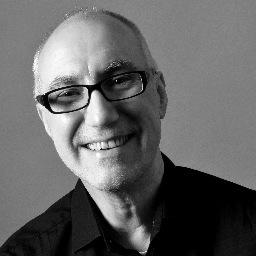
1f-xbxgwWho or what inspired you to take up composing, and pursue a career in music?

I started composing as soon as I started learning the piano. Going to the theatre as a child was an important inspiration – I wanted to write theatre music, and still do. Serious composition started when I went to Chetham’s School of Music in Manchester for 6th form and I suppose I have never looked back.

Who or what were the most significant influences on your musical life and career as a composer?

Influences have come and gone over the years, but Stravinsky and Wagner have loomed large – somewhat disparate figures but as with most music there are connections under the skin. The early Stravinsky ballets naturally had a huge influence on me as a teenager, though now I would take Symphony of Psalms any day. Wagner came later. There is nothing like the sense of immersion you get from being in the middle of Tristan or Parsifal. In terms of teachers, each has had an important impact on me in different ways, although I’m especially grateful to Giles Swayne for teaching me to cut the crap – he is that rare thing, a composer completely without bullshit.

What have been the greatest challenges/frustrations of your career so far?

While I can’t think of anything specific, the sense that a piece hasn’t lived up to what I wanted it to be is always agonising. On the other hand, that’s what leads me to write the next one. They’re all steps along a road and I have no idea where it leads.

What are the special challenges/pleasures of working on a commissioned piece?

The greatest challenge and the greatest pleasure is that there is a deadline. The piece would never get finished without it.

What are the special challenges/pleasures of working with particular musicians, singers, ensembles and orchestras?

More pleasures than challenges – knowing who or where I am writing for provides a focal point.

Of which works are you most proud?

I feel the work which has come closest to what I wanted it to be was a piece I wrote for a very good friend of mine, pianist Philip Sharp, called ‘Five Anatomical Sketches’. The music is unusually austere for me, but I felt that I was able to boil the material down to its expressive essence, and Phil performed it superbly.

How would you characterise your compositional language?

Communicative without compromise.

How do you work?

I compose whenever I can, I have no special routine. Time and space always yield better results. I also take frequent long walks to work ideas through. Many compositional breakthroughs have come on those long walks.

Who are your favourite musicians/composers?

I’ve already mentioned Stravinsky and Wagner as influences, and other musical loves include Chopin, Mahler, Adès, Beethoven, Adams, Britten, Monteverdi, and so on, and so on… In terms of performers, while I don’t have any particular favourites, I have recently been enjoying Boulez’s Mahler symphony recordings and also luxuriating in the voice of Iestyn Davies.

What is your most memorable concert experience?

As a performer, it was singing in the chorus for Walton’s ‘Belshazzar’s Feast’ at the Royal Festival Hall with the Chetham’s Symphony Orchestra, conducted by David Hill – who brought along the Bach Choir too. It is a silly piece in many ways, and yet it works so incredibly well and the ending is wonderfully ecstatic. As a listener, I will always remember my first Prom fondly, which was the BBC Scottish Symphony Orchestra conducted by Donald Runnicles performing Adams, Mozart and Strauss. I was swept away by the wonderful atmosphere and the wonderful repertoire.

What do you consider to be the most important ideas and concepts to impart to aspiring musicians?

I don’t like the phrase “be yourself” – I would rather say “do what you must do”. Have something to say and discover the best way in which to say it – that is the communicative impulse. I don’t mean communication in the lowest-common-denominator sense, I mean the sharing of music between humans on any scale. Writing and performing music is a way of saying “HERE I AM” and “HERE WE ARE”, nothing more and nothing less.

Where would you like to be in 10 years’ time?

Writing music.

What is your idea of perfect happiness?

Companionship.

What do you enjoy doing most?

Hearing great music with great people in great places.

What is your present state of mind?

Existentially drowning.

Jonathan Woolgar is the joint Cambridge University Musical Society Composer in Residence for 2016-17. This includes writing a piece for the Cambridge University New Music Ensemble, which will be premiered on 2nd February 2017 and conducted by Patrick Bailey

Composer Jonathan Woolgar is particularly interested in music as drama and music for the stage, and his work draws from a wide range of musical experience, aiming to engage every kind of listener.

Jonathan has had works performed at the Bridgewater Hall and the Royal Albert Hall by ensembles such as Manchester Camerata, Onyx Brass, Aurora Orchestra and the Helsingborg Symphony Orchestra, as well as broadcast on BBC Radio 3. In 2010 he won the BBC Proms Young Composers’ Competition. His music has been recorded for commercial release by the choir of Fitzwilliam College, Cambridge, and he also enjoys close associations with contemporary music ensembles The Hermes Experiment and Khymerikal. Jonathan is Composer in Residence at Eton College for 2015-17, and will be Composer in Residence for the Cambridge University Musical Society in 2016-17. His one-woman opera, Scenes from the End, ran in London and Edinburgh this summer, while future projects include performances at St Mark’s Basilica, Venice and St John’s Smith Square.

Whilst currently based near London, Jonathan originally hails from Pontefract in West Yorkshire. He attended Chetham’s School of Music, Manchester from 2008-10, studying composition and conducting with Jeremy Pike and Gavin Wayte. From 2010-13 he read music at Fitzwilliam College, Cambridge where he graduated with First Class Honours and studied composition with Giles Swayne, going on to study with David Sawer at the Royal Academy of Music.

jonathanwoolgar.com

qbk-joyqWho or what inspired you to take up composing, and pursue a career in music? 

As a child there was no real music in our house, or reading materials as such, mainly due to my mum’s mental illness. As a result of this, and of course other problems in the family, I didn’t actually speak or really communicate until about 6 or 7 years of age. However, I had obviously listened to much music, both radio broadcasts and recordings, mainly at schoolfriends’ houses, or at school itself, which I totally soaked up at each opportunity – everything from the Beatles and the Monkeys to Beethoven and Mancini. When I got my first musical instrument, a guitar which was purchased through a shopping catalogue operated by a friend’s mum, and for which I paid by doing potato picking on farms, and  as a newspaper delivery boy, I sort of just started playing back what I’d heard, improvising along the way of course, trying to pin down correct pitch, melody, rhythm, etc. of each song/piece until I’d got it as close as the original. I didn’t know what I was doing at the time of course.

Who or what were the most significant influences on your musical life and career as a composer?

From above, you can obviously see I didn’t have the possibility of music lessons, so I am completely self-taught in music. However, I studied very hard, seeking the knowledge of this strange craft known as music notation, and how to turn ideas in my head into something I and others might play one day – daydreams, maybe, but a very determined Yorkshire boy/man I became, constantly trying to hear/read more music all the time. Many musicians have been an influence, and still are, on my life really: Elgar, his struggle for recognition as an artist, plus his wonderful musical structures enchanted me early on; Neil Young, his stories of life in both his lyrics and musical arrangements, appealed to a young teenager in the 70’s; Gershwin, with his amazing cohesion of jazz and classical genres were to lead me to  carry on this ‘cross genre/culture’ idea in all my later work! Of course, as a fifteen year old boy I truly had no idea where I was going with this magical thing called music, with its strange terms, dots, lines all over the place, but I read everything from ABRSM theory books to  Antony Hopkins books on music and listening/analysis,etc and from Ferdinando Carulli’s great little book ‘Guitar Method’ to the symphonies of Mozart, etc. too – all an education. After school, I was determined to write music one way or another and now I had found a way of communicating my thoughts and feelings I was on a roll!!

What have been the greatest challenges/frustrations of your career so far? 

When I left school at 15/16 years of age, I wasn’t sure how I would do it, but boy was I gonna try and write music as I thought it should sound, and whatever meant something to me,`i was really hoping that somehow people would understand my thoughts and what I was trying to say. Of course, easier said than done, but I learnt very quickly how to be flexible, playing in theatre pits, busking, pop bands, teaching, as well as giving recitals with my own music, I managed to build a small, very small, reputation on the large music scene in UK. Persevering however, I accepted my first true commission for a soundtrack to a lecture series at a local art school, which I both arranged and and multi tracked on two cassette players – a truly awful result I’m sure, but people liked and used it, so a win win situation, as people say now, eh. Of course, frustrations come as an artist, as you try to get to where you think your journey should take you, but as always in life, you carry on, taking rough with smooth and never regret artistic choices, or directions, as you always learn something from the experience – well I certainly did, and after over 40 years of being a composer I’m still getting a thrill and learn something new every work I produce.

What are the special challenges/pleasures of working on a commissioned piece? 

I work in all genres of music: film, theatre, pop/rock music, animation, concert works,etc, and, or so, because of this cross genre working, I have worked and continue to work and learn from such a variety of musicians and their different backgrounds and approaches to music, its really a truly pleasurable experience and exciting, each time am opportunity occurs for me to share ideas and develop my thoughts into musical sounds form the performers. I am not very computer literate at all, I have no music software, and no idea how it works. When younger, I actually wrote all the parts out by hand, even the large orchestral works, brass band pieces and songs. Luckily, for me, I now have an assistant who I get to turn my stuff into files, which then can be emailed around the world the same day, which I find pretty amazing, although slightly confusing how it does so, at the same time! I am very lucky that I have found a career in something, i.e.; which is truly all I know about, and that people approach regularly for new works – now an animation, then a concerto, now a theatre piece, then an album for a rock band to arrange/produce,etc – all of both equal importance in the musical world and in my life.

What are the special challenges/pleasures of working with particular musicians, singers, ensembles and orchestras? 

I always approach my work in the same way now, as when I was a young boy. First of all, I try to arrange a meeting, face to face, as I don’t like the impersonal, remote meetings; phone, emails; Skype, etc, however, this can be impossible sometimes; for example, I have a long term project in Japan, and another project coming up in Poland, so will have to talk on Skype, etc, until each visit, but otherwise I’ll jump on a train – my favourite form of transport – and meet to discuss/talk through everything over either a lunchtime meal, or a few pints in the pub, as either way is very constructive to me! Meeting musicians, either in concert hall, or in the studio is always a pleasure and, to be honest, an honour too to me. I am very happy to enjoy what I do and also appreciate that I’m fortunate that I found how to both express my life, thoughts, emotions, etc, through music, whilst at the same time making a living at it too. This is important part of my philosophy, as coming from a working class background and growing up on a large council house estate in the north of England, I’m very proud of my roots, therefore wish to share with others! I’m also very lucky that all the musicians I work with from any of the genres, seem to respect my thoughts and expertise in composition, although of course, when it comes down to specific technical things like fingering, bowing, phrasing etc ,etc I am always totally in their hands – a genuine collaboration I like to think.

Of which works are you most proud? 

I have composed so much stuff over the years, and have been so lucky that nearly everything I’ve written has been either performed, recorded or broadcast at some point. So trying to pick a particular work out is very difficult, as you could imagine, but maybe I can quickly suggest a few that stick in mind. ‘Suffolk Serenade’ (mezzo,horn+strings) was a joint commission with my wife (writer Gillian) to write a ‘complimentary’ piece to Benjamin Britten’s ‘Serenade’ for the Britten centenary. At the interval, the concert was actually down in Suffolk of course, I was approached with a dilemma – the audience would like to hear it again! Yikes, I thought, as did the conductor too, as it lasted over 30mins in total – although, I may add the orchestra and conductor were very keen and seemed to like it thoroughly too. Anyway, that was amazing that an audience and musicians enjoyed my scribblings so much that they were willing to suffer more tonal distress….hee, hee, from me and was great for a premiere of a contemporary piece of music was accepted on first hearing. Another important piece was a work I wrote for the theatre entitled ‘The In Between Space’. I was composer in residence for Converge at the time, which helps provide student lessons in music, drama, dance, creative writing,etc,for people with mental health issues. I wrote the incidental music soundtrack and was invited to attend the two days of performances – truly wonderful they were too.The last one I choose is the most recent too. I am at present working on a joint project with Japanese composer Nobuya Monta; we are having joint concerts and recordings of our music,both in UK and Japan.On Sunday 17th July this year he visited the UK and we launched our first event: Concert and CD launch of ‘Heading for the Hills’ at Blueprint Studios ( where we recorded it) an album of Japanese and British music for string quartet. First the Strata String Quartet played a selection of the tracks from the CD, then, whilst the studio played back the whole album, we toasted a new adventure in Japanese/British musical culture which we hope to develop over the next few years. It took a lot organising, as you can imagine, bringing performers, studio and record label all together and on board for a journey which was developing as we went along – a truly musical adventure,but if you want it to happen, it will.

How would you characterise your compositional language?

I suppose my musical language is really a combination of many styles, it crosses many musical boundaries really. To be honest, I’ve never actually paid any attention to trying to write in any style at all, whatever comes out of my head I scribble down, then wait to hear the performance – either live or recorded. As I have worked with so many musicians and on so many projects over the years on numerous variety of commissions, I’ve no doubt been subconsciously influenced on what I’ve heard and learnt from each experience and each project – which is exactly what I did when I started at this composing malarkey I suppose. One thing I’m very certain of of though a lot of my individual voice emanates from Elgarian melody, jazz harmony and rock/folk rhythms – all styles of music I liked when I was a youngster and still enjoy listening/playing now too!

How do you work? 

When I receive a commission, for film, concert hall or studio work, I tend to think a lot about the project and meet with the performers to discuss my ideas. Collaboration is very important to me as a composer,sharing thoughts with the players is pretty inspiring to me,as we bounce around ideas off each other and I get to know them and likewise – this so important,I feel anyway. Then I think a little bit more, often walking around, or on my many train travels, until the piece is completed in my head and I have a clear vision of the finished work. I then sit down to use pen and paper to write the score; it doesn’t matter if it’s for full orchestra or a soundtrack for animation etc, I still like the intimacy and immediacy of ink and stave – transferring thought directly to paper. If I need to get score/parts to the other side of the world, I’ll get someone to turn my manuscript into computer ‘stuff’ and email it to players,otherwise I’ll pop in post, or better still, I’ll revisit them and hand over in person.

Who are your favourite musicians/composers? 

I love concerts and enjoy the ‘buzz’ even the tuning up at the beginning has always made the hairs on the back of neck stand up – although,alas, a few less hairs these days! I enjoy a wide variety of musical genres, but I suppose Elgar, Rodrigo, Michael Nyman, Neil Young, Led Zeppelin, Radiohead are all composers and musicians I enjoy listening to regularly and still get great inspiration from. I enjoy listening either live performances – which I much prefer – although I enjoy broadcasts and recordings too of course.I used to do a lot of teaching, which I really enjoyed and which taught me a lot, I actually think we learnt off one another, they from my knowledge and experience,me from their open minds,new exciting ideas, my students would bring along a selection of stuff they were enjoying,o ften from musicians I’d never heard of, which have become favourites, like Arcade Fire, and Einaudi too. Whilst I do a little teaching now, mainly as a guest lecturer at different universities/colleges, etc, I still find it invigorating to listen, explore and find new sources of musical sounds and ideas – I think this is very important for a composer.

What is your most memorable concert experience? 

Other than the excitement at my first rock concert aged 12, by prog-rock band Hawkwind, which was scary and amazing, in equal measure, I seem to remember one of the most memorable and truly overwhelming was a performance Elgar’s cello concerto – many years ago, at York University Central Hall. In the final, agitated fast movement, there occurs a refrain from the slow movement, of that delicious, hauntingly beautiful melody, which builds then dies away bit by bit. Well, in this performance as the slow theme dissipates to Elgar’s dynamic instruction, probably a ‘ppp’ the melody did just this and also something else, which I still can’t quite figure out how, but however the cello sings totally solo then ..gets, quieter ….quieter, quieter, slower……….then almost inaudible. At this moment I and I believe everyone else in the audience held their breath………then after what seems like ages the baton beats and were off for the final orchestral flourish and crashing last few bars. But,the few seconds took me to a really musical and totally magical place that I still recall, not all the concert, but that moment, and I wish I had experienced more of these moments in time – although I’ve been at a few others,close but not so sublime!

What do you consider to be the most important ideas and concepts to impart to aspiring musicians? 

I think, just my personal thoughts these of course, that a musician should always strive to be themselves. Yes, learn from others, study the works of others, but please develop your own style. As composers, we feel we have something individual to say, so it’s very important that we develop our own voice to say and express this. Also, to enable this to happen I feel it’s very important to listen to as wide as possible, and practical, as much music from as varied sources and genres as possible. It’s very important to not become stagnant, or complacent in your music, audiences and musicians deserve better than this and more importantly so do you as a composer. I enjoy writing, listening and learning, still, absorbing from anywhere and everywhere; art, theatre, concerts, broadcasts, socialising, travel, all are very important to me to help keep my feet on the ground, except on a plane of course, but also keep my mind, eyes and especially my ears open and help me continue to work in the 21st Century.

Where would you like to be in 10 years’ time? 

I hope I’ll continue to learn more of the art of composing music from around this small world of ours. It’s a small, but beautiful planet with a wide variety of peoples and cultures and as the technology develops it brings both closer together and hopefully understand one another through art, and particularly in my case music.Sharing our musical ideas across the globe helps composers across the globe develop a new ‘palette’ from which to draw their individual colours to express. I for one, will strive for another ten years to do this. Continuing to have the opportunity to explore new new musical horizons, writing more compositions which cross the boundaries of musical genres.

What is your idea of perfect happiness?

Sitting in a pub beer garden drinking a nice glass of cold cider and eating a cheese ploughman’s with my wife; I believe the nicest things in life are often the simplest.

What is your most treasured possession? 

My Parker fountain pen, with which I sign all my finished scores.

‘Heading for the Hills’, Peter Byrom-Smith’s new album for string quartet is available now

Peter Byrom-Smith is an internationally renowned composer. Writing for and performing with many musicians from across a wide spectrum of genres, Peter’s musical journey has taken him on many trips around the world. His music has been performed, broadcast and recorded in U.K, Europe, Singapore,  Japan and U.S.A. by numerous musicians. He is as happy to have his music performed in small country churches as he is at Liverpool’s Philharmonic Hall. 

His music crosses boundaries: a melange of sounds, bringing together elgarian melody, jazz harmonies and rock rhythms. 

In an ever growing portfolio of work, which includes pieces written for full orchestra and chamber musicians. He also regularly works with pop/rock musicians, both in the studio and in live performance, as well as writing sound tracks for film and theatre.  Peter’s work is performed regularly and he receives frequent commissions for new music.  

www.peterbyromsmith.com


Benjamin Ellin, the award-winning and critically acclaimed British conductor and composer, has been commissioned to create a classical composition focusing on the concept of peace and this year’s centenary of the Battle of the Somme.  The resulting Oratorio One Before Zero is one movement for orchestra, solo baritone, solo mezzo soprano and boys’ choir.

somme-hero-image
(picture source: 1914.org)

This large-scale musical narrative work is inspired by the moment before battle, before zero, zero hour, the time at which hostilities commence.  Benjamin Ellin explains: “It’s the time when all that is known can be turned upside down and where a world of emotions dominates the mind and soul of any soldier”.

The work is in English, French and German and aims to illustrate musically and linguistically how the race to war, the loss of life and the destruction of humanity affected all sides in this devastating war.

Benjamin explains the inspiration behind the new work: “The Imperial War Museum provided a great deal of the research materials that helped inform my understanding of the period and I used the archives of Royds Hall School in Huddersfield which was a military hospital during WW1.  I enlisted the talented writer Ben Maier to help me ensure the work flows as a  continuous and complete line. The work has a personal connection too. My great relative, Private Samuel Vincent Boot (No. 19463) was killed in WW1.  I used his army number to develop a lot of musical material and develop the narrative.”

The performance will take place on 11th November 2016 at the renowned Maison de la Culture in Amiens in Northern France which is located just behind where the front line was established in WW1.  A second performance is scheduled on 12th November 2016 in Beauvais, Maladrerie Saint-Lazare.

benjamin_ellin

In this Meet the Artist interview, Benjamin discusses his musical influences, the challenges of his career as a composer, and the creation of ‘One Before Zero’.

Who or what inspired you to take up composing, and pursue a career in music? 
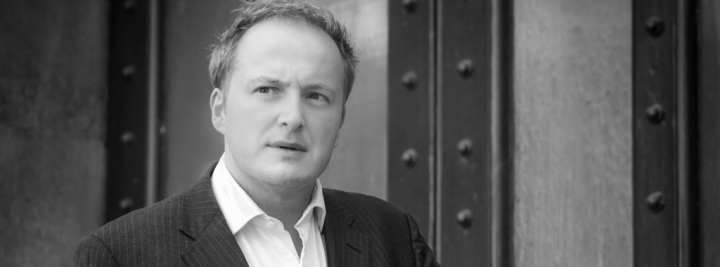
I heard a performance of the Nutcracker at the Royal Ballet as a young boy – my mother took each of us (myself and my two older sisters) to see a ballet when we were young by way of a musical intro – and I was hooked. I persuaded her to buy me the tape recording in the shop and listened to it constantly. Whenever I hear a great piece of music, in whatever genre, I just want to write music or do something creative.

Who or what were the most significant influences on your musical life and career as a composer? 

There isn’t one single thing. My initial musical impulse often comes from the environment I am in or the world events of our time. I also love the sounds that are around us generally and how they often turn in to little musical ideas all by themselves. For instance, one of the tracks from the TAFAHUM album ‘Osmosis’ is inspired by the sound of the Victoria Line tube at Highbury and Islington; the piece is called Three Fishes Laughing.

What have been the greatest challenges/frustrations of your career so far?  

Being pigeonholed really – or people trying to. For me, music is genuinely indivisible and once you try to put people in to boxes you are missing the point. Sadly it seems, at times, this obsession is a by-product of lazy elements of the ‘business’, but I have always believed that the most inspiring characters around do more than one thing and I genuinely just happen to love and feed off different musical arenas.

What are the special challenges/pleasures of working on a commissioned piece? 

The shape of a piece is very important. Once the overall structure is set in your mind, even if it changes slightly in the process of being realised, you can really start to write it out. For ‘One Before Zero’ that really was the main issue; deciding on the form and arch because after that a lot of decisions have been made for you. The challenge is knowing what to not use or not do and structure helps that process of illumination a lot. Pleasures? I love harmony and the juxtaposition of chords and the resonances they have; that and treating the audience to the theatrical elements of music so they are – hopefully – truly gripped and engaged.

What are the special challenges/pleasures of working with particular musicians, singers, ensembles and orchestras? 

If you have a relationship with a performer or a group then you can try and build the musical material around them in subtle ways; this is a joy. A challenge is to always respect the skill and talent of the musicians. They have to play your music and you hope that they actually want to. I don’t believe music is all about the composer in an egotistical way but always about the collective.

Of which works are you most proud? 

I am proud of my Violin Concerto which was premiered last year with the Philharmonia Orchestra, my Trombone Concerto for Joseph Alessi, my tracks on the TAFAHUM album ‘Osmosis’ and the works I have written in conjunction with Violist Rivka Golani and the people of the Siksika nation in Canada – amongst others…

How would you characterise your compositional language?

That is a difficult question – in fact, all these questions are! In short a mix of Stravinsky, Shostakovich, Britten, Vaughan Williams and the jazz world of Miles Davis and Count Basie amongst others. Jazz and blues were major influences growing up in that they were the main style of music that I heard and I still love them. In general, as a composer, I don’t seek to reinvent the wheel but I’ll always express myself as honestly and boldly as I can.

How do you work? 

It largely depends on the piece or the commission. Sometimes a solid idea for a gesture within a piece starts the process and other times I have to work relatively slowly. Waiting for inspiration is all well and good, but sometimes it doesn’t always flow and you have to then rely on your technique – however good it is – when a deadline is there! I also like to sow ideas in my mind and let my subconscious chew them over for a bit; they nearly always find a way of becoming a key part of the process.

Please tell us more about your new work ‘One Before Zero’, to be premiered on Remembrance Day. 

In short it is a large oratorio for orchestra, solo baritone, solo mezzo and SATB male choir to commemorate the Battle of the Somme.

Not so short, well, subconscious played a major part here too. I first worked in Amiens several seasons ago when I wrote two smaller pieces for a new festival there. As soon as I went on a research trip I was hooked on the area, the cathedral and the history of World War 1. I knew I wanted to write something about it and that was a good start for mental gestation! Then I had the chance to work with the orchestra in Picardie as both a composer (I wrote a new work for them) and also as a conductor in several performances. Therefore I got to know the players a little and I also got to work with their Music Director Arie. By the time the commission came I had soaked a lot up about the people, the area and so I could start from a decent place. The desired use of an all male SATB choir provided another set of options for the work as it was clear to me that the choir should be the soldiers and the baritone soloist is one of them whilst the mezzo represents the home front, picking up the pieces and trying to make sense of everything that was going on through the mirage of propaganda and misinformation through media…how things change!

Then, after lots of reading and textual research I decided on the structure of the piece. The soldier (baritone solo), drained, exhausted and battle-hardened from war stands at the front of the stage. Gazing out at the audience he begins to question who are the people across the stretch of no man’s land in front of him who he will shortly be ordered to attack, to kill, or indeed be killed by. Who are they? Are they anything like him? How did he get to this point where a mere order from a higher rank can result in him, a hitherto ordinary man, attacking with such aggression and ferociousness.

This awakening marks the start of the work. The title itself (ONE BEFORE ZERO)  underlines the importance of this moment before battle, before zero, zero hour  – the time at which hostilities commence – when all that is known can be turned upside down and where a world of emotions can surely fly through the mind and soul of any soldier.

The text is also a mixture of source letters, propaganda and diary entries from the time and also a number of commissioned texts by Ben Maier – a writer who I work with regularly. The new texts help knit everything together and I wanted to move away from using war poetry as it had already been done several times. The piece is in three languages, English, French and German as the aim of the piece is to underline the human cost on all sides of this conflict.

What is your most memorable concert experience? 

Again, there have been many for all sorts of reasons. I think my first concert as a conductor at the Philharmonic in St Petersburg was very special. I studied in St Petersburg and saw a concert there during my studies with the St Petersburg Philharmonic. Amazing. Then, years later when I used to do stage managing I stage managed a concert with the EUYO and Ashkenazy there. A few years after that I made my debut as  conductor and with one of my own pieces, WHITE CRUCIFIXION, so it was a powerful feeling of full cycle!

What do you consider to be the most important ideas and concepts to impart to aspiring musicians?

Be really honest with yourself about what you are trying to do, what you love and what you are doing. Lots of people will try and knock you down, directly or just through ignorance. If you genuinely love what you do, no matter what, then just keep going – however hard it gets. Take what you do seriously, but never take yourself seriously so that it becomes destructive – ego is the ugliest trait in people and especially in music.

Where would you like to be in 10 years’ time?  

Music Director of a Professional Orchestra, writing a small handful of film scores a year, touring and collaborating with Tafahum, guest conducting with a handful of organisations and carving out commissions that I am interested in.

What is your idea of perfect happiness?  

Now, as a father, a good afternoon picnic with my wife and children followed by prating around with them, and possibly some creative work in the garden with my daughter helping.

What is your most treasured possession?  

I would say my family, but they are not a possession, so, therefore, I don’t have one.

What do you enjoy doing most?  

Lots of things and as much as I can. I learn about other things from doing something seemingly different so I love variety in work and in life.

What is your present state of mind? 

A mixture of love, contentment, frustration at the world and hope in the many beautiful things that still manage to exist.

‘One Before Zero’, a new oratorio in one movement commissioned by l’Orchestre de Picardie for the Network ONE® – an Orchestra Network for Europe – to commemorate the centenary of the Battle of the Somme will be premiered in France on Remembrance Day, 11th November 2016. Further information and tickets

Award-winning and critically acclaimed British conductor and composer Benjamin Ellin is currently Music Director of Thursford Productions, Founder of the Contemporary Fusion ensemble Tafahum, Principal Conductor of the Slaithwaite Philharmonic Orchestra, Music Director of Focus Opera and President of Pembroke Academy of Music, London.

His belief in the positive power of music within society is reflected in the wide-ranging projects of which he is currently a major figurehead. From his own ensemble Tafahum, major projects and collaborations at London’s Southbank Centre, his own commissioned works with the First Nation communities of Alberta, Canada to his commitment to outreach and development work as well as appearing on stage with leading ensembles across the globe, Ellin’s belief in a musical world without boundaries is equalled by a tireless commitment as a guest artist and as a Music Director.

www.benjaminellin.com

news-3412Who or what inspired you to take up composing and pursue a career in music?


I was surrounded by music from a young age and went to a music school (city of Edinburgh Music school, then St Mary’s Music School) where everyone was encouraged to compose. It’s difficult to put my finger on what exactly inspired me to pursue composing but I think it was this ethos combined with individuals such as the pianist, Peter Evans and ecat (Edinburgh Contemporary Arts Trust at the time)taking an interest and performing as well as commissioning me.

Who or what are the most significant influences on your musical life and career?

Coming to London and studying with Julian Anderson and Edwin Roxburgh made a real shift. They introduced me to so many composers as well as ideas and techniques, and this really instilled me with a desire to always be ambitious with he music I write. Studying in Tanglewood (2008) and working closely with composers Oliver Knussen, Augusta Read Thomas and others was also a very important time for me, not least because I was immersed in the music of Elliott Carter during their celebration of his centenary.

What have been the greatest challenges/frustrations of your career so far? 

Having my son, in 2013, has been a real challenge, although not a frustration. I was used to devoting any or all my time to composing and this had to change, I’m much happier for it though!

What are the special challenges/pleasures of working on a commissioned piece? 

Each commission has its own challenges, this may be linked to a brief. It often feels like you have to learn composing anew for each piece and that’s tough. Another challenge can be the pressure you feel to produce your best work and not to let the commissioner/organiser/individual/performers down, this can be very daunting at the beginning of the composing process.

What are the special challenges/pleasures of working with particular musicians, singers, ensembles and orchestras?

Working with musicians for the first time, whether soloists, singers or orchestras can be very exciting but also completely nerve racking. I want so much for them to respond well to what I’m doing and also enjoy learning and performing my music. My music (everyone tell me) is pretty difficult and detailed, even when I fell I’m doing something very simple. I know it takes a huge amount of energy and time to embrace a new sound world and am always incredibly grateful when musicians seem to get what I’m doing and really believe in it.

Which works are you most proud of?

It takes me a long time to feel really comfortable with a piece and it might take several years and different performances for me to let go and enjoy it. For this reason it’s a difficult question, also, how I feel about a piece can be linked to other people’s reactions at the time or the performance. I think I’m most proud of some chamber pieces such as Aviary Sketches for string trio and my Three Whistler Miniatures for Piano trio. I am proud of my Violin Concerto just now, but it’s not receiving its premiere until December so I will have to wait and see! Often I’ve had particular compositional challenges in these works but don’t feel I’ve had to compromise on my language or original vision for the piece.

How would you describe your compositional language?

My language is detailed and intricate. I am drawn to rich harmonies, initially influenced by Messiaen, Takemitsu and Boulez, and long expressive musical lines. I love to create different layers in my music and often slow music exists at the same time as fast music. Clarity and focus, as well as a dedication to always get exactly the right notes, are always paramount for me.

How do you work?

I work in a spare bedroom and spend a lot of time sketching on manuscript and using piano. Once I have developed and discarded a lot of material as well as discovered what I want to try to achieve in a piece, I start using Sibelius software alongside, always moving back and forth manuscript to rework and draft passage. This is usually pretty extensive.

Who are your favourite musicians/composers?

Difficult to say, but Ravel, Stravinsky, Janacek, Byrd, Bach,Ligeti, Knussen feature pretty highly- obviously there are many others, living and dead, but these are composers whose music I love in its entirety.

What is your most memorable concert experience?

Berg violin concerto with Christian Tetzlaff when I was an usher at the Usher Hall during the the Edinburgh International Festival.

What advice would you give to aspiring musicians and composers?

To always keep a core of self belief and never ever give up, even in really tough times. Keep an open mind but always be true to your musical identity and don’t compromise on that.

What is your idea of perfect happiness?

Snuggled by an open fire with a good glass of red and a good book on a winter day.


Born in 1981, Helen studied oboe with John Anderson and composition with Julian Anderson and Edwin Roxburgh at the Royal College of Music. In 2003 she won a British Composer Award for her Oboe Concerto, and was awarded the intercollegiate Theodore Holland Composition Prize in 2003 as well as all the major composition prizes in the RCM. In 2008 she was awarded a Leonard Bernstein Fellowship to study at the Tanglewood Music Center where she studied with John Harbison, Michael Gandolfi, Shulamit Ran and Augusta Read Thomas. Grime was a Legal and General Junior Fellow at the Royal College of Music from 2007 to 2009. She became a lecturer in composition at the Department of Music at Royal Holloway, University of London, in January 2010.
 
Helen has had works commissioned by some of the most established performers including London Symphony Orchestra, BCMG, Britten Sinfonia, BBC Scottish Symphony Orchestra and the Tanglewood Music Center. Conductors who have performed her work include Daniel Harding, Pierre Boulez, Yan Pascal Tortelier and Sir Mark Elder. Her work Night Songs was commissioned by the BBC Proms in 2012 and premiered by the BBC Symphony Orchestra, conducted by Oliver Knussen. In 2011 she was appointed Associate Composer to the Hallé Orchestra for an initial tenure of three years. Her first commission for them, Near Midnight, was premiered on May 23, 2013 and a recording of her orchestral works performed by the Hallé was released as part of the NMC Debut Disc Series in 2014, which was awarded ‘Editors Choice’ by Gramophone Magazine.
