Who or what inspired you to pursue a career in music?

My family owned an old upright piano that had belonged to my grandparents. It was brilliant to muck around on, and I remember trying to play some TV themes: I got quite good at Grange Hill. There was quite a lot of music at home, as my two older brothers also learned the piano and we all sang in the local church choir, along with my Dad. Although, I did find dressing up in a cassock quite funny. I had really good teachers who were disciplined, while letting me do my own thing. When I was 11, my state school put on Britten’s Noye’s Fludde, and that was an incredible experience, even though I was only a badly behaved squirrel. A few years later I heard a recording of Debussy’s Prelude a’apres-midi d’un faune, which opened my ears to how sensuous and sexy music could be, and sent my teenage hormones through the roof. I then devoured music at the piano, mostly borrowing scores from the library.

Who or what have been the most important influences on your musical life and career both as a performer and a composer?

There’s such a huge range of good music from across the centuries that I love, and nearly of it shares the same philosophy: that music’s essentials (melody, harmony, rhythm, texture, structure) can combine into something that reflects our lives. This shapes my work in what I play and compose/arrange. Making music should also be part of a community, and it can be linked with popular and folk styles while maintaining strength and depth. That’s one of the great legacies of people like Benjamin Britten and Percy Grainger, and their music is a big influence in different ways. Jazz has always had a big impact too, especially the composer/ arrangers like Duke Ellington, Gil Evans, Nelson Riddle, or Leonard Bernstein’s fusion of styles. It shows us that music can be dangerous, dirty, brash and raunchy as well.

What have been the greatest challenges of your career so far?

Self-motivation: maintaining a belief that what you’re doing is worthwhile in a crazy and complicated world, especially during periods of depression. This seems to become harder the older I get.

Which performances/recordings/compositions are you most proud of?

There are so many things I’m lucky to have been involved with, as a performer, composer and arranger. Some of the orchestral pieces I’ve written for the BBC Proms are a highlight: ‘Wing It’ in 2012, ‘Gershwinicity’ in 2018. The ongoing Scary Fairy orchestral fairytale series is a lot of fun, with Craig Charles narrating his poetry. There’s also a concert of orchestral folk song arrangements with the singer Sam Lee, playing jazz songs with Jacqui Dankworth, recording Elgar’s 2nd Symphony on the piano, choral concerts, chamber music… too much to list. And I guess playing the piano at the London 2012 Olympics Opening Ceremony: my Mum died of cancer that morning and I managed to hold it together, even though I was in the middle of having a complete emotional breakdown.

As a performer, how do you make your repertoire choices from season to season?

When I do get the chance to choose, it’s always a very eclectic mixture of music, linked thematically in some way. I generally try and get in a new piece or arrangement of some kind, maybe something entertaining. After all, a concert can be fun too.

Do you have a favourite concert venue to perform in?

Although it’s a bonkers barn of a place, playing at the Royal Albert Hall in the Proms always feels like a bit of a party. Playing the organ there can be a ridiculous ego trip.

As a composer, how do you work?

I do get tunes or harmonies that pop into my head, often as I’m just about to fall asleep, which can sometimes be a nuisance. Normally I throw all the ideas together by improvising at the piano, singing along at the top of my voice. This is scribbled down on semi-legible manuscript, worked at and crossed out until I’ve got a full complete draft. Then I typeset it on Sibelius software, so that I can actually read it.

How would you describe your compositional style/language?

There’s often a lot of jazz styles in there: swing, funk, blues and others, mixed with classical structures and colourful tonal harmonies. Clear melodies and strong rhythms play a big part too. Most of the time, the music is about our life experiences and emotions: joy, sadness, love, loss.

What is your most memorable concert experience?

As an audience member it was actually at the ballet, the first time I saw The Rite of Spring danced by English National Ballet. I was hyperventilating by the end.

As a musician, what is your definition of success?

In a way, any musician that can make a living as a performer is a success, especially while trying to raise a family. Beyond that, I think anyone that can find new and inspiring ways to connect with audiences is doing it right. Giving people life-enhancing experiences outside of the mainstream is vital, including going into schools, hospitals, prisons.

What do you consider to be the most important ideas and concepts to impart to aspiring musicians?

Be versatile, work hard and try to stay as positive as you can. We’re pretty lucky to be doing this, when you think about it.

What is your present state of mind?

Buzzing like a beehive.


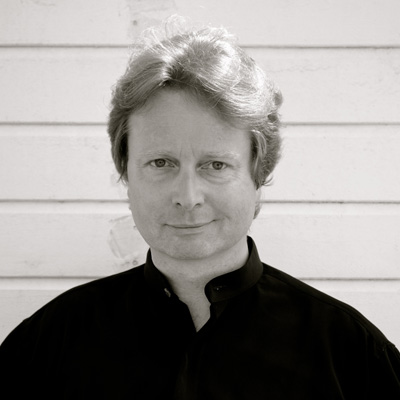
Iain Farrington has an exceptionally busy and diverse career as a pianist, organist, composer and arranger. He studied at the Royal Academy of Music, London and at Cambridge University. He has made numerous recordings, and has broadcast on BBC Television, Classic FM and BBC Radio 3. Through his multi-faceted work as a musician, he aims to bring live music to as wide an audience as possible. Iain’s concert programmes often mix popular and jazz elements into the traditional Classical repertoire. His many chamber orchestral arrangements allow large-scale works to be presented on an affordable smaller scale, and his compositions range from virtuoso display pieces to small works for beginner instrumentalists.

As a solo pianist, accompanist, chamber musician and organist, Iain has performed at all the major UK venues and abroad in the USA, Japan, Mexico, South Africa, Malaysia, Hong Kong and all across Europe. He has worked with many of the country’s leading musicians, including Bryn Terfel, Sir Paul McCartney and Lesley Garrett. Iain played the piano at the opening ceremony of the London 2012 Olympics with Rowan Atkinson, the London Symphony Orchestra and Sir Simon Rattle, broadcast to a global audience of around a billion viewers. With Counterpoise he has worked with numerous singers and actors, including Sir John Tomlinson, Sir Willard White, Jacqui Dankworth and Eleanor Bron. As a session pianist, Iain has recorded numerous film and TV soundtracks for Hollywood, Disney and independent productions. His solo organ performance in the Proms 2007 on the Royal Albert Hall organ was critically acclaimed, and he performed his Animal Parade in 2015 at the Royal Festival Hall organ for a family concert. Iain was Organ Scholar at St John’s College, Cambridge University, and Organ Scholar at St George’s Chapel, Windsor Castle.

Iain is a prolific composer and arranger, and has made hundreds of arrangements ranging from operas to piano pieces. He has composed two 40 minute Scary Fairy orchestral works combining poems by Craig Charles with a continuous full score, first performed and broadcast on BBC Radio 2 ‘Friday Night is Music Night’ with the BBC Philharmonic. For the BBC Proms he composed an orchestral work Gershwinicity in 2018, A Shipshape Shindig in 2017, a jazz guide to the orchestra Wing It, and a Double Violin Concerto, in 2012 for the Wallace and Gromit Prom. Iain’s choral work The Burning Heavens was nominated for a British Composer Award in 2010. He has made arrangements in many styles, including traditional African songs, Berlin cabaret, folk, klezmer, jazz and pop. Iain is the Arranger in Residence for the Aurora Orchestra who have performed and recorded his compositions and arrangements, including all the songs for the Horrible Histories Prom in 2011. His organ arrangement of Elgar’s Pomp and Circumstance March No. 5 was performed at the 2011 Royal Wedding in Westminster Abbey.

iainfarrington.com

Who or what inspired you to take up composing, and pursue a career in music?

Despite my parents efforts to convince me not to, I started the violin when I was three. Throughout my childhood I was determined that I would be a violinist, but when I was eleven I went to a course called The Walden School, a composition course for teenagers situated five minutes away from my step-grandmother’s place in New Hampshire. I wanted to go to a performance course but my mother convinced me to try it… she’d noticed that most of my ‘practice’ time was spent improvising.

Walden and the world of new music was a revelation to me and I fell quickly and deeply in love with the madness and freedom of the vast array and different sorts of music that I heard there. Walden’s motto, ‘Music is Sound organised in Time’, was emblazoned across the top of the recital hall and I took it to heart. It was ear and mind opening and although I continued to claim to want to be a violinist for the next year or so, I kept returning to Walden and spending my time writing… as my mother says, ‘you vote with your feet’.

Who or what were the most significant influences on your musical life and career as a composer?

I’m always looking for new sounds from any musical genre to excite me and spark thoughts. I also look outside of music: my mother is a sculptor (you can have a look at some of her works here: Josiespencer.com), and my father is a theatre manager and producer, so I grew up with influences from all sorts of art forms.

Certain pieces catch me at certain times in my life, and I suppose they become part of me, whether or not their influences can be heard in my music – among these, Mahler’s Rückert-Lieder, George Crumb’s Vox Balaenae and Black Angels, many pieces by Hildegard Von Bingen, Kurtag’s Hipartita, Pauline Oliveros’s philosophies of deep listening, and many works by Oliver Knussen – especially his Songs for Sue. Alongside these classical influences, I like to sneak little bits of R&B, pop, folk, and rock into my pieces.

I’m lucky enough to have had three wonderful composition teachers and each of them challenged me and helped me grow as a composer in different ways. I studied with Giles Swayne during my undergraduate degree and afterwards in London, Simon Bainbridge during my masters and the first years of my PhD, and Oliver Knussen currently. They each have been insightful and supportive mentors as well as being composers whose music I deeply admire.

What have been the greatest challenges/frustrations of your career so far?

Starting each new piece always feels like it’s an insurmountable challenge… until it isn’t.

I think this is true of any career – but keeping life in balance is another constant challenge. It’s how you spend your time each day and what those days add up to as a life in total.

I don’t think either of these two will ever become less challenging.

What are the special challenges/pleasures of working on a commissioned piece?

Commissions give me deadlines, certainty, and variety. These are all things that are both pleasures and challenges at the same time.

Of which works are you most proud?

A few years ago, I had the slightly impractical idea that I’d like to create a piece of music for an especially designed space. I wanted to create a way for people to interact acoustically with a piece of music and physically walk around interwoven lines within a piece to explore how they relate to one another and what they’re doing individually.

Along with my sister, violinist Tamsin Waley-Cohen, and two architectural designers, Finbarr O’Dempsey and Andrew Skulina, we made ​Permutations​, a playfully immersive & interactive artwork. It was developed on an Open Space Residency at Snape Maltings and premiered at the 2017 Aldeburgh Festival along with the release of a CD by the same name on Signum Classics.

I’m unbelievably excited that it will be going on tour starting later this year! The tour will launch at the Dartington Festival during week four, After that ​Permutations ​will travel to the Royal Academy of Music for their ‘Festival of Space’ in November, and on to the Royal Institute of British Architects North, in Liverpool for May 2019. Other venues & dates will be announced later.

Finbarr and Andrew designed six chambers, each lined with rotating doors, with polished timber on one side and corrugated felt on the other. The chambers have Amina Technologies’ invisible speakers built into the wood of their ceilings, and each one plays a different one of the six recorded violin parts, all recorded by Tamsin. If you stand in the middle of the space with the six chambers surrounding you, you can hear the 18 minute piece, equally balanced. You can interact with the music in several ways: you can walk around, in and out of chambers, you can acoustically isolate a solo or a duo by rearranging the doors, you can fully rotate the doors of a chamber to change how resonant the acoustic is, or you can find a seat and place yourself in one particular place and listen from there. There’s also a social element – you can decide whether to create a private closed off space to listen from, or move into the more open communal spaces with other listeners.

It’s a multi-sensory experience – so the best way is often to show rather than tell… here’s a video from the premiere:

I’m also really proud of the string quartet I wrote for the Santa Fe Chamber Music festival last summer. It’s called Snap Dragon and the Heath Quartet are going to be playing it again this summer at Dartington. You can listen to the fantastic Flux Quartet playing it in this recording:


How do you work?

I start by sketching on paper and writing pages of semi-nonsensical scribbles (in both words and music notation) in various notebooks. Depending on what is forming, at some point I start to move towards working in Sibelius (music notation software). I go back and forth a bit between paper and Sibelius during the writing process, but at a point of critical mass I work almost entirely on Sibelius.

Currently, I’m writing a piece for the concert series Listenpony, which I co-founded along with Josephine Stephenson and William Marsey in 2012. We started Listenpony to produce concerts where we would hear the music we love – regardless of genre – in a friendly atmosphere, while also providing a platform for outstanding young musicians.

In May, we had our first ever tour, including at date at the Playground Theatre in London among my mum’s sculpture exhibition ‘Murmurations’. For the tour, I wrote a piano piece for pianist George Fu – it’s influenced by Scottish folk music and the clarity of texture in Couperin’s keyboard works as realized on the modern piano.

I’ve also recently completed piece for 12 players (string quintet, clarinets, flutes, oboe, trumpet, trombone, piano, percussion) from the Philharmonia Orchestra for their Music of Today Series. It was performed in May at the Royal Festival Hall.


Who are your favourite musicians/composers?

My favourite composer is Messiaen, although some days I think it’s Bach, Schubert or Stravinsky.

As a musician, what is your definition of success?

Success is clarity of vision mixed with the flexibility to allow for discovery during the process. If I am getting this balance right, composing is a joyful and playful experience.

Success in the broader career-minded sense is best left out of the creative process – concern with it can poison the waters.

What do you consider to be the most important ideas and concepts to impart to aspiring musicians?

As much as you can, free your work from your ego – ego will hold you back from learning and growing. Presumably you’re doing it because you love it – so don’t let anything compromise that joy in creation. Don’t compare yourself to others. Write music that you want to listen to.


Where would you like to be in 10 years’ time?

Anywhere, composing.

What is your idea of perfect happiness?

Happiness comes in flashes, when I’m not searching for it, and its beauty is often in its imperfection. One of my favourite poems is ‘Happiness’ by Jack Underwood. It’s probably not legal to print the whole thing here but if I can quote a line: ‘we know happiness because it is not always usual, and does not wait to leave’.


Described as “at once intimate and visionary” by BBC Music Magazine Freya Waley-Cohen’s music has been heard in the Wigmore Hall, Sage Gateshead, St John’s Smith Square, The Barbican Centre, The New Mexico Museum of Art and at Aldeburgh, Tanglewood, Santa Fe, Dartington, Cheltenham, St Magnus, Ryedale and Spitalfields festivals. 

Winner of a Royal Philharmonic Society Composition Prize in 2017, Freya is associate composer of Nonclassical, NightMusic at St. David’s Hall, and Reverie Choir, and will be a featured artist at this years Dartington Festival. Freya held an Open Space Residency at Snape Maltings from 2015-2017, where she created the collaborative artwork Permutations, which will tour to Dartington, the Royal Academy of Music and RIBA North in 2018/19.

In 2017 Signum Classics released a CD of Freya’s music including Permutations and Unveil – both of which are recorded by her sister Tamsin Waley-Cohen. Her works have also been released by Nimbus Records, Listenpony, and McMaster Records.

Upcoming commissions include works for the Philharmonia Orchestra’s Music of Today series, CHROMA ensemble, and the LA Philharmonic’s Green Umbrella series.

She is a founding member and artistic director of Listenpony, a concert series, commissioning body and record label that programmes classical music, both new and old, alongside a variety of other genres including folk, jazz and pop, in beautiful and unusual venues. 


http://www.freyawaleycohen.com

http://www.permutations.co

http://listenpony.com

paul

Who or what inspired you to take up composing, and pursue a career in music?

I always wanted to be a musician. My grandparents on my mother’s side were both opera singers – my grandmother was a soprano and my grandfather a tenor, both were principals in the D’Oyly Carte and sang with Carl Rosa. My mother was an artist, an outstanding painter. So I was brought up surrounded by music and art, a lot of it surrealist. I went to some dreadful prep schools, but my mum got me to a Rudolf Steiner School, and there, at Michael Hall, I met the inspiring Mr Masters – Brien Masters. He was a wonderful teacher, musician and poet. He urged me to compose seriously and taught me how to notate, so I have him and that beautiful school to thank especially.

Who or what were the most significant influences on your musical life and career as a composer?

Many people and things have influenced and inspired me and I have seriously eclectic taste. My childhood and grandmother’s stories about Gilbert and Sullivan productions no doubt triggered my passion for opera. Oscar Peterson inspired my teenage years. As a trumpeter, I initially wanted to be a jazz musician, then turned to the baroque natural trumpet and was hooked on Maurice Andre. My student years at the Royal College of Music were the best musical years of my life! Edwin Roxburgh had a profound impact on me, and every lesson was a masterclass in composition. So too did John Wallace, who was an utterly inspirational trumpet teacher and support. But I also learned much from Joseph Horovitz and Richard Blackford, and Michael Finnissy at Sussex – all very different composers. In my twenties I became obsessed with the art and architecture of South East Asia and spent a good twelve years writing pieces directly inspired by Angkor and Javanese temples. I could instil a clear design and adorn it with colourful fantasy – just as the temples are so direct in proportions yet so ornate in final result. In a curious way, that ties in with my love of jazz and spontaneous and effervescent lines. Symbolism too. I love saying things in music that I cannot dare to say in public.

What have been the greatest challenges/frustrations of your career so far?

I remember Ken Russell’s film about Delius. Towards the end, Delius grumbles that his music is only played on BBC radio once a fortnight when it had been on every day. It said at a stroke that composers/musicians/humans can often be unsatisfied with their lot – even lucky Delius! Personally, I have a hugely fulfilling creative life, which encompasses so many aspects of musical endeavour. However, I always wish for more time to compose. That is a general frustration. I would also say that the contemporary music scene can be too closed. When I ran Sounds New, I believe we broke the mould. We embraced contemporary music of a wide variety and were proud to do so. As a result we attracted ever-growing and increasingly engaged audiences. I think that in an attempt to appear ‘modern’ and ‘of the moment’, too many contemporary music platforms favour hard, gritty and sometimes ugly and dull music. Other more ‘mainstream’ organisations can choose the ‘soft focus’ and ‘easy listening’ approach, which achieves little in the long term. I don’t say that as a fuddy-duddy, traditionalist or dye-hard, just as an aficionado and devotee of all types of contemporary music who wishes to see it more widely appreciated, understood and regularly incorporated into concert life. I know very many who quietly agree with me.

What are the special challenges/pleasures of working on a commissioned piece?

I am impelled to compose, irrespective of whether or not a work is commissioned. And… Commissions are not always easy to fulfil. They can be for forces or subjects that doesn’t immediately get the creative juices flowing. So one has to ‘make’ inspiration out of that challenge. That said, my last serious commission, for the London Chamber Orchestra and around 150 young people (performed May 2017), was something I’d always dreamed of doing – a substantial piece of music that was uncompromising yet totally ‘educational’. That was exceptionally rewarding to do, but hugely challenging in that I had to be totally flexible and continually write a range of parts that embraced the easiest possible – a challenge for us ‘complex’ souls.

What are the special challenges/pleasures of working with particular musicians, singers, ensembles and orchestras?

Working with a special musician, artist or ensemble in mind can be deeply inspiring. To be able to take into account a specific human voice, for instance, understand its most special characteristics and incorporate those into the creative process, can be a beautiful thing. However, I would say that I think of particular musicians even when I am writing for personal pleasure. And when writing operas (my crazy passion) I do think of specific voices as I compose, indeed create a character or role. I think it’s fair to say that every mezzo-soprano part I have ever written has had Sarah Connolly in mind. Hers is the mezzo voice of perfection!

Of which works are you most proud?

At the time, I was very proud of my first opera, ‘The Fisherman’, which was (and I believe remains) the only full-length student opera that the RCM produced in many decades. I was told since Vaughan Williams. That said, VW’s first opera was written after he left the RCM, so I can’t work that out. Maybe it was someone else? However, I now see shortcomings in that early piece. Of other works, there are two specific operas: ‘Bayon’ (totally impractical, in five acts with an enormous cast and vast orchestra) and ‘La Belle et La Bête’ (just completed one act opera, for two voices and another foolishly large orchestra). Both are unperformed and may probably remain so, but I’m most proud of them. Of performed works, I’d cite ‘Three Old Gramophones’ (highly autobiographical, and not without humour) and ‘Don – a Cello Concerto’.

How would you characterise your compositional language?

People tell me that my music is strangely accessible. Often they say that in a surprised way, because it is often so complex, and they had anticipated it to be daunting. That pleases me. I like complex musical webs, yet I like music to be understood and to directly impact on people. Fundamentally, I believe that so-called hard-edged contemporary music can be beautiful and can beguile. I don’t ascribe to compromise, yet I do want the listener to be absorbed ‘within’ a musical voyage that has an effect on them and – for want of a better expression, ‘moves’ them.

How do you work?

In blocks of weeks – ideally uninterrupted, usually in the summer months as university work allows. I create in the morning, setting a rigorous routine. Then in the afternoon and often long into the night, I refine, orchestrate, develop the material I established at the start of the day. Ideas flow that way, and there is continuity to the creation. During the period of composition I am basically totally lost to all others! I write very quickly as a result.

Who are your favourite musicians/composers?

Mahler, Messiaen, Takemitsu, Strauss, Mozart and Bach are among the composers I most adore and whose sound worlds continually inspire me. Exceedingly close behind are Beethoven, Stravinsky, Debussy, Ravel and Xenakis. Oscar Peterson is at the top of the first list too. If a genie ever granted me one musical wish, I’d choose to be able to play the piano like that. ‘OP’ had a profound influence on my development in my early years and I never tire of listening to him.

As a musician, what is your definition of success?

Creative fulfilment and the ability to make a positive impact on others.

What do you consider to be the most important ideas and concepts to impart to aspiring musicians?

Be open minded, hard working, focussed, creatively ambitious and giving. We are all vessels through which art passes, and we have a duty to nurture it, support it, create it, foster it and develop it. In other words, be a full part of the creative cycle.


Paul Max Edlin has a career that combines composing, conducting, trumpet playing, lecturing and artistic direction.

His compositions have been performed both nationally and abroad by many leading artists, ensembles and orchestras. He has a particular interest in opera, and his first opera, The Fisherman, was premiered to wide critical acclaim in a production for the London International Opera Festival. Opera Magazine described Paul as ‘our latest operatic prodigy’. His most recent full-length opera is an adaptation of Federico Garcia Lorca’s Blood Wedding in the translation by Ted Hughes. In 2013 he completed an operatic monodrama, Frida, a setting of the diaries of the Mexican artist Frida Kahlo. Recent commissions include a new work for Sarah Connolly (Wigmore Hall, 2014), the UK Society of Recorder Players (Kings Lynn, 2015). In 2015 he completed a new work for orchestra, Five Illusions. In 2016 he succeeds Cheryl Frances Hoad as Composer in Residence for London Chamber Orchestra’s Music Junction programme.

Edlin’s works have received broadcasts on BBC 2, BBC Radio 3, as well as on Radio and Television abroad.

He was a founder member of the Artistic Group of Sounds New Contemporary Music Festival, of which he was Artistic Director from 2007 to 2013, a period in which it flourished. In 2005 he was asked to become Artistic Director of the Deal Festival of Music and the Arts, following on from the cellist Steven Isserlis and composer David Matthews. He stepped down in 2010, but was once again asked to return to this role in 2014.

He has many years of experience in university lecturing and teaching and is currently Director of Music at Queen Mary University of London, one of the country’s leading universities and in the Top World 100 (THE 2015). Formerly, he was Professor of Music at Canterbury Christ Church University from 2009 to 2012 having worked there in a series of roles for almost thirty years. In 2011 he was elected President of the Incorporated Society of Musicians.

As a conductor, Edlin tends to focus on contemporary repertoire. He has conducted many premieres of new works as well as UK premieres of such pieces as Beat Furrer’s Ensemble II and Ernst Krenek’s Sestina. In 2010 he conducted the National Philharmonic Orchestra of Malta, allowing him an opportunity to explore the more romantic repertoire of Puccini and Verdi. As a trumpet player, he particularly enjoys the ‘clarino’ repertoire of Bach, Handel and Purcell and has played in many performances of works such as the B Minor Mass, Christmas Oratorio, etc.

Paul Max Edlin studied at the Royal College of Music (composition with Edwin Roxburgh, Richard Blackford and Joseph Horovitz; trumpet with John Wallace and Richard Walton, and conducting with Christopher Adey). He has won many composition prizes including the IX Premio lnternazionale Ancona. He received a Leverhulme Studentship for further postgraduate study at the RCM. He continued his studies with Michael Finnissy at the University of Sussex where he took his doctorate.

A Fellow of the Royal Society of Arts and a Fellow of the Incorporated Society of Musicians, he has served on the boards of several music and music education organisations and charities, including Cantoris Charitable Trust, which supports Canterbury Cathedral choristers. He is Chair of the Board of Ora, one of the UK’s most prestigious vocal ensembles, and he sits on the board of the newly formed East London Music Group. Paul Max Edlin has two musical sons. Peter, an artist, photographer and designer, plays lead guitar in the progressive rock group The Boot Lagoon, while Timothy is a bass-baritone.

paulmaxedlin.com

Composer Paul Burnell has compiled a playlist of “everything that meant something to me with a keyboard connection“. The result is an intriguing and eclectic compilation with “a lot of stuff from the 60s and 70s, including tv themes and a sprinkling of classical, contemporary


Meet the Artist – Paul Burnell

