Following on from her splendid ‘The Piano: A History in 100 Pieces’, celebrated pianist and writer Susan Tomes now turns her attention to that oft-neglected corner of classical music history – women pianists.

Focussing on 50 women pianists – some well-known (Louise Farrenc, Fanny Mendelssohn, Nadia Boulanger, Tatiana Nikolayeva, for example), others less so, or only recently discovered – Susan Tomes traces the lives and music-making of these women across the piano’s history, from the development of the piano in the 18th century to the present day.

As Tomes points out in her introduction, the piano is “an instrument that anyone can play, irrespective of gender”, yet until fairly recently, women pianists and composer-pianists, were overlooked, under-represented in concert programmes and recordings, and generally consigned to the background in classical music history.

In some ways, the reasons for this are simple: women pianists lacked access to formal music training, were excluded from performances opportunities, and were even at a disadvantage to men due to the size of the instrument, the piano’s keys being designed for men’s typically larger hands. Additionally, women often had significant obligations to the home and family. And yet despite these limitations, women continued to play, perform and compose their own music.

Pioneers in a number of ways, women pianists carved their own paths within a male-dominated profession. They travelled independently, helped to shape the modern piano concert as we know it today, including playing from memory (Clara Schumann), performing cycles of complete works (Wanda Landoswka/Bach’s Goldberg Variations), premiering new works and reviving historical works, bringing lesser-known and rare repertoire into concert programmes and recordings, and commissioning new music. They were involved in recording, broadcasting, presenting TV programmes about music, creating educational initiatives, devising concert series….and much more – all against a background of at best half-hearted support, at worst antagonism, resentment and open sexism.

These enterprising women, 50 of whom are presented in this book, helped to expand and diversify the profession, gradually debunking the notion that the male approach to a career as a concert pianist was not the only way. These women were not imitators of male pianists, but artists in their own right, with their own musical integrity, authority and identity.

This highly readable, meticulously researched and elegantly crafted book takes a chronological approach, beginning with French keyboard player Anne-Louise Boyvin d’Hardancourt Brillon de Jouy and ending with Nina Simone, jazz pianist, singer and civil rights activist. For each woman pianist featured, the author gives biographical details, notes their significant performances, recordings or compositions, and demonstrates how they have each contributed to the world of the piano.

The introductory chapters explore some of the reasons why women were sidelined, including social mores and prejudices, and how men became ascendent in the profession. The closing chapters examine where we are today with regard to female musicians, including the effect of equal rights legislation, the rise of piano competitions, shifting attitudes within the profession and audience perceptions, and the influence of teachers. For this section of the book, Susan Tomes spoke to a number of female pianists working today to reveal some surprising insights, and the barriers and limitations which women still face today in a highly competitive global profession.

At a time when the current discourse in classical music – and indeed in society in general – is focussed on equality and inclusion, this book is a valuable contribution to the debate and a rich celebration of the essential role of women in the history of classical music and the piano in particular.

Women and the Piano: A History in 50 Livesis published by Yale University Press on 12th March 2024

On April 20, 1993, sixteen-year-old Cassie watches her world burn to the ground. A week later—far from Waco, TX and the Branch Davidean fire that claimed her family, friends, savior, and the only life she had ever known—Cassie enters a new life—a strange new ‘normal’ life after being ripped from a cult and forced to function in routine society with little knowledge of how to navigate reality.

Cassie has just two goals: to play the piano and to learn how to be normal. Her love of music, especially the music of J.S Bach, is her only thread to a past she buries under her “normal” façade, the thread that holds her together where therapy and religion fail. But Cassie’s habit of using music to hide from her emotions fails her and she must grieve the truth about losing her family and her world in the Waco fire and begin to let time, and Bach, heal her. And only through Bach’s music can she dare to feel the loss of her parents.

When US authorities raided cult-leader David Khoresh’s compound in February 1993, it led to 10 deaths and a 51-day standoff that ended when a fire killed more than 70 men, women, and children. Those who survived Waco were forced to confront the dark things Khoresh did: narcissistic and abusive, he was deeply controlling yet charismatic and personable.

This well-crafted and sensitively-written novel by American pianist Rhonda Rizzo does not shy away from presenting Khoresh and his cult in unsentimental terms, but rather than offer long descriptions, small disturbing details are slipped into the narrative in the form of flashbacks by Cassie, the protagonist, as she tries to come to terms what has happened to her and her family, and comprehend her parents’ life choices. The complex story of Cassie’s struggle to process the trauma of Waco and resulting PTSD, and the extraordinarily closed world of a religious cult, is told in unsentimental, vividly realistic terms, and Rhonda Rizzo’s own musical background brings an authenticity and authority to the descriptions of the music, including the experience of studying and performing music, the hot house, competitive atmosphere of music college, and the special pleasures (and difficulties) of playing with other musicians.

This is as much a coming-of-age novel as a book about recovery and renewal, and Cassie’s naive, tentative entry into a normal teenage girl’s life of fashion, boys and alcohol is presented in bold, believable terms: her relationships are not always straightforward and her attempts to fit in, despite her unusual background, are familiar to anyone who has felt like an outsider.

In one of those serendipitous encounters which sometimes happen via my blog, the author contacted me out of the blue to ask if I would review her book. I’m so glad I agreed, as I found The Waco Variations a real page-turner, and, ultimately, a wonderful celebration of the restorative powers of music. The novel offers a universal message – that music has the power to touch our souls, to heal and calm, and so much more…..

Recommended

The Waco Variations

Meet the Artist interview with Rhonda Rizzo

rhonda2bheadshot2bpiano
Rhonda Rizzo


Mindful

adjective

1. attentive, aware, or careful (usually followed by of): mindful of one’s responsibilities.

2. noting or relating to the psychological technique of mindfulness: mindful observation of one’s experiences.

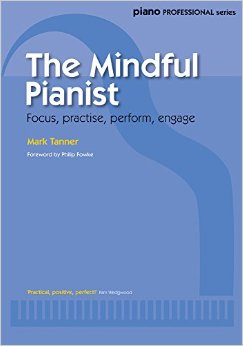
41czgktnuml-_sy344_bo1204203200_The Mindful Pianist by pianist, teacher composer and examiner, Mark Tanner is the latest volume in the Piano Professional series published by Faber Music in association with EPTA, UK (the European Piano Teachers’ Association). “Mindful” is the word du jour, and the practice of mindfulness – the therapeutic technique of focusing one’s awareness on the present moment, while calmly acknowledging and accepting one’s feelings, thoughts, and bodily sensations – has become increasingly popular in today’s stressful and busy world. This book, however, is not some groovy, new age, Zen guide to piano playing, but rather takes its inspiration and approach from the definitions of the word “Mindful”at the top of this article. With contributions from a number of leading pianists and piano pedagogues, including Philip Fowke, Murray McLachlan, Margaret Fingerhut, Penelope Roskell, Leslie Howard and Madeline Bruser, the book draws on the author’s and contributors’ own experiences of playing and teaching the piano, and explores ways in which pianists, amateur or professional, can be more attentive, careful, self-compassionate and mindful in their day-to-day engagement with the piano and its literature.
Written in an engaging and accessible style, yet clearly supported by many years of practical experience as a teacher and performer, and academic research, the book encourages the pianist to take a fresh perspective on playing and performing by applying the concept of mindfulness to the piano. Through 4 distinct parts, Mark Tanner explores the crucial connection between mind and body, and how an alert, focussed mind fosters playing that is more compelling, more refined and ultimately more rewarding. He begins with simple breathing exercises which enable one to focus while at the piano before a note has even been struck and includes practical advice on overcoming feelings of inadequacy when a practise session goes less well, or the self-esteem issues which accompany performing. He tackles the issues encountered by pianists when practising, performing, improvising and preparing for an exam with wisdom and gentleness – throughout the text, one has the sense of Mark encouraging us to be kind to ourselves and to show self-compassion. The section of exams (‘The View from the Examiner’s Chair’) is written from a wealth of personal experience and is particular helpful in offering perspective to those teachers, and  students, who may feel exams place undue pressure on aspiring young pianists. There is also a section on “mindful listening” (‘The Virtuoso Listener’) which encourages us to sharpen our listening abilities, both at the piano and when we hear music on the radio, in concert, on disc etc.

‘The Mindful Pianist’ is a long, detailed and highly satisfying read, and I will be extracting Mark’s wisdom to share with my own students as well as putting into practise some of his methods in my own playing and performing. Having recently had to deal with a setback in my playing career, I have found Mark’s intelligent, practical and gentle advice particularly helpful as I reflect and refocus on my own piano playing.

I am also grateful to Mark for citing this blog as a useful resource for independent learners.

Recommended

Interview with Mark Tanner

Further details and ordering

27072-books-origjpgPublished by Faber & Faber
Publication date 1 September 2016
Length 112 pages
ISBN 9780571330911
Format Hardback


This book is an absolute joy from start to finish. So much so that I read it in one sitting, busily making notes in the margin and nodding my head in agreement.

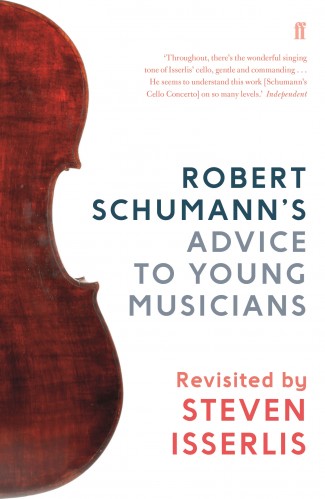
Robert Schumann’s Advice to Young Musicians was originally written in 1848 to accompany his famous, and still very popular, Album for the Young, a suite of piano pieces for children and students. Schumann was a remarkable man, not least for his huge and varied oeuvre of miraculous music, but also his championing and support of other musicians, as well as teaching, writing and encouraging young musicians. Celebrated cellist Steven Isserlis has taken Schumann’s advice and expanded upon it, added his own commentaries and words of wisdom, and often matching Schumann’s humorous or witty tone with his own amusing observations. Schumann’s advice, though couched in the language of his age, is always relevant and Isserlis, through his own words, demonstrates how perceptive Schumann’s wisdom is by passing it through the lens of his own experience as an established and highly-regarded classical musician. He brings the advice right up to date for today’s musicians working in a profession that is increasingly busy, competitive, uncertain and stressful. Such advice includes the importance of playing with others, receiving critical feedback from one’s peers and teachers, appreciating audiences and understanding the structure of music.

Divided into five sections, the book explore keys facets of the musicians life and work, from being a musician through playing (and performing), practising to composing, something which Schumann felt all musicians should do, and which far fewer practising musicians do today (Steven Isserlis’s good friend and colleague the pianist Stephen Hough is a notable exception, whose polymath musical life Schumann would certainly approve of). The final section contains Isserlis’s own pieces of advice which are thoughtful, intelligent and accessible. Isserlis reveals his reverence and enthusiasm for his chosen art in a way that is never didactic, sometimes profound, always realistic yet never depressing. The tone throughout is modest and sensitive, for musicians can be fragile souls. prone to much self-doubt and anxiety.

Not just a handbook for young musicians, this delightful and wise book is a manifesto for all musicians, music teachers and music lovers, one which one can read in a single sitting, or dip into at one’s leisure to extract a nugget.

Highly recommended.

One of my favourite quotes: “As you grow up, communicate more with scores than with virtuosi”