For this concert, I exchanged the deep red plush seats of London’s Wigmore Hall for my first visit to Plush Festival, held in the tiny village of Plush, deep in Thomas Hardy country in Dorset. Here in 1995, far from the madding crowd, Adrian Brendel established the festival in a spirit of collaboration and shared music-making. A deconsecrated church, which sits in the arcadian grounds of Plush Manor (bought by the Brendel family in the early 1990s as a bucolic retreat) is the venue for the concerts. Its generous acoustic and small size make it perfect for intimate chamber music and solo recitals; in addition, visitors may sit in on open rehearsals.

I’d known about the village of Plush (the pub, the Brace of Pheasants does a good Sunday lunch) and the Brendel connection for years, but this was my first visit to the Festival – part of my determination to seek out quality classical music in Dorset, my new home since I moved from London in May.

The drive to Plush suggests one is entering a special place. Leaving Dorchester (Hardy’s “Casterbridge”), I left the A-road and passed through the villages of Piddletrenthide and Piddlehinton (“Longpuddle”). Then a sharp right turn and up a steep hill and there was a sign to Plush Festival, guiding the way. The village is chocolate-box-pretty, with the pub at its heart. The signs to the festival pointed beyond the centre of the village and a winding, tree-lined lane takes you into the grounds of Plush Manor. A helpful gentleman guided me to park my car in an adjacent field and asked if I’d been to Plush before.

Outside the church, small groups of people lolled in foldout camping chairs or lounged on picnics rugs. Some were even enjoying a picnic ahead of the concert. A small bar offered wine, prosecco and soft drinks, and there was a bunting-draped stall next door selling CDs. The murmur of conversation was accompanied by birdsong. A friend texted (before my mobile reception disappeared) to say he was at Glyndebourne for the afternoon, and I thought there was a touch of the Glyndebourne experience, in microcosm, at Plush – though minus the dinner jackets: people were dressed casually. After all, this was a lunchtime on a sunny Saturday in August…..
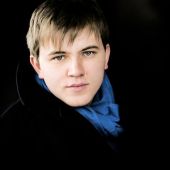
10567-b5caaf2a50ce50da7f81d22244175770The soloist for this concert was Filippo Gorini, a prize-winning young Italian pianist. His programme was unexpected for a weekend lunchtime recital – Schumann’s Geistervariationen (“Ghost” Variations) and Beethoven’s mighty Hammerklavier Sonata – but Kat Brendel, Festival Director, told me afterwards that this was “the programme he wanted to play”. It proved a bold and successful choice.

Schumann composed his Ghost Variations in 1854, shortly before he was committed to a mental asylum. It was his final piece, dedicated to his beloved Clara, and the work is freighted with melancholy and tenderness. Filippo Gorini caught the tragic intensity and intimate poignancy of the work. Understated, elegant and restrained, one felt Gorini fully appreciated that Schumann is a composer who wears his heart on his sleeve; the final variation ended on a whisper, with Gorini allowing the sound to fade into the stillness of the church.

Beethoven, by contrast, is at his most declamatory in the Hammerklavier Sonata, which opens with a daring leap across the keyboard and a rollicking fanfare motif. This was masterfully shaped by Gorini who brought energy and vivid colour to the music. At its heart is the Adagio, a huge slow movement of infinite serenity and profundity which in Gorini’s hands felt like a stand-alone piece of music. Time was suspended, and while a butterfly fluttered, agitato, around the church, nothing could break Gorini’s concentration – nor the audience’s (who were as committed as any Wigmore audience). This movement, played with an intense concentration which echoed Gorini’s sensitive approach to the Schumann, has an almost Schubertian harmonic trajectory and introspection, with the improvisatory qualities of a Chopin Nocturne. Out of this other-worldly space came a finale of restless physicality.

Chatting afterwards, I mentioned to one audience member that I felt Gorini had the ability to make one forget a pianist was actually present during the performance. It’s a rare talent, and his lack of ego or unnecessary gesture undoubtedly contributed to this impressive performance.

If you think great music is only to be found in the metropolis, think again: Sir Andras Schiff returns to Plush Festival tomorrow for a sold out concert, and past seasons have enjoyed performances by Paul Lewis and Till Fellner.


This years Plush Festival continues from 14-16 September. Full details here


Header image: courtesy of Plush Manor
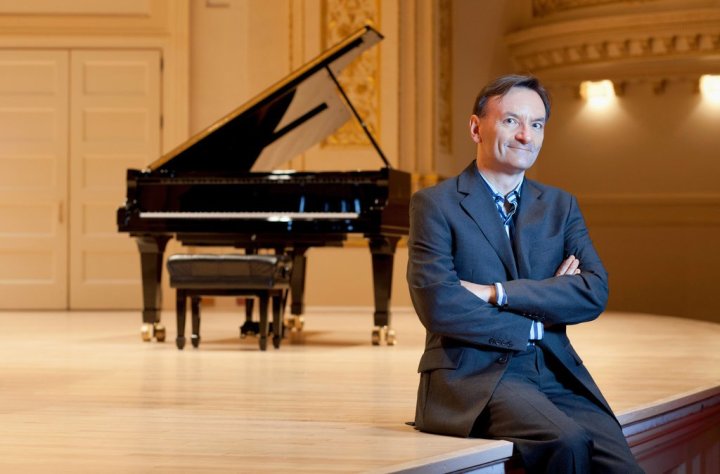


03HOUGH1_SPAN-jumbo-v2What can I write about Stephen Hough’s startling, stunning concert at the Festival Hall last night?
During the second half, between the miniatures by Debussy and Beethoven’s elemental Appassionata Sonata (Op 57), I leaned across to my concert companion and muttered that this concert seemed to be all about spontaneity and improvisation, the short works by Debussy which opened both halves of the concert, in themselves, and in Hough’s skillful hands, improvisatory in character, revealing the same qualities in the works by Schumann and Beethoven. One had the sense of meticulous preparation – and Stephen has talked before in interviews and articles about practising of the need to be “a perfectionist in the practise room” so that one can be “a bohemian” on stage – which enabled him to step back from the music and set it free.

It was an unusual programme. Other pianists may not have been able to pull it off so convincingly, and certainly opening with Debussy’s much-loved Claire de Lune from the Suite Bergamasque was potentially risky. The piece is so well-known, so prone to clichéd readings – yet Hough’s sensitive, unfussy shaping of this work saved it from saccharine sentimentality, and the delicacy of his sound and touch encouraged concentrated listening while also creating a wonderful sense of intimacy in the vastness of the RFH. It was as if we were in Debussy’s drawing room, gathered around his upright piano. And as Stephen said in the pre-concert talk, in the moments of the concert, we can “all be friends”, forgetting our differences of opinion or politics, joined in the shared pleasure of music.

In the programme notes, Stephen Hough explained that his choice of repertoire highlighted the very different approaches the three composers took to writing for the piano. While Debussy’s works (Clair de Lune, the two books of Images and the Prelude La terrasse des audiences du clair de lune) are “sensual paintings with mystical suggestions” [SH] (and even without the titles, their distinctive soundworld immediately conjures up potent, perfumed images in the listener’s mind), the two works by German composers are abstract and tightly structured with clear musical architecture.

And so while Debussy was light (feathery, but never fluffy) and delicately hued, the textures of Schumann’s Fantasie in C seemed all the richer in comparison, the composer’s passion for Clara all there in every note and phrase (Schumann often wears his heart on his sleeve), balanced by lyricism and tenderness, particularly in the glorious closing movement which seemed to evolve and expand there and then.

Similarly, the Beethoven felt wrought before our very eyes and ears, the opening measures creeping out of the mysterious darkness of the lower registers into something resembling light, if only briefly, the work fantasy-like in its range of ideas and striking contrasts. The outer movements were fraught with emotion, urgent and agitated, the middle movement providing a calm respite before the finale was unleashed upon us with, its feverish intensity all the more terrifying for the restrained tempo: this was music on the edge of chaos.

Stephen returned to Schumann for the first encore, one of the Symphonic Etudes which was rejected by the composer – a brief few moments of meltingly beautiful filigree traceries. And a Chopin nocturne to close this exceptional evening.


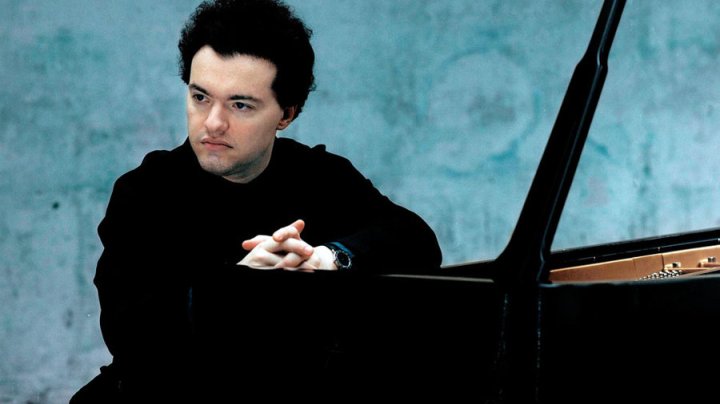
evgenykissin_wide-9aa53798ae987906571102878d8a12936652197c-s900-c85You know you’re at a special concert when the social areas around the concert hall, the bars and cafés, are abuzz with a very tangible sense of excitement? “When did you last hear him?”  “I hear he is magnificent….. ” Add to that an audience populated by “important people” of the music world, including pianist Menahem Pressler (now in his 90’s and still playing) – it promised to be an exceptional evening.


It’s over 20 years since I last saw Evgeny Kissin live. That concert, the first solo piano recital in the history of the Proms, was legendary for all sorts of reasons – coruscating performances of works by Haydn, Liszt and Chopin and no less than seven encores to a record-breaking audience (over 6000). In the course of his career, he has been criticized by some for his rather cool manner, smooth perfectionism, and style over substance, but there’s never been any doubt about his consistent dedication to his art and artistry. Listen to his recording of Chopin’s Berceuse and you hear refinement in every opalescent note and multi-hued filigree passage: Kissin has musical intellect and, more importantly, he has soul.

No longer the shock-haired wunderkind, he is now a mature artist in his mid-40s; he has written a slim volume of thoughtful memoirs and has married his childhood sweetheart. He’s still got the phenomenal technique, but his stage presence is noticeably more relaxed (much smiling during his curtain calls). Yet his style and demeanour hark back to an earlier era, including the way he dresses (evening suit, black tie, even a cummerbund – a rarity at concerts these days): I think audiences really love this – despite attempts by other artists to break down the “us and them” barriers of the concert stage – because it reminds us of the huge sense of occasion a concert by a pianist of this calibre creates and preserves the mystique of the virtuoso performer.

In the programme notes, Kissin was described as a “titan among pianists”, suggesting both physical and metaphoric presence. In an article last year, The Economist billed him as “one of the world’s greatest living musicians”. Both statements are of course subjective – while also being true. He is “great”, in the sense of possessing an ineffable multi-faceted talent which makes the reviewer’s job so hard – for how can one truly describe what he does?

In keeping with his “old school” stage demeanor, he does not indulge in showy piano pyrotechnics nor flashy gesture for the sake of gesture. His mannerisms may be restrained but his playing is full of commitment and a passion which transcends romanticism: it burns with a hypnotic intensity.

Beethoven’s mightly Hammerklavier is one of the high Himalayan peaks of the repertoire, never undertaken lightly. In interviews Kissin has stated that he felt a certain maturity – which he now has – was necessary to tackle this monumental work (other, younger pianists are not so modest…..). It certainly gave full rein to Kissin’s magisterial powers, not just his technique but his musical intelligence too. He made the infamously difficult opening of the Hammerklavier – a rapid leap of an octave and a half taken in the left hand alone – look easy (and indeed the entire programme!) and launched into the first movement with a heroic commitment wrought in myriad sound. This work is so pianistic, its nickname a constant reminder that it must be played on a piano (and Beethoven was alert to rapid developments in piano design at the start of the nineteenth century: he knew a new instrument could produce the effects he demands in his score), yet also rich in orchestral textures and voicings, all revealed so clearly, so musically by Kissin. His pianistic attack may be direct, but his fortissimos never compromise on quality of sound, and his edges are smoothly honed. But above all of this, it was his pacing and natural rubato which captivated: a clear through-narrative combined with interpretative spontaneity gave this large-scale sonata a fantasy-like character, yet with a rigorous sense of the work’s overall architecture – even in the Adagio Sostentuto, where time was suspended for a movement played with an intense almost Schubertian harmonic trajectory and introspection, yet managed with all the improvisatory qualities of a Chopin Nocturne. Out of this other-worldly space came a finale of restless physicality and strikingly dramatic contrasts.

The second half was all Rachmaninov Preludes, a selection from Opp 23 and Op 32, works with which Kissin is fully at ease. As in the Beethoven structures were fully understood, while sound was sculpted, grand gestures deftly chiseled, delicate motifs etched in filigree touch and a gentle haze of sound. We felt the composer’s emotional depth, his yearning and nostalgia, without a hint of false sentiment or surface artifice.

Four encores afforded more pianistic marvels – a crepuscular, haunting étude by Scriabin (Op 2, No. 1), Kissin’s own vertiginously virtuosic Toccata (proof that he could have been an excellent boogie woogie pianist as well!), another favourite Rachmaninov Prelude (in C minor), played with as much energy as if he was beginning the concert, and Tchaikovsky’s Méditation. He probably would have played more, such was his eagerness to return to the piano at each curtain call, but regretfully many of us had last trains to catch.


(photo: FBroede/IMG Artists)

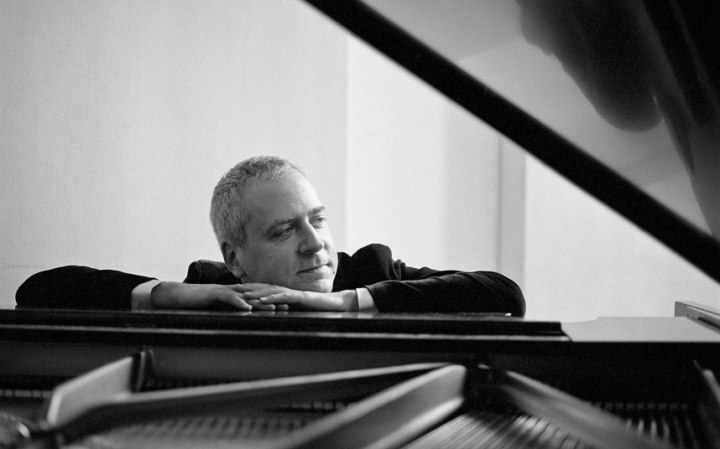
jeremydenk_3226643k

When the concert is perfect, does that make the reviewer redundant?

As regular readers of this blog will know, I enjoy writing about the concerts I attend but I also struggle with the purpose and value of concert reviews. At the most fundamental level, a review is a record of the event, setting it in context and as a moment in history. A review should also offer readers a flavour of the event and the thoughts and opinion of the reviewer about that event. When I left Milton Court last night I told my concert companion I could not write about the concert we’d just attended because it was so perfect that to write about it could not possibly do justice to the quality of the performance…..

Last night I attended American pianist Jeremy Denk’s concert at Milton Court, one of London’s newest concert venues and, in my opinion, the finest for piano music because of the clarity of its acoustic. Add a pianist whose musical insight and intellectual clarity, magical touch and sense of pacing bring the music to life so that you want to hear him “no matter what he performs” (NY Times), and we have the makings for an evening of exceptionally fine pianism.

It was a typically piquant programme, changed from the published version to include just three works – two magisterial, transcendent late sonatas by Beethoven and Schubert and Prokofiev’s Vision Fugitives, twenty fleeting miniatures, by turns quirky, ethereal, rambunctious, grotesque, poetic, delicate, fragmentary….. Denk revealed their individual characters so carefully, so delightfully that each tiny gem felt like a stand alone piece in its own right.

Beethoven’s piano sonata in E, op 109, the first of his triptych of last sonatas, also opens with a fragment – a tiny arabesque of just two notes in the right hand to which the left hand replies with a similar figure. It’s not a melody, yet that opening is immediately memorable. In Denk’s hands the music unfolded before us, its narrative flow so naturally paced. A muscular middle movement which dissolved into a theme and six variations, surely some of the most transcendent Beethoven ever wrote and handled with a delicacy and robustness, when required, by Denk which pulled one into this otherwordly soundworld so completely that one was transported, fully engaged and utterly overwhelmed. It was akin to meditating.

It felt almost wrong to leave the auditorium for the interval and face the noisy crush around the bar, but we knew the second half would take us to another special place, the unique world of late Schubert, his final sonata completed just a few months before his death.

Is the Sonata in B flat, D960 Schubert’s “final word”? A valediction for his departure from this world? I’ve always been suspicious of this view of this great sonata, whose expansive opening movement is like a great river charting is final course before the ocean, and whose finale is a joyful outpouring of hope, a reminder perhaps that Schubert had more, much more to say, had he lived longer. This was certainly Denk’s take on Schubert’s last sonata. The opening movement’s first theme had the serenity of a hymn, the second theme more unsettled, but the overall sense of repose remained, occasionally interrupted by dark, but never ominous, rumbling bass trills.

The meditative quality of the Beethoven variations was felt again in the slow movement of the D960. In some pianist’s hands, this movement can sound funereal, but Denk gave it a mystical grace and a sense of forward movement, so that the warmth of the A major middle section when it came infused rather than surprised the ear. The Scherzo poured forth with the agile freshness of a sparkling mountain stream, but the Trio reminded us that melancholy is never fair away in Schubert’s world, the bass accents (too often overlooked in other performances/recordings) here perfectly highlighting the change of mood….

The finale opens with a bare G, potentially as cold as the opening of the first Impromptu, but a dancing sprightly rondo quickly ensures, rising to a joyous conclusion, all masterfully and imaginatively presented by Denk. The overall pacing of this Sonata, like the Beethoven, was so elegantly managed: it is a long work (around 40 minutes) yet Denk’s clear sense of a through narrative and overall architecture of the music ensured there were no longueurs, not a moment when the mind wandered to other realms.

The encore was Brahms’ ever popular Intermezzo in A, from the Op 118. Tender and poignant, it was a lovely conclusion to an exceptionally fine evening of pianism.

when I have felt in the moment of the performance I have brought the notes on the page to life in a weird way which is outside of me – that is the kind of success that I am after

– Jeremy Denk (interview with The Cross-Eyed Pianist)


Meet the Artist – Jeremy Denk
