Pianist Imogen C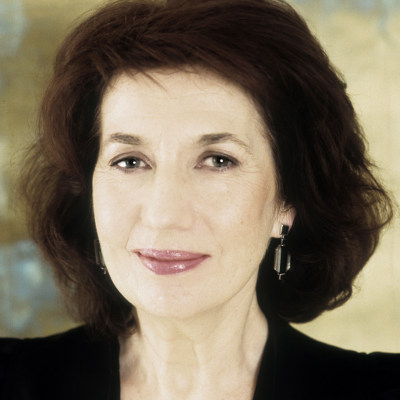 ooper painted evocative sound pictures in a BBC Radio 3 lunchtime recital featuring music by Debussy, Beethoven and Chopin. Read my review for Bachtrack.com here.

Pianist Imogen Cooper painted evocative sound pictures in a BBC Radio 3 lunchtime recital featuring music by Debussy, Beethoven and Chopin. Read my review for Bachtrack.com here.
Say “Glenn Gould”, and most people will reply “Bach”. Horowitz? Liszt. Schnabel? Beethoven. Lipatti? Chopin. Many great pianists (and even some lesser ones!) have become associated with one particular composer, and this “composer connection” still prevails today: Mitsuko Uchida and Maria Joao Pires are noted for their interpretations of Mozart, Evgeny Kissin for Chopin, Alfred Brendel for the great Austro-German triumvirate of Mozart, Beethoven and Schubert (though there are far better interpreters of these composers’ music than Brendel!).
So, why is it that certain pianists become so closely associated with a particular composer, or group of composers? A definitive recording, a well-received concert tour, the praise of respected critics, all these factors contribute. Some pianists choose to devote their life to playing and recording the entire Chopin Etudes and Preludes, or the complete Beethoven piano sonatas (Brendel – three times, Barenboim – twice), while others prefer to play more wide-ranging repertoire. The great Russian pianist Sviatoslav Richter seemed able to turn his hand to anything, from Bach to Britten, Handel to Hindemith (he claimed he had enough repertoire for “around eighty programmes”). Claudio Arrau is another noted all-rounder, along with Maurizio Pollini, who is also a champion of the sort of late twentieth-century repertoire many modern pianists of a similar stature won’t touch (‘The Pollini Project’, his personal survey of piano music from Bach to Boulez, draws to a close next Tuesday).
But is it also perhaps that some pianists choose to immerse themselves in one particular composer, or composers, because the music reveals something about their own personality? We talk of so-and-so having an “affinity” for, say, Bach, or Debussy. The word “affinity” originates from the Middle English affinite and the Latin affinitas which is defined as “connection by marriage”. This suggests an even more intimate connection between musician and composer, and perhaps it is that very intimacy which enables some interpreters to really get to the heart, and soul, of the music?
This sounds fanciful: of course, musicians pick up repertoire because they like it, not because they want to marry it! Why learn something you dislike, or because you feel you should? Even at the most junior level, with my students, I would never force them to learn music they do not like: it is wholly unproductive. I have clear memories from my childhood piano lessons of being confronted with the same dreary page of score week after week, my piano teacher insistent that I learn the damn thing. As a teenager, and, admittedly, a rather tiresome, smug, academic teenager, I claimed to love the music of Bach. I’d only scratched the surface of his oeuvre, but there was something about the tight construction of his music that appealed to my intellect. And still does. While at 16, learning a Chopin Nocturne (Op 37, no. 1) for Grade 8, I loathed what I considered its overblown sentiment. Now, I can’t get enough of Chopin, and studying and learning his music is an enormous, if difficult, pleasure (and, no, I don’t consider his music to be full of overblown sentiment any more!). Liszt has been another revelation – a composer I refused to touch until this year, for the same reason as my dislike of Chopin my teens. Again, I was wrong. Meanwhile, much as I love his music, Mozart remains a tricky option, the words of Schnabel never far from my mind “too easy for children and too difficult for artists”, and I’m not convinced I have the mindset for Mozart.
One of my adult students, a rather stiff, anxious woman, had a breakthrough recently learning Bartok (the Quasi Adagio from For Children, which is part of the ABRSM Grade 1 syllabus this year). While other students have struggled with the simple yet highly emotional nature of this piece, this lady has reveled in it, creating the right nuances and shadings, despite her inexperience, and bringing a plaintive poignancy to the tiny piece. So then we looked at ‘Kummer’ (‘Grief’) by Alexander Gedike (ABRSM Grade 1 2009-10 syllabus), and the same wonderful thing happened. She admitted that the sorrowful, minor-key nature of these pieces suited her personality, and it’s true that she plays both extremely well. So, maybe this is an example of the music “fitting” the personality of the performer?
Performers need to balance their own personality with the expression of the composer’s ego: there is, for me, nothing worse than going to a performance where it is all about the performer (Lang Lang, Fazil Say). It just gets in the way of the music and is, in my opinion, hugely egocentric. The best performances are those where the performer stands back from the music a little, with a “passionate detachment”, a little deferential, thus allowing the music (and its composer) to speak for itself. As conductor Mark Wrigglesworth says in his article which, in part, inspired this post, “the best results are of course when the personalities of both the piece and its performer lie in perfect harmony”. The one notable exception to this is perhaps Glenn Gould, whose personality is, in many ways, all over the music in his muttering and humming. Some people can’t bear this, but to me it’s a sign of Gould’s total engagement with the music, and his enjoyment of it too.
Richter playing the opening movement of his favourite Schubert sonata (G major, D894).
Glenn Gould – French Suite No. 2 in C minor, BWV 813/I. Allemande
As pianists, whether amateur or professional, advanced or intermediate, or even just beginning on the great journey of exploration, we have all come across Beethoven’s piano music, and many of us have played at least one of his sonatas during our years of study. As an early student, a taster of a proper sonata in the form of one of his Sonatinas (something my father is grappling with at the moment – and refusing any helpful advice from me!). Later on, we might encounter one of the “easier” piano sonatas, such as the pair of two-movement sonatas that form the Opus 49 (nos. 19 and 20), which are roughly Grade 5-6 standard (but don’t be fooled by the comparatively “easy” notes!). As part of my Grade 8 repertoire, I learnt the No. 5 (Opus 10, No. 1, in C minor), which prefigures the far more well-known and well-loved Pathétique in the flourish of its opening measures, the “beautiful melody” of its slow movement, and its febrile final movement. A quick glance through the Diploma repertoire lists for any of the exam boards (Trinity, ABRSM, RAM etc) and there is a generous handful of sonatas to choose from, from well-known to less popular, to suit each level of Diploma right up to Fellow.
It is generally accepted pianistic wisdom that Beethoven composed the piano sonatas during three distinct periods of his life, and as such, like the Duo Sonatas for Piano and ‘Cello (read my earlier post here), offer a fascinating overview of his compositional development. Setting aside the three “Electoral” sonatas, which are not usually included in the traditional cycle of 32 (though Beethoven authority, Professor Barry Cooper, who has edited new the ABRSM edition of the sonatas, argues that there is a case for including the three sonatas that Beethoven wrote when he was 12 in a complete edition), the early sonatas are, like the early duo sonatas (for violin and for ‘cello), virtuosic works, reminding us that Beethoven was a fine pianist. While the faster movements may nod back to his teacher, Haydn (though Beethoven would strenuously deny any influence!), it is the slow movements which demonstrate Beethoven’s deep understanding of the capabilities of the piano, and its ability, through textures and colours, moods and contrasts, to transform into any instrument he wishes it to be. Some of the writing could be for string quartet (Op. 2 No. 2). In the early sonatas, Beethoven’s mastery of the form is already clear, and many look forward to the greater, more complex, and more revolutionary sonatas of his ‘middle’ period. His distinctive musical personality is already stamped very firmly on these early works.
The sonatas from the middle period are some of the most famous:
The ‘Tempest’ and ‘La Chasse’ (Op. 31, Nos. 2 and 3). The first with its stormy, passionate opening movement, the second of the opus rollicking and somewhat tongue-in-cheek.
The ‘Moonlight’ (Op. 27, No. 2): the first of his piano sonatas to open with a slow movement. Too often the subject of clichéd, lugubriously romantic renderings, this twilight first movement shimmers and shifts. An amazing gesture, created by a composer poised on the threshold of change.
The ‘Waldstein’ (Op. 53). Throbbing quavers signal the opening of one of the greatest of all of Beethoven’s piano sonatas, while the final movement begins with a sweetly consoling melody which quickly transforms into daring octave scales in the left hand and a continuous trill in the right hand. This is Beethoven at his most heroic.
‘Les Adieux’ (Op. 81a). Suggested to be early ‘programme’ music in its telling of a story (Napoleon’s attack on the city of Vienna which forced Beethoven’s patron, Archduke Rudolph, to leave the city, though this remains the subject of some discussion still). It is true that Beethoven himself named the three movements “Lebewohl,” “Abwesenheit,” and “Wiedersehen”. One of the most challenging sonatas because of its mature emotions and technical difficulties, it bridges the gap between Beethoven’s middle and late periods.
Late period:
The ‘Hammerklavier’ (Op. 106), with its infamous and perilously daring grand leap of an octave and a half at the opening (which, of course, should be played with one hand!); its slow movement of infinite sadness and great suffering; its finale, a finger-twisting fugue, the cumulative effect of which is overwhelming: an expression of huge power and logic.
The Last Sonatas (Opp. 109, 110, 111). I have written about these sonatas previously. They are considered to be some of the most profoundly philosophical music, music which “puts us in touch with something we know about ourselves that we might otherwise struggle to find words to describe” (Paul Lewis), which speaks of shared values, and what it is to be a sentient, thinking human being. From the memorable, lyrical opening of the Op. 109 to the final fugue, that most life-affirming and solid of musical devices, of the Op 110, that peaen of praise, to the “ethereal halo” that is contained in some of the writing of the Arietta of the Op 111, the message and intent of this music is clear. And this is Beethoven’s great skill throughout the entire cycle of his piano sonatas.
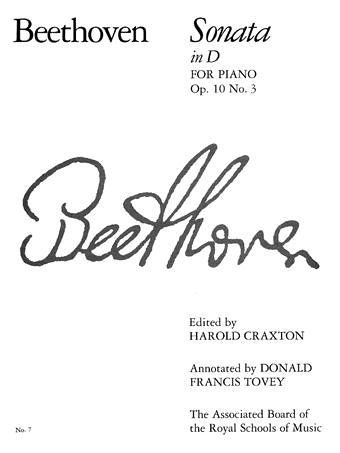 So, what is the perennial attraction of performing a Beethoven Sonata Cycle? Glance through concert programmes around the world and it is clear that these sonatas continue to fascinate performers and audiences alike, and no sooner has one series ended than another begins, or overlaps with another. Playing the Sonatas in a cycle is the pianistic equivalent of reading Shakespeare, Plato, or Dante, and for the performer, it offers the chance to get right to the heart of the music, peeling back the layers on a continuous journey of discovery, always finding something new behind the familiar. One does not have favourites; just as when one has children, one should never have favourites, though certain sonatas will have a special resonance. The sonatas are like a family, they all belong together – and they are needed, ready to be rediscovered by each new generation. You can play the sonatas for over a quarter of a century, half a century, and yet there are still many things in these wonderful works to be explored and understood, things which still have the power to surprise and fascinate.
Every pianist worth his or her salt knows that presenting a Beethoven sonata cycle represents a pinnacle in one’s artistic career (ditto the five Piano Concertos) and an important stepping stone to other great cycles (Schubert’s sonatas, for example, which are, perhaps, less satisfying to play than Beethoven’s because of problems such as incomplete or different versions of the same work), but once a cycle is complete, one cannot truly say one has conquered the highest Himalayan peak. And that is what is so special about this music: you can never truly say you have “arrived” with it, while its endless scope continues to reward, inspire and fulfil.
I have never heard a complete Beethoven cycle performed by a single performer, but I have heard plenty of concerts which form part of the whole: in the 1980s, it was John Lill, now one of the “elder statesmen” of British pianism; before him, my parents would have heard Brendel and Barenboim. Following in their footsteps, I heard some of Barenboim’s concerts when he played a complete cycle at the Festival Hall three year’s ago. At the same time, Paul Lewis was just finishing his own cycle at the Wigmore Hall (and beyond). I heard him play Nos. 15-18, some of the early sonatas, and the Last Sonatas. Then there was Till Fellner, a young Austrian with a clean, fresh approach, whose cycle began in 2008. On LP, I had Lill’s complete cycle, released the same year as I heard him at RFH. On CD I have Arrau, whose account is hard to match. But I also have recordings of favourites, such as the Opus 10’s, played by Angela Hewitt, or the Opus 110 (my absolute favourite), played by Glenn Gould and Mitsuko Uchida (whose Mozart playing I adore).
In concert, the sonatas are presented in halls large and small, famous and lesser known. The size of the hall can affect one’s appreciation and understanding of the works. For example, sometimes the earlier sonatas, which were written for the salon, can be lost in a venue as big as the Royal Festival Hall. One’s connection to the music is also affected, of course, by the performer. Lill, I remember, brought an extraordinary closeness and intimacy, something I have never forgotten, a sense that it was an entirely shared experience; while with Barenboim it felt as if an invisible barrier had been erected between us, the audience, and him the performer (I suspect he neither intended nor engineered this; rather, the over-awed audience brought it upon themselves!).
Further reading
Playing the Beethoven Piano Sonatas – Robert Taub. “Offers the insights of a passionate musician who performs all 32 of Beethoven’s well-loved piano sonatas in concert worldwide. This book presents his intimate understanding of these works with listeners and players alike.” (Amazon)
The Beethoven Sonatas and the Creative Experience – Kenneth Drake. “Drake groups the Beethoven piano sonatas according to their musical qualities, rather than their chronology. He explores the interpretive implications of rhythm, dynamics, slurs, harmonic effects, and melodic development and identifies specific measures where Beethoven skillfully employs these compositional devices.” (Amazon)
Beethoven’s Piano Sonatas: A Short Companion – Charles Rosen. A very readable analysis of all 32 sonatas by respected pianist and writer.
New York Times article about Professor Barry Cooper’s study of all 35 sonatas




 The Cross-Eyed Pianist