
Who or what inspired you to take up the piano and make it your career?
I heard my father playing Chopin, Grieg and Schumann at home almost every evening on our small upright piano. Then I tried to imitate him! As I was gifted, he decided to do everything necessary to help me in my development: courses with great teachers, day to day work. He believed in my musical career from the very beginning and that was probably the most important.
Who or what are the most important influences on your playing?
Arthur and Karl-Ulrich Schnabel (with whom I really learned my Beethoven), then Leon Fleisher, who was for me a kind of Mentor, and Christian Ivaldi, who opened my brain to the world of Wagner and Strauss, which radically influenced radically repertoire and the texture of my personal sound.
What have been the greatest challenges of your career so far?
Playing the 32 Beethoven sonatas in 10 days.
What are the particular challenges/excitements of working with an orchestra/ensemble?
Playing a concerto with orchestra is the utmost gift a pianist can receive! The piano concerto repertoire is just fabulous and I always feel like it’s an achievement in a solo career. The main problem is to build a relationship with a conductor in a very short rehearsal time. You can feel a kind of frustration sometimes. It is why my relationship with Philippe Jordan is very special, as we have recorded and played so many concertos since 2007! The complete Beethovens on CD and in concert as well as Mozart, Brahms and Saint-Saens. The musical result is amazing because we feel like chamber music partners.
Which recordings are you most proud of?
My Brahms 2nd concerto with LPO and Paavo Berglund, the Beethoven Fifth Concerto with O.P. Radio-France and Philippe Jordan, and my last live recording of Beethoven’s ‘Hammerklavier’ Sonata recently released.
Do you have a favourite concert venue?
This is a tough question. For recital, I would say Wigmore hall and Queen Elizabeth Hall, Köln Philharmonie and Metz Arsenal.
With orchestra, Suntory Hall in Tokyo, Salle Pleyel in Paris and Royal Festival Hall in London. Next season I will make my debut in two great European hall: Tonhalle in Zürich and the Concertgebouw in Amsterdam!
Who are your favourite musicians?
Among others – Furtwangler, Celibidache, Barenboim, Boulez, Brendel, Pollini and Sokolov. I rediscovered Arrau recently: a genius.
Regarding the conductors I’ve played with I would mention Esa-Pekka Salonen, Daniel Harding, and of course Philippe Jordan. Recently I played with the young conductor Edward Gardner: he was astonishing.
What is your most memorable concert experience?
Philippe Jordan conducting Parsifal in Bayreuth.
What is your favourite music to play? To listen to?
Beethoven always to play and listen, I listen more than ever Wagner’s Ring..and all the others.. Then Bruckner 4/5/7/8/9, the complete Mahler
What do you consider to be the most important ideas and concepts to impart to aspiring musicians/students?
Do not only work solely at your instrument, although it is crucial to spend hours on practising. The main thing is to have an exhaustive knowledge of orchestral and operatic repertoire in order to make the piano like a real orchestra
What are you working on at the moment?
The 5 Beethoven Concertos and the 32 Sonatas, as well as some Wagner paraphrases to celebrate this genius!
I also have some modern music as usual, new studies from Georges Benjamin and a Piano Concerto by Tristan Murail.
Where would you like to be in 10 years’ time
Any place where I could perform Beethoven’s music.
What is your idea of perfect happiness?
My wife’s love forever and music everywhere.
What is your most treasured possession?
Patou, my dear cat!!!!!
What is your present state of mind?
Promethean!
Interview date: November 2013
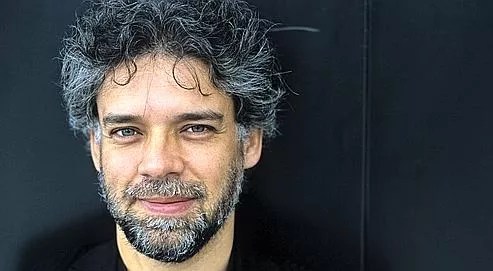
François-Frédéric Guy is regarded as one of the most fascinating pianists of his generation since his career was launched by his debut with Orchestre de Paris and Wolfgang Sawallisch in 2000.
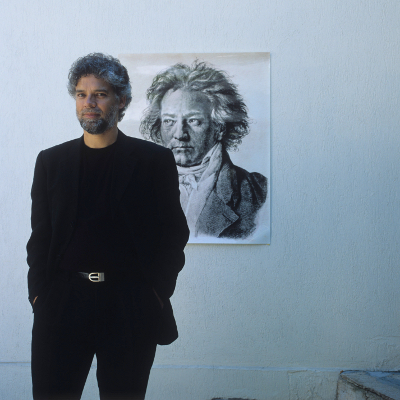
Guy is an artist of immense interpretative authority and superlative technique. He has spent much of his career performing the works of Beethoven, recently completing recordings of the five concertos with Philippe Jordan, and the 32 Sonatas. Guy has performed worldwide with orchestras such as the Berlin Symphony, Hallé, Philharmonia, London Philharmonic, Munich Philharmonic, Orchestre de Paris and San Francisco Symphony and conductors including Esa-Pekka Salonen, Bernard Haitink, Daniel Harding, Neeme Järvi and Michael Tilson Thomas.






 The Cross-Eyed Pianist