
Social media, for all its faults, is also a force for good and can throw up unexpected encounters and delights. One such gem is Andy Lewis’s Proms blog, which I discovered via the music critic of The Spectator, Richard Bratby.
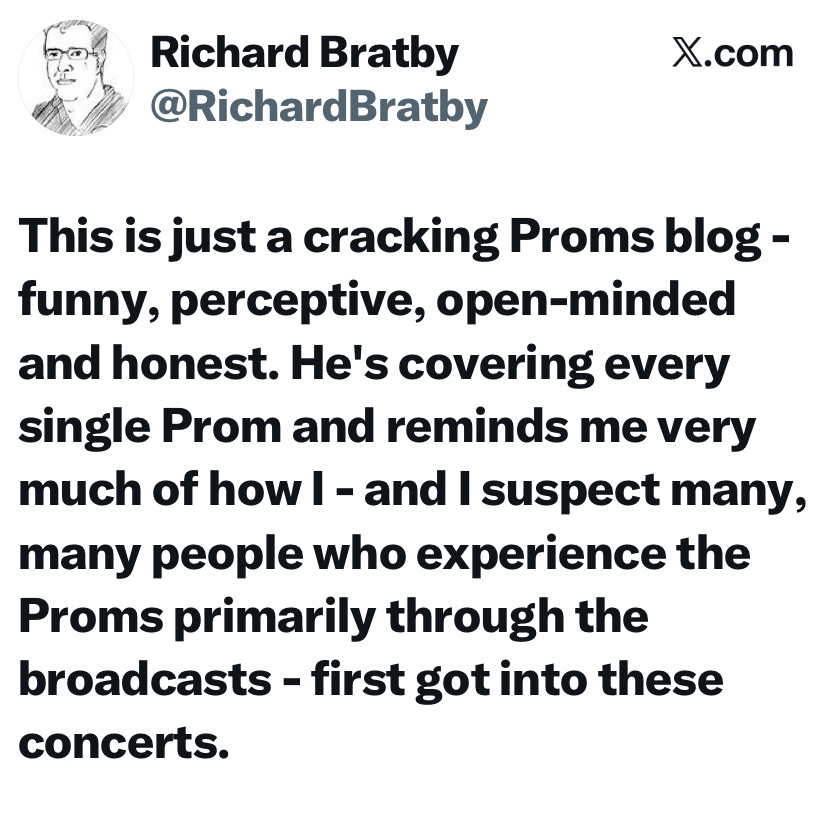
Andy Lewis is blogging about every single Prom of this year’s season, mostly via the broadcasts on BBC Radio 3. He hasn’t missed a single one and is now in the home straight, as it were – the final week, and the close of this year’s at the Last Night of the Proms.
What is so wonderful about Andy’s blog is that it’s not trying to be a serious critique or dry academic appraisal of each concert, but rather a personal reaction to and reflection on the music. He publishes his posts soon after each concert has taken place and as a consequence, his writing is fresh and spontaneous, entertaining, engaging and intelligent (and it reminds me of how and why I started blogging, back in 2010).
I caught up with Andy to find about more about his motivation for writing about the Proms and what he’s enjoyed in this season’s programme….
What made you decide to blog about every single Prom of the 2025 season?
It came about for a few different reasons. I was taken with the premise of the Proms; the fact that it is still possible to buy a ticket on the day for just a few pounds. I used to think to myself, ‘I’d be at the box office every morning if I lived around here.’ This triggered an ambition of one day attending every Prom at the Albert Hall, and this idea has laid dormant in my mind for years. I like to keep myself occupied, and this year my diary was nearly empty for the eight or so weeks when the Proms were happening. To fill my free time, I decided I would ‘attend’ every Prom, whether it be watching it on TV, listening on the radio, or actually getting down to the Royal Albert Hall in person. To make it more meaningful, I decided to create a record of it – hence the idea of the blog. As the weeks have progressed, the blog has also evolved into including little diary snippets from my daily life. If I’m still alive and well in thirty years, it will hopefully be interesting (for me) to read it back. Maybe my opinions on things will have changed by that time. Maybe I’ll be living a completely different life.
Have you attended/followed the Proms before this year?
I had only ever attended one Prom before, and I can tell you exactly which one it was!
It was Prom 48, Sunday 21st August 2016. The programme was Reflections on Narcissus by Matthias Pintscher to start, and then the second half was Mendelssohn’s theme to A Midsummer Night’s Dream. As I remember it, the music was blended with pop-up dramatic performances in different areas of the hall. Going to this Prom was what initiated my desire to see all the acts in one given year, but I had not gotten round to it until now.
What have been the challenges and pleasures of this project?
The pleasure has been discovering new composers, and getting a deeper understanding of composers I only half-knew before. Additionally, looking up the history and origins of the Promenade concerts themselves has been fascinating. In terms of challenges, it has often been exhausting to keep up with the schedule on a daily basis. Early in the run, I was having doubts as to whether I would be able to keep up with it all. If I miss a Prom one day, the momentum will very quickly snowball against me, so I need to make sure I am on top of blogging every day; trying to keep my writing fresh, avoiding repetition where possible, and keeping my grammar in reasonable check against a tight schedule.
And what have been the stand-out moments/performances for you?
It has honestly all been great and varied, but if you really tortured me I think I would say that the best Proms, for me, have been the ones that took me by surprise – those Proms that I thought were going to be boring and difficult to document, but turned out to be the exact opposite. Who would have thought that ‘100 Years of the Shipping Forecast’ would turn out to be so contemporary and engaging? There were packets of surprises hidden in the ‘Bruce Liu plays Tchaikovsky’ Prom – I was gleeful at the inclusion of Maple Leaf Rag amongst others. And Joe Hisaishi’s Proms debut introduced me to music I already knew. Music in the Studio Ghibli productions such as My Neighbour Totoro offer something gorgeously meditative.
Why do you think the Proms is “the world’s greatest classical music festival”?
I think it’s a combination of accessibility, variety, diversity, and longevity. The fundamental idea of the festival is that it opens up classical music to your ‘average Joe’ like me. I can grab a ticket for £8 (in 2025) and enjoy an evening of world-class entertainment. The variety of the performances across the summer weeks makes sure there is something for everyone. The diversity on the stage has ensured the Proms have kept up-to-date with the world around us, and this in turn has kept the Proms running for as long, and successfully, as they have been.
What would you say to people who are unsure about classical music or who have never attended a Prom before?
I would say, ‘don’t be afraid of getting classical music wrong’. If you enjoy what you hear, go and see it played live, just like you would a pop or rock act. Even pass comment on it if you dare to do so. There may well be a bunch of Oxbridge academics looking back at you like that Leonardo DiCaprio meme, but the truth is that music is subjective and – when offering an opinion on it – they are as clueless as the rest of us.
Would you do it all again in the same way for next year’s Proms?
Right at this moment I would say absolutely not! However, I do think I have opened a new relationship with the Proms, and in future years I will be more liable to be looking through the catalogue, choosing which Proms I would like to watch, listen to, or attend.
With regard to my writing, this is likely to be a one-off. But I would never say never. It would be nice to do something with a similar twist. For example, another one of my cultural challenges has been to watch every Shakespeare play, performed live. At time of writing I am on thirty-one plays, seen at different venues around the country. Given the number of operas based on Shakespeare and his characters, it could be an idea to review them with an amusing twist, comparing a production at the Royal Opera House to, say, the time I saw the same play at Gordale Garden Centre.
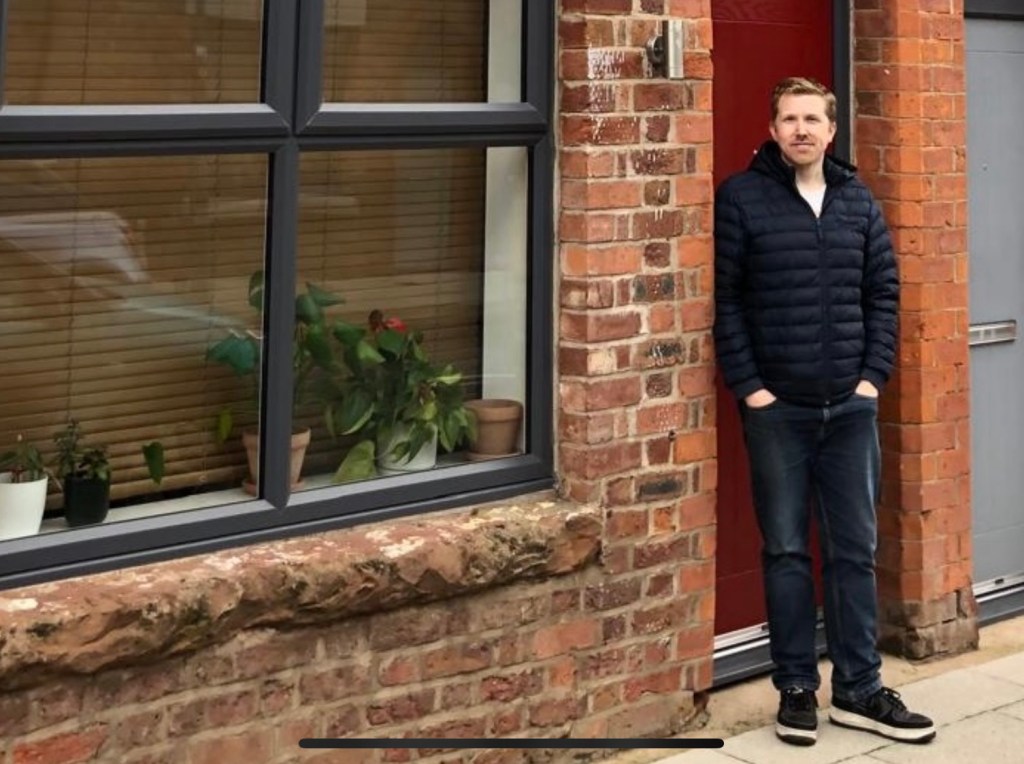
My name is Andy Lewis, I am thirty six years old. From the Wirral but living and working in Runcorn. I work in Medical Information for a multinational healthcare company, and in my spare time I like to attend rock concerts and theatre. I also play guitar, piano and harmonica. I am a music lover with my main genre being blues-rock, but I do also love classical and orchestral music.
Read Andy’s BBC Proms Marathon 2025 blog




 The Cross-Eyed Pianist