

Who or what inspired you to take up the piano, and make it your career?
As a pre-teen, I taught myself the piano, after abandoning piano lessons in 3rd grade. Coming from a musical family, however, there was a great deal of musical osmosis. Two of my older siblings played guitar, and my initial piano style sounded more like fingerpicking than piano. Later, at age 14, I began accompanying my mother, who sang Jazz standards, and my style expanded as I help to arrange more and more of her music. But what inspired me the most happened on my sister’s deathbed, when she was 19. She told me to learn Joni Mitchell’s “River”, not just to play it, but to understand it. The act of playing the piano has always included an element of that moment.
Perhaps the most important psychological push that directed me to make music my career was the story passed down to me from my mother regarding my grandfather. In the days of silent pictures, Grandpa John had been a violinist for a beautiful movie house in Wisconsin. When talkies took over, he became the theater’s janitor. He would play violin at home, accompanied by his wife on piano, but she never appreciated his demanding expectations. So he took up the banjo and, on it, would write a special song for every family member’s birthday, as well as many holidays. But he carried a certain humbled sadness throughout the rest of his life, rarely playing the violin after that. My mother’s spin on the story gently encouraged me to do what her father could not: make music for a living. She urged me to follow my dream, but it was always implied that music should be that dream. The piano was the only instrument that seemed all mine, on which I played mostly self-composed or self-arranged music. I still sit at the piano and improvise for hours. When I am lost in my own music, I am most certainly living within my dreaming, in precisely the way my mother had intended.
Who or what were the most important influences on your musical life and career?
It’s very difficult to hone my list of influences down to a few. Debussy, Chopin, Stravinsky, Bach, Copland; George Gershwin, Thelonious Monk, Bill Evans, Dave Brubeck, Keith Jarrett; Joni Mitchell, Rick Wakeman (Yes), Keith Emerson (ELP), Bruce Hornsby; Stephen Sondheim. My musical career hasn’t followed an ordinary path, if there is such a thing. I played Jazz and 20th Century Modernism in college (1970s), while learning Classical music; was one of the initial developers of New Age piano in the late 70s-early 80s; began writing, performing and touring Musical Theatre in the 1980s; moved to Manhattan to pursue musical theatre writing/composing in the 1990s; wrote my last musical drama in 2005, the same year I recorded my first solo piano album.
When I became a solo piano artist in 2005, I went back to my roots. My music was labeled Jazz, but was really a Neo-Classical/New Age/Jazz hybrid. As such, I am able to synthesize all my favorite disparate styles under the eclectic umbrella of personal expression… I have my own sound and try to have everything I play fall into that genre-less category.
The most important musical influences often depended on the different projects I became involved in. For example, Astor Piazzolla influenced the score I wrote for a film shot in Bucharest, utilizing mostly Tango rhythms. Stephen Sondheim peered over my shoulder while I was writing my musicals staged in NYC. Dave Brubeck, a personal mentor, watched through my eyes as I choose voicings and worked out fingerings. Keith Jarrett’s sense of cool innovation also casts its shadow. But, I must say, the ghost of my sister is the greatest influence.
What have been the greatest challenges of your career so far?
The first challenge was to find a place to thrive: I lived in a small town in Wisconsin (a northern Midwest state in the USA). I could become a big fish in a small pond, receive positive feedback and good press, but had little professional criticism (which you need to improve) and a limited market. I became friends with many fabulous Wisconsin musicians who still rank among the best I’ve ever worked with, but I needed to move to New York City, the center of musical theatre, if my career was to blossom. Or, so I believed.
Extended gigs in NYC, which eventually took up 6 months of the year, ended in my moving to the West Village and, then, getting a divorce. Dealing with that disconnect was difficult. Being an involved stay-at-home father had been a huge aspect of my sense of self. Now I was 1000 miles away from my kids. It was very lonely, depressing. I dealt with this sense of guilt and dislocation by working all the time. And I mean nearly every waking moment. I slept only a few hours a day, wrote 1-5 songs a week, recorded whenever I could, constantly networked with others, and never rested. This was my late 30s, early 40s, and it became my most important growth period.
For the most part, nearly every project in my musical career involved something I didn’t know enough about yet, something I was intensely curious about, a style I hadn’t yet conquered, an intellectual or creative challenge. It is part of what drives me, this internal artistic restlessness. A desire to know more. An agitation to grow. An inability to say no to a request for something I might not be qualified for, yet. I have an aversion to repetition. It keeps me young (if I can use that term metaphorically).
Which performance/recordings are you most proud of?
I always think my latest recording is my best. My 2015 double album, “Flow: The Music of J.S. Bach and Tobin Mueller” is my best piano recording, technically, but might also be the best at striking a balance between my drive to sound innovative and the audience’s need for accessibility and conceptual clarity. “Impressions of Water and Light” extended my musicality tremendously, incorporating stylings of Impressionism. I think I learned the most doing that album. (I’m always proud when I learning things.) But “Flow” is the most difficult playing I’ve done, and, at least until my next album, is my favorite performance.
My three jazz ensemble recordings all make me smile. It’s hard to compare an ensemble project with a solo one. There are so many more memories, so much more energy that grows out of an ensemble project. The logistics and time required to organize players, recording sessions and post-production, etc., make those projects more like events, plus working with great musicians provides better stories. My latest Jazz recording, “Come In Funky”, which features legendary bassist Ron Carter, received good reviews, but I think “The Muller’s Wheel” had stronger sessions, and “Rain Bather” won more accolades.
I like all my instrumental albums better than those on which I sing. But that may be my own sense of criticalness about my voice.
Two musicals also rank up there as my proudest work: a progressive rock opera “Creature”, based on the Frankenstein story; and “Runners In A Dream”, an intimate story of survival and imagination/madness set in the Holocaust. (You can see that I tend toward the dramatic and macabre.) I love writing about death, or cheating death, or finding meaning around death. But I also love to write about those things using beautiful and thrilling music.
Which particular works do you think you play best?
I play my own works better than I play other people’s. I am far more comfortable doing so. Tackling Bach was humbling. Although I love the arrangements where I flip between Bach’s score and my own inventions in quick succession (seamlessly, I hope). But the second CD from “Flow” might be my favorite CD I’ve ever recorded. The two original piano suites on Disc 2 enabled me to use theme and variation over 6 movements, which I love. Yet, the piece I replay the most is “Joy” (based on “Jesu, Joy of Man’s Desiring”), the first track from Disc 1.
My piano style favors Bill Evans style Jazz, or the constantly changing keys of Fred Hersch. As I get older and my hands and wrists hurt more and more, I prefer slower pieces. I have to prepare longer than I used to in order to play fast. Perhaps my best performances happen when I’m playing all by myself in my living room, however. I actually don’t like audiences that much anymore. I take more valuable risks when I am by myself.
How do you make your repertoire choices from season to season?
At the height of my musical theatre career, I would write a show and get it produced in 9 to 12 months, sometimes going into rehearsals before every song was finished. The subject/stylings of the show came from internal curiosities and fascinations, but had to be backed by my financial team of producers. So there was a collaborative defining process that would occur before I would throw myself into the writing/composing process.
After 9/11/2001, everything changed for me. The New York Off-Broadway scene didn’t want serious musical dramas for several years after the terrorist attack. I lost my backers. I had to start over. My next show took over 3 years to mount, after a long succession of readings, etc. Then my health starting to fail and all of my choices were altered. I’ve had 16 collapsed lungs. The damage I’ve suffered from volunteering at Ground Zero, along with a genetic disorder, A1AD, began to affect me seriously when I turned 54 years of age, and has forced me to reduce stress to very low levels. My nerves sometimes swell, my muscles cramp, I have coughing spells, I tire easily. Live performances are few and far between. I try to do only studio work now.
Currently, I choose my next project as if it will be my last. What do I want to “say” if it’s the last music I leave behind me?
There is an interesting thread that runs through my last solo piano recording projects. It started in 2013 when I decided to finally do a Christmas album (after having it been requested/suggested to me for many years). “Midwinter Born” had 18 tracks, a long album, but I still had musical ideas that didn’t get included. I ran out of space. One of these ideas turned into a Jazz arrangement of Debussy’s “Claire de Lune” and formed the basis of my next project, “Impressions of Water and Light.” Thrilled with how fulfilling these two project became, re-arranging “Classical” piano music, it occurred to me how long it had been since I played any Bach. Over three decades! That’s how “Flow” began. It was not originally going to be a double album, but the idea of writing original music for a second disc, to show how Bach effected my own compositions, seemed a perfect balance. Plus, I hadn’t written anything original since 2012. While putting my personal spin on Bach, I realized Chopin was an even greater influence, thus my next project has presented itself. “Of Two Minds: The Music of Chopin and Mueller.” I like the continuity.
Do you have a favorite concert venue to perform in and why?
Can I say “my living room”?
I prefer being a studio musician. I feel less pressure to be perfect, more freedom to experiment, and need to medically avoid stress. I’ve always preferred rehearsing to performing, so maybe I’ve always had an aversion to live performance. I get quite nervous before performances, intestinal upset and all that. My favorite moments are often in the rehearsal process. Most performances are a blur.
One of my favorite places to perform was The Grand Opera House in Oshkosh WI. Fabulously well-preserved, great acoustics, it also had a rich history of fabled hauntings and ghostly sightings. The Green Room was off a dark maze of tunnels and pipes. One time, while singing by myself on the Opera House stage, I let my emotions run away with me and began crying, for real, as I sang. It was one of the most emotional highs I’ve ever achieved while performing. But, at the end of the song, when I thought I had created a transcendental moment for the audience, I looked down and saw a string of mucus, illuminated like a glowing gossamer thread, coming from my nose. I deftly wiped my nose as I finished the song, hiding my embarrassment. But it taught me a very important lesson: It’s not the emotion you conjure up within yourself that is important, but the emotions you stir within your audience. Being self-consumed on stage can lead to a performance disaster.
Favorite pieces to perform? Listen to?
I love performing songs from The American Songbook and giving them a peculiar Tobin Mueller spin. “Over the Rainbow”, “Impossible Dream”, “Someone To Watch Over Me”, “The Long & Winding Road” are masterpieces that should never be played the same way twice. The fluidity and unpredictability of the moment works well within emotional songs.
Right now I’m listening to Ingrid Fliter’s 2014 release, “Chopin Preludes.” But I might also mix in 1960s Bob Dylan, 1970s Chick Corea, 1980s Michael Hedges, 1990s John Medeski, 2000s John Scofield, recent Fred Hersch.
Who are your favorite musicians?
Thelonious Monk, Bill Evans, Dave Brubeck, Jacques Loussier, Brad Mehldau, Fred Hersch; Charlie Parker, Charles Mingus, The Brecker Brothers…
My favorite musician to play with is my Jazz collaborator and saxophonist Woody Mankowski, from Los Angeles CA (although we met when he lived in DePere WI).
What is your most memorable concert experience?
One of the most memorable moments that occurred while I was attending someone else’s concert occurred when I was a short-on-funds college student. My University had a special program in which students could attend concerts at the Milwaukee P.A.C. at greatly reduced rates. I bought season tickets to several concert series. At one concert, Virgil Fox played all by himself at center stage on an organ specially outfitted for maximum visual drama. At the time, I wasn’t that familiar with Virgil Fox, and, in my arrogant youthfulness put him in a category with Liberace, someone more interested in showmanship than art. I had box seats, fabulous. Somewhere in the middle of his first set, he performed “Ave Maria” (Gounod/Bach). I was transfixed. I lost my peripheral vision. Really. The world fell away and only that man playing that music existed. No other performer has done that to me, except when I saw my daughter sing a duet with Hans Christian Anderson, “And my thumb”, as a three year old Thumbelina.
What do you consider to be the most important ideas and concepts to impart to aspiring musicians?
There is no destination achieved, no goals that sustain, only a never ending process. Your work will never stop. But that’s a good thing. At moments of depression, dislocation and discouragement, you can return to your music and continue to perfect your craft, and a sense of peace and direction will come. As you nurture your skills and breadth of knowledge, music will nourish, in turn.
Consider the perspective that the journey is not as much about you as it is about the music. Serve the music, and you will find your internal life expand. Sometimes music isn’t even about music. Rather, it is the sum of your experience, an expression of those who you have encountered winding their way through your fingers and hands. In that way, music ties you to something beyond your life, inclusively.
Remember, it’s called “playing” for a reason. Retain the childlike innocence and expressive joy that is at the heart of play. Never let the work overshadow the wordless spirit that is given voice through your skills and energies. But always honor the work; it is essential.
That said, I get the most satisfaction out of composing and creating my own music, feeling the thrill of creative improvisation, and getting lost in the music making process. My moments at my own piano, in my own living room, free of stress and critique, are my most cherished music moments. Never lose that intensely intimate personal relationship with your music.
What are you working on at the moment?
I will be reinterpreting and rearranging several pieces by Chopin, adding an equal number of original pieces. I may play a Chopin Prelude and then play an original piece in response. The accompanying booklet might incorporate some of George Sands words, not sure yet. The working title is “Of Two Minds: The Music of Frédéric Chopin & Tobin Mueller.” The more I explore Chopin, the harder it will be to trim down the pieces I will want to tackle. I think another double album might be necessary…
Where would you like to be in 10 years’ time?
I’d like to be alive. And healthy enough to play. Breathing well enough to sing. And maybe live in a place with lower property taxes. Ha!
The last thing my mother said to me before she died, in a barely audible whisper: “make…history…not…money…” I figured it was code for “don’t worry about anything but your music.” She had to say it in as few words as possible. Perhaps she meant “history” in the personal sense. I will always be working on making that kind of history, thinking up things no one has done in quite the same way. Doing something new, for me, at least.
What is your idea of perfect happiness?
“Perfect” anything is a phantom. Thinking that perfect happiness is a real goal can set you up for a life of frustration and disappointment. You might even regret being “merely” happy. Happiness is fleeting, like any emotion. Enjoy it as it exists. It is a byproduct of other actions and thoughts, not really a thing held in its own right.
Some people are born happy. Or not. I was. Sometimes things that sadden, such as the memory of lost ones, can bring deep joy. The paradox of joy that comes from carrying the weight of ghosts on your shoulders is profound. This sort of dual emotion is far more interesting than pure happiness, in my experience.
I’ve had my successes. But life more often follows a pattern of failure, recognition, redemption; moments of confusion and defeat, followed by growth and a sense of meaning. And, hopefully, self-understanding. Failure can introduce you to yourself and remind you that you are not the person you thought you were. Not yet, at least. It can open doors to a better you. Often, this is how honest art is born.
Risk, failure, and trying something new, more than happiness, are pieces of the larger narrative, even if happiness is the destination we all strive for. On that journey, making music is my refuge.
What is your most treasured possession?
I thought long and hard on this. My beautiful mahogany grand piano? My favorite fedora? My home, my backyard gardens, my art collection? My personal discography? My family?… If I’m honest, I have to say: my new iPhone. It’s the one thing never far from my hand. Sadly. Although my grand piano and family might win in the long term.
What do you enjoy doing most?
Besides moments alone with my wife? Or my personal concerts for her after I’ve cooked dinner and she’s done the dishes? Hmm… Not sure anything beats those two…
I love creating something new. Mostly, that’s music. But not always.
Tobin Mueller’s latest album Flow: the Music of J S Bach and Tobin Mueller is available now. Further details at www.tobinmueller.com


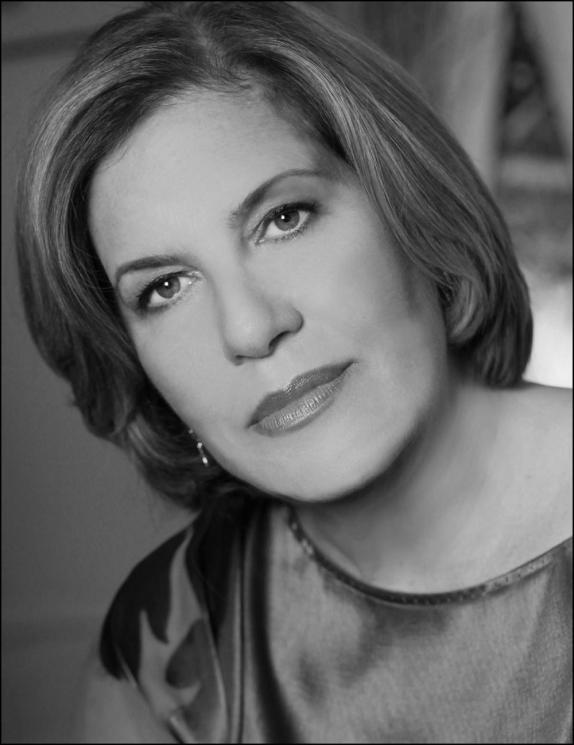
 Beth Levin’s latest disc Bright Circle is available now on the Navonna Records label.



 The Cross-Eyed Pianist