
Who or what inspired you to pursue a career in music and who or what have been the most important influences on your musical life and career?
There was no musical influence until I saw and wanted a little toy piano at the age of 5, which my parents bought for me. Having shown interest in pressing keys that make sound, my parents proceeded to find me a teacher. In fact one of my several childhood teachers still follows my career to this day. She introduced me to the wonders of music through reading me all sorts of stories, literature and relating it to the music that we would listen to. I especially remember being inspired by the legendary recording of 12-year-old Evgeny Kissin playing both Chopin Concerti.

What have been the greatest challenges of your career so far?
It has definitely been a learning curve since winning the Leeds Piano Competition. You have to be very disciplined with your time, carefully estimate and learn about what you can or can’t manage, preferably not the hard way! Planning programmes has been especially challenging as you have to take into account many factors, e.g. my development, audiences, and of course what I want to say artistically.
Which performances/recordings are you most proud of?
I am pretty happy with the Transcendental Etudes for the time being. I really enjoyed the process of creating something in a church in Hampstead for three days straight. It was quite an intimate experience as opposed to being on stage. That music has such a vast variety of ideas, so I felt fortunate to be able to explore it and try to convey this variety.
Which particular works/composers do you think you perform best?
At this point, I don’t think there are any I could say I perform best. I’m constantly learning about the styles of each composer and sometimes I relate with one more than the other at certain times. I can only say that I could never stop playing Beethoven or Chopin.
What do you do off stage that provides inspiration on stage?
Everything in life contributes, from eating, visiting places, to spending time with interesting people. A more direct way of being inspired for me is listening to others.
Do you have a favourite concert venue to perform in and why?
Besides Wigmore Hall, I very much enjoy playing in the Philharmonic Hall of my home town in Almaty, Kazakhstan. I enjoy sharing with the audience of such different culture what I’ve learnt over here.
What do you feel needs to be done to grow classical music’saudiences?
Making classical music accessible to everyone so everybody has the opportunity to discover potential affinity for it. Of course, the earlier the better.
What is your most memorable concert experience?
Definitely Rachmaninov Second Piano Concerto at the Proms [in 2023] with 2 days notice!
As a musician, what is your definition of success?
Success suggests an end goal for a certain task. As there is no end to perfection in music, I’d say making sure of consistent growth however small, is a success.
What advice would you give to young/aspiring musicians?
Discover yourself, your strengths and weaknesses. Play to your strengths while working on your weaknesses. I was fortunate to have a teacher who assisted me with this.
Pianist Alim Beisembayev hails from Kazakhstan and has already made a name for himself, having won the world-renowned Leeds Piano Competition in 2021 aged just 23. He appears at this year’s Cheltenham Music Festival on Thursday 11 July playing music by Schubert, Chopin and Clara Schumann. More information
This site is free to access and ad-free, and takes many hours to research, write, and maintain. If you find joy and value in what I do, why not
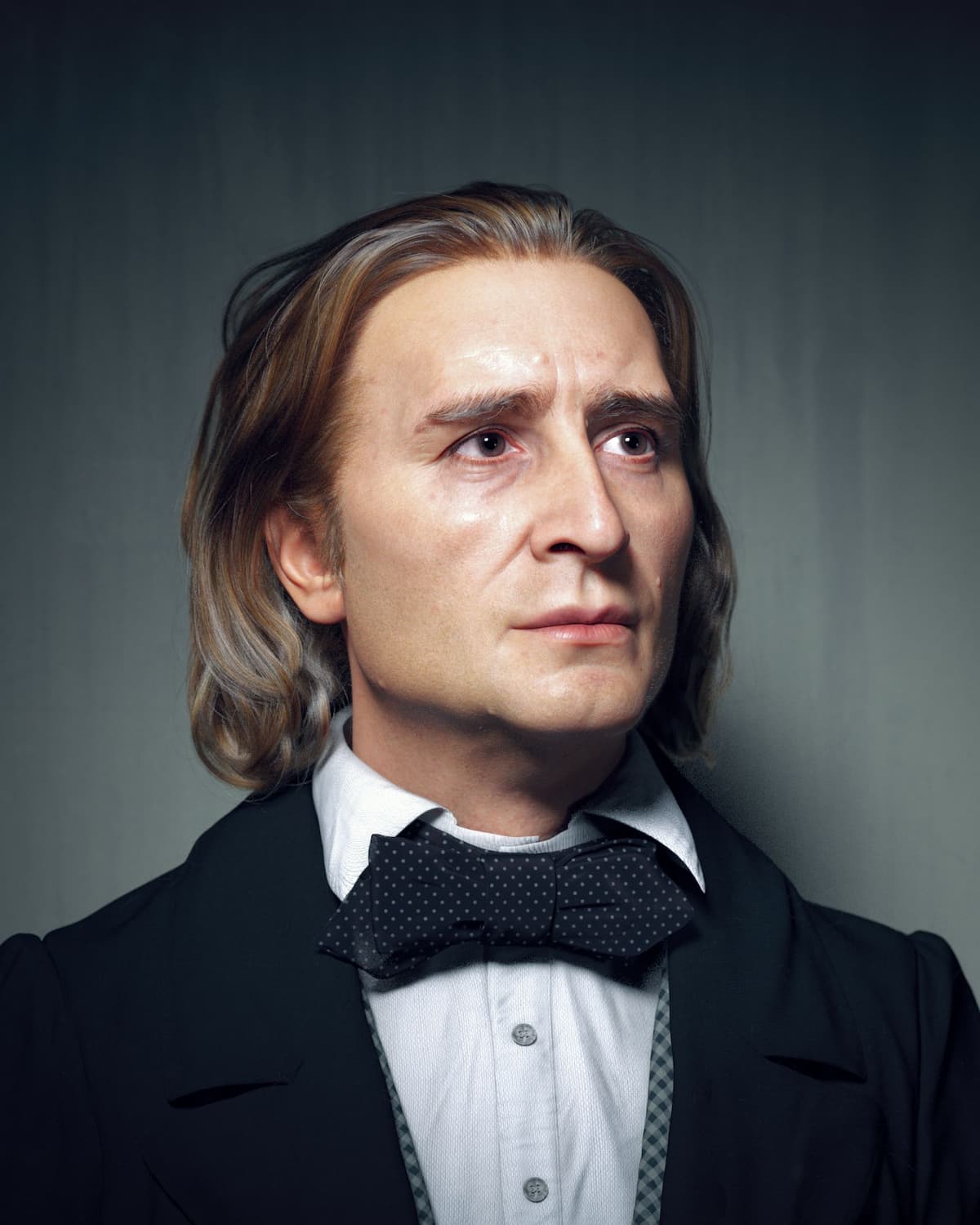 In fact, he was a remarkable musician and human being. Sure, as a performer he could be flamboyant and extravagant in his gestures, but he helped shape the modern solo piano concert as we know it today and he also brought a great deal of music to the public realm through his transcriptions (he transcribed Beethoven’s symphonies for solo piano, thus making this repertoire accessible to both concert artists and amateur pianists to play at home). He was an advocate of new music and up-and-coming composers and lent his generous support to people like Richard Wagner (who married Liszt’s daughter Cosima).
His piano music combines technical virtuosity and emotional depth. It’s true that some of his output is showy – all virtuosic flourishes for the sake of virtuosity – but his suites such as the Années de Pèlerinage or the Transcendental Etudes, and his transcriptions of Schubert songs demonstrate the absolute apogee of art, poetry, and beauty combined.
Martha Argerich
Martha Argerich brings fire and fluency to her interpretations, underpinned by a remarkable technical assuredness. Her 1972 recording of the B-minor Sonata and Hungarian Rhapsody No. 6 is regarded as “legendary”.
Leslie Howard
Australian Leslie Howard is the only pianist to have recorded the solo piano music of Liszt, a project which includes some 300 premiere recordings, and he is rightly regarded as a specialist of this repertoire who has brought much of Liszt’s lesser-known music to the fore.
Lazar Berman
Berman’s 1977 recording of the Années de Pèlerinage remains the benchmark recording of this repertoire for many. Berman brings sensibility and grandeur, warm-heartedness, and mastery to this remarkable set of pieces.
Alim Beisembayev
Winner of the 2021 Leeds International Piano Competition, the young Armenian pianist Alim Beisembayev’s debut recording of the complete Transcendental Etudes is remarkable for its spellbinding polish, precision, and musical maturity, all supported by superb technique.
Yuja Wang
Yuja Wang has been praised for her breath-taking interpretations of Liszt’s First Piano Concerto which combine force and filigree, emotional depth, and technical mastery to create thrilling and insightful performances.
Other noted Liszt pianists include Georges Cziffra, Jorge Bolet, Krystian Zimerman, Lang Lang, Daniil Trifonov, Sviatoslav Richter, Marc-André Hamelin, Nelson Freire, Claudio Arrau, and Vladimir Horowitz.
In fact, he was a remarkable musician and human being. Sure, as a performer he could be flamboyant and extravagant in his gestures, but he helped shape the modern solo piano concert as we know it today and he also brought a great deal of music to the public realm through his transcriptions (he transcribed Beethoven’s symphonies for solo piano, thus making this repertoire accessible to both concert artists and amateur pianists to play at home). He was an advocate of new music and up-and-coming composers and lent his generous support to people like Richard Wagner (who married Liszt’s daughter Cosima).
His piano music combines technical virtuosity and emotional depth. It’s true that some of his output is showy – all virtuosic flourishes for the sake of virtuosity – but his suites such as the Années de Pèlerinage or the Transcendental Etudes, and his transcriptions of Schubert songs demonstrate the absolute apogee of art, poetry, and beauty combined.
Martha Argerich
Martha Argerich brings fire and fluency to her interpretations, underpinned by a remarkable technical assuredness. Her 1972 recording of the B-minor Sonata and Hungarian Rhapsody No. 6 is regarded as “legendary”.
Leslie Howard
Australian Leslie Howard is the only pianist to have recorded the solo piano music of Liszt, a project which includes some 300 premiere recordings, and he is rightly regarded as a specialist of this repertoire who has brought much of Liszt’s lesser-known music to the fore.
Lazar Berman
Berman’s 1977 recording of the Années de Pèlerinage remains the benchmark recording of this repertoire for many. Berman brings sensibility and grandeur, warm-heartedness, and mastery to this remarkable set of pieces.
Alim Beisembayev
Winner of the 2021 Leeds International Piano Competition, the young Armenian pianist Alim Beisembayev’s debut recording of the complete Transcendental Etudes is remarkable for its spellbinding polish, precision, and musical maturity, all supported by superb technique.
Yuja Wang
Yuja Wang has been praised for her breath-taking interpretations of Liszt’s First Piano Concerto which combine force and filigree, emotional depth, and technical mastery to create thrilling and insightful performances.
Other noted Liszt pianists include Georges Cziffra, Jorge Bolet, Krystian Zimerman, Lang Lang, Daniil Trifonov, Sviatoslav Richter, Marc-André Hamelin, Nelson Freire, Claudio Arrau, and Vladimir Horowitz.




 The Cross-Eyed Pianist